

Grindcore

Encyclopedia
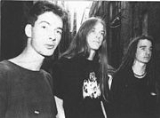
Grindcore is an extreme genre of music that started in the early- to mid-1980s. It draws inspiration from some of the most abrasive music genres – including death metal
, industrial music
, noise
and the more extreme varieties of hardcore punk
.
Grindcore is characterized by heavily distorted, down-tuned guitars, high speed tempo
, blast beat
s, and vocals which consist of incomprehensible growls, or high-pitched shrieks. Early groups like Napalm Death
are credited with laying the groundwork for the style. It is most prevalent today in North America and Europe, with popular contributors such as Brutal Truth
and Nasum
. Lyrical themes range from a primary focus on social and political concerns, to gory subject matter and black humor.
An infamous trait of grindcore is the "microsong". Several bands have produced songs that are only seconds in length. British band Napalm Death holds the Guinness World Record for shortest song ever recorded with the one-second "You Suffer
" (1987). Many bands record simple phrases that may be rhythmically sprawled out across an instrumental lasting only a couple of bars in length.
A variety of "microgenres" have subsequently emerged, often labeling bands according to traits that deviate from regular grindcore, including goregrind
, focused on themes of gore, and pornogrind
, fixated on pornographic lyrical themes. Other offshoots include noisegrind (especially raw and chaotic) and electrogrind (incorporating electronic elements such as programmed drums). Although an influential phenomenon on hardcore punk and other popular genres, grindcore itself remains an underground form of music.
and heavy metal
instrumentation: electric guitar
, bass
and drums
. However, grindcore alters the usual practices of metal or rock music with regard to song structure and tone. The vocal style is "ranging from high-pitched shrieks to low, throat-shredding growls
and barks." In some cases, lyrics don't even exist. Vocals may be used as merely an added sound effect, a common practice with bands such as the experimental Naked City
.
A characteristic of some grindcore songs is the "microsong", lasting only a few seconds. In 2001, the Guinness Book of World Records awarded Brutal Truth the record for "Shortest Music Video" for 1994's "Collateral Damage
" (the song lasts four seconds). In 2007, the video for the Napalm Death song "You Suffer
" set a new "Shortest Music Video" record: 1.3 seconds. Beyond the microsong, it is characteristic of grindcore to have short songs in general; for example, Carcass
' debut album Reek of Putrefaction
(1988) consists of 22 tracks with an average length of 1 minute and 48 seconds.
Many grindcore groups experiment with down-tuned guitars. While the vinyl
A-side of Napalm Death's debut, 1987's Scum, is set to standard tuning
, on side B, the guitars are tuned down 2½ steps. Their second album
and 1989's EP
were tuned to C
♯
. Harmony Corruption
, their third full-length album, was tuned up to a D
. Bolt Thrower went further, dropping 3½ steps down (A
).
group Asocial on their 1982 demo. D.R.I.
("No Sense"), S.O.D.
("Milk"), Sarcófago
("Satanas"), and Repulsion
also included the technique prior to Napalm Death's emergence.
. These themes include anti-racism
, feminism
, anti-militarism, and anti-capitalism
. Other grindcore groups, such as Cattle Decapitation and Carcass
, have expressed disgust with human behavior, animal abuse, and are, in some cases, vegetarians. Carcass' work in particular is often identified as the origin of the goregrind
style, which is devoted to "bodily" themes. Groups that shift their bodily focus to sexual matters, such as Gut
and the Meat Shits, are sometimes referred to as pornogrind
. Seth Putnam
's lyrics are notorious for their black comedy
, while The Locust
tend toward satirical collage, indebted to William S. Burroughs
' cut-up method.
and DIY
production. The most widely acknowledged precursors of the grindcore sound are Siege
, a hardcore punk
group, and Repulsion
, an early death metal
outfit.
Siege, from Weymouth, Massachusetts
, were influenced by classic American hardcore
(Minor Threat
, Black Flag
, Void
) and by British
groups like Discharge
, Venom
, and Motörhead. Siege's goal was maximum velocity: "We would listen to the fastest punk and hardcore bands we could find and say, ‘Okay, we’re gonna deliberately write something that is faster than them'", drummer Robert Williams recalled.
Repulsion, from Flint, Michigan
, cited street punk
groups like Discharge and Charged GBH
, crossover thrash
such as Dirty Rotten Imbeciles
and Corrosion of Conformity
, thrash metal
like Slayer
, Metallica
, and Sodom
, early black metal
(Venom) and death metal
(Possessed
), hardcore punk, like Black Flag, and older hard rock
, as inspirational. The group is often credited with inventing the classic grind blast beat
(played at 190 bpm), as well as its distinctive bass tone. Shane Embury
, in particular, advocates the band as the origin of Napalm Death's later innovations. Kevin Sharp of Brutal Truth
declares that "Horrified
was and still is the defining core of what grind became; a perfect mix of hardcore punk with metallic gore, speed and distortion."
Other groups in the British grindcore scene, such as Heresy
and Unseen Terror
, have emphasized the influence of American hardcore punk
, including Septic Death
, as well as Swedish D-beat
. Sore Throat
cites Discharge, Disorder
, and a variety of European D-beat and thrash metal groups, including Hellhammer
, and American hardcore groups, such as Poison Idea
and DRI. Japanese hardcore
, particularly GISM
, is also mentioned by a number of originators of the style. Other key groups cited by current and former members of Napalm Death as formative influences include Discharge, Amebix
, Throbbing Gristle
, and the aforementioned Dirty Rotten Imbeciles. Post-punk
, such as Killing Joke
and Joy Division
, was also cited as an influence on early Napalm Death.
, a group who emerged from the anarcho-punk
scene in Birmingham, England. While their first recordings were in the vein of Crass, they eventually became associated with crust punk
. The group began to take on increasing elements of thrashcore
, post-punk
, and power electronics
. The group also went through many changes in personnel. A major shift in style took place after Mick Harris
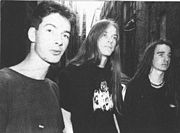
became the group's drummer. Punk historian Ian Glasper indicates that "For several months gob-smacked audiences weren't sure whether Napalm Death were actually a serious band any longer, such was the undeniable novelty of their hyper-speed new drummer." Albert Mudrian's research suggests that the name "grindcore" was coined by Harris. When asked about coming up with the term, Harris said:
Other sources contradict Harris' claim. In a Spin
magazine article written about the genre, Steven Blush declares that "the man often credited" for dubbing the style grindcore was Shane Embury
, Napalm Death's bassist since 1987. Embury offers his own account of how the grindcore "sound" came to be:
 Earache Records
founder Digby Pearson
concurs with Embury, saying that Napalm Death "put hardcore and metal through an accelerator." Pearson, however, said that grindcore "wasn't just about the speed of [the] drums, blast beats, etc." He claimed that "it actually was coined to describe the guitars - heavy, downtuned, bleak, harsh riffing guitars [that] 'grind', so that's what the genre was described as, by the musicians who were its innovators [and] proponents."
While abrasive, grindcore achieved a measure of mainstream visibility. New Musical Express featured Napalm Death on their cover in 1988, declaring them "the fastest band in the world." As James Hoare, deputy editor of Terrorizer
, writes:
Napalm Death's seismic impact inspired other British grindcore groups in the 1980s, among them Extreme Noise Terror
, Carcass
and Sore Throat
. Extreme Noise Terror, from Ipswich, formed in 1984. With the goal of becoming "the most extreme hardcore punk band of all time," the group took Mick Harris from Napalm Death in 1987. Ian Glasper describes the group as "pissed-off hateful noise with its roots somewhere between early Discharge and Disorder, with [vocalists] Dean [Jones] and Phil [Vane] pushing their trademark vocal extremity to its absolute limit." In 1991, the group collaborated with the acid house
group The KLF
, appearing onstage with the group at the Brit Awards
in 1992. Carcass released Reek of Putrefaction
in 1988, which John Peel
declared his favorite album of the year despite its very poor production. The band's focus on gore and anatomical decay, lyrically and in sleeve artwork, inspired the goregrind
subgenre. Sore Throat, said by Ian Glasper to have taken "perhaps the most uncompromisingly anti-music stance" were inspired by crust punk as well as industrial music. Some listeners, such as Digby Pearson, considered them to be simply an in-joke or parody of grindcore.
In the subsequent decade, two pioneers of the style became increasingly commercially viable. According to Nielsen Soundscan
, Napalm Death sold 367,654 units between May 1991 and November 2003, while Carcass sold 220,374 units in the same period. The inclusion of Napalm Death's "Twist the Knife (Slowly)
" on the Mortal Kombat
soundtrack brought the band much greater visibility, as the compilation scored a Top 10 position in the Billboard 200
chart and went platinum
in less than a year. The originators of the style have expressed some ambivalence regarding the subsequent popularity of grindcore. Pete Hurley, the guitarist of Extreme Noise Terror, declared that he had no interest in being remembered as a pioneer of this style: "'grindcore' was a legendarily stupid term coined by a hyperactive kid from the West Midlands, and it had nothing to do with us whatsoever. ENT were, are, and - I suspect - always will be a hardcore punk band... not a grindcore band, a stenchcore band, a trampcore band, or any other sub-sub-sub-core genre-defining term you can come up with." Lee Dorian of Napalm Death indicated that "Unfortunately, I think the same thing happened to grindcore, if you want to call it that, as happened to punk rock - all the great original bands were just plagiarised by a billion other bands who just copied their style identically, making it no longer original and no longer extreme."
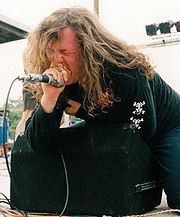
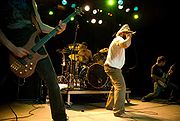 Journalist Kevin Stewart-Panko argues that the American grindcore of the 1990s borrowed from three sources: British grindcore, the American precursors, and death metal
. As early Napalm Death albums were not widely distributed in the United States, American groups tended to take inspiration from later works, such as Harmony Corruption
. American groups also often employ riffs taken from crossover thrash
or thrash metal
. Early American grind practitioners included Terrorizer
and Assück
. Anal Cunt
, a particularly dissonant group who lacked a bass player, were also particularly influential. Their style was sometimes referred to as "noisecore" or "noisegrind", described by Giulio of Cripple Bastards
as "the most anti-musical and nihilistic face of extreme music at that time." Brutal Truth
was a groundbreaking group in the American scene at the beginning of the 1990s. However, Sharp indicates that they were more inspired by the thrash metal of Dark Angel
than the British groups. Discordance Axis
had a more technical style of playing than many of the predecessors, and had a much more ornate visual and production style. Scott Hull is prominent in the contemporary grindcore scene, through his participation in Pig Destroyer
and Agoraphobic Nosebleed
. ANb's Frozen Corpse Stuffed with Dope
has been described as "the Paul's Boutique
of grindcore", by Village Voice critic Phil Freeman, for its "hyper-referential, impossibly dense barrage of samples, blast beats, answering machine messages, and incomprehensibly bellowed rants." Pig Destroyer is inspired by thrash metal, such as Dark Angel and Slayer
, the sludge metal
of The Melvins
, and grindcore practiced by Brutal Truth, while Agoraphobic Nosebleed takes cues from thrashcore
and powerviolence
, like D.R.I. and Crossed Out
. Pig Destroyer's style is sometimes referred to as "deathgrind", because of the prevalence of death metal influences, as are Cattle Decapitation
.
The Locust
, from San Diego, also take inspiration from powerviolence (Crossed Out, Dropdead
), first-wave screamo
(Angel Hair), obscure experimental rock
(Art Bears
, Renaldo and the Loaf
), and death metal. The Locust were sometimes described as "hipster
grind" because of their fan base and fashion choices. Other later prominent grindcore groups of North America include Brujeria
, Soilent Green
, Cephalic Carnage
, Impetigo
, and Circle of Dead Children
. Fuck the Facts
, a Canadian group, practiced classic grindcore, characterized by the "metronome-precision drumming and riffing [that] abound, as well as vocal screams and growls" by Allmusic reviewer Greg Prato.
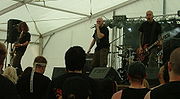 European groups, such as Agathocles
, from Belgium, Patareni
, of Croatia, and Fear of God, from Switzerland, are important early practitioners of the style. Filthy Christians, who signed to Earache Records in 1989, introduced the style in Sweden, while Cripple Bastards
established Italian grindcore. Giulio of Cripple Bastards asserts that the name itself took some time to migrate from Britain, with the style being referred to as "death-thrashcore
" for a time in Europe.
Nasum
, who emerged from the Swedish death metal scene, became a popular group, addressing political topics from a personal perspective. Anders Jakobson, their drummer, reported that "It was all these different types of people who enjoyed what we were were doing. [...] We made grindcore a bit easier to listen to at the expense of the diehard grindcore fans who thought that we were, well, not sellouts
, but not really true to the original essence of grindcore." Other Swedish groups, such as General Surgery
and Regurgitate
, practiced goregrind. Inhume
, from the Netherlands, Rotten Sound
, from Finland, and Leng Tch'e
, from Belgium, were subsequent European groups who practiced grindcore with death metal inflections. In 2000s, the Belgium-based Aborted
"had grown into the role of key contributors to the death-grind genres".
, led by avant-garde jazz saxophonist
John Zorn
, performed an avant-garde form of polystylistic
, grindcore-influenced punk jazz
. Zorn later formed the Painkiller
project with ambient dub producer Bill Laswell
on bass guitar and Mick Harris on drums, which also collaborated with Justin Broadrick on some work. In addition, grindcore was one influence on the powerviolence movement within American hardcore punk, and has affected some strains of metalcore. Some musicians have also produced hybrids between grind and electronic music.
is a raw and dissonant subgenre of hardcore punk
. The style is closely related to thrashcore
and similar to grindcore. While powerviolence took inspiration from Napalm Death and other early grind bands, powerviolence groups avoided elements of heavy metal. Its nascent form was pioneered in the late 1980s in the music of hardcore punk band Infest
, who mixed youth crew
hardcore elements with noisier, sludgier qualities of Lärm
and Siege
. The microgenre solidified into its most commonly recognized form in the early 1990s, with the sounds of bands such as Man Is the Bastard
, Crossed Out
, No Comment, Capitalist Casualties
, and Manpig. Powerviolence bands focus on speed, brevity, bizarre timing breakdowns, and constant tempo changes. Powerviolence songs are often very short; it is not uncommon for some to last less than 30 seconds. Some groups, particularly Man Is the Bastard, took influence from sludge metal
and noise music
. Lyrically and conceptually, powerviolence groups were very raw and underproduced, both sonically and in their packaging. Some groups (Man Is the Bastard and Dropdead
) took influence from anarcho-punk
and crust punk
, emphasizing animal rights
and anti-militarism. The Locust
and Agoraphobic Nosebleed
later reincorporated elements of powerviolence into grindcore.
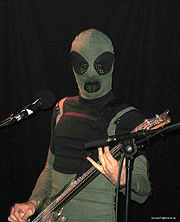 Among other influences, Napalm Death took impetus from the industrial music
scene. Subsequently, Napalm Death's former guitarist, Justin Broadrick
, went on to a career in industrial metal
with Godflesh
. Mick Harris, in his post-Napalm Death project, Scorn
, briefly experimented with the style. Scorn also worked in the industrial hip hop and isolationist
styles. Fear Factory
have also cited debts to the genre. Digital hardcore
is an initially German hybrid of hardcore punk and hardcore techno
. Agoraphobic Nosebleed and the Locust have solicited remixes from digital hardcore producers and noise music
ians. James Plotkin
, Dave Witte
, and Speedranch
participated in the Phantomsmasher
project, which melds grindcore and digital hardcore. Alec Empire
collaborated with Justin Broadrick, on the first Curse of the Golden Vampire
album, and with Gabe Serbian
, of the Locust, live in Japan. Japanoise
icon Merzbow
also participated in the Empire/Serbian show. The 21st century also saw the development of "electrogrind" (or "cybergrind"), practiced by The Berzerker
, Body Hammer, Gigantic Brain and Genghis Tron
which borrows from electronic music
. These groups built on the work of Agoraphobic Nosebleed, Enemy Soil and The Locust, as well as industrial metal. The Berzerker also appropriated the distorted Roland TR-909
kick drums
of gabber
producers. Many later electrogrind groups were caricatured for their hipster connections.
is a fusion genre that combines extreme metal with hardcore punk, and at the same time draws on groove metal
. Like grindcore, metalcore can feature breakdowns as well as intense passages conducive to moshing
. In the mid-1990s, some metalcore groups began to take inspiration from developments in grindcore. For example, mathcore
groups such as Dillinger Escape Plan, Some Girls
, and Daughters
. These groups also include elements of post-hardcore
. By late 2000s, deathcore
bands described themselves as grindcore. In addition to metalcore some early screamo
groups, like Circle Takes the Square
and Orchid
, have been associated with grindcore by some commentators.
Death metal
Death metal is an extreme subgenre of heavy metal. It typically employs heavily distorted guitars, tremolo picking, deep growling vocals, blast beat drumming, minor keys or atonality, and complex song structures with multiple tempo changes....
, industrial music
Industrial music
Industrial music is a style of experimental music that draws on transgressive and provocative themes. The term was coined in the mid-1970s with the founding of Industrial Records by the band Throbbing Gristle, and the creation of the slogan "industrial music for industrial people". In general, the...
, noise
Noise music
Noise music is a term used to describe varieties of avant-garde music and sound art that may use elements such as cacophony, dissonance, atonality, noise, indeterminacy, and repetition in their realization. Noise music can feature distortion, various types of acoustically or electronically...
and the more extreme varieties of hardcore punk
Hardcore punk
Hardcore punk is an underground music genre that originated in the late 1970s, following the mainstream success of punk rock. Hardcore is generally faster, thicker, and heavier than earlier punk rock. The origin of the term "hardcore punk" is uncertain. The Vancouver-based band D.O.A...
.
Grindcore is characterized by heavily distorted, down-tuned guitars, high speed tempo
Tempo
In musical terminology, tempo is the speed or pace of a given piece. Tempo is a crucial element of any musical composition, as it can affect the mood and difficulty of a piece.-Measuring tempo:...
, blast beat
Blast beat
A blast beat is a drum beat often associated with extreme metal and grindcore, although its usage predates the genres, and is utilised by many different styles of metal...
s, and vocals which consist of incomprehensible growls, or high-pitched shrieks. Early groups like Napalm Death
Napalm Death
Napalm Death are a death metal band formed in Birmingham, England in 1981. While none of its original members remain in the group, the lineup of vocalist Mark "Barney" Greenway, bassist Shane Embury, guitarist Mitch Harris and drummer Danny Herrera has remained consistent for most of the band's ...
are credited with laying the groundwork for the style. It is most prevalent today in North America and Europe, with popular contributors such as Brutal Truth
Brutal Truth
Brutal Truth is an American grindcore band from New York City, formed by ex-Anthrax, Nuclear Assault, and Stormtroopers Of Death bass guitarist Dan Lilker in 1990. The group disbanded in 1999, but reformed in 2006 and continue to release new music.-History:...
and Nasum
Nasum
Nasum was a political Swedish band that played a mixture of grindcore and death metal. The band's name, meaning 'nose', was taken from the horror film Flesh for Frankenstein.-Biography:...
. Lyrical themes range from a primary focus on social and political concerns, to gory subject matter and black humor.
An infamous trait of grindcore is the "microsong". Several bands have produced songs that are only seconds in length. British band Napalm Death holds the Guinness World Record for shortest song ever recorded with the one-second "You Suffer
You Suffer
"You Suffer" is a song by the British grindcore band Napalm Death, from their debut album, Scum. The song has earned a place in the Guinness Book of Records as the shortest recorded song ever...
" (1987). Many bands record simple phrases that may be rhythmically sprawled out across an instrumental lasting only a couple of bars in length.
A variety of "microgenres" have subsequently emerged, often labeling bands according to traits that deviate from regular grindcore, including goregrind
Goregrind
-History:Despite the early impact of albums such as Repulsion's Horrified and Impetigo's Ultimo Mondo Cannibale, the origins of the genre really lie with the British band Carcass, who began their career in the late 1980s...
, focused on themes of gore, and pornogrind
Pornogrind
Pornogrind, also known as porno grind, porno-grind or porn grind is a musical subgenre of grindcore and death metal, which lyrically deals with sexual themes.-Characteristics:...
, fixated on pornographic lyrical themes. Other offshoots include noisegrind (especially raw and chaotic) and electrogrind (incorporating electronic elements such as programmed drums). Although an influential phenomenon on hardcore punk and other popular genres, grindcore itself remains an underground form of music.
Characteristics
Grindcore relies on standard hardcore punkHardcore punk
Hardcore punk is an underground music genre that originated in the late 1970s, following the mainstream success of punk rock. Hardcore is generally faster, thicker, and heavier than earlier punk rock. The origin of the term "hardcore punk" is uncertain. The Vancouver-based band D.O.A...
and heavy metal
Heavy metal music
Heavy metal is a genre of rock music that developed in the late 1960s and early 1970s, largely in the Midlands of the United Kingdom and the United States...
instrumentation: electric guitar
Electric guitar
An electric guitar is a guitar that uses the principle of direct electromagnetic induction to convert vibrations of its metal strings into electric audio signals. The signal generated by an electric guitar is too weak to drive a loudspeaker, so it is amplified before sending it to a loudspeaker...
, bass
Bass guitar
The bass guitar is a stringed instrument played primarily with the fingers or thumb , or by using a pick....
and drums
Drum kit
A drum kit is a collection of drums, cymbals and often other percussion instruments, such as cowbells, wood blocks, triangles, chimes, or tambourines, arranged for convenient playing by a single person ....
. However, grindcore alters the usual practices of metal or rock music with regard to song structure and tone. The vocal style is "ranging from high-pitched shrieks to low, throat-shredding growls
Death growl
A death growl, also known as death metal vocals, guttural vocals, death grunts, and harsh vocals among other names, is a vocalisation style usually employed by vocalists of the death metal and black metal music genre, but also used in a variety of heavy metal and hardcore punk subgenres.Death...
and barks." In some cases, lyrics don't even exist. Vocals may be used as merely an added sound effect, a common practice with bands such as the experimental Naked City
Naked City (band)
Naked City was an avant-garde music group led by saxophonist and composer John Zorn. Active primarily in New York City from 1988 to 1993, Naked City was initiated by Zorn as a "composition workshop" to test the limits of composition in a traditional rock band lineup...
.
A characteristic of some grindcore songs is the "microsong", lasting only a few seconds. In 2001, the Guinness Book of World Records awarded Brutal Truth the record for "Shortest Music Video" for 1994's "Collateral Damage
Extreme Conditions Demand Extreme Responses
Extreme Conditions Demand Extreme Responses is the debut full length album by grindcore band Brutal Truth. Music videos were made for "Collateral Damage" and "Ill Neglect"....
" (the song lasts four seconds). In 2007, the video for the Napalm Death song "You Suffer
You Suffer
"You Suffer" is a song by the British grindcore band Napalm Death, from their debut album, Scum. The song has earned a place in the Guinness Book of Records as the shortest recorded song ever...
" set a new "Shortest Music Video" record: 1.3 seconds. Beyond the microsong, it is characteristic of grindcore to have short songs in general; for example, Carcass
Carcass (band)
Carcass are an extreme metal band from England, who formed in 1985 and disbanded in 1995. A reunion was enacted in 2008 without one of its original members, drummer Ken Owen, due to health reasons....
' debut album Reek of Putrefaction
Reek of Putrefaction
Reek of Putrefaction is the debut album by the British extreme metal band Carcass. It was released by Earache Records in 1988.-Background:...
(1988) consists of 22 tracks with an average length of 1 minute and 48 seconds.
Many grindcore groups experiment with down-tuned guitars. While the vinyl
Gramophone record
A gramophone record, commonly known as a phonograph record , vinyl record , or colloquially, a record, is an analog sound storage medium consisting of a flat disc with an inscribed, modulated spiral groove...
A-side of Napalm Death's debut, 1987's Scum, is set to standard tuning
Standard tuning
In music, standard tuning refers to the typical tuning of a string instrument. This notion is contrary to that of scordatura, i.e. an alternate tuning designated to modify either the timbre or technical capabilities of the desired instrument.-Bowed strings:...
, on side B, the guitars are tuned down 2½ steps. Their second album
From Enslavement to Obliteration
From Enslavement to Obliteration is the second album by grindcore band Napalm Death, released in 1988.-Background:From Enslavement to Obliteration is the only Napalm Death album to feature Lee Dorrian as the sole vocalist, where he offers the low, grunting vocals and from time to time in songs, he...
and 1989's EP
Mentally Murdered
Mentally Murdered is an EP by the English band Napalm Death, originally released in 1989. It was later included on the Harmony Corruption CD and the Death by Manipulation compilation album...
were tuned to C
C (musical note)
C or Do is the first note of the fixed-Do solfège scale. Its enharmonic is B.-Middle C:Middle C is designated C4 in scientific pitch notation because of the note's position as the fourth C key on a standard 88-key piano keyboard...
♯
Sharp (music)
In music, sharp, dièse , or diesis means higher in pitch and the sharp symbol raises a note by a half tone. Intonation may be flat, sharp, or both, successively or simultaneously...
. Harmony Corruption
Harmony Corruption
-From the Mentally Murdered EP:*The song Mentally Murdered is a different recording than the version found on From Enslavement to Obliteration-Bonus LP 'Live I.C.A...
, their third full-length album, was tuned up to a D
D tuning
D Tuning, also called One Step Lower, Whole Step Down, or D Standard, is an alternate tuning for guitar. Each string is lowered by a whole tone or two semitones resulting in D-G-C-F-A-D It is used mostly by heavy metal bands to achieve a heavier, deeper sound and by blues guitarists, who use it to...
. Bolt Thrower went further, dropping 3½ steps down (A
A (musical note)
La or A is the sixth note of the solfège. "A" is generally used as a standard for tuning. When the orchestra tunes, the oboe plays an "A" and the rest of the instruments tune to match that pitch. Every string instrument in the orchestra has an A string, from which each player can tune the rest of...
).
Blast beat
The blast beat is a drum beat characteristic of grindcore in all its forms, although its usage predates the genre itself. In Adam MacGregor's definition, "the blast-beat generally comprises a repeated, sixteenth-note figure played at a very fast tempo, and divided uniformly among the kick drum, snare and ride, crash, or hi-hat cymbal." Blast beats have been described as "maniacal percussive explosions, less about rhythm per se than sheer sonic violence." Napalm Death coined the term, though this style of drumming had previously been practiced by others. Daniel Ekeroth argues that the blast beat was first performed by the Swedish D-beatD-beat
D-beat is a style of hardcore punk developed in the early 1980s by imitators of Discharge, for whom the genre is named. Discharge may have themselves inherited the beat from Motörhead. The first such group was The Varukers.The vocal content of D-beat tends towards shouted slogans...
group Asocial on their 1982 demo. D.R.I.
Dirty Rotten Imbeciles
Dirty Rotten Imbeciles is a thrash metal/crossover thrash band from the United States that formed in Houston, in 1982. The band currently comprises founding members, vocalist Kurt Brecht and guitarist Spike Cassidy, as well as drummer Rob Rampy and bassist Harald Oimoen.D.R.I...
("No Sense"), S.O.D.
Stormtroopers of Death
Stormtroopers of Death, better known as S.O.D., was a crossover thrash band formed in New York in 1985. They are commonly credited as being among the first bands to fuse hardcore punk with thrash metal into a style sometimes called "crossover thrash." The song "March of the S.O.D.," from their 1985...
("Milk"), Sarcófago
Sarcófago
Sarcófago was an influential Brazilian extreme metal band. They were fronted by Sepultura's original singer, Wagner Lamounier, and Geraldo Minelli. They have been described as Brazil's most controversial metal band....
("Satanas"), and Repulsion
Repulsion (band)
Repulsion is an early grindcore / death metal band from Flint, Michigan. They have been called the "most influential grindcore band of all time".-History:...
also included the technique prior to Napalm Death's emergence.
Lyrical themes
Grindcore lyrics are typically provocative. A number of grindcore musicians are committed to political and ethical causes. For example, Napalm Death's songs address a variety of anarchist concerns, in the tradition of anarcho-punkAnarcho-punk
Anarcho-punk is punk rock that promotes anarchism. The term anarcho-punk is sometimes applied exclusively to bands that were part of the original anarcho-punk movement in the United Kingdom in the late 1970s and early 1980s...
. These themes include anti-racism
Anti-racism
Anti-racism includes beliefs, actions, movements, and policies adopted or developed to oppose racism. In general, anti-racism is intended to promote an egalitarian society in which people do not face discrimination on the basis of their race, however defined...
, feminism
Feminism
Feminism is a collection of movements aimed at defining, establishing, and defending equal political, economic, and social rights and equal opportunities for women. Its concepts overlap with those of women's rights...
, anti-militarism, and anti-capitalism
Anti-capitalism
Anti-capitalism describes a wide variety of movements, ideas, and attitudes which oppose capitalism. Anti-capitalists, in the strict sense of the word, are those who wish to completely replace capitalism with another system....
. Other grindcore groups, such as Cattle Decapitation and Carcass
Carcass (band)
Carcass are an extreme metal band from England, who formed in 1985 and disbanded in 1995. A reunion was enacted in 2008 without one of its original members, drummer Ken Owen, due to health reasons....
, have expressed disgust with human behavior, animal abuse, and are, in some cases, vegetarians. Carcass' work in particular is often identified as the origin of the goregrind
Goregrind
-History:Despite the early impact of albums such as Repulsion's Horrified and Impetigo's Ultimo Mondo Cannibale, the origins of the genre really lie with the British band Carcass, who began their career in the late 1980s...
style, which is devoted to "bodily" themes. Groups that shift their bodily focus to sexual matters, such as Gut
GUT (band)
Gut is a German grindcore band, often credited as fathers of pornogrind, and known for their over-the-top vocals and morbid, pornographic imagery. Natalie Purcell, in her book Death Metal Music: The Passion and Politics of a Subculture, suggests that pornogrind is defined solely on the basis of its...
and the Meat Shits, are sometimes referred to as pornogrind
Pornogrind
Pornogrind, also known as porno grind, porno-grind or porn grind is a musical subgenre of grindcore and death metal, which lyrically deals with sexual themes.-Characteristics:...
. Seth Putnam
Seth Putnam
Seth Edward Putnam was the founder of grindcore band Anal Cunt. He was known for his brutal screaming and lyrics that either shock, offend, or invoke morbid humor...
's lyrics are notorious for their black comedy
Black comedy
A black comedy, or dark comedy, is a comic work that employs black humor or gallows humor. The definition of black humor is problematic; it has been argued that it corresponds to the earlier concept of gallows humor; and that, as humor has been defined since Freud as a comedic act that anesthetizes...
, while The Locust
The Locust
The Locust is a musical group from San Diego, California, United States known for their unique mix of grindcore speed and aggression, mathcore complexity, and new wave weirdness.- Style :...
tend toward satirical collage, indebted to William S. Burroughs
William S. Burroughs
William Seward Burroughs II was an American novelist, poet, essayist and spoken word performer. A primary figure of the Beat Generation and a major postmodernist author, he is considered to be "one of the most politically trenchant, culturally influential, and innovative artists of the 20th...
' cut-up method.
Precursors
The early grindcore scene relied on an international network of tape tradingTape trading
Tape trading is an unofficial method of distribution of demo tapes encompassing musical genres such as punk, hardcore, and extreme metal. The practice which was most prevalent during the 1980s and 1990s, also saw people distribute recordings of live music shows...
and DIY
DIY ethic
The DIY ethic refers to the ethic of self-sufficiency through completing tasks oneself as opposed to having others who are more experienced or able complete them for one's behalf. It promotes the idea that an ordinary person can learn to do more than he or she thought was possible...
production. The most widely acknowledged precursors of the grindcore sound are Siege
Siege (band)
Siege was an American punk/Thrashcore band from Weymouth, Massachusetts. They were active in the 1980s Boston hardcore scene from 1983 to 1985, and reunited briefly in the early 1990s....
, a hardcore punk
Hardcore punk
Hardcore punk is an underground music genre that originated in the late 1970s, following the mainstream success of punk rock. Hardcore is generally faster, thicker, and heavier than earlier punk rock. The origin of the term "hardcore punk" is uncertain. The Vancouver-based band D.O.A...
group, and Repulsion
Repulsion (band)
Repulsion is an early grindcore / death metal band from Flint, Michigan. They have been called the "most influential grindcore band of all time".-History:...
, an early death metal
Death metal
Death metal is an extreme subgenre of heavy metal. It typically employs heavily distorted guitars, tremolo picking, deep growling vocals, blast beat drumming, minor keys or atonality, and complex song structures with multiple tempo changes....
outfit.
Siege, from Weymouth, Massachusetts
Weymouth, Massachusetts
The Town of Weymouth is a city in Norfolk County, Massachusetts, United States. As of the 2010 census, Weymouth had a total population of 53,743. Despite its city status, it is formally known as the Town of Weymouth...
, were influenced by classic American hardcore
Hardcore punk
Hardcore punk is an underground music genre that originated in the late 1970s, following the mainstream success of punk rock. Hardcore is generally faster, thicker, and heavier than earlier punk rock. The origin of the term "hardcore punk" is uncertain. The Vancouver-based band D.O.A...
(Minor Threat
Minor Threat
Minor Threat was an American hardcore punk band formed in Washington, D.C. in 1980 and disbanded in 1983. The band was relatively short-lived, but had a strong influence on the hardcore punk music scene, both stylistically and in establishing a "do it yourself" ethic for music distribution and...
, Black Flag
Black Flag (band)
Black Flag was an American punk rock band formed in 1976 in Hermosa Beach, California. The band was established by Greg Ginn, the guitarist, primary songwriter and sole continuous member through multiple personnel changes in the band...
, Void
Void (band)
Void was a Washington D.C.-based hardcore punk/crossover thrash band. They were one of the first hardcore outfits to fuse hardcore and some heavy metal in a way most hardcore and metal fans could accept, paving the way for bands such as The Melvins. They were one of the first local bands popular in...
) and by British
Music of the United Kingdom (1980s)
Popular music of the United Kingdom in the 1980s built on the post punk and new wave movements, incorporating different sources of inspiration from sub-genres and what is now classed as World music in the shape of Jamaican and Indian music. It also explored the consequences of new technology and...
groups like Discharge
Discharge (band)
Discharge is a British hardcore punk band formed in 1977 by Terry "Tezz" Roberts and Roy "Rainy" Wainwright. They are often considered among one of the very first bands to play hardcore punk, and to mix punk with metal...
, Venom
Venom (band)
Venom are an English heavy metal band that formed in 1979 in Newcastle upon Tyne. Coming to prominence towards the end of the New Wave of British Heavy Metal, Venom's first two albums—Welcome to Hell and Black Metal —are considered a major influence on thrash metal and extreme metal in general...
, and Motörhead. Siege's goal was maximum velocity: "We would listen to the fastest punk and hardcore bands we could find and say, ‘Okay, we’re gonna deliberately write something that is faster than them'", drummer Robert Williams recalled.
Repulsion, from Flint, Michigan
Flint, Michigan
Flint is a city in the U.S. state of Michigan and is located along the Flint River, northwest of Detroit. The U.S. Census Bureau reports the 2010 population to be placed at 102,434, making Flint the seventh largest city in Michigan. It is the county seat of Genesee County which lies in the...
, cited street punk
Street punk
Street punk is a working class-based genre of punk rock which took shape in the early 1980s, partly as a rebellion against the perceived artistic pretensions of the first wave of British punk. Street punk emerged from the Oi! style, performed by bands such as Sham 69, Angelic Upstarts, Cockney...
groups like Discharge and Charged GBH
Charged GBH
Charged GBH are an English Street punk band, formed in 1978 by vocalist Colin Abrahall, guitarist Colin "Jock" Blyth, bassist Sean McCarthy and Drummer Andy " Wilf" Williams. GBH were early pioneers of English street punk, often nicknamed "UK82", along with Discharge, Broken Bones, The Exploited...
, crossover thrash
Crossover thrash
__FORCETOC__Crossover thrash, often abbreviated to crossover, is a form of thrash metal that contains more hardcore punk elements than standard thrash. The genre lies on a continuum between heavy metal and punk rock...
such as Dirty Rotten Imbeciles
Dirty Rotten Imbeciles
Dirty Rotten Imbeciles is a thrash metal/crossover thrash band from the United States that formed in Houston, in 1982. The band currently comprises founding members, vocalist Kurt Brecht and guitarist Spike Cassidy, as well as drummer Rob Rampy and bassist Harald Oimoen.D.R.I...
and Corrosion of Conformity
Corrosion of Conformity
Corrosion of Conformity is an American heavy metal band from Raleigh, North Carolina formed in 1982. For almost the majority of its existence, the band has consisted of guitarist Woody Weatherman, bassist Mike Dean , drummer Reed Mullin and vocalist and rhythm...
, thrash metal
Thrash metal
Thrash metal is a subgenre of heavy metal that is characterized usually by its fast tempo and aggression. Songs of the genre typically use fast percussive and low-register guitar riffs, overlaid with shredding-style lead work...
like Slayer
Slayer
Slayer is an American thrash metal band formed in Huntington Park, California, in 1981 by guitarists Jeff Hanneman and Kerry King. Slayer rose to fame with their 1986 release, Reign in Blood, and is credited as one of the "Big Four" thrash metal acts, along with Metallica, Megadeth and...
, Metallica
Metallica
Metallica is an American heavy metal band from Los Angeles, California. Formed in 1981 when James Hetfield responded to an advertisement that drummer Lars Ulrich had posted in a local newspaper. The current line-up features long-time lead guitarist Kirk Hammett and bassist Robert Trujillo ...
, and Sodom
Sodom (band)
Sodom is a German Thrash metal trio from Gelsenkirchen, formed in 1981.Along with the bands Kreator and Destruction, Sodom is considered one of the "big three" of Teutonic thrash metal...
, early black metal
Black metal
Black metal is an extreme subgenre of heavy metal music. Common traits include fast tempos, shrieked vocals, highly distorted guitars played with tremolo picking, blast beat drumming, raw recording, and unconventional song structure....
(Venom) and death metal
Death metal
Death metal is an extreme subgenre of heavy metal. It typically employs heavily distorted guitars, tremolo picking, deep growling vocals, blast beat drumming, minor keys or atonality, and complex song structures with multiple tempo changes....
(Possessed
Possessed (band)
Possessed is an American death metal band, originally formed in 1983. Noted for their fast style of playing and Jeff Becerra's guttural vocals, they are routinely called the first band in the death metal genre...
), hardcore punk, like Black Flag, and older hard rock
Hard rock
Hard rock is a loosely defined genre of rock music which has its earliest roots in mid-1960s garage rock, blues rock and psychedelic rock...
, as inspirational. The group is often credited with inventing the classic grind blast beat
Blast beat
A blast beat is a drum beat often associated with extreme metal and grindcore, although its usage predates the genres, and is utilised by many different styles of metal...
(played at 190 bpm), as well as its distinctive bass tone. Shane Embury
Shane Embury
Shane Embury is a British bassist and member of Napalm Death.-Napalm Death:Embury is the only member left who has been in the band since the Scum tour, replacing previous bassist Jim Whitley in 1987...
, in particular, advocates the band as the origin of Napalm Death's later innovations. Kevin Sharp of Brutal Truth
Brutal Truth
Brutal Truth is an American grindcore band from New York City, formed by ex-Anthrax, Nuclear Assault, and Stormtroopers Of Death bass guitarist Dan Lilker in 1990. The group disbanded in 1999, but reformed in 2006 and continue to release new music.-History:...
declares that "Horrified
Horrified
Horrified is the only full-length album released by the American grindcore band Repulsion. Although the album was originally recorded in 1986, it remained unreleased until three years later. It was originally released on Necrosis Records, a sublabel of Earache Records.-Album information:The album...
was and still is the defining core of what grind became; a perfect mix of hardcore punk with metallic gore, speed and distortion."
Other groups in the British grindcore scene, such as Heresy
Heresy (band)
Heresy were a hardcore punk band from Nottingham, England, formed in 1985 and active until late 1988. They released three albums and recorded three sessions for John Peel's BBC Radio 1 show...
and Unseen Terror
Unseen Terror
Unseen Terror was a British extreme metal band formed by Shane Embury and Mitch Dickinson , and played extreme metal with a technical edge. Their most notable feat took place in March 1988, when they recorded tracks for John Peel's BBC Radio 1 program.-History:To set the record straight - The band...
, have emphasized the influence of American hardcore punk
Hardcore punk
Hardcore punk is an underground music genre that originated in the late 1970s, following the mainstream success of punk rock. Hardcore is generally faster, thicker, and heavier than earlier punk rock. The origin of the term "hardcore punk" is uncertain. The Vancouver-based band D.O.A...
, including Septic Death
Septic Death
Septic Death was a hardcore punk band fronted by artist Brian "Pushead" Schroeder on vocals. Septic Death's music became a major influence on bands like Integrity, Citizens Arrest, Infest, and many other bands tied to the hardcore punk, thrashcore, crust punk etc. scenes...
, as well as Swedish D-beat
D-beat
D-beat is a style of hardcore punk developed in the early 1980s by imitators of Discharge, for whom the genre is named. Discharge may have themselves inherited the beat from Motörhead. The first such group was The Varukers.The vocal content of D-beat tends towards shouted slogans...
. Sore Throat
Sore Throat
Sore Throat were a British crust punk / grindcore band, formed in Yorkshire in 1987. They are known for being one of the earliest exponents of the grindcore subgenre known as "noisecore", as well launching the careers of several prominent members of the British metal community.-Biography:Sore...
cites Discharge, Disorder
Disorder (band)
Disorder are a hardcore punk band that formed in the Bristol area of the United Kingdom in 1980, and has existed with varying line-ups to this day. Faithful to anarcho-punk ethics, Disorder are a band who aligned with politically-charged punk bands like Crass and Conflict.-History:Disorder formed...
, and a variety of European D-beat and thrash metal groups, including Hellhammer
Hellhammer
Hellhammer was an influential extreme metal band from Switzerland, active during 1982–1984. They are regarded as being one of the first extreme metal bands and are a key influence on later black metal and death metal bands.-Biography:...
, and American hardcore groups, such as Poison Idea
Poison Idea
Poison Idea was an American hardcore punk band formed in Portland, Oregon in 1980. The band originally dissolved in 1993, but has been playing intermittently since 1998.-Formation, 1980's and 90's:...
and DRI. Japanese hardcore
Japanese hardcore
Japanese hardcore punk refers to the fast-paced Japanese punk/hardcore genre. The original intent of Japanese hardcore was to protest the social and economic changes sweeping Japan in the 1980s. The band SS is regarded as the first, forming in 1977. Bands, such as G.I.S.M. and The Stalin, soon...
, particularly GISM
GISM
was a Japanese hardcore punk band formed in Tokyo, Japan in 1980. Even though the guitar style resembled heavy metal style riffs and solos, GISM were one of the first Japanese hardcore bands, while at the same time drawing influence from the early industrial/avant-garde music scene; something...
, is also mentioned by a number of originators of the style. Other key groups cited by current and former members of Napalm Death as formative influences include Discharge, Amebix
Amebix
Amebix are an English crust punk/heavy metal band. Formed as "The Band with No Name," Amebix's original run was from 1978 to 1987, during which time they released three EPs and two full-length LPs...
, Throbbing Gristle
Throbbing Gristle
Throbbing Gristle were an English industrial, avant-garde music and visual arts group that evolved from the performance art group COUM Transmissions...
, and the aforementioned Dirty Rotten Imbeciles. Post-punk
Post-punk
Post-punk is a rock music movement with its roots in the late 1970s, following on the heels of the initial punk rock explosion of the mid-1970s. The genre retains its roots in the punk movement but is more introverted, complex and experimental...
, such as Killing Joke
Killing Joke
Killing Joke are an English post-punk band formed in October 1978 in Notting Hill, London, England; other sources report the band formed in early 1979.Related news articles: Founding members Jaz Coleman and Geordie Walker have been the only constant members.A key influence on industrial rock,...
and Joy Division
Joy Division
Joy Division were an English rock band formed in 1976 in Salford, Greater Manchester. Originally named Warsaw, the band primarily consisted of Ian Curtis , Bernard Sumner , Peter Hook and Stephen Morris .Joy Division rapidly evolved from their initial punk rock influences...
, was also cited as an influence on early Napalm Death.
British grindcore
Grindcore, as such, was developed during the mid-1980s in the United Kingdom by Napalm DeathNapalm Death
Napalm Death are a death metal band formed in Birmingham, England in 1981. While none of its original members remain in the group, the lineup of vocalist Mark "Barney" Greenway, bassist Shane Embury, guitarist Mitch Harris and drummer Danny Herrera has remained consistent for most of the band's ...
, a group who emerged from the anarcho-punk
Anarcho-punk
Anarcho-punk is punk rock that promotes anarchism. The term anarcho-punk is sometimes applied exclusively to bands that were part of the original anarcho-punk movement in the United Kingdom in the late 1970s and early 1980s...
scene in Birmingham, England. While their first recordings were in the vein of Crass, they eventually became associated with crust punk
Crust punk
Crust punk is a form of music influenced by anarcho-punk, hardcore punk and extreme metal. The style, which evolved in the mid-1980s in England, often has songs with dark and pessimistic lyrics that linger on political and social ills...
. The group began to take on increasing elements of thrashcore
Thrashcore
Thrashcore is a fast tempo subgenre of hardcore punk that emerged in the early 1980s. Thrashcore is essentially sped-up hardcore punk, with bands often using blast beats. Songs can be very brief, and thrashcore is in many ways a less dissonant, less metallic forerunner of grindcore...
, post-punk
Post-punk
Post-punk is a rock music movement with its roots in the late 1970s, following on the heels of the initial punk rock explosion of the mid-1970s. The genre retains its roots in the punk movement but is more introverted, complex and experimental...
, and power electronics
Power electronics
Power electronics is the application of solid-state electronics for the control and conversion of electric power.-Introduction:Power electronic converters can be found wherever there is a need to modify a form of electrical energy...
. The group also went through many changes in personnel. A major shift in style took place after Mick Harris
Mick Harris
Mick Harris commonly known and credited both as Mick Harris or occasionally M.J. Harris, is an English musician....
became the group's drummer. Punk historian Ian Glasper indicates that "For several months gob-smacked audiences weren't sure whether Napalm Death were actually a serious band any longer, such was the undeniable novelty of their hyper-speed new drummer." Albert Mudrian's research suggests that the name "grindcore" was coined by Harris. When asked about coming up with the term, Harris said:
Other sources contradict Harris' claim. In a Spin
Spin (magazine)
Spin is a music magazine founded in 1985 by publisher Bob Guccione Jr.-History:In its early years, the magazine was noted for its broad music coverage with an emphasis on college-oriented rock music and on the ongoing emergence of hip-hop. The magazine was eclectic and bold, if sometimes haphazard...
magazine article written about the genre, Steven Blush declares that "the man often credited" for dubbing the style grindcore was Shane Embury
Shane Embury
Shane Embury is a British bassist and member of Napalm Death.-Napalm Death:Embury is the only member left who has been in the band since the Scum tour, replacing previous bassist Jim Whitley in 1987...
, Napalm Death's bassist since 1987. Embury offers his own account of how the grindcore "sound" came to be:
Earache Records
Earache Records is a heavy metal-oriented record label based in Nottingham, UK and New York, USA. It helped to pioneer extreme metal by releasing many of the earliest grindcore and death metal records in the period 1988-1994.-History:...
founder Digby Pearson
Digby Pearson
Digby Pearson, also known as "Dig," is a British musician who founded Earache Records, which signed some of the most infamous heavy metal acts worldwide in the 1980s and early 1990s....
concurs with Embury, saying that Napalm Death "put hardcore and metal through an accelerator." Pearson, however, said that grindcore "wasn't just about the speed of [the] drums, blast beats, etc." He claimed that "it actually was coined to describe the guitars - heavy, downtuned, bleak, harsh riffing guitars [that] 'grind', so that's what the genre was described as, by the musicians who were its innovators [and] proponents."
While abrasive, grindcore achieved a measure of mainstream visibility. New Musical Express featured Napalm Death on their cover in 1988, declaring them "the fastest band in the world." As James Hoare, deputy editor of Terrorizer
Terrorizer Magazine
Terrorizer is an extreme music magazine published by Dark Arts Ltd. in the United Kingdom. It is released every four weeks with thirteen issues a year and features a 'Fear Candy' covermount CD, a twice yearly 'Fear Candy Unsigned' CD, and a double-sided poster.-1993:Terrorizer published its first...
, writes:
Napalm Death's seismic impact inspired other British grindcore groups in the 1980s, among them Extreme Noise Terror
Extreme Noise Terror
Extreme Noise Terror are a British crust punk / grindcore band originally formed in Ipswich, England in 1985. The band are widely considered one of the earliest and most influential European grindcore bands, and particularly the forefathers of the crustgrind subgenre.Notable for one of the...
, Carcass
Carcass (band)
Carcass are an extreme metal band from England, who formed in 1985 and disbanded in 1995. A reunion was enacted in 2008 without one of its original members, drummer Ken Owen, due to health reasons....
and Sore Throat
Sore Throat
Sore Throat were a British crust punk / grindcore band, formed in Yorkshire in 1987. They are known for being one of the earliest exponents of the grindcore subgenre known as "noisecore", as well launching the careers of several prominent members of the British metal community.-Biography:Sore...
. Extreme Noise Terror, from Ipswich, formed in 1984. With the goal of becoming "the most extreme hardcore punk band of all time," the group took Mick Harris from Napalm Death in 1987. Ian Glasper describes the group as "pissed-off hateful noise with its roots somewhere between early Discharge and Disorder, with [vocalists] Dean [Jones] and Phil [Vane] pushing their trademark vocal extremity to its absolute limit." In 1991, the group collaborated with the acid house
Acid house
Acid house is a sub-genre of house music that emphasizes a repetitive, hypnotic and trance-like style, often with samples or spoken lines rather than sung lyrics. Acid house's core electronic squelch sounds were developed around the mid-1980s, particularly by DJs from Chicago who experimented with...
group The KLF
The KLF
The KLF were one of the seminal bands of the British acid house movement during the late 1980s and early 1990s....
, appearing onstage with the group at the Brit Awards
Brit Awards
The Brit Awards are the British Phonographic Industry's annual pop music awards. The name was originally a shortened form of "British", "Britain" or "Britannia", but subsequently became a backronym for British Record Industry Trust...
in 1992. Carcass released Reek of Putrefaction
Reek of Putrefaction
Reek of Putrefaction is the debut album by the British extreme metal band Carcass. It was released by Earache Records in 1988.-Background:...
in 1988, which John Peel
John Peel
John Robert Parker Ravenscroft, OBE , known professionally as John Peel, was an English disc jockey, radio presenter, record producer and journalist. He was the longest-serving of the original BBC Radio 1 DJs, broadcasting regularly from 1967 until his death in 2004...
declared his favorite album of the year despite its very poor production. The band's focus on gore and anatomical decay, lyrically and in sleeve artwork, inspired the goregrind
Goregrind
-History:Despite the early impact of albums such as Repulsion's Horrified and Impetigo's Ultimo Mondo Cannibale, the origins of the genre really lie with the British band Carcass, who began their career in the late 1980s...
subgenre. Sore Throat, said by Ian Glasper to have taken "perhaps the most uncompromisingly anti-music stance" were inspired by crust punk as well as industrial music. Some listeners, such as Digby Pearson, considered them to be simply an in-joke or parody of grindcore.
In the subsequent decade, two pioneers of the style became increasingly commercially viable. According to Nielsen Soundscan
Nielsen SoundScan
Nielsen SoundScan is an information and sales tracking system created by Mike Fine and Mike Shalett. Soundscan is the official method of tracking sales of music and music video products throughout the United States and Canada...
, Napalm Death sold 367,654 units between May 1991 and November 2003, while Carcass sold 220,374 units in the same period. The inclusion of Napalm Death's "Twist the Knife (Slowly)
Fear, Emptiness, Despair
Fear, Emptiness, Despair is the fifth album by British grindcore band Napalm Death, released in 1994. Originally titled Under Rule, this record is notable for its extensive use of midpaced songs and elaborate music structures, similar to previous albums such as Utopia Banished and Harmony...
" on the Mortal Kombat
Mortal Kombat (soundtrack)
Mortal Kombat Soundtrack is a compilation album featuring music by different artists to accompany the movie Mortal Kombat.- Album information :...
soundtrack brought the band much greater visibility, as the compilation scored a Top 10 position in the Billboard 200
Billboard 200
The Billboard 200 is a ranking of the 200 highest-selling music albums and EPs in the United States, published weekly by Billboard magazine. It is frequently used to convey the popularity of an artist or groups of artists...
chart and went platinum
Music recording sales certification
Music recording sales certification is a system of certifying that a music recording has shipped or sold a certain number of copies, where the threshold quantity varies by type and by nation or territory .Almost all countries follow variations of the RIAA certification categories,...
in less than a year. The originators of the style have expressed some ambivalence regarding the subsequent popularity of grindcore. Pete Hurley, the guitarist of Extreme Noise Terror, declared that he had no interest in being remembered as a pioneer of this style: "'grindcore' was a legendarily stupid term coined by a hyperactive kid from the West Midlands, and it had nothing to do with us whatsoever. ENT were, are, and - I suspect - always will be a hardcore punk band... not a grindcore band, a stenchcore band, a trampcore band, or any other sub-sub-sub-core genre-defining term you can come up with." Lee Dorian of Napalm Death indicated that "Unfortunately, I think the same thing happened to grindcore, if you want to call it that, as happened to punk rock - all the great original bands were just plagiarised by a billion other bands who just copied their style identically, making it no longer original and no longer extreme."
North American grindcore
Death metal
Death metal is an extreme subgenre of heavy metal. It typically employs heavily distorted guitars, tremolo picking, deep growling vocals, blast beat drumming, minor keys or atonality, and complex song structures with multiple tempo changes....
. As early Napalm Death albums were not widely distributed in the United States, American groups tended to take inspiration from later works, such as Harmony Corruption
Harmony Corruption
-From the Mentally Murdered EP:*The song Mentally Murdered is a different recording than the version found on From Enslavement to Obliteration-Bonus LP 'Live I.C.A...
. American groups also often employ riffs taken from crossover thrash
Crossover thrash
__FORCETOC__Crossover thrash, often abbreviated to crossover, is a form of thrash metal that contains more hardcore punk elements than standard thrash. The genre lies on a continuum between heavy metal and punk rock...
or thrash metal
Thrash metal
Thrash metal is a subgenre of heavy metal that is characterized usually by its fast tempo and aggression. Songs of the genre typically use fast percussive and low-register guitar riffs, overlaid with shredding-style lead work...
. Early American grind practitioners included Terrorizer
Terrorizer
Terrorizer is an American grindcore and death metal band formed in 1986 in Los Angeles, California. After disbanding, its members gained recognition by playing in influential extreme metal bands, such as Morbid Angel , Napalm Death and Nausea...
and Assück
Assück
Assück was an anti-capitalist and anarchist grindcore and deathgrind band from Saint Petersburg Florida, active from 1987 to 1998. The band proved influential, with their album Anticapital voted number 4 in the Terrorizer list of their top 20 US grindcore albums, who described it as a "low-calibre...
. Anal Cunt
Anal Cunt
Anal Cunt, also known as AxCx and A.C., was an American grindcore band that formed in Newton, Massachusetts in 1988. Since its inception, the band underwent a number of line-up changes. Known for its grindcore musical style and controversial lyrics, Anal Cunt released eight full-length studio...
, a particularly dissonant group who lacked a bass player, were also particularly influential. Their style was sometimes referred to as "noisecore" or "noisegrind", described by Giulio of Cripple Bastards
Cripple Bastards
Cripple Bastards is a grindcore band from Asti, Italy. They were formed in 1988 in order to keep their area on the hardcore map as most of the other bands around them were breaking up....
as "the most anti-musical and nihilistic face of extreme music at that time." Brutal Truth
Brutal Truth
Brutal Truth is an American grindcore band from New York City, formed by ex-Anthrax, Nuclear Assault, and Stormtroopers Of Death bass guitarist Dan Lilker in 1990. The group disbanded in 1999, but reformed in 2006 and continue to release new music.-History:...
was a groundbreaking group in the American scene at the beginning of the 1990s. However, Sharp indicates that they were more inspired by the thrash metal of Dark Angel
Dark Angel (band)
Dark Angel was an American thrash metal band from Los Angeles, California. Their over-the-top style earned them the nickname "the L.A...
than the British groups. Discordance Axis
Discordance Axis
Discordance Axis was a grindcore band from East Brunswick, New Jersey.-Biography:Frontman Jon Chang on the history of the band:"Discordance Axis was a three piece grind core band that started in NJ around 1992. The band started after myself and Rob's previous band disintegrated and we found Da5e at...
had a more technical style of playing than many of the predecessors, and had a much more ornate visual and production style. Scott Hull is prominent in the contemporary grindcore scene, through his participation in Pig Destroyer
Pig Destroyer
-Biography:The band formed in 1997 with vocalist J. R. Hayes , guitarist Scott Hull , and drummer John Evans. Evans was later replaced by Brian Harvey...
and Agoraphobic Nosebleed
Agoraphobic Nosebleed
Agoraphobic Nosebleed is a grindcore band formed in 1994 in Springfield, Massachusetts, United States. Its line-up has changed often during the years, leaving the only permanent member Scott Hull , also a guitarist in Pig Destroyer...
. ANb's Frozen Corpse Stuffed with Dope
Frozen Corpse Stuffed with Dope
Frozen Corpse Stuffed with Dope is the second full length album released by the band Agoraphobic Nosebleed.-Track listing:-Personnel:*Scott Hull – guitar, programming, backing vocals*Richard Johnson – bass guitar, backing vocals*Carl Schultz – vocals...
has been described as "the Paul's Boutique
Paul's Boutique
Paul's Boutique is the second studio album by American hip hop group Beastie Boys, released on July 25, 1989, on Capitol Records. Featuring production by the Dust Brothers, the recording sessions for the album took place in Matt Dike's Apartment and the Record Plant in Los Angeles from 1988 to...
of grindcore", by Village Voice critic Phil Freeman, for its "hyper-referential, impossibly dense barrage of samples, blast beats, answering machine messages, and incomprehensibly bellowed rants." Pig Destroyer is inspired by thrash metal, such as Dark Angel and Slayer
Slayer
Slayer is an American thrash metal band formed in Huntington Park, California, in 1981 by guitarists Jeff Hanneman and Kerry King. Slayer rose to fame with their 1986 release, Reign in Blood, and is credited as one of the "Big Four" thrash metal acts, along with Metallica, Megadeth and...
, the sludge metal
Sludge metal
Sludge metal is a subgenre of heavy metal that melds elements of doom metal and hardcore punk, and sometimes incorporates influences from southern rock, stoner rock and grunge. Sludge metal is typically abrasive; often featuring shouted vocals, heavily distorted instruments and sharply contrasting...
of The Melvins
The Melvins
The Melvins are an American band that formed in 1983. They usually perform as a trio, but in recent years have performed as a four piece with two drummers. Since 1984, singer and guitarist Buzz Osborne and drummer Dale Crover have been the band's constant members...
, and grindcore practiced by Brutal Truth, while Agoraphobic Nosebleed takes cues from thrashcore
Thrashcore
Thrashcore is a fast tempo subgenre of hardcore punk that emerged in the early 1980s. Thrashcore is essentially sped-up hardcore punk, with bands often using blast beats. Songs can be very brief, and thrashcore is in many ways a less dissonant, less metallic forerunner of grindcore...
and powerviolence
Powerviolence
Powerviolence , is a raw and dissonant subgenre of hardcore punk. The style is closely related to thrashcore and grindcore.-History:...
, like D.R.I. and Crossed Out
Crossed Out
Crossed Out was a power violence band from Encinitas, California, operative from early 1990 until late 1993.-History:Crossed Out played sixteen shows and released a demo, 7", split 7" with Man Is the Bastard, split 5" with Dropdead, and two songs for the Son of Blleeaauurrggh compilation...
. Pig Destroyer's style is sometimes referred to as "deathgrind", because of the prevalence of death metal influences, as are Cattle Decapitation
Cattle Decapitation
Cattle Decapitation is an American deathgrind band from San Diego, California, formed in 1996.-History:Originally founded in 1996, Cattle Decapitation's songs protest the mistreatment and consumption of animals as well as the abuse of the environment. Lyrics may also focus on subjects such as...
.
The Locust
The Locust
The Locust is a musical group from San Diego, California, United States known for their unique mix of grindcore speed and aggression, mathcore complexity, and new wave weirdness.- Style :...
, from San Diego, also take inspiration from powerviolence (Crossed Out, Dropdead
Dropdead
Dropdead is a hardcore punk band based in Providence, Rhode Island. Dropdead has been active in the punk scene since 1991. Dropdead tends to address subjects such as animal rights, pacifism, and anti-authoritarianism. The band members are supporters of the ALF.Their name is derived from the demo of...
), first-wave screamo
Screamo
Screamo, though used loosely to generally describe music that features screamed vocals, is actually a musical subgenre of hardcore punk which predominantly evolved from emo, among other genres, in the early 1990s...
(Angel Hair), obscure experimental rock
Experimental rock
Experimental rock or avant-garde rock is a type of music based on rock which experiments with the basic elements of the genre, or which pushes the boundaries of common composition and performance technique....
(Art Bears
Art Bears
Art Bears were an English avant-rock group formed during the disassembly of Henry Cow in 1978 by three of its members, Chris Cutler , Fred Frith and Dagmar Krause...
, Renaldo and the Loaf
Renaldo and the Loaf
Renaldo and the Loaf was an English musical duo active in the late seventies and most of the eighties, consisting of a pathologist and an architect ....
), and death metal. The Locust were sometimes described as "hipster
Hipster (contemporary subculture)
Hipsters are a subculture of young, recently settled urban middle class adults and older teenagers with musical interests mainly in alternative rock that appeared in the 1990s...
grind" because of their fan base and fashion choices. Other later prominent grindcore groups of North America include Brujeria
Brujeria (band)
Brujeria is an extreme metal band formed in Tijuana, Mexico in 1989. Their name comes from the Spanish word for "witchcraft". Their songs, which are sung in Spanish, are focused on Satanism, anti-Christianity, sex, immigration, narcotics smuggling, politics....
, Soilent Green
Soilent Green
Soilent Green is a grindcore and sludge metal band that hails from Metairie, Louisiana, a suburb of New Orleans.-Overview:Soilent Green was founded in 1988. Their début album wasn't released until 1995, when Pussysoul came out on Dwell Records...
, Cephalic Carnage
Cephalic Carnage
Cephalic Carnage is an American grindcore band formed in 1992 in Denver, Colorado. The band comprises vocalist Lenzig Leal, guitarists Steve Goldberg and Brian Hopp, drummer John Merryman and bassist Nick Schendzielos...
, Impetigo
Impetigo (band)
Impetigo was an Illinois-based hardcore punk, grindcore, and death metal band. They were among the first bands to use clips from films and other media as intros for their songs...
, and Circle of Dead Children
Circle of Dead Children
Circle of Dead Children is a deathgrind band formed on October 24, 1998, in Pittsburgh, Pennsylvania known for being purveyors of pure aural destruction with their claustrophobic, dense take on extreme metal...
. Fuck the Facts
Fuck the Facts
Fuck the Facts is a Canadian grindcore band from Ottawa, Ontario, formed in 1998. They began in the late nineties as a solo recording project constructed by musician Topon Das. After many early recordings, including split tapes with groups from around the world, Fuck the Facts began developing a...
, a Canadian group, practiced classic grindcore, characterized by the "metronome-precision drumming and riffing [that] abound, as well as vocal screams and growls" by Allmusic reviewer Greg Prato.
Continental European grindcore
Agathocles (band)
Agathocles is a Belgian political grindcore band that began in 1985. They are mainly known for producing a large quantity of split seven-inch EPs...
, from Belgium, Patareni
Patareni
Patareni are a punk rock / noise / grindcore band from Croatia, formed in 1983. Owing to their formation at such an early date, they are considered to be one of the earliest grindcore bands. Their name comes from Pataria, a medieval sect....
, of Croatia, and Fear of God, from Switzerland, are important early practitioners of the style. Filthy Christians, who signed to Earache Records in 1989, introduced the style in Sweden, while Cripple Bastards
Cripple Bastards
Cripple Bastards is a grindcore band from Asti, Italy. They were formed in 1988 in order to keep their area on the hardcore map as most of the other bands around them were breaking up....
established Italian grindcore. Giulio of Cripple Bastards asserts that the name itself took some time to migrate from Britain, with the style being referred to as "death-thrashcore
Thrashcore
Thrashcore is a fast tempo subgenre of hardcore punk that emerged in the early 1980s. Thrashcore is essentially sped-up hardcore punk, with bands often using blast beats. Songs can be very brief, and thrashcore is in many ways a less dissonant, less metallic forerunner of grindcore...
" for a time in Europe.
Nasum
Nasum
Nasum was a political Swedish band that played a mixture of grindcore and death metal. The band's name, meaning 'nose', was taken from the horror film Flesh for Frankenstein.-Biography:...
, who emerged from the Swedish death metal scene, became a popular group, addressing political topics from a personal perspective. Anders Jakobson, their drummer, reported that "It was all these different types of people who enjoyed what we were were doing. [...] We made grindcore a bit easier to listen to at the expense of the diehard grindcore fans who thought that we were, well, not sellouts
Selling out
"Selling out" is the compromising of integrity, morality, or principles in exchange for money or "success" . It is commonly associated with attempts to tailor material to a mainstream audience...
, but not really true to the original essence of grindcore." Other Swedish groups, such as General Surgery
General Surgery (band)
General Surgery is a Swedish goregrind group, known as one of the earliest Carcass clones. Their 1991 debut, Necrology, was released by Relapse Records and would be General Surgery's only material released until 2001, when the group recorded one track for the Carcass tribute album, Requiems of...
and Regurgitate
Regurgitate (band)
Regurgitate is a goregrind band from Sweden.In 2001, Bizarre Leprous Productions released a 46-band tribute to Regurgitate entitled Comeback of Goregods: Tribute to Regurgitate, with bands such as Inhume, Lymphatic Phlegm, Gore Beyond Necropsy, Haemorrhage, and Neuro-Visceral Exhumation taking...
, practiced goregrind. Inhume
Inhume (band)
- Members :* Ben Janssen - guitar, Skullhog* Roel Sanders - drums, God Dethroned, Snaggletoöth* Loek Peeters - bass, Skullhog* Dorus van Ooij - vocals* Joost Silvrants - vocals Cliteater- Discography :* Demo 1 demo...
, from the Netherlands, Rotten Sound
Rotten Sound
Rotten Sound is a grindcore band from Vaasa, Finland, formed in 1993. The band comprises vocalist Keijo Niinimaa, guitarist Mika Aalto, bassist Kristian Toivainen and drummer Sami Latva...
, from Finland, and Leng Tch'e
Leng Tch'e
Leng Tch'e is a grindcore band based in Belgium. The band describes their style as "razorgrind", a combination of grindcore with death metal, stoner rock and metalcore....
, from Belgium, were subsequent European groups who practiced grindcore with death metal inflections. In 2000s, the Belgium-based Aborted
Aborted
Aborted is a Belgian death metal band formed in Waregem, Belgium in 1995. The group comprises vocalist and founder Sven de Caluwé, guitarists Eran Segal and Mike Wilson, bassist J.B. Van Der Wal, and drummer Ken Bedene. The band members of Aborted are from Belgium, France, Israel, United Kingdom,...
"had grown into the role of key contributors to the death-grind genres".
Legacy: Influence on other genres
Grindcore's impact spread quickly through the world of extreme music. For example, Napalm Death's strong inspiration from Swans links grindcore to noise rock. Since then, Japanese noise rock group Boredoms have borrowed elements of grind, and toured with Brutal Truth in 1993. Naked CityNaked City (band)
Naked City was an avant-garde music group led by saxophonist and composer John Zorn. Active primarily in New York City from 1988 to 1993, Naked City was initiated by Zorn as a "composition workshop" to test the limits of composition in a traditional rock band lineup...
, led by avant-garde jazz saxophonist
Saxophone
The saxophone is a conical-bore transposing musical instrument that is a member of the woodwind family. Saxophones are usually made of brass and played with a single-reed mouthpiece similar to that of the clarinet. The saxophone was invented by the Belgian instrument maker Adolphe Sax in 1846...
John Zorn
John Zorn
John Zorn is an American avant-garde composer, arranger, record producer, saxophonist and multi-instrumentalist. Zorn is a prolific artist: he has hundreds of album credits as performer, composer, or producer...
, performed an avant-garde form of polystylistic
Polystylism
Polystylism is the use of multiple styles or techniques in literature, art, film, or, especially, music, and is a postmodern characteristic.Some prominent contemporary polystylist composers include Peter Maxwell Davies, Michael Colgrass, Lera Auerbach, Sofia Gubaidulina, George Rochberg, Alfred...
, grindcore-influenced punk jazz
Punk jazz
Punk jazz describes the amalgamation of elements of the jazz tradition with the instrumentation or conceptual heritage of punk rock...
. Zorn later formed the Painkiller
Painkiller (band)
Painkiller is a band originally formed in 1991. Their style can be described as a mix of avant-garde jazz and grindcore; later albums also incorporated elements of ambient and dub....
project with ambient dub producer Bill Laswell
Bill Laswell
Bill Laswell is an American bassist, producer and record label owner....
on bass guitar and Mick Harris on drums, which also collaborated with Justin Broadrick on some work. In addition, grindcore was one influence on the powerviolence movement within American hardcore punk, and has affected some strains of metalcore. Some musicians have also produced hybrids between grind and electronic music.
Powerviolence
PowerviolencePowerviolence
Powerviolence , is a raw and dissonant subgenre of hardcore punk. The style is closely related to thrashcore and grindcore.-History:...
is a raw and dissonant subgenre of hardcore punk
Hardcore punk
Hardcore punk is an underground music genre that originated in the late 1970s, following the mainstream success of punk rock. Hardcore is generally faster, thicker, and heavier than earlier punk rock. The origin of the term "hardcore punk" is uncertain. The Vancouver-based band D.O.A...
. The style is closely related to thrashcore
Thrashcore
Thrashcore is a fast tempo subgenre of hardcore punk that emerged in the early 1980s. Thrashcore is essentially sped-up hardcore punk, with bands often using blast beats. Songs can be very brief, and thrashcore is in many ways a less dissonant, less metallic forerunner of grindcore...
and similar to grindcore. While powerviolence took inspiration from Napalm Death and other early grind bands, powerviolence groups avoided elements of heavy metal. Its nascent form was pioneered in the late 1980s in the music of hardcore punk band Infest
Infest (band)
Infest was an influential American hardcore band, formed in September 1986 by Joe Denunzio, Matt Domino, Dave Ring and Chris Clift. They disbanded in 1996.Infest, while not coining the term "powerviolence", were pioneers of the style...
, who mixed youth crew
Youth crew
Youth crew is a music subgenre of hardcore punk attributed to the band Youth of Today who were primarily active during the early to mid-1980s particularly during the New York hardcore scene of 1988...
hardcore elements with noisier, sludgier qualities of Lärm
Lärm
Lärm were a Dutch straight edge thrashcore band formed in 1981, first playing under the name of Total Chaoz. Lärm pioneered what would later be called power violence, along with bands Heresy and Siege...
and Siege
Siege (band)
Siege was an American punk/Thrashcore band from Weymouth, Massachusetts. They were active in the 1980s Boston hardcore scene from 1983 to 1985, and reunited briefly in the early 1990s....
. The microgenre solidified into its most commonly recognized form in the early 1990s, with the sounds of bands such as Man Is the Bastard
Man Is the Bastard
Man Is the Bastard were a pioneering hardcore punk band who contributed the name, and perhaps also the ethos, to the punk subgenre known as power violence...
, Crossed Out
Crossed Out
Crossed Out was a power violence band from Encinitas, California, operative from early 1990 until late 1993.-History:Crossed Out played sixteen shows and released a demo, 7", split 7" with Man Is the Bastard, split 5" with Dropdead, and two songs for the Son of Blleeaauurrggh compilation...
, No Comment, Capitalist Casualties
Capitalist Casualties
-Discography:*Nuclear National Park demo *The Art of Ballistics EP *Disassembly Line LP *Raised Ignorant EP *split EP with The Dread *split EP with Discordance Axis *split EP with Millions of Dead Cops...
, and Manpig. Powerviolence bands focus on speed, brevity, bizarre timing breakdowns, and constant tempo changes. Powerviolence songs are often very short; it is not uncommon for some to last less than 30 seconds. Some groups, particularly Man Is the Bastard, took influence from sludge metal
Sludge metal
Sludge metal is a subgenre of heavy metal that melds elements of doom metal and hardcore punk, and sometimes incorporates influences from southern rock, stoner rock and grunge. Sludge metal is typically abrasive; often featuring shouted vocals, heavily distorted instruments and sharply contrasting...
and noise music
Noise music
Noise music is a term used to describe varieties of avant-garde music and sound art that may use elements such as cacophony, dissonance, atonality, noise, indeterminacy, and repetition in their realization. Noise music can feature distortion, various types of acoustically or electronically...
. Lyrically and conceptually, powerviolence groups were very raw and underproduced, both sonically and in their packaging. Some groups (Man Is the Bastard and Dropdead
Dropdead
Dropdead is a hardcore punk band based in Providence, Rhode Island. Dropdead has been active in the punk scene since 1991. Dropdead tends to address subjects such as animal rights, pacifism, and anti-authoritarianism. The band members are supporters of the ALF.Their name is derived from the demo of...
) took influence from anarcho-punk
Anarcho-punk
Anarcho-punk is punk rock that promotes anarchism. The term anarcho-punk is sometimes applied exclusively to bands that were part of the original anarcho-punk movement in the United Kingdom in the late 1970s and early 1980s...
and crust punk
Crust punk
Crust punk is a form of music influenced by anarcho-punk, hardcore punk and extreme metal. The style, which evolved in the mid-1980s in England, often has songs with dark and pessimistic lyrics that linger on political and social ills...
, emphasizing animal rights
Animal rights
Animal rights, also known as animal liberation, is the idea that the most basic interests of non-human animals should be afforded the same consideration as the similar interests of human beings...
and anti-militarism. The Locust
The Locust
The Locust is a musical group from San Diego, California, United States known for their unique mix of grindcore speed and aggression, mathcore complexity, and new wave weirdness.- Style :...
and Agoraphobic Nosebleed
Agoraphobic Nosebleed
Agoraphobic Nosebleed is a grindcore band formed in 1994 in Springfield, Massachusetts, United States. Its line-up has changed often during the years, leaving the only permanent member Scott Hull , also a guitarist in Pig Destroyer...
later reincorporated elements of powerviolence into grindcore.
Industrial and electronic music
Industrial music
Industrial music is a style of experimental music that draws on transgressive and provocative themes. The term was coined in the mid-1970s with the founding of Industrial Records by the band Throbbing Gristle, and the creation of the slogan "industrial music for industrial people". In general, the...
scene. Subsequently, Napalm Death's former guitarist, Justin Broadrick
Justin Broadrick
Justin Karl Michael Broadrick is a British singer, songwriter, guitarist and drummer. He is best known as a founding member of the band Godflesh, one of the first bands to combine elements of extreme metal and industrial music.-Biography:Broadrick was born in the council estates of inner...
, went on to a career in industrial metal
Industrial metal
Industrial metal is a musical genre that draws from industrial music and many different types of heavy metal, using repeating metal guitar riffs, sampling, synthesizer or sequencer lines, and distorted vocals. Founding industrial metal acts include Ministry, Godflesh, and KMFDM.Industrial metal's...
with Godflesh
Godflesh
Godflesh are an English industrial metal band from Birmingham, England. Originally known as Fall of Because, they formed in 1988 by Justin K. Broadrick and G.C. Green and disbanded in 2002. Godflesh's innovative music is widely regarded as a foundational influence on industrial metal and post-metal...
. Mick Harris, in his post-Napalm Death project, Scorn
Scorn (band)
Scorn was an English electronic music project. The group was formed in the early 1990s as a side project of former Napalm Death members Mick Harris and Nic Bullen...
, briefly experimented with the style. Scorn also worked in the industrial hip hop and isolationist
Isolationism (music)
Isolationism is term coined by British musician Kevin Martin, used to describe a darker breed of ambient music that came to prominence in the mid-1990s...
styles. Fear Factory
Fear Factory
Fear Factory is an American industrial metal band. Formed in 1989, they have released seven full-length albums and a number of singles and remixes. Over the course of their career they have evolved from a succession of styles, as well as steadily pioneered a combination of the styles death metal,...
have also cited debts to the genre. Digital hardcore
Digital hardcore
Digital hardcore is a subgenre of hardcore punk incorporating influences from electronic music. Digital hardcore fuses elements of hardcore punk with various forms of electronic music...
is an initially German hybrid of hardcore punk and hardcore techno
Hardcore techno
Hardcore techno is a type of electronic music typified by the rhythmic use of distorted and atonal industrial-like beats and samples...
. Agoraphobic Nosebleed and the Locust have solicited remixes from digital hardcore producers and noise music
Noise music
Noise music is a term used to describe varieties of avant-garde music and sound art that may use elements such as cacophony, dissonance, atonality, noise, indeterminacy, and repetition in their realization. Noise music can feature distortion, various types of acoustically or electronically...
ians. James Plotkin
James Plotkin
James Plotkin is an American guitarist and producer, famous for his role in bands such as Khanate and OLD, but with an extensive catalogue outside these bands. He has performed guitar duties for bands Phantomsmasher and Scorn and continues to remix tracks for bands such as KK Null, Nadja, Sunn...
, Dave Witte
Black Army Jacket
Black Army Jacket was an American grindcore / power violence band. They released one full length album and many 7" EPs, splits and compilation appearances...
, and Speedranch
Making Orange Things
Making Orange Things is a 2001 noise/speedcore album by Venetian Snares and Speedranch. This is also Venetian Snares' first album on Mike Paradinas' Planet Mu label.The entire album was produced over the instant messaging client ICQ...
participated in the Phantomsmasher
Phantomsmasher
Phantomsmasher is an experimental grindcore/electronic band led by musician James Plotkin, previously known as Atomsmasher.The band signed to Ipecac Recordings in 2002, and is reportedly currently working on a third album.-Members:...
project, which melds grindcore and digital hardcore. Alec Empire
Alec Empire
Alec Empire is a German musician who is best known as a founding member of the band Atari Teenage Riot. Also a prolific and distinguished solo artist, producer and DJ, he has released well over a hundred albums, EPs and singles and remixed over seventy tracks for various artists including Björk...
collaborated with Justin Broadrick, on the first Curse of the Golden Vampire
Curse of the Golden Vampire
The Curse of the Golden Vampire is an album by electronic artists Alec Empire and Techno Animal, released in 1998. A second Curse Of the Golden Vampire album, entitled Mass Destruction, was released in June 2003 on Mike Patton's Ipecac Recordings label, but for unknown reasons Empire was not...
album, and with Gabe Serbian
Gabe Serbian
Gabriel Serbian is an American drummer and guitarist, most famous for his work in The Locust, Cattle Decapitation, and Holy Molar. He is recognized as a very capable drummer, as showcased on recent Locust albums...
, of the Locust, live in Japan. Japanoise
Japanoise
is a portmanteau of the words "Japanese" and "noise": a term applied to the diverse, prolific, and influential noise music scene of Japan. Primarily popular and active in the 1980s and 1990s but still alive today, the Japanoise scene is defined by a remarkable sense of musical freedom...
icon Merzbow
Merzbow
is the main recording name of the Japanese noise musician , born in 1956. Since 1979 he has released in excess of 350 recordings.The name "Merzbow" comes from German artist Kurt Schwitters' artwork, "Merzbau”. This was chosen to reflect Akita's dada influence and junk art aesthetic...
also participated in the Empire/Serbian show. The 21st century also saw the development of "electrogrind" (or "cybergrind"), practiced by The Berzerker
The Berzerker
The Berzerker was an extreme metal band from Melbourne, Australia and was formed in 1995. The band's music, heavily influenced by older death metal and grindcore, can be characterized as a fusion of these with speedcore, and gabber...
, Body Hammer, Gigantic Brain and Genghis Tron
Genghis Tron
Genghis Tron is a three-piece experimental metal band formed in Poughkeepsie, New York, USA, and currently based in Brooklyn, New York and San Francisco, California. Genghis Tron signed to Relapse Records after releasing two recordings on Crucial Blast. The band is noted for its creative...
which borrows from electronic music
Electronic music
Electronic music is music that employs electronic musical instruments and electronic music technology in its production. In general a distinction can be made between sound produced using electromechanical means and that produced using electronic technology. Examples of electromechanical sound...
. These groups built on the work of Agoraphobic Nosebleed, Enemy Soil and The Locust, as well as industrial metal. The Berzerker also appropriated the distorted Roland TR-909
Roland TR-909
The Roland TR-909 Rhythm Composer is a partially analog, partially sample-based drum machine built by the Japanese Roland Corporation in 1983. The brainchild of Tadao Kikumoto, the engineer behind the Roland TB-303, it features a 16-step step sequencer and a drum kit that aimed for realism and...
kick drums
Bass drum
Bass drums are percussion instruments that can vary in size and are used in several musical genres. Three major types of bass drums can be distinguished. The type usually seen or heard in orchestral, ensemble or concert band music is the orchestral, or concert bass drum . It is the largest drum of...
of gabber
Gabber
Gabber , is a style of electronic music and a subgenre of hardcore techno. "Gabber" is a slang word of Yiddish origin that means "mate", "buddy" or "friend"....
producers. Many later electrogrind groups were caricatured for their hipster connections.
Metalcore
MetalcoreMetalcore
Metalcore is a subgenre of heavy metal combining various elements of extreme metal and hardcore punk. The name is a portmanteau of the names of the two genres. The term took on its current meaning in the mid-1990s, describing bands such as Earth Crisis, Deadguy and Integrity...
is a fusion genre that combines extreme metal with hardcore punk, and at the same time draws on groove metal
Groove metal
Groove metal is a subgenre of heavy metal. It was often used to describe Pantera and Exhorder.- Characteristics and origins :Pantera's Cowboys from Hell album from 1990 was described as "groundbreaking" and "blueprint-defining" for the groove metal genre...
. Like grindcore, metalcore can feature breakdowns as well as intense passages conducive to moshing
Moshing
Moshing is a dance in which participants push or slam into each other. They also flail their limbs to breakdowns of hardcore punk and its sub-genres. It is most associated with aggressive music genres, such as hardcore punk and heavy metal...
. In the mid-1990s, some metalcore groups began to take inspiration from developments in grindcore. For example, mathcore
Mathcore
Mathcore is a rhythmically complex and dissonant fusion style of hardcore punk and Metal. It has its roots in bands such as Converge, Botch, and The Dillinger Escape Plan. The term mathcore is suggested by analogy with math rock. Both math rock and mathcore make use of unusual time signatures...
groups such as Dillinger Escape Plan, Some Girls
Some Girls (California band)
Some Girls was a collective of musicians who came from different backgrounds and all who had established bands that pushed the limits of hardcore punk. Their musical style was a hybrid of mathcore, grindcore and noise rock.-History:...
, and Daughters
Daughters (band)
Daughters is an American grindcore/mathcore/noise rock band formed in 2001 in Providence, Rhode Island after the demise of Providence-based As the Sun Sets. Daughters have four releases including their self-titled EP, Canada Songs LP Hell Songs and last album Daughters . The band has re-released...
. These groups also include elements of post-hardcore
Post-hardcore
Post-hardcore is a genre of music that developed from hardcore punk, itself an offshoot of the broader punk rock movement. Like post-punk, post-hardcore is a term for a broad constellation of groups...
. By late 2000s, deathcore
Deathcore
Deathcore is an extreme metal music genre that combines elements of death metal with elements of metalcore or hardcore punk, or both. It is defined by an "excessive" use of death metal riffs, blast beats and use of hardcore punk breakdowns...
bands described themselves as grindcore. In addition to metalcore some early screamo
Screamo
Screamo, though used loosely to generally describe music that features screamed vocals, is actually a musical subgenre of hardcore punk which predominantly evolved from emo, among other genres, in the early 1990s...
groups, like Circle Takes the Square
Circle Takes the Square
Circle Takes the Square is an American post-hardcore band from Savannah, Georgia. Their debut release was a 7-track self-titled EP in 2001, followed later by a 7" split with Pg. 99...
and Orchid
Orchid (band)
Orchid was a screamo band from Amherst, Massachusetts, United States. Considered by many to be one of the pioneers of the "screamo" sound, Orchid combined this with a post-modern aesthetic, releasing several extended play and splits as well as three LPs...
, have been associated with grindcore by some commentators.
See also
- List of grindcore bands
- Napalm Death: Thrash to DeathNapalm Death: Thrash to DeathNapalm Death: Thrash to Death is a short heavy metal music documentary aired on British channel BBC. Thrash to Death centers around grindcore pioneers Napalm Death...
(BBCBBCThe British Broadcasting Corporation is a British public service broadcaster. Its headquarters is at Broadcasting House in the City of Westminster, London. It is the largest broadcaster in the world, with about 23,000 staff...
documentary)