


Industrial music

Encyclopedia
Industrial music is a style of experimental music
that draws on transgressive and provocative themes. The term was coined in the mid-1970s with the founding of Industrial Records
by the band Throbbing Gristle
, and the creation of the slogan "industrial music for industrial people". In general, the style is harsh and challenging. Allmusic defines industrial as the "most abrasive and aggressive fusion of rock
and electronic music"; "initially a blend of avant-garde electronics experiments (tape music, musique concrète
, white noise, synthesizers, sequencers, etc.) and punk
provocation".
The first industrial artists experimented with noise and aesthetically controversial topics, musically and visually, such as fascism
, serial killers and the occult. Their production was not limited to music, but included mail art
, performance art
, installation pieces
and other art forms. Prominent industrial musicians include Throbbing Gristle
, SPK
, Boyd Rice
, Cabaret Voltaire
, and Z'EV
. The precursors that influenced the development of the genre included acts such as electronic
group Kraftwerk
, experimental rock
acts Killing Joke
, The Velvet Underground
and Frank Zappa
, psychedelic rock
artists such as Jimi Hendrix
, composers such as John Cage
, writers such as William S. Burroughs
, and philosophers such as Friedrich Nietzsche
.
While the term was initially self-applied by a small coterie of groups and individuals associated with Industrial Records in the 1970s
, it broadened to include artists influenced by the original movement or using an "industrial" aesthetic. These artists expanded the genre by pushing it into noisier and more electronic
directions. Over time, its influence spread into and blended with styles including ambient
and rock
, all of which now fall under the post-industrial music label. The most notable hybrid genres were industrial rock
and industrial metal
, which include bands such as Nine Inch Nails
, White Zombie
, and Ministry
, both of which released platinum-selling albums in the 1990s
. Electro-industrial
music is a more recent development. These three genres are often referred to as simply industrial.
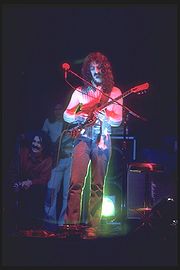 Industrial music drew from a broad range of predecessors. Alexei Monroe argues that Kraftwerk
were particularly significant in the development of industrial music, as the "first successful artists to incorporate representations of industrial sounds into nonacademic electronic music." Industrial music was created originally by using mechanical and electric machinery, and later advanced synthesizers, samplers and electronic percussion as the technology developed. Monroe also argues for Suicide
as an influential contemporary of the industrial musicians. Groups cited as inspirational by the founders of industrial music include The Velvet Underground
, Joy Division
, and Martin Denny
. Genesis P-Orridge
of Throbbing Gristle
had a cassette library including recordings by the Master Musicians of Jajouka, Kraftwerk, Charles Manson
, and William S. Burroughs
. P-Orridge also credited 1960s rock
such as The Doors
, Pearls Before Swine
, The Fugs
, Captain Beefheart
, and Frank Zappa
in a 1979 interview.
Chris Carter
also enjoyed and found inspiration in Pink Floyd
and Tangerine Dream
. Boyd Rice
was influenced by the music of Lesley Gore
and Abba
. Z'EV
cited Christopher Tree (Spontaneous Sound), John Coltrane
, Miles Davis
, Tim Buckley
, Jimi Hendrix
, and Captain Beefheart, among others together with Tibetan, Balinese, Javanese, Indian, and African music as influential in his artistic life. Cabaret Voltaire cited Roxy Music
as their initial forerunners, as well as Kraftwerk's Trans-Europe Express
. Cabaret Voltaire also recorded pieces reminiscent of musique concrète
and composers such as Morton Subotnick
. Nurse with Wound
cited a long list of obscure free improvisation
and Krautrock
as recommended listening. 23 Skidoo borrowed from Fela Kuti
and Miles Davis's On the Corner
. Many industrial groups, including Einstürzende Neubauten
, took inspiration from world music
.
Many of the initial industrial musicians preferred to cite artists or thinkers, rather than musicians, as their inspiration. Simon Reynolds
declares that "Being a Throbbing Gristle fan was like enrolling in a university course of cultural extremism." John Cage
was an initial inspiration for Throbbing Gristle. SPK appreciated Jean Dubuffet
, Marcel Duchamp
, Jean Baudrillard
, Michel Foucault
, Walter Benjamin
, Marshall McLuhan
, Friedrich Nietzsche
, and Gilles Deleuze
. Cabaret Voltaire took conceptual cues from Burroughs, J. G. Ballard
, and Tristan Tzara
. Whitehouse
and Nurse with Wound dedicated some of their work to the Marquis de Sade
; the latter also took impetus from the Comte de Lautréamont
.
Another influence on the Industrial aesthetic was Lou Reed's Metal Machine Music
. Pitchfork Music cites this album as "inspiring, in part, much of the contemporary avant-garde music scene—noise, in particular." The album consists entirely of guitar feedback, anticipating Industrial's use of non-musical sounds.
as the strapline for the record label Industrial Records
, founded by British art-provocateurs Throbbing Gristle
. The first wave of this music appeared with Throbbing Gristle, from London; Cabaret Voltaire, from Sheffield; and Boyd Rice (recording under the name NON), from the United States. Throbbing Gristle first performed in 1976, and began as the musical offshoot of the Kingston upon Hull
-based COUM Transmissions
. COUM was initially a psychedelic rock group, but began to describe their work as performance art
in order to obtain grants from the Arts Council of Great Britain
. COUM was composed of Genesis P-Orridge and Cosey Fanni Tutti. Beginning in 1972, COUM staged several performances inspired by Fluxus
and Viennese Actionism
. These included various acts of sexual and physical abjection. Peter Christopherson, an employee of commercial artists Hipgnosis
, joined the group in 1974, with Chris Carter joining the following year.
The group renamed itself Throbbing Gristle in September 1975, their name coming from a northern English slang word for an erection. The group's first public performance, in October 1976, was alongside an exhibit titled Prostitution, which included pornographic photos of Tutti as well as used tampons. Conservative politician Nicholas Fairbairn
declared that "public money is being wasted here to destroy the morality of our society" and blasted the group as "wreckers of civilization." The group ended in 1981, with P-Orridge declaring "the mission is terminated."
, Nocturnal Emissions
, Whitehouse
, Nurse with Wound
, and SPK
soon followed. Whitehouse intended to play "the most brutal and extreme music of all time", a style they eventually called power electronics
. An early collaborator with Whitehouse, Steve Stapleton, formed Nurse with Wound, who experimented with noise sculpture and sound collage. Clock DVA described their goal as borrowing equally from surrealism
automatism
and "nervous energy sort of funk stuff, body music that flinches you and makes you move." 23 Skidoo, like Clock DVA, merged industrial music with African-American dance music, but also performed a response to world music
. Performing at the first WOMAD Festival in 1982, the group likened themselves to Indonesian gamelan
. Swedish act Leather Nun
, were signed to Industrial Records in 1978, being the first non-TG/Cazazza act to have an IR-release. Their singles eventually received significant airplay in the United States on college radio.
 Across the Atlantic, similar experiments were taking place. In San Francisco, performance art
ist Monte Cazazza
began recording noise music
. Boyd Rice
released several albums of noise, with guitar drones and tape loops creating a cacophony of repetitive sounds. In Boston Sleep Chamber
and other artists from Inner-X-Musick
began experimenting with a mixture of powerful noise and early forms of EBM
. In Italy, work by Maurizio Bianchi
at the beginning of the 1980s also shared this aesthetic. In Germany, Einstürzende Neubauten
mixed metal percussion, guitars, and unconventional instruments (such as jackhammer
s and bones) in stage performances that often damaged the venues in which they played. Blixa Bargeld, inspired by Antonin Artaud
and an enthusiasm for amphetamines, also originated an art movement called Die Genialen Dilettanten. Bargeld is particularly well-known for his hissing scream. In January 1984, Einstürzende Neubauten performed a Concerto for Voice and Machinery at the Institute of Contemporary Arts
(the same site as COUM's Prostitution exhibition), drilling through the floor and eventually sparking a riot. This event received front page news coverage in England. Other groups who practiced a form of industrial "metal music" (that is, produced by the sounds of metal crashing against metal) include Test Dept
, Laibach
, and Die Krupps
, as well as Z'EV and SPK. Test Dept were largely inspired by Russian Futurism
and toured to support the UK miners' strike (1984–1985)
. Skinny Puppy embraced a variety of industrial forefathers and created a lurching, impalatable whole from many pieces. Swans
, from New York City, also practiced a metal music aesthetic, though reliant on standard rock instrumentation. Laibach, a Slovenia
n group who began while Yugoslavia
remained a single state, were very controversial for their iconographic borrowings from Stalinist
, Nazi, Titoist, Dada
, and Russian Futurist imagery, conflating Yugoslav patriotism with its German authoritarian adversary. Slavoj Žižek
has defended Laibach, arguing that they and their associated Neue Slowenische Kunst
art group practice an overidentification with the hidden perverse enjoyment undergirding authority that produces a subversive and liberatory effect.
Following the breakup of Throbbing Gristle, Genesis P-Orridge and Peter Christopherson founded Psychic TV
and signed to a major label. Their first album was much more accessible and melodic than the usual industrial style, and included hired work by trained musicians. Later work returned to the sound collage and noise elements of earlier industrial. They also borrowed from funk and disco
. P-Orridge also founded Thee Temple ov Psychick Youth
, a quasi-religious organization that produced video art
. Psychic TV's commercial aspirations were managed by Stevo of Some Bizzare records, who released many of the later industrial musicians, including Eistürzende Neubauten, Test Dept, and Cabaret Voltaire. Cabaret Voltaire had become friends with New Order
, and began to practice a similar form of danceable electropop. Peter Christopherson left Psychic TV in 1983 and formed Coil
with John Balance
. Coil made use of gongs and bullroarers in an attempt to conjur "Martian," "homosexual energy". David Tibet
, a friend of Coil's, formed Current 93
; both groups were inspired by amphetamines and LSD
. J. G. Thirlwell
, a co-producer with Coil, developed a version of black comedy
in industrial music, borrowing from lounge
as well as noise
and film music. In the early 1980s, the Chicago-based record label Wax Trax! and Canada's Nettwerk
helped to expand the industrial music genre into the more accessible electro-industrial
and industrial rock
genres.
website explains that the musicians wanted to re-invent rock music, and that their uncensored records were about their relationship with the world. They go on to say that they wanted their music to be an awakening for listeners so that they would begin to think for themselves and question the world around them. Industrial Records intended the term industrial to evoke the idea of music created for a new generation, with previous music being more agricultural: Genesis P-Orridge
stated that "there's an irony in the word 'industrial' because there's the music industry. And then there's the joke we often used to make in interviews about churning out our records like motorcars —that sense of industrial. And ... up till then the music had been kind of based on the blues
and slavery, and we thought it was time to update it to at least Victorian times—you know, the Industrial Revolution".
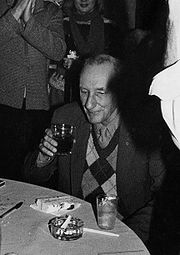 Early industrial music often featured tape editing, stark percussion and loops distorted to the point where they had degraded to harsh noise, such as the work of early industrial group Cabaret Voltaire
, which Journalist Simon Reynolds
described as characterized by "hissing high hats and squelchy snares of rhythm-generator." Chris Carter
of Throbbing Gristle
invented a device named the "Gristle-izer", played by Peter Christopherson
, which comprised a one-octave keyboard and a number of cassette machines triggering various pre-recorded sounds.
Traditional instruments were often played in nontraditional or highly modified ways. Reynolds described the Cabaret Voltaire members' individual contributions as "[Chris] Watson
's smears of synth slime; [Stephen] Mallinder
's dankly pulsing bass; and [Richard H.] Kirk
's spikes of shattered-glass guitar." Watson custom-built a fuzzbox for Kirk's guitar, producing a unique timbre
. Carter built speakers, effects units, and synthesizer modules, as well as modifying more conventional rock instrumentation, for Throbbing Gristle. Cosey Fanni Tutti
played guitar with a slide in order to produce glissandi
, or pounded the strings as if it were a percussion instrument. Throbbing Gristle also played at very high volume and produced ultra-high and sub-bass frequencies in an attempt to produce physical effects, naming this approach as "metabolic music."
Vocals were sporadic, and were as likely to be bubblegum pop
as they were to be abrasive polemic
s. Cabaret Voltaire's Stephen Mallinder's vocals were electronically treated.
The purpose of industrial music initially was to serve as a commentary on modern society by eschewing what artists saw as trite connections to the past. Throbbing Gristle opposed the elements of traditional rock music remaining in the punk rock
scene, declaring industrial to be "anti-music." Early industrial performances often involved taboo
-breaking, provocative elements, such as mutilation
, sado-masochistic elements and totalitarian imagery or symbolism, as well as forms of audience abuse, such as Throbbing Gristle's aiming high powered lights at the audience.
Industrial groups typically focus on transgressive
subject matter. In his introduction for the Industrial Culture Handbook
(1983), Jon Savage
considered some hallmarks of industrial music to be organizational autonomy, shock tactics, and the use of synthesizers and "anti-music." Furthermore, an interest in the investigation of "cult
s, wars, psychological techniques of persuasion, unusual murders (especially by children and psychopaths), forensic pathology
, venereology
, concentration camp behavior, the history of uniforms and insignia
" and Aleister Crowley
's magick was present in Throbbing Gristle's work, as well as in other industrial pioneers. William S. Burroughs
's recordings and writings were particularly influential on the scene, particularly his interest in the cut-up technique
and noise as a method of disrupting societal control. Many of the first industrial musicians were interested in, though not necessarily sympathetic with, fascism
. Throbbing Gristle's logo was based on the lightning symbol of the British Union of Fascists
, while the Industrial Records logo was a photo of Auschwitz.
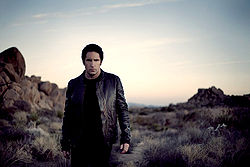
In the late 1980s, a number of additional styles developed from the already eclectic base of industrial music. These offshoots include fusions with noise music
, ambient music
, folk music
, post-punk
and electronic dance music
, as well as other mutations and developments. The scene has spread worldwide, and is particularly well-represented in North America, Europe, and Japan. Post-industrial subgenres include ambient industrial
, power electronics
, Japanoise
, neofolk
, electro-industrial
, electronic body music
, industrial hip hop, industrial rock
, industrial metal
, martial industrial and power noise
.
The best-selling offshoots of industrial music have been industrial rock and metal; Ministry
and Nine Inch Nails
both recorded platinum
-selling albums. Their success led to an increase in commercial success for some other industrial musicians; for example, the Nine Inch Nails remix album Further Down the Spiral
, which included contributions from Foetus
and Coil
, was certified gold in 1996. The mid-90s was a high point for industrial rock, when, in addition to bands that had been around since the 1980s, newer bands such as Gravity Kills
, whose self-titled debut sold almost half a million records, had some chart and radio success, and especially for industrial metal, with Marilyn Manson
releasing multiple platinum selling albums.
Experimental music
Experimental music refers, in the English-language literature, to a compositional tradition which arose in the mid-20th century, applied particularly in North America to music composed in such a way that its outcome is unforeseeable. Its most famous and influential exponent was John Cage...
that draws on transgressive and provocative themes. The term was coined in the mid-1970s with the founding of Industrial Records
Industrial Records
Industrial Records was a record label established in 1976 by art/music group Throbbing Gristle. The group, fronted by Genesis P-Orridge, Cosey Fanni Tutti, Chris Carter, and Peter Christopherson, were to release their experiments in non-entertainment sound and multimedia through the label; in...
by the band Throbbing Gristle
Throbbing Gristle
Throbbing Gristle were an English industrial, avant-garde music and visual arts group that evolved from the performance art group COUM Transmissions...
, and the creation of the slogan "industrial music for industrial people". In general, the style is harsh and challenging. Allmusic defines industrial as the "most abrasive and aggressive fusion of rock
Rock music
Rock music is a genre of popular music that developed during and after the 1960s, particularly in the United Kingdom and the United States. It has its roots in 1940s and 1950s rock and roll, itself heavily influenced by rhythm and blues and country music...
and electronic music"; "initially a blend of avant-garde electronics experiments (tape music, musique concrète
Musique concrète
Musique concrète is a form of electroacoustic music that utilises acousmatic sound as a compositional resource. The compositional material is not restricted to the inclusion of sounds derived from musical instruments or voices, nor to elements traditionally thought of as "musical"...
, white noise, synthesizers, sequencers, etc.) and punk
Punk rock
Punk rock is a rock music genre that developed between 1974 and 1976 in the United States, the United Kingdom, and Australia. Rooted in garage rock and other forms of what is now known as protopunk music, punk rock bands eschewed perceived excesses of mainstream 1970s rock...
provocation".
The first industrial artists experimented with noise and aesthetically controversial topics, musically and visually, such as fascism
Fascism
Fascism is a radical authoritarian nationalist political ideology. Fascists seek to rejuvenate their nation based on commitment to the national community as an organic entity, in which individuals are bound together in national identity by suprapersonal connections of ancestry, culture, and blood...
, serial killers and the occult. Their production was not limited to music, but included mail art
Mail art
Mail art is a worldwide cultural movement that began in the early 1960s and involves sending visual art through the international postal system. Mail Art is also known as Postal Art or Correspondence Art...
, performance art
Performance art
In art, performance art is a performance presented to an audience, traditionally interdisciplinary. Performance may be either scripted or unscripted, random or carefully orchestrated; spontaneous or otherwise carefully planned with or without audience participation. The performance can be live or...
, installation pieces
Installation art
Installation art describes an artistic genre of three-dimensional works that are often site-specific and designed to transform the perception of a space. Generally, the term is applied to interior spaces, whereas exterior interventions are often called Land art; however, the boundaries between...
and other art forms. Prominent industrial musicians include Throbbing Gristle
Throbbing Gristle
Throbbing Gristle were an English industrial, avant-garde music and visual arts group that evolved from the performance art group COUM Transmissions...
, SPK
SPK (band)
SPK, formed in 1978 in Sydney, Australia, was a 1980s and early 1990s industrial music and noise music group. One member, Graeme Revell, would later go on to become a successful Hollywood movie composer.-History:...
, Boyd Rice
Boyd Rice
Boyd Blake Rice is an American experimental sound/noise musician using the name of NON since the mid-1970s, archivist, actor, photographer, author, member of the Partridge Family Temple religious group, co-founder of the UNPOP art movement and current staff writer for Modern Drunkard...
, Cabaret Voltaire
Cabaret Voltaire (band)
Cabaret Voltaire were a British music group from Sheffield, England.Initially composed of Stephen Mallinder, Richard H. Kirk and Chris Watson, the group was named after the Cabaret Voltaire, a nightclub in Zürich, Switzerland that was a centre for the early Dada movement.Their earliest performances...
, and Z'EV
Z'EV
Z'EV is an American poet, percussionist, and sound artist. After studying various world music traditions at CalArts, he began creating his own percussion sounds out of industrial materials for a variety of record labels...
. The precursors that influenced the development of the genre included acts such as electronic
Electronic music
Electronic music is music that employs electronic musical instruments and electronic music technology in its production. In general a distinction can be made between sound produced using electromechanical means and that produced using electronic technology. Examples of electromechanical sound...
group Kraftwerk
Kraftwerk
Kraftwerk is an influential electronic music band from Düsseldorf, Germany. The group was formed by Ralf Hütter and Florian Schneider in 1970, and was fronted by them until Schneider's departure in 2008...
, experimental rock
Experimental rock
Experimental rock or avant-garde rock is a type of music based on rock which experiments with the basic elements of the genre, or which pushes the boundaries of common composition and performance technique....
acts Killing Joke
Killing Joke
Killing Joke are an English post-punk band formed in October 1978 in Notting Hill, London, England; other sources report the band formed in early 1979.Related news articles: Founding members Jaz Coleman and Geordie Walker have been the only constant members.A key influence on industrial rock,...
, The Velvet Underground
The Velvet Underground
The Velvet Underground was an American rock band formed in New York City. First active from 1964 to 1973, their best-known members were Lou Reed and John Cale, who both went on to find success as solo artists. Although experiencing little commercial success while together, the band is often cited...
and Frank Zappa
Frank Zappa
Frank Vincent Zappa was an American composer, singer-songwriter, electric guitarist, record producer and film director. In a career spanning more than 30 years, Zappa wrote rock, jazz, orchestral and musique concrète works. He also directed feature-length films and music videos, and designed...
, psychedelic rock
Psychedelic rock
Psychedelic rock is a style of rock music that is inspired or influenced by psychedelic culture and attempts to replicate and enhance the mind-altering experiences of psychedelic drugs. It emerged during the mid 1960s among folk rock and blues rock bands in United States and the United Kingdom...
artists such as Jimi Hendrix
Jimi Hendrix
James Marshall "Jimi" Hendrix was an American guitarist and singer-songwriter...
, composers such as John Cage
John Cage
John Milton Cage Jr. was an American composer, music theorist, writer, philosopher and artist. A pioneer of indeterminacy in music, electroacoustic music, and non-standard use of musical instruments, Cage was one of the leading figures of the post-war avant-garde...
, writers such as William S. Burroughs
William S. Burroughs
William Seward Burroughs II was an American novelist, poet, essayist and spoken word performer. A primary figure of the Beat Generation and a major postmodernist author, he is considered to be "one of the most politically trenchant, culturally influential, and innovative artists of the 20th...
, and philosophers such as Friedrich Nietzsche
Friedrich Nietzsche
Friedrich Wilhelm Nietzsche was a 19th-century German philosopher, poet, composer and classical philologist...
.
While the term was initially self-applied by a small coterie of groups and individuals associated with Industrial Records in the 1970s
1970s in music
For music from a year in the 1970s, go to 70 | 71 | 72 | 73 | 74 | 75 | 76 | 77 | 78 | 79This article includes an overview of the major events and trends in popular music in the 1970s....
, it broadened to include artists influenced by the original movement or using an "industrial" aesthetic. These artists expanded the genre by pushing it into noisier and more electronic
Electronic music
Electronic music is music that employs electronic musical instruments and electronic music technology in its production. In general a distinction can be made between sound produced using electromechanical means and that produced using electronic technology. Examples of electromechanical sound...
directions. Over time, its influence spread into and blended with styles including ambient
Ambient music
Ambient music is a musical genre that focuses largely on the timbral characteristics of sounds, often organized or performed to evoke an "atmospheric", "visual" or "unobtrusive" quality.- History :...
and rock
Rock music
Rock music is a genre of popular music that developed during and after the 1960s, particularly in the United Kingdom and the United States. It has its roots in 1940s and 1950s rock and roll, itself heavily influenced by rhythm and blues and country music...
, all of which now fall under the post-industrial music label. The most notable hybrid genres were industrial rock
Industrial rock
Industrial rock is a musical genre that fuses industrial music and specific rock subgenres. Industrial rock spawned industrial metal, with which it is often confused...
and industrial metal
Industrial metal
Industrial metal is a musical genre that draws from industrial music and many different types of heavy metal, using repeating metal guitar riffs, sampling, synthesizer or sequencer lines, and distorted vocals. Founding industrial metal acts include Ministry, Godflesh, and KMFDM.Industrial metal's...
, which include bands such as Nine Inch Nails
Nine Inch Nails
Nine Inch Nails is an American industrial rock project, founded in 1988 by Trent Reznor in Cleveland, Ohio. As its main producer, singer, songwriter, and instrumentalist, Reznor is the only official member of Nine Inch Nails and remains solely responsible for its direction...
, White Zombie
White Zombie
White Zombie was a Grammy Award-nominated American heavy metal band. Based in New York City, White Zombie was originally a noise rock band. White Zombie are better-known for their later heavy metal-oriented sound...
, and Ministry
Ministry (band)
Ministry is an American industrial metal band founded by lead singer Al Jourgensen in 1981. Originally a synthpop outfit, Ministry changed its style to industrial metal in the late 1980s. Ministry found mainstream success in the early 1990s with its most successful album Psalm 69: The Way to...
, both of which released platinum-selling albums in the 1990s
1990s in music
For music from a year in the 1990s, go to 90 | 91 | 92 | 93 | 94 | 95 | 96 | 97 | 98 | 99This article includes trends in popular music in the 1990s....
. Electro-industrial
Electro-industrial
Electro-industrial is a music genre drawing on EBM and post-industrial that developed in the mid-1980s. While EBM has a minimal structure and clean production, electro-industrial has a deep, complex and layered sound. The style was pioneered by Skinny Puppy, Front Line Assembly, and other groups,...
music is a more recent development. These three genres are often referred to as simply industrial.
Precursors
Kraftwerk
Kraftwerk is an influential electronic music band from Düsseldorf, Germany. The group was formed by Ralf Hütter and Florian Schneider in 1970, and was fronted by them until Schneider's departure in 2008...
were particularly significant in the development of industrial music, as the "first successful artists to incorporate representations of industrial sounds into nonacademic electronic music." Industrial music was created originally by using mechanical and electric machinery, and later advanced synthesizers, samplers and electronic percussion as the technology developed. Monroe also argues for Suicide
Suicide (band)
Suicide is an American electronic protopunk musical duo, intermittently active since 1970 and composed of vocalist Alan Vega and Martin Rev on synthesizers and drum machines. They are an early synthesizer/vocal musical duo....
as an influential contemporary of the industrial musicians. Groups cited as inspirational by the founders of industrial music include The Velvet Underground
The Velvet Underground
The Velvet Underground was an American rock band formed in New York City. First active from 1964 to 1973, their best-known members were Lou Reed and John Cale, who both went on to find success as solo artists. Although experiencing little commercial success while together, the band is often cited...
, Joy Division
Joy Division
Joy Division were an English rock band formed in 1976 in Salford, Greater Manchester. Originally named Warsaw, the band primarily consisted of Ian Curtis , Bernard Sumner , Peter Hook and Stephen Morris .Joy Division rapidly evolved from their initial punk rock influences...
, and Martin Denny
Martin Denny
Martin Denny was an American piano-player and composer best known as the "father of exotica." In a long career that saw him performing well into his 80s, he toured the world popularizing his brand of lounge music which included exotic percussion, imaginative rearrangements of popular songs, and...
. Genesis P-Orridge
Genesis P-Orridge
Genesis Breyer P-Orridge is an English singer-songwriter, musician, writer and artist. P-Orridge's early confrontational performance work in COUM Transmissions in the late 1960s and early 1970s along with the industrial band Throbbing Gristle, which dealt with subjects such as prostitution,...
of Throbbing Gristle
Throbbing Gristle
Throbbing Gristle were an English industrial, avant-garde music and visual arts group that evolved from the performance art group COUM Transmissions...
had a cassette library including recordings by the Master Musicians of Jajouka, Kraftwerk, Charles Manson
Charles Manson
Charles Milles Manson is an American criminal who led what became known as the Manson Family, a quasi-commune that arose in California in the late 1960s. He was found guilty of conspiracy to commit the Tate/LaBianca murders carried out by members of the group at his instruction...
, and William S. Burroughs
William S. Burroughs
William Seward Burroughs II was an American novelist, poet, essayist and spoken word performer. A primary figure of the Beat Generation and a major postmodernist author, he is considered to be "one of the most politically trenchant, culturally influential, and innovative artists of the 20th...
. P-Orridge also credited 1960s rock
Rock music
Rock music is a genre of popular music that developed during and after the 1960s, particularly in the United Kingdom and the United States. It has its roots in 1940s and 1950s rock and roll, itself heavily influenced by rhythm and blues and country music...
such as The Doors
The Doors
The Doors were an American rock band formed in 1965 in Los Angeles, California, with vocalist Jim Morrison, keyboardist Ray Manzarek, drummer John Densmore, and guitarist Robby Krieger...
, Pearls Before Swine
Pearls Before Swine (band)
Pearls Before Swine was an American psychedelic folk band formed by Tom Rapp in 1965 in Eau Gallie, now part of Melbourne, Florida. They released six albums between 1967 and 1971, before Rapp launched a solo career.-Early years, 1965-68:...
, The Fugs
The Fugs
The Fugs are a band formed in New York in late 1964 by poets Ed Sanders and Tuli Kupferberg, with Ken Weaver on drums. Soon afterward, they were joined by Peter Stampfel and Steve Weber of the Holy Modal Rounders...
, Captain Beefheart
Captain Beefheart
Don Van Vliet January 15, 1941 December 17, 2010) was an American musician, singer-songwriter and artist best known by the stage name Captain Beefheart. His musical work was conducted with a rotating ensemble of musicians called The Magic Band, active between 1965 and 1982, with whom he recorded 12...
, and Frank Zappa
Frank Zappa
Frank Vincent Zappa was an American composer, singer-songwriter, electric guitarist, record producer and film director. In a career spanning more than 30 years, Zappa wrote rock, jazz, orchestral and musique concrète works. He also directed feature-length films and music videos, and designed...
in a 1979 interview.
Chris Carter
Chris Carter (musician)
Chris Carter was born on January 28, 1953 in London, England and educated at the Friern Barnet Grammar School. He is best known for being a synthesist and member of Throbbing Gristle and Chris & Cosey...
also enjoyed and found inspiration in Pink Floyd
Pink Floyd
Pink Floyd were an English rock band that achieved worldwide success with their progressive and psychedelic rock music. Their work is marked by the use of philosophical lyrics, sonic experimentation, innovative album art, and elaborate live shows. Pink Floyd are one of the most commercially...
and Tangerine Dream
Tangerine Dream
Tangerine Dream is a German electronic music group founded in 1967 by Edgar Froese. The band has undergone many personnel changes over the years, with Froese being the only continuous member...
. Boyd Rice
Boyd Rice
Boyd Blake Rice is an American experimental sound/noise musician using the name of NON since the mid-1970s, archivist, actor, photographer, author, member of the Partridge Family Temple religious group, co-founder of the UNPOP art movement and current staff writer for Modern Drunkard...
was influenced by the music of Lesley Gore
Lesley Gore
Lesley Gore is an American singer. She is perhaps best known for her 1963 pop hit "It's My Party", which she recorded at the age of 16. Following the hit, she became one of the most recognized teen pop singers of the 1960s.- Biography :Gore was born in New York City, New York. She was raised in...
and Abba
Abba
ABBA is the name of a former Swedish pop music group.Abba may also refer to:* ABBA , a self-titled album by the Swedish pop music group ABBA* "Abba ", a song by Christian pop and rock artist, Rebecca St...
. Z'EV
Z'EV
Z'EV is an American poet, percussionist, and sound artist. After studying various world music traditions at CalArts, he began creating his own percussion sounds out of industrial materials for a variety of record labels...
cited Christopher Tree (Spontaneous Sound), John Coltrane
John Coltrane
John William Coltrane was an American jazz saxophonist and composer. Working in the bebop and hard bop idioms early in his career, Coltrane helped pioneer the use of modes in jazz and later was at the forefront of free jazz...
, Miles Davis
Miles Davis
Miles Dewey Davis III was an American jazz musician, trumpeter, bandleader, and composer. Widely considered one of the most influential musicians of the 20th century, Miles Davis was, with his musical groups, at the forefront of several major developments in jazz music, including bebop, cool jazz,...
, Tim Buckley
Tim Buckley
Timothy Charles Buckley III was an American vocalist, and musician. His music and style changed considerably through the years; his first album was mostly folk oriented, but over time his music incorporated jazz, psychedelia, funk, soul, avant-garde and an evolving "voice as instrument," sound...
, Jimi Hendrix
Jimi Hendrix
James Marshall "Jimi" Hendrix was an American guitarist and singer-songwriter...
, and Captain Beefheart, among others together with Tibetan, Balinese, Javanese, Indian, and African music as influential in his artistic life. Cabaret Voltaire cited Roxy Music
Roxy Music
Roxy Music was a British art rock band formed in 1971 by Bryan Ferry, who became the group's lead vocalist and chief songwriter, and bassist Graham Simpson. The other members are Phil Manzanera , Andy Mackay and Paul Thompson . Former members include Brian Eno , and Eddie Jobson...
as their initial forerunners, as well as Kraftwerk's Trans-Europe Express
Trans-Europe Express (album)
Trans-Europe Express is the sixth studio album by German electronic music band Kraftwerk. Recorded in mid-1976 in Düsseldorf, Germany, the album was released in March 1977 on Kling Klang Records. The album's themes were influenced by friends who suggested writing songs about the Trans-Europ...
. Cabaret Voltaire also recorded pieces reminiscent of musique concrète
Musique concrète
Musique concrète is a form of electroacoustic music that utilises acousmatic sound as a compositional resource. The compositional material is not restricted to the inclusion of sounds derived from musical instruments or voices, nor to elements traditionally thought of as "musical"...
and composers such as Morton Subotnick
Morton Subotnick
Morton Subotnick is an American composer of electronic music, best known for his Silver Apples of the Moon, the first electronic work commissioned by a record company, Nonesuch...
. Nurse with Wound
Nurse with Wound
Nurse with Wound is the main recording name for British musician Steven Stapleton. Nurse with Wound was originally a band, formed in 1978 by Stapleton, John Fothergill and Heman Pathak...
cited a long list of obscure free improvisation
Free improvisation
Free improvisation or free music is improvised music without any rules beyond the logic or inclination of the musician involved. The term can refer to both a technique and as a recognizable genre in its own right....
and Krautrock
Krautrock
Krautrock is a generic name for the experimental music scenes that appeared in Germany in the late 1960s and gained popularity throughout the 1970s, especially in Britain. The term is a result of the English-speaking world's reception of the music at the time and not a reference to any one...
as recommended listening. 23 Skidoo borrowed from Fela Kuti
Fela Kuti
Fela Anikulapo Kuti , or simply Fela , was a Nigerian multi-instrumentalist musician and composer, pioneer of Afrobeat music, human rights activist, and political maverick.-Biography:...
and Miles Davis's On the Corner
On the Corner
On the Corner is a studio album by jazz musician Miles Davis, recorded in June and July 1972 and released later that year on Columbia Records. It was scorned by critics at the time of its release and was one of Davis's worst-selling recordings...
. Many industrial groups, including Einstürzende Neubauten
Einstürzende Neubauten
Einstürzende Neubauten is a German post-industrial band, originally from West Berlin, formed in 1980. The group currently comprises Blixa Bargeld , Alexander Hacke , N.U...
, took inspiration from world music
World music
World music is a term with widely varying definitions, often encompassing music which is primarily identified as another genre. This is evidenced by world music definitions such as "all of the music in the world" or "somebody else's local music"...
.
Many of the initial industrial musicians preferred to cite artists or thinkers, rather than musicians, as their inspiration. Simon Reynolds
Simon Reynolds
Simon Reynolds is an English music critic who is well-known for his writings on electronic dance music and for coining the term "post-rock". Besides electronic dance music, Reynolds has written about a wide range of artists and musical genres, and has written books on post-punk and rock...
declares that "Being a Throbbing Gristle fan was like enrolling in a university course of cultural extremism." John Cage
John Cage
John Milton Cage Jr. was an American composer, music theorist, writer, philosopher and artist. A pioneer of indeterminacy in music, electroacoustic music, and non-standard use of musical instruments, Cage was one of the leading figures of the post-war avant-garde...
was an initial inspiration for Throbbing Gristle. SPK appreciated Jean Dubuffet
Jean Dubuffet
Jean Philippe Arthur Dubuffet was a French painter and sculptor. His idealistic approach to aesthetics embraced so called "low art" and eschewed traditional standards of beauty in favor of what he believed to be a more authentic and humanistic approach to image-making.-Life and work:Dubuffet was...
, Marcel Duchamp
Marcel Duchamp
Marcel Duchamp was a French artist whose work is most often associated with the Dadaist and Surrealist movements. Considered by some to be one of the most important artists of the 20th century, Duchamp's output influenced the development of post-World War I Western art...
, Jean Baudrillard
Jean Baudrillard
Jean Baudrillard was a French sociologist, philosopher, cultural theorist, political commentator, and photographer. His work is frequently associated with postmodernism and post-structuralism.-Life:...
, Michel Foucault
Michel Foucault
Michel Foucault , born Paul-Michel Foucault , was a French philosopher, social theorist and historian of ideas...
, Walter Benjamin
Walter Benjamin
Walter Bendix Schönflies Benjamin was a German-Jewish intellectual, who functioned variously as a literary critic, philosopher, sociologist, translator, radio broadcaster and essayist...
, Marshall McLuhan
Marshall McLuhan
Herbert Marshall McLuhan, CC was a Canadian educator, philosopher, and scholar—a professor of English literature, a literary critic, a rhetorician, and a communication theorist...
, Friedrich Nietzsche
Friedrich Nietzsche
Friedrich Wilhelm Nietzsche was a 19th-century German philosopher, poet, composer and classical philologist...
, and Gilles Deleuze
Gilles Deleuze
Gilles Deleuze , was a French philosopher who, from the early 1960s until his death, wrote influentially on philosophy, literature, film, and fine art. His most popular works were the two volumes of Capitalism and Schizophrenia: Anti-Oedipus and A Thousand Plateaus , both co-written with Félix...
. Cabaret Voltaire took conceptual cues from Burroughs, J. G. Ballard
J. G. Ballard
James Graham Ballard was an English novelist, short story writer, and prominent member of the New Wave movement in science fiction...
, and Tristan Tzara
Tristan Tzara
Tristan Tzara was a Romanian and French avant-garde poet, essayist and performance artist. Also active as a journalist, playwright, literary and art critic, composer and film director, he was known best for being one of the founders and central figures of the anti-establishment Dada movement...
. Whitehouse
Whitehouse (band)
Whitehouse are a pioneering English power electronics band formed in 1980, largely credited for the founding of the power electronics subgenre.-History and personnel:...
and Nurse with Wound dedicated some of their work to the Marquis de Sade
Marquis de Sade
Donatien Alphonse François, Marquis de Sade was a French aristocrat, revolutionary politician, philosopher, and writer famous for his libertine sexuality and lifestyle...
; the latter also took impetus from the Comte de Lautréamont
Comte de Lautréamont
Comte de Lautréamont was the pseudonym of Isidore Lucien Ducasse , an Uruguayan-born French poet....
.
Another influence on the Industrial aesthetic was Lou Reed's Metal Machine Music
Metal Machine Music
Metal Machine Music, subtitled *The Amine β Ring, is the fifth solo album by Lou Reed. It was originally released as a double album by RCA Records in 1975...
. Pitchfork Music cites this album as "inspiring, in part, much of the contemporary avant-garde music scene—noise, in particular." The album consists entirely of guitar feedback, anticipating Industrial's use of non-musical sounds.
Industrial Records
Industrial Music for Industrial People was originally coined by Monte CazazzaMonte Cazazza
Monte Cazazza is an American artist and composer best known for his seminal role in helping shape the early landscape of industrial music through recordings with the London-based Industrial Records in the mid-1970s.-Career:...
as the strapline for the record label Industrial Records
Industrial Records
Industrial Records was a record label established in 1976 by art/music group Throbbing Gristle. The group, fronted by Genesis P-Orridge, Cosey Fanni Tutti, Chris Carter, and Peter Christopherson, were to release their experiments in non-entertainment sound and multimedia through the label; in...
, founded by British art-provocateurs Throbbing Gristle
Throbbing Gristle
Throbbing Gristle were an English industrial, avant-garde music and visual arts group that evolved from the performance art group COUM Transmissions...
. The first wave of this music appeared with Throbbing Gristle, from London; Cabaret Voltaire, from Sheffield; and Boyd Rice (recording under the name NON), from the United States. Throbbing Gristle first performed in 1976, and began as the musical offshoot of the Kingston upon Hull
Kingston upon Hull
Kingston upon Hull , usually referred to as Hull, is a city and unitary authority area in the ceremonial county of the East Riding of Yorkshire, England. It stands on the River Hull at its junction with the Humber estuary, 25 miles inland from the North Sea. Hull has a resident population of...
-based COUM Transmissions
COUM Transmissions
COUM Transmissions was a performance art group interested in pushing boundaries, influenced by Dada and the Merry Pranksters.CT was a whimsical, eccentric as well as confrontational band and performance art group, from Hull, Yorkshire – a collective the constants of which were its...
. COUM was initially a psychedelic rock group, but began to describe their work as performance art
Performance art
In art, performance art is a performance presented to an audience, traditionally interdisciplinary. Performance may be either scripted or unscripted, random or carefully orchestrated; spontaneous or otherwise carefully planned with or without audience participation. The performance can be live or...
in order to obtain grants from the Arts Council of Great Britain
Arts Council of Great Britain
The Arts Council of Great Britain was a non-departmental public body dedicated to the promotion of the fine arts in Great Britain. The Arts Council of Great Britain was divided in 1994 to form the Arts Council of England , the Scottish Arts Council, and the Arts Council of Wales...
. COUM was composed of Genesis P-Orridge and Cosey Fanni Tutti. Beginning in 1972, COUM staged several performances inspired by Fluxus
Fluxus
Fluxus—a name taken from a Latin word meaning "to flow"—is an international network of artists, composers and designers noted for blending different artistic media and disciplines in the 1960s. They have been active in Neo-Dada noise music and visual art as well as literature, urban planning,...
and Viennese Actionism
Viennese Actionism
The term Viennese Actionism describes a short and violent movement in 20th century art that can be regarded as part of the many independent efforts of the 1960s to develop "action art" . Its main participants were Günter Brus, Otto Mühl, Hermann Nitsch and Rudolf Schwarzkogler. As "actionists",...
. These included various acts of sexual and physical abjection. Peter Christopherson, an employee of commercial artists Hipgnosis
Hipgnosis
Hipgnosis was a British art design group that specialized in creating cover art for the albums of rock musicians and bands, most notably Pink Floyd, T.Rex, The Pretty Things, UFO, 10cc, Bad Company, Led Zeppelin, AC/DC, Scorpions, Yes, The Alan Parsons Project, Genesis, Peter Gabriel, ELO and XTC...
, joined the group in 1974, with Chris Carter joining the following year.
The group renamed itself Throbbing Gristle in September 1975, their name coming from a northern English slang word for an erection. The group's first public performance, in October 1976, was alongside an exhibit titled Prostitution, which included pornographic photos of Tutti as well as used tampons. Conservative politician Nicholas Fairbairn
Nicholas Fairbairn
Sir Nicholas Hardwick Fairbairn, QC was a British politician.He was the Conservative Member of Parliament for Kinross and Western Perthshire, elected in 1974 and 1979, and Perth and Kinross, elected 1983, 1987, and 1992. He was Solicitor General for Scotland from 1979 to 1982...
declared that "public money is being wasted here to destroy the morality of our society" and blasted the group as "wreckers of civilization." The group ended in 1981, with P-Orridge declaring "the mission is terminated."
Expansion of the scene
The bands Clock DVAClock DVA
Clock DVA are an industrial music, post-punk and EBM group from Sheffield, England. The group was formed in 1978, with two members, Adolphus "Adi" Newton and Steven "Judd" Turner. Along with contemporaries Heaven 17, Clock DVA's name was inspired by the Russian-influenced Nadsat of Anthony Burgess'...
, Nocturnal Emissions
Nocturnal Emissions
Nocturnal Emissions is a sound art project that has released numerous records and CDs in music styles ranging from electro-acoustic, musique concrète, hybridised beats, sound collage, post-industrial music, ambient and noise music....
, Whitehouse
Whitehouse (band)
Whitehouse are a pioneering English power electronics band formed in 1980, largely credited for the founding of the power electronics subgenre.-History and personnel:...
, Nurse with Wound
Nurse with Wound
Nurse with Wound is the main recording name for British musician Steven Stapleton. Nurse with Wound was originally a band, formed in 1978 by Stapleton, John Fothergill and Heman Pathak...
, and SPK
SPK (band)
SPK, formed in 1978 in Sydney, Australia, was a 1980s and early 1990s industrial music and noise music group. One member, Graeme Revell, would later go on to become a successful Hollywood movie composer.-History:...
soon followed. Whitehouse intended to play "the most brutal and extreme music of all time", a style they eventually called power electronics
Power electronics (music)
Power electronics was originally coined by William Bennett as part of the sleevenotes to the Whitehouse album Psychopathia Sexualis, and is related to the early industrial records scene but later became more identified with noise music...
. An early collaborator with Whitehouse, Steve Stapleton, formed Nurse with Wound, who experimented with noise sculpture and sound collage. Clock DVA described their goal as borrowing equally from surrealism
Surrealism
Surrealism is a cultural movement that began in the early 1920s, and is best known for the visual artworks and writings of the group members....
automatism
Automatism
Automatism may refer to:*Automatic behavior, spontaneous verbal or motor behavior; an act performed unconsciously. Defendants have been found not guilty due to an automatism defense ....
and "nervous energy sort of funk stuff, body music that flinches you and makes you move." 23 Skidoo, like Clock DVA, merged industrial music with African-American dance music, but also performed a response to world music
World music
World music is a term with widely varying definitions, often encompassing music which is primarily identified as another genre. This is evidenced by world music definitions such as "all of the music in the world" or "somebody else's local music"...
. Performing at the first WOMAD Festival in 1982, the group likened themselves to Indonesian gamelan
Gamelan
A gamelan is a musical ensemble from Indonesia, typically from the islands of Bali or Java, featuring a variety of instruments such as metallophones, xylophones, drums and gongs; bamboo flutes, bowed and plucked strings. Vocalists may also be included....
. Swedish act Leather Nun
Leather Nun
The Leather Nun were a Swedish rock group. Careening from garage rock to goth and industrial, Leather Nun became cult heroes in their native land...
, were signed to Industrial Records in 1978, being the first non-TG/Cazazza act to have an IR-release. Their singles eventually received significant airplay in the United States on college radio.
Performance art
In art, performance art is a performance presented to an audience, traditionally interdisciplinary. Performance may be either scripted or unscripted, random or carefully orchestrated; spontaneous or otherwise carefully planned with or without audience participation. The performance can be live or...
ist Monte Cazazza
Monte Cazazza
Monte Cazazza is an American artist and composer best known for his seminal role in helping shape the early landscape of industrial music through recordings with the London-based Industrial Records in the mid-1970s.-Career:...
began recording noise music
Noise music
Noise music is a term used to describe varieties of avant-garde music and sound art that may use elements such as cacophony, dissonance, atonality, noise, indeterminacy, and repetition in their realization. Noise music can feature distortion, various types of acoustically or electronically...
. Boyd Rice
Boyd Rice
Boyd Blake Rice is an American experimental sound/noise musician using the name of NON since the mid-1970s, archivist, actor, photographer, author, member of the Partridge Family Temple religious group, co-founder of the UNPOP art movement and current staff writer for Modern Drunkard...
released several albums of noise, with guitar drones and tape loops creating a cacophony of repetitive sounds. In Boston Sleep Chamber
Sleep Chamber
Sleep Chamber is an American industrial band fronted by John Zewizz. The band is known for using S&M, bondage and Magick imagery on their art work, during their performances, and within their lyrics...
and other artists from Inner-X-Musick
Inner-X-Musick
Inner-X Musick was a record label/mail order catalog run by Boston musician John Zewizz. Over the years Inner-X Musick has changed its name 3 times and released well over a hundred releases...
began experimenting with a mixture of powerful noise and early forms of EBM
EBM
EBM may stand for:* Electron beam melting, a type of additive manufacturing for metal parts* Electronic body music, a music genre* "Epic Beard Man", see AC Transit Bus fight* Espresso Book Machine, a print-on-demand book printing press...
. In Italy, work by Maurizio Bianchi
Maurizio Bianchi
Maurizio Bianchi is an Italian pioneer of noise music, originating from Milan.-Biography:...
at the beginning of the 1980s also shared this aesthetic. In Germany, Einstürzende Neubauten
Einstürzende Neubauten
Einstürzende Neubauten is a German post-industrial band, originally from West Berlin, formed in 1980. The group currently comprises Blixa Bargeld , Alexander Hacke , N.U...
mixed metal percussion, guitars, and unconventional instruments (such as jackhammer
Jackhammer
A jackhammer is a pneumatic tool that combines a hammer directly with a chisel that was invented by Charles Brady King. Hand-held jackhammers are typically powered by compressed air, but some use electric motors. Larger jackhammers, such as rig mounted hammers used on construction machinery, are...
s and bones) in stage performances that often damaged the venues in which they played. Blixa Bargeld, inspired by Antonin Artaud
Antonin Artaud
Antoine Marie Joseph Artaud, more well-known as Antonin Artaud was a French playwright, poet, actor and theatre director...
and an enthusiasm for amphetamines, also originated an art movement called Die Genialen Dilettanten. Bargeld is particularly well-known for his hissing scream. In January 1984, Einstürzende Neubauten performed a Concerto for Voice and Machinery at the Institute of Contemporary Arts
Institute of Contemporary Arts
The Institute of Contemporary Arts is an artistic and cultural centre on The Mall in London, just off Trafalgar Square. It is located within Nash House, part of Carlton House Terrace, near the Duke of York Steps and Admiralty Arch...
(the same site as COUM's Prostitution exhibition), drilling through the floor and eventually sparking a riot. This event received front page news coverage in England. Other groups who practiced a form of industrial "metal music" (that is, produced by the sounds of metal crashing against metal) include Test Dept
Test Dept
Test Dept were an industrial music group from London, one of the most important and influential early industrial music acts. Their approach was marked by a strong commitment to radical socialist politics.-History:...
, Laibach
Laibach (band)
Laibach is a Slovenian avant-garde music group associated with industrial, martial, and neo-classical musical styles. Laibach formed June 1, 1980 in Trbovlje, Slovenia . Laibach represents the music wing of the Neue Slowenische Kunst art collective, of which it was a founding member in 1984...
, and Die Krupps
Die Krupps
Die Krupps is a German industrial rock/EBM band, formed in 1980 by Jürgen Engler and Bernward Malaka in Düsseldorf.-History:Their initial sound throughout the 1980s combined synthesizers with metallic percussion...
, as well as Z'EV and SPK. Test Dept were largely inspired by Russian Futurism
Russian Futurism
Russian Futurism is the term used to denote a group of Russian poets and artists who adopted the principles of Filippo Marinetti's "Manifesto of Futurism"...
and toured to support the UK miners' strike (1984–1985)
UK miners' strike (1984–1985)
The UK miners' strike was a major industrial action affecting the British coal industry. It was a defining moment in British industrial relations, and its defeat significantly weakened the British trades union movement...
. Skinny Puppy embraced a variety of industrial forefathers and created a lurching, impalatable whole from many pieces. Swans
Swans (band)
Swans are an influential American post-punk band initially active from 1982 to 1997, led by singer, songwriter and multi-instrumentalist Michael Gira. The band was one of the few groups to emerge from the early 1980s New York No Wave scene and stay intact into the next decade. Formed by Gira in...
, from New York City, also practiced a metal music aesthetic, though reliant on standard rock instrumentation. Laibach, a Slovenia
Slovenia
Slovenia , officially the Republic of Slovenia , is a country in Central and Southeastern Europe touching the Alps and bordering the Mediterranean. Slovenia borders Italy to the west, Croatia to the south and east, Hungary to the northeast, and Austria to the north, and also has a small portion of...
n group who began while Yugoslavia
Yugoslavia
Yugoslavia refers to three political entities that existed successively on the western part of the Balkans during most of the 20th century....
remained a single state, were very controversial for their iconographic borrowings from Stalinist
Stalinism
Stalinism refers to the ideology that Joseph Stalin conceived and implemented in the Soviet Union, and is generally considered a branch of Marxist–Leninist ideology but considered by some historians to be a significant deviation from this philosophy...
, Nazi, Titoist, Dada
Dada
Dada or Dadaism is a cultural movement that began in Zurich, Switzerland, during World War I and peaked from 1916 to 1922. The movement primarily involved visual arts, literature—poetry, art manifestoes, art theory—theatre, and graphic design, and concentrated its anti-war politics through a...
, and Russian Futurist imagery, conflating Yugoslav patriotism with its German authoritarian adversary. Slavoj Žižek
Slavoj Žižek
Slavoj Žižek is a Slovenian philosopher, critical theorist working in the traditions of Hegelianism, Marxism and Lacanian psychoanalysis. He has made contributions to political theory, film theory, and theoretical psychoanalysis....
has defended Laibach, arguing that they and their associated Neue Slowenische Kunst
Neue Slowenische Kunst
Neue Slowenische Kunst , aka NSK, is a controversial political art collective that announced itself in Slovenia in 1984, when Slovenia was part of Yugoslavia. NSK's name, being German, is compatible with a theme in NSK works: the complicated relationship Slovenes have had with Germans...
art group practice an overidentification with the hidden perverse enjoyment undergirding authority that produces a subversive and liberatory effect.
Following the breakup of Throbbing Gristle, Genesis P-Orridge and Peter Christopherson founded Psychic TV
Psychic TV
Psychic TV or PTV, is a video art and music group that primarily performs psychedelic, punk, electronic and experimental music...
and signed to a major label. Their first album was much more accessible and melodic than the usual industrial style, and included hired work by trained musicians. Later work returned to the sound collage and noise elements of earlier industrial. They also borrowed from funk and disco
Disco
Disco is a genre of dance music. Disco acts charted high during the mid-1970s, and the genre's popularity peaked during the late 1970s. It had its roots in clubs that catered to African American, gay, psychedelic, and other communities in New York City and Philadelphia during the late 1960s and...
. P-Orridge also founded Thee Temple ov Psychick Youth
Thee Temple ov Psychick Youth
Thee Temple ov Psychick Youth or TOPY was a fellowship founded in 1981 by members of Psychic TV, Coil, Current 93, and a number of other individuals...
, a quasi-religious organization that produced video art
Video art
Video art is a type of art which relies on moving pictures and comprises video and/or audio data. . Video art came into existence during the 1960s and 1970s, is still widely practiced and has given rise to the widespread use of video installations...
. Psychic TV's commercial aspirations were managed by Stevo of Some Bizzare records, who released many of the later industrial musicians, including Eistürzende Neubauten, Test Dept, and Cabaret Voltaire. Cabaret Voltaire had become friends with New Order
New Order
New Order are an English rock band formed in 1980 by Bernard Sumner , Peter Hook and Stephen Morris...
, and began to practice a similar form of danceable electropop. Peter Christopherson left Psychic TV in 1983 and formed Coil
Coil (band)
Coil were an English cross-genre, experimental music group formed in 1982 by John Balance—later credited as "Jhonn Balance"—and his partner Peter Christopherson, aka "Sleazy". The duo worked together on a series of releases before Balance chose the name Coil, which he claimed to be...
with John Balance
John Balance
John Balance , born in Mansfield, England, was the founder of the experimental music group Coil, along with his partner Peter Christopherson...
. Coil made use of gongs and bullroarers in an attempt to conjur "Martian," "homosexual energy". David Tibet
David Tibet
David Tibet is a British poet and artist who founded the music group Current 93, of which he is the only full-time member. He had earlier collaborated with Psychic TV and 23 Skidoo...
, a friend of Coil's, formed Current 93
Current 93
Current 93 is an eclectic British experimental music group, working since the early 1980s in folk-based musical forms. The band was founded in 1982 by David Tibet .-Background:Tibet has been the only constant in the group, though Steven Stapleton has appeared on...
; both groups were inspired by amphetamines and LSD
LSD
Lysergic acid diethylamide, abbreviated LSD or LSD-25, also known as lysergide and colloquially as acid, is a semisynthetic psychedelic drug of the ergoline family, well known for its psychological effects which can include altered thinking processes, closed and open eye visuals, synaesthesia, an...
. J. G. Thirlwell
J. G. Thirlwell
James George Thirlwell , aka Clint Ruin, aka Frank Want, aka Foetus, is an Australian vocalist, composer and record producer...
, a co-producer with Coil, developed a version of black comedy
Black comedy
A black comedy, or dark comedy, is a comic work that employs black humor or gallows humor. The definition of black humor is problematic; it has been argued that it corresponds to the earlier concept of gallows humor; and that, as humor has been defined since Freud as a comedic act that anesthetizes...
in industrial music, borrowing from lounge
Lounge music
Lounge music is a retrospective description of music popular in the 1950s and 1960s. It is a type of mood music meant to evoke in the listeners the feeling of being in a place — a jungle, an island paradise, outer space, et cetera — other than where they are listening to it...
as well as noise
Noise music
Noise music is a term used to describe varieties of avant-garde music and sound art that may use elements such as cacophony, dissonance, atonality, noise, indeterminacy, and repetition in their realization. Noise music can feature distortion, various types of acoustically or electronically...
and film music. In the early 1980s, the Chicago-based record label Wax Trax! and Canada's Nettwerk
Nettwerk
The Nettwerk Music Group is the umbrella company for Nettwerk Management, Nettwerk Records, Nettwerk One Publishing, Nutone Records, and Artwerk. With over 150 employees, the Vancouver-based company has offices in New York, Los Angeles, London, Boston, Nashville, and Hamburg...
helped to expand the industrial music genre into the more accessible electro-industrial
Electro-industrial
Electro-industrial is a music genre drawing on EBM and post-industrial that developed in the mid-1980s. While EBM has a minimal structure and clean production, electro-industrial has a deep, complex and layered sound. The style was pioneered by Skinny Puppy, Front Line Assembly, and other groups,...
and industrial rock
Industrial rock
Industrial rock is a musical genre that fuses industrial music and specific rock subgenres. Industrial rock spawned industrial metal, with which it is often confused...
genres.
Characteristics
The birth of industrial music was a response to "an age [in which] the access and control of information were becoming the primary tools of power." At its birth, the genre of industrial music was different from any other music, and its use of technology and disturbing lyrics and themes to tear apart preconceptions about the necessary rules of musical form supports the suggestion that industrial music is modernist music. The artists themselves made these goals explicit, even drawing connections to social changes they wished to argue for through their music. The Industrial RecordsIndustrial Records
Industrial Records was a record label established in 1976 by art/music group Throbbing Gristle. The group, fronted by Genesis P-Orridge, Cosey Fanni Tutti, Chris Carter, and Peter Christopherson, were to release their experiments in non-entertainment sound and multimedia through the label; in...
website explains that the musicians wanted to re-invent rock music, and that their uncensored records were about their relationship with the world. They go on to say that they wanted their music to be an awakening for listeners so that they would begin to think for themselves and question the world around them. Industrial Records intended the term industrial to evoke the idea of music created for a new generation, with previous music being more agricultural: Genesis P-Orridge
Genesis P-Orridge
Genesis Breyer P-Orridge is an English singer-songwriter, musician, writer and artist. P-Orridge's early confrontational performance work in COUM Transmissions in the late 1960s and early 1970s along with the industrial band Throbbing Gristle, which dealt with subjects such as prostitution,...
stated that "there's an irony in the word 'industrial' because there's the music industry. And then there's the joke we often used to make in interviews about churning out our records like motorcars —that sense of industrial. And ... up till then the music had been kind of based on the blues
Blues
Blues is the name given to both a musical form and a music genre that originated in African-American communities of primarily the "Deep South" of the United States at the end of the 19th century from spirituals, work songs, field hollers, shouts and chants, and rhymed simple narrative ballads...
and slavery, and we thought it was time to update it to at least Victorian times—you know, the Industrial Revolution".
Cabaret Voltaire (band)
Cabaret Voltaire were a British music group from Sheffield, England.Initially composed of Stephen Mallinder, Richard H. Kirk and Chris Watson, the group was named after the Cabaret Voltaire, a nightclub in Zürich, Switzerland that was a centre for the early Dada movement.Their earliest performances...
, which Journalist Simon Reynolds
Simon Reynolds
Simon Reynolds is an English music critic who is well-known for his writings on electronic dance music and for coining the term "post-rock". Besides electronic dance music, Reynolds has written about a wide range of artists and musical genres, and has written books on post-punk and rock...
described as characterized by "hissing high hats and squelchy snares of rhythm-generator." Chris Carter
Chris Carter (musician)
Chris Carter was born on January 28, 1953 in London, England and educated at the Friern Barnet Grammar School. He is best known for being a synthesist and member of Throbbing Gristle and Chris & Cosey...
of Throbbing Gristle
Throbbing Gristle
Throbbing Gristle were an English industrial, avant-garde music and visual arts group that evolved from the performance art group COUM Transmissions...
invented a device named the "Gristle-izer", played by Peter Christopherson
Peter Christopherson
Peter Martin Christopherson, a.k.a. Sleazy was a musician, video director and designer, and former member of the influential British design agency Hipgnosis....
, which comprised a one-octave keyboard and a number of cassette machines triggering various pre-recorded sounds.
Traditional instruments were often played in nontraditional or highly modified ways. Reynolds described the Cabaret Voltaire members' individual contributions as "[Chris] Watson
Chris Watson (musician)
Christopher Richard Watson is a Sheffield-born musician and sound recordist specialising in natural history. He was a founding member of the musical group Cabaret Voltaire, and Watson's work as a wildlife sound recordist has covered television documentaries and experimental musical collaborations.-...
's smears of synth slime; [Stephen] Mallinder
Stephen Mallinder
Stephen William Mallinder was a founding member of Cabaret Voltaire, Sassi and Loco and the Ku-Ling Bros. While in Cabaret Voltaire he contributed lead vocals, bass and occasional keyboards.-Biography:...
's dankly pulsing bass; and [Richard H.] Kirk
Richard H. Kirk
Richard H. Kirk is an English musician specialising in electronic music since the 1970s.-Background:Richard H. Kirk first came to prominence in the 1970s as a member of the seminal industrial band Cabaret Voltaire...
's spikes of shattered-glass guitar." Watson custom-built a fuzzbox for Kirk's guitar, producing a unique timbre
Timbre
In music, timbre is the quality of a musical note or sound or tone that distinguishes different types of sound production, such as voices and musical instruments, such as string instruments, wind instruments, and percussion instruments. The physical characteristics of sound that determine the...
. Carter built speakers, effects units, and synthesizer modules, as well as modifying more conventional rock instrumentation, for Throbbing Gristle. Cosey Fanni Tutti
Cosey Fanni Tutti
Cosey Fanni Tutti is best known as a performance artist and for her time in Throbbing Gristle and Chris & Cosey....
played guitar with a slide in order to produce glissandi
Glissando
In music, a glissando is a glide from one pitch to another. It is an Italianized musical term derived from the French glisser, to glide. In some contexts it is distinguished from the continuous portamento...
, or pounded the strings as if it were a percussion instrument. Throbbing Gristle also played at very high volume and produced ultra-high and sub-bass frequencies in an attempt to produce physical effects, naming this approach as "metabolic music."
Vocals were sporadic, and were as likely to be bubblegum pop
Bubblegum pop
Bubblegum pop is a genre of pop music with an upbeat sound contrived and marketed to appeal to pre-teens and teenagers, produced in an assembly-line process, driven by producers, often using unknown singers.Bubblegum's classic period ran from 1967 to 1972...
as they were to be abrasive polemic
Polemic
A polemic is a variety of arguments or controversies made against one opinion, doctrine, or person. Other variations of argument are debate and discussion...
s. Cabaret Voltaire's Stephen Mallinder's vocals were electronically treated.
The purpose of industrial music initially was to serve as a commentary on modern society by eschewing what artists saw as trite connections to the past. Throbbing Gristle opposed the elements of traditional rock music remaining in the punk rock
Punk rock
Punk rock is a rock music genre that developed between 1974 and 1976 in the United States, the United Kingdom, and Australia. Rooted in garage rock and other forms of what is now known as protopunk music, punk rock bands eschewed perceived excesses of mainstream 1970s rock...
scene, declaring industrial to be "anti-music." Early industrial performances often involved taboo
Taboo
A taboo is a strong social prohibition relating to any area of human activity or social custom that is sacred and or forbidden based on moral judgment, religious beliefs and or scientific consensus. Breaking the taboo is usually considered objectionable or abhorrent by society...
-breaking, provocative elements, such as mutilation
Mutilation
Mutilation or maiming is an act of physical injury that degrades the appearance or function of any living body, usually without causing death.- Usage :...
, sado-masochistic elements and totalitarian imagery or symbolism, as well as forms of audience abuse, such as Throbbing Gristle's aiming high powered lights at the audience.
Industrial groups typically focus on transgressive
Transgressive art
Transgressive art refers to art forms that aim to transgress; i.e. to outrage or violate basic mores and sensibilities. The term transgressive was first used by American filmmaker Nick Zedd and his Cinema of Transgression in 1985...
subject matter. In his introduction for the Industrial Culture Handbook
Industrial Culture Handbook
RE/Search No. 6/7: Industrial Culture Handbook from RE/Search Publications, 1983 is a book about industrial music and performance art edited by V. Vale and Andrea Juno. It features interviews and articles with Throbbing Gristle, Mark Pauline, Cabaret Voltaire, NON, Monte Cazazza, Sordide...
(1983), Jon Savage
Jon Savage
Jon Savage , real name Jonathon Sage, is a Cambridge-educated writer, broadcaster and music journalist, best known for his award winning history of the Sex Pistols and punk music, England's Dreaming, published in 1991.-Career:...
considered some hallmarks of industrial music to be organizational autonomy, shock tactics, and the use of synthesizers and "anti-music." Furthermore, an interest in the investigation of "cult
Cult
The word cult in current popular usage usually refers to a group whose beliefs or practices are considered abnormal or bizarre. The word originally denoted a system of ritual practices...
s, wars, psychological techniques of persuasion, unusual murders (especially by children and psychopaths), forensic pathology
Forensic pathology
Forensic pathology is a branch of pathology concerned with determining the cause of death by examination of a corpse. The autopsy is performed by the pathologist at the request of a coroner or medical examiner usually during the investigation of criminal law cases and civil law cases in some...
, venereology
Venereology
Venereology is a studio album by the Japanese noise musician Merzbow. It was the first of five Merzbow albums released by the American heavy metal label Relapse Records, under their Release Entertainment imprint, and as such was responsible for bringing Merzbow's work to a much wider audience in...
, concentration camp behavior, the history of uniforms and insignia
Insignia
Insignia or insigne pl -nia or -nias : a symbol or token of personal power, status or office, or of an official body of government or jurisdiction...
" and Aleister Crowley
Aleister Crowley
Aleister Crowley , born Edward Alexander Crowley, and also known as both Frater Perdurabo and The Great Beast, was an influential English occultist, astrologer, mystic and ceremonial magician, responsible for founding the religious philosophy of Thelema. He was also successful in various other...
's magick was present in Throbbing Gristle's work, as well as in other industrial pioneers. William S. Burroughs
William S. Burroughs
William Seward Burroughs II was an American novelist, poet, essayist and spoken word performer. A primary figure of the Beat Generation and a major postmodernist author, he is considered to be "one of the most politically trenchant, culturally influential, and innovative artists of the 20th...
's recordings and writings were particularly influential on the scene, particularly his interest in the cut-up technique
Cut-up technique
The cut-up technique is an aleatory literary technique in which a text is cut up and rearranged to create a new text. Most commonly, cut-ups are used to offer a non-linear alternative to traditional reading and writing....
and noise as a method of disrupting societal control. Many of the first industrial musicians were interested in, though not necessarily sympathetic with, fascism
Fascism
Fascism is a radical authoritarian nationalist political ideology. Fascists seek to rejuvenate their nation based on commitment to the national community as an organic entity, in which individuals are bound together in national identity by suprapersonal connections of ancestry, culture, and blood...
. Throbbing Gristle's logo was based on the lightning symbol of the British Union of Fascists
British Union of Fascists
The British Union was a political party in the United Kingdom formed in 1932 by Sir Oswald Mosley as the British Union of Fascists, in 1936 it changed its name to the British Union of Fascists and National Socialists and then in 1937 to simply the British Union...
, while the Industrial Records logo was a photo of Auschwitz.
Post-industrial
In the late 1980s, a number of additional styles developed from the already eclectic base of industrial music. These offshoots include fusions with noise music
Noise music
Noise music is a term used to describe varieties of avant-garde music and sound art that may use elements such as cacophony, dissonance, atonality, noise, indeterminacy, and repetition in their realization. Noise music can feature distortion, various types of acoustically or electronically...
, ambient music
Ambient music
Ambient music is a musical genre that focuses largely on the timbral characteristics of sounds, often organized or performed to evoke an "atmospheric", "visual" or "unobtrusive" quality.- History :...
, folk music
Folk music
Folk music is an English term encompassing both traditional folk music and contemporary folk music. The term originated in the 19th century. Traditional folk music has been defined in several ways: as music transmitted by mouth, as music of the lower classes, and as music with unknown composers....
, post-punk
Post-punk
Post-punk is a rock music movement with its roots in the late 1970s, following on the heels of the initial punk rock explosion of the mid-1970s. The genre retains its roots in the punk movement but is more introverted, complex and experimental...
and electronic dance music
Electronic dance music
Electronic dance music is electronic music produced primarily for the purposes of use within a nightclub setting, or in an environment that is centered upon dance-based entertainment...
, as well as other mutations and developments. The scene has spread worldwide, and is particularly well-represented in North America, Europe, and Japan. Post-industrial subgenres include ambient industrial
Dark ambient
Dark ambient is a subgenre of ambient music that features foreboding, ominous, or discordant overtones. Although it had its roots in the 1970s, Dark ambient emerged in the 1980s and 1990s with the introduction of newer, smaller, and more affordable Effects units, synthesizer and sampling technology...
, power electronics
Power electronics (music)
Power electronics was originally coined by William Bennett as part of the sleevenotes to the Whitehouse album Psychopathia Sexualis, and is related to the early industrial records scene but later became more identified with noise music...
, Japanoise
Japanoise
is a portmanteau of the words "Japanese" and "noise": a term applied to the diverse, prolific, and influential noise music scene of Japan. Primarily popular and active in the 1980s and 1990s but still alive today, the Japanoise scene is defined by a remarkable sense of musical freedom...
, neofolk
Neofolk
Neofolk is a form of folk music-inspired experimental music that emerged from post-industrial music circles. Neofolk can either be solely acoustic folk music or a blend of acoustic folk instrumentation aided by varieties of accompanying sounds such as pianos, strings and elements of industrial...
, electro-industrial
Electro-industrial
Electro-industrial is a music genre drawing on EBM and post-industrial that developed in the mid-1980s. While EBM has a minimal structure and clean production, electro-industrial has a deep, complex and layered sound. The style was pioneered by Skinny Puppy, Front Line Assembly, and other groups,...
, electronic body music
Electronic body music
Electronic body music or industrial dance is a music genre that combines elements of industrial music and electronic dance music...
, industrial hip hop, industrial rock
Industrial rock
Industrial rock is a musical genre that fuses industrial music and specific rock subgenres. Industrial rock spawned industrial metal, with which it is often confused...
, industrial metal
Industrial metal
Industrial metal is a musical genre that draws from industrial music and many different types of heavy metal, using repeating metal guitar riffs, sampling, synthesizer or sequencer lines, and distorted vocals. Founding industrial metal acts include Ministry, Godflesh, and KMFDM.Industrial metal's...
, martial industrial and power noise
Power noise
Power noise is a fusion genre among noise music and various styles of electronic dance music. It should not be confused with "power electronics", which lacks rhythmic elements and is closer to harsh noise...
.
The best-selling offshoots of industrial music have been industrial rock and metal; Ministry
Ministry (band)
Ministry is an American industrial metal band founded by lead singer Al Jourgensen in 1981. Originally a synthpop outfit, Ministry changed its style to industrial metal in the late 1980s. Ministry found mainstream success in the early 1990s with its most successful album Psalm 69: The Way to...
and Nine Inch Nails
Nine Inch Nails
Nine Inch Nails is an American industrial rock project, founded in 1988 by Trent Reznor in Cleveland, Ohio. As its main producer, singer, songwriter, and instrumentalist, Reznor is the only official member of Nine Inch Nails and remains solely responsible for its direction...
both recorded platinum
Music recording sales certification
Music recording sales certification is a system of certifying that a music recording has shipped or sold a certain number of copies, where the threshold quantity varies by type and by nation or territory .Almost all countries follow variations of the RIAA certification categories,...
-selling albums. Their success led to an increase in commercial success for some other industrial musicians; for example, the Nine Inch Nails remix album Further Down the Spiral
Further Down the Spiral
Further Down the Spiral is a remix album by Nine Inch Nails, and was released on June 1, 1995. It is the tenth official Nine Inch Nails release and is the companion remix disc to The Downward Spiral...
, which included contributions from Foetus
Foetus (band)
Foetus is the primary musical outlet of industrial music pioneer J. G. Thirlwell. Until 1995 the band underwent various name changes, all including the word foetus. Monikers adopted at different times include Foetus Under Glass, You've Got Foetus On Your Breath and Scraping Foetus Off The Wheel...
and Coil
Coil (band)
Coil were an English cross-genre, experimental music group formed in 1982 by John Balance—later credited as "Jhonn Balance"—and his partner Peter Christopherson, aka "Sleazy". The duo worked together on a series of releases before Balance chose the name Coil, which he claimed to be...
, was certified gold in 1996. The mid-90s was a high point for industrial rock, when, in addition to bands that had been around since the 1980s, newer bands such as Gravity Kills
Gravity Kills
Gravity Kills is an American industrial rock band from Jefferson City, Missouri. Their music was described by one critic as "a blending of eerie industrial rock with a pop-infused melodic chorus and a bit of hard-core head banging."...
, whose self-titled debut sold almost half a million records, had some chart and radio success, and especially for industrial metal, with Marilyn Manson
Marilyn Manson
Marilyn Manson may refer to:* Marilyn Manson , an American rock musician* Marilyn Manson , the American rock band led by the singer of the same name...
releasing multiple platinum selling albums.
See also
- Cassette cultureCassette cultureCassette culture, or the cassette underground , refers to the practices surrounding amateur production and distribution of recorded music that emerged in the late 1970s via home-made audio cassettes...
- List of industrial music bands
- RivetheadRivetheadRivethead can mean:* The head of a rivet* Formerly, since the 1940s, a nickname for American automotive assembly line workers* A fashion style, as described here----...
External links
- "20 best: industrial & EBM." Fact magazine article.
- The rec.music.industrial USENET group FAQ file
- IndustrialnatioN Magazine
- Industrial music magazine
- [ allmusic entry on Industrial music]