


Football War

Encyclopedia
The Football War also known as the Soccer War or 100 hour War, was a four-day war
fought by El Salvador
and Honduras
in 1969. It was caused by political conflicts between Hondurans and Salvadorans, namely issues concerning immigration from El Salvador
to Honduras
. These existing tensions between the two countries coincided with the inflamed rioting during the second North American
qualifying round of the 1970 FIFA World Cup
. On 14 July 1969, the Salvadoran army launched an attack against Honduras. The Organization of American States
negotiated a cease-fire which took effect on 20 July, with the Salvadoran troops withdrawn in early August.
Eleven years later the two nations signed a peace treaty
on 30 October 1980 to put the border dispute over the Gulf of Fonseca
and five sections of land boundary before the International Court of Justice
. In 1992, the Court awarded most of the disputed territory to Honduras
, and in 1998, Honduras
and El Salvador
signed a border demarcation treaty to implement the terms of the ICJ decree. The total land area given to Honduras from El Salvador after the court's ruling was around 374.5 km2. As of the beginning of 2006 demarcation had not yet been completed, but Honduras
and El Salvador
maintain normal diplomatic and trade relations.
and immigration and demographic problems in El Salvador
. Honduras is more than five times the size of neighbouring El Salvador, but in 1969 El Salvador had a population that was more than double that of Honduras. At the beginning of the twentieth century, Salvadorans had begun migrating to Honduras in large numbers. By 1969, more than 300,000 Salvadorans were living in Honduras. These Salvadorans made up twenty percent of the peasant population of Honduras.
In Honduras, as in much of Central America, a large majority of the land was owned by large landowners or big corporations. The United Fruit Company
owned ten percent of the land, making it hard for the average landowners to compete. In 1966, the United Fruit Company banded together with many other large companies to create la Federación Nacional de Agricultores y Ganaderos de Honduras (FENAGH; the National Federation of Farmers and Livestock-Farmers of Honduras). FENAGH was anti-campesino
as well as anti-Salvadoran. This group put pressure on the Honduran president, General Lopez Arellano
, to protect the property rights of wealthy landowners.
In 1962, Honduras successfully enacted a new land reform law. Fully enforced by 1967, this law gave the central government and municipalities much land occupied illegally by Salvadoran immigrants and redistributed this land to native-born Honduran peoples as specified by the Land Reform Law. The land was taken from both immigrant farmers and squatters regardless of their claims to ownership or immigration status. This also created problems for Salvadorans and Hondurans who were intermarried with each other. Thousands of Salvadorans were displaced by this law and were forced to emigrate once again. Salvadoran newspapers then heightened the already stressed relationship between the two countries by showing the many supposed atrocities being committed against Salvadorans in Honduras. This general rise in tensions ultimately led to a military conflict
Thousands of Salvadoran labourers were expelled from Honduras, including both temporary harvest workers and longer-term settlers. This general rise in tensions ultimately led to a military conflict.
and El Salvador
met in the second North American
qualifying round for the 1970 FIFA World Cup
. There was fighting between fans at the first game in the Honduran capital of Tegucigalpa
on 8 June 1969, which Honduras won 1–0. Immediately following the match an eighteen-year old Salvadoran girl Amelia Bolaños shot herself in the heart, and was subsequently regarded as a martyr in El Salvador, with her funeral being televised and the El Salvador president and national football team walking behind her coffin. The second game, on 15 June 1969 in the Salvadoran capital of San Salvador
, which was won 3–0 by El Salvador, was followed by even greater violence. A play-off match took place in Mexico City
on 26 June 1969. El Salvador won 3–2 after extra time.
On the same day, 26 June 1969, El Salvador dissolved all ties with Honduras, stating that "the government of Honduras has not taken any effective measures to punish these crimes which constitute genocide, nor has it given assurances of indemnification or reparations for the damages caused to Salvadorans". This led to border clashes between the two nations.
economic sanctions against El Salvador and the dispatch of OAS observers to Honduras to oversee the security of Salvadorans remaining in that country. The actual war had lasted just over four days, but it would take more than a decade to arrive at a final peace settlement.
 El Salvador, which had refused to withdraw its troops from the occupied territory in Honduras, finally withdrew its troops on 2 August 1969. On that date, Honduras guaranteed Salvadoran President Fidel Sanchez Hernandez that the Honduran government would provide adequate safety for the Salvadorans still living in Honduras. He had also asked that reparations be paid to the Salvadoran citizens as well, but was never accepted by Hondurans. There were also heavy pressures from the OAS and the debilitating repercussions that would take place if El Salvador continued to resist a withdraw of their troops from Honduras.
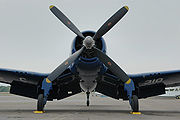
The war in the Central American skies over El Salvador and Honduras, is often cited as the last occasion on which piston-engined fighters fought each other, both sides deploying former World War II
and Korean War American aircraft. Cavalier F-51D Mustangs, F4U-1, -4 and -5 Corsairs, T-28A Trojans, AT-6C Texans
and even C-47 Skytrains converted into bombers saw action. At the outset of the Football War, El Salvador enlisted the assistance of several American pilots with P-51 and F4U experience. Bob Love, a Korean war ace, Chuck Lyford, Ben Hall and Lynn Garrison are believed to have flown combat missions but it has never been confirmed. Lynn Garrison had purchased F4U-7 133693 from the French MAAG office when retired from French naval service in 1964. It was registered N693M and was later destroyed in a 1987 crash in San Diego, California.[86]
El Salvador suffered about 900 troops and civilians killed during the war. This wasn't the first time that the military of El Salvador saw combat, 1811 Independence Movement The First Shout of Independence was the first of a series of revolts in Central America in El Salvador against Spanish colonialism and dependency on the Captaincy General of Guatemala. Later El Salvador also fought against Guatemala three times once in 1822 and another in 1851 and again in 1885, they won three times.
Honduras lost 100 combat troops, and over 2,000 civilians were killed during the four days, since most of the war was fought on Honduran soil. Thousands more had been ultimately made homeless. Trade between Honduras and El Salvador had been greatly disrupted, and the international border had been officially closed. This damaged the economies of these nations tremendously and threatened the Central American Common Market (CACM).
War
War is a state of organized, armed, and often prolonged conflict carried on between states, nations, or other parties typified by extreme aggression, social disruption, and usually high mortality. War should be understood as an actual, intentional and widespread armed conflict between political...
fought by El Salvador
El Salvador
El Salvador or simply Salvador is the smallest and the most densely populated country in Central America. The country's capital city and largest city is San Salvador; Santa Ana and San Miguel are also important cultural and commercial centers in the country and in all of Central America...
and Honduras
Honduras
Honduras is a republic in Central America. It was previously known as Spanish Honduras to differentiate it from British Honduras, which became the modern-day state of Belize...
in 1969. It was caused by political conflicts between Hondurans and Salvadorans, namely issues concerning immigration from El Salvador
El Salvador
El Salvador or simply Salvador is the smallest and the most densely populated country in Central America. The country's capital city and largest city is San Salvador; Santa Ana and San Miguel are also important cultural and commercial centers in the country and in all of Central America...
to Honduras
Honduras
Honduras is a republic in Central America. It was previously known as Spanish Honduras to differentiate it from British Honduras, which became the modern-day state of Belize...
. These existing tensions between the two countries coincided with the inflamed rioting during the second North American
CONCACAF
The Confederation of North, Central American and Caribbean Association Football is the continental governing body for association football in North America, Central America and the Caribbean...
qualifying round of the 1970 FIFA World Cup
1970 FIFA World Cup
The 1970 FIFA World Cup, the ninth staging of the World Cup, was held in Mexico, from 31 May to 21 June. The 1970 tournament was the first World Cup hosted in North America, and the first held outside South America and Europe. In a match-up of two-time World Cup champions, the final was won by...
. On 14 July 1969, the Salvadoran army launched an attack against Honduras. The Organization of American States
Organization of American States
The Organization of American States is a regional international organization, headquartered in Washington, D.C., United States...
negotiated a cease-fire which took effect on 20 July, with the Salvadoran troops withdrawn in early August.
Eleven years later the two nations signed a peace treaty
Peace treaty
A peace treaty is an agreement between two or more hostile parties, usually countries or governments, that formally ends a state of war between the parties...
on 30 October 1980 to put the border dispute over the Gulf of Fonseca
Gulf of Fonseca
The Gulf of Fonseca , part of the Pacific Ocean, is a gulf in Central America, bordering El Salvador, Honduras and Nicaragua.-History:Fonseca Bay was discovered in 1522 by Gil Gonzalez de Avila, and named by him after his patron, Archbishop Juan Fonseca, the implacable enemy of Columbus.In 1849, E. G...
and five sections of land boundary before the International Court of Justice
International Court of Justice
The International Court of Justice is the primary judicial organ of the United Nations. It is based in the Peace Palace in The Hague, Netherlands...
. In 1992, the Court awarded most of the disputed territory to Honduras
Honduras
Honduras is a republic in Central America. It was previously known as Spanish Honduras to differentiate it from British Honduras, which became the modern-day state of Belize...
, and in 1998, Honduras
Honduras
Honduras is a republic in Central America. It was previously known as Spanish Honduras to differentiate it from British Honduras, which became the modern-day state of Belize...
and El Salvador
El Salvador
El Salvador or simply Salvador is the smallest and the most densely populated country in Central America. The country's capital city and largest city is San Salvador; Santa Ana and San Miguel are also important cultural and commercial centers in the country and in all of Central America...
signed a border demarcation treaty to implement the terms of the ICJ decree. The total land area given to Honduras from El Salvador after the court's ruling was around 374.5 km2. As of the beginning of 2006 demarcation had not yet been completed, but Honduras
Honduras
Honduras is a republic in Central America. It was previously known as Spanish Honduras to differentiate it from British Honduras, which became the modern-day state of Belize...
and El Salvador
El Salvador
El Salvador or simply Salvador is the smallest and the most densely populated country in Central America. The country's capital city and largest city is San Salvador; Santa Ana and San Miguel are also important cultural and commercial centers in the country and in all of Central America...
maintain normal diplomatic and trade relations.
Context
Although the nickname "Football War" implies that the conflict was due to a football game, the causes of the war goes deeper. The roots of the war were issues over land reform in HondurasHonduras
Honduras is a republic in Central America. It was previously known as Spanish Honduras to differentiate it from British Honduras, which became the modern-day state of Belize...
and immigration and demographic problems in El Salvador
El Salvador
El Salvador or simply Salvador is the smallest and the most densely populated country in Central America. The country's capital city and largest city is San Salvador; Santa Ana and San Miguel are also important cultural and commercial centers in the country and in all of Central America...
. Honduras is more than five times the size of neighbouring El Salvador, but in 1969 El Salvador had a population that was more than double that of Honduras. At the beginning of the twentieth century, Salvadorans had begun migrating to Honduras in large numbers. By 1969, more than 300,000 Salvadorans were living in Honduras. These Salvadorans made up twenty percent of the peasant population of Honduras.
In Honduras, as in much of Central America, a large majority of the land was owned by large landowners or big corporations. The United Fruit Company
United Fruit Company
It had a deep and long-lasting impact on the economic and political development of several Latin American countries. Critics often accused it of exploitative neocolonialism and described it as the archetypal example of the influence of a multinational corporation on the internal politics of the...
owned ten percent of the land, making it hard for the average landowners to compete. In 1966, the United Fruit Company banded together with many other large companies to create la Federación Nacional de Agricultores y Ganaderos de Honduras (FENAGH; the National Federation of Farmers and Livestock-Farmers of Honduras). FENAGH was anti-campesino
Peasant
A peasant is an agricultural worker who generally tend to be poor and homeless-Etymology:The word is derived from 15th century French païsant meaning one from the pays, or countryside, ultimately from the Latin pagus, or outlying administrative district.- Position in society :Peasants typically...
as well as anti-Salvadoran. This group put pressure on the Honduran president, General Lopez Arellano
Oswaldo López Arellano
Oswaldo Enrique López Arellano was a two-time President of Honduras, first from 1963 to 1971 and again from 1972 to 1975. He gained power both times via military force....
, to protect the property rights of wealthy landowners.
In 1962, Honduras successfully enacted a new land reform law. Fully enforced by 1967, this law gave the central government and municipalities much land occupied illegally by Salvadoran immigrants and redistributed this land to native-born Honduran peoples as specified by the Land Reform Law. The land was taken from both immigrant farmers and squatters regardless of their claims to ownership or immigration status. This also created problems for Salvadorans and Hondurans who were intermarried with each other. Thousands of Salvadorans were displaced by this law and were forced to emigrate once again. Salvadoran newspapers then heightened the already stressed relationship between the two countries by showing the many supposed atrocities being committed against Salvadorans in Honduras. This general rise in tensions ultimately led to a military conflict
Thousands of Salvadoran labourers were expelled from Honduras, including both temporary harvest workers and longer-term settlers. This general rise in tensions ultimately led to a military conflict.
Buildup
HondurasHonduras national football team
The Honduran national football team, nicknamed Los Catrachos, La Bicolor or La H, is the national team of Honduras and is controlled by the Federación Nacional Autónoma de Fútbol de Honduras...
and El Salvador
El Salvador national football team
El Salvador's national football team represents El Salvador in international football and is sanctioned by the Federación Salvadoreña de Fútbol . In 1899, Santa Ana and San Salvador met for the first hosted football game in El Salvador...
met in the second North American
CONCACAF
The Confederation of North, Central American and Caribbean Association Football is the continental governing body for association football in North America, Central America and the Caribbean...
qualifying round for the 1970 FIFA World Cup
1970 FIFA World Cup
The 1970 FIFA World Cup, the ninth staging of the World Cup, was held in Mexico, from 31 May to 21 June. The 1970 tournament was the first World Cup hosted in North America, and the first held outside South America and Europe. In a match-up of two-time World Cup champions, the final was won by...
. There was fighting between fans at the first game in the Honduran capital of Tegucigalpa
Tegucigalpa
Tegucigalpa , and commonly referred as Tegus , is the capital of Honduras and seat of government of the Republic, along with its twin sister Comayagüela. Founded on September 29, 1578 by the Spanish, it became the country's capital on October 30, 1880 under President Marco Aurelio Soto...
on 8 June 1969, which Honduras won 1–0. Immediately following the match an eighteen-year old Salvadoran girl Amelia Bolaños shot herself in the heart, and was subsequently regarded as a martyr in El Salvador, with her funeral being televised and the El Salvador president and national football team walking behind her coffin. The second game, on 15 June 1969 in the Salvadoran capital of San Salvador
San Salvador
The city of San Salvador the capital and largest city of El Salvador, which has been designated a Gamma World City. Its complete name is La Ciudad de Gran San Salvador...
, which was won 3–0 by El Salvador, was followed by even greater violence. A play-off match took place in Mexico City
Mexico City
Mexico City is the Federal District , capital of Mexico and seat of the federal powers of the Mexican Union. It is a federal entity within Mexico which is not part of any one of the 31 Mexican states but belongs to the federation as a whole...
on 26 June 1969. El Salvador won 3–2 after extra time.
On the same day, 26 June 1969, El Salvador dissolved all ties with Honduras, stating that "the government of Honduras has not taken any effective measures to punish these crimes which constitute genocide, nor has it given assurances of indemnification or reparations for the damages caused to Salvadorans". This led to border clashes between the two nations.
Cease fire
The day after the fighting had begun, the OAS met in an urgent session and called for an immediate cease-fire and a withdrawal of El Salvador's forces from Honduras. El Salvador resisted the pressures from the OAS for several days, demanding that Honduras first agree to pay reparations for the attacks on Salvadoran citizens and guarantee the safety of those Salvadorans remaining in Honduras. A cease-fire was arranged on the night of 18 July; it took full effect only on 20 July. El Salvador continued until 29 July to resist pressures to withdraw its troops. Then a combination of pressures led El Salvador to agree to a withdrawal in the first days of August. Those persuasive pressures included the possibility of OASOrganization of American States
The Organization of American States is a regional international organization, headquartered in Washington, D.C., United States...
economic sanctions against El Salvador and the dispatch of OAS observers to Honduras to oversee the security of Salvadorans remaining in that country. The actual war had lasted just over four days, but it would take more than a decade to arrive at a final peace settlement.
Withdrawal
The war in the Central American skies over El Salvador and Honduras, is often cited as the last occasion on which piston-engined fighters fought each other, both sides deploying former World War II
World War II
World War II, or the Second World War , was a global conflict lasting from 1939 to 1945, involving most of the world's nations—including all of the great powers—eventually forming two opposing military alliances: the Allies and the Axis...
and Korean War American aircraft. Cavalier F-51D Mustangs, F4U-1, -4 and -5 Corsairs, T-28A Trojans, AT-6C Texans
North American T-6 Texan
The North American Aviation T-6 Texan was a single-engine advanced trainer aircraft used to train pilots of the United States Army Air Forces, United States Navy, Royal Air Force and other air forces of the British Commonwealth during World War II and into the 1950s...
and even C-47 Skytrains converted into bombers saw action. At the outset of the Football War, El Salvador enlisted the assistance of several American pilots with P-51 and F4U experience. Bob Love, a Korean war ace, Chuck Lyford, Ben Hall and Lynn Garrison are believed to have flown combat missions but it has never been confirmed. Lynn Garrison had purchased F4U-7 133693 from the French MAAG office when retired from French naval service in 1964. It was registered N693M and was later destroyed in a 1987 crash in San Diego, California.[86]
Consequences
In the end, both sides of the Football War suffered extensive casualties. Some 300,000 Salvadorans were displaced due to the battle. Many had been forcibly exiled or had fled from war-torn Honduras, only to enter an El Salvador in which the government was not welcoming. Most of these refugees were forced to provide for themselves with very little assistance. Over the next few years, more Salvadorans returned to their native land, where they were surrounded by overpopulation and extreme poverty.El Salvador suffered about 900 troops and civilians killed during the war. This wasn't the first time that the military of El Salvador saw combat, 1811 Independence Movement The First Shout of Independence was the first of a series of revolts in Central America in El Salvador against Spanish colonialism and dependency on the Captaincy General of Guatemala. Later El Salvador also fought against Guatemala three times once in 1822 and another in 1851 and again in 1885, they won three times.
Honduras lost 100 combat troops, and over 2,000 civilians were killed during the four days, since most of the war was fought on Honduran soil. Thousands more had been ultimately made homeless. Trade between Honduras and El Salvador had been greatly disrupted, and the international border had been officially closed. This damaged the economies of these nations tremendously and threatened the Central American Common Market (CACM).
- The war led to a 22-year suspension of the Central American Common Market, a regional integration project that had been set up by the United States largely as a means of counteracting the effects of the Cuban RevolutionCuban RevolutionThe Cuban Revolution was an armed revolt by Fidel Castro's 26th of July Movement against the regime of Cuban dictator Fulgencio Batista between 1953 and 1959. Batista was finally ousted on 1 January 1959, and was replaced by a revolutionary government led by Castro...
. - The political power of the military in both countries was reinforced. In the Salvadoran legislative elections that followed, candidates of the governing National Conciliation Party (Partido de Conciliación Nacional, PCN), were largely drawn from the ranks of the military. Having apologized for their role in the conflict, they proved very successful in elections both at the national and local levels. However, these elections were considered fraudulent, especially on the part of the military dictatorship that virtually ruled El Salvador.
- The social situation in El Salvador worsened, as the government proved unable to satisfy the economic needs of its citizens deported from Honduras. The resulting social unrest was one of the causes of the El Salvador Civil WarEl Salvador Civil WarThe Salvadoran Civil War was a conflict in El Salvador between the military-led government of El Salvador and the Farabundo Martí National Liberation Front , a coalition or umbrella organization of five left-wing militias. Significant tensions and violence had already existed, before the civil...
, which followed 10 years later.
External links
- Salvador-Honduras War, 1969
- Soccer War 1969
- El Salvador vs Honduras, 1969: The 100-Hour War
- Land, Island and Maritime Frontier Dispute (El Salvador/Honduras: Nicaragua intervening), International Court of Justice case registry
- Application for Revision of the Judgment of 11 September 1992 in the Case concerning the Land, Island and Maritime Frontier Dispute (El Salvador/Honduras: Nicaragua intervening) (El Salvador v. Honduras), International Court of Justice case registry