


Endowment (Latter Day Saints)

Encyclopedia
In the theology of the Latter Day Saint movement
, an endowment refers to a gift of "power from on high", typically associated with Latter Day Saint temples. The purpose and meaning of the endowment varied during the life of movement founder Joseph Smith, Jr. The term has referred to many such gifts of heavenly power, including the confirmation ritual, the institution of the High Priesthood in 1831, events and rituals occurring in the Kirtland Temple
in the mid-1830s, and an elaborate ritual performed in the Nauvoo Temple
in the 1840s.
The term endowment has the most significance to adherents of the Latter Day Saint branch known as Mormonism
, including most prominently The Church of Jesus Christ of Latter-day Saints (LDS Church), which practice a form of the Nauvoo endowment
. The Nauvoo endowment ceremony, introduced by Joseph Smith, Jr. and codified by Mormon leader Brigham Young
, consisted of symbolic acts and covenants designed to prepare participants to officiate in priesthood ordinances, and to give them the key words and tokens they need to pass by angels guarding the way to heaven. In the LDS Church's modern practices, the endowment ceremony directs new participants to take a number of solemn oaths or covenants such as an oath of consecration to the LDS Church. Also in the LDS Church's modern practices, completing the endowment ceremony is a prerequisite to both full-time missionary
service and temple marriage
.
.png) Although it was not generally referred to as an endowment at the time, in retrospect, Latter Day Saints have viewed the confirmation, first performed on April 6, 1830, and attendant outpourings of the spiritual gifts, as an early type of endowment. The term derives from the Authorized King James Version, referring to the spiritual gifts given the disciples of Jesus
Although it was not generally referred to as an endowment at the time, in retrospect, Latter Day Saints have viewed the confirmation, first performed on April 6, 1830, and attendant outpourings of the spiritual gifts, as an early type of endowment. The term derives from the Authorized King James Version, referring to the spiritual gifts given the disciples of Jesus
on the day of Pentecost
, in which they were "endowed with power from on high," Subsequent to these early confirmations, Mormons exhibited what they viewed as spiritual gifts such as having visions, prophecy
, gift of healing, gift of knowledge, gift of tongues. Unlike the other Latter Day Saint endowments, confirmation has continued to coexist with later endowments as a separate Latter Day Saint ritual. In the Community of Christ
, the second-largest branch of Mormonism formerly known as the RLDS Church, the "endowment of the Holy Spirit" such as occurred on the day of Pentecost
is the only recognized endowment.
, was in early 1831, some days after Smith was joined in his ministry by Sidney Rigdon
, a newly-converted Campbellite minister from Ohio
. Rigdon's congregation also was converted to Smith's Church of Christ. Rigdon had apparently disagreed with the Campbellites in that he believed in a Pentecostal endowment of power beyond the abiding presence of the Holy Spirit
endowed upon confirmation. While Rigdon believed the teachings of the early Mormon missionaries who converted him, he thought the missionaries were lacking in heavenly power.
In January 1831, Smith issued a revelation where he wrote that after Mormons relocated to Kirtland
, Ohio
, they would "be endowed with power from on high" and "sent forth". Smith reiterated this in February 1831, stating that the "elders of the church Smith reaffirmed that the faithful members would "be taught from on high" and "endowed with power", and that God would call the elders of the church together in Kirtland in a General Conference and "pour out [his] Spirit upon them in that day they assemble themselves together". In a revelation given to an individual, Smith assured the man that "at the conference meeting he [would] be ordained unto power from on high".
This General Conference of the church was held on June 3 to June 6, 1831, in which a number of men were ordained to the "High" or "Melchizedek" Priesthood for the first time, which ordination "consisted [of] the endowment--it being a new order--and bestowed authority". Later that year, an early convert who had left the church claimed that many of the Saints "have been ordained to the High Priesthood, or the order of Melchizedek; and profess to be endowed with the same power as the ancient apostles were".
,
Although the events at this school were never specifically called an "endowment", it has been classified as such by scholars including Gregory A. Prince because of similarities with the 1831 and 1836 endowments, and the fact that part of the school's stated intention was so that the church's elders could be "endowed with power from on high. At the beginning, the school was "accompanied by a pentecostal outpouring, including speaking in tongues, prophesying and 'many manifestations of the holy spirit'". It included a new Latter Day Saint ordinance of foot washing.
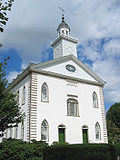 A year and a half after the June 1831 endowment, Smith said he received a revelation in December 1832 to prepare to build a "house of God" or a temple. A revelation soon followed identifying the location of the temple in Kirtland, Ohio, and another revelation affirmed that in this building the Lord "design[ed] to endow those [he] had chosen with power on high". In a later revelation the Lord indicated that the elders were to be "endowed with power from on high; for [he had] prepared a greater endowment" than the 1831 endowment. Upon the completion of the Kirtland Temple
after three years of construction (1833–1836), the elders of the church gathered for this second promised endowment in early 1836.
The Kirtland Temple endowment ceremonies were patterned after Old Testament
sacerdotal
practices. They consisted of preparatory washings, administered in private homes, in which men washed and purified their bodies with water and alcohol. After this, they gathered in the temple where they were anointed with specially consecrated oil and with blessings pronounced upon their heads by Smith and other church leaders. The men's anointings were sealed with uplifted hands. Following these ceremonies many men reported participating in extraordinary spiritual experiences, such as seeing visions, speaking prophecies or receiving revelations. The culmination of the endowment was a solemn assembly, held on March 30, in which the men partook of the Sacrament and then washed each other's feet. Those present spent the rest of the day and night prophesying, speaking in tongues, testifying and exhorting each other. To those present it was a "day of Pentecost
." Indeed, Smith told the solemn assembly that they could now "go forth and build up the kingdom of God".
On April 3, 1836, Joseph Smith and Oliver Cowdery
recounted the appearance of Jesus
to them in the Kirtland Temple, and his acceptance of the building as his house. This was followed by the appearance of three Old Testament prophet
s: Moses
, Elias
, and Elijah
, each of whom bestowed additional temple-related authority on the two men.
Initially, Smith intended the Kirtland endowment to become an annual affair; he administered the same ceremonies again in 1837. However, because of persecution the Mormons largely abandoned Kirtland and its temple in 1838–1839 and moved west. As Smith's theology expanded during the 1840s, the Kirtland Endowment was superseded by the Nauvoo Endowment. Mormons looked back upon the Kirtland Temple rituals with the authority bestowed by the three prophets as preparatory to the greater endowment revealed at Nauvoo. This was certainly the view of Brigham Young, who said:
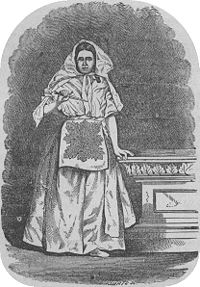
On May 3, 1842 Joseph Smith, Jr. prepared the second floor of his Red Brick Store
, in Nauvoo
, Illinois
, to represent "the interior of a temple as circumstances would permit". The next day, May 4, he introduced the Nauvoo Endowment ceremony to nine associates: Associate President
and Patriarch to the Church
, Smith's brother Hyrum
; first counselor in the First Presidency
, William Law
; three of the Twelve Apostles
, Brigham Young
, Heber C. Kimball
and Willard Richards
; Nauvoo stake president, William Marks
; two bishops
, Newel K. Whitney
and George Miller
, and a close friend, Judge James Adams
of Springfield
, Illinois
.
Throughout 1843 and 1844 Smith continued to initiate other men, as well as women, into the endowment ceremony. By the time of his death on June 27, 1844 more than 50 persons had been admitted into the Anointed Quorum
, the name by which this group called themselves.
The Nauvoo endowment consists of two phases: (1) an initiation, and (2) an instructional and testing phase. The initiation consists of a washing and anointing
, culminating in the clothing of the patron in a "Garment of the Holy Priesthood
", which is thereafter worn as an undergarment.
The instructional and testing phase of the endowment consists of a scripted reenactment of Adam and Eve's
experience in the Garden of Eden
(performed by live actors—called officiators; in the mid-20th century certain portions were adapted to a film presentation). The instruction is punctuated with oaths, symbolic gestures, and a prayer circle
around an altar, and at the end of instruction, the initiate's knowledge of symbolic gestures and key-words is tested at a "veil."
Latter Day Saint movement
The Latter Day Saint movement is a group of independent churches tracing their origin to a Christian primitivist movement founded by Joseph Smith, Jr. in the late 1820s. Collectively, these churches have over 14 million members...
, an endowment refers to a gift of "power from on high", typically associated with Latter Day Saint temples. The purpose and meaning of the endowment varied during the life of movement founder Joseph Smith, Jr. The term has referred to many such gifts of heavenly power, including the confirmation ritual, the institution of the High Priesthood in 1831, events and rituals occurring in the Kirtland Temple
Kirtland Temple
The Kirtland Temple is a National Historic Landmark in Kirtland, Ohio, USA, on the eastern edge of the Cleveland metropolitan area. Owned and operated by the Community of Christ, formerly the Reorganized Church of Jesus Christ of Latter Day Saints , the house of worship was the first temple to be...
in the mid-1830s, and an elaborate ritual performed in the Nauvoo Temple
Nauvoo Temple
The Nauvoo Temple was the second temple constructed by the Church of Jesus Christ of Latter Day Saints, commonly known as the Mormons. The church's first temple was completed in Kirtland, Ohio, United States in 1836. When the main body of the church was forced out of Nauvoo, Illinois in the...
in the 1840s.
The term endowment has the most significance to adherents of the Latter Day Saint branch known as Mormonism
Mormonism
Mormonism is the religion practiced by Mormons, and is the predominant religious tradition of the Latter Day Saint movement. This movement was founded by Joseph Smith, Jr. beginning in the 1820s as a form of Christian primitivism. During the 1830s and 1840s, Mormonism gradually distinguished itself...
, including most prominently The Church of Jesus Christ of Latter-day Saints (LDS Church), which practice a form of the Nauvoo endowment
Endowment (Mormonism)
In Mormonism, the endowment is an ordinance designed to prepare participants to become kings, queens, priests, and priestesses in the afterlife. As part of the ceremony, participants take part in a scripted reenactment of the Biblical creation and fall of Adam and Eve...
. The Nauvoo endowment ceremony, introduced by Joseph Smith, Jr. and codified by Mormon leader Brigham Young
Brigham Young
Brigham Young was an American leader in the Latter Day Saint movement and a settler of the Western United States. He was the President of The Church of Jesus Christ of Latter-day Saints from 1847 until his death in 1877, he founded Salt Lake City, and he served as the first governor of the Utah...
, consisted of symbolic acts and covenants designed to prepare participants to officiate in priesthood ordinances, and to give them the key words and tokens they need to pass by angels guarding the way to heaven. In the LDS Church's modern practices, the endowment ceremony directs new participants to take a number of solemn oaths or covenants such as an oath of consecration to the LDS Church. Also in the LDS Church's modern practices, completing the endowment ceremony is a prerequisite to both full-time missionary
Missionary (LDS Church)
The Church of Jesus Christ of Latter-day Saints is one of the most active modern practitioners of missionary work, with over 52,000 full-time missionaries worldwide, as of the end of 2010...
service and temple marriage
Celestial marriage
Celestial marriage is a doctrine of Mormonism, particularly The Church of Jesus Christ of Latter-day Saints and branches of Mormon fundamentalism.Within Mormonism, celestial marriage is an ordinance associated with a covenant that always...
.
1830 Endowments: Endowment of the Holy Spirit and Confirmation
Jesus
Jesus of Nazareth , commonly referred to as Jesus Christ or simply as Jesus or Christ, is the central figure of Christianity...
on the day of Pentecost
Pentecost
Pentecost is a prominent feast in the calendar of Ancient Israel celebrating the giving of the Law on Sinai, and also later in the Christian liturgical year commemorating the descent of the Holy Spirit upon the disciples of Christ after the Resurrection of Jesus...
, in which they were "endowed with power from on high," Subsequent to these early confirmations, Mormons exhibited what they viewed as spiritual gifts such as having visions, prophecy
Prophecy
Prophecy is a process in which one or more messages that have been communicated to a prophet are then communicated to others. Such messages typically involve divine inspiration, interpretation, or revelation of conditioned events to come as well as testimonies or repeated revelations that the...
, gift of healing, gift of knowledge, gift of tongues. Unlike the other Latter Day Saint endowments, confirmation has continued to coexist with later endowments as a separate Latter Day Saint ritual. In the Community of Christ
Community of Christ
The Community of Christ, known from 1872 to 2001 as the Reorganized Church of Jesus Christ of Latter Day Saints , is an American-based international Christian church established in April 1830 that claims as its mission "to proclaim Jesus Christ and promote communities of joy, hope, love, and peace"...
, the second-largest branch of Mormonism formerly known as the RLDS Church, the "endowment of the Holy Spirit" such as occurred on the day of Pentecost
Pentecost
Pentecost is a prominent feast in the calendar of Ancient Israel celebrating the giving of the Law on Sinai, and also later in the Christian liturgical year commemorating the descent of the Holy Spirit upon the disciples of Christ after the Resurrection of Jesus...
is the only recognized endowment.
1831 Kirtland Endowment: Conferral of the High Priesthood
The first reference to an endowment by Joseph Smith, Jr., the founder of the Latter Day Saint movementLatter Day Saint movement
The Latter Day Saint movement is a group of independent churches tracing their origin to a Christian primitivist movement founded by Joseph Smith, Jr. in the late 1820s. Collectively, these churches have over 14 million members...
, was in early 1831, some days after Smith was joined in his ministry by Sidney Rigdon
Sidney Rigdon
Sidney Rigdon was a leader during the early history of the Latter Day Saint movement.-Baptist background:...
, a newly-converted Campbellite minister from Ohio
Ohio
Ohio is a Midwestern state in the United States. The 34th largest state by area in the U.S.,it is the 7th‑most populous with over 11.5 million residents, containing several major American cities and seven metropolitan areas with populations of 500,000 or more.The state's capital is Columbus...
. Rigdon's congregation also was converted to Smith's Church of Christ. Rigdon had apparently disagreed with the Campbellites in that he believed in a Pentecostal endowment of power beyond the abiding presence of the Holy Spirit
Holy Spirit
Holy Spirit is a term introduced in English translations of the Hebrew Bible, but understood differently in the main Abrahamic religions.While the general concept of a "Spirit" that permeates the cosmos has been used in various religions Holy Spirit is a term introduced in English translations of...
endowed upon confirmation. While Rigdon believed the teachings of the early Mormon missionaries who converted him, he thought the missionaries were lacking in heavenly power.
In January 1831, Smith issued a revelation where he wrote that after Mormons relocated to Kirtland
Kirtland, Ohio
Kirtland is a city in Lake County, Ohio, USA. The population was 6,670 at the 2000 census. Kirtland is famous for being the early headquarters of the Latter Day Saint movement.-Origins of Kirtland:...
, Ohio
Ohio
Ohio is a Midwestern state in the United States. The 34th largest state by area in the U.S.,it is the 7th‑most populous with over 11.5 million residents, containing several major American cities and seven metropolitan areas with populations of 500,000 or more.The state's capital is Columbus...
, they would "be endowed with power from on high" and "sent forth". Smith reiterated this in February 1831, stating that the "elders of the church Smith reaffirmed that the faithful members would "be taught from on high" and "endowed with power", and that God would call the elders of the church together in Kirtland in a General Conference and "pour out [his] Spirit upon them in that day they assemble themselves together". In a revelation given to an individual, Smith assured the man that "at the conference meeting he [would] be ordained unto power from on high".
This General Conference of the church was held on June 3 to June 6, 1831, in which a number of men were ordained to the "High" or "Melchizedek" Priesthood for the first time, which ordination "consisted [of] the endowment--it being a new order--and bestowed authority". Later that year, an early convert who had left the church claimed that many of the Saints "have been ordained to the High Priesthood, or the order of Melchizedek; and profess to be endowed with the same power as the ancient apostles were".
1833 Kirtland Endowment: School of the Prophets
In 1833, Joseph Smith established what he called a School of the ProphetsSchool of the Prophets
In Mormonism, the School of the Prophets was a select group of early Latter Day Saint leaders who began meeting on January 23, 1833 in Kirtland, Ohio under the direction of Mormon prophet Joseph Smith, Jr. for both theological and secular learning...
,
Although the events at this school were never specifically called an "endowment", it has been classified as such by scholars including Gregory A. Prince because of similarities with the 1831 and 1836 endowments, and the fact that part of the school's stated intention was so that the church's elders could be "endowed with power from on high. At the beginning, the school was "accompanied by a pentecostal outpouring, including speaking in tongues, prophesying and 'many manifestations of the holy spirit'". It included a new Latter Day Saint ordinance of foot washing.
The 1836 Kirtland Endowment
Kirtland Temple
The Kirtland Temple is a National Historic Landmark in Kirtland, Ohio, USA, on the eastern edge of the Cleveland metropolitan area. Owned and operated by the Community of Christ, formerly the Reorganized Church of Jesus Christ of Latter Day Saints , the house of worship was the first temple to be...
after three years of construction (1833–1836), the elders of the church gathered for this second promised endowment in early 1836.
The Kirtland Temple endowment ceremonies were patterned after Old Testament
Old Testament
The Old Testament, of which Christians hold different views, is a Christian term for the religious writings of ancient Israel held sacred and inspired by Christians which overlaps with the 24-book canon of the Masoretic Text of Judaism...
sacerdotal
Sacerdotalism
Sacerdotalism is the idea that a propitiatory sacrifice for sin must be offered by the intervention of an order of men separated to the priesthood...
practices. They consisted of preparatory washings, administered in private homes, in which men washed and purified their bodies with water and alcohol. After this, they gathered in the temple where they were anointed with specially consecrated oil and with blessings pronounced upon their heads by Smith and other church leaders. The men's anointings were sealed with uplifted hands. Following these ceremonies many men reported participating in extraordinary spiritual experiences, such as seeing visions, speaking prophecies or receiving revelations. The culmination of the endowment was a solemn assembly, held on March 30, in which the men partook of the Sacrament and then washed each other's feet. Those present spent the rest of the day and night prophesying, speaking in tongues, testifying and exhorting each other. To those present it was a "day of Pentecost
Pentecost
Pentecost is a prominent feast in the calendar of Ancient Israel celebrating the giving of the Law on Sinai, and also later in the Christian liturgical year commemorating the descent of the Holy Spirit upon the disciples of Christ after the Resurrection of Jesus...
." Indeed, Smith told the solemn assembly that they could now "go forth and build up the kingdom of God".
On April 3, 1836, Joseph Smith and Oliver Cowdery
Oliver Cowdery
Oliver H. P. Cowdery was, with Joseph Smith, Jr., an important participant in the formative period of the Latter Day Saint movement between 1829 and 1836, becoming one of the Three Witnesses of the Book of Mormon's golden plates, one of the first Latter Day Saint apostles, and the Second Elder of...
recounted the appearance of Jesus
Jesus
Jesus of Nazareth , commonly referred to as Jesus Christ or simply as Jesus or Christ, is the central figure of Christianity...
to them in the Kirtland Temple, and his acceptance of the building as his house. This was followed by the appearance of three Old Testament prophet
Prophet
In religion, a prophet, from the Greek word προφήτης profitis meaning "foreteller", is an individual who is claimed to have been contacted by the supernatural or the divine, and serves as an intermediary with humanity, delivering this newfound knowledge from the supernatural entity to other people...
s: Moses
Moses
Moses was, according to the Hebrew Bible and Qur'an, a religious leader, lawgiver and prophet, to whom the authorship of the Torah is traditionally attributed...
, Elias
Elias
Elias is the Latin transliteration of the Greek name , which in turn is the Hellenized form of the , meaning "Yahweh is my God". Another form of Eliyahu in English is Elijah.The name belonged most notably to Elijah , the Hebrew prophet...
, and Elijah
Elijah (prophet)
Elijah also Elias ; , meaning "Yahweh is my God";Arabic:إلياس, Ilyās), was a prophet in the Kingdom of Samaria during the reign of Ahab , according to the Books of Kings....
, each of whom bestowed additional temple-related authority on the two men.
Initially, Smith intended the Kirtland endowment to become an annual affair; he administered the same ceremonies again in 1837. However, because of persecution the Mormons largely abandoned Kirtland and its temple in 1838–1839 and moved west. As Smith's theology expanded during the 1840s, the Kirtland Endowment was superseded by the Nauvoo Endowment. Mormons looked back upon the Kirtland Temple rituals with the authority bestowed by the three prophets as preparatory to the greater endowment revealed at Nauvoo. This was certainly the view of Brigham Young, who said:
The Nauvoo Endowment
On May 3, 1842 Joseph Smith, Jr. prepared the second floor of his Red Brick Store
Red Brick Store
The Red Brick Store in Nauvoo, Illinois, was a building that was constructed and owned by Joseph Smith, Jr., the founder of the Latter Day Saint movement.-Original building:...
, in Nauvoo
Nauvoo, Illinois
Nauvoo is a small city in Hancock County, Illinois, United States. Although the population was just 1,063 at the 2000 census, and despite being difficult to reach due to its location in a remote corner of Illinois, Nauvoo attracts large numbers of visitors for its historic importance and its...
, Illinois
Illinois
Illinois is the fifth-most populous state of the United States of America, and is often noted for being a microcosm of the entire country. With Chicago in the northeast, small industrial cities and great agricultural productivity in central and northern Illinois, and natural resources like coal,...
, to represent "the interior of a temple as circumstances would permit". The next day, May 4, he introduced the Nauvoo Endowment ceremony to nine associates: Associate President
Assistant President of the Church
Assistant President of the Church was a position in the leadership hierarchy in the early days of the Latter Day Saint church founded by Joseph Smith, Jr. The Assistant President was the second-highest authority in the church and was a member of the church's governing First Presidency...
and Patriarch to the Church
Patriarch (Mormonism)
In the Latter Day Saint movement, Patriarch is an office of the Priesthood whose main duty is to give Patriarchal blessings to church members. It is considered to be either an office of the Patriarchal Priesthood or the Melchizedek priesthood...
, Smith's brother Hyrum
Hyrum Smith
Hyrum Smith was an American religious leader in the Church of Jesus Christ of Latter Day Saints, the original church of the Latter Day Saint movement. He was the older brother of the movement's founder, Joseph Smith, Jr....
; first counselor in the First Presidency
First Presidency
In the Latter Day Saint movement, the First Presidency was the highest governing body in the Latter Day Saint church established by Joseph Smith, Jr. in 1832, and is the highest governing body of several modern Latter Day Saint denominations...
, William Law
William Law
William Law was an English cleric, divine and theological writer.-Early life:Law was born at Kings Cliffe, Northamptonshire in 1686. In 1705 he entered as a sizar at Emmanuel College, Cambridge; in 1711 he was elected fellow of his college and was ordained...
; three of the Twelve Apostles
Apostle (Mormonism)
In the Latter Day Saint movement, an Apostle is a "special witness of the name of Jesus Christ who is sent to teach the principles of salvation to others." In many Latter Day Saint churches, an Apostle is a priesthood office of high authority within the church hierarchy. In many churches, apostles...
, Brigham Young
Brigham Young
Brigham Young was an American leader in the Latter Day Saint movement and a settler of the Western United States. He was the President of The Church of Jesus Christ of Latter-day Saints from 1847 until his death in 1877, he founded Salt Lake City, and he served as the first governor of the Utah...
, Heber C. Kimball
Heber C. Kimball
Heber Chase Kimball was a leader in the early Latter Day Saint movement. He served as one of the original twelve apostles in the early Latter Day Saint church, and as first counselor to Brigham Young in the First Presidency of The Church of Jesus Christ of Latter-day Saints from 1847 until his...
and Willard Richards
Willard Richards
Willard Richards was an early leader in the Latter Day Saint movement and served as Second Counselor in the First Presidency to church president Brigham Young in The Church of Jesus Christ of Latter-day Saints from 1847 until his death.Willard Richards was born in Hopkinton, Massachusetts, to...
; Nauvoo stake president, William Marks
William Marks (Mormonism)
William Marks was a leader in the early days of the Latter Day Saint movement and was a member of the First Presidency in the Reorganized Church of Jesus Christ of Latter Day Saints...
; two bishops
Bishop (Mormonism)
Bishop is the highest priesthood office of the Aaronic priesthood in the Latter Day Saint movement. A bishop is usually the leader of a local congregation of church members. The Latter Day Saint concept of the office differs significantly from the role of bishops in other Christian denominations,...
, Newel K. Whitney
Newel K. Whitney
Newel Kimball Whitney was a prominent leader of The Church of Jesus Christ of Latter-day Saints and an American businessman. He served as Bishop of Kirtland, Ohio, Far West, Missouri, and Nauvoo, Illinois. He also served as the second Presiding Bishop of the Church from 1847 until his death...
and George Miller
George Miller (Latter Day Saints)
-External links:**...
, and a close friend, Judge James Adams
James Adams (lawyer)
James Adams was a nineteenth century Illinois lawyer and close friend of Joseph Smith, Jr., founder of the Latter Day Saint movement.-Biography:...
of Springfield
Springfield, Illinois
Springfield is the third and current capital of the US state of Illinois and the county seat of Sangamon County with a population of 117,400 , making it the sixth most populated city in the state and the second most populated Illinois city outside of the Chicago Metropolitan Area...
, Illinois
Illinois
Illinois is the fifth-most populous state of the United States of America, and is often noted for being a microcosm of the entire country. With Chicago in the northeast, small industrial cities and great agricultural productivity in central and northern Illinois, and natural resources like coal,...
.
Throughout 1843 and 1844 Smith continued to initiate other men, as well as women, into the endowment ceremony. By the time of his death on June 27, 1844 more than 50 persons had been admitted into the Anointed Quorum
Anointed Quorum
The Anointed Quorum, also known as the Quorum of the Anointed, or the Holy Order, was a select body of men and women who Joseph Smith, Jr. initiated into Mormon temple ordinances at Nauvoo, Illinois, which gave them special standing in the early Latter Day Saint movement...
, the name by which this group called themselves.
The Nauvoo endowment consists of two phases: (1) an initiation, and (2) an instructional and testing phase. The initiation consists of a washing and anointing
Washing and anointing
The washing and anointing is a temple ordinance of The Church of Jesus Christ of Latter-day Saints that pertains to exaltation within the Celestial Kingdom. Combined, the two ordinances are known as the initiatory, which is performed for both the living and the dead.-History:Ritual anointings were...
, culminating in the clothing of the patron in a "Garment of the Holy Priesthood
Temple garment
A Temple garment is a type of underwear worn by members of some denominations of the Latter Day Saint movement, after they have taken part in the Endowment ceremony. Garments are worn both day and night and are required for any previously endowed adult to enter a church temple...
", which is thereafter worn as an undergarment.
The instructional and testing phase of the endowment consists of a scripted reenactment of Adam and Eve's
Adam and Eve
Adam and Eve were, according to the Genesis creation narratives, the first human couple to inhabit Earth, created by YHWH, the God of the ancient Hebrews...
experience in the Garden of Eden
Garden of Eden
The Garden of Eden is in the Bible's Book of Genesis as being the place where the first man, Adam, and his wife, Eve, lived after they were created by God. Literally, the Bible speaks about a garden in Eden...
(performed by live actors—called officiators; in the mid-20th century certain portions were adapted to a film presentation). The instruction is punctuated with oaths, symbolic gestures, and a prayer circle
Prayer circle (Mormonism)
In Mormonism, a prayer circle, also known as the True Order of Prayer is a ritual established by Joseph Smith, Jr. that some Mormons believe is a more potent means of receiving blessings and revelation from God...
around an altar, and at the end of instruction, the initiate's knowledge of symbolic gestures and key-words is tested at a "veil."