

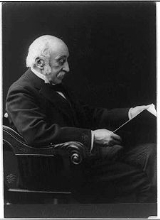
Charles Eliot Norton

Encyclopedia
Charles Eliot Norton, was a leading American
author, social critic, and professor of art. He was a militant idealist, a progressive social reformer, and a liberal activist whom many of his contemporaries considered the most cultivated man in the United States.
. His father, Andrews Norton
(1786–1853) was a Unitarian
theologian, and Dexter professor of sacred literature at Harvard
; his mother was Catherine Eliot, and Charles William Eliot
, president of Harvard, was his cousin.
Norton graduated from Harvard in 1846, and started in business with an East Indian trading firm in Boston, travelling to India
in 1849. After a tour in Europe
, where he was influenced by John Ruskin and pre-Raphaelite painters, he returned to Boston in 1851, and devoted himself to literature and art. He translated Dante
's Vita Nuova (1860 and 1867) and the Divina Commedia (1891-91-92), 3 vols.). He worked tirelessly as secretary to the Loyal Publication Society
during the Civil War
, communicating with newspaper editors across the country, including the journalist Jonathan Baxter Harrison
who became a lifelong close friend. From 1864 to 1868, he edited the highly influential magazine North American Review
, in association with James Russell Lowell
. In 1861 he and Lowell helped Henry Wadsworth Longfellow
in his translation of Dante and in the starting of the informal Dante Club. In 1862 Norton married Susan Sedgwick, creating what for a time became the wealthiest family in Boston.
In 1875 he was appointed professor of the history of art at Harvard, a chair which was created for him and which he held until retirement in 1898. The Archaeological Institute of America
chose him as its first president (1879–1890). From 1856 to 1874 Norton spent much time in travel and residence on the continent of Europe and in England, and it was during this period that his friendships began with Thomas Carlyle
, John Ruskin
, Edward FitzGerald
and Leslie Stephen
, an intimacy which did much to bring American and English men of letters into close personal relation. Norton had a peculiar genius for friendship, and it is on his personal influence rather than on his literary productions that his claim to fame rests. In 1881 he inaugurated the Dante Society, whose first presidents were Longfellow, Lowell and Norton himself. From 1882 onward he confined himself to the study of Dante, his professorial duties, and the editing and publication of the literary memorials of many of his friends. One of his many students at Harvard was James Loeb
, who was later, in 1907, to create The Charles Eliot Norton Memorial Lectureship.
In 1883 came the Letters of Carlyle and Emerson; in 1886, 1887 and 1888, Carlyle's Letters and Reminiscences; in 1894, the Orations and Addresses of George William Curtis
and the Letters of Lowell. Norton was also made Ruskin's literary executor
, and he wrote various introductions for the American "Brantwood" edition of Ruskin's works. His other publications include Notes of Travel and Study in Italy (1859), and an Historical Study of Church-building in the Middle Ages: Venice, Siena, Florence (1880). He organized exhibitions of the drawings of Turner (1874) and of Ruskin (1879), for which he compiled the catalogues.
During the first years of the twentieth century, Norton spoke out in favor of legalized euthanasia
. He lent his name to a movement led by Ohio socialite Anna S. Hall to pass physician-assisted suicide legislation in Ohio
and Iowa
.
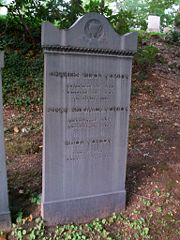 Norton died at "Shady-hill", the house where he had been born, on October 21, 1908, and was buried at Mount Auburn Cemetery
. He bequeathed the more valuable portion of his library to Harvard. He had the degrees of Litt.D. (Cambridge) and D.C.L. (Oxford), as well as the L.H.D. of Columbia and the LL.D. of Harvard and of Yale. Today, his name is borne by a series of lectures (Charles Eliot Norton Lectures
) held annually by distinguished professors at Harvard.
United States
The United States of America is a federal constitutional republic comprising fifty states and a federal district...
author, social critic, and professor of art. He was a militant idealist, a progressive social reformer, and a liberal activist whom many of his contemporaries considered the most cultivated man in the United States.
Biography
Norton was born at Cambridge, MassachusettsCambridge, Massachusetts
Cambridge is a city in Middlesex County, Massachusetts, United States, in the Greater Boston area. It was named in honor of the University of Cambridge in England, an important center of the Puritan theology embraced by the town's founders. Cambridge is home to two of the world's most prominent...
. His father, Andrews Norton
Andrews Norton
Andrews Norton was an American preacher and theologian. Along with William Ellery Channing, he was the leader of mainstream Unitarianism of the early and middle 19th century....
(1786–1853) was a Unitarian
Unitarianism
Unitarianism is a Christian theological movement, named for its understanding of God as one person, in direct contrast to Trinitarianism which defines God as three persons coexisting consubstantially as one in being....
theologian, and Dexter professor of sacred literature at Harvard
Harvard University
Harvard University is a private Ivy League university located in Cambridge, Massachusetts, United States, established in 1636 by the Massachusetts legislature. Harvard is the oldest institution of higher learning in the United States and the first corporation chartered in the country...
; his mother was Catherine Eliot, and Charles William Eliot
Charles William Eliot
Charles William Eliot was an American academic who was selected as Harvard's president in 1869. He transformed the provincial college into the preeminent American research university...
, president of Harvard, was his cousin.
Norton graduated from Harvard in 1846, and started in business with an East Indian trading firm in Boston, travelling to India
India
India , officially the Republic of India , is a country in South Asia. It is the seventh-largest country by geographical area, the second-most populous country with over 1.2 billion people, and the most populous democracy in the world...
in 1849. After a tour in Europe
Europe
Europe is, by convention, one of the world's seven continents. Comprising the westernmost peninsula of Eurasia, Europe is generally 'divided' from Asia to its east by the watershed divides of the Ural and Caucasus Mountains, the Ural River, the Caspian and Black Seas, and the waterways connecting...
, where he was influenced by John Ruskin and pre-Raphaelite painters, he returned to Boston in 1851, and devoted himself to literature and art. He translated Dante
Dante Alighieri
Durante degli Alighieri, mononymously referred to as Dante , was an Italian poet, prose writer, literary theorist, moral philosopher, and political thinker. He is best known for the monumental epic poem La commedia, later named La divina commedia ...
's Vita Nuova (1860 and 1867) and the Divina Commedia (1891-91-92), 3 vols.). He worked tirelessly as secretary to the Loyal Publication Society
Loyal Publication Society
The Loyal Publication Society was founded in 1863, during a time when the Union Army had suffered many reverses in the Civil War. The purpose of the society was to bolster public support for the Union effort, by disseminating pro-Union news articles and editorials to newspapers around the...
during the Civil War
American Civil War
The American Civil War was a civil war fought in the United States of America. In response to the election of Abraham Lincoln as President of the United States, 11 southern slave states declared their secession from the United States and formed the Confederate States of America ; the other 25...
, communicating with newspaper editors across the country, including the journalist Jonathan Baxter Harrison
Jonathan Baxter Harrison
Jonathan Baxter Harrison , Unitarian minister and journalist who was involved in many of the social causes of his day: abolitionism, Indian rights, forest preservation, and the cultural improvement of the working class...
who became a lifelong close friend. From 1864 to 1868, he edited the highly influential magazine North American Review
North American Review
The North American Review was the first literary magazine in the United States. Founded in Boston in 1815 by journalist Nathan Hale and others, it was published continuously until 1940, when publication was suspended due to J. H. Smyth, who had purchased the magazine, being unmasked as a Japanese...
, in association with James Russell Lowell
James Russell Lowell
James Russell Lowell was an American Romantic poet, critic, editor, and diplomat. He is associated with the Fireside Poets, a group of New England writers who were among the first American poets who rivaled the popularity of British poets...
. In 1861 he and Lowell helped Henry Wadsworth Longfellow
Henry Wadsworth Longfellow
Henry Wadsworth Longfellow was an American poet and educator whose works include "Paul Revere's Ride", The Song of Hiawatha, and Evangeline...
in his translation of Dante and in the starting of the informal Dante Club. In 1862 Norton married Susan Sedgwick, creating what for a time became the wealthiest family in Boston.
In 1875 he was appointed professor of the history of art at Harvard, a chair which was created for him and which he held until retirement in 1898. The Archaeological Institute of America
Archaeological Institute of America
The Archaeological Institute of America is a North American nonprofit organization devoted to the promotion of public interest in archaeology, and the preservation of archaeological sites. It has offices on the campus of Boston University and in New York City.The institute was founded in 1879,...
chose him as its first president (1879–1890). From 1856 to 1874 Norton spent much time in travel and residence on the continent of Europe and in England, and it was during this period that his friendships began with Thomas Carlyle
Thomas Carlyle
Thomas Carlyle was a Scottish satirical writer, essayist, historian and teacher during the Victorian era.He called economics "the dismal science", wrote articles for the Edinburgh Encyclopedia, and became a controversial social commentator.Coming from a strict Calvinist family, Carlyle was...
, John Ruskin
John Ruskin
John Ruskin was the leading English art critic of the Victorian era, also an art patron, draughtsman, watercolourist, a prominent social thinker and philanthropist. He wrote on subjects ranging from geology to architecture, myth to ornithology, literature to education, and botany to political...
, Edward FitzGerald
Edward FitzGerald (poet)
Edward FitzGerald was an English writer, best known as the poet of the first and most famous English translation of The Rubaiyat of Omar Khayyam. The spelling of his name as both FitzGerald and Fitzgerald is seen...
and Leslie Stephen
Leslie Stephen
Sir Leslie Stephen, KCB was an English author, critic and mountaineer, and the father of Virginia Woolf and Vanessa Bell.-Life:...
, an intimacy which did much to bring American and English men of letters into close personal relation. Norton had a peculiar genius for friendship, and it is on his personal influence rather than on his literary productions that his claim to fame rests. In 1881 he inaugurated the Dante Society, whose first presidents were Longfellow, Lowell and Norton himself. From 1882 onward he confined himself to the study of Dante, his professorial duties, and the editing and publication of the literary memorials of many of his friends. One of his many students at Harvard was James Loeb
James Loeb
James Loeb was a Jewish-German-American banker and philanthropist.He was the second born son of Solomon Loeb and Betty Loeb.James Loeb joined his father at Kuhn, Loeb & Co...
, who was later, in 1907, to create The Charles Eliot Norton Memorial Lectureship.
In 1883 came the Letters of Carlyle and Emerson; in 1886, 1887 and 1888, Carlyle's Letters and Reminiscences; in 1894, the Orations and Addresses of George William Curtis
George William Curtis
George William Curtis was an American writer and public speaker, born in Providence, Rhode Island, of old New England stock.-Biography:...
and the Letters of Lowell. Norton was also made Ruskin's literary executor
Literary executor
A literary executor is a person with decision-making power in respect of a literary estate. According to Wills, Administration and Taxation: a practical guide "A will may appoint different executors to deal with different parts of the estate...
, and he wrote various introductions for the American "Brantwood" edition of Ruskin's works. His other publications include Notes of Travel and Study in Italy (1859), and an Historical Study of Church-building in the Middle Ages: Venice, Siena, Florence (1880). He organized exhibitions of the drawings of Turner (1874) and of Ruskin (1879), for which he compiled the catalogues.
During the first years of the twentieth century, Norton spoke out in favor of legalized euthanasia
Euthanasia
Euthanasia refers to the practice of intentionally ending a life in order to relieve pain and suffering....
. He lent his name to a movement led by Ohio socialite Anna S. Hall to pass physician-assisted suicide legislation in Ohio
Ohio
Ohio is a Midwestern state in the United States. The 34th largest state by area in the U.S.,it is the 7th‑most populous with over 11.5 million residents, containing several major American cities and seven metropolitan areas with populations of 500,000 or more.The state's capital is Columbus...
and Iowa
Iowa
Iowa is a state located in the Midwestern United States, an area often referred to as the "American Heartland". It derives its name from the Ioway people, one of the many American Indian tribes that occupied the state at the time of European exploration. Iowa was a part of the French colony of New...
.
Mount Auburn Cemetery
Mount Auburn Cemetery was founded in 1831 as "America's first garden cemetery", or the first "rural cemetery", with classical monuments set in a rolling landscaped terrain...
. He bequeathed the more valuable portion of his library to Harvard. He had the degrees of Litt.D. (Cambridge) and D.C.L. (Oxford), as well as the L.H.D. of Columbia and the LL.D. of Harvard and of Yale. Today, his name is borne by a series of lectures (Charles Eliot Norton Lectures
Charles Eliot Norton Lectures
The Charles Eliot Norton Professorship of Poetry at Harvard University was established in 1925 as an annual lectureship in "poetry in the broadest sense" and named for the university's former professor of fine arts. Distinguished creative figures and scholars in the arts, including painting,...
) held annually by distinguished professors at Harvard.
External links
- Eliot Norton Park in Boston, MA