


Cabin pressurization

Encyclopedia
Cabin pressurization is the pumping of compressed air into an aircraft cabin
to maintain a safe and comfortable environment for crew and passengers when flying at altitude.
to protect crew and passengers from the risk of a number of physiological problems caused by the low outside air pressure above that altitude; it also serves to generally increase passenger comfort. The principal physiological problems are as follows:
Hypoxia
. The low partial pressure
of oxygen at altitude reduces the alveolar
oxygen tension in the lungs and subsequently in the brain, leading to sluggish thinking, dimmed vision, loss of consciousness, and ultimately death. In some individuals, particularly those with heart or lung disease, symptoms may begin as low as 5000 feet (1,524 m), although most passengers can tolerate altitudes of 8000 feet (2,438.4 m) without ill effect. At this altitude, there is about 25% less oxygen than there is at sea level. Hypoxia may be addressed by the administration of supplemental oxygen, either through an oxygen mask
or through a nasal cannula
.
Altitude sickness
. The low local partial pressure of carbon dioxide (CO2) causes CO2 to out-gas from the blood, raising the blood pH and inducing alkalosis
. Passengers may experience fatigue, nausea
, headaches, sleeplessness, and (on extended flights) even pulmonary oedema. These are the same symptoms that mountain climbers experience, but the limited duration of powered flight makes the development of pulmonary oedema unlikely. Altitude sickness may be controlled by a full pressure suit
with helmet and faceplate, which completely envelopes the body in a pressurized environment; this is clearly impractical for commercial passengers.
Decompression sickness
. The low local partial pressure of gases, principally nitrogen (N2) but including all other gases, may cause dissolved gases in the bloodstream to precipitate out, resulting in gas embolism or bubbles in the bloodstream. The mechanism is the same as for compressed-air divers on ascent from depth. Symptoms may include the early symptoms of "the bends"—tiredness, forgetfulness, headache, stroke, thrombosis, and subcutaneous itching—but rarely the full symptoms of the bends. Decompression sickness may also be controlled by a full-pressure suit as for altitude sickness.
Barotrauma
. As the aircraft climbs or descends, passengers may experience discomfort or acute pain as gases trapped within their bodies expand or contract. The most common problems occur with air trapped in the middle ear
(aerotitus) or paranasal sinuses by a blocked Eustachian tube or sinuses. Pain may also be experienced in the gastrointestinal tract
or even the teeth (barodontalgia
). Usually these are not severe enough to cause actual trauma but can result in soreness in the ear that persists after the flight and can exacerbate or precipitate pre-existing medical conditions, such as pneumothorax
.
Pressurisation of the cargo hold is also required to prevent damage to pressure sensitive goods that might leak, expand, burst or be crushed on re-pressurization.
A typical cabin altitude, such as the Boeing 767's, is maintained at 6900 feet (2,103.1 m) when cruising at 39000 feet (11,887.2 m). The trend in new aircraft is to lower the cabin altitude: the lowest currently flying is the Airbus A380
at 5000 ft (1,524 m) when cruising at 43000 feet (13,106.4 m).
Keeping the cabin altitude below 8000 ft (2,438.4 m) generally avoids significant hypoxia, altitude sickness, decompression sickness, and barotrauma, and Federal Aviation Administration
(FAA) regulations in the U.S. mandate that the cabin altitude may not exceed this at the maximum operating altitude of the aircraft under normal operating conditions.
Unfortunately, this mandatory maximum cabin altitude does not eliminate all physiological problems: passengers with conditions such as pneumothorax
are advised not to fly until fully healed; people suffering from a cold or other infection may still experience pain in the ears and sinuses; SCUBA
divers flying within the 'no fly' period after a dive risk decompression sickness, because the accumulated nitrogen in their bodies can form bubbles when exposed to reduced cabin pressure.
Prior to 1996, approximately 6,000 large commercial transport airplanes were type-certificated to fly up to 45,000 ft without being required to meet high-altitude special conditions. In 1996, the FAA adopted Amendment 25-87, which imposed additional high-altitude cabin pressure specifications for new-type aircraft designs. For aircraft certified to operate above 25,000 ft, it "must be designed so that occupants will not be exposed to cabin pressure altitudes in excess of 15,000 feet after any probable failure condition in the pressurization system." In the event of a decompression which results from "any failure condition not shown to be extremely improbable," the plane must be designed so that occupants will not be exposed to a cabin altitude exceeding 25,000 feet for more than 2 minutes, nor exceeding an altitude of 40,000 feet at any time. In practice, that new Federal Aviation Regulations
amendment imposes an operational ceiling
of 40,000 ft on the majority of newly designed commercial aircraft. Aircraft manufacturers can apply for a relaxation of this rule if the circumstances warrant it. In 2004, Airbus
acquired an FAA exemption to allow the cabin altitude of the A380 to reach 43000 ft (13,106.4 m) in the event of a decompression incident and to exceed 40000 ft (12,192 m) feet for one minute. This allows the A380 to operate at a higher altitude than other newly designed civilian aircraft.
(ECS). The most common source of compressed air for pressurization is bleed air
extracted from the compressor stage of a gas turbine
engine, from a low or intermediate stage and also from an additional high stage, the exact stage can vary, depending on engine type. By the time the cold outside air has reached the bleed air valves it is at a very high pressure and has been heated to around 200 °C (392 °F). The control and selection of high or low bleed sources is fully automatic and is governed by the needs of various pneumatic systems at various stages of flight.
The part of the bleed air that is directed to the ECS, is then expanded and cooled to a suitable temperature by passing it through a heat exchanger
and air cycle machine
known as the packs system. In some of the larger airliners hot trim air can be added downstream of air conditioned air coming from the packs if it is needed to warm a section of the cabin that is colder than others.
At least two engines provide compressed bleed air for all of the plane's pneumatic systems, to provide full redundancy
. Compressed air is also obtained from the auxiliary power unit
(APU), if fitted, in the event of an emergency and for cabin air supply on the ground before the main engines are started. Most modern commercial aircraft today have fully redundant, duplicated electronic controllers for maintaining pressurization along with a manual back-up control system.
All exhaust air is dumped to atmosphere via an outflow valve, usually at the rear of the fuselage. This valve controls the cabin pressure and also acts as a safety relief valve, in addition to other safety relief valves. In the event that the automatic pressure controllers fail, the pilot can manually control the cabin pressure valve, according to the backup emergency procedure checklist. The automatic controller normally maintains the proper cabin pressure altitude by constantly adjusting the outflow valve position so that the cabin altitude is as low as practical without exceeding the maximum pressure differential limit of 8.60 psi on the fuselage. At 39,000 feet, the cabin pressure would be automatically maintained at about 6,900 ft (450 feet lower than Mexico City), which is about 11.5 psi
of atmosphere pressure (76 kPa
).
Some aircraft, such as the Boeing 787 Dreamliner, have re-introduced the use of electric compressors previously used on piston-engined airliners to provide pressurization. The use of electric compressors increases the electrical generation load on the engines and introduces a number of stages of energy transfer, therefore it is unclear whether this increases the overall efficiency of the aircraft air handling system. It does, however, remove the danger of chemical contamination of the cabin, simplifies engine design, avoids the need to run high pressure pipework around the aircraft and provides greater design flexibility.
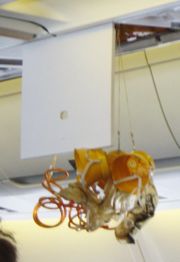 Unplanned loss of cabin pressure at altitude is rare but has resulted in a number of fatal accidents. Failures range from sudden, catastrophic loss of airframe integrity (explosive decompression) to slow leaks or equipment malfunctions that allow cabin pressure to drop undetected to levels that can lead to unconsciousness or severe performance degradation of the aircrew.
Any failure of cabin pressurization above 10000 feet (3,048 m) requires an emergency descent to 8000 feet (2,438.4 m) or the closest to that while maintaining terrain clearance (MSA), and the deployment of an oxygen mask
for each seat. The oxygen systems are sufficient oxygen for all on board and give the pilots adequate time to descend to below 8000 ft (2,438.4 m). Without emergency oxygen hypoxia
may lead to loss of consciousness and a subsequent loss of control of the aircraft, the time of useful consciousness
varying according to altitude. As the pressure falls the cabin air temperature may also plummet to the ambient outside temperature with a danger of hypothermia
or frostbite
.
In the late 1910s attempts were being made to achieve higher and higher altitudes. In 1920 flights well over 37,000 ft were first achieved by test pilot Lt. John A. Macready in a Packard-Le Peré LUSAC-11
biplane at McCook Field
in Dayton, Ohio
. The flight was possible by releasing stored oxygen into the cockpit, which was released directly into an enclosed cabin and not to an oxygen mask, which was developed later. With this system flights nearing 40000 ft (12,192 m) were possible, but the lack of atmospheric pressure at that altitude caused the pilot's heart to enlarge visibly, and many pilots reported health problems from such high altitude flights. In 1921 a Wright-Dayton USD-9A reconnaissance biplane was modified with the addition of a completely enclosed air-tight chamber that could be pressurized with air forced into it by small external turbines. The chamber had a hatch only 22 in (0.5588 m) in diameter that would be sealed by the pilot at 3,000 ft. The chamber contained only one instrument, an altimeter, while the conventional cockpit instruments were all mounted outside the chamber, visible through five small portholes. The first attempt to operate the aircraft was again made by Lt. John A. McCready, who discovered that the turbine was forcing air into the chamber faster than the small release valve provided could release it. As a result the chamber quickly over pressurized, and the flight was abandoned. A second attempt had to be abandoned when the pilot discovered at 3,000 ft that he was too short to close the chamber hatch. The first successful flight was finally made by test pilot Lt. Harrold Harris, making it the world's first flight by a pressurized aircraft.
The first airliner with a pressurized cabin was the Boeing 307
Stratoliner, built 1938, prior to World War II
, though only ten were produced. The 307's "pressure compartment was from the nose of the aircraft to a pressure bulkhead
in the aft just forward of the horizontal stabilizer."
World War II was a catalyst for aircraft development. Initially the piston aircraft of World War II, though they often flew at very high altitudes were not pressurized and relied on oxygen masks. This became impractical with the development of larger bombers where crew were required to move about the cabin and this led to the first bomber with cabin pressurization (though restricted to crew areas), the Boeing B-29 Superfortress. The control system for this was designed by Garrett AiResearch Manufacturing Company
, drawing in part on licensing of patents held by Boeing for the Stratoliner.
Post-war piston airliners such as the Lockheed Constellation
(1943) extended the technology to civilian service. The piston engined airliners generally relied on electrical compressors to provide pressurized cabin air. Engine supercharging and cabin pressurization enabled planes like the Douglas DC-6
, the Douglas DC-7
, and the Constellation to have certified service ceilings from 24,000 ft to 28,000 ft. Designing a pressurized fuselage to cope with that altitude range was within the engineering and metallurgical knowledge of that time. The introduction of jet airliners required a significant increase in cruise altitudes to the 30000–41000 ft (9,144–12,496.8 m) range, where jet engines are more fuel efficient. That increase in cruise altitudes required far more rigorous engineering of the fuselage, and in the beginning not all the engineering problems were fully understood.
The world’s first commercial jet airliner was the British de Havilland Comet
(1949) designed with a service ceiling of 36000 ft (10,972.8 m). It was the first time that a large diameter, pressurized fuselage with windows had been built and flown at this altitude. Initially the design was very successful but two catastrophic airframe failures in 1954 resulting in the total loss of the aircraft, passengers and crew grounded what was then the entire world jet airliner fleet. Extensive investigation and groundbreaking engineering analysis of the wreckage led to a number of very significant engineering advances that solved the basic problems of pressurized fuselage design at altitude. The critical problem proved to be a combination of an inadequate understanding of the effect of progressive metal fatigue
as the fuselage undergoes repeated stress cycles coupled with a misunderstanding of how aircraft skin stresses are redistributed around openings in the fuselage such as windows and rivet holes.
The critical engineering principles concerning metal fatigue
learned from the Comet 1 program were applied directly to the design of the Boeing 707
(1957) and all subsequent jet airliners. One immediately noticeable legacy of the Comet disasters is the oval windows on every jet airliner; the metal fatigue cracks that destroyed the Comets were initiated by the small radius corners on the Comet 1’s almost square windows. The Comet fuselage was redesigned and the Comet 4 (1958) went on to become a successful airliner, pioneering the first transatlantic jet service, but the program never really recovered from these disasters and was overtaken by the Boeing 707.
Concorde
had to deal with unusually high pressure differentials, as of necessity it flew at unusually high altitude (up to 60,000 ft) while the cabin altitude was maintained at 6000 ft (1,828.8 m). This made the vehicle significantly heavier and contributed to the high cost of a flight. Concorde also had to have smaller than normal cabin windows to limit decompression speed in the event of window failure.
The designed operating cabin altitude for new aircraft is falling and this is expected to reduce any remaining physiological problems. The lowest cabin altitude of any airliner either already flying or in current development is the A380
, designed to maintain a cabin altitude of 1520 m (4,986.9 ft).
Aircraft cabin
An aircraft cabin is the section of an aircraft in which passengers travel. At cruising altitudes of modern commercial aircraft the surrounding atmosphere is too thin to breathe without an oxygen mask, so cabins are pressurized at a higher pressure than ambient pressure at altitude.In commercial...
to maintain a safe and comfortable environment for crew and passengers when flying at altitude.
Need for cabin pressurization
Pressurization is essential over 10000 feet (3,048 m) above sea levelSea level
Mean sea level is a measure of the average height of the ocean's surface ; used as a standard in reckoning land elevation...
to protect crew and passengers from the risk of a number of physiological problems caused by the low outside air pressure above that altitude; it also serves to generally increase passenger comfort. The principal physiological problems are as follows:
Hypoxia
Hypoxia (medical)
Hypoxia, or hypoxiation, is a pathological condition in which the body as a whole or a region of the body is deprived of adequate oxygen supply. Variations in arterial oxygen concentrations can be part of the normal physiology, for example, during strenuous physical exercise...
. The low partial pressure
Partial pressure
In a mixture of ideal gases, each gas has a partial pressure which is the pressure which the gas would have if it alone occupied the volume. The total pressure of a gas mixture is the sum of the partial pressures of each individual gas in the mixture....
of oxygen at altitude reduces the alveolar
Pulmonary alveolus
An alveolus is an anatomical structure that has the form of a hollow cavity. Found in the lung parenchyma, the pulmonary alveoli are the dead ends of the respiratory tree, which outcrop from either alveolar sacs or alveolar ducts, which are both sites of gas exchange with the blood as well...
oxygen tension in the lungs and subsequently in the brain, leading to sluggish thinking, dimmed vision, loss of consciousness, and ultimately death. In some individuals, particularly those with heart or lung disease, symptoms may begin as low as 5000 feet (1,524 m), although most passengers can tolerate altitudes of 8000 feet (2,438.4 m) without ill effect. At this altitude, there is about 25% less oxygen than there is at sea level. Hypoxia may be addressed by the administration of supplemental oxygen, either through an oxygen mask
Oxygen mask
An oxygen mask provides a method to transfer breathing oxygen gas from a storage tank to the lungs. Oxygen masks may cover the nose and mouth or the entire face...
or through a nasal cannula
Nasal cannula
The nasal cannula is a device used to deliver supplemental oxygen or airflow to a patient or person in need of respiratory help. This device consists of a plastic tube which fits behind the ears, and a set of two prongs which are placed in the nostrils. Oxygen flows from these prongs...
.
Altitude sickness
Altitude sickness
Altitude sickness—also known as acute mountain sickness , altitude illness, hypobaropathy, or soroche—is a pathological effect of high altitude on humans, caused by acute exposure to low partial pressure of oxygen at high altitude...
. The low local partial pressure of carbon dioxide (CO2) causes CO2 to out-gas from the blood, raising the blood pH and inducing alkalosis
Alkalosis
Alkalosis refers to a condition reducing hydrogen ion concentration of arterial blood plasma . Generally, alkalosis is said to occur when pH of the blood exceeds 7.45. The opposite condition is acidosis .-Causes:...
. Passengers may experience fatigue, nausea
Nausea
Nausea , is a sensation of unease and discomfort in the upper stomach with an involuntary urge to vomit. It often, but not always, precedes vomiting...
, headaches, sleeplessness, and (on extended flights) even pulmonary oedema. These are the same symptoms that mountain climbers experience, but the limited duration of powered flight makes the development of pulmonary oedema unlikely. Altitude sickness may be controlled by a full pressure suit
Pressure suit
A pressure suit is a protective suit worn by high-altitude pilots who may fly at altitudes where the air pressure is too low for an unprotected person to survive, even breathing pure oxygen at positive pressure. Such suits may be either full-pressure or partial-pressure...
with helmet and faceplate, which completely envelopes the body in a pressurized environment; this is clearly impractical for commercial passengers.
Decompression sickness
Decompression sickness
Decompression sickness describes a condition arising from dissolved gases coming out of solution into bubbles inside the body on depressurization...
. The low local partial pressure of gases, principally nitrogen (N2) but including all other gases, may cause dissolved gases in the bloodstream to precipitate out, resulting in gas embolism or bubbles in the bloodstream. The mechanism is the same as for compressed-air divers on ascent from depth. Symptoms may include the early symptoms of "the bends"—tiredness, forgetfulness, headache, stroke, thrombosis, and subcutaneous itching—but rarely the full symptoms of the bends. Decompression sickness may also be controlled by a full-pressure suit as for altitude sickness.
Barotrauma
Barotrauma
Barotrauma is physical damage to body tissues caused by a difference in pressure between an air space inside or beside the body and the surrounding fluid...
. As the aircraft climbs or descends, passengers may experience discomfort or acute pain as gases trapped within their bodies expand or contract. The most common problems occur with air trapped in the middle ear
Middle ear
The middle ear is the portion of the ear internal to the eardrum, and external to the oval window of the cochlea. The mammalian middle ear contains three ossicles, which couple vibration of the eardrum into waves in the fluid and membranes of the inner ear. The hollow space of the middle ear has...
(aerotitus) or paranasal sinuses by a blocked Eustachian tube or sinuses. Pain may also be experienced in the gastrointestinal tract
Gastrointestinal tract
The human gastrointestinal tract refers to the stomach and intestine, and sometimes to all the structures from the mouth to the anus. ....
or even the teeth (barodontalgia
Barodontalgia
Barodontalgia, commonly known as tooth squeeze and previously known as aerodontalgia, is a pain in tooth caused by a change in atmospheric pressure...
). Usually these are not severe enough to cause actual trauma but can result in soreness in the ear that persists after the flight and can exacerbate or precipitate pre-existing medical conditions, such as pneumothorax
Pneumothorax
Pneumothorax is a collection of air or gas in the pleural cavity of the chest between the lung and the chest wall. It may occur spontaneously in people without chronic lung conditions as well as in those with lung disease , and many pneumothoraces occur after physical trauma to the chest, blast...
.
Pressurisation of the cargo hold is also required to prevent damage to pressure sensitive goods that might leak, expand, burst or be crushed on re-pressurization.
Cabin altitude
The pressure inside the cabin is technically referred to as the equivalent effective cabin altitude or more commonly as the cabin altitude. The cabin altitude is the equivalent altitude having the same atmospheric pressure, so that if the cabin altitude were set to zero then the pressure inside would be the pressure found at sea level. In practice, it is almost never kept at zero, in order to keep within the design limits of the fuselage and to manage landing at airfields higher than sea level. The cabin altitude of an aircraft planning to cruise at 40000 ft (12,192 m) is programmed to rise gradually from the altitude of the airport of origin to around a maximum of 8000 ft (2,438.4 m) and to then reduce gently during descent until it matches the ambient air pressure of the destination.A typical cabin altitude, such as the Boeing 767's, is maintained at 6900 feet (2,103.1 m) when cruising at 39000 feet (11,887.2 m). The trend in new aircraft is to lower the cabin altitude: the lowest currently flying is the Airbus A380
Airbus A380
The Airbus A380 is a double-deck, wide-body, four-engine jet airliner manufactured by the European corporation Airbus, a subsidiary of EADS. It is the largest passenger airliner in the world. Due to its size, many airports had to modify and improve facilities to accommodate it...
at 5000 ft (1,524 m) when cruising at 43000 feet (13,106.4 m).
Keeping the cabin altitude below 8000 ft (2,438.4 m) generally avoids significant hypoxia, altitude sickness, decompression sickness, and barotrauma, and Federal Aviation Administration
Federal Aviation Administration
The Federal Aviation Administration is the national aviation authority of the United States. An agency of the United States Department of Transportation, it has authority to regulate and oversee all aspects of civil aviation in the U.S...
(FAA) regulations in the U.S. mandate that the cabin altitude may not exceed this at the maximum operating altitude of the aircraft under normal operating conditions.
Unfortunately, this mandatory maximum cabin altitude does not eliminate all physiological problems: passengers with conditions such as pneumothorax
Pneumothorax
Pneumothorax is a collection of air or gas in the pleural cavity of the chest between the lung and the chest wall. It may occur spontaneously in people without chronic lung conditions as well as in those with lung disease , and many pneumothoraces occur after physical trauma to the chest, blast...
are advised not to fly until fully healed; people suffering from a cold or other infection may still experience pain in the ears and sinuses; SCUBA
Scuba
Scuba is an acronym for self-contained underwater breathing apparatus. It may also refer to:* Scuba diving, the use of a self-contained breathing set to stay underwater for periods of time* Scuba set, the equipment used to do scuba diving...
divers flying within the 'no fly' period after a dive risk decompression sickness, because the accumulated nitrogen in their bodies can form bubbles when exposed to reduced cabin pressure.
Prior to 1996, approximately 6,000 large commercial transport airplanes were type-certificated to fly up to 45,000 ft without being required to meet high-altitude special conditions. In 1996, the FAA adopted Amendment 25-87, which imposed additional high-altitude cabin pressure specifications for new-type aircraft designs. For aircraft certified to operate above 25,000 ft, it "must be designed so that occupants will not be exposed to cabin pressure altitudes in excess of 15,000 feet after any probable failure condition in the pressurization system." In the event of a decompression which results from "any failure condition not shown to be extremely improbable," the plane must be designed so that occupants will not be exposed to a cabin altitude exceeding 25,000 feet for more than 2 minutes, nor exceeding an altitude of 40,000 feet at any time. In practice, that new Federal Aviation Regulations
Federal Aviation Regulations
The Federal Aviation Regulations, or FARs, are rules prescribed by the Federal Aviation Administration governing all aviation activities in the United States. The FARs are part of Title 14 of the Code of Federal Regulations...
amendment imposes an operational ceiling
Ceiling (aeronautics)
With respect to aircraft, a ceiling is the maximum density altitude an aircraft can reach under a set of conditions.The word ceiling can also refer to the height of the lowest obscuring cloud layer above the ground.-Service ceiling:...
of 40,000 ft on the majority of newly designed commercial aircraft. Aircraft manufacturers can apply for a relaxation of this rule if the circumstances warrant it. In 2004, Airbus
Airbus
Airbus SAS is an aircraft manufacturing subsidiary of EADS, a European aerospace company. Based in Blagnac, France, surburb of Toulouse, and with significant activity across Europe, the company produces around half of the world's jet airliners....
acquired an FAA exemption to allow the cabin altitude of the A380 to reach 43000 ft (13,106.4 m) in the event of a decompression incident and to exceed 40000 ft (12,192 m) feet for one minute. This allows the A380 to operate at a higher altitude than other newly designed civilian aircraft.
Mechanics of pressurization
Pressurization is achieved by the design of an airtight fuselage engineered to be pressurized with a source of compressed air and controlled by an environmental control systemEnvironmental Control System
The environmental control system of an aircraft provides air supply, thermal control and cabin pressurization for the crew and passengers...
(ECS). The most common source of compressed air for pressurization is bleed air
Bleed air
Bleed air in gas turbine engines is compressed air taken from within the engine, after the compressor stage and before the fuel is injected in the burners. While in theory bleed air could be drawn in any gas turbine engine, its usage is generally restricted to jet engines used in aircraft...
extracted from the compressor stage of a gas turbine
Gas turbine
A gas turbine, also called a combustion turbine, is a type of internal combustion engine. It has an upstream rotating compressor coupled to a downstream turbine, and a combustion chamber in-between....
engine, from a low or intermediate stage and also from an additional high stage, the exact stage can vary, depending on engine type. By the time the cold outside air has reached the bleed air valves it is at a very high pressure and has been heated to around 200 °C (392 °F). The control and selection of high or low bleed sources is fully automatic and is governed by the needs of various pneumatic systems at various stages of flight.
The part of the bleed air that is directed to the ECS, is then expanded and cooled to a suitable temperature by passing it through a heat exchanger
Heat exchanger
A heat exchanger is a piece of equipment built for efficient heat transfer from one medium to another. The media may be separated by a solid wall, so that they never mix, or they may be in direct contact...
and air cycle machine
Air cycle machine
An air cycle machine is the refrigeration unit of the environmental control system used in pressurized gas turbine-powered aircraft. Normally an aircraft has two or three of these ACM. Each ACM and its components are often referred as an Air Conditioning Pack.The air cycle cooling process uses...
known as the packs system. In some of the larger airliners hot trim air can be added downstream of air conditioned air coming from the packs if it is needed to warm a section of the cabin that is colder than others.
At least two engines provide compressed bleed air for all of the plane's pneumatic systems, to provide full redundancy
Redundancy (engineering)
In engineering, redundancy is the duplication of critical components or functions of a system with the intention of increasing reliability of the system, usually in the case of a backup or fail-safe....
. Compressed air is also obtained from the auxiliary power unit
Auxiliary power unit
An auxiliary power unit is a device on a vehicle that provides energy for functions other than propulsion. They are commonly found on large aircraft, as well as some large land vehicles.-Function:...
(APU), if fitted, in the event of an emergency and for cabin air supply on the ground before the main engines are started. Most modern commercial aircraft today have fully redundant, duplicated electronic controllers for maintaining pressurization along with a manual back-up control system.
All exhaust air is dumped to atmosphere via an outflow valve, usually at the rear of the fuselage. This valve controls the cabin pressure and also acts as a safety relief valve, in addition to other safety relief valves. In the event that the automatic pressure controllers fail, the pilot can manually control the cabin pressure valve, according to the backup emergency procedure checklist. The automatic controller normally maintains the proper cabin pressure altitude by constantly adjusting the outflow valve position so that the cabin altitude is as low as practical without exceeding the maximum pressure differential limit of 8.60 psi on the fuselage. At 39,000 feet, the cabin pressure would be automatically maintained at about 6,900 ft (450 feet lower than Mexico City), which is about 11.5 psi
Pounds per square inch
The pound per square inch or, more accurately, pound-force per square inch is a unit of pressure or of stress based on avoirdupois units...
of atmosphere pressure (76 kPa
Pascal (unit)
The pascal is the SI derived unit of pressure, internal pressure, stress, Young's modulus and tensile strength, named after the French mathematician, physicist, inventor, writer, and philosopher Blaise Pascal. It is a measure of force per unit area, defined as one newton per square metre...
).
Some aircraft, such as the Boeing 787 Dreamliner, have re-introduced the use of electric compressors previously used on piston-engined airliners to provide pressurization. The use of electric compressors increases the electrical generation load on the engines and introduces a number of stages of energy transfer, therefore it is unclear whether this increases the overall efficiency of the aircraft air handling system. It does, however, remove the danger of chemical contamination of the cabin, simplifies engine design, avoids the need to run high pressure pipework around the aircraft and provides greater design flexibility.
Unplanned decompression
Any failure of cabin pressurization above 10000 feet (3,048 m) requires an emergency descent to 8000 feet (2,438.4 m) or the closest to that while maintaining terrain clearance (MSA), and the deployment of an oxygen mask
Oxygen mask
An oxygen mask provides a method to transfer breathing oxygen gas from a storage tank to the lungs. Oxygen masks may cover the nose and mouth or the entire face...
for each seat. The oxygen systems are sufficient oxygen for all on board and give the pilots adequate time to descend to below 8000 ft (2,438.4 m). Without emergency oxygen hypoxia
Hypoxia (medical)
Hypoxia, or hypoxiation, is a pathological condition in which the body as a whole or a region of the body is deprived of adequate oxygen supply. Variations in arterial oxygen concentrations can be part of the normal physiology, for example, during strenuous physical exercise...
may lead to loss of consciousness and a subsequent loss of control of the aircraft, the time of useful consciousness
Time of Useful Consciousness
Time of useful consciousness is defined as the amount of time an individual is able to perform flying duties efficiently in an environment of inadequate oxygen supply...
varying according to altitude. As the pressure falls the cabin air temperature may also plummet to the ambient outside temperature with a danger of hypothermia
Hypothermia
Hypothermia is a condition in which core temperature drops below the required temperature for normal metabolism and body functions which is defined as . Body temperature is usually maintained near a constant level of through biologic homeostasis or thermoregulation...
or frostbite
Frostbite
Frostbite is the medical condition where localized damage is caused to skin and other tissues due to extreme cold. Frostbite is most likely to happen in body parts farthest from the heart and those with large exposed areas...
.
History of cabin pressurization
The aircraft that pioneered pressurized cabin systems include:- USD-9A, a modified Airco DH.9AAirco DH.9AThe Airco DH.9A was a British light bomber designed and first used shortly before the end of the First World War. Colloquially known as the "Ninak" , it served on in large numbers for the Royal Air Force following the end of the war, both at home and overseas, where it was used for colonial...
(1921 - the first aircraft to fly with the addition of a pressurized cockpit module) - Junkers Ju 49Junkers Ju 49|-See also:-Cited sources:* Cornelisse, Diana G. Splended Vision, Unswerving Purpose; Developing Air Power for the United States Air Force During the First Century of Powered Flight. Wright-Patterson Air Force Base, Ohio: U.S. Air Force Publications, 2002. ISBN 0-16-067599-5....
(1931 - a German experimental aircraft purpose built to test the concept of cabin pressurization) - Lockheed XC-35Lockheed XC-35|-See also:-External links:* * * * * from National Museum of the United States Air Force...
(1937 - an American pressurized aircraft also purpose built to test the concept) - Boeing 307Boeing 307The Boeing Model 307 Stratoliner was the first commercial transport aircraft with a pressurized cabin. This feature allowed the plane to cruise at an altitude of 20,000 ft , well above weather disturbances. The pressure differential was 2.5 psi , so at 14,700 ft the cabin altitude...
(1938 - the first pressurized piston airliner) - Lockheed ConstellationLockheed ConstellationThe Lockheed Constellation was a propeller-driven airliner powered by four 18-cylinder radial Wright R-3350 engines. It was built by Lockheed between 1943 and 1958 at its Burbank, California, USA, facility. A total of 856 aircraft were produced in numerous models, all distinguished by a...
(1943 - the first pressurized airliner in wide service) - Avro TudorAvro TudorAvro's Type 688 Tudor was a British piston-engined airliner based on their four-engine Lincoln bomber, itself a descendant of the famous Lancaster heavy bomber, and was Britain's first pressurised airliner...
(1946 - first British pressurized airliner) - de Havilland CometDe Havilland CometThe de Havilland DH 106 Comet was the world's first commercial jet airliner to reach production. Developed and manufactured by de Havilland at the Hatfield, Hertfordshire, United Kingdom headquarters, it first flew in 1949 and was a landmark in aeronautical design...
(British, Comet 1 1949 - the first jetliner, Comet 4 1958 - resolving the Comet 1 problems) - Tupolev Tu-144Tupolev Tu-144The Tupolev Tu-144 was a Soviet supersonic transport aircraft and remains one of only two SSTs to enter commercial service, the other being the Concorde...
and ConcordeConcordeAérospatiale-BAC Concorde was a turbojet-powered supersonic passenger airliner, a supersonic transport . It was a product of an Anglo-French government treaty, combining the manufacturing efforts of Aérospatiale and the British Aircraft Corporation...
(1968 USSR and 1969 Anglo-French respectively - first to operate at very high altitude)
In the late 1910s attempts were being made to achieve higher and higher altitudes. In 1920 flights well over 37,000 ft were first achieved by test pilot Lt. John A. Macready in a Packard-Le Peré LUSAC-11
Packard-Le Peré LUSAC-11
|-References:* . Flight 4 March 1920, p. 265.* Angelucci, Enzo and Peter M. Bowers. The American Fighter. Sparkford, UK:Haynes Publishing Group, 1987. ISBN 0-85429-635-2.* . Flight, 7 February 1924, pp. 73–75....
biplane at McCook Field
McCook Field
McCook Field was an airfield and aviation experimentation station operated by the Aviation Section, U.S. Signal Corps and its successor the United States Army Air Service from 1917-1927...
in Dayton, Ohio
Dayton, Ohio
Dayton is the 6th largest city in the U.S. state of Ohio and the county seat of Montgomery County, the fifth most populous county in the state. The population was 141,527 at the 2010 census. The Dayton Metropolitan Statistical Area had a population of 841,502 in the 2010 census...
. The flight was possible by releasing stored oxygen into the cockpit, which was released directly into an enclosed cabin and not to an oxygen mask, which was developed later. With this system flights nearing 40000 ft (12,192 m) were possible, but the lack of atmospheric pressure at that altitude caused the pilot's heart to enlarge visibly, and many pilots reported health problems from such high altitude flights. In 1921 a Wright-Dayton USD-9A reconnaissance biplane was modified with the addition of a completely enclosed air-tight chamber that could be pressurized with air forced into it by small external turbines. The chamber had a hatch only 22 in (0.5588 m) in diameter that would be sealed by the pilot at 3,000 ft. The chamber contained only one instrument, an altimeter, while the conventional cockpit instruments were all mounted outside the chamber, visible through five small portholes. The first attempt to operate the aircraft was again made by Lt. John A. McCready, who discovered that the turbine was forcing air into the chamber faster than the small release valve provided could release it. As a result the chamber quickly over pressurized, and the flight was abandoned. A second attempt had to be abandoned when the pilot discovered at 3,000 ft that he was too short to close the chamber hatch. The first successful flight was finally made by test pilot Lt. Harrold Harris, making it the world's first flight by a pressurized aircraft.
The first airliner with a pressurized cabin was the Boeing 307
Boeing 307
The Boeing Model 307 Stratoliner was the first commercial transport aircraft with a pressurized cabin. This feature allowed the plane to cruise at an altitude of 20,000 ft , well above weather disturbances. The pressure differential was 2.5 psi , so at 14,700 ft the cabin altitude...
Stratoliner, built 1938, prior to World War II
World War II
World War II, or the Second World War , was a global conflict lasting from 1939 to 1945, involving most of the world's nations—including all of the great powers—eventually forming two opposing military alliances: the Allies and the Axis...
, though only ten were produced. The 307's "pressure compartment was from the nose of the aircraft to a pressure bulkhead
Bulkhead (partition)
A bulkhead is an upright wall within the hull of a ship or within the fuselage of an airplane. Other kinds of partition elements within a ship are decks and deckheads.-Etymology:...
in the aft just forward of the horizontal stabilizer."
World War II was a catalyst for aircraft development. Initially the piston aircraft of World War II, though they often flew at very high altitudes were not pressurized and relied on oxygen masks. This became impractical with the development of larger bombers where crew were required to move about the cabin and this led to the first bomber with cabin pressurization (though restricted to crew areas), the Boeing B-29 Superfortress. The control system for this was designed by Garrett AiResearch Manufacturing Company
Garrett AiResearch
Garrett AiResearch was a manufacturer of turboprop engines and turbochargers, and a pioneer in numerous aerospace technologies. It was previously known as Aircraft Tool and Supply Company, Garrett Supply Company, AiResearch Manufacturing Company, or simply AiResearch...
, drawing in part on licensing of patents held by Boeing for the Stratoliner.
Post-war piston airliners such as the Lockheed Constellation
Lockheed Constellation
The Lockheed Constellation was a propeller-driven airliner powered by four 18-cylinder radial Wright R-3350 engines. It was built by Lockheed between 1943 and 1958 at its Burbank, California, USA, facility. A total of 856 aircraft were produced in numerous models, all distinguished by a...
(1943) extended the technology to civilian service. The piston engined airliners generally relied on electrical compressors to provide pressurized cabin air. Engine supercharging and cabin pressurization enabled planes like the Douglas DC-6
Douglas DC-6
The Douglas DC-6 is a piston-powered airliner and transport aircraft built by the Douglas Aircraft Company from 1946 to 1958. Originally intended as a military transport near the end of World War II, it was reworked after the war to compete with the Lockheed Constellation in the long-range...
, the Douglas DC-7
Douglas DC-7
The Douglas DC-7 is an American transport aircraft built by the Douglas Aircraft Company from 1953 to 1958. It was the last major piston engine powered transport made by Douglas, coming just a few years before the advent of jet aircraft such as the Boeing 707 and Douglas DC-8.-Design and...
, and the Constellation to have certified service ceilings from 24,000 ft to 28,000 ft. Designing a pressurized fuselage to cope with that altitude range was within the engineering and metallurgical knowledge of that time. The introduction of jet airliners required a significant increase in cruise altitudes to the 30000–41000 ft (9,144–12,496.8 m) range, where jet engines are more fuel efficient. That increase in cruise altitudes required far more rigorous engineering of the fuselage, and in the beginning not all the engineering problems were fully understood.
The world’s first commercial jet airliner was the British de Havilland Comet
De Havilland Comet
The de Havilland DH 106 Comet was the world's first commercial jet airliner to reach production. Developed and manufactured by de Havilland at the Hatfield, Hertfordshire, United Kingdom headquarters, it first flew in 1949 and was a landmark in aeronautical design...
(1949) designed with a service ceiling of 36000 ft (10,972.8 m). It was the first time that a large diameter, pressurized fuselage with windows had been built and flown at this altitude. Initially the design was very successful but two catastrophic airframe failures in 1954 resulting in the total loss of the aircraft, passengers and crew grounded what was then the entire world jet airliner fleet. Extensive investigation and groundbreaking engineering analysis of the wreckage led to a number of very significant engineering advances that solved the basic problems of pressurized fuselage design at altitude. The critical problem proved to be a combination of an inadequate understanding of the effect of progressive metal fatigue
Metal Fatigue
Metal Fatigue , is a futuristic science fiction, real-time strategy computer game developed by Zono Incorporated and published by Psygnosis and TalonSoft .-Plot:...
as the fuselage undergoes repeated stress cycles coupled with a misunderstanding of how aircraft skin stresses are redistributed around openings in the fuselage such as windows and rivet holes.
The critical engineering principles concerning metal fatigue
Metal Fatigue
Metal Fatigue , is a futuristic science fiction, real-time strategy computer game developed by Zono Incorporated and published by Psygnosis and TalonSoft .-Plot:...
learned from the Comet 1 program were applied directly to the design of the Boeing 707
Boeing 707
The Boeing 707 is a four-engine narrow-body commercial passenger jet airliner developed by Boeing in the early 1950s. Its name is most commonly pronounced as "Seven Oh Seven". The first airline to operate the 707 was Pan American World Airways, inaugurating the type's first commercial flight on...
(1957) and all subsequent jet airliners. One immediately noticeable legacy of the Comet disasters is the oval windows on every jet airliner; the metal fatigue cracks that destroyed the Comets were initiated by the small radius corners on the Comet 1’s almost square windows. The Comet fuselage was redesigned and the Comet 4 (1958) went on to become a successful airliner, pioneering the first transatlantic jet service, but the program never really recovered from these disasters and was overtaken by the Boeing 707.
Concorde
Concorde
Aérospatiale-BAC Concorde was a turbojet-powered supersonic passenger airliner, a supersonic transport . It was a product of an Anglo-French government treaty, combining the manufacturing efforts of Aérospatiale and the British Aircraft Corporation...
had to deal with unusually high pressure differentials, as of necessity it flew at unusually high altitude (up to 60,000 ft) while the cabin altitude was maintained at 6000 ft (1,828.8 m). This made the vehicle significantly heavier and contributed to the high cost of a flight. Concorde also had to have smaller than normal cabin windows to limit decompression speed in the event of window failure.
The designed operating cabin altitude for new aircraft is falling and this is expected to reduce any remaining physiological problems. The lowest cabin altitude of any airliner either already flying or in current development is the A380
A380 (disambiguation)
A380 may refer to:* Airbus A380, the world's largest passenger airliner* A380 road * RFA Cedardale , a British fleet auxiliary vessel...
, designed to maintain a cabin altitude of 1520 m (4,986.9 ft).
See also
- Atmosphere (unit)Atmosphere (unit)The standard atmosphere is an international reference pressure defined as 101325 Pa and formerly used as unit of pressure. For practical purposes it has been replaced by the bar which is 105 Pa...
- Compressed airCompressed airCompressed air is air which is kept under a certain pressure, usually greater than that of the atmosphere. In Europe, 10 percent of all electricity used by industry is used to produce compressed air, amounting to 80 terawatt hours consumption per year....
- RarefactionRarefactionRarefaction is the reduction of a medium's density, or the opposite of compression.A natural example of this is as a phase in a sound wave or phonon. Half of a sound wave is made up of the compression of the medium, and the other half is the decompression or rarefaction of the medium.Another...
- Space suitSpace suitA space suit is a garment worn to keep an astronaut alive in the harsh environment of outer space. Space suits are often worn inside spacecraft as a safety precaution in case of loss of cabin pressure, and are necessary for extra-vehicular activity , work done outside spacecraft...
- Aerotoxic syndromeAerotoxic syndromeAerotoxic syndrome is a term describing the alleged short-term and long-term ill-health effects that are attributed to exposure to cabin air that has been contaminated with atomized engine oils and other chemicals. The documentary film Welcome Aboard Toxic Airlines suggests the term was first...
General references
- Cornelisse, Diana G. Splended Vision, Unswerving Purpose; Developing Air Power for the United States Air Force During the First Century of Powered Flight. Wright-Patterson Air Force Base, Ohio: U.S. Air Force Publications, 2002. ISBN 0-16-067599-5. pp. 128–129.
- Portions from the United States Naval Flight Surgeon's Manual
- CNN: 121 Dead in Greek Air Crash
- "Explosive Decompression" segment of MythBustersMythBustersMythBusters is a science entertainment TV program created and produced by Beyond Television Productions for the Discovery Channel. The series is screened by numerous international broadcasters, including Discovery Channel Australia, Discovery Channel Latin America, Discovery Channel Canada, Quest...
episode 10, January 11, 2004- also shown as a segment of Beyond Tomorrow episode 12