


Ashikaga shogunate

Encyclopedia
The , also known as the , was a Japanese feudal military regime, ruled by the shogun
s of the Ashikaga clan
.
This period is also known as the Muromachi period
and gets its name from Muromachi Street
of Kyoto
where the third shogun Ashikaga Yoshimitsu
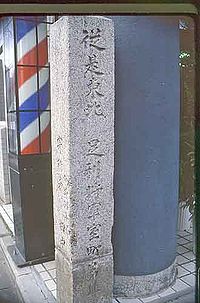
established his residence. This residence is nicknamed "Hana no Gosho" (花の御所) or "Flower Palace" (constructed in 1379) because of the abundance of flowers in its landscaping.
(1185–1333), the Hōjō clan
enjoyed absolute power in the governing of Japan. This monopoly of power, as well as the lack of a reward of lands after the defeat of Mongol invasion
, led to simmering resentment among Hōjō vassals. Finally, in 1333, the Emperor Go-Daigo
ordered local governing vassals to oppose Hōjō rule, in favor of Imperial restoration, in the Kemmu Restoration
.
To counter this revolt, the Kamakura bakufu ordered Ashikaga Takauji
to squash the uprising. For reasons that are unclear, possibly because Ashikaga was the de facto
leader of the powerless Minamoto clan
, while the Hōjō clan were from the Taira clan
the Minamoto had previously defeated, Ashikaga turned against the Kamakura bakufu, and fought on behalf of the Imperial court.
After the successful overthrow of the Kamakura bakufu in 1336, Ashikaga Takauji set up his own bakufu in Kyoto.
, to be installed as Emperor Kōmyō
. Go-Daigo fled, and the country was divided between a North Court (in favor of Kōmyō and Ashikaga), and a South Court (in favor of Go-Daigo). This period of North and South Courts (Nanboku-chō
) continued for 56 years, until 1392, when the South Court gave up during the reign of Ashikaga Yoshimitsu.
established his shogunate by siding with the Emperor against the previous Kamakura shogunate
, the Ashikagas shared more of the governmental authority with the Imperial government than the Kamakura shogunate had. Thus, it was a weaker shogunate than the Kamakura shogunate or the Tokugawa shogunate
. The centralized master-vassal system used in the Kamakura system was replaced with the highly de-centralized daimyo
(local lord) system, and the military power of the Ashikaga shogunate depended heavily on the loyalty of the daimyo.
on the Korean peninsula and with Imperial China.
, that loyalty grew increasingly strained, until it erupted into open warfare in the late Muromachi period, also known as the Sengoku Period
.
When the shogun Yoshiteru
was assassinated in 1565, an ambitious daimyo, Oda Nobunaga
, seized the opportunity and installed Yoshiteru's brother Ashikaga Yoshiaki
as the 15th Ashikaga shogun. However, Yoshiaki was only a puppet shogun.
The Ashikaga shogunate was finally destroyed in 1573 when Nobunaga drove Ashikaga Yoshiaki out of Kyoto. Initially, Yoshiaki fled to Shikoku
. Afterwards, Yoshiaki sought and received protection from the Mōri clan in western Japan. Later, Toyotomi Hideyoshi
requested that Yoshiaki accept him as an adopted son and the 16th Ashikaga Shogun, but Yoshiaki refused.
The Ashikaga family survived the 16th century, and a branch of it became the daimyo family of the Kitsuregawa domain.
Shogun
A was one of the hereditary military dictators of Japan from 1192 to 1867. In this period, the shoguns, or their shikken regents , were the de facto rulers of Japan though they were nominally appointed by the emperor...
s of the Ashikaga clan
Ashikaga clan
The ' was a prominent Japanese samurai clan which established the Muromachi shogunate and ruled Japan from roughly 1336 to 1573.The Ashikaga were descended from a branch of the Minamoto clan, deriving originally from the town of Ashikaga in Shimotsuke province .For about a century the clan was...
.
This period is also known as the Muromachi period
Muromachi period
The is a division of Japanese history running from approximately 1336 to 1573. The period marks the governance of the Muromachi or Ashikaga shogunate, which was officially established in 1338 by the first Muromachi shogun, Ashikaga Takauji, two years after the brief Kemmu restoration of imperial...
and gets its name from Muromachi Street
Muromachi Street
is a north-south street in Kyoto, Japan. It was originally a path called of the ancient capital of Heian-kyō, which is now Kyoto. It lies to the west of where the subway Karasuma Line runs. It extends from running through Kita-ku in the north to running through Minami-ku in the south...
of Kyoto
Kyoto
is a city in the central part of the island of Honshū, Japan. It has a population close to 1.5 million. Formerly the imperial capital of Japan, it is now the capital of Kyoto Prefecture, as well as a major part of the Osaka-Kobe-Kyoto metropolitan area.-History:...
where the third shogun Ashikaga Yoshimitsu
Ashikaga Yoshimitsu
was the 3rd shogun of the Ashikaga shogunate who ruled from 1368 to 1394 during the Muromachi period of Japan. Yoshimitsu was the son of the second shogun Ashikaga Yoshiakira....
established his residence. This residence is nicknamed "Hana no Gosho" (花の御所) or "Flower Palace" (constructed in 1379) because of the abundance of flowers in its landscaping.
Beginning
During the preceding Kamakura periodKamakura period
The is a period of Japanese history that marks the governance by the Kamakura Shogunate, officially established in 1192 in Kamakura by the first shogun Minamoto no Yoritomo....
(1185–1333), the Hōjō clan
Hojo clan
See the late Hōjō clan for the Hōjō clan of the Sengoku Period.The in the history of Japan was a family who controlled the hereditary title of shikken of the Kamakura Shogunate. In practice, the family had actual governmental power, many times dictatorial, rather than Kamakura shoguns, or the...
enjoyed absolute power in the governing of Japan. This monopoly of power, as well as the lack of a reward of lands after the defeat of Mongol invasion
Mongol invasions of Japan
The ' of 1274 and 1281 were major military efforts undertaken by Kublai Khan to conquer the Japanese islands after the submission of Goryeo to vassaldom. Despite their ultimate failure, the invasion attempts are of macrohistorical importance, because they set a limit on Mongol expansion, and rank...
, led to simmering resentment among Hōjō vassals. Finally, in 1333, the Emperor Go-Daigo
Emperor Go-Daigo
Emperor Go-Daigo was the 96th emperor of Japan, according to the traditional order of succession....
ordered local governing vassals to oppose Hōjō rule, in favor of Imperial restoration, in the Kemmu Restoration
Kemmu restoration
The is the name given to both the three year period of Japanese history between the Kamakura period and the Muromachi period, and the political events that took place in it...
.
To counter this revolt, the Kamakura bakufu ordered Ashikaga Takauji
Ashikaga Takauji
was the founder and first shogun of the Ashikaga shogunate. His rule began in 1338, beginning the Muromachi period of Japan, and ended with his death in 1358...
to squash the uprising. For reasons that are unclear, possibly because Ashikaga was the de facto
De facto
De facto is a Latin expression that means "concerning fact." In law, it often means "in practice but not necessarily ordained by law" or "in practice or actuality, but not officially established." It is commonly used in contrast to de jure when referring to matters of law, governance, or...
leader of the powerless Minamoto clan
Minamoto clan
was one of the surnames bestowed by the Emperors of Japan upon members of the imperial family who were demoted into the ranks of the nobility. The practice was most prevalent during the Heian Period , although its last occurrence was during the Sengoku Era. The Taira were another such offshoot of...
, while the Hōjō clan were from the Taira clan
Taira clan
The was a major Japanese clan of samurai in historical Japan.In reference to Japanese history, along with Minamoto, Taira was a hereditary clan name bestowed by the emperors of the Heian Period to certain ex-members of the imperial family when they became subjects...
the Minamoto had previously defeated, Ashikaga turned against the Kamakura bakufu, and fought on behalf of the Imperial court.
After the successful overthrow of the Kamakura bakufu in 1336, Ashikaga Takauji set up his own bakufu in Kyoto.
North and South Court
After Ashikaga Takauji established himself as the Seii Taishogun, a dispute arose with the Emperor Go-Daigo on the subject of how to govern the country. That dispute led Takauji to cause Yutahito, the second son of Emperor Go-FushimiEmperor Go-Fushimi
Emperor Go-Fushimi was the 93rd emperor of Japan, according to the traditional order of succession...
, to be installed as Emperor Kōmyō
Emperor Komyo
was the 2nd of the Ashikaga Pretenders, although he was actually the first to be supported by the Ashikaga Bakufu. According to pre-Meiji scholars, his reign spanned the years from 1336 through 1348.-Genealogy:...
. Go-Daigo fled, and the country was divided between a North Court (in favor of Kōmyō and Ashikaga), and a South Court (in favor of Go-Daigo). This period of North and South Courts (Nanboku-chō
Nanboku-cho
The , spanning from 1336 to 1392, was a period that occurred during the formative years of the Muromachi bakufu of Japan's history.During this period, there existed a Northern Imperial Court, established by Ashikaga Takauji in Kyoto, and a Southern Imperial Court, established by Emperor Go-Daigo in...
) continued for 56 years, until 1392, when the South Court gave up during the reign of Ashikaga Yoshimitsu.
Government Structure
In part because Ashikaga TakaujiAshikaga Takauji
was the founder and first shogun of the Ashikaga shogunate. His rule began in 1338, beginning the Muromachi period of Japan, and ended with his death in 1358...
established his shogunate by siding with the Emperor against the previous Kamakura shogunate
Kamakura shogunate
The Kamakura shogunate was a military dictatorship in Japan headed by the shoguns from 1185 to 1333. It was based in Kamakura. The Kamakura period draws its name from the capital of the shogunate...
, the Ashikagas shared more of the governmental authority with the Imperial government than the Kamakura shogunate had. Thus, it was a weaker shogunate than the Kamakura shogunate or the Tokugawa shogunate
Tokugawa shogunate
The Tokugawa shogunate, also known as the and the , was a feudal regime of Japan established by Tokugawa Ieyasu and ruled by the shoguns of the Tokugawa family. This period is known as the Edo period and gets its name from the capital city, Edo, which is now called Tokyo, after the name was...
. The centralized master-vassal system used in the Kamakura system was replaced with the highly de-centralized daimyo
Daimyo
is a generic term referring to the powerful territorial lords in pre-modern Japan who ruled most of the country from their vast, hereditary land holdings...
(local lord) system, and the military power of the Ashikaga shogunate depended heavily on the loyalty of the daimyo.
Foreign relations
The Ashikaga shogunate's foreign relations policy choices were played out in evolving contacts with the Joseon DynastyJoseon Dynasty
Joseon , was a Korean state founded by Taejo Yi Seong-gye that lasted for approximately five centuries. It was founded in the aftermath of the overthrow of the Goryeo at what is today the city of Kaesong. Early on, Korea was retitled and the capital was relocated to modern-day Seoul...
on the Korean peninsula and with Imperial China.
Fall of the Shogunate
As the daimyo increasingly feuded among themselves in the pursuit of power in the Ōnin WarOnin War
The ' was a civil war that lasted 10 years during the Muromachi period in Japan. A dispute between Hosokawa Katsumoto and Yamana Sōzen escalated into a nationwide war involving the Ashikaga shogunate and a number of daimyo in many regions of Japan....
, that loyalty grew increasingly strained, until it erupted into open warfare in the late Muromachi period, also known as the Sengoku Period
Sengoku period
The or Warring States period in Japanese history was a time of social upheaval, political intrigue, and nearly constant military conflict that lasted roughly from the middle of the 15th century to the beginning of the 17th century. The name "Sengoku" was adopted by Japanese historians in reference...
.
When the shogun Yoshiteru
Ashikaga Yoshiteru
, also known as Yoshifushi or Yoshifuji, was the 13th shogun of the Ashikaga shogunate who reigned from 1546 to 1565 during the late Muromachi period of Japan. He was the eldest son of the 12th shogun, Ashikaga Yoshiharu; and his mother was a daughter of Konoe Taneie...
was assassinated in 1565, an ambitious daimyo, Oda Nobunaga
Oda Nobunaga
was the initiator of the unification of Japan under the shogunate in the late 16th century, which ruled Japan until the Meiji Restoration in 1868. He was also a major daimyo during the Sengoku period of Japanese history. His opus was continued, completed and finalized by his successors Toyotomi...
, seized the opportunity and installed Yoshiteru's brother Ashikaga Yoshiaki
Ashikaga Yoshiaki
was the 15th shogun of the Ashikaga shogunate in Japan who reigned from 1568 to 1573. His father, Ashikaga Yoshiharu was the twelfth shogun, and his brother, Ashikaga Yoshiteru was the thirteenth shogun....
as the 15th Ashikaga shogun. However, Yoshiaki was only a puppet shogun.
The Ashikaga shogunate was finally destroyed in 1573 when Nobunaga drove Ashikaga Yoshiaki out of Kyoto. Initially, Yoshiaki fled to Shikoku
Shikoku
is the smallest and least populous of the four main islands of Japan, located south of Honshū and east of the island of Kyūshū. Its ancient names include Iyo-no-futana-shima , Iyo-shima , and Futana-shima...
. Afterwards, Yoshiaki sought and received protection from the Mōri clan in western Japan. Later, Toyotomi Hideyoshi
Toyotomi Hideyoshi
was a daimyo warrior, general and politician of the Sengoku period. He unified the political factions of Japan. He succeeded his former liege lord, Oda Nobunaga, and brought an end to the Sengoku period. The period of his rule is often called the Momoyama period, named after Hideyoshi's castle...
requested that Yoshiaki accept him as an adopted son and the 16th Ashikaga Shogun, but Yoshiaki refused.
The Ashikaga family survived the 16th century, and a branch of it became the daimyo family of the Kitsuregawa domain.
List of Ashikaga Shoguns
- Ashikaga TakaujiAshikaga Takaujiwas the founder and first shogun of the Ashikaga shogunate. His rule began in 1338, beginning the Muromachi period of Japan, and ended with his death in 1358...
, ruled 1338–1358 - Ashikaga YoshiakiraAshikaga Yoshiakirawas the 2nd shogun of the Ashikaga shogunate who reigned from 1358 to 1367 during the Muromachi period of Japan. Yoshiakira was the son of the founder and first shogun of the Muromachi shogunate, Ashikaga Takauji....
, r. 1359–1368 - Ashikaga YoshimitsuAshikaga Yoshimitsuwas the 3rd shogun of the Ashikaga shogunate who ruled from 1368 to 1394 during the Muromachi period of Japan. Yoshimitsu was the son of the second shogun Ashikaga Yoshiakira....
, r. 1368–1394 - Ashikaga YoshimochiAshikaga Yoshimochiwas the 4th shogun of the Ashikaga shogunate who reigned from 1394 to 1423 during the Muromachi period of Japan. Yoshimochi was the son of the third shogun Ashikaga Yoshimitsu....
, r. 1395–1423 - Ashikaga YoshikazuAshikaga Yoshikazuwas the 5th shogun of the Ashikaga shogunate who reigned from 1423 to 1425 during the Muromachi period of Japan. Yoshikazu was the son of the fourth shogun Ashikaga Yoshimochi....
, r. 1423–1425 - Ashikaga YoshinoriAshikaga Yoshinoriwas the 6th shogun of the Ashikaga shogunate who reigned from 1429 to 1441 during the Muromachi period of Japan. Yoshinori was the son of the third shogun Ashikaga Yoshimitsu.-Shogunal succession:...
, r. 1429–1441 - Ashikaga YoshikatsuAshikaga Yoshikatsuwas the 7th shogun of the Ashikaga shogunate who reigned from 1442 to 1443 during the Muromachi period of Japan. Yoshikatsu was the son of 6th shogun Ashikaga Yoshinori.Significant events which shaped the period during which Yoshikatsu was shogun:...
, r. 1442–1443 - Ashikaga YoshimasaAshikaga Yoshimasawas the 8th shogun of the Ashikaga shogunate who reigned from 1449 to 1473 during the Muromachi period of Japan. Yoshimasa was the son of the sixth shogun Ashikaga Yoshinori....
, r. 1449–1473 - Ashikaga YoshihisaAshikaga Yoshihisawas the 9th shogun of the Ashikaga shogunate who reigned from 1473 to 1489 during the Muromachi period of Japan. Yoshihisa was the son of the eighth shogun Ashikaga Yoshimasa....
, r. 1474–1489 - Ashikaga YoshitaneAshikaga Yoshitane, also known as Ashikaga Yoshiki , was the 10th shogun of the Ashikaga shogunate who headed the shogunate first from 1490 to 1493 and then again from 1508 to 1521 during the Muromachi period of Japan....
, r. 1490–1493, 1508–1521 - Ashikaga YoshizumiAshikaga Yoshizumiwas the 11th shogun of the Ashikaga shogunate who reigned from 1494 to 1508 during the Muromachi period of Japan. He was the son of Ashikaga Masatomo and grandson of the sixth shogun Ashikaga Yoshinori. Yoshizumi was first called Yoshitō , then Yoshitaka.Yoshizumi was adopted by the 8th shogun...
, r. 1494–1508 - Ashikaga YoshiharuAshikaga Yoshiharuwas the 12th shogun of the Ashikaga shogunate who held the reins of supreme power from 1521 through 1546 during the late Muromachi period of Japan...
, r. 1521–1546 - Ashikaga YoshiteruAshikaga Yoshiteru, also known as Yoshifushi or Yoshifuji, was the 13th shogun of the Ashikaga shogunate who reigned from 1546 to 1565 during the late Muromachi period of Japan. He was the eldest son of the 12th shogun, Ashikaga Yoshiharu; and his mother was a daughter of Konoe Taneie...
, r. 1546–1565 - Ashikaga YoshihideAshikaga Yoshihidewas the 14th shogun of the Ashikaga shogunate who held nominal power for a few months in 1568 during the Muromachi period of Japan. When he became shogun, he changed his name to Yoshinaga, but he is more conventionally recognized today by the name Yoshihide....
, r. 1568 - Ashikaga YoshiakiAshikaga Yoshiakiwas the 15th shogun of the Ashikaga shogunate in Japan who reigned from 1568 to 1573. His father, Ashikaga Yoshiharu was the twelfth shogun, and his brother, Ashikaga Yoshiteru was the thirteenth shogun....
, r. 1568–1573
See also
- ShogunShogunA was one of the hereditary military dictators of Japan from 1192 to 1867. In this period, the shoguns, or their shikken regents , were the de facto rulers of Japan though they were nominally appointed by the emperor...
- History of JapanHistory of JapanThe history of Japan encompasses the history of the islands of Japan and the Japanese people, spanning the ancient history of the region to the modern history of Japan as a nation state. Following the last ice age, around 12,000 BC, the rich ecosystem of the Japanese Archipelago fostered human...
- Lists of incumbents
- Kamakura periodKamakura periodThe is a period of Japanese history that marks the governance by the Kamakura Shogunate, officially established in 1192 in Kamakura by the first shogun Minamoto no Yoritomo....
- Muromachi periodMuromachi periodThe is a division of Japanese history running from approximately 1336 to 1573. The period marks the governance of the Muromachi or Ashikaga shogunate, which was officially established in 1338 by the first Muromachi shogun, Ashikaga Takauji, two years after the brief Kemmu restoration of imperial...
- Nanboku-chōNanboku-choThe , spanning from 1336 to 1392, was a period that occurred during the formative years of the Muromachi bakufu of Japan's history.During this period, there existed a Northern Imperial Court, established by Ashikaga Takauji in Kyoto, and a Southern Imperial Court, established by Emperor Go-Daigo in...
- Ashikaga clanAshikaga clanThe ' was a prominent Japanese samurai clan which established the Muromachi shogunate and ruled Japan from roughly 1336 to 1573.The Ashikaga were descended from a branch of the Minamoto clan, deriving originally from the town of Ashikaga in Shimotsuke province .For about a century the clan was...
- Ashikaga TakaujiAshikaga Takaujiwas the founder and first shogun of the Ashikaga shogunate. His rule began in 1338, beginning the Muromachi period of Japan, and ended with his death in 1358...
- Ashikaga YoshimitsuAshikaga Yoshimitsuwas the 3rd shogun of the Ashikaga shogunate who ruled from 1368 to 1394 during the Muromachi period of Japan. Yoshimitsu was the son of the second shogun Ashikaga Yoshiakira....
- Ashikaga YoshiteruAshikaga Yoshiteru, also known as Yoshifushi or Yoshifuji, was the 13th shogun of the Ashikaga shogunate who reigned from 1546 to 1565 during the late Muromachi period of Japan. He was the eldest son of the 12th shogun, Ashikaga Yoshiharu; and his mother was a daughter of Konoe Taneie...
- Japanese missions to Imperial China
External links
- Ashikaga Bakufu from Washington State University website
- Kyoto City Web