

Apis cerana nuluensis

Encyclopedia
Apis cerana nuluensis is a subspecies of honey bee
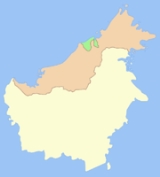
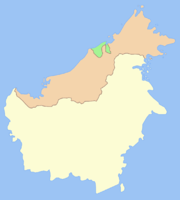
described in 1996 by Tingek, Koeniger & Koeniger. The geographic distribution of the subspecies is the south-east Asian
island of Borneo
, politically divided between Indonesia
, Malaysia, and Brunei
.
A. c. nuluensis is one of a number of Asiatic honey bees, including the more obscure Apis koschevnikovi
and Apis nigrocincta
(the latter of which has nearby habitat on nearby Sulawesi
and Mindanao
islands)
While this was originally described as a species, it has since been classified as a geographic race (subspecies) of the widespread A. cerana (Engel, 1999). Molecular evidence suggests it is divergent enough in its DNA sequences to potentially represent a biological species (Arias & Sheppard, 2005), but there has been no formal reassignment to date, and no hybridization studies have been performed to confirm this hypothesis.
 Like many honey bees, A. c. nuluensis is liable to infestation by the parasitic Varroa
mite, although in this case the particular species is Varroa underwoodi. (In this aspect, A. c. nuluensis is similar to A. nigrocincta)
Honey bee
Honey bees are a subset of bees in the genus Apis, primarily distinguished by the production and storage of honey and the construction of perennial, colonial nests out of wax. Honey bees are the only extant members of the tribe Apini, all in the genus Apis...
described in 1996 by Tingek, Koeniger & Koeniger. The geographic distribution of the subspecies is the south-east Asian
Southeast Asia
Southeast Asia, South-East Asia, South East Asia or Southeastern Asia is a subregion of Asia, consisting of the countries that are geographically south of China, east of India, west of New Guinea and north of Australia. The region lies on the intersection of geological plates, with heavy seismic...
island of Borneo
Borneo
Borneo is the third largest island in the world and is located north of Java Island, Indonesia, at the geographic centre of Maritime Southeast Asia....
, politically divided between Indonesia
Indonesia
Indonesia , officially the Republic of Indonesia , is a country in Southeast Asia and Oceania. Indonesia is an archipelago comprising approximately 13,000 islands. It has 33 provinces with over 238 million people, and is the world's fourth most populous country. Indonesia is a republic, with an...
, Malaysia, and Brunei
Brunei
Brunei , officially the State of Brunei Darussalam or the Nation of Brunei, the Abode of Peace , is a sovereign state located on the north coast of the island of Borneo, in Southeast Asia...
.
A. c. nuluensis is one of a number of Asiatic honey bees, including the more obscure Apis koschevnikovi
Apis koschevnikovi
Koschevnikov's bee, or Apis koschevnikovi, is a species of honey bee which inhabits Malaysian and Indonesian Borneo, where it lives conspecifically with other honey bee species such as Apis cerana Koschevnikov's bee, or Apis koschevnikovi, is a species of honey bee which inhabits Malaysian and...
and Apis nigrocincta
Apis nigrocincta
Apis nigrocincta is a species of honey bee that inhabits the Philippine island of Mindanao as well as the Indonesian islands of Sangihe and the Celebes or Sulawesi.The species builds nests in cavities like the closely related Apis cerana...
(the latter of which has nearby habitat on nearby Sulawesi
Sulawesi
Sulawesi is one of the four larger Sunda Islands of Indonesia and is situated between Borneo and the Maluku Islands. In Indonesia, only Sumatra, Borneo, and Papua are larger in territory, and only Java and Sumatra have larger Indonesian populations.- Etymology :The Portuguese were the first to...
and Mindanao
Mindanao
Mindanao is the second largest and easternmost island in the Philippines. It is also the name of one of the three island groups in the country, which consists of the island of Mindanao and smaller surrounding islands. The other two are Luzon and the Visayas. The island of Mindanao is called The...
islands)
While this was originally described as a species, it has since been classified as a geographic race (subspecies) of the widespread A. cerana (Engel, 1999). Molecular evidence suggests it is divergent enough in its DNA sequences to potentially represent a biological species (Arias & Sheppard, 2005), but there has been no formal reassignment to date, and no hybridization studies have been performed to confirm this hypothesis.
Varroa
Varroa is a genus of parasitic mites associated with honey bees, placed in its own family, Varroidae. The genus was named for Marcus Terentius Varro, a Roman scholar who was also a beekeeper.-History and behavior:...
mite, although in this case the particular species is Varroa underwoodi. (In this aspect, A. c. nuluensis is similar to A. nigrocincta)