


Anglo-Saxon Charters

Encyclopedia
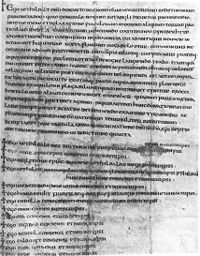
Anglo-Saxon charters are documents from the early medieval period
History of Anglo-Saxon England
Anglo-Saxon England refers to the period of the history of that part of Britain, that became known as England, lasting from the end of Roman occupation and establishment of Anglo-Saxon kingdoms in the 5th century until the Norman conquest of England in 1066 by William the Conqueror...
in Britain
Great Britain
Great Britain or Britain is an island situated to the northwest of Continental Europe. It is the ninth largest island in the world, and the largest European island, as well as the largest of the British Isles...
which typically make a grant of land
Real estate
In general use, esp. North American, 'real estate' is taken to mean "Property consisting of land and the buildings on it, along with its natural resources such as crops, minerals, or water; immovable property of this nature; an interest vested in this; an item of real property; buildings or...
or record a privilege. The earliest surviving charters were drawn up in the 670s; the oldest surviving charters granted land to the Church
Roman Catholic Church
The Catholic Church, also known as the Roman Catholic Church, is the world's largest Christian church, with over a billion members. Led by the Pope, it defines its mission as spreading the gospel of Jesus Christ, administering the sacraments and exercising charity...
, but from the eighth century surviving charters were increasingly used to grant land to lay people.
The term charter covers a range of written legal documentation including diplomas, writs and wills. A diploma is a royal charter—that is a grant of rights over land or other privileges by the king—whereas a writ is an instruction (or prohibition) by the king which may contain evidence of rights or privileges. Diplomas are usually written on parchment
Parchment
Parchment is a thin material made from calfskin, sheepskin or goatskin, often split. Its most common use was as a material for writing on, for documents, notes, or the pages of a book, codex or manuscript. It is distinct from leather in that parchment is limed but not tanned; therefore, it is very...
, in Latin
Latin
Latin is an Italic language originally spoken in Latium and Ancient Rome. It, along with most European languages, is a descendant of the ancient Proto-Indo-European language. Although it is considered a dead language, a number of scholars and members of the Christian clergy speak it fluently, and...
but often with sections in the vernacular, describing the bounds of estates, which often correspond closely to modern parish boundaries. The writ was authenticated by a seal and gradually replaced the diploma as evidence of land tenure during the late Anglo-Saxon and early Norman periods. Land held by virtue of a charter was known as bookland
Bookland (type of land)
Bookland and folkland are the two types of land tenure under Anglo-Saxon law. "Bookland" refers to land that was vested by a charter, and land held without a charter was "folkland"....
.
Charters provide fundamental source material for understanding Anglo-Saxon England, complementing the Anglo-Saxon Chronicle
Anglo-Saxon Chronicle
The Anglo-Saxon Chronicle is a collection of annals in Old English chronicling the history of the Anglo-Saxons. The original manuscript of the Chronicle was created late in the 9th century, probably in Wessex, during the reign of Alfred the Great...
and other literary sources. They are catalogued in Peter Sawyer
Peter Hayes Sawyer
Peter Hayes Sawyer is a British historian of Medieval England who is known for his annotated catalogue of Anglo-Saxon charters...
's 'Annotated List', and are usually referred to by their Sawyer number (e.g. S407).
Survival and authenticity
The Anglo-Saxon charter can take many forms: it can be a lease (often presented as a chirographChirograph
A chirograph is the term given to a medieval document, which has been written in duplicate, triplicate or very occasionally quadruplicate on a single piece of parchment, where the Latin word "chirographum" has been written across the middle, and then cut through...
), a will, an agreement, a writ, and, most commonly, a grant of land. Our picture is skewed towards those that regard land, particularly in the earlier period (though it must also be admitted that the emergence of wills and cyrographs also owed much to later development). Land charters can further be subdivided into royal charters, or diplomas, and private charters (donations by figures other than the king). Over 1000 Anglo-Saxon charters are extant today, for which we rely entirely on those maintained in the archives of religious houses. These houses preserved charters to record their right to the land. Some surviving charters are later copies, sometimes with interpolations. Anglo-Saxon charters were sometimes used in legal disputes, and the recording of their contents in the process is another reason for survival of text where the original documents have been lost. Overall, some 200 charters exist in the original form, the remainder as post-Conquest copies, often made by the compilers of cartularies (collections of title-deeds
Deed
A deed is any legal instrument in writing which passes, or affirms or confirms something which passes, an interest, right, or property and that is signed, attested, delivered, and in some jurisdictions sealed...
) or by early modern antiquaries.
The importance of charters in legal disputes over land as evidence of land
Real estate
In general use, esp. North American, 'real estate' is taken to mean "Property consisting of land and the buildings on it, along with its natural resources such as crops, minerals, or water; immovable property of this nature; an interest vested in this; an item of real property; buildings or...
tenure gave rise to numerous charter forgeries
Forgery
Forgery is the process of making, adapting, or imitating objects, statistics, or documents with the intent to deceive. Copies, studio replicas, and reproductions are not considered forgeries, though they may later become forgeries through knowing and willful misrepresentations. Forging money or...
, more often than not by those same monastic houses in whose archives they were preserved. The primary motivation for forging charters was to provide evidence of rights
Property
Property is any physical or intangible entity that is owned by a person or jointly by a group of people or a legal entity like a corporation...
to land. Often forging was focussed on providing written evidence for the holdings recorded as belonging to a religious house in the Domesday Book. It is therefore important when studying charters to establish their authenticity. The study of charters to determine authenticity gave rise to Diplomatics
Diplomatics
Diplomatics , or Diplomatic , is the study that revolves around documentation. It is a study that focuses on the analysis of document creation, its inner constitutions and form, the means of transmitting information, and the relationship documented facts have with their creator...
- the science of ancient documents.
They are catalogued in Peter Sawyer
Peter Hayes Sawyer
Peter Hayes Sawyer is a British historian of Medieval England who is known for his annotated catalogue of Anglo-Saxon charters...
's 'Annotated List', and are usually referred to by their Sawyer number (e.g. S407).
Diplomas
The largest number of surviving charters are diplomas, or royal charters granting privileges and rights, usually over land. The typical diploma has three sections. The first section is usually in Latin and records the transaction as well as invoking the wrath of God on anyone who fails to observe it - the anathema. The second section which is often in Old EnglishOld English language
Old English or Anglo-Saxon is an early form of the English language that was spoken and written by the Anglo-Saxons and their descendants in parts of what are now England and southeastern Scotland between at least the mid-5th century and the mid-12th century...
, describes the boundaries of the land. The third section is a list of witnesses - usually powerful lay and ecclesiastical members of the Kings court.
Much of the language of the diploma was explicitly religious - that a grant was made for the benefit of the grantor's soul or that anyone breaking the charter would be excommunicated. Many early charters were indeed granted in anticipation of the founding of a monastery
Monastery
Monastery denotes the building, or complex of buildings, that houses a room reserved for prayer as well as the domestic quarters and workplace of monastics, whether monks or nuns, and whether living in community or alone .Monasteries may vary greatly in size – a small dwelling accommodating only...
. However, the document served a largely secular purpose - to document the legal possession of land and to free that land from certain duties that would otherwise attach to it.
Writs
The second most common form of charter, although far fewer in number than the diploma, is the royal writ. This differs from the diploma in both form and function. A writ is an instruction from the king to a named official or group of recipients. It starts with a greeting and is authenticated by a royal seal. The writ does not require witnesses and is often in English before the conquest. Under the Normans, the use of writs was extended to cover many other aspects of royal business and was written in latin. Florence Harmer has provided the text (and translation when written in Old English) of 120 pre-conquest royal writs.Wills
Wills are rarer than writs. Dorothy Whitelock published an annotated edition of thirty nine Anglo-Saxon wills. They are intended to make gifts of property (including land) after the writers death, but are not wills in the modern sense.Boundary descriptions
The typical royal diploma has a clause describing the boundaries of the territory that is the subject of the charter. There are also boundary descriptions in a number of leases and two wills. In the earliest examples, these boundary descriptions are short, in Latin and with few boundary points. In time, they became longer, with more detail and in Old English. By the end of the 9th century, all boundary clauses were in English. Many charters, particularly those that survive only in later copies do not have boundary clauses. In some instances space has been left for a boundary clause that was never copied. A few boundary descriptions survive that do not appear to be related to any surviving charter.The content of these boundary descriptions varies, but in many instances these descriptions show how the Anglo-Saxons thought about their own landscape.
Historical significance
Charters provide fundamental source material for understanding Anglo-Saxon England, complementing the Anglo-Saxon ChronicleAnglo-Saxon Chronicle
The Anglo-Saxon Chronicle is a collection of annals in Old English chronicling the history of the Anglo-Saxons. The original manuscript of the Chronicle was created late in the 9th century, probably in Wessex, during the reign of Alfred the Great...
and other literary sources. They are often used by historians as sources for the history of Anglo-Saxon England
History of Anglo-Saxon England
Anglo-Saxon England refers to the period of the history of that part of Britain, that became known as England, lasting from the end of Roman occupation and establishment of Anglo-Saxon kingdoms in the 5th century until the Norman conquest of England in 1066 by William the Conqueror...
. It is frequently kings who give land in charters. By seeing what land is given it is possible to see the extent of a king's control, and how he was exercising power in that region. For instance, King Æthelwulf of Wessex granted land in Devon
Devon
Devon is a large county in southwestern England. The county is sometimes referred to as Devonshire, although the term is rarely used inside the county itself as the county has never been officially "shired", it often indicates a traditional or historical context.The county shares borders with...
by charter in 846, perhaps dividing the spoils from this recently conquered territory among his men.
Charters give lists of persons attesting the document, and so it is possible to see who was present at the king's court. For instance, we can see that several Welsh
Wales
Wales is a country that is part of the United Kingdom and the island of Great Britain, bordered by England to its east and the Atlantic Ocean and Irish Sea to its west. It has a population of three million, and a total area of 20,779 km²...
kings, including Hywel Dda
Hywel Dda
Hywel Dda , was the well-thought-of king of Deheubarth in south-west Wales, who eventually came to rule Wales from Prestatyn to Pembroke. As a descendant of Rhodri Mawr, through his father Cadell, Hywel was a member of the Dinefwr branch of the dynasty and is also named Hywel ap Cadell...
, were attending Athelstan of Wessex's court in the early tenth century. A person's absence from court can be equally revealing; Wulfstan I
Wulfstan I, Archbishop of York
Wulfstan was Archbishop of York between 931 and 952. He is often known as Wulfstan I, to separate him from Wulfstan II, Archbishop of York.-Life:Wulfstan was consecrated in 931....
, Archbishop of York
Archbishop of York
The Archbishop of York is a high-ranking cleric in the Church of England, second only to the Archbishop of Canterbury. He is the diocesan bishop of the Diocese of York and metropolitan of the Province of York, which covers the northern portion of England as well as the Isle of Man...
from 931 to 956 failed to attest any royal charters between 936 and 941, during which time the Battle of Brunanburh
Battle of Brunanburh
The Battle of Brunanburh was an English victory in 937 by the army of Æthelstan, King of England, and his brother Edmund over the combined armies of Olaf III Guthfrithson, the Norse-Gael King of Dublin, Constantine II, King of Scots, and Owen I, King of Strathclyde...
was fought between Athelstan and an alliance of the Hiberno-Norse king of Dublin, Óláfr Guðrøðsson
Olaf III Guthfrithson
Amlaíb mac Gofraid , a member of the Norse-Gael Uí Ímair dynasty, was King of Dublin from 934 to 941...
and the Scottish
Scotland
Scotland is a country that is part of the United Kingdom. Occupying the northern third of the island of Great Britain, it shares a border with England to the south and is bounded by the North Sea to the east, the Atlantic Ocean to the north and west, and the North Channel and Irish Sea to the...
king, Causantín
Constantine II of Scotland
Constantine, son of Áed was an early King of Scotland, known then by the Gaelic name Alba. The Kingdom of Alba, a name which first appears in Constantine's lifetime, was in northern Great Britain...
. Wulfstan was rather independently-minded, and we may link his absence from the West Saxon
Wessex
The Kingdom of Wessex or Kingdom of the West Saxons was an Anglo-Saxon kingdom of the West Saxons, in South West England, from the 6th century, until the emergence of a united English state in the 10th century, under the Wessex dynasty. It was to be an earldom after Canute the Great's conquest...
court with possible participation at Brunanburh and his later activity as a kind of kingmaker
Kingmaker
Kingmaker is a term originally applied to the activities of Richard Neville, 16th Earl of Warwick — "Warwick the Kingmaker" — during the Wars of the Roses in England. The term has come to be applied more generally to a person or group that has great influence in a royal or political succession,...
in York
York
York is a walled city, situated at the confluence of the Rivers Ouse and Foss in North Yorkshire, England. The city has a rich heritage and has provided the backdrop to major political events throughout much of its two millennia of existence...
. It is also possible to trace a person's career at court through his position in the witness list, as for instance in the case of Eadric Streona
Eadric Streona
Eadric Streona was an ealdorman of the English Mercians. His name a loose translation of the Anglo-Saxon "the Grasper." Streona is historically regarded as the greatest traitor of the Anglo-Saxon period in English history....
at the court of Æthelred 'the Unready'
Ethelred the Unready
Æthelred the Unready, or Æthelred II , was king of England . He was son of King Edgar and Queen Ælfthryth. Æthelred was only about 10 when his half-brother Edward was murdered...
in the early 11th century.
"Burdens" that were due by land owners to the king
Monarch
A monarch is the person who heads a monarchy. This is a form of government in which a state or polity is ruled or controlled by an individual who typically inherits the throne by birth and occasionally rules for life or until abdication...
, such as providing soldiers, resources and man-power, were sometimes relieved in charters. This gives us the chance to examine social structure
Social structure
Social structure is a term used in the social sciences to refer to patterned social arrangements in society that are both emergent from and determinant of the actions of the individuals. The usage of the term "social structure" has changed over time and may reflect the various levels of analysis...
s in Anglo-Saxon times.
A joint committee of the British Academy and Royal Historical Society was set up in 1966 to oversee a definitive edition of the entire corpus of Anglo-Saxon charters, eventually in approximately 30 volumes. Professor Nicholas Brooks is the chairman of the committee in charge and Professor Simon Keynes
Simon Keynes
Simon Douglas Keynes MA, PhD, Litt.D, FBA is the current Elrington and Bosworth Professor of Anglo-Saxon in the Department of Anglo-Saxon, Norse, and Celtic at Cambridge University.-Biography:...
is the secretary. Eleven volumes had appeared by 2005.
Secondary sources
- Maitland, F.W.Frederic William MaitlandFrederic William Maitland was an English jurist and historian, generally regarded as the modern father of English legal history.-Biography:...
(1897). Domesday Book and Beyond. Cambridge University Press. Reprinted: 1996. - Sawyer, P.H.Peter Hayes SawyerPeter Hayes Sawyer is a British historian of Medieval England who is known for his annotated catalogue of Anglo-Saxon charters...
(1968). Anglo-Saxon Charters: an Annotated List and Bibliography. London. - Stenton, Frank (1943, 2001). Anglo-Saxon England. Oxford: Oxford University Press.
Further reading
- Brooks, Nicholas (1974). "Anglo-Saxon Charters: the Work of the Last Twenty Years." Anglo-Saxon EnglandAnglo-Saxon England (journal)Anglo-Saxon England is an annual peer-reviewed academic journal covering the study of various aspects of history, language, and culture in Anglo-Saxon England. It has been published since 1972 by Cambridge University Press and is available in print and digital form...
3. - Kelly, Susan E. (1990). "Anglo-Saxon Lay Society and the Written Word." In The Uses of Literacy in Early Mediaeval Europe, ed. R. McKitterick. Cambridge: Cambridge University Press.
- Keynes, Simon (forthcoming). Anglo-Saxon Charters. Archives and Single Sheets. Anglo-Saxon Charters Supplementary Series 2. Oxford: Oxford University Press.
- Keynes, Simon (1999). "Charters and Writs." In The Blackwell Encyclopaedia of Anglo-Saxon England. Oxford: Blackwell.
- Thompson, S.D. (2006). Anglo-Saxon Royal Diplomas. A Palaeography. Publications of the Manchester Centre for Anglo-Saxon Studies 6. Woodbridge.
- Keynes, Simon (secretary). Anglo-Saxon Charters series (British Academy)
- British Academy Review, 1998
- Joint Committee on Anglo-Saxon Charters website
External links
- Anglo-Saxons.net Charters Searchable database of Anglo-Saxon Charters
- Electronic Sawyer The revised catalogue of Anglo-Saxon Charters, based on and extending Sawyer's 1968 printed catalogue
- Prosopography of Anglo-Saxon England