

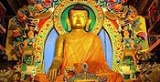

563 BC The Buddha is born (est) in Lumbini into a leading royal family in the republic of the Shakyas, which is now part of Nepal.
534 BC The Buddha leaves his palace behind and begins his quest for enlightenment.
528 BC The Buddha attains elightenment in Buddha Gaya.
483 BC The Buddha dies at Kusinara, India.
483 BC The First Buddhist Council is convened.
383 BC The Second Buddhist Council in converned.
250 BC Third Buddhist Council, convened by Ashoka the Great and chaired by Moggaliputta Tissa
250 BC Emperor Ashoka the Great sends various Buddhist missionaries to faraway countries, as far as China and the Mon & Malay kingdoms in the east and the Hellenistic kingdoms in the west, in order to make Buddhism known to them.
180 BC Greco-Bactrian King Demetrius invades India as far as Pataliputra and establishes the Indo-Greek kingdom (180–10 BC), under which Buddhism flourishes.
67 Liu Ying's sponsorship of Buddhism is the first documented case of Buddhist practices in China.
552 Buddhism is introduced to Japan via Baekje (Korea), according to Nihonshoki; some scholars place this event in 538.
1238 The Thai Kingdom of Sukhothai is established, with Theravada Buddhism as the state religion.
1244 Eiheiji Soto Zen Temple and Monastery are established by Dogen Zenji.
1253 Nichiren, a Japanese Buddhist monk, propounds ''Nam Myoho Renge Kyo'' for the very first time and declares it to be the essence of Buddhism, in effect founding Nichiren Buddhism.
1253 Nichiren, a Japanese Buddhist monk, propounds ''Nam Myoho Renge Kyo'' for the very first time and declares it to be the essence of Buddhism, in effect founding Nichiren Buddhism.
1279 Nichiren, a Japanese Buddhist monk founder of Nichiren Buddhism, inscribes the Dai-Gohonzon
1295 Mongol leader Ghazan Khan is converted to Islam, ending a line of Tantric Buddhist leaders.
1321 Sojiji Soto Zen Temple and Monastery established by Keizan Zenji.
1381 Gyalwa Gendun Drubpa, first Dalai Lama of Tibet.1578
1405 The Chinese eunuch admiral Zheng He makes seven voyages in this period, through southeast Asia, India, the Persian Gulf, East Africa, and Egypt. At the time, Buddhism is well-established in China, so visited peoples may have had exposure to Chinese Buddhism.
1536 Buddhist monks from Kyōto's Enryaku-ji temple set fire to 21 Nichiren temples throughout in what will be known as the Tenbun Hokke Disturbance. (Traditional Japanese date: July 27, 1536).
1536 Buddhist monks from Kyōto's Enryaku-ji temple set fire to 21 Nichiren temples throughout in what will be known as the Tenbun Hokke Disturbance. (Traditional Japanese date: July 27, 1536).
1578 Altan Khan of the Tümed gives the title of Dalai Lama to Sonam Gyatso (later known as the third Dalai Lama).
1614 The Toyotomi family rebuilds a great image of Buddha at the Temple of Hōkōji in Kyōtō.
1956 Dr. B. R. Ambedkar, the Indian Untouchable caste leader, converts to Buddhism along with 385,000 of his followers (see Neo-Buddhism).
1959 The 14th Dalai Lama flees Tibet amidst unrest and establishes an exile community in India. Monasteries that participated in or sheltered agents of partisan violence were damaged or destroyed in the fighting.
1963 Buddhist monk Thich Quang Duc burns himself with gasoline in a busy Saigon intersection to protest the lack of religious freedom in South Vietnam.