

Yus

Encyclopedia
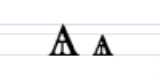
Little Yus or Jus, are letters of the Cyrillic script, representing two Common Slavonic
nasal vowel
s in the early Cyrillic
and Glagolitic alphabets. Each can occur in iotified form , formed as ligatures with the letter Decimal I (І). Other Yus letters are Blended Yus , Closed Little Yus and Iotified Closed Little Yus .
Phonetically, Little Yus represents a nasalized front vowel, possibly ɛ̃, while Big Yus represents a nasalized back vowel, such as IPA [ɔ̃]. This is also suggested by the appearance of each as a 'stacked' digraph of 'Am' and 'om' respectively.
The names of the letters do not imply capitalization
: both Little and Big Yus exist in majuscule and minuscule variants.
All modern Slavic languages that use the Cyrillic alphabet have lost the nasal vowels, making Yus unnecessary.
Big Yus was a part of the Bulgarian
alphabet until 1945. However, by that time the back nasal was pronounced the same way as ⟨ъ⟩ [ə]. As a result, there were inconsistencies in its usage since people had to rely on memorized orthographic conventions to put it in its etymologically correct place. There are some Macedonian dialects around Thessaloniki
and Kastoria
in Northern Greece that still preserve a nasal pronunciation: [ˈkə̃(n)de ˈgrẽ(n)deʃ ˈmilo ˈt͡ʃẽ(n)do], 'Where are you going, dear child?').
In Russia
, Little Yus was adapted to represent the iotated /ja/ ⟨я⟩ in the middle or end of a word; the modern letter Ya
⟨я⟩ is an adaptation of its cursive form of the seventeenth century, enshrined by the typographical reform
of 1708. (This is also why ⟨я⟩ in Russian often appears as ⟨ę
⟩ in Polish
; cf. Russian пять; Polish pięć.) The disappearance of the nasal vowels in Russian has gone further than elsewhere, with many Russian speakers even omitting /n/ in rapid speech in other places (for example, раньше might be realized as райше, or станет as стает).
In Polish
, which is a Slavic language written with Latin alphabet
, the letter ⟨Ę ę
⟩ has the phonetic value of Little Yus, while ⟨Ą ą
⟩ has that of Big Yus. The iotated
forms are written ⟨ię⟩, ⟨ią⟩, ⟨ję⟩, ⟨ją⟩ in Polish. However, the phonemes written ⟨ę⟩ and ⟨ą⟩ are not directly descended from those represented by Little and Big Yus, but developed after the original nasals merged in Polish and then diverged again.
Little and Big Yus can also be found in the Romanian Cyrillic alphabet
, used until about 1860. Little Yus was used for /ja/ and Big Yus for /ɨ/.
Proto-Slavic language
Proto-Slavic is the proto-language from which Slavic languages later emerged. It was spoken before the seventh century AD. As with most other proto-languages, no attested writings have been found; the language has been reconstructed by applying the comparative method to all the attested Slavic...
nasal vowel
Nasal vowel
A nasal vowel is a vowel that is produced with a lowering of the velum so that air escapes both through nose as well as the mouth. By contrast, oral vowels are ordinary vowels without this nasalisation...
s in the early Cyrillic
Early Cyrillic alphabet
The Early Cyrillic alphabet is a writing system developed in the First Bulgarian Empire in the 9th or 10th century to write the Old Church Slavonic liturgical language...
and Glagolitic alphabets. Each can occur in iotified form , formed as ligatures with the letter Decimal I (І). Other Yus letters are Blended Yus , Closed Little Yus and Iotified Closed Little Yus .
Phonetically, Little Yus represents a nasalized front vowel, possibly ɛ̃, while Big Yus represents a nasalized back vowel, such as IPA [ɔ̃]. This is also suggested by the appearance of each as a 'stacked' digraph of 'Am' and 'om' respectively.
The names of the letters do not imply capitalization
Capitalization
Capitalization is writing a word with its first letter as a majuscule and the remaining letters in minuscules . This of course only applies to those writing systems which have a case distinction...
: both Little and Big Yus exist in majuscule and minuscule variants.
All modern Slavic languages that use the Cyrillic alphabet have lost the nasal vowels, making Yus unnecessary.
Big Yus was a part of the Bulgarian
Bulgarian language
Bulgarian is an Indo-European language, a member of the Slavic linguistic group.Bulgarian, along with the closely related Macedonian language, demonstrates several linguistic characteristics that set it apart from all other Slavic languages such as the elimination of case declension, the...
alphabet until 1945. However, by that time the back nasal was pronounced the same way as ⟨ъ⟩ [ə]. As a result, there were inconsistencies in its usage since people had to rely on memorized orthographic conventions to put it in its etymologically correct place. There are some Macedonian dialects around Thessaloniki
Thessaloniki
Thessaloniki , historically also known as Thessalonica, Salonika or Salonica, is the second-largest city in Greece and the capital of the region of Central Macedonia as well as the capital of the Decentralized Administration of Macedonia and Thrace...
and Kastoria
Kastoria
Kastoria is a city in northern Greece in the periphery of West Macedonia. It is the capital of Kastoria peripheral unit. It is situated on a promontory on the western shore of Lake Orestiada, in a valley surrounded by limestone mountains...
in Northern Greece that still preserve a nasal pronunciation: [ˈkə̃(n)de ˈgrẽ(n)deʃ ˈmilo ˈt͡ʃẽ(n)do], 'Where are you going, dear child?').
In Russia
Russia
Russia or , officially known as both Russia and the Russian Federation , is a country in northern Eurasia. It is a federal semi-presidential republic, comprising 83 federal subjects...
, Little Yus was adapted to represent the iotated /ja/ ⟨я⟩ in the middle or end of a word; the modern letter Ya
Ya (Cyrillic)
Ya is a letter of the Cyrillic alphabet, the civil script variant of Old Cyrillic Little Yus . Among modern Slavonic languages it is used by Russian, Belarusian, Ukrainian and Bulgarian to represent both the combination in initial or post-vocalic position and after a palatalised consonant; in...
⟨я⟩ is an adaptation of its cursive form of the seventeenth century, enshrined by the typographical reform
Reforms of Russian orthography
The reform of Russian orthography refers to changes made to the Russian alphabet over the course of the history of the Russian language.- Early Changes :...
of 1708. (This is also why ⟨я⟩ in Russian often appears as ⟨ę
E
E is the fifth letter and a vowel in the basic modern Latin alphabet. It is the most commonly used letter in the Czech, Danish, Dutch, English, French, German, Hungarian, Latin, Norwegian, Spanish, and Swedish languages.-History:...
⟩ in Polish
Polish language
Polish is a language of the Lechitic subgroup of West Slavic languages, used throughout Poland and by Polish minorities in other countries...
; cf. Russian пять; Polish pięć.) The disappearance of the nasal vowels in Russian has gone further than elsewhere, with many Russian speakers even omitting /n/ in rapid speech in other places (for example, раньше might be realized as райше, or станет as стает).
In Polish
Polish language
Polish is a language of the Lechitic subgroup of West Slavic languages, used throughout Poland and by Polish minorities in other countries...
, which is a Slavic language written with Latin alphabet
Latin alphabet
The Latin alphabet, also called the Roman alphabet, is the most recognized alphabet used in the world today. It evolved from a western variety of the Greek alphabet called the Cumaean alphabet, which was adopted and modified by the Etruscans who ruled early Rome...
, the letter ⟨Ę ę
E
E is the fifth letter and a vowel in the basic modern Latin alphabet. It is the most commonly used letter in the Czech, Danish, Dutch, English, French, German, Hungarian, Latin, Norwegian, Spanish, and Swedish languages.-History:...
⟩ has the phonetic value of Little Yus, while ⟨Ą ą
A
A is the first letter and a vowel in the basic modern Latin alphabet. It is similar to the Ancient Greek letter Alpha, from which it derives.- Origins :...
⟩ has that of Big Yus. The iotated
Iotation
Iotation is a linguistic phenomenon very characteristic of the Slavic languages. It should not be confused with palatalization, which is an entirely different process....
forms are written ⟨ię⟩, ⟨ią⟩, ⟨ję⟩, ⟨ją⟩ in Polish. However, the phonemes written ⟨ę⟩ and ⟨ą⟩ are not directly descended from those represented by Little and Big Yus, but developed after the original nasals merged in Polish and then diverged again.
Little and Big Yus can also be found in the Romanian Cyrillic alphabet
Romanian Cyrillic alphabet
The Romanian Cyrillic alphabet was used to write the Romanian language before 1860–1862, when it was officially replaced by a Latin-based Romanian alphabet. Cyrillic remained in occasional use until circa 1920...
, used until about 1860. Little Yus was used for /ja/ and Big Yus for /ɨ/.
Related letters and other similar characters
- Я я : Cyrillic letter Ya : Cyrillic letter Yat
- ĘEE is the fifth letter and a vowel in the basic modern Latin alphabet. It is the most commonly used letter in the Czech, Danish, Dutch, English, French, German, Hungarian, Latin, Norwegian, Spanish, and Swedish languages.-History:...
- ĄAA is the first letter and a vowel in the basic modern Latin alphabet. It is similar to the Ancient Greek letter Alpha, from which it derives.- Origins :...
Computing codes
| character | ||||||||
| Unicode name | CYRILLIC CAPITAL LETTER LITTLE YUS |
CYRILLIC SMALL LETTER LITTLE YUS |
CYRILLIC CAPITAL LETTER IOTIFIED LITTLE YUS |
CYRILLIC SMALL LETTER IOTIFIED LITTLE YUS |
||||
| character encoding | decimal | hex | decimal | hex | decimal | hex | decimal | hex |
| Unicode Unicode Unicode is a computing industry standard for the consistent encoding, representation and handling of text expressed in most of the world's writing systems... |
1126 | 0466 | 1127 | 0467 | 1128 | 0468 | 1129 | 0469 |
| UTF-8 UTF-8 UTF-8 is a multibyte character encoding for Unicode. Like UTF-16 and UTF-32, UTF-8 can represent every character in the Unicode character set. Unlike them, it is backward-compatible with ASCII and avoids the complications of endianness and byte order marks... |
209 166 | D1 A6 | 209 167 | D1 A7 | 209 168 | D1 A8 | 209 169 | D1 A9 |
| Numeric character reference Numeric character reference A numeric character reference is a common markup construct used in SGML and other SGML-related markup languages such as HTML and XML. It consists of a short sequence of characters that, in turn, represent a single character from the Universal Character Set of Unicode... |
Ѧ | Ѧ | ѧ | ѧ | Ѩ | Ѩ | ѩ | ѩ |
| character | ||||||||
| Unicode name | CYRILLIC CAPITAL LETTER BIG YUS |
CYRILLIC SMALL LETTER BIG YUS |
CYRILLIC CAPITAL LETTER IOTIFIED BIG YUS |
CYRILLIC SMALL LETTER IOTIFIED BIG YUS |
||||
| character encoding | decimal | hex | decimal | hex | decimal | hex | decimal | hex |
| Unicode Unicode Unicode is a computing industry standard for the consistent encoding, representation and handling of text expressed in most of the world's writing systems... |
1130 | 046A | 1131 | 046B | 1132 | 046C | 1133 | 046D |
| UTF-8 UTF-8 UTF-8 is a multibyte character encoding for Unicode. Like UTF-16 and UTF-32, UTF-8 can represent every character in the Unicode character set. Unlike them, it is backward-compatible with ASCII and avoids the complications of endianness and byte order marks... |
209 170 | D1 AA | 209 171 | D1 AB | 209 172 | D1 AC | 209 173 | D1 AD |
| Numeric character reference Numeric character reference A numeric character reference is a common markup construct used in SGML and other SGML-related markup languages such as HTML and XML. It consists of a short sequence of characters that, in turn, represent a single character from the Universal Character Set of Unicode... |
Ѫ | Ѫ | ѫ | ѫ | Ѭ | Ѭ | ѭ | ѭ |