
All Topics  
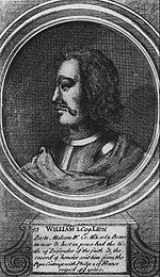
William I of Scotland


   Email Print
   Bookmark   Link


William I of Scotland


William I, known as the Lion or Garbh, "the Rough", (1142/1143 – December 4 1214) reigned as King of Scots from 1165 to 1214. His reign was the second longest in Scottish history before the Act of UnionActs of Union 1707

The Acts of Union were a pair of Acts of Parliament passed in 1706 and 1707 by, respectively, the Parliament of England and...
 with EnglandEngland

England is the largest and most populous constituent country of the United Kingdom....
 in 1707,. He became King following his brother Malcolm IVMalcolm IV of Scotland

Malcolm IV, King of Scots, was the eldest son of Earl Henry and Ada de Warenne....
's death on 9 December 1165 and was crowned on 24 December 1165.

In contrast to his deeply religious, frail brother, William was powerfully built, redheaded, and headstrong. He was an effective monarch whose reign was marred by his ill-fated attempts to regain control of NorthumbriaNorthumbria

Northumbria is primarily the name of a petty kingdom of Angles which was formed in Great Britain at the beginning of the 7th...
 from the English.

Traditionally, William is credited with founding Arbroath AbbeyArbroath Abbey

Arbroath Abbey was founded in 1178 by King William the Lion for a group of Tironesian Benedictine monks from Kelso Abbey....
, the site of the later Declaration of ArbroathDeclaration of Arbroath

The Declaration of Arbroath was a declaration of Scottish independence, and set out to confirm Scotland's status as an indep...
. Interestingly, he was not known as "The Lyon" during his own lifetime, and the sobriquet did not relate to his tenacious character or his military prowess.


Discussion
Ask a question about 'William I of Scotland'
Start a new discussion about 'William I of Scotland'
Answer questions from other users
Full Discussion Forum


Timeline

1143   Born

1165   William I becomes King of Scotland.

1174   William I of Scotland is captured by Henry II of England, and Henry occupies Scotland.

1214   Died


Encyclopedia


William I, known as the Lion or Garbh, "the Rough", (1142/1143 – December 4 1214) reigned as King of Scots from 1165 to 1214. His reign was the second longest in Scottish history before the Act of UnionActs of Union 1707

The Acts of Union were a pair of Acts of Parliament passed in 1706 and 1707 by, respectively, the Parliament of England and...
 with EnglandEngland

England is the largest and most populous constituent country of the United Kingdom....
 in 1707,. He became King following his brother Malcolm IVMalcolm IV of Scotland

Malcolm IV, King of Scots, was the eldest son of Earl Henry and Ada de Warenne....
's death on 9 December 1165 and was crowned on 24 December 1165.

In contrast to his deeply religious, frail brother, William was powerfully built, redheaded, and headstrong. He was an effective monarch whose reign was marred by his ill-fated attempts to regain control of NorthumbriaNorthumbria

Northumbria is primarily the name of a petty kingdom of Angles which was formed in Great Britain at the beginning of the 7th...
 from the English.

Traditionally, William is credited with founding Arbroath AbbeyArbroath Abbey

Arbroath Abbey was founded in 1178 by King William the Lion for a group of Tironesian Benedictine monks from Kelso Abbey....
, the site of the later Declaration of ArbroathDeclaration of Arbroath

The Declaration of Arbroath was a declaration of Scottish independence, and set out to confirm Scotland's status as an indep...
. Interestingly, he was not known as "The Lyon" during his own lifetime, and the sobriquet did not relate to his tenacious character or his military prowess. William adopted the use of the Lion Rampant by his right to do so under the law of Heraldry.

The title "Lion" was attached to him because of his flag or standard, a red lion rampant (with a forked tail) on a yellow background. This (with the addition of a 'double tressure fleury counter-fleury' border) went on to become the Royal standard of ScotlandRoyal Standard of Scotland

The Royal Standard of Scotland, also known as the Lion Rampant is a flag used historically by the Kings of Scotland....
, still used today but quartered with those of EnglandCoat of arms of England

Royal Arms of England| align="center" colspan="2"|...
 and of IrelandFacts About Coat of arms of Ireland

The coat of arms of Ireland is blazoned as azure a harp or, stringed argent - a gold harp with silver strings on a blue ...
. It became attached to him because the chronicler Fordun called him the "Lion of Justice".

William also inherited the title of Earl of NorthumbriaNorthumbria

Northumbria is primarily the name of a petty kingdom of Angles which was formed in Great Britain at the beginning of the 7th...
 in 1152. However he had to give up this title to King Henry II of EnglandHenry II of England

Henry II of England ruled as Count of Anjou, Duke of Normandy, and as King of England and, at various times, controlled pa...
 in 1157. This caused trouble after William became king, since he spent a lot of effort trying to regain Northumbria.

William was a key rebel in the Revolt of 1173–1174 against Henry II. In 1174, at the Battle of AlnwickFacts About Battle of Alnwick (1174)

The Battle of Alnwick is one of two battles fought near the town of Alnwick, in Northumberland....
, during a raid in support of the revolt, William recklessly charged the English troops himself, shouting, "Now we shall see which of us are good knights!" He was unhorsed and captured by Henry's troops led by Ranulf de GlanvillRanulf de Glanvill

Ranulf de Glanvill was chief justiciar of England during the reign of King Henry II and reputed author of a book on English ...
 and taken in chains to NewcastleNewcastle upon Tyne

!colspan=2 align=center bgcolor="#ff9999"|City of Newcastle upon Tyne...
, then Northampton, and then transferred to Falaise in NormandyFacts About Normandy

Normandy is a geographical region in northern France....
. Henry then sent an army to Scotland and occupied it. As ransom and to regain his kingdom, William had to acknowledge Henry as his feudal superior and agree to pay for the cost of the English army's occupation of Scotland by taxing the Scots. This he did by signing the Treaty of FalaiseTreaty of Falaise

The Treaty of Falaise was an agreement made in December 1174 by the captive William I, King of Scots, and the English King H...
. He was then allowed to return to Scotland. In 1175 he swore fealty to Henry II at York CastleYork Castle

York Castle is an area of York near the confluence of the Rivers Ouse....
.

The Treaty of Falaise remained in force for the next fifteen years. Then Richard the LionheartRichard I of England

Richard I was King of England from 1189 to 1199....
, needing money to take part in the Third CrusadeThird Crusade

The Third Crusade was an attempt by European leaders to reconquer the Holy Land from Saladin....
, agreed to terminate it in return for 10,000 silver marks.

Due to the terms of the Treaty of Falaise, Henry II had the right to choose William's bride. As a result, William married Ermengarde de BeaumontErmengarde de Beaumont

Ermengarde de Beaumont was Queen Consort of the Kingdom of Scotland....
, a granddaughter of King Henry I of EnglandHenry I of England

King Henry I of England , called Henry Beauclerc was the fourth son of William I of England commonly known in both E...
, at Woodstock PalaceWoodstock Palace

Woodstock Palace was a royal residence in the English town of Woodstock, Oxfordshire....
 in 1186. Edinburgh CastleEdinburgh Castle Overview

Edinburgh Castle is an ancient stronghold which from its lofty position dominates views of the city of Edinburgh, and is Sco...
 was her dowry. The marriage was not very successful, and it was many years before she bore him an heir. William and Ermengarde's children were:
  1. MargaretMargaret of Scotland, Countess of Kent

    Margaret of Scotland was the first child born to William I of Scotland and his Queen consort Ermengarde de Beaumont....
     (1193–1259), married Hubert de Burgh, 1st Earl of KentHubert de Burgh, 1st Earl of Kent

    Hubert de Burgh was Earl of Kent, Justiciar of England and Ireland, and one of the most influential men in England during th...
    .
  2. Isabella (1195–1253), married Roger Bigod, 4th Earl of NorfolkRoger Bigod, 4th Earl of Norfolk Summary

    Roger Bigod, was 4th Earl of Norfolk and Marshal of England....
    .
  3. Alexander II of ScotlandAlexander II of Scotland

    Alexander II , King of Scots, was the son of William the Lion and Ermengarde of Beaumont....
     (1198–1249).
  4. Marjorie (1200–44), married Gilbert Marshal, 4th Earl of PembrokeGilbert Marshal, 4th Earl of Pembroke

    Gilbert Marshal, 4th Earl of Pembroke was the 3rd son of William Marshal, 1st Earl of Pembroke and Isabella de Clare , the...
    .


William died in Stirling in 1214 and lies buried in Arbroath Abbey. His son, Alexander IIAlexander II of Scotland

Alexander II , King of Scots, was the son of William the Lion and Ermengarde of Beaumont....
, succeeded him as king, reigning from 1214 to 1249.

Curiously William is recorded in 1206 as having cured a case of Scrofula by his touching and blessing a child with the ailment whilst at YorkYork

York is a city in Northern England, at the confluence of the Rivers Ouse and Foss....
.

Sources

  • Ashley, Mike. Mammoth Book of British Kings & Queens, 1998
  • Magnusson, Magnus. Scotland: Story of a Nation, 2001


|-