

Will Shade

Encyclopedia
Will Shade was an African American
Memphis blues
musician, best known for his membership in the Memphis Jug Band
. Shade was commonly called Son Brimmer, a nickname from his grandmother Annie Brimmer, because "son" is short for "grandson". The name apparently stuck when other members of the band noticed that the "sun" bothered him and he used the "brim" of a hat to "shade" his eyes.
in 1925 when he first heard recordings by the Dixieland Jug Blowers
, a jug band from Louisville
, Kentucky
. Shade was excited by what he heard and felt that bringing this style of music to his hometown of Memphis
, Tennessee
, could be promising. He then convinced a few of the local musician
s, though still reluctant, to join him in creating one of Memphis's first jug bands.
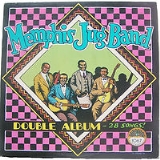
The original Memphis Jug Band, as it was called, consisted of three other members besides Shade: Lionhouse, whom Shade converted from a whiskey bottle blower to a jug blower; Tee Wee Blackman on guitar; and Ben Ramey as a vocalist. Shade himself played the guitar, the "bullfiddle" or washtub bass
, and the harmonica, the instrument on which he was most influential. His pure country blues
harmonica style served as the foundation for later renowned harmonicists like Big Walter Horton
and both Sonny Boy Williamson I
and II
, and Charlie Musselwhite
credits him as a mentor. He composed many of the band's songs and sang lead vocal on a handful of their recordings. His distinctive guitar style has also been identified as that of the uncredited accompanist, who backed up the Sanctified Church gospel singer Bessie Johnson on record.
The Memphis Jug Band had a fluid membership during the nearly 40 years that it was active, recording under a number of names and in a variety of styles ranging from blues and rag
s to gospel
. All the while, though, Shade was the backbone of the group, as he was the one responsible for finding new members to keep the jug band alive. The group's best material came mainly from him; intelligently, Shade tried, whenever possible, to copyright his music under his name. Besides being the head of the band's music, Shade was also in charge of the business affairs of the Memphis Jug Band, planning gigs
and distributing money.
The band's visibility declined in the mid 1930s due to the overall decline in commercial recordings, a shift in musical taste toward more urbane swing music, and the extent of violence occurring in Memphis. During this time, in fact, the jug band era in Memphis came to an end. However, blues revivalists found Shade and his old cohorts still playing together into the early 1960s and released several field recordings under the Memphis Jug Band name. The band during this period usually included Shade's long time friend Charlie Burse
, whom Shade had picked up in 1928 as a vocalist and tenor guitarist, and sometimes included old rival Gus Cannon
. Shade also appeared as an accompanist on Cannon's "comeback" album, Walk Right In, recorded by Stax Records
in 1963.
Shade died of pneumonia
, at John Gaston Hospital, Memphis, in 1966, aged 68, and was buried in Shelby County Cemetery. The fact that this is a public cemetery full of unmarked graves reveals the poverty that Shade faced in his later years. However, in 2008 a group of musicians based at the Old Town School of Folk Music
, held a fundraiser and purchased a headstone for Shade's grave. The same group sponsored a "brass note" on the Beale Street walk of fame, dedicated on August 1, 2009. Will Shade and his Memphis Jug Band was the first jug band to receive this honor.
ier beat, as seen in the final 1934 recordings. Famous singles by the band include the "Lindberg Hop", "On the Road Again", "Newport News Blues," "K.C. Moan," and "Stealin' Stealin'
".
African American
African Americans are citizens or residents of the United States who have at least partial ancestry from any of the native populations of Sub-Saharan Africa and are the direct descendants of enslaved Africans within the boundaries of the present United States...
Memphis blues
Memphis blues
The Memphis blues is a style of blues music that was created in the 1920s and 1930s by Memphis-area musicians like Frank Stokes, Sleepy John Estes, Furry Lewis and Memphis Minnie...
musician, best known for his membership in the Memphis Jug Band
Memphis Jug Band
The Memphis Jug Band was an American musical group in the late 1920s and early to mid 1930s. The band featured harmonicas, violins, mandolins, banjos, and guitars, backed by washboards, kazoo, and jugs blown to supply the bass; they played in a variety of musical styles...
. Shade was commonly called Son Brimmer, a nickname from his grandmother Annie Brimmer, because "son" is short for "grandson". The name apparently stuck when other members of the band noticed that the "sun" bothered him and he used the "brim" of a hat to "shade" his eyes.
Biography
Shade got his first taste of blues musicBlues
Blues is the name given to both a musical form and a music genre that originated in African-American communities of primarily the "Deep South" of the United States at the end of the 19th century from spirituals, work songs, field hollers, shouts and chants, and rhymed simple narrative ballads...
in 1925 when he first heard recordings by the Dixieland Jug Blowers
Dixieland Jug Blowers
The Dixieland Jug Blowers were a popular American musical group of the 1920s. While being a jug band, the group is often classified as a jazz band due to its set up which, while including regular Jug band instruments such as jug, banjo, guitar, and violin, also used alto saxophone, trombone, piano,...
, a jug band from Louisville
Louisville, Kentucky
Louisville is the largest city in the U.S. state of Kentucky, and the county seat of Jefferson County. Since 2003, the city's borders have been coterminous with those of the county because of a city-county merger. The city's population at the 2010 census was 741,096...
, Kentucky
Kentucky
The Commonwealth of Kentucky is a state located in the East Central United States of America. As classified by the United States Census Bureau, Kentucky is a Southern state, more specifically in the East South Central region. Kentucky is one of four U.S. states constituted as a commonwealth...
. Shade was excited by what he heard and felt that bringing this style of music to his hometown of Memphis
Memphis, Tennessee
Memphis is a city in the southwestern corner of the U.S. state of Tennessee, and the county seat of Shelby County. The city is located on the 4th Chickasaw Bluff, south of the confluence of the Wolf and Mississippi rivers....
, Tennessee
Tennessee
Tennessee is a U.S. state located in the Southeastern United States. It has a population of 6,346,105, making it the nation's 17th-largest state by population, and covers , making it the 36th-largest by total land area...
, could be promising. He then convinced a few of the local musician
Musician
A musician is an artist who plays a musical instrument. It may or may not be the person's profession. Musicians can be classified by their roles in performing music and writing music.Also....* A person who makes music a profession....
s, though still reluctant, to join him in creating one of Memphis's first jug bands.
The original Memphis Jug Band, as it was called, consisted of three other members besides Shade: Lionhouse, whom Shade converted from a whiskey bottle blower to a jug blower; Tee Wee Blackman on guitar; and Ben Ramey as a vocalist. Shade himself played the guitar, the "bullfiddle" or washtub bass
Washtub bass
The washtub bass, or "gutbucket", is a stringed instrument used in American folk music that uses a metal washtub as a resonator. Although it is possible for a washtub bass to have four or more strings and tuning pegs, traditional washtub basses have a single string whose pitch is adjusted by...
, and the harmonica, the instrument on which he was most influential. His pure country blues
Country blues
Country blues is a general term that refers to all the acoustic, mainly guitar-driven forms of the blues. It often incorporated elements of rural gospel, ragtime, hillbilly, and dixieland jazz...
harmonica style served as the foundation for later renowned harmonicists like Big Walter Horton
Big Walter Horton
Walter Horton, better known as Big Walter Horton or Walter "Shakey" Horton, was an American blues harmonica player. A quiet, unassuming and essentially shy man, Horton is remembered as one of the premier harmonica players in the history of blues...
and both Sonny Boy Williamson I
Sonny Boy Williamson I
Sonny Boy Williamson was an American blues harmonica player and singer, and the first to use the name Sonny Boy Williamson.-Biography and career:...
and II
Sonny Boy Williamson II
Willie "Sonny Boy" Williamson was an American blues harmonica player, singer and songwriter, from Mississippi. He is acknowledged as one of the most charismatic and influential blues musicians, with considerable prowess on the harmonica and highly creative songwriting skills...
, and Charlie Musselwhite
Charlie Musselwhite
Charlie Musselwhite is an American electric blues harmonica player and bandleader, one of the non-black bluesmen who came to prominence in the early 1960s, along with Mike Bloomfield and Paul Butterfield. Though he has often been identified as a "white bluesman", he claims Native American heritage...
credits him as a mentor. He composed many of the band's songs and sang lead vocal on a handful of their recordings. His distinctive guitar style has also been identified as that of the uncredited accompanist, who backed up the Sanctified Church gospel singer Bessie Johnson on record.
The Memphis Jug Band had a fluid membership during the nearly 40 years that it was active, recording under a number of names and in a variety of styles ranging from blues and rag
Ragtime
Ragtime is an original musical genre which enjoyed its peak popularity between 1897 and 1918. Its main characteristic trait is its syncopated, or "ragged," rhythm. It began as dance music in the red-light districts of American cities such as St. Louis and New Orleans years before being published...
s to gospel
Gospel
A gospel is an account, often written, that describes the life of Jesus of Nazareth. In a more general sense the term "gospel" may refer to the good news message of the New Testament. It is primarily used in reference to the four canonical gospels of Matthew, Mark, Luke, and John...
. All the while, though, Shade was the backbone of the group, as he was the one responsible for finding new members to keep the jug band alive. The group's best material came mainly from him; intelligently, Shade tried, whenever possible, to copyright his music under his name. Besides being the head of the band's music, Shade was also in charge of the business affairs of the Memphis Jug Band, planning gigs
Concert
A concert is a live performance before an audience. The performance may be by a single musician, sometimes then called a recital, or by a musical ensemble, such as an orchestra, a choir, or a musical band...
and distributing money.
The band's visibility declined in the mid 1930s due to the overall decline in commercial recordings, a shift in musical taste toward more urbane swing music, and the extent of violence occurring in Memphis. During this time, in fact, the jug band era in Memphis came to an end. However, blues revivalists found Shade and his old cohorts still playing together into the early 1960s and released several field recordings under the Memphis Jug Band name. The band during this period usually included Shade's long time friend Charlie Burse
Charlie Burse
Charlie Burse was an African-American blues musician, best known for his skill with the ukulele. He was nicknamed "Uke Kid Burse" because of his talent, which extended to other musical instruments....
, whom Shade had picked up in 1928 as a vocalist and tenor guitarist, and sometimes included old rival Gus Cannon
Gus Cannon
Gus Cannon was an American blues musician, who helped to popularize jug bands in the 1920s and 1930s. There is doubt about his birth year; his tombstone gives the date as 1874....
. Shade also appeared as an accompanist on Cannon's "comeback" album, Walk Right In, recorded by Stax Records
Stax Records
Stax Records is an American record label, originally based in Memphis, Tennessee.Founded in 1957 as Satellite Records, the name Stax Records was adopted in 1961. The label was a major factor in the creation of the Southern soul and Memphis soul music styles, also releasing gospel, funk, jazz, and...
in 1963.
Shade died of pneumonia
Pneumonia
Pneumonia is an inflammatory condition of the lung—especially affecting the microscopic air sacs —associated with fever, chest symptoms, and a lack of air space on a chest X-ray. Pneumonia is typically caused by an infection but there are a number of other causes...
, at John Gaston Hospital, Memphis, in 1966, aged 68, and was buried in Shelby County Cemetery. The fact that this is a public cemetery full of unmarked graves reveals the poverty that Shade faced in his later years. However, in 2008 a group of musicians based at the Old Town School of Folk Music
Old Town School of Folk Music
The Old Town School of Folk Music is a Chicago teaching and performing institution that launched the careers of many notable folk music artists...
, held a fundraiser and purchased a headstone for Shade's grave. The same group sponsored a "brass note" on the Beale Street walk of fame, dedicated on August 1, 2009. Will Shade and his Memphis Jug Band was the first jug band to receive this honor.
Discography
Between 1927 and 1934, the Memphis Jug Band recorded over 100 sides, making it the most recorded jug band in Memphis. In the first four years alone, Shade and his band members recorded at least 60 songs with Victor Records. Over time, the band's style moved to a jazzJazz
Jazz is a musical style that originated at the beginning of the 20th century in African American communities in the Southern United States. It was born out of a mix of African and European music traditions. From its early development until the present, jazz has incorporated music from 19th and 20th...
ier beat, as seen in the final 1934 recordings. Famous singles by the band include the "Lindberg Hop", "On the Road Again", "Newport News Blues," "K.C. Moan," and "Stealin' Stealin'
Stealin'
Stealin' is an American folk song from the 1920s. The song is particularly identified with the jug band tradition, but gained wider popularity after several folk and blues artists recorded it in the 1960s....
".