
| |
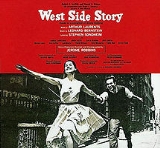
West Side Story is a musical with a book by Arthur Laurents, music by Leonard Bernstein, and lyrics by Stephen Sondheim. The musical is based on William Shakespeare's Romeo and Juliet.
Set in Manhattan's West Side/Hell's Kitchen in the mid-1950s, the musical explores the rivalry between two teenage gangs of different ethnic and cultural backgrounds. The young protagonist, Tony, who belongs to the American gang, falls in love with Maria, the sister of the rival Puerto Rican gang's leader.

Discussion
Ask a question about 'West Side Story'
Start a new discussion about 'West Side Story'
Answer questions from other users
|
Quotations
Come and get me too, Chino. Come on Chino, get me too...There's nobody here but me...I'm waitin' for ya! Riff ==
Don't worry. I'll find out where it's gonna be. So be sure to finish each other off because if you don't, I will.
Ice: singing When you're a Jet, you're the swingin'est thingLittle boy, you're a man, little man, you're a king.
Look, every one of you hates every one of us, and we hate you right back. Let's get at it.
Snowboy: singing When you're a Jet, you're a top cat in townYou're a gold medal kid with the heavyweight crown!
The Screen Achieves One of the Great Entertainments in the History of Motion Pictures

Encyclopedia
West Side Story is a musical with a book by Arthur Laurents, music by Leonard Bernstein, and lyrics by Stephen Sondheim. The musical is based on William Shakespeare's Romeo and Juliet.
Set in Manhattan's West Side/Hell's Kitchen in the mid-1950s, the musical explores the rivalry between two teenage gangs of different ethnic and cultural backgrounds. The young protagonist, Tony, who belongs to the American gang, falls in love with Maria, the sister of the rival Puerto Rican gang's leader. The dark theme, sophisticated music, extended dance scenes, and focus on social problems marked a turning point in American musical theatre. Bernstein's score for the musical has become extremely popular; it includes "Something's Coming," "Maria," "America," "Somewhere," "Tonight," "Jet Song," "I Feel Pretty," "One Hand, One Heart," and "Cool."
The original 1957 Broadway production, directed and choreographed by Jerome Robbins and produced by Robert E. Griffith and Harold Prince, marked Stephen Sondheim's Broadway debut. It ran for 732 performances (a successful run for the time), before going on tour. The production garnered a Tony Award nomination for Best Musical in 1957, but the award went to Meredith Willson's The Music Man. It won a Tony Award in 1957 for Robbins' choreography. The show had an even longer-running London production, a number of revivals and international success, and spawned an innovative, award-winning 1961 musical film of the same name. West Side Story is produced frequently by schools, regional theatres and, occasionally, by opera companies.
Background
Genesis of the concept
In 1949, Jerome Robbins approached Leonard Bernstein and Arthur Laurents about collaborating on a contemporary musical adaptation of Romeo and Juliet. He proposed that the plot focus on the conflict between an Italian-American Roman Catholic family and a Jewish family, living on the Lower East Side of Manhattan, during the Easter-Passover season. The girl has survived the Holocaust and immigrated from Israel; the conflict was to be centered around anti-Semitism of the Catholic "Jets" and resentment of the Jews or "Emeralds" (a name that made its way into the script as a reference). Eager to write his first musical, Laurents immediately agreed. Bernstein wanted to present the material in operatic form, but Robbins and Laurents resisted the suggestion. They described the project as "lyric theatre," and Laurents wrote a first draft he called East Side Story. Only after he completed it did the group realize it was little more than a musicalization of themes that had already been covered in plays like Abie's Irish Rose. When he opted to drop out, the three men went their separate ways, and the piece was shelved for almost five years.
In 1955, theatre producer Martin Gabel was working on a stage adaptation of the James M. Cain novel Serenade, about an opera singer who comes to the realization he is homosexual, and he invited Laurents to write the book. Laurents accepted and suggested Bernstein and Robbins join the creative team. Robbins felt if the three were going to join forces, they should return to East Side Story, and Bernstein agreed. Laurents, however, was committed to Gabel, who introduced him to the young composer/lyricist Stephen Sondheim. Sondheim auditioned by playing the score for Saturday Night, his musical that was scheduled to open in the fall. Laurents liked the lyrics but wasn't impressed with the music. Sondheim didn't care for Laurents' opinion. Serenade ultimately was shelved.
Laurents was soon hired to write the screenplay for a remake of the 1934 Greta Garbo film The Painted Veil for Ava Gardner. While in Hollywood, he contacted Bernstein, who was in town conducting at the Hollywood Bowl. The two met at the Beverly Hills Hotel, and the conversation turned to juvenile delinquent gangs, a fairly recent social phenomenon that had received major coverage on the front pages of the morning newspapers due to a Chicano turf war. Bernstein suggested they rework East Side Story and set it in Los Angeles, but Laurents felt he was more familiar with Puerto Ricans and Harlem than he was with Mexican Americans and Olvera Street. The two contacted Robbins, who was enthusiastic about a musical with a Latin beat. He arrived in Hollywood to choreograph the dance sequences for The King and I, and he and Laurents began developing the musical while working on their respective projects, keeping in touch with Bernstein, who had returned to New York. When the producer of The Painted Veil replaced Gardner with Eleanor Parker and asked Laurents to revise his script with her in mind, he backed out of the film, freeing him to devote all his time to the stage musical.
Collaboration and development
In New York, Laurents went to the opening night party for a new play by Ugo Betti, and there he met Sondheim, who had heard that East Side Story, now retitled West Side Story, was back on track. Bernstein had decided he needed to concentrate solely on the music, and he and Robbins had invited Betty Comden and Adolph Green to write the lyrics, but the team opted to work on a film instead. Laurents asked Sondheim if he would be interested in tackling the task. Initially he resisted, because he was determined to write the full score for his next project (Saturday Night had been aborted), but Oscar Hammerstein convinced him that he would benefit from the experience, and he accepted. Meanwhile, Laurents had written a new draft of the book changing the characters' backgrounds: Anton, once an Italian American, was now of Polish descent, and the formerly Jewish Maria had become a Puerto Rican.
The original book Laurents wrote closely adhered to Romeo and Juliet, but the characters based on Rosaline and the parents of the doomed lovers were eliminated early on. Later the scenes related to Juliet's faking her death and committing suicide also were deleted. Language posed a problem; four-letter curse words were uncommon in the theatre at the time, and slang expressions were avoided for fear they would be dated by the time the production opened. Laurents ultimately invented what sounded like real street talk: "cut the frabba-jabba," for example, but actually wasn't. Sondheim converted long passages of dialogue, and sometimes just a simple phrase like "A boy like that would kill your brother," into lyrics. With the help of Oscar Hammerstein, Laurents convinced Bernstein and Sondheim to move "One Hand, One Heart," which he considered too pristine for the balcony scene, to the scene set in the bridal shop, and as a result "Tonight" was written to replace it. Laurents felt that the building tension needed to be alleviated in order to increase the impact of the play's tragic outcome, so comic relief in the form of Officer Krupke was added to the second act. He was outvoted on other issues: he felt the lyrics to "America" and "I Feel Pretty" were too witty for the characters singing them, but they stayed in the score and proved to be audience favorites. Another song, "Kid Stuff," was added and quickly removed during the Washington, DC tryout when Laurents convinced the others it was helping tip the balance of the show into typical musical comedy.
Bernstein composed West Side Story and Candide concurrently, which led to some switches of material between the two works. Tony and Maria's duet, "One Hand, One Heart," was originally intended for Cunegonde in Candide. The music of "Gee, Officer Krupke" was pulled from the Venice scene in Candide. Laurents explained the style that the creative team finally decided on: "Just as Tony and Maria, our Romeo and Juliet, set themselves apart from the other kids by their love, so we have tried to set them even further apart by their language, their songs, their movement. Wherever possible in the show, we have tried to heighten emotion or to articulate inarticulate adolescence through music, song or dance."
The show nearly was complete in the fall of 1956, but almost everyone on the creative team needed to fulfill other commitments first. Robbins was involved with Bells Are Ringing, then Bernstein with Candide, and in January 1957 A Clearing in the Woods, Laurents' latest play, opened and quickly closed. When a backers' audition failed to raise any money for West Side Story late in the spring of 1957, only two months before the show was to begin rehearsals, producer Cheryl Crawford pulled out of the project. Every other producer already had turned down the show, deeming it too dark and depressing. Bernstein was despondent, but Sondheim convinced his friend Hal Prince, who was in Boston overseeing the out-of-town tryout of the new George Abbott musical New Girl in Town, to read the script. He liked it but decided to ask Abbott, his longtime mentor, for his opinion, and Abbott advised him to turn it down. Prince, aware that Abbott was the primary reason New Girl was in trouble, decided to ignore him, and he and his producing partner Robert Griffith flew to New York to hear the score. In his memoirs, Prince recalled, "Sondheim and Bernstein sat at the piano playing through the music, and soon I was singing along with them."
Production period
Prince began cutting the budget and raising money. Robbins then announced he didn't want to choreograph the show, but changed his mind when Prince agreed to an eight-week dance rehearsal period (instead of the customary four), since there was to be more dancing in West Side Story than in any previous Broadway show, ) and allowed Robbins to hire Peter Gennaro as his assistant. Originally, when considering the cast, Laurents wanted James Dean for the lead role of Tony, but the actor had died before hearing of it. Sondheim found Larry Kert and Chita Rivera, who created the roles of Tony and Anita, respectively. Getting the work on stage was still not easy. Bernstein told Rolling Stone:
-
Throughout the rehearsal period, the New York newspapers were filled with articles about gang warfare, keeping the show's plot timely. Robbins kept the cast members playing the Sharks and the Jets separate in order to discourage them from socializing with each other and reminded everyone of the reality of gang violence by posting news stories on the bulletin board backstage. Robbins wanted a gritty realism from his sneaker- and jeans-clad cast. He gave the ensemble more freedom than Broadway dancers had previously been given to interpret their roles, and the dancers were thrilled to be treated like actors instead of just choreographed bodies. As the rehearsals wore on, Bernstein fought to keep his score together, as other members of the team called on him to cut out more and more of the sweeping or complex "operatic" passages. Columbia Records initially declined to record the cast album, saying the score was too depressing and too difficult.
There were problems with Oliver Smith's designs. His painted backdrops were stunning, but the sets were, for the most part, either shabby looking or too stylized. Prince refused to spend money on new construction, and Smith was obliged to improve what he had as best he could with very little money to do it.
The pre-Broadway run in Washington, DC was a critical and commercial success, although none of the reviews mentioned Sondheim, listed as co-lyricist, who was overshadowed by the better-known Bernstein. Bernstein magnanimously removed his name as co-author of the lyrics, although Sondheim was uncertain he wanted to receive sole credit for what he considered to be overly florid contributions by Bernstein. Robbins demanded and received a "Conceived by" credit, and used it to justify his making major decisions regarding changes in the show without consulting the others. As a result, by opening night on Broadway, none of his collaborators were speaking to him.
Synopsis
Act 1
Two teenage gangs, the American Jets and the Puerto Rican Sharks, struggle for control of the neighbourhood, amidst police whistles and taunts (Prologue). They are warned by Lt. Schrank and Sgt. Krupke to stop fighting on their beat. The police chase the Sharks off, then the Jets plan how they can assure their continued dominance of the street. The Jets' leader, Riff, suggests setting up a rumble with the Sharks. He plans to make the challenge to Bernardo, the Sharks' leader, that night at the neighbourhood dance. Riff wants to convince his friend and former member of the Jets, Tony, to meet the Jets at the dance but some of the Jets are unsure of his loyalty ("Jet Song"). Riff meets Tony while he's working at Doc's Drugstore to persuade him to come. Loyal to Riff, Tony agrees, but he wants no further part of gang life and imagines a better future ("Something's Coming"). Maria works in a bridal shop with Anita, the girlfriend of her brother, Bernardo. Maria's family has selected Chino to be her future husband. Maria has newly arrived from Puerto Rico, and, like Tony, is full of hope. Anita makes Maria a dress to wear to the neighborhood dance.
At the dance, after introductions, the young people begin to dance; soon a challenge dance is called ("Mambo"). Tony and Maria see each other across the room and are drawn to each other. They dance together, forgetting the tension in the room, fall in love, and kiss. An enraged Bernardo pulls his sister from Tony's arms and sends her home. Riff and Bernardo agree to meet for a War Council at Doc's, which is considered neutral ground. An infatuated and happy Tony finds Maria's building and serenades her outside her bedroom ("Maria"). He appears on her fire escape, and the two profess their love for one another ("Tonight"). Meanwhile, Anita and the other Shark girls discuss the differences between Puerto Rico and America ("America"). The Jets get antsy while waiting for the Sharks at Doc's while Doc attempts to convince the Jets to call off the rumble, to no avail but Riff tells them to stay cool ("Cool"). The Sharks arrive to discuss weapons to use in the rumble. Tony suggests "a fair fight" (fists only), which the leaders agree to, despite the other members' protests. Bernardo believes that he will fight Tony, but must settle for fighting Diesel instead. This is followed by a monologue by the ineffective Lt. Schrank trying to find out the location of the rumble. Tony tells Doc about Maria. Doc is worried for them while Tony is convinced that nothing can go wrong; he is in love.
Tony meets Maria at the bridal shop the next day, where they dream of their wedding ("One Hand, One Heart"). She asks Tony to stop the fight, which he agrees to do. Tony, Maria, Anita, Bernardo (and the Sharks), and Riff (and the Jets) all anticipate the events to come that night ("Tonight Quintet"). Tony arrives and tries to stop the rumble. Though Bernardo taunts Tony, ridiculing his attempt to make peace and provoking him in every way, Tony keeps his composure. When Bernardo pushes Tony, Riff punches him in Tony's defense. The two draw their switchblades and get in a knife fight ("The Rumble"). Tony warns Riff to back away, but Riff shakes him off and continues the fight. In an important moment of the show, Riff has an opportunity to stab Bernardo, but Tony holds him back leaving Riff vulnerable. Bernardo stabs Riff. Tony then kills Bernardo in a fit of rage. The two gangs then go into a free-for-all. The sound of approaching sirens is heard, and everyone scatters, except Tony, who stands in shock at what he has done. The tomboy, Anybodys, who wishes that she could become a Jet, tells Tony to flee from the scene at the last moment. Only the bodies of Riff and Bernardo remain.
Act 2
In her bedroom, Maria has not heard the news and daydreams happily about seeing Tony with her friends-Rosalia, Consuela, Teresita and Francisca ("I Feel Pretty"). Just then, Chino brings the news that Tony has killed Bernardo. Maria flees to her bedroom, praying that Chino is mistaken. Tony arrives to see Maria, in a fit of rage she repeatedly hits him until he finally calms her down and they plan to get away together, as the walls of Maria's bedroom disappear they find themselves in a "dream" world where everyone gets along. "Dream Consuela" sings ("Somewhere").
Jet members A-Rab and Baby John are still on the run from the police and talk about their fear about what will happen next. Krupke shows up and attempts to arrest them, but they table-top him and run away. They join the rest of the Jets and lampoon the police, judges, psychiatrists and social workers ("Gee, Officer Krupke") Anybodys brings news that she overheard Chino planning to hunt down Tony and kill him with a gun. The Jets then spread out to find Tony and protect him from Chino.
A grieving Anita arrives at Maria's apartment. As Tony leaves he tells Maria to meet him at Doc's so they can run away to the country. Anita sees that Tony has been with Maria, and asks in horror how she can love the man who killed her brother ("A Boy Like That"). Maria responds passionately ("I Have a Love"), and Anita understands that Maria loves Tony as much as she had loved Bernardo. She admits that Chino has a gun and is looking for Tony.
Lt. Schrank arrives to question Maria, and Anita reluctantly agrees to go to Doc's to tell Tony to wait. At the store, the Jets taunt Anita with racist innuendo and insults. The taunts turn into physical abuse, and Anita is nearly raped before a horrified Doc arrives to stop the boys. In her anger, Anita, who is in tears, tells the Jets that Bernardo was right about them that when one of them die she should spit on them, and then claims that Chino has found that Tony and Maria had been seeing each other so Chino killed Maria.
Doc relates the news to Tony, who has been dreaming of heading to the country to have children with Maria. Feeling there is no longer anything to live for, Tony leaves to find Chino, begging for him to die as well. Just as Tony sees Maria alive, Chino arrives and shoots Tony. The Jets, Sharks, and adults flock around the lovers. Maria holds Tony in her arms ("Somewhere" Reprise) as he dies. Angry at the death of another friend, the Jets move towards the Sharks but Maria takes Chino's gun and tells everyone that hatred is what killed Tony and the others, and now she can kill, because now she hates, too. But she is unable to bring herself to fire the gun and collapses in her grief, ending the cycle of violence. Gradually, all the members of both gangs assemble on either side of Tony's body, suggesting that the feud is over. The Jets and Sharks form a procession, and together they carry Tony away. [Note: in the 2009 revival, they do not carry Tony away, he is left on-stage.]
Characters The Jets
- Tony, The co-founder of the Jets
- Riff, The leader of the Jets
- Action, easily angered & excited
- Diesel, toughest of the gang, tall and muscular
- A-Rab, the weary one of the gang
- Baby John, the youngest of the Jets, A-Rab's best friend, very sensitive
- Big Deal, hangs around with Diesel a lot
- Snowboy, cool, calm, collected
- Gee-Tar
- Tiger
- Mouth Piece
Their Girls
- Velma,
- Graziella
- Anybodys, a tomboy who wishes to become a Jet
- Minnie
- Clarice
- Pauline
The Sharks
- Bernardo, The leader of the Sharks
- Chino, young and shy, kills Tony
- Pepe, Bernardos right hand man and Consuela's Boyfriend
- Indio
- Luis
- Anxious
- Toro
- Nibbles
- Moose
- Juano
Their Girls
- Maria, Bernardo's sister, falls in love with Tony [LEAD FEMALE]
- Anita, Bernardo's girl
- Consuela, Shark girl with dyed bleach blonde hair
- Rosalia, the Dreamer who longs to return to Puerto Rico
- Estella
- Margurita
- Francisca
The Adults
- Officer Krupke, a police officer of the town
- Doc, owner of the Drug Store
- Lt. Schrank, the town's Lieutenant
- Glad Hand, the chaperone at the dance
Songs
Act 1
- Overture (Instrumental)
- Prologue (Instrumental) - Jets and Sharks
- Jet Song - Riff, Action, Baby John, A-rab, Big Deal and Jets
- Something's Coming - Tony
- The Dance At The Gym (Instrumental) - Jets and Sharks
- Maria - Tony
- Tonight - Tony and Maria
- America - Anita, Rosalia and Shark Girls
- Cool - Riff and Jets
- One Hand, One Heart - Tony and Maria
- Tonight (Quintet and Chorus) - Anita, Tony, Maria, Jets and Sharks
- The Rumble (Dance) - Jets and Sharks
Act 2
- I Feel Pretty - Maria, Consuela, Rosalia, Teresita, Francisca and Shark Girls.
- Somewhere (Song and Dance) - Company and "Dream Consuela" (in the 2008 revival, "Kiddo", Tony, Maria, and Company)
- Gee, Officer Krupke - Action, A-rab, Diesel, Baby John and the Jets
- A Boy Like That/I Have A Love - Anita and Maria
- Taunting Scene (Instrumental) - Anita and Jets
- Finale - Tony and Maria
Shakespearean basis
Characters
Many of the key characters in West Side Story are based on counterparts in Romeo and Juliet:
Story parallels
- Romeo and Juliet starts out with a street fight between the Montagues and Capulets, as the Jets and the Sharks do.
- The beginning fight is broken up by Krupke and Schrank, just as Prince Escalus breaks up the Montague/Capulet fight.
- Juliet is betrothed to Paris, and Maria has been set up with Chino (however, their characters aren't very similar).
- Some Montague men crash the Capulet party in which Romeo meets Juliet. In West Side Story, Maria and Tony see each other from opposite sides of the dance and are immediately attracted to each other.
- Romeo searches for Juliet and finds her at her balcony. After the dance, Tony finds Maria and uses the fire escape.
- In Romeo and Juliet they go to the Friar to get married. Maria and Tony set up a fake wedding in a bridal shop.
- In the big fight scene, Bernardo kills Riff like Tybalt kills Mercutio. Tony avenges Riff's death by killing Bernardo, just as Romeo kills Tybalt.
- Both stories feature Maria/Juliet's false death. Anita tells the Jets that Chino has killed Maria. Juliet fakes her death. Tony seeks out Chino in misery, wishing for him to die also. Romeo wishes to visit Juliet's grave to take poison and die with her.
- The nurse is played around with and disgraced by Montague men. The same was for Anita by the Jets.
- Chino seeks out Tony to kill him. Paris finds Romeo in Juliet's tomb and duels with Romeo, resulting in Paris' death.
Productions
Original Broadway
After tryouts in Washington, DC and Philadelphia beginning in August 1957, the original Broadway production opened at the Winter Garden Theatre on September 26, 1957 to positive reviews. The production was directed and choreographed by Jerome Robbins, produced by Robert E. Griffith and Harold Prince and starred Larry Kert as Tony, Carol Lawrence as Maria and Chita Rivera as Anita. Robbins won the Tony Award for Best Choreographer, and Oliver Smith won the Tony for Best Scenic Designer. Also nominated were Carol Lawrence, as Best Actress in a Supporting Role in a Musical, Max Goberman as Best Musical Director, and Irene Sharaff for Best Costume Design. Carol Lawrence received the 1958 Theatre World Award. The production ran for 732 performances at the Winter Garden Theatre before touring and then returning to the Winter Garden Theatre in 1960 for another 253 performance engagement.
The other principal or notable cast members in the original production were: Anybodys: Lee Becker, Riff: Mickey Calin, A-Rab: Tony Mordente, Action: Eddie Roll, Baby John: David Winters, Big Deal: Martin Charnin, Gee-Tar: Tommy Abbott; Bernardo: Ken Le Roy, Chino: Jamie Sanchez, Nibbles: Ronnie Lee; Rosalia: Marilyn Cooper, Consuela: Reri Grist, Teresita: Carmen Gutierrez, Francisca: Elizabeth Taylor; Lt. Schrank: Arch Johnson, Doc: Art Smith, and Krupke: William Bramley.
West End
The 1958 European premiere at the Manchester Opera House transferred to London where it opened at Her Majesty's Theatre in London's West End in December 1958 and ran until June 1961 with a total of 1,039 performances. Robbins directed and choreographed, and it was co-Choreographed by Peter Gennaro, with scenery by Oliver Smith. Featured performers were George Chakiris, who won an Academy Award as Bernardo in the 1961 film version, as Riff, Marlys Watters as Maria, Don McKay as Tony, and Chita Rivera as Anita.
In February 1962, the West End (H.M. Tennent) production launched a five-month Scandinavian tour opening in Copenhagen, continuing to Oslo, Goteborg, Stockholm and Helsinki. Robert Jeffrey took over from David Holiday as Tony and Jill Martin played Maria.
Revivals
The New York City Center Light Opera Company production opened on April 8, 1964 at the New York City Center and closed May 3, 1964 after a limited engagement of 31 performances. Tony was Don McKay, and Maria was Julia Migenes. It was staged by Gerald Freedman based on Robbins' original concept, and the choreography was re-mounted by Tom Abbott.
The Musical Theater of Lincoln Center and Richard Rodgers production opened at the New York State Theater, Lincoln Center, on June 24, 1968 and closed on September 7, 1968 after 89 performances. Direction and choreography were reproduced by Lee Theodore, and scenery was by Oliver Smith. Tony was Kurt Peterson and Maria was Victoria Mallory.
In 1961 a tour of Israel, Africa and the Near East was mounted.
A Broadway revival opened at the Minskoff Theatre on February 14, 1980 and closed on November 30, 1980, after 333 performances. It was directed and choreographed by Robbins with the assistance of Tom Abbott and Lee Becker Theodore and scenery was by Oliver Smith. It starred Debbie Allen as Anita, Josie de Guzman as Maria, and Ken Marshall as Tony. Both Allen and de Guzman received Tony Award nominations as Best Featured Actress in a Musical, and the musical was nominated as best Reproduction (Play or Musical). Allen won the Drama Desk Award as Outstanding Featured Actress in a Musical.
A 1987 U.S. tour starred Jack Wagner as Tony. Several dances from West Side Story were presented as the featured performances in the Tony Award-winning 1989 Broadway production, Jerome Robbins' Broadway.
The Japanese Takarazuka Revue has also performed the show twice. It was produced by the Moon Troupe in 1998 and again in 1999 by the Star Troupe.
A UK national tour started in 1997 and starred David Habbin as Tony, Katie Knight Adams as Maria and Anna Jane Casey as Anita. The production was very well received and transferred to London's West End opening at the Prince Edward Theatre in October 1998, transferring to the Prince of Wales Theatre where it closed in January 2000. The production subsequently toured the UK for a second time.
A Hong Kong production was produced in 2000 with Cantonese lyrics, featuring Hong Kong rock star Paul Wong as Tony. It was staged at the outdoor plaza of Hong Kong Cultural Center.
A U.S. national tour, directed by Alan Johnson, was produced in 2002.
The Austrian Bregenz Festival presented West Side Story in a German translation by Marcel Prawy in 2003 and 2004, directed by the Francesca Zambello, followed by a German tour.
In 2007, the Fulton Opera House in Lancaster, Pennsylvania and 5th Avenue Theatre in Seattle, Washington were the only professional theaters in the U.S. to be granted the production rights to West Side Story on the 50th anniversary of its Broadway opening. To mark the occasion, the Fulton joined with the Lancaster Symphony Orchestra for the first time to supply the musical score under the direction of Maestro Stephen Gunzenhauser. The production, during the Fulton's 155th season, ran from September 6, 2007 to September 30, 2007.
A French language adaptation, translated by Philippe Gobeille, opened in Montreal, Quebec in March 2008. A Philippine version premiered on September 5, 2008 at the Meralco Theatre. It features Christian Bautista as Tony and Karylle and Joanna Ampil as Maria.
An international tour, directed and choroegraphed by Joey McKneely and produced by BB Promotion, has been performed in Tokyo, Paris and Austria, Switzerland and Germany. It started a West End run on July 22, 2008 at Sadler's Wells Theatre in London and began to tour in the UK in September 2008. The London production starred Elisa Cordova/Sofia Escobar as Maria, Ryan Silverman/Scott Sussman as Tony, Lana Gordon/Oneika Phillips as Anita, Leo Ash Evens as Riff and Marco Santiago as Bernardo.
In 2007, Arthur Laurents expressed disappointment in the 1980 revival, stating "I've come up with a way of doing it that will make it absolutely contemporary without changing a word or a note." He directed a revival at the National Theatre in Washington, DC from December 15, 2008 through January 17, 2009. It is scheduled to begin previews on Broadway at the Palace Theatre on February 23, 2009 with an official opening on March 19, 2009. The production "will introduce the unprecedented element of selectively weaving Spanish throughout both the book and songs." The translations to the lyrics are being done by Lin-Manuel Miranda, who wrote In The Heights. Also, Laurents stated, "This show will be radically different from any other production of West Side Story ever done. The musical theatre and cultural conventions of 1957 made it next to impossible for the characters to have authenticity. Every member of both gangs was always a potential killer even then. Now they actually will be. Only Tony and Maria try to live in a different world…" The cast features Matt Cavenaugh as Tony, Josefina Scaglione as Maria, Karen Olivo as Anita, Cody Green as Riff and George Akram as Bernardo.
In 2008, an adaptation played in Portugal, directed by Filipe La Féria, with the name West Side Story - Amor Sem Barreiras, in the Politeama Theater, in Lisbon, with Ricardo Soler and Rui Andrade playing the character Tony and Bárbara Barradas and Cátia Tavares playing Maria. Anita is portrayed by Lúcia Moniz and Anabela.
Film
- See main article: West Side Story (film)
The 1961 film version was directed by Robert Wise and Robbins and starred Natalie Wood, Richard Beymer, Rita Moreno, George Chakiris and Russ Tamblyn. It won ten Academy Awards out of eleven nominations.
Critical reaction
The creators' innovations in dance, music and theatrical style resulted in strong reactions from the critics. Walter Kerr wrote in the New York Herald Tribune on September 27, 1957:
-
The other reviews generally joined in speculation about how the new work would influence the course of musical theatre. Typical was John Chapman's review in the New York Daily News on September 27, 1957, was headed: "West Side Story a Splendid and Super-Modern Musical Drama."
-
Time Magazine found the dance and gang warfare more compelling than the love story and noted that the show's "putting choreography foremost, may prove a milestone in musical-drama history...."
-
Musical analysis
Orchestration
The score for West Side Story was orchestrated by Bernstein himself, with assistance from Sid Ramin and Irwin Kostal. The instrumentation at first seems unusually large, but typical for Broadway, many of the players are called upon to handle multiple instruments, or 'double'. The score calls for a total of five 'reed' players covering: 3 piccolos, 3 flutes, oboe, English horn, E-flat clarinet, 4 B-flat clarinets, 3 bass clarinets, bassoon, and saxophones (soprano, alto, tenor, baritone, and bass). There are 3 independent parts for horn in F, 3 independent parts for trumpet in B-flat (2nd doubling trumpet in D) and 2 trombone parts. One or more percussionists are asked to cover: traps, timpani, vibraphone, 4 pitched drums, güiro, xylophone, 3 bongos, conga, timbales, snare drum, police whistle, gourd, 2 suspended cymbals, castanets, maracas, finger cymbals, tambourine, small maracas, glockenspiel, wood block, claves, triangle, temple blocks, chimes, tam-tam, ratchet, and slide whistle. In addition, there are parts for celesta, piano, electric guitar, Spanish guitar, and mandolin, while the (bowed) string section consists of 7 violins (divisi), 4 cellos (divisi), and double bass.
Symphonic Dances
Bernstein later prepared a suite of orchestral music from the show, titled Symphonic Dances from West Side Story. Although the suite is most frequently performed in its entirety, it is occasionally abbreviated. The full sequence is:
- Prologue (Allegro Moderato)
- "Somewhere" (Adagio)
- Scherzo (Vivaco e Leggiero)
- Mambo (Meno Presto)
- Cha-Cha (Andantino Con Grazia)
- Meeting Scene (Meno Mosso)
- "Cool", Fugue (Allegretto)
- Rumble (Molto Allegro)
- Finale (Adagio)
Musical Ideas
A common musical device in West Side Story is the tritone (also known as the augmented fourth). It is featured throughout the musical, such as the repeated word, Maria, in the song "Maria", and in the overture and all of the fight music ("The Rumble"). The interval is dissonant (that is, it sounds jarring and unsettled and creates musical tension). By embracing the musical disunity created by the tritone, Bernstein is providing a musical representation of the opposing gangs in West Side Story.
Recordings
Recordings of West Side Story include:
- The 1957 original Broadway cast album, with Carol Lawrence as Maria, Larry Kert as Tony and Chita Rivera as Anita.
- The movie soundtrack, with Marni Nixon singing Maria's role (played in the film by Natalie Wood) and Tony (played in the film by Richard Beymer) sung by Jimmy Bryant. It won the Grammy Award for Best Sound Track Album or Recording of Original Cast from Motion Picture or Television. The 1992 remastered re-release of this album included the "Overture", the "End Credits" music, the complete "Dance at the Gym" and dialogue from the film. The 2004 re-release added the "Intermission" music.
- The jazz version recorded by Oscar Peterson and his trio.
- In 1966, Buddy Rich and his big band performed an arrangement penned by Bill Reddie called West Side Story Medley for many years and became one of his most popular performances.
- In 1969, progressive rock band Yes covered the song "Something's Coming" as the B-side to their first single "Sweetness."
- In 1984, Bernstein decided to re-record the musical, conducting his own music for the first time. Generally known as the "operatic version" of West Side Story, it stars Kiri Te Kanawa as Maria, José Carreras as Tony, Tatiana Troyanos as Anita, Kurt Ollman as Riff, and Marilyn Horne as the offstage voice who sings "Somewhere". It won a Grammy Award for Best Cast Show Album in 1985 and the recording process was filmed as a documentary.
- A 1993 recording, the first recording to document the full score including the overture performed by Britain's National Symphony Orchestra using cast members of the 1992 Leicester Haymarket Theatre production.
- In 1996, RCA Victor released the tribute album The Songs of West Side Story featuring new versions of the songs from the musical sung by popular music stars, including: "The Jet Song" sung by Brian Setzer, "A Boy Like That" sung by Selena, "I feel Pretty" sung by Little Richard, two versions of "Somewhere" performed by Aretha Franklin and Phil Collins, "Tonight" sung by Wynonna Judd and Kenny Loggins, "America" sung by Patti LaBelle, Natalie Cole and Sheila E and "I Have A Love" sung by Trisha Yearwood. Proceeds from the sale of this album go to benefit the Leonard Bernstein Education Through The Arts Fund, the NARAS Foundation and The Leonard Bernstein Center at Nashville, Tennessee.
- A 2007 tribute album entitled A Place for Us marking the 50th anniversary of the show. The album features cover versions previously recorded as well as a new recording of "Tonight" by Kristin Chenoweth and Hugh Panaro.
- A 2007 recording was released by Decca Broadway in honor of West Side Story's 50th anniversary. This album stars Hayley Westenra as Maria and Vittorio Grigolo as Tony. The Bernstein Foundation in New York has authorized the recording. It was nominated for the Grammy Award for Best Show Album.
- Bernstein recorded the Symphonic Dances suite with the New York Philharmonic in 1961, and with the Los Angeles Philharmonic in 1983. The Symphonic Dances have entered the repertoire of many major world orchestras, most recently by the Simon Bolivar Youth Orchestra under Gustavo Dudamel. It has been recorded by many orchestras, including the San Francisco Symphony under the direction of Seiji Ozawa.
Other references
- Selections from the work have also been played by marching band and drum corps continuously, and the 1984 production by The Cadets Drum and Bugle Corps (at that time known as the Garfield Cadets in their 50th anniversary program) won their 2nd world championship using music from the show.
- In the Broadway musical "The Producers" the doorbell of flamboyant director Roger De Bris chimes the notes to "I Feel Pretty."
- "Gee, Officer Krupke" was featured in the 2001 Broadway production and subsequent PBS video of Blast!, a professional on-stage drum and bugle corps, as parody and homage to high school marching bands.
- In the Cyborg 009 original manga, Jet Link/002's introduction scene (which showed how he was captured by Black Ghost) was a parody of the Sharks v/s Jets fights.
- In the Broadway musical "Urinetown" the song "Snuff the Girl" is meant to be a parody of the song "Cool". Complete with snapping, and long dance breaks.
- In the anime Sailor Stars, the entrance of the Starlights is very similar to the introduction sequence of the Jets, with the same whistling music and snapping fingers.
- In The Onion's 1999 parody of newspaper front pages entitled Our Dumb Century, a story dated January 4, 1959 has the byline "One Shark, One Jet Dead in Choreographed Street Fight".
- The soon to be released musical "Mouth-Ger: The Musical" takes place during the actual events in "West Side Story", but from Mouthpiece and Tigers point of view, scheduled for a 2009 release.
- In the Broadway Musical "Avenue Q" during the song "Purpose" sung by Princeton and the Moving Boxes, the line "Something's Coming, Something Good!" is sung with different pitches, but similar rhythm and is a direct quote from Tony's song "Something's Coming."
Further reading
- Vaill, A, Somewhere: The Life of Jerome Robbins, New York: Broadway Books, 2006
- Bauch, Marc. The American Musical. Marburg, Germany: Tectum Verlag, 2003. ISBN 382888458X
- Bauch, Marc. Themes and Topics of the American Musical after World War II. Marburg, Germany: Tectum Verlag, 2001. ISBN 3828811418
External links
|