
All Topics  
Romeo and Juliet

 
Romeo and Juliet

   Email Print
   Bookmark   Link


Romeo and Juliet


Romeo and Juliet is a tragedy
Shakespearean tragedy

Shakespeare wrote tragedies from the beginning of his career. One of his earliest plays was the Roman tragedy Titus Andronicus, which he followed a few years later with Romeo and Juliet....
 written early in the career of playwright William Shakespeare
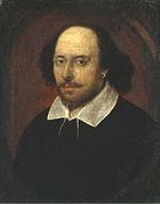
William Shakespeare

William Shakespeare was an English people poet and playwright, widely regarded as the greatest writer in the English language and the world's preeminent dramatist....
 about two young "star-cross'd lovers
Star-crossed

"Star-crossed" or "star-crossed lovers" is a phrase describing a pair of lovers whose relationship is said to be doomed from the start. The phrase is astrology in origin, stemming from the belief that the positions of the stars ruled over people's fates....
" whose untimely deaths ultimately unite their feuding families. It was among Shakespeare's most popular plays during his lifetime and, along with Hamlet
Hamlet

Hamlet is a tragedy by William Shakespeare, believed to have been written between 1599 and 1601. The play, set in Denmark, recounts how Prince Hamlet exacts revenge on his uncle King Claudius, who has murdered King Hamlet, the King, and then taken the throne and married Gertrude ....
, is one of his most frequently performed plays.


Discussion
Ask a question about 'Romeo and Juliet'
Start a new discussion about 'Romeo and Juliet'
Answer questions from other users
Full Discussion Forum


Recent Posts


Quotations


Good-night, good-night! Parting is such sweet sorrowThat I shall say good-night till it be morrow.

Juliet, scene ii

I beg for justice, which thou, prince, must give;Romeo slew Tybalt, Romeo must not live.

Lady Capulet, scene i

I take thee at thy word:Call me but love, and I'll be new baptis'd;Henceforth I never will be Romeo.

Romeo, scene ii

Love goes toward love, as schoolboys from their books,But love from love, toward school with heavy looks.

Romeo, scene ii

Mercutio: If love be rough with you, be rough with love;Prick love for pricking, and you beat love down.

Scene iv

My only love sprung from my only hate!Too early seen unknown, and known too late!

Juliet, scene v


Encyclopedia


Romeo and Juliet Brown
Romeo and Juliet is a tragedy
Shakespearean tragedy

Shakespeare wrote tragedies from the beginning of his career. One of his earliest plays was the Roman tragedy Titus Andronicus, which he followed a few years later with Romeo and Juliet....
 written early in the career of playwright William Shakespeare
William Shakespeare

William Shakespeare was an English people poet and playwright, widely regarded as the greatest writer in the English language and the world's preeminent dramatist....
 about two young "star-cross'd lovers
Star-crossed

"Star-crossed" or "star-crossed lovers" is a phrase describing a pair of lovers whose relationship is said to be doomed from the start. The phrase is astrology in origin, stemming from the belief that the positions of the stars ruled over people's fates....
" whose untimely deaths ultimately unite their feuding families. It was among Shakespeare's most popular plays during his lifetime and, along with
Hamlet
Hamlet

Hamlet is a tragedy by William Shakespeare, believed to have been written between 1599 and 1601. The play, set in Denmark, recounts how Prince Hamlet exacts revenge on his uncle King Claudius, who has murdered King Hamlet, the King, and then taken the throne and married Gertrude ....
, is one of his most frequently performed plays. Today, the title characters are regarded as archetypal
Archetype

An archetype is an original model of a person, ideal example, or a prototype after which others are copied, patterned, or emulated; a symbol universally recognized by all....
 young lovers.

Romeo and Juliet belongs to a tradition of tragic romances stretching back to antiquity. Its plot is based on an Italian tale, translated into verse as The Tragical History of Romeus and Juliet
The Tragical History of Romeus and Juliet

The Tragical History of Romeus and Juliet is a narrative poem, first published in 1562 by Arthur Brooke , who is reported to have translated it from an Italian poem by Bandello....
by Arthur Brooke in 1562, and retold in prose in Palace of Pleasure by William Painter
William Painter

William Painter , English author, was a native of Kent. He matriculated at St John's College, Cambridge, in 1554. In 1561 he became clerk of the ordnance in the Tower of London, a position in which he appears to have amassed a fortune out of the public funds....
 in 1582. Shakespeare borrowed heavily from both, but developed supporting characters, particularly Mercutio
Mercutio

Mercutio is a character in William Shakespeare's famous tragedy, Romeo and Juliet. He is a relative of the Prince Escalus and Count Paris, and is a close friend of Romeo Montague, and Romeo's cousin Benvolio....
 and Paris
Count Paris

In William Shakespeare's Romeo and Juliet, Count Paris is a suitor of Juliet Capulet's. He is handsome, arrogant, and wealthy, and a kinsman of Prince Escalus....
, in order to expand the plot. Believed to be written between 1591 and 1595, the play was first published in a quarto version in 1597. This text was of poor quality, and later editions corrected it, bringing it more in line with Shakespeare's original text.

Shakespeare's use of dramatic structure
Dramatic structure

Dramatic structure is the plot structure of a dramatic work such as a Play or screenplay. Many scholars have analyzed dramatic structure, beginning with Aristotle in his Poetics ....
, especially effects such as switching between comedy and tragedy to heighten tension, his expansion of minor characters, and his use of sub-plots to embellish the story, has been praised as an early sign of his dramatic skill. The play ascribes different poetic forms to different characters, sometimes changing the form as the character develops. Romeo, for example, grows more adept at the sonnet
Sonnet

The sonnet is one of the Poetry that can be found in lyric poetry from Europe.The term "sonnet" derives from the Occitan word sonet and the Italian language word sonetto, both meaning "little song"....
 over the course of the play.

Romeo and Juliet has been adapted numerous times for stage, film, musical and opera. During the Restoration
English Restoration

The English Restoration, or simply The Restoration began in 1660 when the English monarchy, Scottish monarchy and Irish monarchy were restored under Charles II of England after the Interregnum that followed the English Civil War....
, it was revived and heavily revised by William Davenant
William Davenant

Sir William Davenant , also spelled D'Avenant, was an England poet and playwright. Along with Thomas Killigrew, Davenant was one of the rare figures in English Renaissance theatre whose career spanned both the Literature in English#Caroline and Cromwellian literature and Literature in English#Restoration literature eras, and who was a...
. David Garrick's
David Garrick

David Garrick was an English actor, playwright, theatre manager and Theatrical producer who influenced nearly all aspects of theatrical practice throughout the 18th century and was a pupil and friend of Dr Samuel Johnson....
 18th-century version also modified several scenes, removing material then considered indecent, and Georg Benda's
Georg Benda

Jir? Anton?n Benda, also Georg Benda was a Czechs kapellmeister, violinist and composer.Born in Ben?tky nad Jizerou, Bohemia, he studied at Piarists Gymnasium in Kosmonosy and at Society of Jesus Gymnasium in Jic?n in 1735?1742....
 operatic adaptation omitted much of the action and added a happy ending. Performances in the 19th century, including Charlotte Cushman's, restored the original text, and focused on greater realism. John Gielgud's
John Gielgud

Sir Arthur John Gielgud, Order of Merit , Companion of Honour was an England actor and singer, particularly known for his warm and expressive voice, which his colleague Alec Guinness likened to "a silver trumpet muffled in silk"....
 1935 version kept very close to Shakespeare's text, and used Elizabethan costumes and staging to enhance the drama. In the 20th century the play has been adapted in versions as diverse as MGM's comparatively faithful 1936 film
Romeo and Juliet (1936 film)

----Romeo and Juliet is a film adaptation of the play by William Shakespeare, directed by George Cukor from a screenplay by Talbot Jennings....
, the 1950s stage musical
West Side Story
West Side Story

West Side Story is a musical with a book by Arthur Laurents, music by Leonard Bernstein, and lyrics by Stephen Sondheim. The musical is based on William Shakespeare's Romeo and Juliet....
, and 1996's MTV-inspired Romeo + Juliet.

Major and supporting characters


Romeo and Juliet depicts the interactions between three prominent families (or houses) in Verona.

House of Capulet
  • Capulet
    Lord Capulet

    Lord Capulet, in William Shakespeare?s Romeo and Juliet, is a loving, but controlling father. Lord Capulet is the head of his family and father to Juliet Capulet....
    is the patriarch of the house of Capulet.
  • Lady Capulet
    Characters in Romeo and Juliet

    The following is a list of characters in William Shakespeare's Romeo and Juliet, sorted by family allegiance, and alphabetically by first name where applicable....
    is the matriarch of the house of Capulet.
  • Juliet
    Juliet Capulet

    Juliet Capulet is one of the title characters in William Shakespeare's tragedy Romeo and Juliet. The story has a long history that precedes Shakespeare himself....
    is the daughter of the Capulets, and is the play's female protagonist.
  • Tybalt
    Tybalt

    Tybalt is a fictional character in William Shakespeare's play Romeo and Juliet. He is Juliet's hateful cousin and Romeo's rival....
    is a cousin of Juliet, and the nephew of Lady Capulet.
  • The Nurse
    Nurse (Romeo and Juliet)

    The Nurse is a major character in William Shakespeare's classic drama Romeo and Juliet. It is revealed later in the play by Lord Capulet that the Nurse's real name is Angelica....
    is Juliet's personal attendant and confidante.
  • Peter, Samson and Gregory are servants of the Capulet household.
Ruling house of Verona
  • Prince Escalus
    Prince Escalus

    Prince Escalus, fictional Prince of Verona, is the mediator of the feuding families in William Shakespeare's Romeo and Juliet. Escalus is the voice of authority in Verona....
    is the ruling Prince of Verona
    Verona

    Verona is a city in Veneto, northern Italy, one of the seven provincial capitals in the region. It is one of the main tourist destinations in north-eastern Italy, thanks to its artistic heritage, several annual fairs, shows and operas, such as the lyrical season in the Arena, the ancient amphitheatre built by the Romans....
  • Count Paris
    Count Paris

    In William Shakespeare's Romeo and Juliet, Count Paris is a suitor of Juliet Capulet's. He is handsome, arrogant, and wealthy, and a kinsman of Prince Escalus....
    is a kinsman of Escalus who wishes to marry Juliet.
  • Mercutio
    Mercutio

    Mercutio is a character in William Shakespeare's famous tragedy, Romeo and Juliet. He is a relative of the Prince Escalus and Count Paris, and is a close friend of Romeo Montague, and Romeo's cousin Benvolio....
    is another kinsman of Escalus, and a friend of Romeo.
House of Montague
  • Montague
    Characters in Romeo and Juliet

    The following is a list of characters in William Shakespeare's Romeo and Juliet, sorted by family allegiance, and alphabetically by first name where applicable....
    is the patriarch of the house of Montague.
  • Lady Montague
    Characters in Romeo and Juliet

    The following is a list of characters in William Shakespeare's Romeo and Juliet, sorted by family allegiance, and alphabetically by first name where applicable....
    is the matriarch of the house of Montague.
  • Romeo
    Romeo Montague

    Romeo Montague is one of the fictional protagonists in William Shakespeare's Romeo and Juliet. He is the heir of the Montague family of Verona, and falls in love and dies with Juliet Capulet, the daughter of the Capulet house....
    is the son of the Montagues, and is the play's male protagonist.
  • Benvolio
    Benvolio

    Benvolio Montague is a fictional character in William Shakespeare's drama Romeo and Juliet....
    is a cousin, and friend, of Romeo.
  • Abram and Balthasar are servants of the Montague household.
Others
  • Friar Laurence
    Friar Lawrence

    Friar Laurence is a character in William Shakespeare's play Romeo and Juliet....
    is a Franciscan
    Franciscan

    The term Franciscan is commonly used to refer to members of Catholic religious orders that follow a body of regulations known as "The rule of St....
     friar, and is Romeo's confidant.
  • A Chorus reads a prologue
    Prologue

    Prologue , or prolog, is a preferred piece of writing. The Greek prologos included the modern meaning of prologue, but was of wider significance, embracing any kind of preface, like the Latin praefatio....
     to each of the first two acts.
  • Friar John is sent to deliver Friar Laurence's letter to Romeo.
  • An Apothecary reluctantly sells Romeo poison.
  • Rosaline
    Rosaline

    Rosaline is an unseen character and niece of Lord Capulet in William Shakespeare tragedy Romeo and Juliet . Although silent, her role is important: her lover, Romeo Montague, first spots Juliet Capulet while trying to catch a glimpse of Rosaline at a Capulet gathering....
    is an unseen character
    Unseen character

    Unseen characters are never directly observed by the audience but are only described by other characters. They are a common device in drama and have been called "triumphs of theatrical invention"....
     with whom Romeo is in love before meeting Juliet.


Synopsis


The play starts with a street brawl between Montagues
Characters in Romeo and Juliet

The following is a list of characters in William Shakespeare's Romeo and Juliet, sorted by family allegiance, and alphabetically by first name where applicable....
 and Capulets
Characters in Romeo and Juliet

The following is a list of characters in William Shakespeare's Romeo and Juliet, sorted by family allegiance, and alphabetically by first name where applicable....
. The Prince of Verona
Prince Escalus

Prince Escalus, fictional Prince of Verona, is the mediator of the feuding families in William Shakespeare's Romeo and Juliet. Escalus is the voice of authority in Verona....
 intervenes and declares that further breach of the peace will be punishable by death. Later, Count Paris
Count Paris

In William Shakespeare's Romeo and Juliet, Count Paris is a suitor of Juliet Capulet's. He is handsome, arrogant, and wealthy, and a kinsman of Prince Escalus....
 talks to Lord Capulet
Lord Capulet

Lord Capulet, in William Shakespeare?s Romeo and Juliet, is a loving, but controlling father. Lord Capulet is the head of his family and father to Juliet Capulet....
 about marrying his daughter, but Capulet is wary of the request because Juliet
Juliet Capulet

Juliet Capulet is one of the title characters in William Shakespeare's tragedy Romeo and Juliet. The story has a long history that precedes Shakespeare himself....
 is still only thirteen. Capulet asks Paris to wait another two years and invites him to attend a planned Capulet ball
Ball (dance)

A ball is a formal dance. The word 'ball' is derived from the Latin word "ballare", meaning 'to dance'; the term also derived into "bailar", which is the Spanish language and Portuguese language word for dance ....
. Lady Capulet and Juliet's nurse try to persuade Juliet to accept Paris' courtship. After the brawl, Benvolio
Benvolio

Benvolio Montague is a fictional character in William Shakespeare's drama Romeo and Juliet....
 talks with his cousin Romeo
Romeo Montague

Romeo Montague is one of the fictional protagonists in William Shakespeare's Romeo and Juliet. He is the heir of the Montague family of Verona, and falls in love and dies with Juliet Capulet, the daughter of the Capulet house....
, Lord Montague's son, about Romeo's recent depression. Benvolio discovers that it stems from unrequited love for a girl named Rosaline
Rosaline

Rosaline is an unseen character and niece of Lord Capulet in William Shakespeare tragedy Romeo and Juliet . Although silent, her role is important: her lover, Romeo Montague, first spots Juliet Capulet while trying to catch a glimpse of Rosaline at a Capulet gathering....
, one of Lord Capulet's nieces. Persuaded by Benvolio and Mercutio
Mercutio

Mercutio is a character in William Shakespeare's famous tragedy, Romeo and Juliet. He is a relative of the Prince Escalus and Count Paris, and is a close friend of Romeo Montague, and Romeo's cousin Benvolio....
, Romeo attends the ball at the Capulet house in hopes of meeting Rosaline. However, Romeo instead meets and falls in love with Juliet. After the ball, in what is now called the "balcony scene", Romeo sneaks into the Capulet courtyard and overhears Juliet on her balcony vowing her love to him in spite of her family's hatred of the Montagues. Romeo makes himself known to her and they agree to be married.

With the help of Friar Laurence
Friar Lawrence

Friar Laurence is a character in William Shakespeare's play Romeo and Juliet....
, who hopes to reconcile the two families through their children's union, they are married secretly the next day. Juliet's cousin Tybalt
Tybalt

Tybalt is a fictional character in William Shakespeare's play Romeo and Juliet. He is Juliet's hateful cousin and Romeo's rival....
, offended that Romeo had sneaked into the Capulet ball, challenges him to a duel. Romeo, now considering Tybalt his kinsman, refuses to fight him. Mercutio is incensed by Tybalt's insolence, as well as Romeo's "vile submission", and accepts the duel on Romeo's behalf. Mercutio is fatally wounded and Romeo, angered by his friend's death, pursues and slays Tybalt. The Prince exiles Romeo from Verona for the killing. He also adds that if Romeo returns, "that hour is his last". Lord Capulet, misinterpreting Juliet's grief, agrees to marry her to Count Paris and threatens to disown her when she refuses to become Paris's "joyful bride". When she then pleads for the marriage to be delayed, her mother rejects her. Romeo secretly spends the night in Juliet's chamber, where they consummate
Consummate

Consummation or consummation of a marriage, in many traditions and statutes of civil or religious law, is the first act of sexual intercourse between two people, following their marriage to each other....
 their marriage.

Juliet visits Friar Laurence for help, and he offers her a drug that will put her into a death-like coma for "two and forty hours". The Friar promises to send a messenger to inform Romeo of the plan, so that he can rejoin her when she awakens. On the night before the wedding, she takes the drug and, when discovered apparently dead, she is laid in the family crypt.

The messenger, however, does not reach Romeo and, instead, he learns of Juliet's apparent death from his servant Balthasar. Grief-stricken, Romeo buys poison from an apothecary
Characters in Romeo and Juliet

The following is a list of characters in William Shakespeare's Romeo and Juliet, sorted by family allegiance, and alphabetically by first name where applicable....
 and goes to the Capulet crypt. He encounters Paris who has come to mourn Juliet privately. Believing Romeo to be a vandal Paris confronts him and, in the ensuing battle, Romeo kills Paris. Still believing Juliet to be dead, he drinks the poison. Juliet then awakens and, finding Romeo dead, stabs herself with his dagger. The feuding families and the Prince meet at the tomb to find all three dead. Friar Laurence recounts the story of the two "star-cross'd lovers". The families are reconciled by their children's deaths and agree to end their violent feud. The play ends with the Prince's elegy for the lovers: "For never was a story of more woe / Than this of Juliet and her Romeo."

Sources


Romeo and Juliet borrows from a tradition of tragic love stories dating back to antiquity. One of these is Pyramus and Thisbe
Pyramus and Thisbe

The love story of Pyramus and Thisbe, is a part of Roman mythology, and is also a sentimental romance. The tale is told by Ovid in his Metamorphoses ....
, from Ovid's
Ovid

Publius Ovidius Naso was a Roman Empire poet known as Ovid to the English language-speaking world, who wrote about love, seduction, and Roman mythology transformation....
 Metamorphoses, which contains parallels to Shakespeare's story: the lovers' parents despise each other, and Pyramus falsely believes his lover Thisbe is dead. The
Ephesiaca
Ephesian Tale

The Ephesian Tale of Anthia and Habrocomes by Xenophon of Ephesus is a Novel#Individual Novels Discussed written in the mid-2nd century Common Era....
of Xenophon of Ephesus
Xenophon of Ephesus

Xenophon of Ephesus was a Roman and Byzantine Greece writer. His surviving work is the Ephesian Tale, one of the earliest novels as well as one of the sources for Shakespeare's Romeo and Juliet....
, written in the 3rd century, also contains several similarities to the play, including the separation of the lovers, and a potion which induces a deathlike sleep.

The earliest known version of the
Romeo and Juliet tale is the story of Mariotto and Gianozza by Masuccio Salernitano
Masuccio Salernitano

Masuccio Salernitano, born Tommaso Guardati, was an Italy poet.Born in Salerno or Sorrento, Italy, he is best known today for Il Novellino, a collection of 50 "novelle" or short stories, each prefaced by a letter of dedication to a famous person and with an epilogue containing the "moral" of the story....
, in the 33rd novel of his
Il Novellino published in 1476. Salernitano sets the story in Siena
Siena

Siena is a city in Tuscany, Italy. It is the capital of the province of Siena.The historic centre of Siena has been declared by UNESCO a World Heritage Site....
 and insists its events took place in his own lifetime. His version of the story includes the secret marriage, the colluding friar, the fray where a prominent citizen is killed, Mariotto's exile, Gianozza's forced marriage, the potion plot, and the crucial message that goes astray. In this version, Mariotto is caught and beheaded and Gianozza dies of grief.

Luigi da Porto
Luigi Da Porto

Luigi Da Porto was an Italy writer and storiographer, better known as the author of the novel with the story of Romeo and Juliet, later reprised by William Shakespeare for his famous drama....
 adapted the story as
Giulietta e Romeo and included it in his Historia novellamente ritrovata di due Nobili Amanti published in 1530. Da Porto drew on Pyramus and Thisbe and Boccacio's
Giovanni Boccaccio

Giovanni Boccaccio was an Italy author and poet, a friend and correspondent of Petrarch, an important Renaissance humanism and the author of a number of notable works including the Decameron, On Famous Women, and his poetry in the Italian vernacular....
 Decameron. He gave it much of its modern form, including the names of the lovers, the rival families of Montecchi and Capuleti, and the location in Verona
Verona

Verona is a city in Veneto, northern Italy, one of the seven provincial capitals in the region. It is one of the main tourist destinations in north-eastern Italy, thanks to its artistic heritage, several annual fairs, shows and operas, such as the lyrical season in the Arena, the ancient amphitheatre built by the Romans....
. He also introduces characters corresponding to Shakespeare's Mercutio
Mercutio

Mercutio is a character in William Shakespeare's famous tragedy, Romeo and Juliet. He is a relative of the Prince Escalus and Count Paris, and is a close friend of Romeo Montague, and Romeo's cousin Benvolio....
, Tybalt
Tybalt

Tybalt is a fictional character in William Shakespeare's play Romeo and Juliet. He is Juliet's hateful cousin and Romeo's rival....
, and Paris
Count Paris

In William Shakespeare's Romeo and Juliet, Count Paris is a suitor of Juliet Capulet's. He is handsome, arrogant, and wealthy, and a kinsman of Prince Escalus....
. Da Porto presents his tale as historically true and claims it took place in the days of Bartolomeo II della Scala
Bartolomeo II della Scala

Bartolomeo II della Scala was lord of Verona from 1375 until his death, together with his brother Paolo Alboino della Scala.The illegitimate son of Cansignorio della Scala, he obtained the power in Verona after the latter's death by assassinating Cansignorio's brother, Paolo Alboino della Scala....
 (a century earlier than Salernitano). Montecchi and Capuleti were actual 13th-century political factions, but the only connection between them is a mention in Dante's
DANTE

DANTE is a not-for-profit organisation that plans, builds and operates the international networks that interconnect the various National Research and Education Networks in Europe and surrounding regions....
 Purgatorio as an example of civil dissention. In da Porto's version Romeo takes poison and Giulietta stabs herself with his dagger.

In 1554, Matteo Bandello
Matteo Bandello

Matteo Bandello was an Italian writer....
 published the second volume of his
Novelle which included his version of Giuletta e Romeo. Bandello emphasises Romeo's initial depression and the feud between the families, and introduces the Nurse and Benvolio
Benvolio

Benvolio Montague is a fictional character in William Shakespeare's drama Romeo and Juliet....
. Bandello's story was translated into French by Pierre Boaistuau
Pierre Boaistuau

Pierre Boaistuau, known as Pierre Launay was a French author, editor, translator. He was the first editor of the works of Marguerite de Navarre....
 in 1559 in the first volume of his
Histories Tragiques. Boaistuau adds much moralising and sentiment, and the characters indulge in rhetorical outbursts.

In his 1562 narrative poem
Narrative poetry

Narrative poetry is poetry that tells a story and is a snapshot of a poet's thoughts and feelings. The poems may be short or long, and the story it relates to may be simple or complex....
 
The Tragical History of Romeus and Juliet

The Tragical History of Romeus and Juliet is a narrative poem, first published in 1562 by Arthur Brooke , who is reported to have translated it from an Italian poem by Bandello....
, Arthur Brooke translated Boaistuau faithfully, but adjusted it to reflect parts of Chaucer's Troilus and Criseyde
Troilus and Criseyde

Troilus and Criseyde is Geoffrey Chaucer's poem in rhyme royal re-telling the tragic love story of Troilus, a Troy prince, and Cressida. Scholarly consensus is that Chaucer completed Troilus and Criseyde by the mid 1380's....
. There was a trend among writers and playwrights to publish works based on Italian novelles—Italian tales were very popular among theatre-goers—and Shakespeare may well have been familiar with William Painter's
William Painter

William Painter , English author, was a native of Kent. He matriculated at St John's College, Cambridge, in 1554. In 1561 he became clerk of the ordnance in the Tower of London, a position in which he appears to have amassed a fortune out of the public funds....
 1567 collection of Italian tales titled
Palace of Pleasure. This collection included a version in prose of the Romeo and Juliet story named "The goodly History of the true and constant love of Rhomeo and Julietta". Shakespeare took advantage of this popularity: The Merchant of Venice
The Merchant of Venice

The Merchant of Venice is a play by William Shakespeare, believed to have been written between 1596 and 1598. Although classified as a Shakespearean comedies in the First Folio, and while it shares certain aspects with Shakespeare's other romantic comedy, the play is perhaps more remembered for its dramatic scenes, and is best known for...
, Much Ado About Nothing
Much Ado About Nothing

Much Ado About Nothing is a romantic Shakespearean comedy by William Shakespeare set in Messina, Sicily. The story concerns a pair of lovers named Claudio and Hero who are due to be married in a week....
, All's Well That Ends Well
All's Well That Ends Well

All's Well That Ends Well is a play by William Shakespeare. It was probably written between 1601 in literature and 1608 in literature, and it was first published in the First Folio in 1623 in literature....
, Measure for Measure
Measure for Measure

Measure for Measure is a Play by William Shakespeare, believed to have been written in 1603 or 1604. It was originally classified as a comedy, but is now also classified as one of Shakespeare's Problem plays s....
, and Romeo and Juliet are all from Italian novelle. Romeo and Juliet is a dramatisation of Brooke's translation, and Shakespeare follows the poem closely, but adds extra detail to both major and minor characters (in particular the Nurse and Mercutio).

Christopher Marlowe's
Christopher Marlowe

Christopher "Kit" Marlowe was an Kingdom of England Playwright, poet and translator of the Elizabethan era. The foremost English Renaissance theatre tragedy next to William Shakespeare, he is known for his blank verse, his overreaching protagonists, and his own mysterious and untimely death....
 
Hero and Leander
Hero and Leander (poem)

Hero and Leander is a mythological poem by Christopher Marlowe. After Marlowe's death it was completed by George Chapman. Henry Petowe published an alternate completion to the poem....
and Dido, Queen of Carthage
Dido, Queen of Carthage

Dido, Queen of Carthage is a short play written by the English playwright Christopher Marlowe, with possible contributions by Thomas Nashe....
, both similar stories written in Shakespeare's day, are thought to be less of a direct influence, although they may have helped create an atmosphere in which tragic love stories could thrive.

Date and text

It is unknown when exactly Shakespeare wrote
Romeo and Juliet. Juliet's nurse refers to an earthquake which she says occurred 11 years ago. An earthquake did occur in England in 1580, possibly dating that particular line to 1591, although other earthquakes—both in England and in Verona—have been proposed in support of different dates. But the play's stylistic similarities with A Midsummer Night's Dream and other plays conventionally dated around 1594–95, place its composition sometime between 1591 and 1595. One conjecture is that Shakespeare may have begun a draft in 1591, which he completed in 1595.

Shakespeare's
Romeo and Juliet was published in two quarto
Quarto (text)

A quarto is a term in printing, referring to a size of book common in the early modern era. Quarto texts were printed on the two sides of large paper sheets, measuring 9" by 12" , roughly the size of most modern magazines....
 editions prior to the publication of the First Folio
First Folio

Mr. William Shakespeares Comedies, Histories, & Tragedies is the 1623 published collection of William Shakespeare's plays. Modern scholars commonly refer to it as the First Folio....
 of 1623. These are referred to as Q1 and Q2. The first printed edition, Q1, appeared in early 1597, printed by John Danter. Because its text contains numerous differences from the later editions, it is labelled a 'bad quarto
Bad quarto

Bad quarto is a term and concept developed by twentieth-century William Shakespeare scholarly method to explain some problems in the early transmission of the texts of Shakespearean works....
'; the 20th-century editor T. J. B. Spencer described it as "a detestable text, probably a reconstruction of the play from the imperfect memories of one or two of the actors", suggesting that it had been pirated for publication. An alternative explanation for Q1's shortcomings is that the play (like many others of the time) may have been heavily edited before performance by the playing company. In any event, its appearance in early 1597 makes 1596 the latest possible date for the play's composition.

The superior Q2 called the play
The Most Excellent and Lamentable Tragedie of Romeo and Juliet. It was printed in 1599 by Thomas Creede
Thomas Creede

Thomas Creede was a printer of the Elizabethan era and Jacobean era eras, rated as "one of the best of his time." Based in London, he conducted his business under the sign of the Catherine Wheel in Thames Street from 1593 to 1600, and under the sign of the Eagle and Child in the Old Exchange from 1600 to 1617....
 and published by Cuthbert Burby
Cuthbert Burby

Cuthbert Burby was a London bookseller and publisher of the Elizabethan era and early Jacobean era eras. He is remembered for publishing a series of significant volumes of English Renaissance theatre, including works by William Shakespeare, Robert Greene, John Lyly, and Thomas Nashe....
. Q2 is about 800 lines longer than Q1. Its title page describes it as "Newly corrected, augmented and amended". Scholars believe that Q2 was based on Shakespeare's pre-performance draft (called his foul papers
Foul papers

Foul papers is a term that refers to an author's working drafts, most often applied in the study of the plays of Shakespeare and other dramatists of English Renaissance theatre....
), since there are textual oddities such as variable tags for characters and "false starts" for speeches that were presumably struck through by the author but erroneously preserved by the typesetter. It is a much more complete and reliable text, and was reprinted in 1609 (Q3), 1622 (Q4) and 1637 (Q5). In effect, all later Quartos and Folios of
Romeo and Juliet are based on Q2, as are all modern editions since editors believe that any deviations from Q2 in the later editions (whether good or bad) are likely to arise from editors or compositors, not from Shakespeare.

The First Folio text of 1623 was based primarily on Q3, with clarifications and corrections possibly coming from a theatrical promptbook or Q1. Other Folio editions of the play were printed in 1632 (F2), 1664 (F3), and 1685 (F4). Modern versions—that take into account several of the Folios and Quartos—first appeared with Nicholas Rowe's
Nicholas Rowe (dramatist)

Nicholas Rowe , England dramatist, poet and miscellaneous writer, was appointed Poet Laureate in 1715....
 1709 edition, followed by Alexander Pope's
Alexander Pope

Alexander Pope is generally regarded as the greatest England poet of the eighteenth century, best known for his satirical verse and for his translation of Homer....
 1723 version. Pope began a tradition of editing the play to add information such as stage directions missing in Q2 by locating them in Q1. This tradition continued late into the Romantic
Romanticism

Romanticism is a complex artistic, literary, and intellectual movement that originated in the second half of the 18th century in Western Europe, and gained strength during the Industrial Revolution....
 period. Fully annotated editions first appeared in the Victorian period and continue to be produced today, printing the text of the play with footnotes describing the sources and culture behind the play.

Themes and motifs

Scholars have found it extremely difficult to assign one specific, over-arching theme
Theme (literature)

A theme is a simile used to relate to idioms and or literary work a message or lesson conveyed by a written text. This message is usually about life, society or human nature....
 to the play. Proposals for a main theme include a discovery by the characters that human beings are neither wholly good nor wholly evil, but instead are more or less alike, awaking out of a dream and into reality, the danger of hasty action, or the power of tragic fate. None of these have widespread support. However, even if an overall theme cannot be found it is clear that the play is full of several small, thematic elements which intertwine in complex ways. Several of those which are most often debated by scholars are discussed below.

Love


Romeo and Juliet is sometimes considered to have no unifying theme, save that of young love. Romeo and Juliet have become emblematic of young lovers and doomed love. Since it is such an obvious subject of the play, several scholars have explored the language and historical context behind the romance of the play.

On their first meeting, Romeo and Juliet use a form of communication recommended by many etiquette authors in Shakespeare's day: metaphor. By using metaphors of saints and sins, Romeo was able to test Juliet's feelings for him in a non-threatening way. This method was recommended by Baldassare Castiglione
Baldassare Castiglione

Baldassare Castiglione, count of Novilara , was an Italy courtier, diplomat, soldier and a prominent Renaissance author....
 (whose works had been translated into English by this time). He pointed out that if a man used a metaphor as an invitation, the woman could pretend she did not understand him, and he could retreat without losing honour. Juliet, however, participates in the metaphor and expands on it. The religious metaphors of "shrine", "pilgrim" and "saint" were fashionable in the poetry of the time and more likely to be understood as romantic rather than blasphemous, as the concept of sainthood was associated with the Catholicism of an earlier age. Later in the play, Shakespeare removes the more daring allusions to Christ's resurrection in the tomb he found in his source work: Brooke's
Romeus and Juliet
The Tragical History of Romeus and Juliet

The Tragical History of Romeus and Juliet is a narrative poem, first published in 1562 by Arthur Brooke , who is reported to have translated it from an Italian poem by Bandello....
.

In the later balcony scene, Shakespeare has Romeo overhear Juliet's soliloquy, but in Brooke's version of the story her declaration is done alone. By bringing Romeo into the scene to eavesdrop, Shakespeare breaks from the normal sequence of courtship. Usually a woman was required to be modest and shy to make sure that her suitor was sincere, but breaking this rule serves to speed along the plot. The lovers are able to skip a lengthy part of wooing, and move on to plain talk about their relationship—developing into an agreement to be married after knowing each other for only one night. In the final suicide scene, there is a contradiction in the message—in the Catholic religion, suicides were often thought to be condemned to hell, whereas people who die to be with their loves under the "Religion of Love
Courtly love

Courtly love was a medieval European conception of nobly and chivalry expressing love and admiration. Generally, courtly love was secret and between members of the nobility....
" are joined with their loves in paradise. Romeo and Juliet's love seems to be expressing the "Religion of Love" view rather than the Catholic view. Another point is that although their love is passionate, it is only consummated in marriage, which prevents them from losing the audience's sympathy.

The play arguably equates love and sex with death. Throughout the story, both Romeo and Juliet, along with the other characters, fantasise about it as a dark being
Death (personification)

Death as a sentient entity is a concept that has existed in many societies since the beginning of history. In English, death is often given the name the "Grim Reaper" and from the 15th century onwards came to be shown as a skeletal figure carrying a large scythe and clothed in a black cloak with a hood....
, often equating it with a lover. Capulet, for example, when he first discovers Juliet's (faked) death, describes it as having deflowered
Virginity

A Virgin is, originally, a woman who has never had sexual intercourse. Virginity is the state of being a virgin. The term has traditionally also been applied to men....
 his daughter. Juliet later erotically compares Romeo and death. Right before her suicide she grabs Romeo's dagger, saying "O happy dagger! This is thy sheath. There rust, and let me die."

Fate and chance


Scholars are divided on the role of fate in the play. No consensus exists on whether the characters are truly fated to die together or whether the events take place by a series of unlucky chances. Arguments in favour of fate often refer to the description of the lovers as "star-cross'd". This phrase seems to hint that the stars have predetermined the lovers' future. John W. Draper points out the parallels between the Elizabethan belief in the four humours
Humorism

Humourism, or humouralism, was a theory of the makeup and workings of the human body adopted by Ancient Greek medicine and Medicine in ancient Rome and Greek philosophy....
 and the main characters of the play (for example, Tybalt as a choleric). Interpreting the text in the light of humours reduces the amount of plot attributed to chance by modern audiences. Still, other scholars see the play as a series of unlucky chances—many to such a degree that they do not see it as a tragedy at all, but an emotional melodrama
Melodrama

The theatrical genre of Melodrama utilizes theme-music to manipulate the spectator's emotional response and to denote character types. The term combines "melody" and "drama"....
. Ruth Nevo believes the high degree to which chance is stressed in the narrative makes
Romeo and Juliet a "lesser tragedy" of happenstance, not of character. For example, Romeo's challenging Tybalt is not impulsive, it is, after Mercutio's death, the expected action to take. In this scene, Nevo reads Romeo as being aware of the dangers of flouting social norms
Norm (sociology)

A Social norm is the sociology term for the behavioral expectations and cues within a society or group. They have been defined as "the rules that a group uses for appropriate and inappropriate values, beliefs, attitudes and behaviors....
, identity and commitments. He makes the choice to kill, not because of a tragic flaw, but because of circumstance.

Light and dark


Scholars have long noted Shakespeare's widespread use of light and dark imagery
Imagery

Imagery is used in literature to refer to descriptive language that evokes sensory experience....
 throughout the play. Caroline Spurgeon considers the theme of light as "symbolic of the natural beauty of young love" and later critics have expanded on this interpretation. For example, both Romeo and Juliet see the other as light in a surrounding darkness. Romeo describes Juliet as being like the sun, brighter than a torch, a jewel sparkling in the night, and a bright angel among dark clouds. Even when she lies apparently dead in the tomb, he says her "beauty makes / This vault a feasting presence full of light." Juliet describes Romeo as "day in night" and "Whiter than snow upon a raven's back." This contrast of light and dark can be expanded as symbols—contrasting love and hate, youth and age in a metaphoric way. Sometimes these intertwining metaphors create dramatic irony
Irony

Irony is a Literary technique or rhetorical device, in which there is an wiktionary:incongruous or wiktionary:discordance between what one says or does and what one means or what is generally understood....
. For example, Romeo and Juliet's love is a light in the midst of the darkness of the hate around them, but all of their activity together is done in night and darkness, while all of the feuding is done in broad daylight. This paradox of imagery adds atmosphere to the moral dilemma
Ethical dilemma

An ethical dilemma is a situation that will often involve an apparent conflict between moral imperatives, in which to obey one would result in transgressing another....
 facing the two lovers: loyalty to family or loyalty to love. At the end of the story, when the morning is gloomy and the sun hiding its face for sorrow, light and dark have returned to their proper places, the outward darkness reflecting the true, inner darkness of the family feud out of sorrow for the lovers. All characters now recognise their folly in light of recent events, and things return to the natural order, thanks to the love of Romeo and Juliet. The "light" theme in the play is also heavily connected to the theme of time, since light was a convenient way for Shakespeare to express the passage of time through descriptions of the sun, moon, and stars.

Time


Time plays an important role in the language and plot of the play. Both Romeo and Juliet struggle to maintain an imaginary world void of time in the face of the harsh realities that surround them. For instance, when Romeo swears his love to Juliet by the moon, she protests "O swear not by the moon, th'inconstant moon, / That monthly changes in her circled orb, / Lest that thy love prove likewise variable." From the very beginning, the lovers are designated as "star-cross'd" referring to an astrologic
Astrology

Astrology is a group of systems, traditions, and beliefs which hold that the relative positions of astronomical object and related details can provide useful information about personality, human affairs, and other terrestrial matters....
 belief associated with time. Stars were thought to control the fates of humanity, and as time passed, stars would move along their course in the sky, also charting the course of human lives below. Romeo speaks of a foreboding he feels in the stars' movements early in the play, and when he learns of Juliet's death, he defies the stars' course for him.

Another central theme is haste: Shakespeare's
Romeo and Juliet spans a period of four to six days, in contrast to Brooke's poem's spanning nine months. Scholars such as G. Thomas Tanselle believe that time was "especially important to Shakespeare" in this play, as he used references to "short-time" for the young lovers as opposed to references to "long-time" for the "older generation" to highlight "a headlong rush towards doom". Romeo and Juliet fight time to make their love last forever. In the end, the only way they seem to defeat time is through a death which makes them immortal through art.

Time is also connected to the theme of light and dark. In Shakespeare's day, plays were often performed at noon in broad daylight. This forced the playwright to use words to create the illusion of day and night in his plays. Shakespeare uses references to the night and day, the stars, the moon, and the sun to create this illusion. He also has characters frequently refer to days of the week and specific hours to help the audience understand that time has passed in the story. All in all, no fewer than 103 references to time are found in the play, adding to the illusion of its passage.

Criticism and interpretation


Critical history

Samuel Pepys
Critics have noted many weak points in
Romeo and Juliet, but it is still regarded as one of Shakespeare's best plays. The earliest known critic of the play was diarist Samuel Pepys
Samuel Pepys

Samuel Pepys, Fellow of the Royal Society was an English people Navy Board and Member of Parliament, who is now most famous for his diary. Although Pepys had no maritime experience, he rose by patronage, hard work and his talent for administration, to be the Chief Secretary to the Admiralty under James II of England....
, who wrote in 1662: "it is a play of itself the worst that I ever heard in my life." Poet John Dryden
John Dryden

John Dryden was an influential English poet, literary critic, translator, and playwright who dominated the literary life of English Restoration to such a point that the period came to be known in literary circles as the Age of Dryden....
 wrote 10 years later in praise of the play and its comic character Mercutio: "Shakespear show'd the best of his skill in his
Mercutio, and he said himself, that he was forc'd to kill him in the third Act, to prevent being killed by him." Criticism of the play in the 18th century was less sparse, but no less divided. Publisher Nicholas Rowe
Nicholas Rowe (dramatist)

Nicholas Rowe , England dramatist, poet and miscellaneous writer, was appointed Poet Laureate in 1715....
 was the first critic to ponder the theme of the play, which he saw as the just punishment of the two feuding families. In mid-century, writer Charles Gildon
Charles Gildon

Charles Gildon , was an English language hack writer who was, by turns, a translator, biographer, essayist, playwright, poet, author of fictional letters, fabulist, short story author, and critic....
 and philosopher Lord Kames argued that the play was a failure in that it did not follow the classical rules of drama: the tragedy must occur because of some character flaw
Hamartia

Hamartia is a term developed by Aristotle in his work Poetics . The term can simply be seen as a character?s flaw or error. The word hamartia is rooted in the notion of missing the mark and covers a broad spectrum that includes accident and mistake, as well as wrongdoing, error, or sin.....
, not an accident of fate. Writer and critic Samuel Johnson
Samuel Johnson

Samuel Johnson was an English author. Beginning as a Grub Street journalist, he made lasting contributions to English literature as a poet, essayist, moralist, novelist, literary critic, biographer, editor and lexicographer....
, however, considered it one of Shakespeare's "most pleasing" plays.

In the later part of the 18th and through the 19th century, criticism centred on debates over the moral message of the play. Actor and playwright David Garrick's
David Garrick

David Garrick was an English actor, playwright, theatre manager and Theatrical producer who influenced nearly all aspects of theatrical practice throughout the 18th century and was a pupil and friend of Dr Samuel Johnson....
 1748 adaptation excluded Rosaline: Romeo abandoning her for Juliet was seen as fickle and reckless. Critics such as Charles Dibdin
Charles Dibdin

Charles Dibdin , Kingdom of Great Britain musician, dramatist, novelist, actor and songwriter, the son of a parish clerk, was born in Southampton on or before 4 March 1745, and was the youngest of a family of 18....
 argued that Rosaline had been purposely included in the play to show how reckless the hero was, and that this was the reason for his tragic end. Others argued that Friar Laurence might be Shakespeare's spokesman in his warnings against undue haste. With the advent of the 20th century, these moral arguments were disputed by critics like Richard Green Moulton
Richard Green Moulton

Richard Green Moulton was a professor, author & lawyer born in England, 1849 and died in America on 15 August, 1924. He was the brother of William Fiddian Moulton, John Fletcher Moulton, and James Egan Moulton....
. He argued that accident, and not some character flaw, led to the lovers' deaths.

Dramatic structure

In
Romeo and Juliet, Shakespeare employs several dramatic techniques that have garnered praise from critics; most notably the abrupt shifts from comedy to tragedy (an example is the punning exchange between Romeo and Mercutio just before Tybalt arrives). Before Mercutio's death in Act three, the play is largely a comedy. After his accidental demise, the play suddenly becomes serious and takes on a tragic tone. When Romeo is banished, rather than executed, and Friar Laurence offers Juliet a plan to reunite her with Romeo, the audience can still hope that all will end well. They are in a "breathless state of suspense" by the opening of the last scene in the tomb: If Romeo is delayed long enough for the Friar to arrive, he and Juliet may yet be saved. These shifts from hope to despair, reprieve, and new hope, serve to emphasise the tragedy when the final hope fails and both the lovers die at the end.

Shakespeare also uses sub-plots to offer a clearer view of the actions of the main characters. For example, when the play begins, Romeo is in love with Rosaline, who has refused all of his advances. Romeo's infatuation with her stands in obvious contrast to his later love for Juliet. This provides a comparison through which the audience can see the seriousness of Romeo and Juliet's love and marriage. Paris' love for Juliet also sets up a contrast between Juliet's feelings for him and her feelings for Romeo. The formal language she uses around Paris, as well as the way she talks about him to her Nurse, show that her feelings clearly lie with Romeo. Beyond this, the sub-plot
Subplot

A subplot, sometimes referred to as a "B story" or a "C story" and so on, is a secondary Plot strand that is auxiliary to the main plot.Subplots may connect to main plots, in either time and place or in thematic significance....
 of the Montague–Capulet feud overarches the whole play, providing an atmosphere of hate that is the main contributor to the play's tragic end.

Language

Shakespeare uses a variety of poetic forms throughout the play. He begins with a 14-line prologue
Prologue

Prologue , or prolog, is a preferred piece of writing. The Greek prologos included the modern meaning of prologue, but was of wider significance, embracing any kind of preface, like the Latin praefatio....
 in the form of a Shakespearean sonnet, spoken by a Chorus. Most of
Romeo and Juliet is, however, written in blank verse
Blank verse

Blank verse is a type of poetry, distinguished by having a regular meter , but no rhyme. In English, the meter most commonly used with blank verse has been iambic pentameter ....
, and much of it in strict iambic pentameter
Iambic pentameter

Iambic pentameter is a type of meter that is used in poetry and drama. It describes a particular rhythm that the words establish in each Line ....
, with less rhythmic variation than in most of Shakespeare's later plays. In choosing forms, Shakespeare matches the poetry to the character who uses it. Friar Laurence, for example, uses sermon
Sermon

A sermon is an public speaking by a prophet or member of the clergy. Sermons address a Bible, Theology, Religion, or Morality topic, usually expounding on a type of belief, law or Human behavior within both past and present contexts....
 and sententiae
Sententiae

Sententiae are brief apophthegms from ancient sources, quoted without context. They were a tool of scholasticism, which was popular in the Middle Ages as a form of rhetoric....
 forms, and the Nurse uses a unique blank verse
Blank verse

Blank verse is a type of poetry, distinguished by having a regular meter , but no rhyme. In English, the meter most commonly used with blank verse has been iambic pentameter ....
 form that closely matches colloquial speech. Each of these forms is also moulded and matched to the emotion of the scene the character occupies. For example, when Romeo talks about Rosaline earlier in the play, he attempts to use the Petrarchan sonnet form. Petrarchan sonnets were often used by men to exaggerate the beauty of women who were impossible for them to attain, as in Romeo's situation with Rosaline. This sonnet form is used by Lady Capulet to describe Count Paris to Juliet as a handsome man. When Romeo and Juliet meet, the poetic form changes from the Petrarchan (which was becoming archaic in Shakespeare's day) to a then more contemporary sonnet form, using "pilgrims" and "saints" as metaphors. Finally, when the two meet on the balcony, Romeo attempts to use the sonnet form to pledge his love, but Juliet breaks it by saying "Dost thou love me?" By doing this, she searches for true expression, rather than a poetic exaggeration of their love. Juliet uses monosyllabic words with Romeo, but uses formal language with Paris. Other forms in the play include an epithalamium
Epithalamium

Epithalamium specifically refers to a form of poem that is written for the bride. Or, specifically, written for the bride on the way to her marital chamber....
 by Juliet, a rhapsody
Epic poetry

An epic is a lengthy narrative poem, ordinarily concerning a serious subject containing details of heroic deeds and events significant to a culture or nation....
 in Mercutio's Queen Mab
Queen Mab

Queen Mab is a fairy referred to in Shakespeare's play Romeo and Juliet. She also appears in other 17th century literature, and in various guises in later poetry, drama and cinema....
 speech, and an elegy
Elegy

An elegy is a mournful, melancholic or plaintive Poetry#Elegy, especially a funeral song or a lament for the dead....
 by Paris. Shakespeare saves his prose style most often for the common people in the play, though at times he uses it for other characters, such as Mercutio. Humour, also, is important: scholar Molly Mahood identifies at least 175 puns and wordplays in the text. Many of these jokes are sexual in nature, especially those involving Mercutio and the Nurse.

Psychoanalytic criticism

Early psychoanalytic critics saw the problem of
Romeo and Juliet in terms of Romeo's impulsiveness, deriving from "ill-controlled, partially disguised aggression", which leads both to Mercutio's death and to the double suicide. Romeo and Juliet is not considered to be exceedingly psychologically complex, and sympathetic psychoanalytic readings of the play make the tragic male experience equivalent with sicknesses. Norman Holland, writing in 1966, considers Romeo's dream as a realistic "wish fulfilling fantasy both in terms of Romeo's adult world and his hypothetical childhood at stages oral, phallic and oedipal" – while acknowledging that a dramatic character is not a human being with mental processes separate from those of the author. Critics such as Julia Kristeva
Julia Kristeva

Julia Kristeva is a Bulgarians-France philosopher, literary critic, psychoanalysis, French feminist, and, most recently, novelist, who has lived in France since the mid-1960s....
 focus on the hatred between the families, arguing that this hatred is the cause of Romeo and Juliet's passion for each other. That hatred manifests itself directly in the lovers' language: Juliet, for example, speaks of "my only love sprung from my only hate" and often expresses her passion through an anticipation of Romeo's death. This leads on to speculation as to the playwright's psychology, in particular to a consideration of Shakespeare's grief for the death of his son, Hamnet
Hamnet Shakespeare

Hamnet Shakespeare was the only son of William Shakespeare and Anne Hathaway , and the fraternal twin of Judith Quiney. He died at age eleven of unknown causes....
.

Feminist criticism

Feminist critics
Feminist literary criticism

Feminist literary criticism is literary criticism informed by feminist theory, or by the politics of feminism more broadly. Its history has been broad and varied, from classic works of nineteenth-century women authors such as George Eliot and Margaret Fuller to cutting-edge theoretical work in women's studies and gender studies by "third-wa...
 argue that the blame for the family feud lies in Verona's patriarchal society. For Coppélia Kahn, for example, the strict, masculine code of violence imposed on Romeo is the main force driving the tragedy to its end. When Tybalt kills Mercutio, Romeo shifts into this violent mode, regretting that Juliet has made him so "effeminate". In this view, the younger males "become men" by engaging in violence on behalf of their fathers, or in the case of the servants, their masters. The feud is also linked to male virility, as the numerous jokes about maidenheads aptly demonstrate. Juliet also submits to a female code of docility by allowing others, such as the Friar, to solve her problems for her. Other critics, such as Dympna Callaghan, look at the play's feminism
Feminism

Feminism is the belief that women should have equal political, social, sexual, intellectual and economic rights to men. It involves various movements, Theory, and philosophies, all concerned with issues of gender difference, that advocate equality for women and that campaign for women's rights and interests....
 from an historicist
Historicism

Historicism refers to philosophy theories that include one or both of two claims:# that there is an organic succession of developments, a notion also known as historism , and/or;...
 angle, stressing that when the play was written the feudal order was being challenged by increasingly centralised government and the advent of capitalism
Capitalism

Capitalism is an economic system in which wealth, and the means of producing wealth, are private property and controlled rather than commonly, publicly, or state-owned and controlled....
. At the same time, emerging Puritan
Puritan

A Puritan of 16th and 17th century England was an associate of any number of religious groups advocating for more "purity" of worship and doctrine, as well as personal and group pietism....
 ideas about marriage were less concerned with the "evils of female sexuality" than those of earlier eras, and more sympathetic towards love-matches: so when Juliet dodges her father's attempt to force her to marry a man she has no feeling for, she is challenging the patriarchal order in a way that would not have been possible at an earlier time.

Queer theory

Queer studies
Queer theory

Queer theory is a field of gender studies that emerged in the early 1990s out of the fields of Gay and lesbian studies and feminist studies. Heavily influenced by the work of Michel Foucault, queer theory builds both upon feminist challenges to the idea that gender is part of the Essentialism self and upon gay/lesbian studies' close examinat...
 critics question the sexuality of Mercutio and Romeo, comparing their friendship with sexual love. Mercutio, in friendly conversation, mentions Romeo's phallus
Phallus

Phallus can refer to a penis, or to an object shaped like a penis. The word comes from Vulgar Latin "phallus", from Ancient Greek "fa????" phallos, penis....
, suggesting traces of homoeroticism
Homoeroticism

Homoeroticism refers to the representation of same-sex love and desire, most especially as it is depicted or manifested in the visual arts and literature....
. An example is his joking wish "To raise a spirit in his mistress' circle ... letting it there stand / Till she had laid it and conjured it down." Romeo's homoeroticism can also be found in his attitude to Rosaline, a woman who is distant and unavailable and brings no hope of offspring. As Benvolio argues, she is best replaced by someone who will reciprocate. Shakespeare's procreation sonnets
Procreation sonnets

The term procreation sonnets is a name given to Shakespeare's sonnets numbers Sonnet 1 to Sonnet 17.They are referred to as the procreation sonnets because they all argue that the Shakespeare's sonnets#Fair Youth, to whom they are addressed, should marry and father children, hence, procreate....
 describe another young man who, like Romeo, is having trouble creating offspring and who may be seen as being a homosexual. Gender critics believe that Shakespeare may have used Rosaline as a way to express homosexual problems of procreation in an acceptable way. In this view, when Juliet says "...that which we call a rose [or Rosaline] / By any other name would smell as sweet", she may be raising the question of whether there is any difference between the beauty of a man and the beauty of a woman.

Afterlife


Shakespeare's day

Romeo and Juliet ranks with Hamlet
Hamlet

Hamlet is a tragedy by William Shakespeare, believed to have been written between 1599 and 1601. The play, set in Denmark, recounts how Prince Hamlet exacts revenge on his uncle King Claudius, who has murdered King Hamlet, the King, and then taken the throne and married Gertrude ....
as one of Shakespeare's most-performed plays. Its many adaptations have made it one of his most enduring and famous stories. Even in Shakespeare's lifetime it was extremely popular. Scholar Gary Taylor measures it as the sixth most popular of Shakespeare's plays, in the period after the death of Christopher Marlowe
Christopher Marlowe

Christopher "Kit" Marlowe was an Kingdom of England Playwright, poet and translator of the Elizabethan era. The foremost English Renaissance theatre tragedy next to William Shakespeare, he is known for his blank verse, his overreaching protagonists, and his own mysterious and untimely death....
 and Thomas Kyd
Thomas Kyd

Thomas Kyd was an England dramatist, the author of The Spanish Tragedy, and one of the most important figures in the development of Elizabethan drama....
 but before the ascendancy of Ben Jonson
Ben Jonson

Benjamin Jonson was an England English Renaissance dramatist, poet and actor. A contemporary of William Shakespeare, he is best known for his satire plays, particularly Volpone, The Alchemist , and Bartholomew Fair, which are considered his best, and his Lyric poetry poems....
 during which Shakespeare was London's dominant playwright. The date of the first performance is unknown. The First Quarto, printed in 1597, says that "it hath been often (and with great applause) plaid publiquely", setting the first performance prior to that date. The Lord Chamberlain's Men
Lord Chamberlain's Men

The Lord Chamberlain's Men was a playing company that William Shakespeare worked at as an actor and playwright for most of his career. Formed at the end of a period of flux in the theatrical world of London, it had become, by 1603, one of the two leading companies of the city and was subsequently patronized by James I of England....
 were certainly the first to perform it. Besides their strong connections with Shakespeare, the Second Quarto actually names one of its actors, Will Kemp
William Kempe

William Kempe , also spelled Kemp, was an England actor and dancer best known for being one of the original actors in William Shakespeare's plays....
, instead of Peter in a line in Act five. Richard Burbage
Richard Burbage

Richard Burbage was an actor and theatre owner. He was the younger brother of Cuthbert Burbage. They were both actors in drama.Burbage came from a poor family and was a popular actor by his early 20s....
 was probably the first Romeo, being the company's leading actor
Leading actor

A leading actor, leading actress, or simply lead, plays the role of the protagonist in a film or play. The word lead may also refer to the largest role in the piece and leading actor may refer to a person who typically plays such parts or an actor with a respected body of work....
, and Master Robert Goffe (a male) the first Juliet. The premiere is likely to have been at "The Theatre
The Theatre

The Theatre was an Elizabethan theatre located in Shoreditch , just outside the City of London. It was the second permanent theatre ever built in England, after the Red Lion , and the first successful one....
", with other early productions at "The Curtain
Curtain Theatre

The Curtain Theatre was an Elizabethan playhouse located in Curtain Close, Shoreditch , just outside the City of London. It opened in 1577, and continued staging plays until 1622....
".
Romeo and Juliet is one of the first Shakespearean plays to have been performed outside England: a shortened and simplified version was performed in Nördlingen
Nördlingen

N?rdlingen is a town in the Donau-Ries district, in Bavaria, Germany, with a population of 20,000. It is located in the middle of a giant Impact crater, called the N?rdlinger Ries....
 in 1604.

Restoration and 18th-century theatre

All theatres were closed down by the puritan
Puritan

A Puritan of 16th and 17th century England was an associate of any number of religious groups advocating for more "purity" of worship and doctrine, as well as personal and group pietism....
 government on 6 September 1642. Upon the restoration
English Restoration

The English Restoration, or simply The Restoration began in 1660 when the English monarchy, Scottish monarchy and Irish monarchy were restored under Charles II of England after the Interregnum that followed the English Civil War....
 of the monarchy in 1660, two patent companies (the King's Company
King's Company

The King's Company was one of two enterprises granted the rights to mount theatrical productions in London at the start of the English Restoration....
 and the Duke's Company
Duke's Company

The Duke's Company was one of the two theatre companies that were chartered by King Charles II of England at the start of the English Restoration era, when the London theatres re-opened after their eighteen-year closure during the English Civil War and the English Interregnum....
) were established, and the existing theatrical repertoire divided between them.

Sir William Davenant
William Davenant

Sir William Davenant , also spelled D'Avenant, was an England poet and playwright. Along with Thomas Killigrew, Davenant was one of the rare figures in English Renaissance theatre whose career spanned both the Literature in English#Caroline and Cromwellian literature and Literature in English#Restoration literature eras, and who was a...
 of the Duke's Company staged a 1662 adaptation in which Henry Harris played Romeo, Thomas Betterton
Thomas Betterton

Thomas Patrick Betterton , England actor, son of an under-cook to Charles I of England, was born in London.He was apprenticed to John Holden, William Davenant's publisher, and possibly later to a bookseller named John Rhodes , who had been wardrobe-keeper at the Blackfriars Theatre....
 Mercutio, and Betterton's wife Mary Saunderson
Mary Saunderson

Mary Saunderson was an actress and singer in England during the 1660s and 1690s. She is considered one of the first England actresses.Her most notable accomplishments are her being the first female actress to portray several of Shakespeare's woman characters on the professional stage....
 Juliet: she was probably the first woman to play the role professionally. Another version closely followed Davenant's adaptation and was also regularly performed by the Duke's Company. This was a tragicomedy by James Howard, in which the two lovers survive.

Thomas Otway's
Thomas Otway

Thomas Otway was an England dramatist of the English Restoration period.He was born at Trotton, near Midhurst, the parish of which his father, Humphrey Otway, was at that time curate....
 
The History and Fall of Caius Marius, one of the more extreme of the Restoration adaptations of Shakespeare, debuted in 1680. The scene is shifted from Renaissance Verona to ancient Rome
Ancient Rome

Ancient Rome was a civilization that grew out of a small agricultural community founded on the Italian Peninsula as early as the 10th century BC....
; Romeo is Marius, Juliet is Lavinia, the feud is between patricians and plebeians; Juliet/Lavinia wakes from her potion before Romeo/Marius dies. Otway's version was a hit, and was acted for the next seventy years. His innovation in the closing scene was even more enduring, and was used in adaptations throughout the next 200 years: Theophilus Cibber's
Theophilus Cibber

Theophilus Cibber was an England actor, playwright, author, and son of the actor-manager Colley Cibber.Theophilus Cibber began acting in the Drury Lane Theatre in 1721....
 adaptation of 1744, and David Garrick's
David Garrick

David Garrick was an English actor, playwright, theatre manager and Theatrical producer who influenced nearly all aspects of theatrical practice throughout the 18th century and was a pupil and friend of Dr Samuel Johnson....
 of 1748 both used variations on it. These versions also eliminated elements deemed inappropriate at the time. For example, Garrick's version transferred all language describing Rosaline to Juliet, in order to heighten the idea of faithfulness and downplay the love-at-first-sight theme. In 1750 a "Battle of the Romeos" began, with Spranger Barry
Spranger Barry

Spranger Barry was an Ireland actor....
 and Susannah Maria Arne
Susannah Maria Arne

Susannah Maria Cibber, also known as Susannah Maria Arne was a celebrated England singer and actor and the sister of the composer Thomas Arne....
 (Mrs. Theophilus Cibber) at Covent Garden
Royal Opera House

The Royal Opera House is an opera house and major performing arts venue in the London district of Covent Garden. The large building, often referred to as simply "Covent Garden", is the home of Royal Opera, London , Royal Ballet, London and the Orchestra of the Royal Opera House....
 versus David Garrick
David Garrick

David Garrick was an English actor, playwright, theatre manager and Theatrical producer who influenced nearly all aspects of theatrical practice throughout the 18th century and was a pupil and friend of Dr Samuel Johnson....
 and George Anne Bellamy
George Anne Bellamy

George Anne Bellamy was an English people actress. She was born, by her own account, at Fingal, Ireland. "George Anne" was a name given by mistake for Georgiana....
 at Drury Lane
Theatre Royal, Drury Lane

The Theatre Royal, Drury Lane is a West End theatre in Covent Garden, in the City of Westminster, a London borough of London. The building faces Catherine Street and backs onto Drury Lane....
.

The earliest known production in North America was an amateur one: on 23 March 1730, a physician named Joachimus Bertrand placed an advertisement in the
Gazette newspaper in New York, promoting a production in which he would play the apothecary. The first professional performances of the play in North America were those of the Hallam Company.

19th-century theatre

Garrick's altered version of the play was very popular, and ran for nearly a century. Not until 1845 did Shakespeare's original return to the stage in the United States with the sisters Susan
Susan Webb Cushman

Actress Susan Webb Cushman , younger sister of actress Charlotte Saunders Cushman, first d?buted in Epes Sargent 's play, The Genoese in 1836, a year following a trip with her mother to see Charlotte, an up and coming actress, in New York City and Albany, New York....
 and Charlotte Cushman
Charlotte Saunders Cushman

Charlotte Saunders Cushman was an United States stage actress....
 as Juliet and Romeo, respectively, and then in 1847 in Britain with Samuel Phelps
Samuel Phelps

Samuel Phelps was an England actor, born in Devonport, Devon.Phelps made his d?but as Shylock in London at the Haymarket Theatre in 1837 and appeared under the management of William Charles Macready at the Theatre Royal, Drury Lane, who recognized Phelps as a potential rival and gave him little opportunity to display his talents, alth...
 at Sadler's Wells Theatre
Sadler's Wells Theatre

Sadler's Wells Theatre is the name of six theatres that have been built since 1683 at a site on Rosebery Avenue, Clerkenwell in the London Borough of Islington....
. Cushman adhered to Shakespeare's version, beginning a string of eighty-four performances. Her portrayal of Romeo was considered genius by many.
The Times
The Times

The Times is a daily national newspaper published in the United Kingdom since 1785 when it was known as The Daily Universal Register.The Times and its sister paper The Sunday Times are published by Times Newspapers Limited, a subsidiary of News International....
wrote: "For a long time Romeo has been a convention. Miss Cushman's Romeo is a creative, a living, breathing, animated, ardent human being." Queen Victoria
Victoria of the United Kingdom

Victoria was from 20 June 1837 the Queen regnant of the United Kingdom of Great Britain and Ireland and from 1 May 1876 the first Empress of India of the British Raj until her death....
 wrote in her journal that "no-one would ever have imagined she was a woman". Cushman's success broke the Garrick tradition and paved the way for later performances to return to the original storyline.

Professional performances of Shakespeare in the mid-nineteenth century had two particular features: firstly, they were generally star vehicle
Star vehicle

A star vehicle has historically been a movie, Play , TV show, or other production whose primary purpose profit is to enhance an actor's career. Vehicles are most commonly produced when a young or inexperienced actor has signed a long-term contract with a major studio....
s, with supporting roles cut or marginalised to give greater prominence to the central characters. Secondly, they were "pictorial", placing the action on spectacular and elaborate sets (requiring lengthy pauses for scene changes) and with the frequent use of tableaux
Tableau vivant

Tableau vivant is French for "living picture." The term describes a striking group of suitably costumed actors or artist's models, carefully posed and often Theatre lit....
. Henry Irving's
Henry Irving

Sir Henry Irving , born John Henry Brodribb, was an English stage actor in the Victorian era. He was the first actor to be awarded a knighthood....
 1882 production at the Lyceum Theatre (with himself as Romeo and Ellen Terry
Ellen Terry

Dame Ellen Terry, Order of the British Empire was an English people stage actor. Terry became the leading Shakespearean actress in Britain....
 as Juliet) is considered an archetype of the pictorial style. In 1895, Sir Johnston Forbes-Robertson
Johnston Forbes-Robertson

Sir Johnston Forbes-Robertson was an England actor and theatre manager. He was considered the finest Prince Hamlet of the nineteenth century and one of the finest actors of his time, despite his dislike of the job and his lifelong belief that he was temperamentally unsuited to acting....
 took over from Irving, and laid the groundwork for a more natural portrayal of Shakespeare that remains popular today. Forbes-Robertson avoided the showiness of Irving and instead portrayed a down-to-earth Romeo, expressing the poetic dialogue as realistic prose and avoiding melodramatic flourish.

American actors began to rival their British counterparts. Edwin Booth
Edwin Booth

Edwin Thomas Booth , was a famous 19th century United States actor. He was born near Bel Air, Harford County, Maryland into the English American theatrical Booth family....
 (brother to John Wilkes Booth
John Wilkes Booth

John Wilkes Booth was an American stage actor who assassinated President of the United States Abraham Lincoln at Ford's Theatre, in Washington, D.C., on April 14, 1865....
) and Mary McVicker (soon to be Edwin's wife) opened as Romeo and Juliet at the sumptuous Booth's Theatre
Booth's Theatre

Booth's Theatre was a theatre in Manhattan built by actor Edwin Booth....
 (with its European-style stage machinery, and an air conditioning system unique in New York) on 3 February 1869. Some reports said it was one of the most elaborate productions of
Romeo and Juliet ever seen in America; it was certainly the most popular, running for over six weeks and earning over $60,000. The programme noted that: "The tragedy will be produced in strict accordance with historical propriety, in every respect, following closely the text of Shakespeare."

The first professional performance of the play in Japan may have been George Crichton Miln's company's production which toured to Yokohama
Yokohama

is the capital city of Kanagawa Prefecture. It lies on Tokyo Bay, south of Tokyo, in the Kanto region of the main island of Honshu. It is a major commercial hub of the Greater Tokyo Area....
 in 1890. Throughout the nineteenth century,
Romeo and Juliet had been Shakespeare's most popular play, measured by the number of professional performances. In the twentieth century it would become the second most popular, behind Hamlet
Hamlet

Hamlet is a tragedy by William Shakespeare, believed to have been written between 1599 and 1601. The play, set in Denmark, recounts how Prince Hamlet exacts revenge on his uncle King Claudius, who has murdered King Hamlet, the King, and then taken the throne and married Gertrude ....
.

20th-century theatre

John Gielgud's
John Gielgud

Sir Arthur John Gielgud, Order of Merit , Companion of Honour was an England actor and singer, particularly known for his warm and expressive voice, which his colleague Alec Guinness likened to "a silver trumpet muffled in silk"....
 New Theatre
Noël Coward Theatre

The No?l Coward Theatre is a West End theatre on St. Martin's Lane in the City of Westminster. It opened on 12 March 1903 as the New Theatre, and was built by Charles Wyndham behind Wyndham's Theatre which was completed in 1899....
 production in 1935 featured Gielgud and Laurence Olivier
Laurence Olivier

Laurence Kerr Olivier, Baron Olivier, Order of Merit was an English people Stage actor, Theatre director, and Theatrical producer. He is one of the most famous and revered actors of the 20th century, along with his contemporaries John Gielgud, Peggy Ashcroft and Ralph Richardson....
 as Romeo and Mercutio, exchanging roles six weeks into the run, with Peggy Ashcroft
Peggy Ashcroft

Dame Peggy Ashcroft Order of the British Empire was an English actress....
 as Juliet. Gielgud used a scholarly combination of Q1 and Q2 texts, and organised the set and costumes to match as closely as possible to the Elizabethan period
Elizabethan era

The Elizabethan era is associated with Elizabeth I of England's reign and is often considered to be the Golden Age in History of England. It was the height of the English Renaissance and saw the flowering of English poetry and English literature....
. His efforts were a huge success at the box office, and set the stage for increased historical realism in later productions. Olivier later compared his performance and Gielgud's: "John, all spiritual, all spirituality, all beauty, all abstract things; and myself as all earth, blood, humanity ... I've always felt that John missed the lower half and that made me go for the other ... But whatever it was, when I was playing Romeo I was carrying a torch, I was trying to sell realism in Shakespeare."

Peter Brook's
Peter Brook

Peter Stephen Paul Brook Companion of Honour, Order of the British Empire is a United Kingdom theatre director and film director and innovator....
 1947 version was the beginning of a different style of
Romeo and Juliet performances. Brook was less concerned with realism, and more concerned with translating the play into a form that could communicate with the modern world. He argued, "A production is only correct at the moment of its correctness, and only good at the moment of its success." Brook excluded the final reconciliation of the families from his performance text.

Throughout the century, audiences, influenced by the cinema, became less willing to accept actors distinctly older than the teenage characters they were playing. A significant example of more youthful casting was in Franco Zeffirelli
Franco Zeffirelli

Franco Zeffirelli, Order of the British Empire , is an Italy film director. He is also an theatre director, designer and producer of opera, theatre, film and television....
's Old Vic
Old Vic

The Old Vic is a theatre located just south-east of Waterloo Station in London on the corner of The Cut and Waterloo Road, London. It became a Grade II* listed building in 1951....
 production in 1960, with John Stride
John Stride

John Stride is an England actor best known for his television work during the 1970s.Stride was born in London, the son of Margaret and Alfred Teneriffe Stride....
 and Judi Dench
Judi Dench

Dame Judith Olivia Dench, Order of the Companions of Honour, Order of the British Empire, Royal Society of Arts is an England actress. She has won nine BAFTAs, seven Laurence Olivier Awards, two Screen Actors Guild Awards, an Academy Award, two Golden Globe Awards's and a Tony Award....
, which would serve as the basis for his 1968 film
Romeo and Juliet (1968 film)

Romeo and Juliet is a movie adaptation of the William Shakespeare Play Romeo and Juliet.The film was directed by Franco Zeffirelli, and stars Leonard Whiting and Olivia Hussey....
. Zeffirelli borrowed from Brook's ideas, altogether removing around a third of the play's text in order to make it more accessible. In an interview with
The Times, he stated that the play's "twin themes of love and the total breakdown of understanding between two generations" had contemporary relevance.

Recent performances often set the play in the contemporary world. For example, in 1986 the Royal Shakespeare Company
Royal Shakespeare Company

The Royal Shakespeare Company is a British theatre company. Located primarily at Stratford-upon-Avon, with bases also in London and Theatre Royal, Newcastle, it is one of the United Kingdom's two most prominent publicly-funded theatre companies, alongside the Royal National Theatre....
 set the play in modern Verona
Verona

Verona is a city in Veneto, northern Italy, one of the seven provincial capitals in the region. It is one of the main tourist destinations in north-eastern Italy, thanks to its artistic heritage, several annual fairs, shows and operas, such as the lyrical season in the Arena, the ancient amphitheatre built by the Romans....
. Switchblades replaced swords, feasts and balls became drug-laden rock parties, and Romeo committed suicide by hypodermic needle
Hypodermic needle

A hypodermic needle is a hollow needle commonly used with a syringe to Injection substances into the body. They may also be used to take liquid samples from the body, for example taking blood from a vein in venipuncture....
. In 1997, the Folger Shakespeare Theatre
Folger Shakespeare Library

The Folger Shakespeare Library is an independent research library on Capitol Hill, Washington, DC in Washington, DC. It has the world's largest collection of the printed works of William Shakespeare, and is a primary repository for rare materials from the early modern period ....
 produced a version set in a typical suburban world. Romeo sneaks into the Capulet barbecue to meet Juliet, and Juliet discovers Tybalt's death while in class at school.

The play is sometimes given a historical setting, enabling audiences to reflect on the underlying conflicts. For example, adaptations have been set in the midst of the Israeli-Palestinian conflict
Israeli-Palestinian conflict

The Israeli?Palestinian conflict is an ongoing dispute between Israelis and the Palestinian people. It forms part of the wider Arab?Israeli conflict....
, in the apartheid era in South Africa, and in the aftermath of the Pueblo Revolt
Pueblo Revolt

The Pueblo Revolt of 1680 or Pop?'s Rebellion was an uprising of many pueblos of the Pueblo people against Spanish colonization of the Americas in the New Spain province of New Mexico....
. Similarly, Peter Ustinov's
Peter Ustinov

Sir Peter Alexander Ustinov CBE or ;, born Peter Alexander Baron von Ustinow, was a British actor, writer and dramatist.Ustinov was also renowned as a filmmaker, theatre director and opera director, film director, stage designer, screenwriter, comedian, humorist, newspaper and magazine columnist, radio broadcaster and television pres...
 1956 comic adaptation, Romanoff and Juliet
Romanoff and Juliet

Romanoff and Juliet is a play by Peter Ustinov. A comic spoof of the Cold War, it is set in the small mythical mid-European country of Concordia, whose leader is wooed by the United States and the Soviet Union, each one wanting him as an ally....
, is set in a fictional mid-European country in the depths of the Cold War
Cold War

The Cold War was the continuing state of conflict, tension and competition that existed between a number of world powers, including the United States, the Soviet Union, People's Republic of China, France, United Kingdom and those countries' respective allies from the mid-1940s to the early 1990s....
. A mock-Victorian revisionist version of
Romeo and Juliet 's final scene (with a happy ending, Romeo, Juliet, Mercutio and Paris restored to life, and Benvolio revealing that he is Paris's love, Benvolia, in disguise) forms part of the 1980 stage-play The Life and Adventures of Nicholas Nickleby
The Life and Adventures of Nicholas Nickleby (play)

The Life and Adventures of Nicholas Nickleby is an eight-hour stage play, presented over two performances, adapted from the Charles Dickens The Life and Adventures of Nicholas Nickleby by David Edgar ....
.Shakespeare’s R&J, by Joe Calarco, spins the classic in a modern tale of gay teenage awakening.

Music


At least 24 opera
Opera

Opera is an Performing arts in which singers and musicians perform a dramatic work which combines a text and a musical score. Opera is part of the Western classical music tradition....
s have been based on Romeo and Juliet. The earliest,
Romeo und Julie
Romeo und Julie

Romeo und Julie is a singspiel in three acts by composer Georg Benda. The opera has a German language libretto by Friedrich Wilhelm Gotter that is based upon Christian Felix Weisse's translation of William Shakespear's play Romeo and Juliet....
in 1776, a Singspiel
Singspiel

Singspiel is a form of German language music drama, regarded as a genre of opera. It is characterized by spoken dialogue, sometimes performed over music, interspersed with Musical ensemble, popular songs, ballads and arias ....
 by Georg Benda
Georg Benda

Jir? Anton?n Benda, also Georg Benda was a Czechs kapellmeister, violinist and composer.Born in Ben?tky nad Jizerou, Bohemia, he studied at Piarists Gymnasium in Kosmonosy and at Society of Jesus Gymnasium in Jic?n in 1735?1742....
, omits much of the action of the play and most of its characters, and has a happy ending. It is occasionally revived. The best-known is Gounod's
Charles Gounod

Charles-Fran?ois Gounod was a French composer, best known for his Ave Maria as well as his operas Faust and Rom?o et Juliette....
 1867
Roméo et Juliette
Roméo et Juliette

Rom?o et Juliette is an opera in five acts by Charles Gounod to a French language libretto by Jules Barbier and Michel Carr?, based on The Tragedy of Romeo and Juliet by William Shakespeare....
(libretto by Jules Barbier
Jules Barbier

Paul Jules Barbier was a France poet, writer and opera librettist who often wrote in collaboration with Michel Carr?. He was a noted Parisian bon vivant and man of letters ....
 and Michel Carré
Michel Carré

Michel Carr? was a prolific France librettist.He went to Paris in 1840 intending to become a painter but took up writing instead. He wrote verse and plays before turning to writing libretti....
), a critical triumph when first performed and frequently revived today. Bellini's
Vincenzo Bellini

Vincenzo Salvatore Carmelo Francesco Bellini was an Italy opera composer. Known for his flowing melodic lines for which he was named "the Swan of Catania", Bellini was the quintessential composer of Bel canto opera....
 
I Capuleti e i Montecchi

I Capuleti e i Montecchi is an Italian language opera by Vincenzo Bellini.The libretto by Felice Romani was a reworking of a the story of Romeo and Juliet for an opera by Nicola Vaccai called Giulietta e Romeo ....
is also revived from time to time, but has sometimes been judged unfavourably because of its perceived liberties with Shakespeare; however, Bellini and his librettist, Felice Romani
Felice Romani

Felice Romani was an Italy poet and scholar of literature and mythology who wrote many librettos for the opera composers Gaetano Donizetti and Vincenzo Bellini....
, worked from Italian sources—principally Romani's libretto for an opera by Nicola Vaccai
Nicola Vaccai

Nicola Vaccai, , was an Italy composer, particularly of operas, and a singing teacher.He grew up in Pesaro, and studied music there until his parents sent him to Rome to study law....
—rather than directly adapting Shakespeare's play.

Roméo et Juliette
Roméo et Juliette (symphony)

Rom?o et Juliette is a "symphonie dramatique", a large scale choral symphony by French composer Hector Berlioz. The libretto was written by Emile Deschamps and the completed work was assigned the catalogue numbers Opus number and H.79....
by Berlioz
Hector Berlioz

Louis Hector Berlioz was a French Romantic music composer and guitarist, best known for his compositions Symphonie fantastique and Requiem . Berlioz made great contributions to the modern orchestra with his Treatise on Instrumentation and by utilizing huge orchestral forces for his works; as a conductor, he performed several c...
 is a "symphonie dramatique", a large scale work in three parts for mixed voices, chorus and orchestra, which premiered in 1839. The Romeo and Juliet Fantasy Overture
Romeo and Juliet (Tchaikovsky)

Romeo and Juliet is a musical work by Pyotr Ilyich Tchaikovsky, subtitled Overture-Fantasy, based on William Shakespeare's Romeo and Juliet....
 (1869, revised 1870 and 1880), by Tchaikovsky
Pyotr Ilyich Tchaikovsky

Pyotr Ilyich Tchaikovsky – ) was a Russian composer of the Romantic music era. He wrote some of the most popular concert and theatrical music in the current classical repertoire, including the ballets Swan Lake and Nutcracker, the 1812 Overture, his Piano Concerto No....
 is a long symphonic poem
Symphonic poem

A symphonic poem or tone poem is a piece of orchestral music in one movement in which some extramusical program provides a narrative or illustrative element....
, containing the famous melody known as the "love theme". Tchaikovsky's device of repeating the same musical theme at the ball, in the balcony scene, in Juliet's bedroom and in the tomb has been used by subsequent directors: for example Nino Rota's
Nino Rota

Nino Rota was an Italian composer best known for his work on film scores, notably the films of Federico Fellini. He also composed the music for two of Franco Zeffirelli's Shakespeare films, and for Francis Ford Coppola's The Godfather trilogy....
 love theme is used in a similar way in the 1968 film of the play, as is Des'ree's
Des'ree

Des'ree is a United Kingdom pop music/soul music singer who was popular during the 1990s, mostly remembered for her hit record "Feel So High", "You Gotta Be", "Kissing You ", and "Life"....
 Kissing You
Kissing You (Des'ree song)

"Kissing You" is a song written by British singer Des'ree and Timothy Atack, and recorded by Des'ree for the soundtrack of the 1996 film William Shakespeare's Romeo + Juliet....
 in the 1996 film. Other classical composers influenced by the play include Svendsen
Johan Svendsen

Johan Severin Svendsen was a Norway composer, conducting and violinist. Born in Christiania , Norway, he lived most his life in Copenhagen, Denmark....
 (
Romeo og Julie, 1876), Delius
Frederick Delius

Frederick Albert Theodore Delius Order of the Companions of Honour was an England composer....
 (
A Village Romeo and Juliet

A Village Romeo and Juliet is an opera by Frederick Delius, the fourth of his six operas. The composer himself, with his wife Jelka, wrote the English-language libretto based on the short story Romeo und Julia auf dem Dorfe by the Switzerland author Gottfried Keller....
, 1899–1901) and Stenhammar
Wilhelm Stenhammar

Carl Wilhelm Eugen Stenhammar , was a Sweden composer, Conducting and pianist....
 (
Romeo och Julia, 1922).

The best-known ballet
Ballet

Ballet is a formalized type of performative dance, the origins of which date lay in sixteenth- and seventeenth-century France courts, and which was further developed in England, Italy, and Russia as a concert dance form....
 version is Prokofiev's
Sergei Prokofiev

Sergei Sergeyevich Prokofiev was a Russian composer who mastered numerous musical genres and came to be admired as one of the greatest composers of the 20th century....
 
Romeo and Juliet
Romeo and Juliet (Prokofiev)

Romeo and Juliet is a ballet by Sergei Prokofiev based on William Shakespeare's play Romeo and Juliet. Music from the ballet was extracted by Prokofiev as three suites for orchestra and as a piano work....
. Originally commissioned by the Kirov Ballet
Mariinsky Ballet

The Mariinsky Ballet, is a classical ballet company based at the Mariinsky Theatre in Saint Petersburg, Russia. Founded in the 19th Century and originally known as the Imperial Russian Ballet, the Mariinsky Ballet is one of the world's leading ballet companies....
, it was rejected by them when Prokofiev attempted a happy ending, and was rejected again for the experimental nature of its music. It has subsequently attained an "immense" reputation, and has been choreographed by John Cranko
Romeo and Juliet (Cranko)

Romeo and Juliet is ballet made by John Cranko to Serge Prokofiev's eponymous score on the Stuttgart Ballet in 1962 and first seen in America in 1969....
 (1962) and Kenneth MacMillan
Kenneth MacMillan

Sir Kenneth MacMillan was a British ballet dancer and choreographer. He was artistic director of the Royal Ballet in London between 1970 and 1977....
 (1965) among others.

The play influenced several jazz
Jazz

Jazz is a primarily American musical art form which originated at the beginning of the 20th century in African American communities in the Southern United States from a confluence of African and European music traditions....
 works, including Peggy Lee's
Peggy Lee

Peggy Lee was an United States jazz and traditional pop singer and songwriter and Academy Award-nominated actress. She was born Norma Deloris Egstrom in Jamestown, North Dakota....
 
Fever
Fever (1956 song)

"Fever" is a song credited to Eddie Cooley and "John Davenport" . The song was a rhythm and blues hit for Little Willie John that crossed over and became a pop standard after being transformed, with additional lyrics, by Peggy Lee....
. Duke Ellington's
Duke Ellington

Edward Kennedy "Duke" Ellington was an American composer, pianist, and bandleader.Duke Ellington was recognized during his life as one of the most influential Jazz royalty, if not in all American music and he is of only four jazz musicians ever to have been featured on the cover of Time magazine ....
 
Such Sweet Thunder
Such Sweet Thunder

Such Sweet Thunder is a Duke Ellington album, released in 1957 ....
contains a piece entitled "The Star-Crossed Lovers" in which the pair are represented by tenor and alto saxophones: critics noted that Juliet's sax dominates the piece, rather than offering an image of equality. The play has frequently influenced popular music
Popular music

Popular music is music that is accessible to the mainstream and disseminated by one or more of the mass media. It belongs to any of a number of musical genres, and stands in contrast to classical music, which historically was the music of the elite and upper strata of society, and traditional music which was disseminated orally....
, including works by The Supremes
The Supremes

The Supremes, an American girl group, were one of the signature acts on Motown Records during the 1960s. Originally founded as The Primettes in Detroit, Michigan, Michigan in 1959, The Supremes' repertoire included doo-wop, pop music, soul music, Broadway theatre show tunes, psychedelic soul and disco....
, Bruce Springsteen
Bruce Springsteen

Bruce Frederick Joseph Springsteen , nicknamed "The Boss", is an American songwriter, singer and musician. He has recorded and toured with the E Street Band....
, Tom Waits
Tom Waits

Thomas Alan Waits is an United Statesn singer-songwriter, composer and actor. Waits has a distinctive voice, described by critic Daniel Durchholz as sounding "like it was soaked in a vat of Bourbon whiskey, left hanging in the smokehouse for a few months, and then taken outside and run over with a car." With this trademark growl, his incorpo...
 and Lou Reed
Lou Reed

Lewis Allan "Lou" Reed is an American rock music musician best known as the guitarist, Singing and principal songwriter of The Velvet Underground as well as a successful solo artist whose career has spanned several decades....
. The most famous such track is Dire Straits
Dire Straits

Dire Straits were a United Kingdom Rock music, formed in 1977 by Mark Knopfler , his younger brother David Knopfler , John Illsley , and Pick Withers , and managed by Ed Bicknell....
'
Romeo and Juliet
Romeo and Juliet (song)

"Romeo and Juliet" is a song by the British rock band Dire Straits, written by Dire Straits singer and lead guitarist Mark Knopfler.It first appeared on the 1980 album Making Movies and was released as a single in 1981....
.

The most famous musical theatre
Musical theatre

Musical theatre is a form of theatre combining music, songs, spoken dialogue and dance. The emotional content of the piece ? humor, pathos, love, anger ? as well as the story itself, is communicated through the words, music, movement and technical aspects of the entertainment as an integrated whole....
 adaptation is
West Side Story
West Side Story

West Side Story is a musical with a book by Arthur Laurents, music by Leonard Bernstein, and lyrics by Stephen Sondheim. The musical is based on William Shakespeare's Romeo and Juliet....
with music by Leonard Bernstein
Leonard Bernstein

Leonard Bernstein was a multi-Emmy-winning and Academy Award for Original Music Score nominated American Conductor , composer, author, music lecturer and Piano....
 and lyrics by Stephen Sondheim
Stephen Sondheim

Stephen Joshua Sondheim is an American composer and lyricist for theatre and film, winner of an Academy Award, multiple Tony Awards and the Special Tony Award for Lifetime Achievement in the Theatre, multiple Grammy Awards, and a Pulitzer Prize....
. It débuted on Broadway in 1957 and in the West End in 1958, and became a popular film in 1961. This version updated the setting to mid-20th century New York City, and the warring families to ethnic gangs. Other musical adaptations include Terrence Mann's
Terrence Mann

Terrence Vaughan Mann is an American actor and dancer who has been prominent on the Broadway theatre stage for the past two decades....
 1999 rock musical
William Shakespeare's Romeo and Juliet, co-written with Jerome Korman, Gérard Presgurvic's 2001 Roméo et Juliette, de la Haine à l'Amour
Roméo et Juliette, de la Haine à l'Amour

Rom?o et Juliette: de la Haine ? l'Amour is a French musical theatre based on William Shakespeare's play Romeo and Juliet, with music and lyrics by G?rard Presgurvic....
and Riccardo Cocciante's
Riccardo Cocciante

Riccardo Cocciante, also known in French language-speaking countries as Richard Cocciante , is a French-Italian singer-songwriter and actor....
 2007
Giulietta & Romeo
Giulietta e Romeo (musical)

Giulietta & Romeo is an Italian-language musical with music by Riccardo Cocciante and lyrics by Pasquale Panella, based on William Shakespeare's play Romeo and Juliet....
.

Literature and art

Romeo and Juliet had a profound influence on subsequent literature. Previously, romance had not even been viewed as a worthy topic for tragedy. In Harold Bloom's words, Shakespeare "invented the formula that the sexual becomes the erotic when crossed by the shadow of death." Of Shakespeare's works, Romeo and Juliet has generated the most—and the most varied—adaptations, including prose and verse narratives, drama, opera, orchestral and choral music, ballet, film, television and painting. The word "Romeo" has even become synonymous with "male lover" in English.

Romeo and Juliet was parodied in Shakespeare's own lifetime: Henry Porter's Two Angry Women of Abingdon (1598) and Thomas Dekker's Blurt, Master Constable
Blurt, Master Constable

Blurt, Master Constable is a late Literature_in_English#Elizabethan_literature comedy, interesting for the authorship problem it presents....
(1607) both contain balcony scenes in which a virginal heroine engages in bawdy wordplay. The play directly influenced later literary works
Literature

Literature is the art of written works. Literally translated, the word means "acquaintance with letters" . In Western culture the most basic written literary types include fiction and non-fiction....
. For example the preparations for a performance form a major plot arc in Charles Dickens
Charles Dickens

Charles John Huffam Dickens, Royal Society of Arts , pen-name "Boz", was the most popular English people novelist of the Victorian era, as well as a vigorous Reform movement....
'
Nicholas Nickleby.

Romeo and Juliet is one of Shakespeare's most-illustrated works. The first known illustration was a woodcut of the tomb scene, thought to be by Elisha Kirkall, which appeared in Nicholas Rowe's
Nicholas Rowe (dramatist)

Nicholas Rowe , England dramatist, poet and miscellaneous writer, was appointed Poet Laureate in 1715....
 1709 edition of Shakespeare's plays. Five paintings of the play were commissioned for the Boydell Shakespeare Gallery
Boydell Shakespeare Gallery

The Boydell Shakespeare Gallery was a three-part project initiated in November 1786 by engraver and publisher John Boydell in an effort to foster a School of British history painting....
 in the late 18th century, one representing each of the five acts of the play. The nineteenth century fashion for "pictorial" performances led to directors drawing on paintings for their inspiration, which in turn influenced painters to depict actors and scenes from the theatre. In the twentieth century, the play's most iconic visual images have derived from its popular film versions.

Screen


Romeo and Juliet may be the most-screened play of all time. The most notable theatrical releases were George Cukor's
George Cukor

'George Cukor' was an Academy Award-winning United States film director. His career flourished at RKO and later MGM, where he directed a string of impressive films including What Price Hollywood? , A Bill of Divorcement , Dinner at Eight , Little Women , Personal History, Adventures, Experience, and Observation of David Copp...
 multi-Oscar-nominated 1936 production
Romeo and Juliet (1936 film)

----Romeo and Juliet is a film adaptation of the play by William Shakespeare, directed by George Cukor from a screenplay by Talbot Jennings....
, Franco Zeffirelli's
Franco Zeffirelli

Franco Zeffirelli, Order of the British Empire , is an Italy film director. He is also an theatre director, designer and producer of opera, theatre, film and television....
 1968 version
Romeo and Juliet (1968 film)

Romeo and Juliet is a movie adaptation of the William Shakespeare Play Romeo and Juliet.The film was directed by Franco Zeffirelli, and stars Leonard Whiting and Olivia Hussey....
, and Baz Luhrmann's
Baz Luhrmann

Mark Anthony "Baz" Luhrmann is an Academy Award- and Golden Globe-nominated Australian film director, screenwriter, and film producer best known for The Red Curtain Trilogy....
 1996 MTV-inspired
Romeo + Juliet
William Shakespeare's Romeo + Juliet

William Shakespeare's Romeo + Juliet is a 1996 in film United States film and the 10th on-screen adaptation of William Shakespeare's Romeo and Juliet....
. The latter two were both, in their time, the highest-grossing Shakespeare film ever. Romeo and Juliet was first filmed in the silent era, by Georges Méliès
Georges Méliès

Georges M?li?s , full name Marie-Georges-Jean M?li?s, was a France filmmaker famous for leading many technical and narrative developments in the earliest film....
, although his film is now lost. The play was first heard on film in
The Hollywood Revue of 1929

The Hollywood Revue of 1929 is an United States musical film/comedy motion picture released in 1929 in film. It was the studio's second feature-length musical, and one of the earliest ventures into the talkie format....
, in which John Gilbert
John Gilbert (actor)

John Gilbert was an American actor and a major star of the silent film era.Known as "the great lover", he rivaled even the great Rudolph Valentino as a box office draw....
 recited the balcony scene opposite Norma Shearer
Norma Shearer

Edith Norma Shearer was an Academy Awards Canadian-American actor....
.

Shearer and Leslie Howard
Leslie Howard (actor)

Leslie Howard was an English people Academy Award-nominated Stage and film actor, director, and Theatrical producer. He is best known by international audiences as Ashley Wilkes in the film Gone with the Wind ....
, with a combined age over 75, played the teenage lovers in George Cukor's
George Cukor

'George Cukor' was an Academy Award-winning United States film director. His career flourished at RKO and later MGM, where he directed a string of impressive films including What Price Hollywood? , A Bill of Divorcement , Dinner at Eight , Little Women , Personal History, Adventures, Experience, and Observation of David Copp...
 MGM 1936 film version
Romeo and Juliet (1936 film)

----Romeo and Juliet is a film adaptation of the play by William Shakespeare, directed by George Cukor from a screenplay by Talbot Jennings....
. Neither critics nor the public responded enthusiastically. Cinemagoers considered the film too "arty", staying away as they had from Warner's
A Midsummer Night Dream
A Midsummer Night's Dream (1935 film)

A Midsummer Night's Dream is a film directed by Max Reinhardt and William Dieterle, produced by Henry Blanke and Hal Wallis, and adapted by Charles Kenyon and Mary C....
a year before: leading to Hollywood abandoning the Bard for over a decade. Renato Castellani
Renato Castellani

Renato Castellani was an Italian film director and screenwriter....
 won the
Grand Prix
Golden Lion

The Leone d?Oro is the highest prize given to a film at the Venice Biennale Venice Film Festival. The prize was introduced in 1949 by the organizing committee and is now regarded as one of the film industry's most distinguished prizes....
at the Venice Film Festival
Venice Film Festival

The Venice Film Festival is the oldest film festival in the world. Founded by Count Giuseppe Volpi di Misurata in 1932 as the "Esposizione Internazionale d'Arte Cinematografica", the festival has since taken place every year in late August or early September on the island of the Lido di Venezia, Venice, Italy....
 for his 1954 film of
Romeo and Juliet
Romeo and Juliet (1954 film)

Romeo and Juliet is a 1954 film adaptation of William Shakespeare's Romeo and Juliet. It was directed by Renato Castellani and stars Laurence Harvey as Romeo Montague, Susan Shentall as Juliet Capulet, Flora Robson as the Nurse , Mervyn Johns as Friar Laurence, Bill Travers as Benvolio, Sebastian Cabot as Lord Capulet, Ubaldo Zollo as Me...
. his Romeo, Laurence Harvey
Laurence Harvey

Laurence Harvey was an Academy Award-nominated Lithuanian-born actor who achieved fame in United Kingdom and United States films....
, was already an experienced screen actor. By contrast, Susan Shentall, as Juliet, was a secretarial student who was discovered by the director in a London pub, and was cast for her "pale sweet skin and honey-blonde hair".

Stephen Orgel describes Franco Zeffirelli's
Franco Zeffirelli

Franco Zeffirelli, Order of the British Empire , is an Italy film director. He is also an theatre director, designer and producer of opera, theatre, film and television....
 1968
Romeo and Juliet
Romeo and Juliet (1968 film)

Romeo and Juliet is a movie adaptation of the William Shakespeare Play Romeo and Juliet.The film was directed by Franco Zeffirelli, and stars Leonard Whiting and Olivia Hussey....
 as being "full of beautiful young people, and the camera, and the lush technicolour, make the most of their sexual energy and good looks." Zeffirelli's teenage leads, Leonard Whiting
Leonard Whiting

Leonard Whiting is a United Kingdom actor who starred as Romeo in the 1968 Franco Zeffirelli Romeo and Juliet opposite Olivia Hussey's Juliet, a role which earned him the Golden Globe Award for New Star Of The Year - Actor....
 and Olivia Hussey
Olivia Hussey

Olivia Hussey is an England-Argentina actress best known for her Golden Globe Award for New Star Of The Year - Actress-winning role as Juliet Capulet in Franco Zeffirelli's 1968 film version of Romeo and Juliet ....
, were already experienced actors. Zeffirelli has been particularly praised, for his presentation of the duel scene as bravado getting out-of-control. The film courted controversy by including a nude wedding-night scene while Olivia Hussey was only fifteen.

Baz Luhrmann's
Baz Luhrmann

Mark Anthony "Baz" Luhrmann is an Academy Award- and Golden Globe-nominated Australian film director, screenwriter, and film producer best known for The Red Curtain Trilogy....
 1996
Romeo + Juliet and its accompanying soundtrack
Romeo + Juliet (soundtrack)

The soundtrack to Baz Luhrmann's 1996 in film film William Shakespeare's Romeo + Juliet was composed of two separate soundtrack album releases: the first containing popular music from the film and the second containing the actual film score to the film composed by Nellee Hooper, Craig Armstrong , and Marius De Vries....
 successfully targeted the "MTV Generation
MTV Generation

The MTV Generation is a term sometimes used to refer to people born between roughly 1975-1986, a generation whose adolescence and coming of age is perceived to have been heavily influenced by 1990s era popular culture in general and mass media in particular....
": a young audience of similar age to the story's characters. Far darker than Zeffirelli's version, the film is set in the "crass, violent and superficial society" of Verona Beach and Sycamore Grove. Leonardo DiCaprio
Leonardo DiCaprio

Leonardo Wilhelm DiCaprio is an American actor, film producer whose career rose with his role in the television sit-com Growing Pains and quickly moved to films....
 was Romeo. Claire Danes
Claire Danes

Claire Catherine Danes is a Golden Globe Award-winning and Emmy Award-nominated American film, television, and theater actor most known for the television series My So-Called Life and the films Romeo + Juliet, Terminator 3: Rise of the Machines, Stardust , and voice acting for Princess Mononoke....
, as Juliet, was praised for portraying a poise and wisdom beyond her years, and as the first screen Juliet whose speech sounded spontaneous.

The play has been widely adapted for TV and film. In 1960, Peter Ustinov's
Peter Ustinov

Sir Peter Alexander Ustinov CBE or ;, born Peter Alexander Baron von Ustinow, was a British actor, writer and dramatist.Ustinov was also renowned as a filmmaker, theatre director and opera director, film director, stage designer, screenwriter, comedian, humorist, newspaper and magazine columnist, radio broadcaster and television pres...
 cold-war stage parody,
Romanoff and Juliet
Romanoff and Juliet

Romanoff and Juliet is a play by Peter Ustinov. A comic spoof of the Cold War, it is set in the small mythical mid-European country of Concordia, whose leader is wooed by the United States and the Soviet Union, each one wanting him as an ally....
was filmed. The 1961 film of West Side Story
West Side Story (film)

West Side Story is a 1961 in film Cinema of the United States film directed by Robert Wise and Jerome Robbins. It is an adaptation of the Broadway musical West Side Story, which itself was adapted from William Shakespeare's Romeo and Juliet....
—set among New York gangs–featured the Jets as white youths, equivalent to Shakespeare's Montagues, while the Sharks, equivalent to the Capulets, are Puerto Rican. In 2006, Disney's
High School Musical
High School Musical

High School Musical is an Emmy Award-winning United States television film, and the first in the High School Musical . Upon its release on January 20, 2006, it became the most successful movie that List of Disney Channel Original Movies ever produced, with a television sequel High School Musical 2 released in 2007 and the feature fil...
made use of Romeo and Juliet's plot, placing the two young lovers in rival high school cliques instead of feuding families. Film-makers have frequently featured characters performing scenes from Romeo and Juliet. The conceit
Conceit

Aside from its common usage, signifying "excessive pride", in literature terms, a conceit is an extended metaphor with a complex logic that governs an entire poem or poetic passage....
 of dramatising Shakespeare writing
Romeo and Juliet has been used several times, including John Madden's
John Madden (director)

John Philip Madden is an England director of Theater, film, television, and radio. He was educated at Clifton College.He was in the same house as friend and fellow director Roger Michell....
 1998
Shakespeare in Love
Shakespeare in Love

Shakespeare in Love is a 1998 in film romantic comedy/drama film. The film was directed by John Madden and written by Marc Norman and playwright Tom Stoppard....
, in which Shakespeare writes the play against the backdrop of his own doomed love affair.

Secondary sources


External links

  • Text with notes, line numbers, and search function
  • Plain vanilla text from Project Gutenberg
    Project Gutenberg

    Project Gutenberg, abbreviated as PG, is a volunteer effort to digitize, archive and distribute cultural works, as founder Michael Hart said "To encourage the creation and distribution of eBooks."....
  • HTML version at MIT
  • Full text with audio.
  • Scene-indexed and searchable version of the play.
  • Comparing Brooke's work with Shakespeare's