


Spatial memory

Encyclopedia
In cognitive psychology
and neuroscience
, spatial memory is the part of memory responsible for recording information about one's environment and its spatial orientation. For example, a person's spatial memory is required in order to navigate around a familiar city, just as a rat's spatial memory is needed to learn the location of food at the end of a maze
. It is often argued that in both humans and animals, spatial memories are summarized as a cognitive map
. Spatial memory has representations within working, short-term and long-term memory. Research indicates that there are specific areas of the brain associated with spatial memory. Many methods are used for measuring spatial memory in children, adults, and animals.
(STM) can be described as a system allowing one to temporarily store and manage information that is necessary to complete complex cognitive tasks. Tasks which employ short-term memory include learning
, reason
ing, and comprehension. Spatial memory is a cognitive process that enables a person to remember different locations as well as spatial relations between objects. This allows one to remember where an object is in relation to another object. For instance, allowing someone to navigate
through a familiar city. Spatial memories are said to form after a person has already gathered and processed sensory
information about their environment.
(WM) can be described as a limited capacity system that allows one to temporarily store and process information. This temporary store enables one to complete or work on complex tasks while being able to keep information in mind. For instance, the ability to work on a complicated mathematical problem utilizes ones working memory.
One highly influential theory of WM is the Baddeley
and Hitch multi-component model of working memory
. The most recent version of this model suggests that there are four subcomponents to WM, namely the phonological loop, the visuo-spatial sketchpad, the central executive
, and the episodic buffer. One component of this model, the visuo-spatial sketchpad, is said to be responsible for the temporary storage, maintenance, and manipulation of both visual and spatial information.
In contrast to the multi-component model, some researchers believe that STM should be viewed as a unitary construct. In this respect, visual, spatial, and verbal information are thought to be organized by levels of representation rather than the type of store to which they belong. Within the literature, it is suggested that further research into the fractionation of STM and WM be explored. However, much of the research into the visuo-spatial memory construct have been conducted in accordance to the paradigm advanced by Baddeley and Hitch.
and working memory are dependent on executive resources and are not entirely distinct. For instance, performance on a working memory but not on a short-term memory task was affected by articulatory suppression
suggesting that impairment on the spatial task was caused by the concurrent performance on a task that had extensive use of executive resources. Results have also found that performances were impaired on STM and WM tasks with executive suppression. This illustrates how, within the visuo-spatial domain, both STM and WM require similar utility of the central executive.
Additionally, during a spatial visualisation task (which is related to executive functioning and not STM or WM) concurrent executive suppression impaired performance indicating that the effects were due to common demands on the central executive and not short-term storage. The researchers concluded with the explanation that the central executive employs cognitive strategies
enabling participants to both encode and maintain mental representations during short-term memory tasks.
Although studies suggest that the central executive is intimately involved in a number of spatial tasks, the exact way in which they are connected remains to be seen.
People are not only capable of learning about the spatial layout of their surroundings, but they can also piece together novel routes and new spatial relations through inference. Yet, this field has traditionally been hampered by confounding variables, like cost and the potential for previous exposure to an experimental environment. Thankfully technological leaps have opened a new, albeit virtual, world to psychologists.
A cognitive map is "a mental model of objects’ spatial configuration that permits navigation along optimal path between arbitrary pairs of points." This mental map is built upon two fundamental bedrocks: layout, also known as route knowledge, and landmark orientation. Layout is potentially the first method of navigation that people learn to utilize; it’s workings reflect our most basic understandings of the world.
Hermer and Spelke (1994) determined that when toddlers begin to crawl, around eighteen months, they navigate by their sense of the world’s layout. Indeed, it would seem that a sojourning toddler’s world is a place of axial lines and contrasting boundaries. McNamara, Hardy and Hirtle identified region membership as a major building block of anyone’s cognitive map (1989). Specifically, region membership is defined by any kind of boundary, whether physical, perceptual or subjective (McNamara et al, 1989). Boundaries are among the most basic and endemic qualities in the world around us. These boundaries are nothing more than axial lines which are a feature that people are biased towards when relating to space; for example one axial line determinant is gravity (McNamara & Shelton, 2001; Kim & Penn, 2004). Axial lines aid everyone in apportioning our perceptions into regions. This parceled world idea is further supported items by the finding that items that get recalled together are more likely than not to also be clustered within the same region of one’s larger cognitive map. Clustering shows that people tend to chunk information together according to smaller layouts within a larger cognitive map.
Boundaries, though, are not the only determinants of layout. Clustering, also demonstrates another important property of our relation to spatial conceptions. This is that spatial recall is a hierarchical process. When someone recalls an environment or navigates terrain, that person implicitly recalls the overall layout at first. Then, due to the concept’s "rich correlational structure," a series of associations become activated . Eventually the resulting cascade of activations will awaken the particular details that correspond with the region being recalled. This is how people encode many entities from varying ontological levels, such as the location of a stapler; in a desk; which is in the office .. Alas, layout has its flaws too. One can only recall from one at region at a time (a bottleneck).
A bottleneck in your cognitive navigational system could be disastrous, for instance if there were need for a sudden detour on a long road trip. And yet, people are still capable of getting place to place functionally. Lack of experience in a locale, or simply sheer size, can disorient one’s mental layout, especially in a large and unfamiliar place with lots of overwhelming stimuli. In these environments people are still able to orient themselves, and even find their way around using landmarks. This ability to "prioritize objects and regions in complex scenes for selection (and) recognition" was labeled by Chun and Jiang in 1998. Landmarks give people guidance by activating "learned associations between the global context and target locations." Mallot and Gillner (2000) showed that subjects learned an association between a specific landmark and the direction of a turn, thereby furthering the relationship between associations and landmarks. Shelton and McNamara (2001) succinctly summed up why landmarks, as markers, are so helpful: "location...cannot be described without making reference to the orientation of the observer."
It is fairly clear that people use both the layout of a particular space, as well as the presence of orienting landmarks in order to navigate. Yet, psychologists have yet to explain whether layout affects landmarks or if landmarks determine the boundaries of a layout. Thus, this concept suffers from a chicken and the egg paradox. In fact, McNamara has found that subjects use "clusters of landmarks as intrinsic frames of reference," which only confuses the issue further.
People perceive objects in their environment relative to other objects in that same environment. In other words, landmarks and layout are complimentary systems for spatial recall. However, it is unknown how these two systems interact when both types of information are available. Thus, we have to make certain assumptions about the interaction between these two systems. For example, cognitive maps are not "absolute" but rather, as anyone can attest, are "used to provide a default...(which) modulated according to...task demands." Psychologists also think that cognitive maps are instance based, which accounts for "discriminative matching to past experience."
These assumptions could soon be validated. Advances in virtual reality technology have pried open the door to this enigmatic field. Now experimenters find themselves creating scenarios that were impossible to imagine fifteen years ago. Virtual reality affords experimenters the luxury of extreme control over their test environment. Any variable can be manipulated, including things that would not be possible in reality.
First, participants were assigned two of the three virtual landscapes and tasked with the role of a taxi driver. The participant’s avatar picked up a total of 25 passengers and dropped them off at random locations throughout the map. Researchers measured the participants’ "delivery path length" in both sets of the first trial. They found that there was a "clear decrease in path length with increased number of deliveries in a town." The participants’ improved route length correlated with the increasing amount of experience they got driving in the virtual towns. However, as one would expect, the knowledge that participants gleaned from the first town not transfer, or aid them, in their travels around the second town. Thusly, Newman et al. (2006) inferred that the participants "formed a survey representation of each town." That is they drove around enough of the town to infer the general layout of the rest of it.
The second set of trials involved the same task for the participants but with some changes to the context of the environment. Researchers added two more maps and made them smaller. It should be noted, though, that the second map set in this trial was standardized with the same layout and landmarks, meaning that all participants would experience this map on their second run. Moreover, three of the five maps "replaced some set of the landmarks with novel landmarks while the layout of target locations remain(ed) unchanged." The other two maps were either "identical" to the second traversed landscape of the second trial or both the landmarks and their relative locations were changed. Again, Newman et al. measured "excess path length," specifically focusing on the excess distance traveled on the first delivery of the second map in the second trial, where they believed that spatial learning would transfer mostly strongly from the first map. They found that the group that encountered altered building representations in the same locations, had the highest level of layout knowledge transfer from the first town despite.
The results of the first trial showed that people are capable of learning the spatial layout of an interactive environment. The second trial showed that despite a change in landmark presence, participants were still able to "find novel shortest routes." Because participants did not travel across previously memorized routes and still performed well according to the "excess path length" standard, Newman et al. concluded that these results evidenced "some higher-order survey representation of the environment.
information in a more efficient way.
An interesting study investigating taxi
drivers memory for streets in Helsinki
, Finland
examined the role of prelearned spatial knowledge. This study compared experts to a control group to determine how this prelearned knowledge in their skill domain allows them to overcome the capacity limitations of STM and WM. The study used four levels of spatial randomness:
Route Order – spatially continuous route
Route Random – spatially continuous list presented randomly
Map Order – street names forming a straight line on the map, but omitting intermediate streets
Map Random – streets on map presented in random order
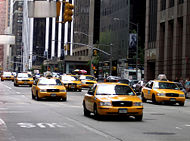 The results of this study indicate that the taxi drivers (experts) recall of streets was higher in both the route order condition and the map order condition than the two random conditions. This indicates that the experts were able to use their prelearned spatial knowledge to organize the information in such a way that they surpassed STM and WM capacity limitations. The organization strategy that the drivers employed is known as chunking
. Additionally, the comments made by the experts during the procedure point towards their use of route knowledge in completing the task. To ensure that it was in fact spatial information that they were encoding, the researchers also presented lists in alphabetical order and semantic
categories. However, the researchers found that it was in fact spatial information that the experts were chunking, allowing them to surpass the limitations of both visuo-spatial STM and WM.
(such as the black-capped chickadee
and the scrub jay
) are able to use spatial memory to remember where, when and what type of food they have cached. Recent studies with rats and squirrels, have also suggested that they are able to use spatial memory to locate previously hidden food. Experiments using the radial maze have allowed researchers to control for a number of variables, such as the type of food hidden, the locations of where the food is hidden, the retention interval, as well as any odour cues that could skew results of memory research. In particular, studies have indicated that rats have memory for where they have hidden food and what type of food they have hidden. This is shown in retrieval behaviour, such that the rats are selective in going to the arms of the maze where they have previously hidden preferred food more often than to arms with less preferred food or where no food was hidden.
Thus, the evidence for the spatial memory of some species of animals, such as rats, indicates that they do use spatial memory to locate and retrieve hidden food stores.
Visual memory
is responsible for retaining visual shapes and colours (i.e., what), whereas spatial memory is responsible for information about locations and movement (i.e., where). This distinction is not always straightforward since part of visual memory involves spatial information and vice versa. For example, memory for object shapes usually involves maintaining information about the spatial arrangement of the features which define the object in question.
In practice the two systems work together in some capacity but different tasks have been developed to highlight the unique abilities involved in either visual or spatial memory. For example, the visual patterns test (VPT) measures visual span whereas the Corsi Blocks Task measures spatial span. Correlational studies of the two measures suggest a separation between visual and spatial abilities, due to a lack of correlation found between them in both healthy and brain damaged patients.
Support for the division of visual and spatial memory components is found through experiments using the dual-task paradigm
. A number of studies have shown that the retention of visual shapes or colours (i.e., visual information) is disrupted by the presentation of irrelevant pictures or dynamic visual noise. Conversely, the retention of location (i.e., spatial information) is disrupted only by spatial tracking tasks, spatial tapping tasks, and eye movements. For example, participants completed both the VPT and the Corsi Blocks Task in a selective interference experiment. During the retention interval of the VPT, the subject viewed irrelevant pictures (e.g., avant-garde
paintings). The spatial interference task required participants to follow, by touching the stimuli, an arrangement of small wooden pegs which were concealed behind a screen. Both the visual and spatial spans were shortened by their respective interference tasks, confirming that the Corsi Blocks Task relates primarily to spatial working memory.
is commonly used to determine the visual-spatial memory span and the implicit visual-spatial learning abilities of an individual. Participants sit with nine wooden 3x3 cm blocks fastened before them on a 25 x 30 cm baseboard in a standard random order. The experiment taps a sequence pattern onto the blocks which participants must then replicate. The blocks are numbered on the experimenters’ side to allow for efficient pattern demonstration. The sequence length increases each trial until the participant is no longer able to correctly replicate the pattern. The test can be used to measure both short-term and long-term spatial memory, depending on the length of time between test and recall.
The test was created by Canadian neuropsychologist
Phillip Corsi, who modeled it after Hebb’s digit span
task by replacing the numerical test items with spatial ones. On average most participants achieve a span of five items on the Corsi span test and seven on the digit span task.
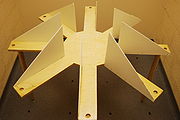 First pioneered by Olton and Samuelson in 1976, the radial arm maze is designed to test the spatial memory capabilities of rats. Mazes are typically designed with a centre platform and a varying number of arms branching off with food placed at the ends. The arms are usually shielded from each other in some way but not to the extent that external cues cannot be used as reference points.
In most cases, the rat is placed in the center of the maze and needs to explore each arm individually to retrieve food while simultaneously remembering which arms it has already pursued. The maze is set up so the rat is forced to return to the center of the maze before pursuing another arm. Measures are usually taken to prevent the rat from using its olfactory
senses to navigate
such as placing extra food throughout the bottom of the maze.
The Morris Water Maze is a classic for studying spatial learning and memory in rats and was first developed in 1981 by Richard G. Morris whom the test is named after. The subject is placed in a round tank of translucent water with walls that are too high for it to climb out and water that is too deep for it to stand in. Additionally, the walls of the tank are decorated with visual cues to serve as reference points. The rat must swim around the pool until by chance it discovers the hidden platform just below the surface that it can climb up onto.
Typically, rats swim around the edge of the pool first before venturing out into the center in a meandering pattern before stumbling upon the hidden platform however as time spent in the pool increases experience, the amount of time needed to locate the platform decreases with veteran rats swimming directly to the platform almost immediately after being placed in the water.
provides animals with a spatial map of their environment. It stores information regarding non-egocentric space (egocentric means in reference to one's body position in space) and therefore supports viewpoint independence in spatial memory. This means that it allows for viewpoint manipulation from memory. It is however, important for long-term spatial memory of allocentric space (reference to external cues in space). Maintenance and retrieval of memories are thus relational or context dependent
. The hippocampus makes use of reference and working memory and has the important role of processing information about spatial locations.
Blocking plasticity
in this region results in problems in goal-directed navigation and impairs the ability to remember precise locations. Amnesic patients with damage to the hippocampus cannot learn or remember spatial layouts and patients having undergone hippocampal removal are severely impaired in spatial navigation. Monkeys with leisons to this area cannot not learn object-place associations and rats also display spatial deficits by not reacting to spatial change. In addition, rats with hippocampal lesions were shown to have temporally ungraded (time-independent) retrograde amnesia
that is only resistant to recognition of a learned platform task when the entire hippocampus is lesioned but not when it is partially lesioned. Deficits in spatial memory are also found in spatial discrimination tasks.
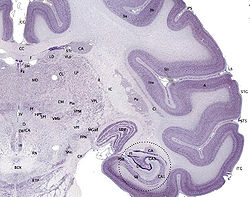 Large differences in spatial impairment are found among the dorsal
and ventral hippocampus. Lesions to the ventral hippocampus have no effect on spatial memory, while the dorsal hippocampus is required for retrieval, processing short-term memory and transferring memory from the short term to longer delay periods. Infusion of amphetamine
into the dorsal hippocampus has also been shown to enhance memory for spatial locations learned previously. These findings indicate that there is a functional dissociation
between the dorsal and ventral hippocampus.
Hemispheric differences within the hippocampus are also observed. A study on London
taxi drivers, asked drivers to recall complex routes around the city as well as famous landmark
s for which the drivers had no knowledge of their spatial location. This resulted in an activation of the right hippocampus solely during recall of the complex routes which indicates that the right hippocampus is used for navigation in large scale spatial environments.
The hippocampus is known to contain two separate memory circuits. One circuit is used for recollection-based place recognition memory and includes the entorhinal-CA1 system while the other system is used for place recall memory and makes use of the CA3-CA1 system.
Place cell
s are also found in the hippocampus.
encodes spatial information using an egocentric frame of reference. It is therefore involved in the transformation of sensory information coordinates into action or effector coordinates by updating the spatial representation of the body within the environment. As a result, lesions to the parietal cortex produce deficits in the acquisition and retention of egocentric tasks, whereas minor impairment is seen among allocentric tasks.
Rats with lesions to the anterior region of the posterior parietal cortex
reexplore displaced objects, while rats with lesions to the posterior region of the posterior parietal cortex displayed no reaction to spatial change.
Parietal cortex lesions are also known to produce temporally ungraded retrograde amnesia
.
(dMEC) contains a topographically organized map of the spatial environment made up of grid cells. This brain region thus transforms sensory input from the environment and stores it as a durable allocentric representation in the brain to be used for path integration
.
The entorhinal cortex contributes to the processing and integration of geometric properties and information in the environment. Lesions to this region impair the use of distal but not proximal landmarks during navigation and produces a delay-dependent deficit in spatial memory that is proportional to the length of the delay. Lesions to this region are also known to create retention deficits for tasks learned up to 4 weeks but not 6 weeks prior to the lesions.
Memory consolidation
in the entorhinal cortex is achieved through extracellular signal-regulated kinase
activity.
processes egocentric spatial information. It participates in the processing of short-term spatial memory used to guide planned search behavior and is believed to join spatial information with its motivation
al significance. The identification of neurons that anticipate expected rewards
in a spatial task support this hypothesis. The medial prefrontal cortex is also implicated in the temporal organization of information.
Hemisphere specialization is found in this brain region. The left prefrontal cortex preferentially processes categorical spatial memory including source memory (reference to spatial relationships between a place or event), while the right prefrontal cortex preferentially processes coordinate spatial memory including item memory (reference to spatial relationships between features of an item).
Leisons to the medial prefrontal cortex impair the performance of rats on a previously trained radial arm maze, however, rats can gradually improve to the level of the controls as a function of experience. Lesions to this area also cause deficits on delayed nonmatching-to-positions tasks and impairments in the acquisition of spatial memory tasks during training trials.
is involved in the processing of allocentric memory and geometric properties
in the environment. Inactivation of this region accounts for impaired navigation in the dark and thus it is implicated to be involved in the process of path integration
.
Lesions to the retrosplenial cortex consistently impair tests of allocentric memory, while sparing egocentric memory. Animals with lesions to the caudal retrosplenial cortex show impaired performance on a radial arm maze only when the maze is rotated to remove their reliance on intramaze cues.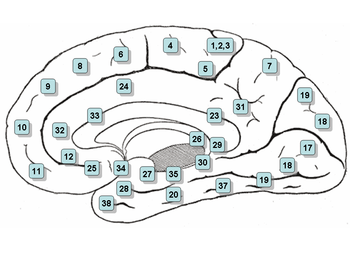 In humans, damage to the retrosplenial cortex results in topographical disorientation. Most cases involve damage to the right retrosplenial cortex and include Broadmann’s area 30. Patients are often impaired at learning new routes and at navigating through familiar environments. However, most patients usually recover within 8 weeks.
The retrosplenial cortex preferentially processes spatial information in the right hemisphere.
is associated with both spatial reference and spatial working memory. It processes relational information of environmental cues and locations.
Lesions in the perirhinal cortex account for deficits in reference memory and working memory, and increase the rate of forgetting
of information during training trials of the Morris water maze. This accounts for the impairment in the initial acquisition of the task. Lesions also cause impairment on an object location task and reduce habituation to a novel environment.
and proprioception
). In general, mammals require a functioning hippocampus (particularly area CA1) in order to form and process memories about space. There is some evidence that human spatial memory is strongly tied to the right hemisphere of the brain.
Spatial learning requires both NMDA
and AMPA
receptors, consolidation requires NMDA receptors, and the retrieval of spatial memories requires AMPA receptors. In rodents, spatial memory has been shown to covary with the size of a part of the hippocampal mossy fiber
projection.
The function of NMDA receptors varies according to the subregion of the hippocampus. NMDA receptors are required in the CA3 of the hippocampus when spatial information needs to be reorganized, while NMDA receptors in the CA1 are required in the acquisition and retrieval of memory after a delay, as well as in the formation of CA1 place fields. Blockade of the NMDA receptors prevents induction of long-term potentiation
and impairs spatial learning.
The CA3 of the hippocampus plays an especially important role in the encoding and retrieval of spatial memories. The CA3 is innervated by two afferent paths known as the perforant path (PPCA3) and the dentate gyrus
(DG)-mediated mossy fibers (MFs). The first path is regarded as the retrieval index path while the second is concerned with encoding.
or Developmental topographical disorientation
Topographical disorientation is a cognitive disorder that results in the individual being unable to orient his or herself in the real or virtual environment. Patients also struggle with spatial information dependant tasks. These problems could possibly be the result of a disruption in the ability to access one’s cognitive map, a mental representation of the surrounding environment or the inability to judge objects’ location in relation to one’s self.
Developmental Topographical Disorientation (DTD) is diagnosed when patients have shown an inability to navigate
even familiar surroundings since birth and show no apparent neurological causes for this deficiency such as lesioning or brain damage. DTD is a relatively new disorder and can occur in varying degrees of severity.
Topographical Disorientation in Mild Cognitive Impairment: A Voxel-Based Morphometry Study was done to see if Topographical Disorientation had an effect on individuals who had mild cognitive impairment. The study was done by recruiting forty-one patients diagnosed with MCI and 24 healthy control individuals. The standards that were set for this experiment were
1.Subjective cognitive complaint by the patient or his/her caregiver.
2) Normal general cognitive function above the 16th percentile on the Korean version of the Mini-Mental State Examination (K-MMSE).
3) Normal activities of daily living (ADL) assessed both clinically and on a standardized scale (as described below).
4) Objective cognitive decline below the 16th percentile on neuropsychological tests.
5) Exclusion of dementia.
(TD) was assessed clinically in all participants. Neurological and neuropsychological evaluations were determined by a magnetic imaging scan which was performed on each participant. Voxel-based morphometry was used to compare patterns of gray-matter atrophy between patients with and without TD, and a group of normal controls. The outcome of the experiment was that they found TD in 17 out of the 41 MCI patients (41.4%). The functional abilities were significantly impaired in MCI patients with TD compared to in MCI patients without TD and that the presence of TD in MCI patients is associated with loss of gray matter in the medial temporal regions, including the hippocampus.Tae-Sung Lim, Giuseppe Iaria, So Young Moon. "Topographical Disorientation in Mild Cognitive Impairment:A Voxel-Based Morphometry Study." 9 August 2010. 16 April 2011.
damage to the hippocampus in a way that closely resembles schizophrenia
. Schizophrenia is thought to stem from neurodevelopmental
problems shortly after birth.
Rats are commonly used as models of schizophrenia patients. Experimenters create lesions in the ventral hippocampal area shortly after birth, a procedure known as neonatal ventral hippocampal lesioning(NVHL). Adult rats who with NVHL show typical indicators of schizophrenia such as hypersensitivity to psychostimulants
, reduced social interactions and impaired prepulse inhibition
, working memory and set-shifting. Similar to schizophrenia, impaired rats fail to use environmental context in spatial learning tasks such as showing difficulty completing the radial arm maze and the Moris water maze.
in an article by Ishikawa et al in 2008 revealed that using a GPS
moving map device reduces an individual’s navigate abilities when compared to other participants who were using maps or had previous experience on the route with a guide. GPS moving map devices are frequently set up to allow the user to only see a small detailed close-up of a particular segment of the map which is constantly updated. In comparison, maps usually allow the user to see the same view of the entire route from departure to arrival. Other research has shown that individuals who use GPS travel more slowly overall compared to map users who are faster. GPS users stop more frequently and for a longer period of time whereas map users and individuals using past experience as a guide travel on more direct routes to reach their goal.
is characterized by normal verbal abilities but impaired visuospatial abilities. Problem areas for children with nonverbal learning disability are arithmetic, geometry, and science. Impairments in spatial memory is implicated in nonverbal learning disorder and other learning difficulties.
Arithmetic
word problems
involve written text containing a set of data followed by one or more questions and require the use of the four basic arithmetic operations (addition, subtraction, multiplication, or division). Researchers suggest that successful completion of arithmetic word problems involves spatial working memory
(involved in building schematic representations) which facilitates the creation of spatial relationships between objects. Creating spatial relationships between objects is an important part of solving word problems because mental operations and transformations are required.
For example, consider the following question: "A child builds three towers using red and white coloured blocks of the same size.
The lowest tower has 14 blocks; the highest has 7 more blocks. The intermediate tower has three blocks less than the highest one. How many blocks are in each of the three towers?" To solve the question, it is necessary to maintain incoming information (i.e., the text) and integrate it with previous information (such as knowledge for arithmetic operations). The individual must also select relevant (i.e., the spatial relationship between the blocks) and inhibit irrelevant information (i.e., the colours and textures of the blocks) and simultaneously build a mental representation of the problem.
Researchers investigated the role of spatial memory and visual memory in the ability to complete arithmetic word problems. Children in the study completed the Corsi Block Task (forward and backward series) and a spatial matrix task, as well as a visual memory task called the house recognition test. Poor problem-solvers
were impaired on the Corsi Block Tasks and the spatial matrix task, but performed normally on the house recognition test when compared to normally achieving children. The experiment demonstrated that poor problem solving is related specifically to deficient processing of spatial information.
Cognitive psychology
Cognitive psychology is a subdiscipline of psychology exploring internal mental processes.It is the study of how people perceive, remember, think, speak, and solve problems.Cognitive psychology differs from previous psychological approaches in two key ways....
and neuroscience
Neuroscience
Neuroscience is the scientific study of the nervous system. Traditionally, neuroscience has been seen as a branch of biology. However, it is currently an interdisciplinary science that collaborates with other fields such as chemistry, computer science, engineering, linguistics, mathematics,...
, spatial memory is the part of memory responsible for recording information about one's environment and its spatial orientation. For example, a person's spatial memory is required in order to navigate around a familiar city, just as a rat's spatial memory is needed to learn the location of food at the end of a maze
Maze
A maze is a tour puzzle in the form of a complex branching passage through which the solver must find a route. In everyday speech, both maze and labyrinth denote a complex and confusing series of pathways, but technically the maze is distinguished from the labyrinth, as the labyrinth has a single...
. It is often argued that in both humans and animals, spatial memories are summarized as a cognitive map
Cognitive map
Cognitive maps are a type of mental processing composed of a series of psychological transformations by which an individual can acquire, code, store, recall, and decode information about the relative locations and attributes of phenomena in their everyday or metaphorical spatial environment.The...
. Spatial memory has representations within working, short-term and long-term memory. Research indicates that there are specific areas of the brain associated with spatial memory. Many methods are used for measuring spatial memory in children, adults, and animals.
Short-Term Spatial Memory
Short-term memoryShort-term memory
Short-term memory is the capacity for holding a small amount of information in mind in an active, readily available state for a short period of time. The duration of short-term memory is believed to be in the order of seconds. A commonly cited capacity is 7 ± 2 elements...
(STM) can be described as a system allowing one to temporarily store and manage information that is necessary to complete complex cognitive tasks. Tasks which employ short-term memory include learning
Learning
Learning is acquiring new or modifying existing knowledge, behaviors, skills, values, or preferences and may involve synthesizing different types of information. The ability to learn is possessed by humans, animals and some machines. Progress over time tends to follow learning curves.Human learning...
, reason
Reason
Reason is a term that refers to the capacity human beings have to make sense of things, to establish and verify facts, and to change or justify practices, institutions, and beliefs. It is closely associated with such characteristically human activities as philosophy, science, language, ...
ing, and comprehension. Spatial memory is a cognitive process that enables a person to remember different locations as well as spatial relations between objects. This allows one to remember where an object is in relation to another object. For instance, allowing someone to navigate
Navigation
Navigation is the process of monitoring and controlling the movement of a craft or vehicle from one place to another. It is also the term of art used for the specialized knowledge used by navigators to perform navigation tasks...
through a familiar city. Spatial memories are said to form after a person has already gathered and processed sensory
Sensory system
A sensory system is a part of the nervous system responsible for processing sensory information. A sensory system consists of sensory receptors, neural pathways, and parts of the brain involved in sensory perception. Commonly recognized sensory systems are those for vision, hearing, somatic...
information about their environment.
Spatial Working Memory
Working memoryWorking memory
Working memory has been defined as the system which actively holds information in the mind to do verbal and nonverbal tasks such as reasoning and comprehension, and to make it available for further information processing...
(WM) can be described as a limited capacity system that allows one to temporarily store and process information. This temporary store enables one to complete or work on complex tasks while being able to keep information in mind. For instance, the ability to work on a complicated mathematical problem utilizes ones working memory.
One highly influential theory of WM is the Baddeley
Alan Baddeley
Alan David Baddeley FRS, CBE is a British psychologist. He is professor of psychology at the University of York. He is known for his work on working memory, in particular for his multiple components model.-Education:...
and Hitch multi-component model of working memory
Baddeley's Model of Working Memory
Alan Baddeley and Graham Hitch proposed a model of working memory in 1974, in an attempt to describe a more accurate model of short-term memory....
. The most recent version of this model suggests that there are four subcomponents to WM, namely the phonological loop, the visuo-spatial sketchpad, the central executive
Executive functions
The executive system is a theorized cognitive system in psychology that controls and manages other cognitive processes. It is responsible for processes that are sometimes referred to as the executive function, executive functions, supervisory attentional system, or cognitive control...
, and the episodic buffer. One component of this model, the visuo-spatial sketchpad, is said to be responsible for the temporary storage, maintenance, and manipulation of both visual and spatial information.
In contrast to the multi-component model, some researchers believe that STM should be viewed as a unitary construct. In this respect, visual, spatial, and verbal information are thought to be organized by levels of representation rather than the type of store to which they belong. Within the literature, it is suggested that further research into the fractionation of STM and WM be explored. However, much of the research into the visuo-spatial memory construct have been conducted in accordance to the paradigm advanced by Baddeley and Hitch.
The Role of the Central Executive
Research into the exact function of the visuo-spatial sketchpad has indicated that both spatial short-term memoryShort-term memory
Short-term memory is the capacity for holding a small amount of information in mind in an active, readily available state for a short period of time. The duration of short-term memory is believed to be in the order of seconds. A commonly cited capacity is 7 ± 2 elements...
and working memory are dependent on executive resources and are not entirely distinct. For instance, performance on a working memory but not on a short-term memory task was affected by articulatory suppression
Working memory
Working memory has been defined as the system which actively holds information in the mind to do verbal and nonverbal tasks such as reasoning and comprehension, and to make it available for further information processing...
suggesting that impairment on the spatial task was caused by the concurrent performance on a task that had extensive use of executive resources. Results have also found that performances were impaired on STM and WM tasks with executive suppression. This illustrates how, within the visuo-spatial domain, both STM and WM require similar utility of the central executive.
Additionally, during a spatial visualisation task (which is related to executive functioning and not STM or WM) concurrent executive suppression impaired performance indicating that the effects were due to common demands on the central executive and not short-term storage. The researchers concluded with the explanation that the central executive employs cognitive strategies
Cognitive style
Cognitive style or "thinking style" is a term used in cognitive psychology to describe the way individuals think, perceive and remember information. Cognitive style differs from cognitive ability , the latter being measured by aptitude tests or so-called intelligence tests...
enabling participants to both encode and maintain mental representations during short-term memory tasks.
Although studies suggest that the central executive is intimately involved in a number of spatial tasks, the exact way in which they are connected remains to be seen.
Long-Term Spatial Memory
Spatial memory recall is built upon a hierarchical structure. That is to say that people remember the general layout of a particular space and then "cue target locations" located within that spatial set. This paradigm includes an ordinal scale of features that an individual must attend to in order to inform their cognitive map. Recollection of spatial details is a top-down procedure, which requires an individual to recall the superordinate features of a cognitive map, followed by the ordinate and subordinate features. Thus, two spatial features are prominent in navigating a path: general layout and landmark orienting (Kahana et al., 2006).People are not only capable of learning about the spatial layout of their surroundings, but they can also piece together novel routes and new spatial relations through inference. Yet, this field has traditionally been hampered by confounding variables, like cost and the potential for previous exposure to an experimental environment. Thankfully technological leaps have opened a new, albeit virtual, world to psychologists.
A cognitive map is "a mental model of objects’ spatial configuration that permits navigation along optimal path between arbitrary pairs of points." This mental map is built upon two fundamental bedrocks: layout, also known as route knowledge, and landmark orientation. Layout is potentially the first method of navigation that people learn to utilize; it’s workings reflect our most basic understandings of the world.
Hermer and Spelke (1994) determined that when toddlers begin to crawl, around eighteen months, they navigate by their sense of the world’s layout. Indeed, it would seem that a sojourning toddler’s world is a place of axial lines and contrasting boundaries. McNamara, Hardy and Hirtle identified region membership as a major building block of anyone’s cognitive map (1989). Specifically, region membership is defined by any kind of boundary, whether physical, perceptual or subjective (McNamara et al, 1989). Boundaries are among the most basic and endemic qualities in the world around us. These boundaries are nothing more than axial lines which are a feature that people are biased towards when relating to space; for example one axial line determinant is gravity (McNamara & Shelton, 2001; Kim & Penn, 2004). Axial lines aid everyone in apportioning our perceptions into regions. This parceled world idea is further supported items by the finding that items that get recalled together are more likely than not to also be clustered within the same region of one’s larger cognitive map. Clustering shows that people tend to chunk information together according to smaller layouts within a larger cognitive map.
Boundaries, though, are not the only determinants of layout. Clustering, also demonstrates another important property of our relation to spatial conceptions. This is that spatial recall is a hierarchical process. When someone recalls an environment or navigates terrain, that person implicitly recalls the overall layout at first. Then, due to the concept’s "rich correlational structure," a series of associations become activated . Eventually the resulting cascade of activations will awaken the particular details that correspond with the region being recalled. This is how people encode many entities from varying ontological levels, such as the location of a stapler; in a desk; which is in the office .. Alas, layout has its flaws too. One can only recall from one at region at a time (a bottleneck).
A bottleneck in your cognitive navigational system could be disastrous, for instance if there were need for a sudden detour on a long road trip. And yet, people are still capable of getting place to place functionally. Lack of experience in a locale, or simply sheer size, can disorient one’s mental layout, especially in a large and unfamiliar place with lots of overwhelming stimuli. In these environments people are still able to orient themselves, and even find their way around using landmarks. This ability to "prioritize objects and regions in complex scenes for selection (and) recognition" was labeled by Chun and Jiang in 1998. Landmarks give people guidance by activating "learned associations between the global context and target locations." Mallot and Gillner (2000) showed that subjects learned an association between a specific landmark and the direction of a turn, thereby furthering the relationship between associations and landmarks. Shelton and McNamara (2001) succinctly summed up why landmarks, as markers, are so helpful: "location...cannot be described without making reference to the orientation of the observer."
It is fairly clear that people use both the layout of a particular space, as well as the presence of orienting landmarks in order to navigate. Yet, psychologists have yet to explain whether layout affects landmarks or if landmarks determine the boundaries of a layout. Thus, this concept suffers from a chicken and the egg paradox. In fact, McNamara has found that subjects use "clusters of landmarks as intrinsic frames of reference," which only confuses the issue further.
People perceive objects in their environment relative to other objects in that same environment. In other words, landmarks and layout are complimentary systems for spatial recall. However, it is unknown how these two systems interact when both types of information are available. Thus, we have to make certain assumptions about the interaction between these two systems. For example, cognitive maps are not "absolute" but rather, as anyone can attest, are "used to provide a default...(which) modulated according to...task demands." Psychologists also think that cognitive maps are instance based, which accounts for "discriminative matching to past experience."
These assumptions could soon be validated. Advances in virtual reality technology have pried open the door to this enigmatic field. Now experimenters find themselves creating scenarios that were impossible to imagine fifteen years ago. Virtual reality affords experimenters the luxury of extreme control over their test environment. Any variable can be manipulated, including things that would not be possible in reality.
Virtual Reality
During one recent study researchers designed three different virtual towns, each of which had its own "unique road layout and a unique set of five stores." However, the overall footprint of the different maps was the exact same size, "80 sq. units." In this experiment, participants had to partake in two different sets of trials.First, participants were assigned two of the three virtual landscapes and tasked with the role of a taxi driver. The participant’s avatar picked up a total of 25 passengers and dropped them off at random locations throughout the map. Researchers measured the participants’ "delivery path length" in both sets of the first trial. They found that there was a "clear decrease in path length with increased number of deliveries in a town." The participants’ improved route length correlated with the increasing amount of experience they got driving in the virtual towns. However, as one would expect, the knowledge that participants gleaned from the first town not transfer, or aid them, in their travels around the second town. Thusly, Newman et al. (2006) inferred that the participants "formed a survey representation of each town." That is they drove around enough of the town to infer the general layout of the rest of it.
The second set of trials involved the same task for the participants but with some changes to the context of the environment. Researchers added two more maps and made them smaller. It should be noted, though, that the second map set in this trial was standardized with the same layout and landmarks, meaning that all participants would experience this map on their second run. Moreover, three of the five maps "replaced some set of the landmarks with novel landmarks while the layout of target locations remain(ed) unchanged." The other two maps were either "identical" to the second traversed landscape of the second trial or both the landmarks and their relative locations were changed. Again, Newman et al. measured "excess path length," specifically focusing on the excess distance traveled on the first delivery of the second map in the second trial, where they believed that spatial learning would transfer mostly strongly from the first map. They found that the group that encountered altered building representations in the same locations, had the highest level of layout knowledge transfer from the first town despite.
The results of the first trial showed that people are capable of learning the spatial layout of an interactive environment. The second trial showed that despite a change in landmark presence, participants were still able to "find novel shortest routes." Because participants did not travel across previously memorized routes and still performed well according to the "excess path length" standard, Newman et al. concluded that these results evidenced "some higher-order survey representation of the environment.
Spatial Expertise
Within the literature there is evidence that experts in a particular field are able to perform memory tasks in accordance with their skills at an exceptional level. The level of skill displayed by experts has also been said to exceed the limits of the normal capacity of both STM and WM. It is believed that because experts have an enormous amount of prelearned and task-specific knowledge they are able to encodeEncoding (Memory)
Memory has the ability to encode, store and recall information. Memories give an organism the capability to learn and adapt from previous experiences as well as build relationships. Encoding allows the perceived item of use or interest to be converted into a construct that can be stored within the...
information in a more efficient way.
An interesting study investigating taxi
Taxicab
A taxicab, also taxi or cab, is a type of vehicle for hire with a driver, used by a single passenger or small group of passengers, often for a non-shared ride. A taxicab conveys passengers between locations of their choice...
drivers memory for streets in Helsinki
Helsinki
Helsinki is the capital and largest city in Finland. It is in the region of Uusimaa, located in southern Finland, on the shore of the Gulf of Finland, an arm of the Baltic Sea. The population of the city of Helsinki is , making it by far the most populous municipality in Finland. Helsinki is...
, Finland
Finland
Finland , officially the Republic of Finland, is a Nordic country situated in the Fennoscandian region of Northern Europe. It is bordered by Sweden in the west, Norway in the north and Russia in the east, while Estonia lies to its south across the Gulf of Finland.Around 5.4 million people reside...
examined the role of prelearned spatial knowledge. This study compared experts to a control group to determine how this prelearned knowledge in their skill domain allows them to overcome the capacity limitations of STM and WM. The study used four levels of spatial randomness:
Route Order – spatially continuous route
Route Random – spatially continuous list presented randomly
Map Order – street names forming a straight line on the map, but omitting intermediate streets
Map Random – streets on map presented in random order
Chunking (psychology)
Chunking, in psychology, is a phenomenon whereby individuals group responses when performing a memory task. Tests where individuals can illustrate "chunking" commonly include serial and free recall, as these both require the individual to reproduce items that he or she had previously been...
. Additionally, the comments made by the experts during the procedure point towards their use of route knowledge in completing the task. To ensure that it was in fact spatial information that they were encoding, the researchers also presented lists in alphabetical order and semantic
Semantics
Semantics is the study of meaning. It focuses on the relation between signifiers, such as words, phrases, signs and symbols, and what they stand for, their denotata....
categories. However, the researchers found that it was in fact spatial information that the experts were chunking, allowing them to surpass the limitations of both visuo-spatial STM and WM.
Animal Research
Within the literature it has been found that certain species of paridae and corvidaeCorvidae
Corvidae is a cosmopolitan family of oscine passerine birds that contains the crows, ravens, rooks, jackdaws, jays, magpies, treepies, choughs and nutcrackers. The common English names used are corvids or the crow family , and there are over 120 species...
(such as the black-capped chickadee
Black-capped Chickadee
The Black-capped Chickadee is a small, North American songbird, a passerine bird in the tit family Paridae. It is the state bird of both Maine and Massachusetts in the United States, and the provincial bird of New Brunswick in Canada...
and the scrub jay
Aphelocoma
The passerine birds of the genus Aphelocomainclude the scrub-jays and relatives. They are New World jays found in Mexico, western Central America and the western United States, with an outlying population in Florida...
) are able to use spatial memory to remember where, when and what type of food they have cached. Recent studies with rats and squirrels, have also suggested that they are able to use spatial memory to locate previously hidden food. Experiments using the radial maze have allowed researchers to control for a number of variables, such as the type of food hidden, the locations of where the food is hidden, the retention interval, as well as any odour cues that could skew results of memory research. In particular, studies have indicated that rats have memory for where they have hidden food and what type of food they have hidden. This is shown in retrieval behaviour, such that the rats are selective in going to the arms of the maze where they have previously hidden preferred food more often than to arms with less preferred food or where no food was hidden.
Thus, the evidence for the spatial memory of some species of animals, such as rats, indicates that they do use spatial memory to locate and retrieve hidden food stores.
Visual – Spatial Distinction
Logie (1995) proposed that the visuo-spatial sketchpad is broken down into two subcomponents, one visual and one spatial. These are the visual cache and the inner scribe, respectively. The visual cache is a temporary visual store including such dimensions as colour and shape. Conversely, the inner scribe is a rehearsal mechanism for visual information and is responsible for information concerning movement sequences. Although a general lack of consensus regarding this distinction has been noted in the literature, there is a growing amount of evidence that the two components are separate and serve different functions.Visual memory
Visual memory
Visual memory describes the relationship between perceptual processing and the encoding, storage and retrieval of the resulting neural representations. Visual memory occurs over a broad time range spanning from eye movements to years in order to visually navigate to a previously visited location...
is responsible for retaining visual shapes and colours (i.e., what), whereas spatial memory is responsible for information about locations and movement (i.e., where). This distinction is not always straightforward since part of visual memory involves spatial information and vice versa. For example, memory for object shapes usually involves maintaining information about the spatial arrangement of the features which define the object in question.
In practice the two systems work together in some capacity but different tasks have been developed to highlight the unique abilities involved in either visual or spatial memory. For example, the visual patterns test (VPT) measures visual span whereas the Corsi Blocks Task measures spatial span. Correlational studies of the two measures suggest a separation between visual and spatial abilities, due to a lack of correlation found between them in both healthy and brain damaged patients.
Support for the division of visual and spatial memory components is found through experiments using the dual-task paradigm
Dual-task paradigm
A dual-task paradigm is a procedure in experimental psychology that requires an individual to perform two tasks simultaneously, in order to compare performance with single-task conditions.When performance scores on one and/or both tasks are lower when they are done simultaneously compared to...
. A number of studies have shown that the retention of visual shapes or colours (i.e., visual information) is disrupted by the presentation of irrelevant pictures or dynamic visual noise. Conversely, the retention of location (i.e., spatial information) is disrupted only by spatial tracking tasks, spatial tapping tasks, and eye movements. For example, participants completed both the VPT and the Corsi Blocks Task in a selective interference experiment. During the retention interval of the VPT, the subject viewed irrelevant pictures (e.g., avant-garde
Avant-garde
Avant-garde means "advance guard" or "vanguard". The adjective form is used in English to refer to people or works that are experimental or innovative, particularly with respect to art, culture, and politics....
paintings). The spatial interference task required participants to follow, by touching the stimuli, an arrangement of small wooden pegs which were concealed behind a screen. Both the visual and spatial spans were shortened by their respective interference tasks, confirming that the Corsi Blocks Task relates primarily to spatial working memory.
Measuring Spatial Memory
There are a variety of tasks that psychologists use to measure spatial memory on adults, children and animal models. These tasks allow professionals to identify cognitive irregularities or in adults and children and allows researchers to administer varying types of drugs and or lesions in participants and measure the consequential effects on spatial memory.The Corsi Block Tapping Task
Also known as the Corsi Span Test, this psychological testPsychological testing
Psychological testing is a field characterized by the use of samples of behavior in order to assess psychological construct, such as cognitive and emotional functioning, about a given individual. The technical term for the science behind psychological testing is psychometrics...
is commonly used to determine the visual-spatial memory span and the implicit visual-spatial learning abilities of an individual. Participants sit with nine wooden 3x3 cm blocks fastened before them on a 25 x 30 cm baseboard in a standard random order. The experiment taps a sequence pattern onto the blocks which participants must then replicate. The blocks are numbered on the experimenters’ side to allow for efficient pattern demonstration. The sequence length increases each trial until the participant is no longer able to correctly replicate the pattern. The test can be used to measure both short-term and long-term spatial memory, depending on the length of time between test and recall.
The test was created by Canadian neuropsychologist
Neuropsychology
Neuropsychology studies the structure and function of the brain related to specific psychological processes and behaviors. The term neuropsychology has been applied to lesion studies in humans and animals. It has also been applied to efforts to record electrical activity from individual cells in...
Phillip Corsi, who modeled it after Hebb’s digit span
Memory span
In psychology and neuroscience, memory span is the longest list of items that a person can repeat back in correct order immediately after presentation on 50% of all trials. Items may include words, numbers, or letters. The task is known as digit span when numbers are used. Memory span is a common...
task by replacing the numerical test items with spatial ones. On average most participants achieve a span of five items on the Corsi span test and seven on the digit span task.
Visual Pattern Span
Similar to the Corsi block tapping test but regarded as a more pure test of visual short term recall. Participants are presented with a a series or matrix patterns that have half their cells coloured and the other half blank. The matrix patterns are arranged in a way that is difficult to verbally code forcing the participant to rely on visual spatial memory. Beginning with a small 2 x 2 matrix participants copy the matrix pattern from memory into an empty matrix. The matrix patterns are increased in size and complexity at a rate of two cells until the participant's ability to replicate them breaks down. On average, participant's performance tends to break down at sixteen cells.Pathway Span Task
This task is designed to measure spatial memory abilities in children. The experimenter asks the participant to visualize a blank matrix with a little man. Through a series of directional instructions such as forwards, backwards, left or right the experimenter guides the participant’s little man on a pathway throughout the matrix. At the end the participant is asked to indicate on a real matrix where the little man that he or she visualized, finished. The length of the pathway varies depending on the level of difficulty (1-10) and the matrices themselves may vary in length from 2 x 2 cells to 6 x 6.Dynamic Mazes
Intended for measuring spatial ability in children. With this test an experimenter presents the participant with a drawing of a maze with a picture of a man in the centre. The experimenter uses his or her finger to trace a pathway from the opening of the maze to the drawing of the man while the participant watches. The participant is then expected to replicate the demonstrated pathway through the maze to the drawing of the man. Mazes vary in complexity as difficulty increases.Radial Arm Maze
Full article: Radial arm mazeRadial arm maze
The radial arm maze was designed by Olton and Samuelson in 1976 to measure spatial learning and memory in rats. The original apparatus consists of eight equidistantly spaced arms, each about 4 feet long, and all radiating from a small circular central platform...
In most cases, the rat is placed in the center of the maze and needs to explore each arm individually to retrieve food while simultaneously remembering which arms it has already pursued. The maze is set up so the rat is forced to return to the center of the maze before pursuing another arm. Measures are usually taken to prevent the rat from using its olfactory
Olfaction
Olfaction is the sense of smell. This sense is mediated by specialized sensory cells of the nasal cavity of vertebrates, and, by analogy, sensory cells of the antennae of invertebrates...
senses to navigate
Navigation
Navigation is the process of monitoring and controlling the movement of a craft or vehicle from one place to another. It is also the term of art used for the specialized knowledge used by navigators to perform navigation tasks...
such as placing extra food throughout the bottom of the maze.
Moris Water Maze
Full article: Morris water navigation taskThe Morris Water Maze is a classic for studying spatial learning and memory in rats and was first developed in 1981 by Richard G. Morris whom the test is named after. The subject is placed in a round tank of translucent water with walls that are too high for it to climb out and water that is too deep for it to stand in. Additionally, the walls of the tank are decorated with visual cues to serve as reference points. The rat must swim around the pool until by chance it discovers the hidden platform just below the surface that it can climb up onto.
Typically, rats swim around the edge of the pool first before venturing out into the center in a meandering pattern before stumbling upon the hidden platform however as time spent in the pool increases experience, the amount of time needed to locate the platform decreases with veteran rats swimming directly to the platform almost immediately after being placed in the water.
Hippocampus
The hippocampusHippocampus
The hippocampus is a major component of the brains of humans and other vertebrates. It belongs to the limbic system and plays important roles in the consolidation of information from short-term memory to long-term memory and spatial navigation. Humans and other mammals have two hippocampi, one in...
provides animals with a spatial map of their environment. It stores information regarding non-egocentric space (egocentric means in reference to one's body position in space) and therefore supports viewpoint independence in spatial memory. This means that it allows for viewpoint manipulation from memory. It is however, important for long-term spatial memory of allocentric space (reference to external cues in space). Maintenance and retrieval of memories are thus relational or context dependent
Context-dependent memory
Context-dependent memory refers to improved recall of specific episodes or information when the context present at encoding and retrieval are the same. One particularly common example of context-dependence at work occurs when an individual has lost an item in an unknown location...
. The hippocampus makes use of reference and working memory and has the important role of processing information about spatial locations.
Blocking plasticity
Neuroplasticity
Neuroplasticity is a non-specific neuroscience term referring to the ability of the brain and nervous system in all species to change structurally and functionally as a result of input from the environment. Plasticity occurs on a variety of levels, ranging from cellular changes involved in...
in this region results in problems in goal-directed navigation and impairs the ability to remember precise locations. Amnesic patients with damage to the hippocampus cannot learn or remember spatial layouts and patients having undergone hippocampal removal are severely impaired in spatial navigation. Monkeys with leisons to this area cannot not learn object-place associations and rats also display spatial deficits by not reacting to spatial change. In addition, rats with hippocampal lesions were shown to have temporally ungraded (time-independent) retrograde amnesia
Retrograde amnesia
Retrograde amnesia is a loss of access to events that occurred, or information that was learned, before an injury or the onset of a disease....
that is only resistant to recognition of a learned platform task when the entire hippocampus is lesioned but not when it is partially lesioned. Deficits in spatial memory are also found in spatial discrimination tasks.
Dorsum (anatomy)
In anatomy, the dorsum is the upper side of animals that typically run, fly, or swim in a horizontal position, and the back side of animals that walk upright. In vertebrates the dorsum contains the backbone. The term dorsal refers to anatomical structures that are either situated toward or grow...
and ventral hippocampus. Lesions to the ventral hippocampus have no effect on spatial memory, while the dorsal hippocampus is required for retrieval, processing short-term memory and transferring memory from the short term to longer delay periods. Infusion of amphetamine
Amphetamine
Amphetamine or amfetamine is a psychostimulant drug of the phenethylamine class which produces increased wakefulness and focus in association with decreased fatigue and appetite.Brand names of medications that contain, or metabolize into, amphetamine include Adderall, Dexedrine, Dextrostat,...
into the dorsal hippocampus has also been shown to enhance memory for spatial locations learned previously. These findings indicate that there is a functional dissociation
Dissociation (neuropsychology)
In neuropsychology, dissociation involves identifying the neural substrate of a particular brain function through identification of case studies, neuroimaging, or neuropsychological testing.-Single dissociation:...
between the dorsal and ventral hippocampus.
Hemispheric differences within the hippocampus are also observed. A study on London
London
London is the capital city of :England and the :United Kingdom, the largest metropolitan area in the United Kingdom, and the largest urban zone in the European Union by most measures. Located on the River Thames, London has been a major settlement for two millennia, its history going back to its...
taxi drivers, asked drivers to recall complex routes around the city as well as famous landmark
Landmark
This is a list of landmarks around the world.Landmarks may be split into two categories - natural phenomena and man-made features, like buildings, bridges, statues, public squares and so forth...
s for which the drivers had no knowledge of their spatial location. This resulted in an activation of the right hippocampus solely during recall of the complex routes which indicates that the right hippocampus is used for navigation in large scale spatial environments.
The hippocampus is known to contain two separate memory circuits. One circuit is used for recollection-based place recognition memory and includes the entorhinal-CA1 system while the other system is used for place recall memory and makes use of the CA3-CA1 system.
Place cell
Place cell
Place cells are neurons in the hippocampus that exhibit a high rate of firing whenever an animal is in a specific location in an environment corresponding to the cell's "place field". These neurons are distinct from other neurons with spatial firing properties, such as grid cells, border cells,...
s are also found in the hippocampus.
Posterior parietal cortex
The parietal cortexParietal lobe
The parietal lobe is a part of the Brain positioned above the occipital lobe and behind the frontal lobe.The parietal lobe integrates sensory information from different modalities, particularly determining spatial sense and navigation. For example, it comprises somatosensory cortex and the...
encodes spatial information using an egocentric frame of reference. It is therefore involved in the transformation of sensory information coordinates into action or effector coordinates by updating the spatial representation of the body within the environment. As a result, lesions to the parietal cortex produce deficits in the acquisition and retention of egocentric tasks, whereas minor impairment is seen among allocentric tasks.
Rats with lesions to the anterior region of the posterior parietal cortex
Posterior parietal cortex
The posterior parietal cortex plays an important role in producing planned movements. Before an effective movement can be initiated, the nervous system must know the original positions of the body parts that are to be moved, and the positions of any external objects with which the body is going to...
reexplore displaced objects, while rats with lesions to the posterior region of the posterior parietal cortex displayed no reaction to spatial change.
Parietal cortex lesions are also known to produce temporally ungraded retrograde amnesia
Retrograde amnesia
Retrograde amnesia is a loss of access to events that occurred, or information that was learned, before an injury or the onset of a disease....
.
Entorhinal cortex
The dorsalcaudal medial entorhinal cortexEntorhinal cortex
The entorhinal cortex is located in the medial temporal lobe and functions as a hub in a widespread network for memory and navigation. The EC is the main interface between the hippocampus and neocortex...
(dMEC) contains a topographically organized map of the spatial environment made up of grid cells. This brain region thus transforms sensory input from the environment and stores it as a durable allocentric representation in the brain to be used for path integration
Path integration
Path integration is the name given to the method thought to be used by animals for dead reckoning.Charles Darwin and J.J. Murphy first postulated an inertially-based navigation system in animals in 1873...
.
The entorhinal cortex contributes to the processing and integration of geometric properties and information in the environment. Lesions to this region impair the use of distal but not proximal landmarks during navigation and produces a delay-dependent deficit in spatial memory that is proportional to the length of the delay. Lesions to this region are also known to create retention deficits for tasks learned up to 4 weeks but not 6 weeks prior to the lesions.
Memory consolidation
Memory consolidation
Memory consolidation is a category of processes that stabilize a memory trace after the initial acquisition. Consolidation is distinguished into two specific processes, synaptic consolidation, which occurs within the first few hours after learning, and system consolidation, where...
in the entorhinal cortex is achieved through extracellular signal-regulated kinase
Kinase
In chemistry and biochemistry, a kinase is a type of enzyme that transfers phosphate groups from high-energy donor molecules, such as ATP, to specific substrates, a process referred to as phosphorylation. Kinases are part of the larger family of phosphotransferases...
activity.
Prefrontal cortex
The medial prefrontal cortexPrefrontal cortex
The prefrontal cortex is the anterior part of the frontal lobes of the brain, lying in front of the motor and premotor areas.This brain region has been implicated in planning complex cognitive behaviors, personality expression, decision making and moderating correct social behavior...
processes egocentric spatial information. It participates in the processing of short-term spatial memory used to guide planned search behavior and is believed to join spatial information with its motivation
Motivation
Motivation is the driving force by which humans achieve their goals. Motivation is said to be intrinsic or extrinsic. The term is generally used for humans but it can also be used to describe the causes for animal behavior as well. This article refers to human motivation...
al significance. The identification of neurons that anticipate expected rewards
Reinforcement
Reinforcement is a term in operant conditioning and behavior analysis for the process of increasing the rate or probability of a behavior in the form of a "response" by the delivery or emergence of a stimulus Reinforcement is a term in operant conditioning and behavior analysis for the process of...
in a spatial task support this hypothesis. The medial prefrontal cortex is also implicated in the temporal organization of information.
Hemisphere specialization is found in this brain region. The left prefrontal cortex preferentially processes categorical spatial memory including source memory (reference to spatial relationships between a place or event), while the right prefrontal cortex preferentially processes coordinate spatial memory including item memory (reference to spatial relationships between features of an item).
Leisons to the medial prefrontal cortex impair the performance of rats on a previously trained radial arm maze, however, rats can gradually improve to the level of the controls as a function of experience. Lesions to this area also cause deficits on delayed nonmatching-to-positions tasks and impairments in the acquisition of spatial memory tasks during training trials.
Retrosplenial cortex
The retrosplenial cortexRetrosplenial region
The retrosplenial region is a brain area and part of the cingulate cortex. It is defined by Brodmann area 26, Brodmann area 29 and Brodmann area 30.-Function:...
is involved in the processing of allocentric memory and geometric properties
Geometry
Geometry arose as the field of knowledge dealing with spatial relationships. Geometry was one of the two fields of pre-modern mathematics, the other being the study of numbers ....
in the environment. Inactivation of this region accounts for impaired navigation in the dark and thus it is implicated to be involved in the process of path integration
Path integration
Path integration is the name given to the method thought to be used by animals for dead reckoning.Charles Darwin and J.J. Murphy first postulated an inertially-based navigation system in animals in 1873...
.
Lesions to the retrosplenial cortex consistently impair tests of allocentric memory, while sparing egocentric memory. Animals with lesions to the caudal retrosplenial cortex show impaired performance on a radial arm maze only when the maze is rotated to remove their reliance on intramaze cues.
The retrosplenial cortex preferentially processes spatial information in the right hemisphere.
Perirhinal cortex
The perirhinal cortexPerirhinal cortex
Perirhinal cortex is a cortical region in the medial temporal lobe that is made up of Brodmann areas 35 and 36. In rats, it is located along and dorsal to the rhinal sulcus. It receives highly-processed sensory information from all sensory regions, and is generally accepted to be an important...
is associated with both spatial reference and spatial working memory. It processes relational information of environmental cues and locations.
Lesions in the perirhinal cortex account for deficits in reference memory and working memory, and increase the rate of forgetting
Forgetting
Forgetting refers to apparent loss of information already encoded and stored in an individual's long term memory. It is a spontaneous or gradual process in which old memories are unable to be recalled from memory storage. It is subject to delicately balanced optimization that ensures that...
of information during training trials of the Morris water maze. This accounts for the impairment in the initial acquisition of the task. Lesions also cause impairment on an object location task and reduce habituation to a novel environment.
Plasticity
Spatial memories are formed after an animal gathers and processes sensory information about its surroundings (especially visionVisual system
The visual system is the part of the central nervous system which enables organisms to process visual detail, as well as enabling several non-image forming photoresponse functions. It interprets information from visible light to build a representation of the surrounding world...
and proprioception
Proprioception
Proprioception , from Latin proprius, meaning "one's own" and perception, is the sense of the relative position of neighbouring parts of the body and strength of effort being employed in movement...
). In general, mammals require a functioning hippocampus (particularly area CA1) in order to form and process memories about space. There is some evidence that human spatial memory is strongly tied to the right hemisphere of the brain.
Spatial learning requires both NMDA
NMDA receptor
The NMDA receptor , a glutamate receptor, is the predominant molecular device for controlling synaptic plasticity and memory function....
and AMPA
AMPA receptor
The α-amino-3-hydroxy-5-methyl-4-isoxazolepropionic acid receptor is a non-NMDA-type ionotropic transmembrane receptor for glutamate that mediates fast synaptic transmission in the central nervous system . Its name is derived from its ability to be activated by the artificial glutamate analog AMPA...
receptors, consolidation requires NMDA receptors, and the retrieval of spatial memories requires AMPA receptors. In rodents, spatial memory has been shown to covary with the size of a part of the hippocampal mossy fiber
Mossy fiber (hippocampus)
In the hippocampus, granule cells of the dentate gyrus form distinctive unmyelinated axons that project along the mossy fiber pathway to the CA3 region. The axons emerge from the basal portions of the granule cells and pass through the hilus of the dentate gyrus before entering the stratum...
projection.
The function of NMDA receptors varies according to the subregion of the hippocampus. NMDA receptors are required in the CA3 of the hippocampus when spatial information needs to be reorganized, while NMDA receptors in the CA1 are required in the acquisition and retrieval of memory after a delay, as well as in the formation of CA1 place fields. Blockade of the NMDA receptors prevents induction of long-term potentiation
Long-term potentiation
In neuroscience, long-term potentiation is a long-lasting enhancement in signal transmission between two neurons that results from stimulating them synchronously. It is one of several phenomena underlying synaptic plasticity, the ability of chemical synapses to change their strength...
and impairs spatial learning.
The CA3 of the hippocampus plays an especially important role in the encoding and retrieval of spatial memories. The CA3 is innervated by two afferent paths known as the perforant path (PPCA3) and the dentate gyrus
Dentate gyrus
The dentate gyrus is part of the hippocampal formation. It is thought to contribute to new memories as well as other functional roles. It is notable as being one of a select few brain structures currently known to have high rates of neurogenesis in adult rats, .The dentate gyrus cells receive...
(DG)-mediated mossy fibers (MFs). The first path is regarded as the retrieval index path while the second is concerned with encoding.
Topographical Disorientation
Full article: Topographical disorientationTopographical disorientation
Topographical disorientation is a cognitive disorder marked by the inability to orient in the surrounding. This disorder may result from the inability to make use of selective spatial information or to orient by means of specific cognitive strategies such as the ability to form a mental...
or Developmental topographical disorientation
Developmental topographical disorientation
Developmental Topographical Disorientation, also known as DTD, is caused by the inability to segregate landmarks and derive navigational information from them, navigate through a non-verbal process, or generate cognitive maps...
Topographical disorientation is a cognitive disorder that results in the individual being unable to orient his or herself in the real or virtual environment. Patients also struggle with spatial information dependant tasks. These problems could possibly be the result of a disruption in the ability to access one’s cognitive map, a mental representation of the surrounding environment or the inability to judge objects’ location in relation to one’s self.
Developmental Topographical Disorientation (DTD) is diagnosed when patients have shown an inability to navigate
Navigation
Navigation is the process of monitoring and controlling the movement of a craft or vehicle from one place to another. It is also the term of art used for the specialized knowledge used by navigators to perform navigation tasks...
even familiar surroundings since birth and show no apparent neurological causes for this deficiency such as lesioning or brain damage. DTD is a relatively new disorder and can occur in varying degrees of severity.
Topographical Disorientation in Mild Cognitive Impairment: A Voxel-Based Morphometry Study was done to see if Topographical Disorientation had an effect on individuals who had mild cognitive impairment. The study was done by recruiting forty-one patients diagnosed with MCI and 24 healthy control individuals. The standards that were set for this experiment were
1.Subjective cognitive complaint by the patient or his/her caregiver.
2) Normal general cognitive function above the 16th percentile on the Korean version of the Mini-Mental State Examination (K-MMSE).
3) Normal activities of daily living (ADL) assessed both clinically and on a standardized scale (as described below).
4) Objective cognitive decline below the 16th percentile on neuropsychological tests.
5) Exclusion of dementia.
(TD) was assessed clinically in all participants. Neurological and neuropsychological evaluations were determined by a magnetic imaging scan which was performed on each participant. Voxel-based morphometry was used to compare patterns of gray-matter atrophy between patients with and without TD, and a group of normal controls. The outcome of the experiment was that they found TD in 17 out of the 41 MCI patients (41.4%). The functional abilities were significantly impaired in MCI patients with TD compared to in MCI patients without TD and that the presence of TD in MCI patients is associated with loss of gray matter in the medial temporal regions, including the hippocampus.Tae-Sung Lim, Giuseppe Iaria, So Young Moon. "Topographical Disorientation in Mild Cognitive Impairment:A Voxel-Based Morphometry Study." 9 August 2010. 16 April 2011
Hippocampal Damage and Schizophrenia
Research with rats indicates that spatial memory may be adversely affected by neonatalInfant
A newborn or baby is the very young offspring of a human or other mammal. A newborn is an infant who is within hours, days, or up to a few weeks from birth. In medical contexts, newborn or neonate refers to an infant in the first 28 days after birth...
damage to the hippocampus in a way that closely resembles schizophrenia
Schizophrenia
Schizophrenia is a mental disorder characterized by a disintegration of thought processes and of emotional responsiveness. It most commonly manifests itself as auditory hallucinations, paranoid or bizarre delusions, or disorganized speech and thinking, and it is accompanied by significant social...
. Schizophrenia is thought to stem from neurodevelopmental
Neural development
Neural development comprises the processes that generate, shape, and reshape the nervous system, from the earliest stages of embryogenesis to the final years of life. The study of neural development aims to describe the cellular basis of brain development and to address the underlying mechanisms...
problems shortly after birth.
Rats are commonly used as models of schizophrenia patients. Experimenters create lesions in the ventral hippocampal area shortly after birth, a procedure known as neonatal ventral hippocampal lesioning(NVHL). Adult rats who with NVHL show typical indicators of schizophrenia such as hypersensitivity to psychostimulants
Stimulant
Stimulants are psychoactive drugs which induce temporary improvements in either mental or physical function or both. Examples of these kinds of effects may include enhanced alertness, wakefulness, and locomotion, among others...
, reduced social interactions and impaired prepulse inhibition
Prepulse inhibition
Prepulse Inhibition is a neurological phenomenon in which a weaker prestimulus inhibits the reaction of an organism to a subsequent strong startling stimulus . The stimuli are usually acoustic, but tactile stimuli Prepulse Inhibition (PPI) is a neurological phenomenon in which a weaker...
, working memory and set-shifting. Similar to schizophrenia, impaired rats fail to use environmental context in spatial learning tasks such as showing difficulty completing the radial arm maze and the Moris water maze.
GPS
Recent research on spatial memory and wayfindingWayfinding
Wayfinding encompasses all of the ways in which people and animals orient themselves in physical space and navigate from place to place.-Historical:...
in an article by Ishikawa et al in 2008 revealed that using a GPS
GPS navigation device
A GPS navigation device is any device that receives Global Positioning System signals for the purpose of determining the device's current location on Earth...
moving map device reduces an individual’s navigate abilities when compared to other participants who were using maps or had previous experience on the route with a guide. GPS moving map devices are frequently set up to allow the user to only see a small detailed close-up of a particular segment of the map which is constantly updated. In comparison, maps usually allow the user to see the same view of the entire route from departure to arrival. Other research has shown that individuals who use GPS travel more slowly overall compared to map users who are faster. GPS users stop more frequently and for a longer period of time whereas map users and individuals using past experience as a guide travel on more direct routes to reach their goal.
Learning Difficulties and Spatial Memory
Nonverbal learning disabilityNonverbal learning disorder
A nonverbal learning disorder or nonverbal learning disability is a condition characterized by a significant discrepancy between higher verbal and lower motor, visuo-spatial, and social skills on an IQ test...
is characterized by normal verbal abilities but impaired visuospatial abilities. Problem areas for children with nonverbal learning disability are arithmetic, geometry, and science. Impairments in spatial memory is implicated in nonverbal learning disorder and other learning difficulties.
Arithmetic
Arithmetic
Arithmetic or arithmetics is the oldest and most elementary branch of mathematics, used by almost everyone, for tasks ranging from simple day-to-day counting to advanced science and business calculations. It involves the study of quantity, especially as the result of combining numbers...
word problems
Word problem (mathematics education)
In mathematics education, the term word problem is often used to refer to any math exercise where significant background information on the problem is presented as text rather than in mathematical notation...
involve written text containing a set of data followed by one or more questions and require the use of the four basic arithmetic operations (addition, subtraction, multiplication, or division). Researchers suggest that successful completion of arithmetic word problems involves spatial working memory
Working memory
Working memory has been defined as the system which actively holds information in the mind to do verbal and nonverbal tasks such as reasoning and comprehension, and to make it available for further information processing...
(involved in building schematic representations) which facilitates the creation of spatial relationships between objects. Creating spatial relationships between objects is an important part of solving word problems because mental operations and transformations are required.
For example, consider the following question: "A child builds three towers using red and white coloured blocks of the same size.
The lowest tower has 14 blocks; the highest has 7 more blocks. The intermediate tower has three blocks less than the highest one. How many blocks are in each of the three towers?" To solve the question, it is necessary to maintain incoming information (i.e., the text) and integrate it with previous information (such as knowledge for arithmetic operations). The individual must also select relevant (i.e., the spatial relationship between the blocks) and inhibit irrelevant information (i.e., the colours and textures of the blocks) and simultaneously build a mental representation of the problem.
Researchers investigated the role of spatial memory and visual memory in the ability to complete arithmetic word problems. Children in the study completed the Corsi Block Task (forward and backward series) and a spatial matrix task, as well as a visual memory task called the house recognition test. Poor problem-solvers
Problem solving
Problem solving is a mental process and is part of the larger problem process that includes problem finding and problem shaping. Consideredthe most complex of all intellectual functions, problem solving has been defined as higher-order cognitive process that requires the modulation and control of...
were impaired on the Corsi Block Tasks and the spatial matrix task, but performed normally on the house recognition test when compared to normally achieving children. The experiment demonstrated that poor problem solving is related specifically to deficient processing of spatial information.
See also
- Cognitive mapCognitive mapCognitive maps are a type of mental processing composed of a series of psychological transformations by which an individual can acquire, code, store, recall, and decode information about the relative locations and attributes of phenomena in their everyday or metaphorical spatial environment.The...
- Dissociation (neuropsychology)Dissociation (neuropsychology)In neuropsychology, dissociation involves identifying the neural substrate of a particular brain function through identification of case studies, neuroimaging, or neuropsychological testing.-Single dissociation:...
- Method of lociMethod of lociThe method of loci , also called the memory palace, is a mnemonic device introduced in ancient Roman rhetorical treatises . It relies on memorized spatial relationships to establish, order and recollect memorial content...
- Visual memoryVisual memoryVisual memory describes the relationship between perceptual processing and the encoding, storage and retrieval of the resulting neural representations. Visual memory occurs over a broad time range spanning from eye movements to years in order to visually navigate to a previously visited location...