


Sexual conflict

Encyclopedia
Sexual conflict occurs when the two sex
es have conflicting optimal fitness
strategies concerning reproduction, particularly the mode and frequency of mating, leading to an evolutionary arms race
between male
s and female
s. The conflict encompasses the actions and behaviors of both sexes to influence each other. For instance, males may benefit from multiple matings, while multiple matings may harm or endanger females. The development of an evolutionary arms race can also be seen in the chase-away sexual selection model, which places inter-sexual conflicts in the context of secondary sexual characteristic evolution, sensory exploitation, and female resistance. According to chase-away selection, continuous sexual conflict creates an environment in which mating frequency and male secondary sexual trait development are somewhat in step with the female’s degree of resistance. It has primarily been studied in animal
s, though it can in principle apply to any sexually reproducing
organism, such as plant
s and fungi.
Sexual conflict can be in two forms:
Sexual conflict may lead to antagonistic co-evolution, in which one sex (usually male) evolves a favorable trait that is offset by a countering trait in the other sex. Similarly, interlocus sexual conflict can be the result of what is called a perpetual cycle. The perpetual cycle begins with the traits that favor male reproductive competition, which eventually manifests into male persistence. These favorable traits will cause a reduction in the fitness of females due to their persistence. Following this event, females may develop a counter-adaptation, that is, a favorable trait that reduces the direct costs implemented by males. This is known as female resistance. After this event, females fitness depression decreases, and the cycle starts again. Interlocus sexual conflict reflects interactions among mates to achieve their optimal fitness strategies and can be explained through evolutionary concepts.
Sensory exploitation by males is one mechanism that involves males attempting to overcome female reluctance. It can result in chase-away selection, which then leads to a co-evolutionary arms race. There are also other mechanisms involved in sexual conflict such as traumatic insemination
, forced copulation, sexual cannibalism
, penis fencing
, love darts and others.
Some regard sexual conflict as a subset of sexual selection
(which was traditionally regarded as mutualistic), while others suggest it is a separate evolution
ary phenomenon.
Males and females differ in the following general components of fitness, thus leading to sexual conflict. Refer to the accompanying figure in this section.
Mating rate: Males generally increase their fitness by mating with multiple mates, while females are on the middle section of the range because they do not favor a particular side of the spectrum. For instance, females tend to be the choosier sex, but the presence of female sexual promiscuity in Soay sheep
show that females do not have an established mating preference .
Female stimulation threshold: Depending on the species, females can either be monogamous and thus choosier than females who are polyandrous. However, males favor a lower female stimulation threshold as it allows for easier and more frequent mating opportunities without incurring a high energy cost. Overall, females benefit from being more selective than males would like them to be. For example, the Neotropical spider, Paratrechalea ornata, display nuptial gift-giving behaviors during courtship as a part of their male mating efforts. These nuptials gifts allow the male to control copulation duration and to increase the speed of female oviposition .
Degree of female fidelity: Because female fidelity depends on the species’ particular mating system, therefore they are in the middle section of the spectrum. However, males seeking mates have different preferences depending on whether they are unpaired or paired. Paired males benefit from high female fidelity, while unpaired males benefit from low female fidelity in order to increase their mating frequencies.
Toxicity of seminal fluid: Females benefit from low seminal fluid toxicity, while males benefit from a high toxicity level as it increases their competitive edge .
Female fecundity: Males benefit from a high female fecundity as it means that females can produce more offspring and have a higher potential for reproduction.
Maternal investment: In many species such as the, males benefit from high maternal investment as it allows them to preserve more energy and time for additional matings rather than investing their resources on one offspring. Females are expected to invest a certain amount of time and resources, but it can also be detrimental to the female if too much maternal investment is expected.
According to Darwin (1859), sexual selection occurs when some individuals are favored over others of the same sex in the context of reproduction. Sexual selection and sexual conflict are related because males usually mate with multiple females while females typically mate with fewer males. It is hypothesized that both chase away selection and sexual conflict may be the result of males use of sensory exploitation. Males are able to exploit females’ sensory biases due to the existence of female choice. For example, females may behave in ways that are considerably biased towards mating and fertilization success due the attractiveness of males who exhibit a deceptive or exaggerated secondary sex characteristic
. Since some male traits are detrimental to females, the female becomes insensitive to these traits. Sexually antagonistic co-evolution entails the cyclic process between the exaggerated (persistent) traits and the resistant traits by the sexes. If male traits that decrease female fitness spread, then female preference will change.
and pygmy fish.
Male water striders exhibit forced copulation on the female. As a result, the female will struggle with the male to reduce the detrimental effects. Female struggle is a by-product of female resistance.
The population of pygmy fish Xiphophorus
pygmaeus or pygmy sword-tail fish initially consisted of small males. A study tested female choice using large hetero-specific males. They found that the female pigmy swordtail fish favored larger sized males, indicating that females changed their preference from small males to large males. This pattern of female preference for larger male body size disappeared in populations consisting of smaller males. The study concluded that this behavior is caused by female resistance and not due to a general preference for larger body size males.
is an evolutionary concept developed by Geoff Parker (1970) and describes a mechanism by which different males will compete to fertilize a female’s egg. Sperm competition selects for both offensive and defensive traits. Offensive sperm competition consists of males displacing sperm from the previous male as well as the use of toxic sperm to destroy rival sperm. Conversely, defensive sperm competition consists of males preventing females from remating by prolonging the duration of their own mating or by restricting the females’ interest in other males. Sperm competition can be exhibited throughout behavioral, morphological and physiological male adaptations. Some examples of behavioral adaptations are mate guarding or forced copulation. Morphological adaptations may include male claspers, altered genitalia (e.g. spiky genitals) and copulatory plugs (i.e. mating plug
s). Physiological adaptations may consist of toxic sperm or other chemicals in the seminal fluid that delays a female’s ability to remate.
Sexual conflict is exhibited when males target other males through sperm competition. For example, Iberian Rock Lizard
(Lacerta monticola) males create hard mating plugs. These mating plugs are placed within the female cloaca instantly after copulation, which was hypothesized to function as a “chastity belt
.” However, the study found no evidence to support the hypothesis, as males were able to displace the mating plugs of other males. There is no direct conflict between males and females, but males may evolve manipulative traits to counter the removal of their mating plugs.
Males also develop different behaviors for paternity assurance. A study of sperm competition revealed that there was a positive relationship between testis size and levels of sperm competition within groups. Higher levels of sperm competition were correlated to larger accessory reproductive glands, seminal vesicles, and interior prostrates. Larger mating plugs were less likely to be removed.
. Their mating ritual involves penis fencing
in which both try to stab to inseminate the other and at the same time avoid being stabbed. Being inseminated represents a cost because striking and hypodermic insemination can cause considerable injury; as a result, the conflict lies in adapting to be more adept at striking and parrying and avoiding being stabbed.
There are cases where hermaphrodites can fertilize their own eggs, but this is usually rare. Most hermaphrodites take on the role of a male or female to reproduce. Sexual conflict over mating can cause hermaphrodites to either cooperate or display aggressive behavior in the context of gender choice.
Hermaphrodites can increase their offspring’s fitness by outbreeding. Because hermaphrodites digest sperm, the ejaculates benefit the female by providing a variety of substances that trigger reproduction.
eating their own juvenile descendants. Although males usually exhibit such behavior, females can also behave in the same way.
Infanticide has be extensively studied in vertebrates such as hanuman langurs, lion
s, house sparrow
s and mice
. However, this behavior also occurs in the invertebrate
s. For example, in the spider Stegodyphus lineatus
, males invade female nests and toss out their egg sacs. Females only have one clutch in their lifetime, and experience reduced reproductive success if the clutch is lost. This results in vicious battles where injury and even death can occur. Jacana jacana, a tropical wading bird, provides an example of infanticide by the female sex. Females guard a territory while males care for their young. As males are a limited resource, other females will commonly displace or kill their young. Males can then mate again and care for the young of the new female.
This behavior is costly to both sides, and counter-adaptations have evolved in the affected sex ranging from cooperative defense of their young to loss minimization strategies such as aborting existing offspring upon the arrival of a new male (the Bruce effect
).
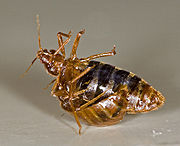 Traumatic insemination describes the male’s tactics of piercing a female and depositing sperm in order to ensure paternity success. Traumatic insemination in this sense incorporates species who display extra-genitalic traumatic insemination. Males have a needle-like intromittent organ. Examples include bed bugs, bat bugs and spiders.
In bed bugs Cimex lectularius, for example, males initiate mating by climbing onto the female and piercing her abdomen. The male will then directly inject his sperm along with the accessory gland fluids into the female’s blood. As a result, the female will have a distinct melanized scar in the region the male pierced. It was observed that males not only pierce females but also other males and nymphs. The females may suffer detrimental effects which can include blood leaking, wounds, the risk of infection, and the immune system having difficulty fighting off sperm in the blood.
A study focused on the mating effects of bed bugs of other species such as female Hesperocimex sonorensis and a male Hesperocimex cochimiensis. It was observed that H. sonorensis females died in a period of 24 to 48 hours after mating with H. cochimiensis males. When examining the females, it was evident that their abdomens were blackened and swollen due to an enormous number of immunoreactions. There is a direct relationship between the increase of mating and the decrease in female’s lifespan.
Female bed bug mortality rate due to traumatic insemination could be related more to STDs rather than just the open wound. The same environmental microbes that were found on the male’s genital were also found within the female. A study found a total of nine microbes, with five microbes actually causing mortality of females during copulation.
African bat bugs Afrocimex constrictus
also perform extra-genitalic traumatic insemination. Males will puncture the female outside her genitals and ultimately inseminate them. It was observed that both males and females suffer from traumatic insemination. Males suffer from traumatic insemination because they expressed female like genitals, and were often at times mistaken for females. Females also displayed polymorphism because some females had distinct “female-like” genitals while others had a “male-like” appearance. The results showed that males along with females who had “male-like” genitals suffer less traumatic insemination compared to the distinct females. Female polymorphism could in fact be a result of evolution due to sexual conflict.
Male spiders Harpactea sadistica
perform extra-genitalic traumatic insemination with their needle-like intromittent organs that puncture the female’s wall, resulting in direct insemination. Males also puncture females with their cheliceral fangs during courtship. Females have atrophied spermathecae (sperm-storage organs). The sperm storage organ removes sperm from males who mate later, which reflects cryptic female choice. Cryptic female choice refers to a female’s opportunity to choose with which sperm to fertilize her eggs. It has been suggested that males may have developed this aggressive mate tactic as a result of the female sperm storage organ.
The substances in the toxic ejaculate that have been linked to detrimental effects to females are known as accessory gland proteins (Acps). Acps are found in male seminal fluid. After Acps are transferred to the female, they cause a change in her behavior and physiology. A study found that females who received Acps from males suffered a decrease in lifespan. Currently it has been estimated that there are more than 20 different genes that code for Acps. It has been approximated that male fruit flies contain a range of 80 to 100 different Acps. Acp genes have been found in a variety of species and genera. Acps have been described as displaying a conservation function because they reserve protein biochemical classes within the seminal fluid.
Drosophila hibisci use mating plugs rather than traumatic insemination. The mating plugs of Drosophila hibisci are gelatinous, hard composites that adheres to the uterus of the female in the event of copulation. A study tested two hypotheses concerning mating plugs: a) that they were nutritional gifts for females to digest to provide maintenance of the eggs during maturation, or b) that they could serve as a chastity device to prevent sperm of rivals. The study found that mating plugs had no effect on female nutrition and serve as an enforcement device against rival males. Although this species of fruit flies (Drosophila hibisci) found success in mating plugs, they are ineffective for other Drosophila species. A study found that males who insert their mating plugs within females were unable to prevent females from remating just four hours after mating. Therefore, the assumption can be made that male Drosophila melanogaster develop other male adaptations to compensate for mating plug insufficiency, including intra-genitalic traumatic insemination to directly deposit their sperm.
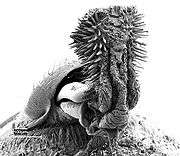 Bruchid beetle or bean weevil Callosobruchus maculatus
males are known to express extra-genitalic traumatic insemination on females. The male Bruchid beetle’s intromittent organ is described as having spines that are used to pierce the reproductive tract of the female.
Males who had multiple copulations with the same female caused greater damage to her genitals. However, those same males transferred a small quantity of ejaculate compared to the virgin males. It was also observed that males who participated in copulation with females, at times, deposit no sperm through the wounds they created on the females.
The study also found that females who mated with more than one male suffered higher mortality. It was also noted that females had a decrease in longevity as a result of receiving a large single ejaculate from males. However, females who received a total of two ejaculates were less likely to die compare to those that received just one ejaculate. The assumption could be made that females who mated 48 hours after the first copulation were lacking nutrition as they do not drink or eat. The ejaculate that was provided after the second copulation was nutritionally beneficial and lengthened female longevity, allowing them to produce more offspring.
Females who mated with virgin males were less likely to suffer genital damage compared to those who mated with regular males. It was suggested that factors contributing to male virgins being less harmful were ejaculate size and the amount of sperm contained.
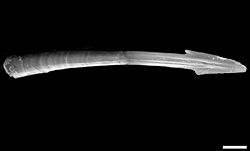 Hermaphroditic gastropod snails’ mate tactic consists of love dart
s. The love darts are described as a sharp “stiletto,” created by the males. The love darts are shot at the females during courtship. A single love dart is shot at a time, due to the lengthy process of regeneration.
Snails of the genus Helix are model organisms for the study of love darts. It was observed that snails that rub against their mates, will forcefully place the love dart into their mate. It has been shown that though darts may aid in mating, they do not necessarily ensure mating success.
However, love darts do in fact aid in mating success. Hermaphroditic snails will selectively take on a female or male role. Snails transmitted darts into these females so that they would store more sperm (about twice as much) compared to males who weren’t as successful. Males who successfully hit females with love darts had higher paternity assurance. Many snails inflicted with love darts suffer open wounds and sometimes death.
), males harass females of interest from a distance. This stalker-like behavior may consist of swimming below or behind the females, and even following them at a distance. When the male Malabar ricefish is ready to copulate, he dashes at high speed towards the female and release his club-shaped organ, the gonopodium also known as an anal fin. The purpose of the gonopodium is to deliver the spermatophore. The male takes his gonopodium and forcefully places it near the female genitalia. The sharp end of the spermatophore stabs the female’s skin. As a result, the male is firmly attached to the female. Following this event, the male’s spermatophore bursts, releasing sperm that travel towards the female’s genital opening.
During forced copulation, male water striders (genus Gerris) attack females. As a result, a struggle occurs because the female is resistant. When the male water strider is successfully attached to the female, the female carries the male during and after copulation. This can be energetically costly to the female because she has to support the heavy weight of the male at the same time as she is gliding on the water surface. The speed of the female is usually reduced by 20% when the male is attached. The purpose of long copulation is for the male to achieve paternity assurance in order to restrict the female from other males. Long periods of copulation can strongly affect females because females will depart from the water surface after mating and discontinue foraging. The duration of copulation can be extremely long. For water strider Aquarius najas it was a total of 3 months. For water strider Gerris lateralis the time ranged from 4 to 7 minutes.
In water strider Gerris odontogaster, males have an abdominal clasping mechanism that grasps females in highly complex struggles before mating. Males that have clasps that are longer than those of other males were able to endure more somersaults by resistant females and achieved mating success. Males’ genital structures had a particular shape to aid in female resistance.
Water striders G. gracilicornis have a behavioral mechanism and grasping structures allowing grasping. Male water striders use what is called an “intimidating courtship”. This mechanism involves males using a signal vibration to attract predators in order to manipulate females to mate. Females face more risks of being captured by predators since they idle on the water's surface for long periods of time. If a male were attached to the female, it would be less likely for the male to be harmed by the predators because he would be resting on top of the female. Therefore, males will tap their legs in order to create ripples in the water to attract predators. The female become fearful, causing her to be less resistant towards the male. As a result, copulation occurs faster, during which the male stops signaling.
Male water striders Gerris odontogaster have grasping structures that can prolong copulation depending on the size of their abdominal processes. Males who had longer abdominal processes were able to restrain females longer than males who had shorter abdominal processes. It was evident that females developed a preference for males with longer abdominal processes, which expresses her bias towards mating. This is an example of female choice because females prefer males who are stronger in order to have offspring with those genes.
In diving beetles Dytiscidae
, males approach females in the water with a grasping mechanism before copulation. When this occurs, females repeatedly resist. Males evolved an anatomical advantage towards grasping. Males have a particular structure located on their tarsae that enhances grasping of female anatomical structures, pronotum and elytra, which are located on her dorsal surface.
contradicts the traditional male-female relationship in terms of sexual conflict. Species that exhibit sexual cannibalism are spiders and invertebrates. Sexual cannibalism involves females slaying and consuming males during courtship or copulation. Examples including the gift-giving spider and the funnel-web spider.
A possible explanation for sexual cannibalism occurring across taxa is “paternal investment”. This means that females kill and consume males after sperm exchange in order to enhance the quality and number of her offspring. Male consumption by females serves as a blood meal since they volunteer their soma. During sexual cannibalism, males are passive compared to other species that try to escape. The idea of “paternal investment” supports the concept of female choice because female spiders consume males in order to receive an increase in quality of offspring. Males may tap into female sensory biases that may influence female mate selection. Male gift-giving spiders are known to provide gifts to females in order to avoid being eaten. This is a tactic that males may use in order to manipulate females to not kill them. Females may have a strong, uncontrollable appetite, which males may use to their advantage by manipulating females through edible gifts.
, is a polygamous species. Multiply mating increases the hatching success of clutch of eggs which is hypothesized to be a result of increased chances of finding compatible sperm. Therefore it is in the female’s best interest to mate with multiple males to increase the offpspring genetic fitness ; however, males would prefer to sire more of the females’ offspring and will try to prevent the female from mating multiply by mate guarding to exclude rival males.
In the species Nicrophorus defodiens
, the burying beetle, there is biparental care; however, males of the species will resume releasing pheromones after mating with the primary female in order to attract more females to increase his reproductive output. However it is in the female’s best interest if she can monopolize the male’s parental care and food providence for her offspring. Therefore the female will bite and attempt to push the male off his signaling perch and interfere with the male’s secondary mating attempts in order to impose monogamy on the male.
In the species Remiz pendulinus, the Penduline Tit
, the male will build an elaborate nest and may or may not be joined by a female at any stage of construction. After eggs are laid, it is strictly uniparental incubation and offspring care; however, either parent may take the role of caregiver. Females will give care 50-70% of initiated breedings while males will give care 5-20% of the time, and approximately 30%-35% of the time, the eggs, which consist of four to five viable eggs, will be left to die, which is a considerable cost to both parents. However, being deserted also represents a large cost for the deserted parent. Therefore timing of desertion becomes very important. Optimal timing for the males depends on the status of the clutch, and as a result the male will frequently enter and remain near the nest during the egg laying period. For females it is important not to desert too early so that the male will not also desert the eggs but also not too late else the male deserts before the female does. Females adapt by being very aggressive towards males that try to approach the nest as well as hiding one or more eggs so that males will not have the full information on the clutch status.
Sex
In biology, sex is a process of combining and mixing genetic traits, often resulting in the specialization of organisms into a male or female variety . Sexual reproduction involves combining specialized cells to form offspring that inherit traits from both parents...
es have conflicting optimal fitness
Fitness (biology)
Fitness is a central idea in evolutionary theory. It can be defined either with respect to a genotype or to a phenotype in a given environment...
strategies concerning reproduction, particularly the mode and frequency of mating, leading to an evolutionary arms race
Evolutionary arms race
In evolutionary biology, an evolutionary arms race is an evolutionary struggle between competing sets of co-evolving genes that develop adaptations and counter-adaptations against each other, resembling an arms race, which are also examples of positive feedback...
between male
Male
Male refers to the biological sex of an organism, or part of an organism, which produces small mobile gametes, called spermatozoa. Each spermatozoon can fuse with a larger female gamete or ovum, in the process of fertilization...
s and female
Female
Female is the sex of an organism, or a part of an organism, which produces non-mobile ova .- Defining characteristics :The ova are defined as the larger gametes in a heterogamous reproduction system, while the smaller, usually motile gamete, the spermatozoon, is produced by the male...
s. The conflict encompasses the actions and behaviors of both sexes to influence each other. For instance, males may benefit from multiple matings, while multiple matings may harm or endanger females. The development of an evolutionary arms race can also be seen in the chase-away sexual selection model, which places inter-sexual conflicts in the context of secondary sexual characteristic evolution, sensory exploitation, and female resistance. According to chase-away selection, continuous sexual conflict creates an environment in which mating frequency and male secondary sexual trait development are somewhat in step with the female’s degree of resistance. It has primarily been studied in animal
Animal
Animals are a major group of multicellular, eukaryotic organisms of the kingdom Animalia or Metazoa. Their body plan eventually becomes fixed as they develop, although some undergo a process of metamorphosis later on in their life. Most animals are motile, meaning they can move spontaneously and...
s, though it can in principle apply to any sexually reproducing
Sexual reproduction
Sexual reproduction is the creation of a new organism by combining the genetic material of two organisms. There are two main processes during sexual reproduction; they are: meiosis, involving the halving of the number of chromosomes; and fertilization, involving the fusion of two gametes and the...
organism, such as plant
Plant
Plants are living organisms belonging to the kingdom Plantae. Precise definitions of the kingdom vary, but as the term is used here, plants include familiar organisms such as trees, flowers, herbs, bushes, grasses, vines, ferns, mosses, and green algae. The group is also called green plants or...
s and fungi.
Sexual conflict can be in two forms:
- Interlocus sexual conflictInterlocus sexual conflictInterlocus sexual conflict is a type of sexual conflict that occurs through the interaction of a set of antagonistic alleles at one or more different loci in males and females, resulting in the deviation of either or both sexes from the fitness optima for the traits.Interlocus sexual conflict...
is the interaction of a set of antagonistic alleles at one or more loci in males and females. An example is conflict over mating rates. Males frequently have a higher optimal mating rate than females because in most animal species, they invest fewer resources in offspring than their female counterparts. Therefore, males have numerous adaptations to induce females to mate with them. Another well-documented example of inter-locus sexual conflict is the seminal fluid of Drosophila melanogasterDrosophila melanogasterDrosophila melanogaster is a species of Diptera, or the order of flies, in the family Drosophilidae. The species is known generally as the common fruit fly or vinegar fly. Starting from Charles W...
, which up-regulates females' egg-laying rate and reduces her desire to re-mate with another male (serving the male's interests), but also shortens the female's lifespan reducing her fitness. - Intralocus sexual conflictIntralocus sexual conflictIntralocus sexual conflict is one of two genetic forms of sexual conflict . It occurs when selection on a shared allelic trait in one sex displaces the other sex from its phenotypic optimum...
occurs when the same set of alleles in males and females have different optima. i.e. they are expressed differently in the sexes. In some cases, this conflict may be resolved through the differential expression of such loci in males and females, but evidence indicates that intralocus conflict may be an important constraint in the evolution of many traits.
Sexual conflict may lead to antagonistic co-evolution, in which one sex (usually male) evolves a favorable trait that is offset by a countering trait in the other sex. Similarly, interlocus sexual conflict can be the result of what is called a perpetual cycle. The perpetual cycle begins with the traits that favor male reproductive competition, which eventually manifests into male persistence. These favorable traits will cause a reduction in the fitness of females due to their persistence. Following this event, females may develop a counter-adaptation, that is, a favorable trait that reduces the direct costs implemented by males. This is known as female resistance. After this event, females fitness depression decreases, and the cycle starts again. Interlocus sexual conflict reflects interactions among mates to achieve their optimal fitness strategies and can be explained through evolutionary concepts.
Sensory exploitation by males is one mechanism that involves males attempting to overcome female reluctance. It can result in chase-away selection, which then leads to a co-evolutionary arms race. There are also other mechanisms involved in sexual conflict such as traumatic insemination
Traumatic insemination
Traumatic insemination, also known as hypodermic insemination, is the mating practice in some species of invertebrates in which the male pierces the female's abdomen with his penis and injects his sperm through the wound into her abdominal cavity . The sperm diffuse through the female's hemolymph,...
, forced copulation, sexual cannibalism
Sexual cannibalism
Sexual cannibalism is a special case of cannibalism in which a female organism kills and consumes a male of the same species before, during, or after copulation. On rare occasions, these roles are reversed.-Prevalence:...
, penis fencing
Penis fencing
Penis fencing is a mating behavior engaged in by certain species of flatworm, such as Pseudobiceros hancockanus. Species which engage in the practice are hermaphroditic; each individual has both egg-producing ovaries and sperm-producing testes....
, love darts and others.
Some regard sexual conflict as a subset of sexual selection
Sexual selection
Sexual selection, a concept introduced by Charles Darwin in his 1859 book On the Origin of Species, is a significant element of his theory of natural selection...
(which was traditionally regarded as mutualistic), while others suggest it is a separate evolution
Evolution
Evolution is any change across successive generations in the heritable characteristics of biological populations. Evolutionary processes give rise to diversity at every level of biological organisation, including species, individual organisms and molecules such as DNA and proteins.Life on Earth...
ary phenomenon.
Conflicts of interests between sexes
The differences between male and female general evolutionary interests can be better understood through the analysis of the various factors that affect sexual conflict. In situations involving a male and female, only the relative positions of the optimal trait values are important as it is their comparative positions that provide insight into the resulting conflict. The trait value bar at the bottom of the accompanying figure indicates the relative intensity of each trait. The left side represents the poorly developed end of intensity range, while the right side represents the strongly developed end of the range.Males and females differ in the following general components of fitness, thus leading to sexual conflict. Refer to the accompanying figure in this section.
Mating rate: Males generally increase their fitness by mating with multiple mates, while females are on the middle section of the range because they do not favor a particular side of the spectrum. For instance, females tend to be the choosier sex, but the presence of female sexual promiscuity in Soay sheep
Soay sheep
The Soay sheep is a primitive breed of domestic sheep descended from a population of feral sheep on the island of Soay in the St. Kilda Archipelago, about from the Western Isles of Scotland...
show that females do not have an established mating preference .
Female stimulation threshold: Depending on the species, females can either be monogamous and thus choosier than females who are polyandrous. However, males favor a lower female stimulation threshold as it allows for easier and more frequent mating opportunities without incurring a high energy cost. Overall, females benefit from being more selective than males would like them to be. For example, the Neotropical spider, Paratrechalea ornata, display nuptial gift-giving behaviors during courtship as a part of their male mating efforts. These nuptials gifts allow the male to control copulation duration and to increase the speed of female oviposition .
Degree of female fidelity: Because female fidelity depends on the species’ particular mating system, therefore they are in the middle section of the spectrum. However, males seeking mates have different preferences depending on whether they are unpaired or paired. Paired males benefit from high female fidelity, while unpaired males benefit from low female fidelity in order to increase their mating frequencies.
Toxicity of seminal fluid: Females benefit from low seminal fluid toxicity, while males benefit from a high toxicity level as it increases their competitive edge .
Female fecundity: Males benefit from a high female fecundity as it means that females can produce more offspring and have a higher potential for reproduction.
Maternal investment: In many species such as the, males benefit from high maternal investment as it allows them to preserve more energy and time for additional matings rather than investing their resources on one offspring. Females are expected to invest a certain amount of time and resources, but it can also be detrimental to the female if too much maternal investment is expected.
Evolutionary theories
Interlocus sexual conflict involves numerous evolutionary concepts that are applied to a wide range of species in order to provide explanations for the interactions between sexes. The conflict between the interactions of male and females can be described as an ongoing evolutionary arms race.According to Darwin (1859), sexual selection occurs when some individuals are favored over others of the same sex in the context of reproduction. Sexual selection and sexual conflict are related because males usually mate with multiple females while females typically mate with fewer males. It is hypothesized that both chase away selection and sexual conflict may be the result of males use of sensory exploitation. Males are able to exploit females’ sensory biases due to the existence of female choice. For example, females may behave in ways that are considerably biased towards mating and fertilization success due the attractiveness of males who exhibit a deceptive or exaggerated secondary sex characteristic
Secondary sex characteristic
Secondary sex characteristics are features that distinguish the two sexes of a species, but that are not directly part of the reproductive system. They are believed to be the product of sexual selection for traits which give an individual an advantage over its rivals in courtship and aggressive...
. Since some male traits are detrimental to females, the female becomes insensitive to these traits. Sexually antagonistic co-evolution entails the cyclic process between the exaggerated (persistent) traits and the resistant traits by the sexes. If male traits that decrease female fitness spread, then female preference will change.
Female's resistance
Female resistance is an evolutionary concept where females develop traits to counter the males influence. This concept can be supported by the examples of sexual conflict in the water striderWater strider
Gerridae is a family of true bugs in the order Hemiptera, commonly known as water striders, water bugs, magic bugs, pond skaters, skaters, skimmers, water scooters, water skaters, water skeeters, water skimmers, water skippers, water spiders, or Jesus bugs...
and pygmy fish.
Male water striders exhibit forced copulation on the female. As a result, the female will struggle with the male to reduce the detrimental effects. Female struggle is a by-product of female resistance.
The population of pygmy fish Xiphophorus
Xiphophorus
Xiphophorus is a genus of euryhaline and freshwater fishes in the family Poeciliidae of order Cyprinodontiformes. The many Xiphophorus species are all called either platyfish or swordtails. The type species is X. hellerii, the Green swordtail. Platyfish and swordtails are Live-bearers, meaning...
pygmaeus or pygmy sword-tail fish initially consisted of small males. A study tested female choice using large hetero-specific males. They found that the female pigmy swordtail fish favored larger sized males, indicating that females changed their preference from small males to large males. This pattern of female preference for larger male body size disappeared in populations consisting of smaller males. The study concluded that this behavior is caused by female resistance and not due to a general preference for larger body size males.
Sperm competition
Sperm competitionSperm competition
Sperm competition is a term used to refer to the competitive process between spermatozoa of two different males to fertilize an egg of a lone female. Competition occurs whenever females engage in promiscuous mating to increase their chances in producing more viable offspring...
is an evolutionary concept developed by Geoff Parker (1970) and describes a mechanism by which different males will compete to fertilize a female’s egg. Sperm competition selects for both offensive and defensive traits. Offensive sperm competition consists of males displacing sperm from the previous male as well as the use of toxic sperm to destroy rival sperm. Conversely, defensive sperm competition consists of males preventing females from remating by prolonging the duration of their own mating or by restricting the females’ interest in other males. Sperm competition can be exhibited throughout behavioral, morphological and physiological male adaptations. Some examples of behavioral adaptations are mate guarding or forced copulation. Morphological adaptations may include male claspers, altered genitalia (e.g. spiky genitals) and copulatory plugs (i.e. mating plug
Mating plug
right|thumbnail|A mating plug in a female [[Richardson's ground squirrel]] A mating plug, also known as a copulation plug, sperm plug, vaginal plug, or sphragis, is gelatinous secretion used in the mating of some species. It is deposited by a male into a female genital tract and later hardens into...
s). Physiological adaptations may consist of toxic sperm or other chemicals in the seminal fluid that delays a female’s ability to remate.
Sexual conflict is exhibited when males target other males through sperm competition. For example, Iberian Rock Lizard
Iberian Rock Lizard
The Iberian Rock Lizard is a species of lizard in the Lacertidae family.It is found in Portugal and Spain....
(Lacerta monticola) males create hard mating plugs. These mating plugs are placed within the female cloaca instantly after copulation, which was hypothesized to function as a “chastity belt
Chastity belt
A chastity belt is a locking item of clothing designed to prevent sexual intercourse. They may be used to protect the wearer from rape or temptation. Some devices have been designed with additional features to prevent masturbation...
.” However, the study found no evidence to support the hypothesis, as males were able to displace the mating plugs of other males. There is no direct conflict between males and females, but males may evolve manipulative traits to counter the removal of their mating plugs.
Males also develop different behaviors for paternity assurance. A study of sperm competition revealed that there was a positive relationship between testis size and levels of sperm competition within groups. Higher levels of sperm competition were correlated to larger accessory reproductive glands, seminal vesicles, and interior prostrates. Larger mating plugs were less likely to be removed.
Males
Males inflicting harm on females is a by-product of male adaptation in the context of sperm competition. The advantages to males may include: a) a decrease in the likelihood of females remating, b) the ability to produce more offspring, c) sperm maintenance, and d) sperm storage. These advantages are seen throughout all variations of mate traits such as toxic sperm, spiky genitalia, forced copulation, sexual cannibalism, penis fencing, love darts, mate guarding, harassment/aggressive behavior, and traumatic insemination.Females
Females can experience a wide range of detrimental effects from males. This may include: a) longevity reduction, b) distortion in feeding behaviors (which could increase food intake as seen in Drosophila fruit flies) c)increased risk of infection, d) wound repair through energy consumption, e) male manipulation of female reproductive schedules, f) susceptibility to predators, and g) reduced female immune response.Hermaphrodites
Hermaphrodites are organisms that have the ability to shift interchangeably from male to female or vice versa. It is also possible for there to be sexual conflict even with the lack of two distinct sexes. An example of such is seen in some hermaphroditic flatworms such as Pseudobiceros bedfordiPseudobiceros bedfordi
Pseudobiceros bedfordi, is a species of flatworm in the family Pseudocerotidae....
. Their mating ritual involves penis fencing
Penis fencing
Penis fencing is a mating behavior engaged in by certain species of flatworm, such as Pseudobiceros hancockanus. Species which engage in the practice are hermaphroditic; each individual has both egg-producing ovaries and sperm-producing testes....
in which both try to stab to inseminate the other and at the same time avoid being stabbed. Being inseminated represents a cost because striking and hypodermic insemination can cause considerable injury; as a result, the conflict lies in adapting to be more adept at striking and parrying and avoiding being stabbed.
There are cases where hermaphrodites can fertilize their own eggs, but this is usually rare. Most hermaphrodites take on the role of a male or female to reproduce. Sexual conflict over mating can cause hermaphrodites to either cooperate or display aggressive behavior in the context of gender choice.
Hermaphrodites can increase their offspring’s fitness by outbreeding. Because hermaphrodites digest sperm, the ejaculates benefit the female by providing a variety of substances that trigger reproduction.
Infanticide
Infanticide is a behavior that occurs in many species in which an adult kills the younger individuals, including eggs. Sexual conflict is one of the most common causes, although there are exceptions as demonstrated by the male bassBass (fish)
Bass is a name shared by many different species of popular gamefish. The term encompasses both freshwater and marine species. All belong to the large order Perciformes, or perch-like fishes, and in fact the word bass comes from Middle English bars, meaning "perch."-Types of basses:*The temperate...
eating their own juvenile descendants. Although males usually exhibit such behavior, females can also behave in the same way.
Infanticide has be extensively studied in vertebrates such as hanuman langurs, lion
Lion
The lion is one of the four big cats in the genus Panthera, and a member of the family Felidae. With some males exceeding 250 kg in weight, it is the second-largest living cat after the tiger...
s, house sparrow
House Sparrow
The House Sparrow is a bird of the sparrow family Passeridae, found in most parts of the world. One of about 25 species in the genus Passer, the House Sparrow occurs naturally in most of Europe, the Mediterranean region, and much of Asia...
s and mice
MICE
-Fiction:*Mice , alien species in The Hitchhiker's Guide to the Galaxy*The Mice -Acronyms:* "Meetings, Incentives, Conferencing, Exhibitions", facilities terminology for events...
. However, this behavior also occurs in the invertebrate
Invertebrate
An invertebrate is an animal without a backbone. The group includes 97% of all animal species – all animals except those in the chordate subphylum Vertebrata .Invertebrates form a paraphyletic group...
s. For example, in the spider Stegodyphus lineatus
Stegodyphus lineatus
Stegodyphus lineatus is the only European species of the spider genus Stegodyphus.-Description:Males are up to 12 mm long, females up to 15 mm. The colour can range from whitish to almost black. In most individuals the opisthosoma is whitish with two broad black longitudinal stripes...
, males invade female nests and toss out their egg sacs. Females only have one clutch in their lifetime, and experience reduced reproductive success if the clutch is lost. This results in vicious battles where injury and even death can occur. Jacana jacana, a tropical wading bird, provides an example of infanticide by the female sex. Females guard a territory while males care for their young. As males are a limited resource, other females will commonly displace or kill their young. Males can then mate again and care for the young of the new female.
This behavior is costly to both sides, and counter-adaptations have evolved in the affected sex ranging from cooperative defense of their young to loss minimization strategies such as aborting existing offspring upon the arrival of a new male (the Bruce effect
Bruce effect
The Bruce effect, or pregnancy block, refers to the tendency for female rodents to terminate their pregnancies following exposure to the scent of an unfamiliar male. The effect has primarily been studied in laboratory mice , but is also observed in deer-mice, meadow voles, and collared lemmings...
).
Traumatic insemination
In bed bugs Cimex lectularius, for example, males initiate mating by climbing onto the female and piercing her abdomen. The male will then directly inject his sperm along with the accessory gland fluids into the female’s blood. As a result, the female will have a distinct melanized scar in the region the male pierced. It was observed that males not only pierce females but also other males and nymphs. The females may suffer detrimental effects which can include blood leaking, wounds, the risk of infection, and the immune system having difficulty fighting off sperm in the blood.
A study focused on the mating effects of bed bugs of other species such as female Hesperocimex sonorensis and a male Hesperocimex cochimiensis. It was observed that H. sonorensis females died in a period of 24 to 48 hours after mating with H. cochimiensis males. When examining the females, it was evident that their abdomens were blackened and swollen due to an enormous number of immunoreactions. There is a direct relationship between the increase of mating and the decrease in female’s lifespan.
Female bed bug mortality rate due to traumatic insemination could be related more to STDs rather than just the open wound. The same environmental microbes that were found on the male’s genital were also found within the female. A study found a total of nine microbes, with five microbes actually causing mortality of females during copulation.
African bat bugs Afrocimex constrictus
Afrocimex constrictus
Afrocimex constrictus, also called the African bat bug, is an insect parasite of Egyptian fruit bats in bat caves in East Africa. Population sizes can comprise millions of individuals and there can be one to 15 bugs per bat...
also perform extra-genitalic traumatic insemination. Males will puncture the female outside her genitals and ultimately inseminate them. It was observed that both males and females suffer from traumatic insemination. Males suffer from traumatic insemination because they expressed female like genitals, and were often at times mistaken for females. Females also displayed polymorphism because some females had distinct “female-like” genitals while others had a “male-like” appearance. The results showed that males along with females who had “male-like” genitals suffer less traumatic insemination compared to the distinct females. Female polymorphism could in fact be a result of evolution due to sexual conflict.
Male spiders Harpactea sadistica
Harpactea sadistica
Harpactea sadistica is a species of dysderine spider, found only in Israel. It was first described in 2008.-Description:Both sexes have the same body characteristics. The length of the pale yellow-brown, smooth carapace ranges from 1.1 to 1.7 mm. The legs are pale yellow, with the first two...
perform extra-genitalic traumatic insemination with their needle-like intromittent organs that puncture the female’s wall, resulting in direct insemination. Males also puncture females with their cheliceral fangs during courtship. Females have atrophied spermathecae (sperm-storage organs). The sperm storage organ removes sperm from males who mate later, which reflects cryptic female choice. Cryptic female choice refers to a female’s opportunity to choose with which sperm to fertilize her eggs. It has been suggested that males may have developed this aggressive mate tactic as a result of the female sperm storage organ.
Toxic ejaculation
Toxic ejaculation is most associated with Drosophila melanogaster fruit flies. Drosophila fruit flies exhibit toxic ejaculation along with intra-genitalic traumatic insemination. The male places his intromittent organ within the female genitalia, following the piercing of her inner wall, to inject toxic sperm. Drosophila males benefit highly from toxic ejaculation because the female will only produce his offspring.The substances in the toxic ejaculate that have been linked to detrimental effects to females are known as accessory gland proteins (Acps). Acps are found in male seminal fluid. After Acps are transferred to the female, they cause a change in her behavior and physiology. A study found that females who received Acps from males suffered a decrease in lifespan. Currently it has been estimated that there are more than 20 different genes that code for Acps. It has been approximated that male fruit flies contain a range of 80 to 100 different Acps. Acp genes have been found in a variety of species and genera. Acps have been described as displaying a conservation function because they reserve protein biochemical classes within the seminal fluid.
Drosophila hibisci use mating plugs rather than traumatic insemination. The mating plugs of Drosophila hibisci are gelatinous, hard composites that adheres to the uterus of the female in the event of copulation. A study tested two hypotheses concerning mating plugs: a) that they were nutritional gifts for females to digest to provide maintenance of the eggs during maturation, or b) that they could serve as a chastity device to prevent sperm of rivals. The study found that mating plugs had no effect on female nutrition and serve as an enforcement device against rival males. Although this species of fruit flies (Drosophila hibisci) found success in mating plugs, they are ineffective for other Drosophila species. A study found that males who insert their mating plugs within females were unable to prevent females from remating just four hours after mating. Therefore, the assumption can be made that male Drosophila melanogaster develop other male adaptations to compensate for mating plug insufficiency, including intra-genitalic traumatic insemination to directly deposit their sperm.
Spiky genitals
Callosobruchus maculatus
Callosobruchus maculatus, the bruchid beetle or the cowpea weevil, is a species of reddish-brown slightly elongate beetle. Although weevil-like they are not true weevils and do not have heads prolonged into a long "snout". Wing covers are marked with black and gray and there are two black spots...
males are known to express extra-genitalic traumatic insemination on females. The male Bruchid beetle’s intromittent organ is described as having spines that are used to pierce the reproductive tract of the female.
Males who had multiple copulations with the same female caused greater damage to her genitals. However, those same males transferred a small quantity of ejaculate compared to the virgin males. It was also observed that males who participated in copulation with females, at times, deposit no sperm through the wounds they created on the females.
The study also found that females who mated with more than one male suffered higher mortality. It was also noted that females had a decrease in longevity as a result of receiving a large single ejaculate from males. However, females who received a total of two ejaculates were less likely to die compare to those that received just one ejaculate. The assumption could be made that females who mated 48 hours after the first copulation were lacking nutrition as they do not drink or eat. The ejaculate that was provided after the second copulation was nutritionally beneficial and lengthened female longevity, allowing them to produce more offspring.
Females who mated with virgin males were less likely to suffer genital damage compared to those who mated with regular males. It was suggested that factors contributing to male virgins being less harmful were ejaculate size and the amount of sperm contained.
Love darts
Love dart
A love dart is a hard, long, sharp, calcareous or chitinous dart which some hermaphroditic land snails and slugs create. Love darts are made in sexually mature animals only, and are used as part of the sequence of events during courtship, before actual mating takes place...
s. The love darts are described as a sharp “stiletto,” created by the males. The love darts are shot at the females during courtship. A single love dart is shot at a time, due to the lengthy process of regeneration.
Snails of the genus Helix are model organisms for the study of love darts. It was observed that snails that rub against their mates, will forcefully place the love dart into their mate. It has been shown that though darts may aid in mating, they do not necessarily ensure mating success.
However, love darts do in fact aid in mating success. Hermaphroditic snails will selectively take on a female or male role. Snails transmitted darts into these females so that they would store more sperm (about twice as much) compared to males who weren’t as successful. Males who successfully hit females with love darts had higher paternity assurance. Many snails inflicted with love darts suffer open wounds and sometimes death.
Forced copulation
Forced copulation by males occurs in a wide range of species and may elicit behaviors such as aggression, harassment and grasping. In the time prior to or during copulation, females suffer detrimental effects due to forceful male mating tactics. Ultimately, females are forced to copulate without their permission.Harassment
Harassment is a behavior displayed during or prior to forced copulation. A male may display stalker-like behavior, in which he follows the female at a distance in preparation to attack. In the Malabar ricefish Horaichthys setnai (BeloniformesBeloniformes
The Beloniformes are an order of five families of freshwater and marine ray-finned fish: the Adrianichthyidae ; Belonidae ; Exocoetidae ; Hemiramphidae ; and the Scomberesocidae...
), males harass females of interest from a distance. This stalker-like behavior may consist of swimming below or behind the females, and even following them at a distance. When the male Malabar ricefish is ready to copulate, he dashes at high speed towards the female and release his club-shaped organ, the gonopodium also known as an anal fin. The purpose of the gonopodium is to deliver the spermatophore. The male takes his gonopodium and forcefully places it near the female genitalia. The sharp end of the spermatophore stabs the female’s skin. As a result, the male is firmly attached to the female. Following this event, the male’s spermatophore bursts, releasing sperm that travel towards the female’s genital opening.
Grasping
Forced copulation can lead to aggressive behaviors such as grasping. Males express grasping behaviors during the event of copulation with a desired female. Darwin (1871) described males with grasping qualities as having "organs for prehension." His view was that males perform these aggressive behaviors in order to prevent the female from leaving or escaping. The purpose of male grasping devices is to increase the duration of copulation along with restricting females from other males. Grasping traits can also be considered as a way of males expressing mate-guarding. Examples of species with grasping traits are water striders and diving beetles.During forced copulation, male water striders (genus Gerris) attack females. As a result, a struggle occurs because the female is resistant. When the male water strider is successfully attached to the female, the female carries the male during and after copulation. This can be energetically costly to the female because she has to support the heavy weight of the male at the same time as she is gliding on the water surface. The speed of the female is usually reduced by 20% when the male is attached. The purpose of long copulation is for the male to achieve paternity assurance in order to restrict the female from other males. Long periods of copulation can strongly affect females because females will depart from the water surface after mating and discontinue foraging. The duration of copulation can be extremely long. For water strider Aquarius najas it was a total of 3 months. For water strider Gerris lateralis the time ranged from 4 to 7 minutes.
In water strider Gerris odontogaster, males have an abdominal clasping mechanism that grasps females in highly complex struggles before mating. Males that have clasps that are longer than those of other males were able to endure more somersaults by resistant females and achieved mating success. Males’ genital structures had a particular shape to aid in female resistance.
Water striders G. gracilicornis have a behavioral mechanism and grasping structures allowing grasping. Male water striders use what is called an “intimidating courtship”. This mechanism involves males using a signal vibration to attract predators in order to manipulate females to mate. Females face more risks of being captured by predators since they idle on the water's surface for long periods of time. If a male were attached to the female, it would be less likely for the male to be harmed by the predators because he would be resting on top of the female. Therefore, males will tap their legs in order to create ripples in the water to attract predators. The female become fearful, causing her to be less resistant towards the male. As a result, copulation occurs faster, during which the male stops signaling.
Male water striders Gerris odontogaster have grasping structures that can prolong copulation depending on the size of their abdominal processes. Males who had longer abdominal processes were able to restrain females longer than males who had shorter abdominal processes. It was evident that females developed a preference for males with longer abdominal processes, which expresses her bias towards mating. This is an example of female choice because females prefer males who are stronger in order to have offspring with those genes.
In diving beetles Dytiscidae
Dytiscidae
Dytiscidae – based on the Greek dytikos , "able to dive" – are the predaceous diving beetles, a family of water beetles. They are about 25 mm long on average, though there is much variation between species. Dytiscus latissimus, the largest, can grow up to 45 mm long...
, males approach females in the water with a grasping mechanism before copulation. When this occurs, females repeatedly resist. Males evolved an anatomical advantage towards grasping. Males have a particular structure located on their tarsae that enhances grasping of female anatomical structures, pronotum and elytra, which are located on her dorsal surface.
Sexual cannibalism
Sexual cannibalismSexual cannibalism
Sexual cannibalism is a special case of cannibalism in which a female organism kills and consumes a male of the same species before, during, or after copulation. On rare occasions, these roles are reversed.-Prevalence:...
contradicts the traditional male-female relationship in terms of sexual conflict. Species that exhibit sexual cannibalism are spiders and invertebrates. Sexual cannibalism involves females slaying and consuming males during courtship or copulation. Examples including the gift-giving spider and the funnel-web spider.
A possible explanation for sexual cannibalism occurring across taxa is “paternal investment”. This means that females kill and consume males after sperm exchange in order to enhance the quality and number of her offspring. Male consumption by females serves as a blood meal since they volunteer their soma. During sexual cannibalism, males are passive compared to other species that try to escape. The idea of “paternal investment” supports the concept of female choice because female spiders consume males in order to receive an increase in quality of offspring. Males may tap into female sensory biases that may influence female mate selection. Male gift-giving spiders are known to provide gifts to females in order to avoid being eaten. This is a tactic that males may use in order to manipulate females to not kill them. Females may have a strong, uncontrollable appetite, which males may use to their advantage by manipulating females through edible gifts.
Sexual conflict after mating
The most well known examples of sexual conflict occur before and during mating, but conflicts of interest do not end once mating has happened. Initially there may be a conflict over female reproductive patterns such as reproductive rate, remating rate, and sperm utilization. In species with parental care, there may be a conflict over which sex provides care and the amount of care given to the offspring.Cryptic female choice
Cryptic female choice falls under the conflict in reproductive patterns. Cryptic female choice results from process that occurs after intromission which allows the female to preferentially fertilize or produce offspring with a particular male phenotype. It is thought that if the female’s cryptic choice provides her with indirect genetic benefits in the form of more fit offspring, any male phenotype that limits female cryptic choice will induce a cost on the female. Often, cryptic female choice occurs in polyandrous or polygamous species. The cricket species, Gryllus bimaculatusGryllus bimaculatus
Gryllus bimaculatus is one of many cricket species known as the Field cricket. Also known as the African or Mediterranean field cricket or as the two-spotted cricket, it can be discriminated from other Gryllus species by the two dot-like marks on the base of its wings.This species of cricket is...
, is a polygamous species. Multiply mating increases the hatching success of clutch of eggs which is hypothesized to be a result of increased chances of finding compatible sperm. Therefore it is in the female’s best interest to mate with multiple males to increase the offpspring genetic fitness ; however, males would prefer to sire more of the females’ offspring and will try to prevent the female from mating multiply by mate guarding to exclude rival males.
Parental care
Parental investment is when either parent cares for eggs or offspring resulting in increased offspring fitness. Though intuitively one might assume that since providing care to offspring would provide indirect genetic benefits to both parents, there would not be much sexual conflict; however, since neither is interested in the other’s genetic fitness, it is more beneficial to be selfish and push the costs of parental care onto the other sex. Therefore each partner would exert selection on the other partner to provide more care creating, sexual conflict. Additionally, since it is beneficial for one partner to develop adaptations in parental care at the expense of the other, the other partner is likely evolve counter adaptations to avoid being exploited creating a situation to be predicted by game theory.In the species Nicrophorus defodiens
Nicrophorus defodiens
Nicrophorus defodiens is a burying beetle described by Mannerheim in 1846.-References:http://collections2.eeb.uconn.edu/nicroweb/PDFs/Sikes_et_al_2002.pdf...
, the burying beetle, there is biparental care; however, males of the species will resume releasing pheromones after mating with the primary female in order to attract more females to increase his reproductive output. However it is in the female’s best interest if she can monopolize the male’s parental care and food providence for her offspring. Therefore the female will bite and attempt to push the male off his signaling perch and interfere with the male’s secondary mating attempts in order to impose monogamy on the male.
In the species Remiz pendulinus, the Penduline Tit
Penduline tit
The penduline tits are a family of small passerine birds, related to the true tits. All but the Verdin and Fire-capped Tit make elaborate bag nests hanging from trees , usually over water; inclusion of the Fire-capped Tit in this family is disputed by some authorities.-Characteristics:Penduline...
, the male will build an elaborate nest and may or may not be joined by a female at any stage of construction. After eggs are laid, it is strictly uniparental incubation and offspring care; however, either parent may take the role of caregiver. Females will give care 50-70% of initiated breedings while males will give care 5-20% of the time, and approximately 30%-35% of the time, the eggs, which consist of four to five viable eggs, will be left to die, which is a considerable cost to both parents. However, being deserted also represents a large cost for the deserted parent. Therefore timing of desertion becomes very important. Optimal timing for the males depends on the status of the clutch, and as a result the male will frequently enter and remain near the nest during the egg laying period. For females it is important not to desert too early so that the male will not also desert the eggs but also not too late else the male deserts before the female does. Females adapt by being very aggressive towards males that try to approach the nest as well as hiding one or more eggs so that males will not have the full information on the clutch status.
See also
- Concealed ovulationConcealed ovulationConcealed ovulation or hidden estrus is the lack of distinctive signaling that the adult female of a species is "in heat". These signals may include swelling and redness of the genitalia in baboons and bonobos Pan paniscus, pheromone release in the feline family, etc...
- Extra-pair copulation
- Genomic imprinting
- Intragenomic conflictIntragenomic conflictThe selfish gene theory postulates that natural selection will increase the frequency of those genes whose phenotypic effects ensure their successful replication...
- Parent-offspring conflictParent-offspring conflictParent–offspring conflict is a term coined in 1974 by Robert Trivers. It is used to signify the evolutionary conflict arising from differences in optimal parental investment to an offspring from the standpoint of the parent and the offspring...
- Red Queen effect