

Psicose

Encyclopedia
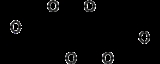
D-Psicose is an ultralow-energy monosaccharide
sugar
. It is a C-3 epimer
of D-fructose
, and is present in small quantities in agricultural products and commercially-prepared carbohydrate complexes. It is known as a "rare sugar" because it is rarely found in nature, and even when found, only in small amounts. D-Psicose yields only 0.3% the metabolic energy of the equivalent amount of sucrose
. Its name derives from the antibiotic
psicofuranine, from which it can be isolated. Research is being conducted into how it can be used in diets to aid in combating hyperglycemia
, hyperlipidemia
, and obesity
.
Monosaccharide
Monosaccharides are the most basic units of biologically important carbohydrates. They are the simplest form of sugar and are usually colorless, water-soluble, crystalline solids. Some monosaccharides have a sweet taste. Examples of monosaccharides include glucose , fructose , galactose, xylose...
sugar
Sugar
Sugar is a class of edible crystalline carbohydrates, mainly sucrose, lactose, and fructose, characterized by a sweet flavor.Sucrose in its refined form primarily comes from sugar cane and sugar beet...
. It is a C-3 epimer
Epimer
In chemistry, epimers are diastereomers that differ in configuration of only one stereogenic center. Diastereomers are a class of stereoisomers that are non-superposable, non-mirror images of one another....
of D-fructose
Fructose
Fructose, or fruit sugar, is a simple monosaccharide found in many plants. It is one of the three dietary monosaccharides, along with glucose and galactose, that are absorbed directly into the bloodstream during digestion. Fructose was discovered by French chemist Augustin-Pierre Dubrunfaut in 1847...
, and is present in small quantities in agricultural products and commercially-prepared carbohydrate complexes. It is known as a "rare sugar" because it is rarely found in nature, and even when found, only in small amounts. D-Psicose yields only 0.3% the metabolic energy of the equivalent amount of sucrose
Sucrose
Sucrose is the organic compound commonly known as table sugar and sometimes called saccharose. A white, odorless, crystalline powder with a sweet taste, it is best known for its role in human nutrition. The molecule is a disaccharide composed of glucose and fructose with the molecular formula...
. Its name derives from the antibiotic
Antibiotic
An antibacterial is a compound or substance that kills or slows down the growth of bacteria.The term is often used synonymously with the term antibiotic; today, however, with increased knowledge of the causative agents of various infectious diseases, antibiotic has come to denote a broader range of...
psicofuranine, from which it can be isolated. Research is being conducted into how it can be used in diets to aid in combating hyperglycemia
Hyperglycemia
Hyperglycemia or Hyperglycæmia, or high blood sugar, is a condition in which an excessive amount of glucose circulates in the blood plasma. This is generally a glucose level higher than 13.5mmol/l , but symptoms may not start to become noticeable until even higher values such as 15-20 mmol/l...
, hyperlipidemia
Hyperlipidemia
Hyperlipidemia, hyperlipoproteinemia, or hyperlipidaemia is the condition of abnormally elevated levels of any or all lipids and/or lipoproteins in the blood...
, and obesity
Obesity
Obesity is a medical condition in which excess body fat has accumulated to the extent that it may have an adverse effect on health, leading to reduced life expectancy and/or increased health problems...
.