
|
|
|
|
Pablo Casals
|
| |
|
| |
Pau Casals i Defilló (December 29 1876 – October 22, 1973), best known during his professional career as Pablo Casals, was a Spanish Catalan cellist and later conductor. He made many recordings throughout his career, of solo, chamber, and orchestral music, also as conductor, but Casals is perhaps best remembered for the recording of the Bach: Cello Suites he made from 1936 to 1939. An ardent supporter of the Spanish Republican government, after its defeat in 1939, Casals vowed not to return to Spain until democracy had been restored, although he did not live to see the end of the Franco dictatorial regime.
ls was born in El Vendrell, Catalonia, Spain.

Discussion
Ask a question about 'Pablo Casals'
Start a new discussion about 'Pablo Casals'
Answer questions from other users
|
Quotations
Music is not just sound.
Maybe music will save the world.

Encyclopedia
Pau Casals i Defilló (December 29 1876 – October 22, 1973), best known during his professional career as Pablo Casals, was a Spanish Catalan cellist and later conductor. He made many recordings throughout his career, of solo, chamber, and orchestral music, also as conductor, but Casals is perhaps best remembered for the recording of the Bach: Cello Suites he made from 1936 to 1939. An ardent supporter of the Spanish Republican government, after its defeat in 1939, Casals vowed not to return to Spain until democracy had been restored, although he did not live to see the end of the Franco dictatorial regime.
Biography
Casals was born in El Vendrell, Catalonia, Spain. His father, Carles Casals i Ribes (1852-1908), was a parish pipe organist and choirmaster. He gave Casals instruction in piano, violin, and organ. He was also a very strict disciplinarian. When Casals was young his father would pull the piano out from the wall and have him and his brother, Enrique, stand behind it and name the notes and the scales that his father was playing. At age four Casals could play the violin, piano and flute.When Casals was eleven, he first heard the cello performed by a group of traveling musicians, and decided to dedicate himself to the instrument.
In 1888 his mother, Pilar Defilló de Casals, who was born in Mayagüez, Puerto Rico of Catalonian ancestry, took him to Barcelona, where he enrolled in the Escola Municipal de Música. There he studied cello, theory, and piano.
He made prodigious progress as a cellist; on February 23, 1891 he gave a solo recital in Barcelona at age of fourteen. He graduated from the Escola with honours two years later.
In 1893, the Spanish composer Isaac Albéniz heard him playing in a trio in a café and gave him a letter of introduction to the private secretary to María Cristina, the Queen Regent, in Madrid, Spain. Casals was asked to play at informal concerts in the palace, and was granted a royal stipend to study composition at the Conservatory de Musica y Declamacion in Madrid with Víctor Mirecki. He also played in the newly organized Quartet Society.
In 1895 he went to Paris, where, having lost his stipend from Catalonia, he earned a living by playing second cello in the theater orchestra of the Folies Marigny. In 1896, he returned to Catalonia and received an appointment to the faculty of the Escuela Municipal de Música in Barcelona. He was also appointed principal cellist in the orchestra of Barcelona's opera house, the Liceu. In 1897 he appeared as soloist with the Madrid Symphony Orchestra, and was awarded the Order of Carlos III from the Queen.
International career
In 1899, Casals played at The Crystal Palace in London, and later for Queen Victoria at her summer residence at Cowes, Isle of Wight. On November 12, 1899, he appeared as a soloist at a prestigious Lamoureux Concert in Paris, and played at Lamoureux again on December 17, 1899, with great public and critical acclaim. He toured Spain and the Netherlands with the pianist Harold Bauer in 1900-1901; in 1901-1902 he made his first tour of the United States; and in 1903 toured South America.
On January 15, 1904, Casals was invited to play at the White House for President Theodore Roosevelt. On March 9 of that year he made his debut at Carnegie Hall in New York, playing Richard Strauss's Don Quixote under the baton of the composer. In 1906 he became associated with the talented young Portuguese cellist Guilhermina Suggia, who studied with him and began to appear in concerts as Mme. P. Casals-Suggia, although they were not legally married. Their relationship ended in 1912.
The New York Times of April 9, 1911 informed that Pablo Casals would perform at the London Musical Festival to be held at the Queen’s Hall (Crystal Palace) on the second day of the Festival (May 23). The piece chosen was Haydn’s violoncello concerto in D and Casals would later join Fritz Kreisler for Brahms’ double concerto for violin and violoncello.
In 1914 Casals married the American socialite and singer Susan Metcalfe; they were separated in 1928, but did not divorce until 1957.
Although Casals made his first recordings in 1915 (a series for Columbia), it would not be until 1926 that he again released a recording (on the Victor label).
Back in Paris, Casals organized a trio with the pianist Alfred Cortot and the violinist Jacques Thibaud; they played concerts and made recordings until 1937. Casals also became interested in conducting, and in 1919 he organized, in Barcelona, the Orquesta Pau Casals and led its first concert on October 13, 1920. With the outbreak of the Spanish Civil War in 1936, the Orquesta Pau Casals ceased its activities.
Casals was an ardent supporter of the Spanish Republican government, and after its defeat vowed not to return to Spain until democracy was restored. Casals performed at the Gran Teatro del Liceo on October 19, 1938, possibly his last performance in Spain before his exile.
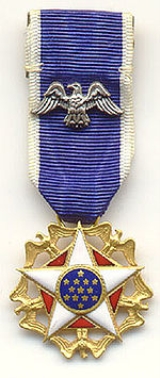
He settled in the French village of Prada de Conflent, on the Spanish frontier; between 1939 and 1942 he made sporadic appearances as a cellist in the unoccupied zone of southern France and in Switzerland. So fierce was his opposition to the Francisco Franco dictatorial regime in Spain that he refused to appear in countries that recognized the authoritarian Spanish government. He made a notable exception when he took part in a concert of chamber music in the White House on November 13, 1961, at the invitation of President John F Kennedy, whom he admired. On December 6 1963, Casals was awarded the Presidential Medal of Freedom.
Throughout most of his professional career, he played on a cello that was labeled and attributed to "Carlo Tononi ... 1733" but after playing it for 50 years it was discovered to have been created by the Venetian luthier, Matteo Goffriller around 1700. It was acquired by Casals in 1913.
Prades Festivals
In 1950 he resumed his career as conductor and cellist at the Prades Festival in Conflent, organized in commemoration of the bicentenary of the death of Bach; Casals agreed to participate on condition that all proceeds were to go to a refugee hospital in nearby Perpignan.
He continued leading the Prades Festivals until 1966.
Puerto Rico
On August 3, 1957, at 80, Casals married Marta Montañez Martínez, a young student of his from Puerto Rico. They settled in the town of Ceiba and lived in a house called "El Pesebre" in San Juan, Puerto Rico, where his mother was born when the island was under Spanish rule and where Casals made his permanent residence. The annual Casals Festival was inaugurated there in 1957.
In the 1960s, Casals gave many master classes throughout the world in places such as Zermatt, Tuscany, Berkeley, and Marlboro. Several of these events were televised.
Casals was also a composer; perhaps his most effective work is La sardana (The Sardana), for an ensemble of cellos, which he composed in 1926. His oratorio El pesebre (The Manger) was performed for the first time in Acapulco, Mexico, on December 17, 1960. One of his last compositions was the Himne a les Nacions Unides (Hymn of the United Nations); he conducted its first performance in a special concert at the United Nations on October 24, 1971, 2 months before his 95th birthday.
Casals had his memoirs recorded by Albert E. Kahn: Joys and Sorrows; Reflections (1970).
Casals died in 1973 in San Juan, Puerto Rico, at the age of 96. In 1979 his remains were laid to rest in his hometown of El Vendrell, Catalonia. He did not live to see the end of the Franco dictatorial regime, but he was posthumously honoured by the Spanish government under King Juan Carlos I, which issued in 1976 a commemorative postage stamp in honour of the centenary of his birth.
In 1989, Casals was posthumously awarded a Grammy Lifetime Achievement Award.
Legacy
The International Pau Casals Cello Competition is held in Germany under the auspices of the Kronberg Academy once every four years, starting in 2000, in order to discover and further the careers of the future cello elite, and is supported by the Pau Casals Foundation, under the patronage of Marta Casals Istomin. One of the prizes is the use of one of the Gofriller cellos owned by Casals.
The first top prize was awarded in 2000 to Claudio Bohórquez.
American comedian George Carlin, in his interview for the Archive of American Television, refers to Casals when discussing the restless nature of an artist's persona. As Carlin states, when Casals (then age 93) was asked why he continued to practice the cello three hours a day, Casals replied "I'm beginning to notice some improvement." Carlin continues, "And that's the thing that's in me. I notice myself getting better at this." This interview is available on Youtube.
Discography
- 1926 – 1928: Casals, Jacques Thibaud and Alfred Cortot – the first trios of Schubert, Schumann and Mendelssohn, the Beethoven "Archduke," Haydn's G Major and Beethoven's "Kakadu" Variations (Recorded in London)
- 1929, Brahms "Double" Concerto with Thibaud and Cortot conducting Casals' own orchestra.
- 1929: Dvorak and Brahms Concerti
- 1929: Beethoven’s Fourth Symphony (Recorded in Barcelona)
- 1936-1939: Bach's Cello Suites
- 1936: Bruch's Kol Nidre - London Symphony conducted by Landon Ronald.
- 1937: Dvorak Cello Concerto - Czech Philharmonic conducted by George Szell.
- 1945: Elgar Cello Concerto - BBC Symphony conducted by Sir Adrian Boult.
- 1950: The first of the Prades Festival recordings on Columbia
- 1950's Schubert C Major Quintet with the Budapest String Quartet
- 1959: Haydn "Farewell" Symphony (No. 45) and Mozart "Linz" Symphony (No. 36) (Recorded live at the 3rd Prades Festival)
- 1961: Mendelssohn Trio No. 1 with Alexander Schneider and Mieczyslaw Horszowski (Recorded live November 13, 1961 at the White House)
- 1963: Beethoven’s Eighth Symphony
- 1964: Bach’s Brandenburg Concerti
- 1966: Bach’s Orchestral Suites
- 1969: Beethoven’s First, Second, Fourth, Sixth ("Pastorale"), and Seventh Symphonies
- 1974: El Pessebre (The Manger) oratorio
See also
Further reading
External links
-
-
-
- at the 24 October 1971 concert at United Nations and
- , in Catalan
- , San Juan, Puerto Rico
- Prada de Conflent, Catalonia
-
|
| |
|
|