

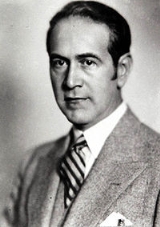
Oswaldo Aranha

Encyclopedia
Osvaldo Euclides de Sousa Aranha (February 15, 1894 – January 27, 1960) was a Brazil
ian politician, diplomat and statesman, who came to national prominence in 1930 under Getúlio Vargas
.
He is known in international politics for lobbying for the creation of the State of Israel as head of the Brazilian delegation to the UN and President of the UN General Assembly in 1947. As head of the Brazilian delegation, he was President of the United Nations General Assembly
in 1947 during the UNGA 181 vote on the United Nations Partition Plan for Palestine, in which he postponed the vote for three days to ensure its passage.
in the city of Alegrete
in the state of Rio Grande do Sul
. Aranha obtained his bachelor degree in Law and Social Sciences through the Law School of now-called Federal University of Rio de Janeiro (Faculdade de Direito do Rio de Janeiro) in 1916. After his graduation, he returned to the state of Rio Grande do Sul and practiced as a lawyer for eight years, establishing a personal and professional contact with Getulio Vargas, who also was a lawyer. His first public post was that of Assistant Police Commissioner in his native state.
Aranha fought the insurrection of 1923, deflagrated by sectors that opposed the fifth consecutive re-election of Borges de Medeiros as governor of Rio Grande do Sul
. By personally commanding an irregular armed force composed by civilians, Aranha fought new uprisings promoted by the opposition in the years that led to the Revolution of 1930.
In a speedy political career, Oswaldo Aranha run for his first elective office in 1926 and was elected Mayor of Alegrete, but soon became a member of the state legislature and later elected to the National Congress in 1928.
When Vargas ran as opposition candidate for president of Brazil
in 1930 and lost, Aranha joined with the tenentes to convince Vargas to organize a revolt. When the revolt succeeded, Aranha took the first of several positions in the Cabinet of Brazil
under now-President
Vargas, heading the Ministry of Finance
, the Ministry of Justice, and the Ministry of External Relations, among other positions.
Aranha also served as Ambassador to the United States in 1934 where he gained recognition as a strong supporter of Pan-Americanism. In 1937 He returned to Brazil to head the Ministry of Foreign Affairs. Dr. Aranha played a large role in the Rio de Janeiro Conference of 1942.
and worked out the recommendation for the collective severance of diplomatic relations with the Axis Powers
. During the 1942 Rio conference, he announced that Brazil had cut all diplomatic ties with Nazi Germany
, thereby siding with the USA and its Allies. Eventually most Central and South American states did the same, with the exception of Argentina
and Chile
.
At the first Special Session of the U.N. General Assembly
held in 1947, Oswaldo Aranha, then head of the Brazilian delegation to the U.N., began a tradition that has remained until today whereby the first speaker at this major international forum is always a Brazilian.
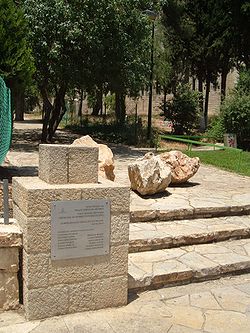 Aranha supported and heavily lobbied for the partition of Palestine toward the creation of the State of Israel
. Streets in Israeli cities such as Beer-Sheva and Ramat-Gan, and a square in Jerusalem are named after Aranha. in 2007, a street in Tel Aviv
was named in his honor at a ceremony attended by his relatives and Brazil's ambassador to Israel.
During Oswaldo Aranha's time as Minister for External Relations, from 1938-1944, many Jews were granted visas to Brazil - despite the circulars. In 1939, Jews were granted 4601 permanent and temporary resident visas to Brazil. In that year, 9% of all permanent residency visas and 14% of temporary Brazilian visas were emitted to people of Jewish origin. In 1940, 2500 Jewish immigrants were given visas to Brazil.
Albert Einstein asked Osvaldo Aranha for help in obtaining a visa for his friend, German Jew Helene Fabian-Katz. Einstein had previously appealed to the United States government for help, but the US denied Fabian-Katz a visa. Helene Fabian-Katz was granted a visa to Brazil and joined her brother, who was already living in São Paulo.
Brazil
Brazil , officially the Federative Republic of Brazil , is the largest country in South America. It is the world's fifth largest country, both by geographical area and by population with over 192 million people...
ian politician, diplomat and statesman, who came to national prominence in 1930 under Getúlio Vargas
Getúlio Vargas
Getúlio Dornelles Vargas served as President of Brazil, first as dictator, from 1930 to 1945, and in a democratically elected term from 1951 until his suicide in 1954. Vargas led Brazil for 18 years, the most for any President, and second in Brazilian history to Emperor Pedro II...
.
He is known in international politics for lobbying for the creation of the State of Israel as head of the Brazilian delegation to the UN and President of the UN General Assembly in 1947. As head of the Brazilian delegation, he was President of the United Nations General Assembly
President of the United Nations General Assembly
The President of the United Nations General Assembly is a position voted for by representatives in the United Nations General Assembly on a yearly basis.- Election :...
in 1947 during the UNGA 181 vote on the United Nations Partition Plan for Palestine, in which he postponed the vote for three days to ensure its passage.
Life
Osvaldo Aranha was born in BrazilBrazil
Brazil , officially the Federative Republic of Brazil , is the largest country in South America. It is the world's fifth largest country, both by geographical area and by population with over 192 million people...
in the city of Alegrete
Alegrete
Alegrete is a town and a municipality in Rio Grande do Sul located in southern Brazil. Its medium altitude is 102 m. Its estimated population in 2008 was 78,984 inhabitants and the total area is 7,803.967 km² . Its inhabitants are called Alegretenses.Alegrete was settled in 1816 and became a...
in the state of Rio Grande do Sul
Rio Grande do Sul
Rio Grande do Sul is the southernmost state in Brazil, and the state with the fifth highest Human Development Index in the country. In this state is located the southernmost city in the country, Chuí, on the border with Uruguay. In the region of Bento Gonçalves and Caxias do Sul, the largest wine...
. Aranha obtained his bachelor degree in Law and Social Sciences through the Law School of now-called Federal University of Rio de Janeiro (Faculdade de Direito do Rio de Janeiro) in 1916. After his graduation, he returned to the state of Rio Grande do Sul and practiced as a lawyer for eight years, establishing a personal and professional contact with Getulio Vargas, who also was a lawyer. His first public post was that of Assistant Police Commissioner in his native state.
Aranha fought the insurrection of 1923, deflagrated by sectors that opposed the fifth consecutive re-election of Borges de Medeiros as governor of Rio Grande do Sul
Rio Grande do Sul
Rio Grande do Sul is the southernmost state in Brazil, and the state with the fifth highest Human Development Index in the country. In this state is located the southernmost city in the country, Chuí, on the border with Uruguay. In the region of Bento Gonçalves and Caxias do Sul, the largest wine...
. By personally commanding an irregular armed force composed by civilians, Aranha fought new uprisings promoted by the opposition in the years that led to the Revolution of 1930.
In a speedy political career, Oswaldo Aranha run for his first elective office in 1926 and was elected Mayor of Alegrete, but soon became a member of the state legislature and later elected to the National Congress in 1928.
When Vargas ran as opposition candidate for president of Brazil
President of Brazil
The president of Brazil is both the head of state and head of government of the Federative Republic of Brazil. The president leads the executive branch of the federal government and is the commander-in-chief of the Brazilian Armed Forces...
in 1930 and lost, Aranha joined with the tenentes to convince Vargas to organize a revolt. When the revolt succeeded, Aranha took the first of several positions in the Cabinet of Brazil
Cabinet of Brazil
The Cabinet of Brazil is composed of the Ministers of State and senior advisors of the executive branch of the federal government of Brazil. Cabinet officers are appointed and dismissed by the President. There are currently twenty-four Ministries of State and fourteen other cabinet-level...
under now-President
President of Brazil
The president of Brazil is both the head of state and head of government of the Federative Republic of Brazil. The president leads the executive branch of the federal government and is the commander-in-chief of the Brazilian Armed Forces...
Vargas, heading the Ministry of Finance
Ministry of Finance (Brazil)
The Ministry of Finance of Brazil was created in 1808 with the title Secretaria de Estado dos Negócios do Brazil e da Fazenda. The ministry is responsible for formulating and implementing the country's economic policy.-External links:*...
, the Ministry of Justice, and the Ministry of External Relations, among other positions.
Aranha also served as Ambassador to the United States in 1934 where he gained recognition as a strong supporter of Pan-Americanism. In 1937 He returned to Brazil to head the Ministry of Foreign Affairs. Dr. Aranha played a large role in the Rio de Janeiro Conference of 1942.
Support for Allies in World War II
While serving as Minister of External Relations, Brazil took part in the first three consultative meetings of the Ministers of External Relations of the American Republics which defined Pan-American policy during the early stages of World War IIWorld War II
World War II, or the Second World War , was a global conflict lasting from 1939 to 1945, involving most of the world's nations—including all of the great powers—eventually forming two opposing military alliances: the Allies and the Axis...
and worked out the recommendation for the collective severance of diplomatic relations with the Axis Powers
Axis Powers
The Axis powers , also known as the Axis alliance, Axis nations, Axis countries, or just the Axis, was an alignment of great powers during the mid-20th century that fought World War II against the Allies. It began in 1936 with treaties of friendship between Germany and Italy and between Germany and...
. During the 1942 Rio conference, he announced that Brazil had cut all diplomatic ties with Nazi Germany
Nazi Germany
Nazi Germany , also known as the Third Reich , but officially called German Reich from 1933 to 1943 and Greater German Reich from 26 June 1943 onward, is the name commonly used to refer to the state of Germany from 1933 to 1945, when it was a totalitarian dictatorship ruled by...
, thereby siding with the USA and its Allies. Eventually most Central and South American states did the same, with the exception of Argentina
Argentina
Argentina , officially the Argentine Republic , is the second largest country in South America by land area, after Brazil. It is constituted as a federation of 23 provinces and an autonomous city, Buenos Aires...
and Chile
Chile
Chile ,officially the Republic of Chile , is a country in South America occupying a long, narrow coastal strip between the Andes mountains to the east and the Pacific Ocean to the west. It borders Peru to the north, Bolivia to the northeast, Argentina to the east, and the Drake Passage in the far...
.
At the first Special Session of the U.N. General Assembly
United Nations General Assembly
For two articles dealing with membership in the General Assembly, see:* General Assembly members* General Assembly observersThe United Nations General Assembly is one of the five principal organs of the United Nations and the only one in which all member nations have equal representation...
held in 1947, Oswaldo Aranha, then head of the Brazilian delegation to the U.N., began a tradition that has remained until today whereby the first speaker at this major international forum is always a Brazilian.
Honor in Israel
Israel
The State of Israel is a parliamentary republic located in the Middle East, along the eastern shore of the Mediterranean Sea...
. Streets in Israeli cities such as Beer-Sheva and Ramat-Gan, and a square in Jerusalem are named after Aranha. in 2007, a street in Tel Aviv
Tel Aviv
Tel Aviv , officially Tel Aviv-Yafo , is the second most populous city in Israel, with a population of 404,400 on a land area of . The city is located on the Israeli Mediterranean coastline in west-central Israel. It is the largest and most populous city in the metropolitan area of Gush Dan, with...
was named in his honor at a ceremony attended by his relatives and Brazil's ambassador to Israel.
Controversy
A book by historian Maria Luiza Tucci Carneiro reveals that Aranha was aware of secret circulars asking that Jews be denied entry visas to Brazil and did little to change this. The circular asking for the denial of visas to Jews, however, was not edited by Osvaldo Aranha nor was it made during his term as Minister of External Relations for Brazil. Mário de Pimentel Brandão was responsible for signing this harmful secret circular in 1937 during his term as Minister of External Relations for Brazil.During Oswaldo Aranha's time as Minister for External Relations, from 1938-1944, many Jews were granted visas to Brazil - despite the circulars. In 1939, Jews were granted 4601 permanent and temporary resident visas to Brazil. In that year, 9% of all permanent residency visas and 14% of temporary Brazilian visas were emitted to people of Jewish origin. In 1940, 2500 Jewish immigrants were given visas to Brazil.
Albert Einstein asked Osvaldo Aranha for help in obtaining a visa for his friend, German Jew Helene Fabian-Katz. Einstein had previously appealed to the United States government for help, but the US denied Fabian-Katz a visa. Helene Fabian-Katz was granted a visa to Brazil and joined her brother, who was already living in São Paulo.