


Norse-Gaels

Encyclopedia
The Norse–Gaels were a people who dominated much of the Irish Sea
region, including the Isle of Man
, and western Scotland
for a part of the Middle Ages
; they were of Gaelic
and Scandinavia
n origin and as a whole exhibited a great deal of Gaelic and Norse
cultural syncretism
. Other modern terms used include Scoto-Norse, Hiberno-Norse, Irish–Norse and Foreign Gaels.
The correct translation for Gall-Ghàidheil or any of the variant spellings is "Foreign Gaels" and is not specifically used to refer to Norse foreigners. It is a general term to describe a particular ethnic grouping of foreigners of which the Norse formed part. This term is subject to a large range of variations depending on chronological and geographical differences in the Gaelic language
, i.e., Gall Gaidel, Gall Gaidhel, Gall Gaidheal, Gall Gaedil, Gall Gaedhil, Gall Gaedhel, Gall Goidel, etc. The modern term in Irish however, is Gall-Ghaeil, while the Scottish Gaelic is Gall-Ghàidheil.
(except for the Norse who settled in Cumbria
) and adopted the Gaelic language
as well as many other Gaelic customs. Many left their original worship of Norse gods
and converted to Christianity
, and this contributed to the Gaelicisation.
Gaelicised Scandinavians dominated the Irish Sea region until the Norman
era of the twelfth century, founding long-lasting kingdoms, such as the Kingdoms of Man
, Argyll
, Dublin
, Galloway
as well as taking control of the Norse
colony at York.
The Lords of the Isles, a Lordship which lasted until the sixteenth century, as well as many other Gaelic rulers of Scotland and Ireland, traced their descent from Norse-Gaels. The Norse-Gaels settlement in England was concentrated in the North West
.
A class of mercenaries now known as "gallowglass
" - a term evolving from the Irish for "foreign soldier" - served as warriors for Irish kings
from the early 13th century until the middle of the 16th century, many settling in Ireland at the completion of their service.
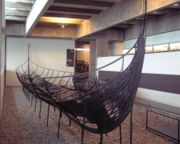
The Norse are first recorded in Ireland in 795 when they sacked Lambay Island
. Sporadic raids then continued until 832, after which they began to build fortified settlements throughout the country. Norse raids continued throughout the tenth century, but resistance to them increased. The Norse established independent kingdoms in Dublin, Waterford
, Wexford
, Cork
and Limerick
. These kingdoms did not survive the subsequent Norman
invasions, but the towns continued to grow and prosper.
that there were papar
or culdee
s in Iceland
before the Norse, and this appears to tie in with comments of Dicuil
. However, whether or not this is true, the settlement of Iceland and the Faroe islands by the Norse would have included many Norse-Gaels, as well as slaves, servants and wives. They were called "Vestmen", and the name is retained in Vestmanna
in the Faroes, and the Vestmannaeyjar off the Icelandic mainland, where it is said that Irish slaves escaped to. ("Vestman" may have referred to the lands and islands "west" of mainland Scandinavia
.)
A number of Icelandic personal names are of Gaelic origin, e.g. Njáll Þorgeirsson
of Njáls saga had a forename of Gaelic origin - Niall. Patreksfjörður
, an Icelandic village also contains the name Padraig. A number of placenames named after the papar
, Irish monks, exist on Iceland and the Faroes.
According to some circumstantial evidence, Grímur Kamban, seen as the founder of the Norse Faroes, may have been a Norse Gael.
Irish Sea
The Irish Sea separates the islands of Ireland and Great Britain. It is connected to the Celtic Sea in the south by St George's Channel, and to the Atlantic Ocean in the north by the North Channel. Anglesey is the largest island within the Irish Sea, followed by the Isle of Man...
region, including the Isle of Man
Isle of Man
The Isle of Man , otherwise known simply as Mann , is a self-governing British Crown Dependency, located in the Irish Sea between the islands of Great Britain and Ireland, within the British Isles. The head of state is Queen Elizabeth II, who holds the title of Lord of Mann. The Lord of Mann is...
, and western Scotland
Scotland
Scotland is a country that is part of the United Kingdom. Occupying the northern third of the island of Great Britain, it shares a border with England to the south and is bounded by the North Sea to the east, the Atlantic Ocean to the north and west, and the North Channel and Irish Sea to the...
for a part of the Middle Ages
Middle Ages
The Middle Ages is a periodization of European history from the 5th century to the 15th century. The Middle Ages follows the fall of the Western Roman Empire in 476 and precedes the Early Modern Era. It is the middle period of a three-period division of Western history: Classic, Medieval and Modern...
; they were of Gaelic
Gaels
The Gaels or Goidels are speakers of one of the Goidelic Celtic languages: Irish, Scottish Gaelic, and Manx. Goidelic speech originated in Ireland and subsequently spread to western and northern Scotland and the Isle of Man....
and Scandinavia
Scandinavia
Scandinavia is a cultural, historical and ethno-linguistic region in northern Europe that includes the three kingdoms of Denmark, Norway and Sweden, characterized by their common ethno-cultural heritage and language. Modern Norway and Sweden proper are situated on the Scandinavian Peninsula,...
n origin and as a whole exhibited a great deal of Gaelic and Norse
Norsemen
Norsemen is used to refer to the group of people as a whole who spoke what is now called the Old Norse language belonging to the North Germanic branch of Indo-European languages, especially Norwegian, Icelandic, Faroese, Swedish and Danish in their earlier forms.The meaning of Norseman was "people...
cultural syncretism
Syncretism
Syncretism is the combining of different beliefs, often while melding practices of various schools of thought. The term means "combining", but see below for the origin of the word...
. Other modern terms used include Scoto-Norse, Hiberno-Norse, Irish–Norse and Foreign Gaels.
The correct translation for Gall-Ghàidheil or any of the variant spellings is "Foreign Gaels" and is not specifically used to refer to Norse foreigners. It is a general term to describe a particular ethnic grouping of foreigners of which the Norse formed part. This term is subject to a large range of variations depending on chronological and geographical differences in the Gaelic language
Goidelic languages
The Goidelic languages or Gaelic languages are one of the two branches of the Insular Celtic languages, the other consisting of the Brythonic languages. Goidelic languages historically formed a dialect continuum stretching from the south of Ireland through the Isle of Man to the north of Scotland...
, i.e., Gall Gaidel, Gall Gaidhel, Gall Gaidheal, Gall Gaedil, Gall Gaedhil, Gall Gaedhel, Gall Goidel, etc. The modern term in Irish however, is Gall-Ghaeil, while the Scottish Gaelic is Gall-Ghàidheil.
History
The Norse-Gaels originated in Viking colonies of Ireland and Scotland, whose inhabitants became subject to the process of Gaelicisation, whereby starting as early as the ninth century, most intermarried with native GaelsGaels
The Gaels or Goidels are speakers of one of the Goidelic Celtic languages: Irish, Scottish Gaelic, and Manx. Goidelic speech originated in Ireland and subsequently spread to western and northern Scotland and the Isle of Man....
(except for the Norse who settled in Cumbria
Cumbria
Cumbria , is a non-metropolitan county in North West England. The county and Cumbria County Council, its local authority, came into existence in 1974 after the passage of the Local Government Act 1972. Cumbria's largest settlement and county town is Carlisle. It consists of six districts, and in...
) and adopted the Gaelic language
Middle Irish language
Middle Irish is the name given by historical philologists to the Goidelic language spoken in Ireland, Scotland and the Isle of Man from the 10th to 12th centuries; it is therefore a contemporary of late Old English and early Middle English...
as well as many other Gaelic customs. Many left their original worship of Norse gods
Norse mythology
Norse mythology, a subset of Germanic mythology, is the overall term for the myths, legends and beliefs about supernatural beings of Norse pagans. It flourished prior to the Christianization of Scandinavia, during the Early Middle Ages, and passed into Nordic folklore, with some aspects surviving...
and converted to Christianity
Christianity
Christianity is a monotheistic religion based on the life and teachings of Jesus as presented in canonical gospels and other New Testament writings...
, and this contributed to the Gaelicisation.
Gaelicised Scandinavians dominated the Irish Sea region until the Norman
Normans
The Normans were the people who gave their name to Normandy, a region in northern France. They were descended from Norse Viking conquerors of the territory and the native population of Frankish and Gallo-Roman stock...
era of the twelfth century, founding long-lasting kingdoms, such as the Kingdoms of Man
Isle of Man
The Isle of Man , otherwise known simply as Mann , is a self-governing British Crown Dependency, located in the Irish Sea between the islands of Great Britain and Ireland, within the British Isles. The head of state is Queen Elizabeth II, who holds the title of Lord of Mann. The Lord of Mann is...
, Argyll
Argyll
Argyll , archaically Argyle , is a region of western Scotland corresponding with most of the part of ancient Dál Riata that was located on the island of Great Britain, and in a historical context can be used to mean the entire western coast between the Mull of Kintyre and Cape Wrath...
, Dublin
Kings of Dublin
The Vikings invaded the territory around Dublin in the 9th century, establishing the Norse Kingdom of Dublin, the earliest and longest lasting Norse kingdom in all of Europe outside of Scandinavia, excepting the so-called Kingdom of Mann and the Isles. This corresponded to most of present-day...
, Galloway
Lords of Galloway
The Lords, or Kings of Galloway ruled over Galloway, in south west Scotland, for a large part of the High Middle Ages.Many regions of Scotland, including Galloway and Moray, periodically had kings or subkings, similar to those in Ireland during the Middle Ages. The Scottish monarch was seen as...
as well as taking control of the Norse
Norsemen
Norsemen is used to refer to the group of people as a whole who spoke what is now called the Old Norse language belonging to the North Germanic branch of Indo-European languages, especially Norwegian, Icelandic, Faroese, Swedish and Danish in their earlier forms.The meaning of Norseman was "people...
colony at York.
The Lords of the Isles, a Lordship which lasted until the sixteenth century, as well as many other Gaelic rulers of Scotland and Ireland, traced their descent from Norse-Gaels. The Norse-Gaels settlement in England was concentrated in the North West
North West England
North West England, informally known as The North West, is one of the nine official regions of England.North West England had a 2006 estimated population of 6,853,201 the third most populated region after London and the South East...
.
A class of mercenaries now known as "gallowglass
Gallowglass
The gallowglass or galloglass – from , gallóglach – were an elite class of mercenary warrior who came from Norse-Gaelic clans in the Hebrides and Highlands of Scotland between the mid 13th century and late 16th century...
" - a term evolving from the Irish for "foreign soldier" - served as warriors for Irish kings
Irish kings
This page serves as an index of lists of kings of the Gaelic kingdoms of Ireland of the Early Medieval period.*List of High Kings of Ireland*Kings of Ailech*Kings of Airgíalla*Kings of Brega*Kings of Breifne*Kings of Connacht*Kings of Dál nAraidi...
from the early 13th century until the middle of the 16th century, many settling in Ireland at the completion of their service.
Ireland
The Norse are first recorded in Ireland in 795 when they sacked Lambay Island
Lambay Island
Lambay lies off the coast of Fingal / north County Dublin, Ireland in the Irish Sea. It is located north of Ireland's Eye at and is the easternmost point of the Republic of Ireland...
. Sporadic raids then continued until 832, after which they began to build fortified settlements throughout the country. Norse raids continued throughout the tenth century, but resistance to them increased. The Norse established independent kingdoms in Dublin, Waterford
Waterford
Waterford is a city in the South-East Region of Ireland. It is the oldest city in the country and fifth largest by population. Waterford City Council is the local government authority for the city and its immediate hinterland...
, Wexford
Wexford
Wexford is the county town of County Wexford, Ireland. It is situated near the southeastern corner of Ireland, close to Rosslare Europort. The town is connected to Dublin via the M11/N11 National Primary Route, and the national rail network...
, Cork
Cork (city)
Cork is the second largest city in the Republic of Ireland and the island of Ireland's third most populous city. It is the principal city and administrative centre of County Cork and the largest city in the province of Munster. Cork has a population of 119,418, while the addition of the suburban...
and Limerick
Limerick
Limerick is the third largest city in the Republic of Ireland, and the principal city of County Limerick and Ireland's Mid-West Region. It is the fifth most populous city in all of Ireland. When taking the extra-municipal suburbs into account, Limerick is the third largest conurbation in the...
. These kingdoms did not survive the subsequent Norman
Normans
The Normans were the people who gave their name to Normandy, a region in northern France. They were descended from Norse Viking conquerors of the territory and the native population of Frankish and Gallo-Roman stock...
invasions, but the towns continued to grow and prosper.
Iceland and the Faroes
It is recorded in the LandnamabokLandnámabók
Landnámabók , often shortened to Landnáma, is a medieval Icelandic written work describing in considerable detail the settlement of Iceland by the Norse in the 9th and 10th centuries AD.-Landnáma:...
that there were papar
Papar
The Papar were, according to early Icelandic historical sources, a group of Irish or Scottish monks resident in parts of Iceland at the time of the arrival of the Norsemen...
or culdee
Culdee
Céli Dé or Culdees were originally members of ascetic Christian monastic and eremitical communities of Ireland, Scotland and England in the Middle Ages. The term is used of St. John the Apostle, of a missioner from abroad recorded in the Annals of the Four Masters at the year 806, and of Óengus...
s in Iceland
Iceland
Iceland , described as the Republic of Iceland, is a Nordic and European island country in the North Atlantic Ocean, on the Mid-Atlantic Ridge. Iceland also refers to the main island of the country, which contains almost all the population and almost all the land area. The country has a population...
before the Norse, and this appears to tie in with comments of Dicuil
Dicuil
Dicuil, Irish monk and geographer, born in the second half of the 8th century.-Background:The exact dates of Dicuil's birth and death unknown...
. However, whether or not this is true, the settlement of Iceland and the Faroe islands by the Norse would have included many Norse-Gaels, as well as slaves, servants and wives. They were called "Vestmen", and the name is retained in Vestmanna
Vestmanna
Vestmanna is a town in the Faroe Islands on the west of the island of Streymoy. It was formerly a ferry port, until an undersea tunnel was built from Vágar to Kvívík and Stykkið. The cliffs west of Vestmanna, Vestmannabjørgini are very popular for excursions by boat.A 'Vestmann' was a "Westman",...
in the Faroes, and the Vestmannaeyjar off the Icelandic mainland, where it is said that Irish slaves escaped to. ("Vestman" may have referred to the lands and islands "west" of mainland Scandinavia
Scandinavia
Scandinavia is a cultural, historical and ethno-linguistic region in northern Europe that includes the three kingdoms of Denmark, Norway and Sweden, characterized by their common ethno-cultural heritage and language. Modern Norway and Sweden proper are situated on the Scandinavian Peninsula,...
.)
A number of Icelandic personal names are of Gaelic origin, e.g. Njáll Þorgeirsson
Njáll Þorgeirsson
Njáll Þorgeirsson was a 10th century Icelandic lawyer who lived at Bergþórshvol and is one of the main protagonists of Njáls saga, a medieval Icelandic saga.Njáll was the son of Þorgeir "gollnir" Ófeigsson...
of Njáls saga had a forename of Gaelic origin - Niall. Patreksfjörður
Patreksfjörður
Patreksfjörður is an Icelandic village in the Westfjords with 627 inhabitants .The town was named after Saint Patrick who was the spiritual guide of Örlygur Hrappson, the original settler in the area...
, an Icelandic village also contains the name Padraig. A number of placenames named after the papar
Papar
The Papar were, according to early Icelandic historical sources, a group of Irish or Scottish monks resident in parts of Iceland at the time of the arrival of the Norsemen...
, Irish monks, exist on Iceland and the Faroes.
According to some circumstantial evidence, Grímur Kamban, seen as the founder of the Norse Faroes, may have been a Norse Gael.
Modern names
Even today, many surnames particularly connected with Gaeldom are of Norse origin, especially in the Western Isles and Isle of Man.Surnames
| Gaelic | Anglicised form | "Son of-" |
|---|---|---|
| MacAsgaill | MacAskill, McCaskill | Áskell |
| MacAmhlaibh | MacAulay Macaulay (surname) Macaulay, MacAulay, and McAulay are surnames in the English language. There are several etymological origins for the names: all of which originated as patronyms in several Gaelic languages—Irish and Scottish Gaelic... , MacAuliffe McAuliffe (surname) McAuliffe or MacAuliffe is a surname of Norse Irish origin. The name is an Anglicisation of the Gaelic Mac Amhlaoibh , meaning "son of Amhlaoibh". The Gaelic name, Amhlaoibh, was derived from the Old Norse personal name Olaf. The surname occurs frequently in Munster, especially northern County... |
Óláf OLAF The European Anti-fraud Office is charged by the European Union with protecting the financial interests of the European Union: Its tasks are to fight fraud affecting the EU budget, as well as corruption and any other irregular activity, including misconduct, within the European Institutions, in an... |
| MacCorcadail | McCorquodale McCorquodale -People with the surname McCorquodale:*Alastair McCorquodale, Scottish athlete and cricketer.*Corky McCorquodale, professional poker player.*Joe McCorquodale, American politician.*Malcolm McCorquodale, 1st Baron McCorquodale, British politician.... , Clan McCorquodale Clan McCorquodale Clan McCorquodale is a Scottish clan, recognised by the Lord Lyon King of Arms, though without a chief so recognised. The last chief of the clan died in the 18th century. Because the clan does not have a recognised chief, it is considered an armigerous clan, and has no legal standing under Scots... , Corkill Corkill Corkill is a surname of Irish and Manx origin. The name is an Anglicised form of the Gaelic Mac Thorcaill which is derived from the Old Norse personal name meaning "Thor's kettle".-People:*Danny Corkill, , an actor.... , McCorkindale |
Þorketill |
| MacCoitir | Cotter, MacCotter | Óttar |
| MacÌomhair | MacIver McIver MacIver, McIver are Scottish and northern Irish surnames. The names are derived from the Gaelic Mac Íomhair, meaning "‘son of Íomhar". The Gaelic personal name Íomhar is a form of the Old Norse personal name Ivarr... , Clan MacIver Clan MacIver Clan MacIver, also known as Clan Iver, is Scottish clan recognised by the Lord Lyon King of Arms. The clan, however, does not have a chief recognised by the Lord Lyon King of Arms. Because of this the clan can be considered an armigerous clan. The clan name of MacIver is of Gaelic origin, derived... , MacIvor McIvor (surname) MacIvor, Macivor, and McIvor are surnames in the English language. In some cases the names are Anglicised forms of the Scottish Gaelic Mac Íomhair, which means "son of Íomhar".-People with the surname:MacIvor... |
Ívar (Ingvar Ingvar (name) The name Ingvar is an Norse first name for males, common in Scandinavia, meaning protected by Ing . Many notable Scandinavians have had this name, for example Ingvar Kamprad, and the legendary Swedish king Ingvar.... ) |
| MacShitrig | MacKitrick, McKittrick McKittrick -People:* Amanda McKittrick Ros* Bobb McKittrick* David McKittrick* Ralph McKittrick* Rob McKittrick-Places:* McKittrick Canyon, a scenic canyon in West Texas* McKittrick Oil Field, an oil field in California... |
Sigtrygg |
| MacLeòid Clan MacLeod Clan MacLeod is a Highland Scottish clan associated with the Isle of Skye. There are two main branches of the clan: the Macleods of Harris and Dunvegan, whose chief is Macleod of Macleod, are known in Gaelic as Sìol Tormoid ; the Macleods of Lewis, whose chief is Macleod of The Lewes, are known in... |
MacLeod Clan MacLeod Clan MacLeod is a Highland Scottish clan associated with the Isle of Skye. There are two main branches of the clan: the Macleods of Harris and Dunvegan, whose chief is Macleod of Macleod, are known in Gaelic as Sìol Tormoid ; the Macleods of Lewis, whose chief is Macleod of The Lewes, are known in... |
Ljót (lit. "the ugly one") |
Forenames
| Gaelic | Anglicised form | Norse equivalent |
|---|---|---|
| Amhlaibh (confused with the Gaelic name Amhlaidh/Amhalghaidh) | Aulay (Olaf) | Ólaf |
| Goraidh | Gorrie (Godfrey, Godfred), Orree (Isle of Man) | Godfrið |
| Ìomhar | Ivor | Ívar (Ingvar) |
| Raghnall | Ranald (Ronald, Randall) | Rögnvald |
| Somhairle | Sorley (or Samuel) | Sumarliði (Somerled Somerled Somerled was a military and political leader of the Scottish Isles in the 12th century who was known in Gaelic as rí Innse Gall . His father was Gillebride... ) |
| Tormod | Norman | Þormóð |
| Torcuil | Torquil | Torkill, Þorketill |
See also
- Scandinavian York
- Old English (Ireland)Old English (Ireland)The Old English were the descendants of the settlers who came to Ireland from Wales, Normandy, and England after the Norman invasion of Ireland in 1169–71. Many of the Old English became assimilated into Irish society over the centuries...
- Clan DonaldClan DonaldClan Donald is one of the largest Scottish clans. There are numerous branches to the clan. Several of these have chiefs recognised by the Lord Lyon King of Arms; these are: Clan Macdonald of Sleat, Clan Macdonald of Clanranald, Clan MacDonell of Glengarry, Clan MacDonald of Keppoch, and Clan...
- Earl of OrkneyEarl of OrkneyThe Earl of Orkney was originally a Norse jarl ruling Orkney, Shetland and parts of Caithness and Sutherland. The Earls were periodically subject to the kings of Norway for the Northern Isles, and later also to the kings of Alba for those parts of their territory in mainland Scotland . The Earl's...
- Kings of DublinKings of DublinThe Vikings invaded the territory around Dublin in the 9th century, establishing the Norse Kingdom of Dublin, the earliest and longest lasting Norse kingdom in all of Europe outside of Scandinavia, excepting the so-called Kingdom of Mann and the Isles. This corresponded to most of present-day...
- List of Kings of the Isle of Man and the Isles
- Diocese of Sodor and ManDiocese of Sodor and ManSodor and Man is a diocese of the Church of England. Originally much larger, today it covers just the Isle of Man and its adjacent islets.-Early history:...
- Galley
- Lord of the IslesLord of the IslesThe designation Lord of the Isles is today a title of Scottish nobility with historical roots that go back beyond the Kingdom of Scotland. It emerged from a series of hybrid Viking/Gaelic rulers of the west coast and islands of Scotland in the Middle Ages, who wielded sea-power with fleets of...
- Lords of GallowayLords of GallowayThe Lords, or Kings of Galloway ruled over Galloway, in south west Scotland, for a large part of the High Middle Ages.Many regions of Scotland, including Galloway and Moray, periodically had kings or subkings, similar to those in Ireland during the Middle Ages. The Scottish monarch was seen as...
- PaparPaparThe Papar were, according to early Icelandic historical sources, a group of Irish or Scottish monks resident in parts of Iceland at the time of the arrival of the Norsemen...