

Nachtigall Battalion

Encyclopedia
The Nachtigall Battalion , officially known as Special Group Nachtigall, was the subunit under command of the Abwehr
special operation unit Lehrregiment "Brandenburg" z.b.V. 800
. Along with the Roland Battalion
it was one of two military units formed February 25, 1941 by head of the Abwehr
Wilhelm Franz Canaris, which sanctioned the creation of the "Ukrainian Legion" under German command. It was manned primarily by occupied Poland citizens of Ukrainian
ethnicity directed to unit by Bandera's OUN orders .
In Germany, in November 1941 the Ukrainian personnel of the Legion was reorganized into the 201st Schutzmannschaft Battalion
. It numbered 650 persons which served for one year at Belarus before disbanding.
Many of its members, especially the commanding officers, went on to the Ukrainian Insurgent Army and 14 of its members joined SS-Freiwilligen-Schützen-Division «Galizien» in spring 1943.
OUN actively cooperated with Nazi Germany. According to the National Academy of Sciences of Ukraine and other sources, OUN-R leader Stepan Bandera
held meetings with the heads of Germany's intelligence, regarding the formation of "Nachtigall" and "Roland
" Battalions. February 25, 1941 head of the Abwehr
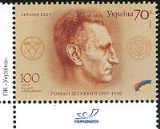
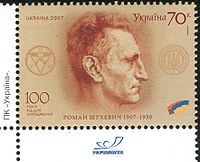
Wilhelm Franz Canaris sanctioned the creation of the "Ukrainian Legion" under German command. The unit would have had 800 persons. Roman Shukhevych
became a commander of the Legion from the OUN-R side. OUN expected that the unit would become the core of the future Ukrainian army. In the spring the OUN received 2.5 million marks for subversive activities against the USSR. In the spring of 1941 the Legion was reorganized into 2 units. One of the units became known as Nachtigall Battalion, a second became the Roland Battalion
, a remained personnel was inmmidiately dispatched into Soviet Union for sabotage of Red Army's rear.
In May 1941, the German command decided to split a 700-strong Ukrainian Legion into two battalions: Nachtigall ("Nightingale") and Roland Battalion.
Training for Nachtigall took place in Neuhammer near Schlessig. On the Ukrainian side, the commander was Roman Shukhevych
and on the German, Theodor Oberländer
. (Oberländer was later to become Federal Minister for Displaced Persons, Refugees and War Victims
in the Federal Republic of Germany
.) Ex-Brandenburger Oberleutnant Dr. Hanz-Albrecht Herzner was placed in military command of the Battalion.
The Nachtigall unit was outfitted in the standard Wehrmacht uniforms. Before entering Lviv, they placed blue and yellow ribbons on their shoulders
while traveling in the direction of Lviv.
The Nachtigall Battalion traveled along with a Panzer-Jaeger Division and some tank units went along through Radymno
-Lviv
-Ternopil
-Proskuriv-Vinnytsia
path.
The battalion took up guard of strategic objects, the most important of which was the radio station on the Vysoky Zamok Hill in the centre of Lviv. From the radio station, the proclamation of the Act of Ukrainian Independence was proclaimed.
The Nachtigall servicemen participated and organized the declaration of independence proclaimed by Yaroslav Stetsko
on June 30. Battalion chaplain Ivan Hrynokh
made a speech after declaration meeting was end. The German administration however did not support these activities but did not act harshly against organizers until mid-September 1941 .
The first company
of the Nachtigall Battalion left Lviv with the Brandenburg
on July 7 in the direction of Zolochiv
. The remainder of the unit joined later during their eastward march towards Zolochiv
, Ternopil
and Vinnytsia
. The unit participated in action against Stalin Line
were some of it members were awarded by Germans.
Some believe that on the way the soldiers of Nachtigall participated in the slaughter of Jews. Only during the march at three villages of the Vinnytsia
region "all Jews which were met" were shot.
The German refusal to accept the OUN(b)’s June 30 proclamation of Ukrainian independence in L’viv led to a change of the Nachtigall battalion direction. As the result, the battalion was recalled to Cracow and disarmed on August 15. It was later transformed together with Roland battalion into the 201st Schutzmannschaft Battalion
.
S. Bandera wrote: "The end of DUN
was such: the revolutionary columns were commanded by Roman Shukhevych with a small party of officers who had not only undergone military training, but had come to a clear understanding of military tactics. The most important, they brought with them - an understanding of organization, strategies and tactics of partisan fighting, and the German method of dealing with partisan groups. This knowledge was very useful in the formation and activities of the UIA and in its future conflicts.
During its short history the Nachtigall Battalion had 39 casualties and had 40 wounded soldiers.
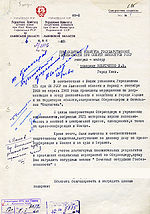
 See: Controversy regarding the Nachtigall Battalion
Accusations have placed the Battalion in Lviv in July 1941 and claimed that the unit participated in the pogrom that took place. While some members of the unit did indeed participate in the pogrom, the unit as a whole was not involved in the event. The origin of the accusations against Nachtigall to a Soviet attempt to discredit the Adenauer government in Germany in 1959. Historical records have since exonerated the Nachtigall Battalion from participation in the pogrom.
The Simon Wiesenthal Center
contends that between June 30 and July 3, 1941, in the days that the Battalion was in Lviv the Nachtigall soldiers together with the German army and the local Ukrainians participated in the killings of Jews in the city. The pretext for the pogrom
was a rumor that the Jews were responsible for the execution of prisoners by the Soviets
before the 1941 Soviet withdrawal from Lviv. The encyclopedia of the Holocaust states that some 4,000 Jews were kidnapped and killed at that time. It further states that the unit was removed from Lviv on July 7 and sent to the Eastern Front
.
The Polish side contends that members of the Nazi-led Nachtigall battalion also participated in the massacres of Polish professors, including the ex-Polish Prime minister Kazimierz Bartel
, Tadeusz Boy-Żeleński
and others, in Lwów in 1941. See Massacre of Lviv professors.
Canadian Investigation: Involvement of any members of the Nachtigall Battalion in the war crimes have not yet been established. The Canadian Commission on War Criminals in Canada (Deschênes Commission
) that look into allegations of war criminals residing in Canada, has not named any of the members of the Nachtigall Battalion. Moreover, it concluded, that units collaborating with the Nazis should not be indicted as a group and that mere membership in such units was not sufficient to justify prosecution.
World opinion: An international commission was set up at The Hague in the Netherlands in 1959 to carry out independent investigations. The members were four former anti-Hitler activists, Norwegian lawyer Hans Cappelen, former Danish foreign minister and president of the Danish parliament Ole Bjørn Kraft, Dutch socialist Karel van Staal, Belgian law professor Flor Peeters, and Swiss jurist and member of parliament Kurt Scoch. Following its interrogation of a number of Ukrainian witnesses between November 1959 and March 1960, the commission concluded: "After four months of inquiries and the evaluation of 232 statements by witnesses from all circles involved, it can be established that the accusations against the Battalion Nachtigall and against the then Lieutenant and currently Federal Minister Oberländer have no foundation in fact."
The Ukrainian side states that none of the allegations have been proven by any documents, and that the Battalion's main priority was securing the radio station, newspapers and proclaiming Ukrainian independence.
The activities of the Nachtigall Battalion continue to remain controversial. A study of the massacre in Lviv based on documents of the time was made by de Zayas in his book The Wehrmacht War Crimes Bureau, 1939-1945 University of Nebraska Press, Rockport, Maine, 2000 edition.
Abwehr
The Abwehr was a German military intelligence organisation from 1921 to 1944. The term Abwehr was used as a concession to Allied demands that Germany's post-World War I intelligence activities be for "defensive" purposes only...
special operation unit Lehrregiment "Brandenburg" z.b.V. 800
Brandenburgers
The Brandenburgers were members of the Brandenburg German Special Forces unit during World War II.Units of Brandenburgers operated in almost all fronts - the invasion of Poland, Denmark and Norway, in the Battle of France, in Operation Barbarossa, in Finland, Greece and the invasion of Crete,...
. Along with the Roland Battalion
Roland Battalion
The Roland Battalion , officially known as Special Group Roland, was the subunit under command of the Abwehr special operation unit Lehrregiment "Brandenburg" z.b.V. 800...
it was one of two military units formed February 25, 1941 by head of the Abwehr
Abwehr
The Abwehr was a German military intelligence organisation from 1921 to 1944. The term Abwehr was used as a concession to Allied demands that Germany's post-World War I intelligence activities be for "defensive" purposes only...
Wilhelm Franz Canaris, which sanctioned the creation of the "Ukrainian Legion" under German command. It was manned primarily by occupied Poland citizens of Ukrainian
Ukrainians
Ukrainians are an East Slavic ethnic group native to Ukraine, which is the sixth-largest nation in Europe. The Constitution of Ukraine applies the term 'Ukrainians' to all its citizens...
ethnicity directed to unit by Bandera's OUN orders .
In Germany, in November 1941 the Ukrainian personnel of the Legion was reorganized into the 201st Schutzmannschaft Battalion
201st Schutzmannschaft Battalion
The 201st Schutzmannschaft Battalion was a Security Police unit composed from the personnel of the Abwehrs Roland Battalion and Nachtigall Battalion....
. It numbered 650 persons which served for one year at Belarus before disbanding.
Many of its members, especially the commanding officers, went on to the Ukrainian Insurgent Army and 14 of its members joined SS-Freiwilligen-Schützen-Division «Galizien» in spring 1943.
Formation and training
Prior to Operation Barbarossa, the Bandera'sStepan Bandera
Stepan Andriyovych Bandera was a Ukrainian politician and one of the leaders of Ukrainian national movement in Western Ukraine , who headed the Organization of Ukrainian Nationalists...
OUN actively cooperated with Nazi Germany. According to the National Academy of Sciences of Ukraine and other sources, OUN-R leader Stepan Bandera
Stepan Bandera
Stepan Andriyovych Bandera was a Ukrainian politician and one of the leaders of Ukrainian national movement in Western Ukraine , who headed the Organization of Ukrainian Nationalists...
held meetings with the heads of Germany's intelligence, regarding the formation of "Nachtigall" and "Roland
Roland Battalion
The Roland Battalion , officially known as Special Group Roland, was the subunit under command of the Abwehr special operation unit Lehrregiment "Brandenburg" z.b.V. 800...
" Battalions. February 25, 1941 head of the Abwehr
Abwehr
The Abwehr was a German military intelligence organisation from 1921 to 1944. The term Abwehr was used as a concession to Allied demands that Germany's post-World War I intelligence activities be for "defensive" purposes only...
Wilhelm Franz Canaris sanctioned the creation of the "Ukrainian Legion" under German command. The unit would have had 800 persons. Roman Shukhevych
Roman Shukhevych
Roman Taras Yosypovych Shukhevych was a Ukrainian politician and military leader, the general of the Ukrainian Insurgent Army.-Childhood:Roman Taras Yosypovych Shukhevych was born in the city of Krakovets, Jaworow powiat, in Kingdom of Galicia and Lodomeria which is located today between Lviv and...
became a commander of the Legion from the OUN-R side. OUN expected that the unit would become the core of the future Ukrainian army. In the spring the OUN received 2.5 million marks for subversive activities against the USSR. In the spring of 1941 the Legion was reorganized into 2 units. One of the units became known as Nachtigall Battalion, a second became the Roland Battalion
Roland Battalion
The Roland Battalion , officially known as Special Group Roland, was the subunit under command of the Abwehr special operation unit Lehrregiment "Brandenburg" z.b.V. 800...
, a remained personnel was inmmidiately dispatched into Soviet Union for sabotage of Red Army's rear.
In May 1941, the German command decided to split a 700-strong Ukrainian Legion into two battalions: Nachtigall ("Nightingale") and Roland Battalion.
Training for Nachtigall took place in Neuhammer near Schlessig. On the Ukrainian side, the commander was Roman Shukhevych
Roman Shukhevych
Roman Taras Yosypovych Shukhevych was a Ukrainian politician and military leader, the general of the Ukrainian Insurgent Army.-Childhood:Roman Taras Yosypovych Shukhevych was born in the city of Krakovets, Jaworow powiat, in Kingdom of Galicia and Lodomeria which is located today between Lviv and...
and on the German, Theodor Oberländer
Theodor Oberländer
Theodor Oberländer was an Ostforschung scientist, Nazi officer and German politician. Before Second World War he devised plans aimed against Jewish and Polish population in territories that were to be conquered by Nazi Germany...
. (Oberländer was later to become Federal Minister for Displaced Persons, Refugees and War Victims
Federal Ministry for Displaced Persons, Refugees and War Victims
The Federal Ministry for Displaced Persons, Refugees and War Victims was part of the West German federal government from 1949 till 1969.Before the formation of the Federal Republic of Germany on the territory of the three western allied zones, the individual state governments were in charge of...
in the Federal Republic of Germany
West Germany
West Germany is the common English, but not official, name for the Federal Republic of Germany or FRG in the period between its creation in May 1949 to German reunification on 3 October 1990....
.) Ex-Brandenburger Oberleutnant Dr. Hanz-Albrecht Herzner was placed in military command of the Battalion.
The Nachtigall unit was outfitted in the standard Wehrmacht uniforms. Before entering Lviv, they placed blue and yellow ribbons on their shoulders
War with the Soviet Union
Four days before the attack on the Soviet Union, the Battalion was moved to the border. On the night of June 23–24, 1941, the Battalion crossed the border near PrzemyślPrzemysl
Przemyśl is a city in south-eastern Poland with 66,756 inhabitants, as of June 2009. In 1999, it became part of the Podkarpackie Voivodeship; it was previously the capital of Przemyśl Voivodeship....
while traveling in the direction of Lviv.
The Nachtigall Battalion traveled along with a Panzer-Jaeger Division and some tank units went along through Radymno
Radymno
Radymno is a town in south-eastern Poland with 5,543 inhabitants . It has been part of the Subcarpathian Voivodeship since its creation in 1999. Radymno was previously in the Przemyśl Voivodeship from 1975–1998.-References:Notes...
-Lviv
Lviv
Lviv is a city in western Ukraine. The city is regarded as one of the main cultural centres of today's Ukraine and historically has also been a major Polish and Jewish cultural center, as Poles and Jews were the two main ethnicities of the city until the outbreak of World War II and the following...
-Ternopil
Ternopil
Ternopil , is a city in western Ukraine, located on the banks of the Seret River. Ternopil is one of the major cities of Western Ukraine and the historical region of Galicia...
-Proskuriv-Vinnytsia
Vinnytsia
Vinnytsia is a city located on the banks of the Southern Bug, in central Ukraine. It is the administrative center of Vinnytsia Oblast.-Names:...
path.
Lviv
As part of the 1st Brandenberg Battalion, the first soldiers of the Nachtigall Battalion entered Lviv on June 29.The battalion took up guard of strategic objects, the most important of which was the radio station on the Vysoky Zamok Hill in the centre of Lviv. From the radio station, the proclamation of the Act of Ukrainian Independence was proclaimed.
The Nachtigall servicemen participated and organized the declaration of independence proclaimed by Yaroslav Stetsko
Yaroslav Stetsko
Yaroslav Stetsko was the leader of the Bandera's Organization of Ukrainian Nationalists , from 1968 until death. In 1941, during Nazi Germany invasion into the Soviet Union he was self-proclaimed temporary head of the self-proclaimed Ukrainian statehood...
on June 30. Battalion chaplain Ivan Hrynokh
Ivan Hrynokh
Ivan Hrynokh Other spellings Pseudonyms - Professor Danyliv, Professor Prister, Herasymovsky, Vsevolod, Kovalenko, Kostetsky, Orlov.Father Dr...
made a speech after declaration meeting was end. The German administration however did not support these activities but did not act harshly against organizers until mid-September 1941 .
The first company
Company (military unit)
A company is a military unit, typically consisting of 80–225 soldiers and usually commanded by a Captain, Major or Commandant. Most companies are formed of three to five platoons although the exact number may vary by country, unit type, and structure...
of the Nachtigall Battalion left Lviv with the Brandenburg
Brandenburgers
The Brandenburgers were members of the Brandenburg German Special Forces unit during World War II.Units of Brandenburgers operated in almost all fronts - the invasion of Poland, Denmark and Norway, in the Battle of France, in Operation Barbarossa, in Finland, Greece and the invasion of Crete,...
on July 7 in the direction of Zolochiv
Zolochiv
Zolochiv is a town located in the Lviv Oblast of western Ukraine. It is the administrative center of the Zolochiv Raion ....
. The remainder of the unit joined later during their eastward march towards Zolochiv
Zolochiv
Zolochiv is a town located in the Lviv Oblast of western Ukraine. It is the administrative center of the Zolochiv Raion ....
, Ternopil
Ternopil
Ternopil , is a city in western Ukraine, located on the banks of the Seret River. Ternopil is one of the major cities of Western Ukraine and the historical region of Galicia...
and Vinnytsia
Vinnytsia
Vinnytsia is a city located on the banks of the Southern Bug, in central Ukraine. It is the administrative center of Vinnytsia Oblast.-Names:...
. The unit participated in action against Stalin Line
Stalin Line
The Stalin Line was a line of fortifications along the western border of the Soviet Union. Work began on the system in the 1920s to protect the USSR against attacks from the West. The line was made up of concrete bunkers and gun emplacements, somewhat similar but less elaborate than the Maginot...
were some of it members were awarded by Germans.
Some believe that on the way the soldiers of Nachtigall participated in the slaughter of Jews. Only during the march at three villages of the Vinnytsia
Vinnytsia
Vinnytsia is a city located on the banks of the Southern Bug, in central Ukraine. It is the administrative center of Vinnytsia Oblast.-Names:...
region "all Jews which were met" were shot.
The German refusal to accept the OUN(b)’s June 30 proclamation of Ukrainian independence in L’viv led to a change of the Nachtigall battalion direction. As the result, the battalion was recalled to Cracow and disarmed on August 15. It was later transformed together with Roland battalion into the 201st Schutzmannschaft Battalion
201st Schutzmannschaft Battalion
The 201st Schutzmannschaft Battalion was a Security Police unit composed from the personnel of the Abwehrs Roland Battalion and Nachtigall Battalion....
.
Assessment
Russian historian V. Chuyev states that despite the ending, OUN achieved its ultimate goals - 600 members of their organization had received military training and had battle experience and these men took positions as instructors and commanders in the structure of the newly formed Ukrainian Insurgent Army.S. Bandera wrote: "The end of DUN
Dun
Dun is now used both as a generic term for a fort and also for a specific variety of Atlantic roundhouse...
was such: the revolutionary columns were commanded by Roman Shukhevych with a small party of officers who had not only undergone military training, but had come to a clear understanding of military tactics. The most important, they brought with them - an understanding of organization, strategies and tactics of partisan fighting, and the German method of dealing with partisan groups. This knowledge was very useful in the formation and activities of the UIA and in its future conflicts.
During its short history the Nachtigall Battalion had 39 casualties and had 40 wounded soldiers.
Controversy
Accusations have placed the Battalion in Lviv in July 1941 and claimed that the unit participated in the pogrom that took place. While some members of the unit did indeed participate in the pogrom, the unit as a whole was not involved in the event. The origin of the accusations against Nachtigall to a Soviet attempt to discredit the Adenauer government in Germany in 1959. Historical records have since exonerated the Nachtigall Battalion from participation in the pogrom.
The Simon Wiesenthal Center
Simon Wiesenthal Center
The Simon Wiesenthal Center , with headquarters in Los Angeles, California, was established in 1977 and named for Simon Wiesenthal, the Nazi hunter. According to its mission statement, it is "an international Jewish human rights organization dedicated to repairing the world one step at a time...
contends that between June 30 and July 3, 1941, in the days that the Battalion was in Lviv the Nachtigall soldiers together with the German army and the local Ukrainians participated in the killings of Jews in the city. The pretext for the pogrom
Pogrom
A pogrom is a form of violent riot, a mob attack directed against a minority group, and characterized by killings and destruction of their homes and properties, businesses, and religious centres...
was a rumor that the Jews were responsible for the execution of prisoners by the Soviets
Soviet Union
The Soviet Union , officially the Union of Soviet Socialist Republics , was a constitutionally socialist state that existed in Eurasia between 1922 and 1991....
before the 1941 Soviet withdrawal from Lviv. The encyclopedia of the Holocaust states that some 4,000 Jews were kidnapped and killed at that time. It further states that the unit was removed from Lviv on July 7 and sent to the Eastern Front
Eastern Front (World War II)
The Eastern Front of World War II was a theatre of World War II between the European Axis powers and co-belligerent Finland against the Soviet Union, Poland, and some other Allies which encompassed Northern, Southern and Eastern Europe from 22 June 1941 to 9 May 1945...
.
The Polish side contends that members of the Nazi-led Nachtigall battalion also participated in the massacres of Polish professors, including the ex-Polish Prime minister Kazimierz Bartel
Kazimierz Bartel
Kazimierz Władysław Bartel was a Polish mathematician and politician who served as Prime Minister of Poland three times between 1926 and 1930....
, Tadeusz Boy-Żeleński
Tadeusz Boy-Zelenski
Tadeusz Kamil Marcjan Żeleński was a Polish stage writer, poet, critic above all, and translator of over 100 French literary classics into Polish...
and others, in Lwów in 1941. See Massacre of Lviv professors.
Canadian Investigation: Involvement of any members of the Nachtigall Battalion in the war crimes have not yet been established. The Canadian Commission on War Criminals in Canada (Deschênes Commission
Deschênes Commission
The Commission of Inquiry on War Criminals in Canada, often referred to as the Deschênes Commission, was established by the government of Canada in February 1985 to investigate claims that Canada had become a haven for Nazi war criminals...
) that look into allegations of war criminals residing in Canada, has not named any of the members of the Nachtigall Battalion. Moreover, it concluded, that units collaborating with the Nazis should not be indicted as a group and that mere membership in such units was not sufficient to justify prosecution.
World opinion: An international commission was set up at The Hague in the Netherlands in 1959 to carry out independent investigations. The members were four former anti-Hitler activists, Norwegian lawyer Hans Cappelen, former Danish foreign minister and president of the Danish parliament Ole Bjørn Kraft, Dutch socialist Karel van Staal, Belgian law professor Flor Peeters, and Swiss jurist and member of parliament Kurt Scoch. Following its interrogation of a number of Ukrainian witnesses between November 1959 and March 1960, the commission concluded: "After four months of inquiries and the evaluation of 232 statements by witnesses from all circles involved, it can be established that the accusations against the Battalion Nachtigall and against the then Lieutenant and currently Federal Minister Oberländer have no foundation in fact."
The Ukrainian side states that none of the allegations have been proven by any documents, and that the Battalion's main priority was securing the radio station, newspapers and proclaiming Ukrainian independence.
The activities of the Nachtigall Battalion continue to remain controversial. A study of the massacre in Lviv based on documents of the time was made by de Zayas in his book The Wehrmacht War Crimes Bureau, 1939-1945 University of Nebraska Press, Rockport, Maine, 2000 edition.