

Mammaliaformes

Encyclopedia
Mammaliaformes is a clade
that contains the mammal
s and their closest extinct
relatives. Phylogenetically, it is defined as a clade including the most recent common ancestor of Sinoconodon
, morganuconodonts, docodonts, Monotremata, Marsupialia, Placentalia, extinct members of this clade, and all of its descendants. The precise phylogeny
is disputed due to the scantness of evidence in the fossil record. However, it is thought that the Mammaliaformes were of three major groups: Allotheria
, the longest extinct lineage of pre-mammals; Docodonta
, including close relatives such as Morganucodonta
; and Symmetrodonta
, the most basal
of modern mammals. Mammaliaformes radiated
from Cynodont
ia. The Probainognathia
ns of the Eucynodont clade probably evolved into the early mammaliaformes, but the branch Allotheria
was so different that they may have come from an entirely different group of cynodonts.
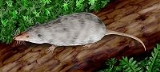
-like in appearance and size, and most of their distinguishing characteristics were internal. In particular, the structure of the mammaliform (and mammal) jaw
and arrangement of teeth is nearly unique. Instead of having many teeth that are frequently replaced, mammals have one set of baby teeth and later one set of adult teeth which fit together precisely. This is thought to aid in the grinding of food to make it quicker to digest. Being warm-blooded requires more calories than "cold-blooded" animals, so quickening the pace of digestion is a necessity. The drawback to the fixed dentition is that worn teeth cannot be replaced, as was possible for the reptilian ancestors of mammaliforms. However, small mammals generally being very short-lived compared to reptiles of the same size, this was not much of a problem during the early phase of their evolution, in which the trait was set. Early mammaliaformes were probably nocturnal.
Mammaliforms have several common structures. Most importantly, mammaliforms have highly specialized molars
, with cusp
s and flat regions for grinding food. This system is also unique to mammals, although it seems to have evolved convergently
in pre-mammals multiple times.
Lactation
and fur
, along with other characteristically mammalian features, are also thought to characterize the Mammaliaformes, but these traits are difficult to study in the fossil record. The fossilized remains of Castorocauda lutrasimilis
are a unique exception.
Some non-mammal mammaliformes still retain reptile
-like traits. Some mammaliformes had reptile-like locomotion. Furthermore, these mammaliformes still had some bones on their lower jaw seen in reptiles.
from an online synthesis by Mikko Haaramo.
Clade
A clade is a group consisting of a species and all its descendants. In the terms of biological systematics, a clade is a single "branch" on the "tree of life". The idea that such a "natural group" of organisms should be grouped together and given a taxonomic name is central to biological...
that contains the mammal
Mammal
Mammals are members of a class of air-breathing vertebrate animals characterised by the possession of endothermy, hair, three middle ear bones, and mammary glands functional in mothers with young...
s and their closest extinct
Extinction
In biology and ecology, extinction is the end of an organism or of a group of organisms , normally a species. The moment of extinction is generally considered to be the death of the last individual of the species, although the capacity to breed and recover may have been lost before this point...
relatives. Phylogenetically, it is defined as a clade including the most recent common ancestor of Sinoconodon
Sinoconodon
Sinoconodon rigneyi is an ancient proto-mammal that appears in the fossil record in the late Triassic period, about 208 million years ago. Although the animal seems more related to Morganucodon than anything else, it differed substantially from other Mammaliaformes in its dental and growth habits...
, morganuconodonts, docodonts, Monotremata, Marsupialia, Placentalia, extinct members of this clade, and all of its descendants. The precise phylogeny
Phylogenetics
In biology, phylogenetics is the study of evolutionary relatedness among groups of organisms , which is discovered through molecular sequencing data and morphological data matrices...
is disputed due to the scantness of evidence in the fossil record. However, it is thought that the Mammaliaformes were of three major groups: Allotheria
Allotheria
Allotheria was a branch of successful Mesozoic mammals. The most important characteristic was the presence of lower molariform teeth equipped with two longitudinal rows of cusps...
, the longest extinct lineage of pre-mammals; Docodonta
Docodonta
Docodonta is an order of extinct proto-mammals that lived during the mid- to late-Mesozoic era. Their most distinguishing physical features were their relatively sophisticated set of molars, from which the order gets its name. In the fossil record, Docodonta is represented primarily by isolated...
, including close relatives such as Morganucodonta
Morganucodonta
The morganucodonts are an extinct group of important animals that seem to represent the earliest of mammals. These were shrew-sized, likely warm-blooded and possibly possessed mammary glands....
; and Symmetrodonta
Symmetrodonta
Symmetrodonta is a basal group of Mesozoic mammals characterized by the triangular aspect of the molars when viewed from above and the absence of a well-developed talonid. The traditional group of symmetrodonts ranges in age from the latest Triassic to the Late Cretaceous. One species,...
, the most basal
Basal (phylogenetics)
In phylogenetics, a basal clade is the earliest clade to branch in a larger clade; it appears at the base of a cladogram.A basal group forms an outgroup to the rest of the clade, such as in the following example:...
of modern mammals. Mammaliaformes radiated
Adaptive radiation
In evolutionary biology, adaptive radiation is the evolution of ecological and phenotypic diversity within a rapidly multiplying lineage. Starting with a recent single ancestor, this process results in the speciation and phenotypic adaptation of an array of species exhibiting different...
from Cynodont
Cynodont
Cynodontia or cynodonts are a taxon of therapsids which first appeared in the Late Permian and were eventually distributed throughout all seven continents by the Early Triassic . This clade includes modern mammals and their extinct close relatives. They were one of the most diverse groups of...
ia. The Probainognathia
Probainognathia
The Probainognathians are one of the two major clades of the infraorder Eucynodontia, the other being Cynognathians. They were mostly carnivorous, though some species may have evolved omnivorous traits. The Probainognathia form into four groups: Probainognathidae, Chiniquodontidae,...
ns of the Eucynodont clade probably evolved into the early mammaliaformes, but the branch Allotheria
Allotheria
Allotheria was a branch of successful Mesozoic mammals. The most important characteristic was the presence of lower molariform teeth equipped with two longitudinal rows of cusps...
was so different that they may have come from an entirely different group of cynodonts.
Mammaliformes in life
Early mammaliforms were generally shrewShrew
A shrew or shrew mouse is a small molelike mammal classified in the order Soricomorpha. True shrews are also not to be confused with West Indies shrews, treeshrews, otter shrews, or elephant shrews, which belong to different families or orders.Although its external appearance is generally that of...
-like in appearance and size, and most of their distinguishing characteristics were internal. In particular, the structure of the mammaliform (and mammal) jaw
Jaw
The jaw is any opposable articulated structure at the entrance of the mouth, typically used for grasping and manipulating food. The term jaws is also broadly applied to the whole of the structures constituting the vault of the mouth and serving to open and close it and is part of the body plan of...
and arrangement of teeth is nearly unique. Instead of having many teeth that are frequently replaced, mammals have one set of baby teeth and later one set of adult teeth which fit together precisely. This is thought to aid in the grinding of food to make it quicker to digest. Being warm-blooded requires more calories than "cold-blooded" animals, so quickening the pace of digestion is a necessity. The drawback to the fixed dentition is that worn teeth cannot be replaced, as was possible for the reptilian ancestors of mammaliforms. However, small mammals generally being very short-lived compared to reptiles of the same size, this was not much of a problem during the early phase of their evolution, in which the trait was set. Early mammaliaformes were probably nocturnal.
Mammaliforms have several common structures. Most importantly, mammaliforms have highly specialized molars
Molar (tooth)
Molars are the rearmost and most complicated kind of tooth in most mammals. In many mammals they grind food; hence the Latin name mola, "millstone"....
, with cusp
Cusp (dentistry)
A cusp is an occlusal or incisal eminence on a tooth.Canine teeth, otherwise known as cuspids, each possess a single cusp, while premolars, otherwise known as bicuspids, possess two each. Molars normally possess either four or five cusps...
s and flat regions for grinding food. This system is also unique to mammals, although it seems to have evolved convergently
Convergent evolution
Convergent evolution describes the acquisition of the same biological trait in unrelated lineages.The wing is a classic example of convergent evolution in action. Although their last common ancestor did not have wings, both birds and bats do, and are capable of powered flight. The wings are...
in pre-mammals multiple times.
Lactation
Lactation
Lactation describes the secretion of milk from the mammary glands and the period of time that a mother lactates to feed her young. The process occurs in all female mammals, however it predates mammals. In humans the process of feeding milk is called breastfeeding or nursing...
and fur
Fur
Fur is a synonym for hair, used more in reference to non-human animals, usually mammals; particularly those with extensives body hair coverage. The term is sometimes used to refer to the body hair of an animal as a complete coat, also known as the "pelage". Fur is also used to refer to animal...
, along with other characteristically mammalian features, are also thought to characterize the Mammaliaformes, but these traits are difficult to study in the fossil record. The fossilized remains of Castorocauda lutrasimilis
Castorocauda lutrasimilis
Castorocauda was a genus of small, semi-aquatic relative of mammals living in the mid Jurassic period, around 154 million years ago, found in lakebed sediments of the Daohugou Beds of Inner Mongolia...
are a unique exception.
Some non-mammal mammaliformes still retain reptile
Reptile
Reptiles are members of a class of air-breathing, ectothermic vertebrates which are characterized by laying shelled eggs , and having skin covered in scales and/or scutes. They are tetrapods, either having four limbs or being descended from four-limbed ancestors...
-like traits. Some mammaliformes had reptile-like locomotion. Furthermore, these mammaliformes still had some bones on their lower jaw seen in reptiles.
Phylogeny
CladogramCladogram
A cladogram is a diagram used in cladistics which shows ancestral relations between organisms, to represent the evolutionary tree of life. Although traditionally such cladograms were generated largely on the basis of morphological characters, DNA and RNA sequencing data and computational...
from an online synthesis by Mikko Haaramo.
External links
- Mammaliforms and Mammaliaformes from Palaeos
- Mesozoic Mammals; Basal Mammaliaformes, an internet directory
See also
- Evolution of mammalsEvolution of mammals__FORCETOC__The evolution of mammals within the synapsid lineage was a gradual process that took approximately 70 million years, beginning in the mid-Permian. By the mid-Triassic, there were many species that looked like mammals, and the first true mammals appeared in the early Jurassic...
- Permian–Triassic extinction event
- Therapsid
- Vertebrate paleontologyVertebrate paleontologyVertebrate paleontology is a large subfield to paleontology seeking to discover the behavior, reproduction and appearance of extinct animals with vertebrae or a notochord, through the study of their fossilized remains...