
All Topics  
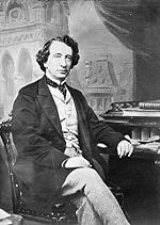
John A. Macdonald

 
John A. Macdonald

   Email Print
   Bookmark   Link


John A. Macdonald


Sir John Alexander Macdonald, GCB
Order of the Bath

The Most Honourable Order of the Bath is a United Kingdom order of chivalry founded by George I of Great Britain on 18 May 1725. The name derives from the medieval ceremony for creating a knight, which involved bathing as one of its elements....
, KCMG
Order of St Michael and St George

The Most Distinguished Order of Saint Michael and Saint George is a British order of chivalry founded on 28 April 1818 by George IV of the United Kingdom whilst he was acting as Prince Regent for his father, George III of the United Kingdom....
, PC, PC (Can)
Queen's Privy Council for Canada

The Queen's Privy Council for Canada , sometimes called Her Majesty's Privy Council for Canada or the Privy Council, is the council of advisers to the Monarchy of Canada, whose members are appointed by the Governor General of Canada of Canada for life on the advice of the Prime Minister of Canada....
, (January 11, 1815  – June 6, 1891) was the first Prime Minister
Prime minister

A prime minister is the most senior minister of Cabinet in the Executive branch of government in a parliamentary system. The position is usually held by, but need not always be held by, a politician....
 of Canada
Canada

Canada is a country occupying most of northern North America, extending from the Atlantic Ocean in the east to the Pacific Ocean in the west and northward into the Arctic Ocean....
 and the dominant figure of Canadian Confederation
Canadian Confederation

Canadian Confederation was the process by which the federalism Dominion of Canada was formed beginning July 1, 1867 from the provinces, colony and Territory of British North America....
. Macdonald's tenure in office spanned 18 years, making him the second longest serving Prime Minister of Canada. He is the only Canadian Prime Minister to win eight majority government
Majority government

In the Parliamentary system, there is a majority government when the governing political party enjoys an absolute majority of seats in the legislature or parliament....
s. He was the major proponent of a national railway, completed in 1885, linking Canada from the Atlantic to the Pacific Oceans.


Discussion
Ask a question about 'John A. Macdonald'
Start a new discussion about 'John A. Macdonald'
Answer questions from other users
Full Discussion Forum


Quotations


Anyone can support me when they think I'm right. What I want is someone that will support me when I am wrong.

Let us be English or let us be French... but above all let us be Canadians.

Yes, In my Canada the rich will always be a minority.

Asked if he believe in minority rights.

I get sick ... not because of drink but because I am forced to listen to the ranting of my honourable opponent.

During the election of 1863, Sir John A. Macdonald threw up during a campaign speech and when his opponent pointed this out, Macdonald shot back with this answer.

We must protect the rights of minorities, and the rich are always fewer in number than the poor.

Sir John A. Macdonald said this in the privacy of the Quebec Conference of 1864 when they were constructing the Senate.


Encyclopedia


Sir John Alexander Macdonald, GCB
Order of the Bath

The Most Honourable Order of the Bath is a United Kingdom order of chivalry founded by George I of Great Britain on 18 May 1725. The name derives from the medieval ceremony for creating a knight, which involved bathing as one of its elements....
, KCMG
Order of St Michael and St George

The Most Distinguished Order of Saint Michael and Saint George is a British order of chivalry founded on 28 April 1818 by George IV of the United Kingdom whilst he was acting as Prince Regent for his father, George III of the United Kingdom....
, PC, PC (Can)
Queen's Privy Council for Canada

The Queen's Privy Council for Canada , sometimes called Her Majesty's Privy Council for Canada or the Privy Council, is the council of advisers to the Monarchy of Canada, whose members are appointed by the Governor General of Canada of Canada for life on the advice of the Prime Minister of Canada....
, (January 11, 1815  – June 6, 1891) was the first Prime Minister
Prime minister

A prime minister is the most senior minister of Cabinet in the Executive branch of government in a parliamentary system. The position is usually held by, but need not always be held by, a politician....
 of Canada
Canada

Canada is a country occupying most of northern North America, extending from the Atlantic Ocean in the east to the Pacific Ocean in the west and northward into the Arctic Ocean....
 and the dominant figure of Canadian Confederation
Canadian Confederation

Canadian Confederation was the process by which the federalism Dominion of Canada was formed beginning July 1, 1867 from the provinces, colony and Territory of British North America....
. Macdonald's tenure in office spanned 18 years, making him the second longest serving Prime Minister of Canada. He is the only Canadian Prime Minister to win eight majority government
Majority government

In the Parliamentary system, there is a majority government when the governing political party enjoys an absolute majority of seats in the legislature or parliament....
s. He was the major proponent of a national railway, completed in 1885, linking Canada from the Atlantic to the Pacific Oceans. He won praise for having helped forge a nation of sprawling geographic size, with two diverse European colonial origins, numerous Aboriginal nations, and a multiplicity of cultural backgrounds and political views.

Early years, 1815–1830


John Alexander Macdonald was born in Glasgow
Glasgow

Glasgow is the largest city in Scotland and List of largest United Kingdom settlements by population in the United Kingdom. The city is situated on the River Clyde in the country's Scottish Lowlands....
, Scotland
Scotland

conventional_long_name = ScotlandAlba|common_name= Scotland|image_flag = Flag of Scotland.svg|flag_width = 130px...
 on January 11, 1815. Although January 10 is the official date recorded in the Glasgow Registry Office, January 11 is the day Macdonald and his family celebrated his birthday. His father was Hugh Macdonald, an unsuccessful merchant, who had married Helen Shaw, on October 21, 1811. Together, they produced five children. The first-born, William died in infancy. The next was Margaret who was followed a year and a half later by John Alexander, then a younger brother, James and a baby sister named Louisa. After the failure of Hugh Macdonald's business ventures, the family emigrated to Kingston
Kingston, Ontario

Kingston, Ontario is a Canadian city located at the eastern end of Lake Ontario, where the lake runs into the St. Lawrence River and the Thousand Islands begin....
, Upper Canada
Upper Canada

The Province of Upper Canada was a British colony located in what is now the southern portion of the Province of Ontario in Canada. Upper Canada officially existed from 26 December 1791 to 10 February 1841 and generally comprised present-day Southern Ontario and, until 1797, the Upper Peninsula of what is now part of the U.S....
 in 1820 along with thousands of others seeking affordable land and promises of prosperity.

Bad luck followed the family to their new country. When he was only seven, Macdonald watched as his younger brother James was struck and killed by a drunken servant who was supposed to be looking after them. Hugh Macdonald's business ventures in the Kingston area were scarcely more successful than they had been in Scotland. The family managed to scrape up the money to send Macdonald to Kingston's Midland Grammar School where, according to biographer Donald Creighton
Donald Creighton

Donald Grant Creighton, Order of Canada was a noted Canada historian....
, he studied subjects such as Latin, French and mathematics. "Already he was a voracious reader," Creighton writes, "and he would sit for hours deep in a book, almost oblivious to what was going on." At 14, Macdonald switched to a school for "general and classical education" founded by a newly arrived Presbyterian minister from Scotland. It was one of the few schools in Upper Canada that taught both boys and girls. Macdonald's formal schooling ended at 15, which was common when only the most prosperous were able to attend university. Nevertheless, Macdonald later regretted leaving school when he did, remarking to his private secretary Joseph Pope
Joseph Pope

Sir Joseph Pope, Order of St Michael and St George, Royal Victorian Order, Imperial Service Order was a Canada public servant. He was Private Secretary to Sir John A....
 that if he had attended university, he might have embarked on a literary career. "He did not add, as he might have done," Pope wrote in his biography of Macdonald, "that the successful government of millions of men, the strengthening of an empire, the creation of a great dominion, call for the possession and exercise of rarer qualities than are necessary to the achievement of literary fame."

Law career, 1830-1843


Professional training, 1830-1836

Macdonald's parents decided he should become a lawyer after leaving school. As Donald Creighton writes, "law was a broad, well-trodden path to comfort, influence, even to power." It was also "the obvious choice for a boy who seemed as attracted to study as he was uninterested in trade." Besides, Macdonald needed to start earning money immediately to support his family because his father's business ventures were failing. "I had no boyhood," he complained many years later. "From the age of 15, I began to earn my own living."

Macdonald travelled by steamboat to Toronto
Toronto

Toronto is the List of the 100 largest municipalities in Canada by population in Canada and the Provinces and territories of Canada Provincial and territorial capitals of Canada of Ontario....
 (then known as York
York, Upper Canada

York was the name of Toronto, Ontario, between 1793 and 1834 and second capital of Upper Canada....
), where he passed an examination set by the Law Society of Upper Canada
Law Society of Upper Canada

The Law Society of Upper Canada is responsible for the self-regulation of lawyers in the Canada province of Ontario, Canada. Founded in 1797, it is known in French language as "Le Barreau du Haut-Canada"....
. In 1830, there were no law schools, so prospective lawyers wrote the entrance exam, then learned the trade through on-the-job training by articling with an established lawyer. Macdonald was extremely fortunate to begin his apprenticeship with George Mackenzie, a young lawyer who was a prominent member of Kingston's rising Scottish community. Mackenzie practised corporate law, a lucrative specialty that Macdonald himself would later pursue. A promising law student, Macdonald was managing a branch office for Mackenzie in Napanee at age 17. It meant much more independence and responsibility. In 1833, Mackenzie permitted his articling student to leave his firm to run the law practice of Macdonald's ailing cousin, Lowther Pennington Macpherson, at Picton
Picton, Ontario

Picton is the largest community and the county seat of Prince Edward County, Ontario in southern central Ontario, Canada. Picton is located at the south-western end of Picton Bay, a branch of the Bay of Quinte, which is along the northern shoreline of Lake Ontario....
. By all accounts, the 19-year-old Macdonald did well. But in the summer of 1835, he decided to return to Kingston to open his own practice after George Mackenzie's sudden death during a cholera epidemic. Biographer Donald Swainson writes that Macdonald was determined to step into Mackenzie's shoes as the "leading lawyer within Kingston's Scottish Presbyterian community, a community that was quickly becoming the dominant force in the life of the city."

Early successes, 1836-1837


Macdonald was then called to the Bar
Call to the bar

The Call to the Bar is a legal term of art in most common law jurisdictions. Common law jurisdictions were all at one time part of the British Empire....
 on February 6 1836. Soon after opening his own law firm he took in two students: Oliver Mowat
Oliver Mowat

Sir Oliver Mowat, Order of St. Michael and St. George, Queen's Privy Council for Canada, Queen's Counsel was a Canada politician, and List of Ontario premiers from 1872 to 1896, making him the longest serving premier of that province and the 3rd longest in all of Canadian history....
, a future premier of Ontario and like Macdonald himself, a Father of Confederation
Canadian Confederation

Canadian Confederation was the process by which the federalism Dominion of Canada was formed beginning July 1, 1867 from the provinces, colony and Territory of British North America....
, and Alexander Campbell
Alexander Campbell (Canadian politician)

Sir Alexander Campbell, Queen's Privy Council for Canada, KCMG, Queen's Counsel was an England-born, Canada statesman and politician, and a father of Canadian Confederation....
, future Father of Confederation, federal cabinet minister and Lieutenant Governor
Lieutenant governor

A lieutenant governor or lieutenant-governor is a high officer of state, whose precise role and rank vary by jurisdiction. In the United States and many Commonwealth of Nations systems, lieutenant governors are usually deputy heads of state....
 of Ontario. With the help of his students, Macdonald "busied himself with lucrative but tedious work, such as chasing down unpaid bills and searching titles." Then suddenly, in 1837, Macdonald switched to criminal law for two years. Biographer Richard Gwyn writes that although there's no documentary evidence, there is a "plausible explanation" for Macdonald's motives:
As a criminal lawyer who took on dramatic cases, Macdonald got himself noticed well beyond the narrow confines of the Kingston business community. He was operating now in the arena where he would spend by far the greatest part of his life --- the court of public opinion. And while there he was learning the arts of argument and of persuasion that would serve him all his political life.
Macdonald unsuccessfully defended a man accused of raping an eight-year-old girl but won praise from a local newspaper for conducting "a very able defence." He then won the acquittal of a man accused of murdering a friend after an argument. Alexander Campbell, Macdonald's student, wrote years later that Macdonald had persuaded the jury by his "humour and strong liking for anecdote more than for his professional knowledge."

Rebellions of 1837


The Rebellions of 1837
Rebellions of 1837

The Rebellions of 1837 were a pair of Canada armed rebellion that occurred in 1837 and 1838 in response to frustrations in political reform and ethnic conflict....
 in Upper and Lower Canada
Lower Canada

The Province of Lower Canada was a British colonization of the Americas on the lower Saint Lawrence River and the shores of the Gulf of Saint Lawrence ....
 proved to be a crucial turning point in Macdonald's legal career. In fact, biographer Donald Creighton argues that the rebellions "made him as a lawyer," giving him the "reputation of a conservative who was not afraid to battle for liberal principles." Macdonald showed he was willing to take professional risks first by defending eight political prisoners from nearby counties who had been charged with treason for allegedly participating in the uprisings against colonial authorities. Macdonald succeeded in winning acquittals for all eight earning praise for his "ingenuity and ability" from a Kingston newspaper which also noted that the young barrister "is rapidly rising in his profession."

Then, Macdonald served as co-counsel for John Ashley, the man in charge of a local military jail, who had himself been arrested and briefly imprisoned for allegedly helping 15 political prisoners escape from custody. Ashley sued Colonel Dundas, the military commander for illegal arrest. Dundas was a popular figure, but Macdonald helped persuade the jury to award Ashley substantial monetary damages. Macdonald, Creighton writes, was now associated "with the defence of the plain people against the encroachments of military power. The solid blue of his inherited conservatism was varied now, in a pleasantly interesting fashion, with a few threads of a different and livelier color."
Battle of the Windmill
Finally, Macdonald took his biggest risk of all by agreeing to advise American raiders who had participated in an abortive invasion to liberate Canada from what they saw as the yoke of British colonial oppression. The inept raiders had been captured after the Battle of the Windmill
Battle of the Windmill

The Battle of the Windmill was a battle fought in November 1838 in the aftermath of the Upper Canada Rebellion. Loyalist forces of the Upper Canadian government defeated an invasion attempt by Hunter Patriot insurgents based in the United States....
 (1838, near Prescott, Ontario
Prescott, Ontario

Prescott is a town of approximately 4,200 people on the north shore of the Saint Lawrence River in Leeds and Grenville United Counties, Ontario, Canada....
) --- a battle in which 16 Canadians were killed and 60 wounded. Worst of all, the American invaders were accused of mutilating the body of a dead Canadian lieutenant. Creighton writes that Kingston was "mad with grief and rage and horror." At least two other lawyers refused to help when the brother-in-law of one of the Americans pleaded with them to provide legal advice. Macdonald must have hesitated, but eventually said yes after the frantic brother-in-law knocked on his door one morning before he was out of bed.
It was surely wisdom to have nothing to do with the whole affair. And yet, he took the case. Even he might have found it difficult to say why. A curious interest in people, a relish for cases which were odd and difficult, a jaunty recognition of the fact that professional prestige involved publicity, and, perhaps, a certain stubborn, independent conviction that these helpless and deluded men deserved at least the bare minimum of assistance - all these may have helped to move him to his decision.
There was little Macdonald could do to defend the Americans. Under military rules governing courts martial, civilian lawyers were not allowed to question witnesses or address the judge. Macdonald could only give private advice which helped the brother-in-law to ask searching questions during his trial, but did not save him from the gallows. Macdonald also advised "General" Nils Szoltevcky Von Schoultz
Nils von Schoultz

Nils Von Schoultz was a Finnish-born Swedish national who helped lead the Battle of the Windmill during the Upper Canada Rebellion in 1838.Von Schoultz was born Nils Gustaf Ulric in October 1807 in Finland and during the course of his life he moved to various cities around the world before finally settling in New York in 1836, where...
, the brave and charismatic Polish immigrant who had led the American raiders after their real commanders abandoned them at Windmill Point. Von Shoultz insisted on pleading guilty and wanted to leave Macdonald $100 in his will. Macdonald had to refuse it, but he never forgot the tragic story of the tall, handsome Pole.

Biographer Donald Creighton writes that although the rebellions and their aftermath helped Macdonald's career, they also had lasting psychological effects. "For him, and for Kingston," Creighton writes, "the 'rebellion' had been not so much a native uprising as a succession of American raids; and from then on he never quite lost a certain lingering anxiety for the problem of British North American defence."

Political rise, 1843–1864

In 1843, Macdonald entered politics, standing for the office of Alderman
Alderman

An alderman is a member of a Municipal government assembly or council in many jurisdictions. Historically the term could also refer to local municipal judges in small legal proceedings ....
 in Kingston, a position to which he was elected. In 1844 he was elected to the legislature of the Province of Canada to represent Kingston, gained the recognition of his peers and in 1847 was appointed Receiver General in William Henry Draper
William Henry Draper

William Henry Draper was a lawyer, judge and political figure in Upper Canada and Canada West.He was born near London, England in 1801 and ran away to sea at age 15....
's government. However, Macdonald had to give up his portfolio when Draper's government lost the next election. He left the Conservatives, hoping to build a more moderate and palatable base. In 1854, he helped with the founding of the Liberal-Conservative Party under the leadership of Sir Allan McNab. Within a few years, the Liberal-Conservatives would attract all of the old Conservative base as well as some centrist Reformers. The Liberal-Conservatives came to power in 1854 and under the new government Macdonald was appointed Attorney-General. During his time in cabinet, Macdonald was usually the most powerful minister, even when other men held the premiership. In the next election Macdonald continued his rise in politics by becoming Joint Premier of the Province of Canada
Joint Premiers of the Province of Canada

Joint Premiers of the Province of Canada were the leaders of the Province of Canada, from the 1841 unification of Upper Canada and Lower Canada until Canadian Confederation in 1867....
 with Sir Étienne-Paschal Taché
Étienne-Paschal Taché

Sir ?tienne-Paschal Tach? Order of St Michael and St George was a Canada doctor, politician and one of the Father of Confederation#Fathers of Confederation....
 of Canada East for the years 1856 and 1857.

Taché resigned in 1857, and George-Étienne Cartier
George-Étienne Cartier

Sir George-?tienne Cartier, Baronet, Order of St Michael and St George, Queen's Privy Council for Canada was a French-Canadian statesman and Canadian Confederation#Fathers of Confederation....
 took his place. In the election of 1858, the Macdonald-Cartier government was defeated and they resigned as Premiers. In an interesting piece of politics, the Governor General of Canada
Governor General of Canada

The Governor General of Canada is the viceroy representative in Canada of the Monarchy of Canada, who is the head of state. Canada is one of sixteen Commonwealth realms, all of which share the same person as their respective sovereign....
 asked Cartier to become the senior Premier, only a week after his defeat. Cartier accepted and brought Macdonald into office along with him. This was legal as any member of the cabinet could re-enter the cabinet provided they did so within a month of resigning their previous position. Macdonald focused on communications and defence, especially the Intercolonial Railway. Canada had to pressure the Colonial Office, Nova Scotia
Nova Scotia

Nova Scotia is a Canadian Provinces and territories of Canada located on Canada's southeastern coast. It is the most populous province in Atlantic Canada....
, New Brunswick
New Brunswick

New Brunswick is one of Canada's three Maritime provinces and is the only Constitution of Canada bilingual province in the federation. The provincial capital is Fredericton....
, Newfoundland and Prince Edward Island
Prince Edward Island

Prince Edward Island is a Canada Provinces and territories of Canada consisting of an island of the same name. The Maritimes is the smallest in the nation in both land area and population ....
 to, as one historian notes, "consider an ambitious scheme proposed by their pushing and turbulent neighbour, Canada." [Creighton, 1956, p. 273]

The coalition government was again defeated in 1862. Macdonald then served as the leader of the opposition until the election of 1864, when Taché came out of retirement and joined ranks with Macdonald to form the governing party yet again.

The Confederation of Canada, 1864–1867


To resolve the frequent legislative deadlocks in the Province of Canada, George Brown
George Brown (Canadian politician)

George Brown was a Scotland-born Canada journalist, politician and one of the Father of Confederation#Fathers of Confederation. A noted Reform Party politician, he was also the founder and editor of the Toronto Globe, which is today known as the Globe and Mail....
, the leader of the Clear Grits
Clear Grits

Clear Grits were reformers in the Province of Upper Canada, a British colony that is now the Province of Ontario, Canada. Their support was concentrated among southwestern Ontario farmers, who were frustrated and disillusioned by the 1849 Reform Party government of Robert Baldwin and Louis-Hippolyte Lafontaine's lack of democratic enthusiasm...
 (the forerunners to the Liberal Party of Canada
Liberal Party of Canada

The Liberal Party of Canada , colloquially known as the Grits, is a major political party in Canada. The party is positioned in the centre-left of the Politics of Canada....
) and an extremely vocal opponent of Macdonald's Conservatives, joined with Macdonald's Conservatives and George-Étienne Cartier's Parti Bleu
Parti bleu

The parti bleu was a moderate political group in Quebec, Canada that emerged in 1854. It was based on the moderate reformist views of Louis-Hippolyte Lafontaine, and was a rival to the radical parti rouge....
 in 1864 to form the Great Coalition
Great Coalition

The Great Coalition refers to the grand coalition of political parties that formed in the Provinces of Canada in 1864. The previous collapse after only a few months of a coalition government formed by ?tienne-Paschal Tach? and Conservative Party of Canada John A....
. The coalition sought to reform the political system of Canada, and was a crucial step in achieving a consensus to support future reform. However, the Parti Rouge
Parti rouge

The Parti rouge was formed in the Province of Canada around 1848 by radical French-Canadians inspired by the ideas of Louis-Joseph Papineau, the Institut canadien de Montr?al, and the reformist movement led by the Parti patriote of the 1830s....
 of Canada East, led by Jean-Baptiste-Éric Dorion
Jean-Baptiste-Éric Dorion

Jean-Baptiste-?ric Dorion was a journalist and political figure in Canada East.He was born in Sainte-Anne-de-la-P?rade, Quebec, Lower Canada in 1826, the son of Pierre-Antoine Dorion....
, still refused to join the coalition. Macdonald then spent 1864 to 1867 organizing the legislation needed to confederate the colonies into the country of Canada. In September 1864, he led the Canadian delegation at the Charlottetown Conference
Charlottetown Conference

The Charlottetown Conference was held in Charlottetown, Prince Edward Island, Prince Edward Island for representatives from the colonies of British North America to discuss Canadian Confederation....
 in Charlottetown
Charlottetown

Charlottetown is a Canada city and the provincial capital of Prince Edward Island. Charlottetown was first incorporated as a town in 1855 and designated as a city in 1885....
, Prince Edward Island
Prince Edward Island

Prince Edward Island is a Canada Provinces and territories of Canada consisting of an island of the same name. The Maritimes is the smallest in the nation in both land area and population ....
, to present his idea to the Maritime colonies, who were discussing a union of their own. In October 1864 delegates for confederation met in Quebec City
Quebec City

Qu?bec or Quebec, also Quebec City or Qu?bec City , is the Capital of the Canada Provinces and territories of Canada of Quebec and is located within the Capitale-Nationale region....
, Quebec
Quebec

Quebec , in French language, Qu?bec , is a Provinces and territories of Canada in the Central Canada and Eastern Canada regions of Canada....
, for the Quebec Conference
Quebec Conference

Quebec Conference refers to one of several different meetings by the same name that were held in Quebec City, Quebec, Canada:*The Quebec Conference, 1864, the second conference to discuss Canada's confederation, which was finally accomplished three years later....
, where the Seventy-Two Resolutions were created – the plan for confederation. By 1866, New Brunswick
New Brunswick

New Brunswick is one of Canada's three Maritime provinces and is the only Constitution of Canada bilingual province in the federation. The provincial capital is Fredericton....
, Nova Scotia
Nova Scotia

Nova Scotia is a Canadian Provinces and territories of Canada located on Canada's southeastern coast. It is the most populous province in Atlantic Canada....
, and the Province of Canada had agreed to confederation. Newfoundland
Newfoundland and Labrador

Newfoundland and Labrador is a Provinces and territories of Canada of Canada, on the country's Atlantic Ocean coast in northeastern North America....
 and Prince Edward Island
Prince Edward Island

Prince Edward Island is a Canada Provinces and territories of Canada consisting of an island of the same name. The Maritimes is the smallest in the nation in both land area and population ....
 were opposed. In the final conference of confederation held in 1866 in London
London

London is the capital of both England and the United Kingdom, and the most populous municipality in the European Union. An important settlement for two millennia, History of London goes back to its founding by the Roman Empire....
, England
England

native_name =|conventional_long_name = England|common_name = England|image_flag = Flag of England.svg|image_coat = England COA.svg|symbol_type = Royal Coat of Arms...
 the agreement to confederate was completed.

In 1867 the agreement was brought to the British Parliament, which passed the British North America Act creating the Dominion of Canada. Upon the creation of the Dominion of Canada, the Province of Canada was then divided into the individual provinces of Quebec
Quebec

Quebec , in French language, Qu?bec , is a Provinces and territories of Canada in the Central Canada and Eastern Canada regions of Canada....
 and Ontario
Ontario

Ontario is a Provinces and territories of Canada located in the Central Canada part of Canada, the largest by population and second largest, after Quebec, in total area....
. Macdonald was asked by the first Governor General of Canada Charles Monck, to form the first government. He was subsequently knighted
Knight Bachelor

The rank of Knight Bachelor is a part of the British honours system. It is the rank of a man who has been knighted by the monarch but not as a member of one of the organised Chivalric order....
 on Canada Day
Canada Day

Canada Day , formerly Dominion Day , is Canada's National Day, a Public holidays in Canada, celebrating the anniversary of the July 1, 1867 enactment of the Constitution Act, 1867, which united Canada as a single country of four provinces....
, July 1, 1867, the only colonial leader ever to receive that honour.

Johnamacdonald1870

First term as prime minister, 1867–1871

Queen Victoria
Victoria of the United Kingdom

Victoria was from 20 June 1837 the Queen regnant of the United Kingdom of Great Britain and Ireland and from 1 May 1876 the first Empress of India of the British Raj until her death....
 knighted John A. Macdonald for playing an integral role in bringing about Confederation
Canadian Confederation

Canadian Confederation was the process by which the federalism Dominion of Canada was formed beginning July 1, 1867 from the provinces, colony and Territory of British North America....
. His appointment as a Knight Commander of the Order of St Michael and St George
Order of St Michael and St George

The Most Distinguished Order of Saint Michael and Saint George is a British order of chivalry founded on 28 April 1818 by George IV of the United Kingdom whilst he was acting as Prince Regent for his father, George III of the United Kingdom....
 was announced at the birth of the Dominion, July 1, 1867. An election
Canadian federal election, 1867

The Canadian federal election of 1867, held from August 7 to September 20, was the first election for the new nation of Canada. It was held to elect members of the Canadian House of Commons of the 1st Canadian Parliament of Canada....
 was held in August which put Macdonald and his Conservative party into power.

Macdonald's vision as prime minister was to enlarge the country and unify it. Accordingly, under his rule Canada bought Rupert's Land
Rupert's Land

Rupert's Land, also sometimes called "Prince Rupert's Land", was a territory in British North America, consisting of the List of Hudson Bay rivers, that was owned by the Hudson's Bay Company for 200 years from 1670 to 1870....
 and the North-Western Territory
North-Western Territory

The North-Western Territory was a region of British North America until 1870. Named for where it lay in relation to Rupert's Land, the territory at its greatest extent covered what is now Yukon, mainland Northwest Territories, northwestern mainland Nunavut, northwestern Saskatchewan, northern Alberta and northern British Columbia....
 from the Hudson's Bay Company
Hudson's Bay Company

The Hudson's Bay Company , abbreviated HBC, is the oldest commercial corporation in North America and is one of the oldest in the world. The company was incorporated by British royal charter in 1670 as The Governor and Company of Adventurers of England trading into Hudson's Bay; it is now domiciled in Canada and has adopted the mo...
 for £300,000 (about $11,500,000 in modern Canadian dollars). This became the Northwest Territories
Northwest Territories

The Northwest Territories are a provinces and territories of Canada of Canada.Located in northern Canada, it borders Canada's two other territories, Yukon to the west and Nunavut to the east, and three provinces: British Columbia to the southwest, Alberta and Saskatchewan to the south....
. In 1870 Parliament passed the Manitoba Act
Manitoba Act

The Manitoba Act was given Royal Assent in the 33rd year of Queen Victoria's reigon, May 12, 1870. Taking effect on July 15, 1870, the Manitoba Act created the Provinces and territories of Canada of Manitoba....
, creating the province of Manitoba
Manitoba

Manitoba is a prairie provinces in Canada, which has an area of 647,797 square kilometres and a population of 1,207,959 , with more than half located within the Winnipeg Capital Region ....
 out of a portion of the Northwest Territories in response to the Red River Rebellion
Red River Rebellion

The Red River Rebellion or Red River Resistance are names given to the events surrounding the actions of a provisional government established by M?tis people leader Louis Riel in 1869 at the Red River Settlement in what is now the Canadian province of Manitoba....
 led by Louis Riel
Louis Riel

Louis David Riel was a Politics of Canada, a founder of the province of Manitoba, and leader of the M?tis people people of the Canadian prairies....
.

Second term and resignation over Pacific Scandal, 1871–1873

In 1871 Britain added British Columbia
United Colonies of Vancouver Island and British Columbia

The United Colonies of Vancouver Island and British Columbia was the name informally given to the de facto amalgamation of the two crown colony from 1866 until their incorporation into the Canadian Confederation in 1871....
 to Confederation, making it the sixth province. Macdonald promised a transcontinental railway connection to persuade the province to join, which his opponents decried as a highly unrealistic and expensive promise. In 1873 Prince Edward Island
Prince Edward Island

Prince Edward Island is a Canada Provinces and territories of Canada consisting of an island of the same name. The Maritimes is the smallest in the nation in both land area and population ....
 joined Confederation, and Macdonald created the North-West Mounted Police (now called the "Royal Canadian Mounted Police") on the advice of the Northwest Territories government to act as a police force for the vast Northwest Territories.

In 1873, Macdonald was accused of taking bribes to award contracts for the construction of the railway. The Pacific Scandal
Pacific Scandal

The Pacific Scandal was a political scandal in Canada which ultimately led to the resignation of Canada's first Prime Minister, Sir John A. Macdonald and a transfer of power from his Conservative Party of Canada to a Liberal Party of Canada led by Alexander Mackenzie....
 broke and Macdonald was forced to resign on November 5th, 1873. Liberal
Liberal Party of Canada

The Liberal Party of Canada , colloquially known as the Grits, is a major political party in Canada. The party is positioned in the centre-left of the Politics of Canada....
 leader Alexander Mackenzie
Alexander Mackenzie

Alexander Mackenzie, Queen's Privy Council for Canada , a building contractor and newspaper editor, was the List_of_Prime_Ministers_of_Canada Prime Minister of Canada from November 7, 1873 to October 9, 1878....
 formed a caretaker government
Caretaker government

In politics, a caretaker government rules temporarily. A caretaker government is often set up following a war until stable democratic rule can be restored, or installed, in which case it is often referred to as a provisional government....
. After New Years, 1874, the Liberals called an election
Canadian federal election, 1874

The Canadian federal election of 1874 was held on January 22, 1874, to elect members of the Canadian House of Commons of the 3rd Canadian Parliament of Canada....
. Macdonald's Tories were unable to recover from the scandal and the Liberals formed a majority government. This election was also the first in Canada to use a secret ballot
Secret ballot

The secret ballot is a voting method in which a voter's choices are confidential. The key aim is to ensure the voter records a sincere choice by forestalling attempts to influence the voter by intimidation or bribery....
.

Final years as prime minister, 1878–1891


Macdonald was returned to power in 1878 on the strength of the National Policy
National Policy

The National Policy was a Canada economic program introduced by John A. Macdonald's Conservative Party of Canada in 1876 after it returned to power....
, a plan to promote trade within the country by protecting it from the industries of other nations. He also promised to renew the effort to complete the previously promised Canadian Pacific Railway
Canadian Pacific Railway

The Canadian Pacific Railway , known as CP Rail between 1968 and 1996, is a Canada Class I railroad operated by Canadian Pacific Railway Limited....
. Macdonald won re-election as prime minister again in 1882. In 1884, Macdonald introduced a bill that would have gave unmarried women with the required qualifications, Dominion franchise, but the bill was defeated by the house. The CPR was completed in 1885, after several refinancing plans to cover shortfalls for the very expensive project, plunging Canada heavily into debt. Also in 1885, Louis Riel returned to Canada from exile in the United States, and launched the North-West Rebellion
North-West Rebellion

The North-West Rebellion of 1885 was a brief and unsuccessful Rebellion by the M?tis people people of the District of Saskatchewan under Louis Riel against the Dominion of Canada, which they believed had failed to address their concerns for the survival of their people....
 in the territory of Saskatchewan
Saskatchewan

Saskatchewan is a prairie provinces in Canada, which has an area of 588,276.09 square kilometres and a population of 1,015,895 , mostly living in the southern half of the province....
, but now that there was a railway through the area, militia were quickly sent to put it down; troops travelling from central Canada reached the site in eleven days. The success of this operation gave the CPR enough political capital to garner sufficient support to complete its construction. The trial and subsequent execution of Riel for treason caused a deep political division between French Canadians, who supported Riel (a culturally French Métis) and English Canadians, who supported Macdonald.

John A Macdonald Election Poster 1891
In 1891, Macdonald won the elections again, but by this time, the 76-year-old political warhorse started to feel the years of overwork, stress, drink and several bouts of severe illness, including a gallstone problem in 1870 that turned his office into a sick room for two months. On May 29, 1891, Sir John A. suffered a severe stroke
Stroke

A stroke is the rapidly developing loss of brain function due to a disturbance in the blood supply to the brain. According to the National Stroke Association, a "stroke" occurs when a blood clot blocks and artery or a blood vessel breaks, interrupting blood flow to an area of the brain....
, which robbed him of the ability to speak, and from which he would never recover. He died a week later on June 6, 1891 at the age of 76. He would lie in state in the Canadian Senate
Canadian Senate

The Senate of Canada is a component of the Parliament of Canada, along with the Canadian monarchy and the Canadian House of Commons. The Senate consists of 105 members appointed by the Governor General of Canada on the Advice of the Prime Minister of Canada....
 Chamber (prime ministers now lie in state in the Hall of Honour in the Centre Block
Centre Block

File:Parliament Building in Ottawa.jpgThe Centre Block is the main building of the Parliament of Canada complex on Parliament Hill, in Ottawa, Ontario, containing the Canadian House of Commons and Senate of Canada chambers, as well as the offices of a number of Member of Parliament#Canada and senators, as well as senior administration for b...
) where grieving Canadians turned out in the thousands to pay their respects. His state funeral
State funeral

A state funeral is a public funeral ceremony held to honour heads of state or other important people of national significance. They usually include much pomp and ceremony....
 was held on June 9, attended by hundreds of thousands of people. He is buried in Cataraqui Cemetery
Cataraqui Cemetery

The Cataraqui Cemetery, in Kingston, Ontario, Canada, is the city's largest and holds the distinction of being the burial site of Canada's first prime minister and a Canadian Confederation, Sir John A....
 in Kingston, Ontario
Kingston, Ontario

Kingston, Ontario is a Canadian city located at the eastern end of Lake Ontario, where the lake runs into the St. Lawrence River and the Thousand Islands begin....
. None of his children left heirs; he is survived by relative Hugh Gainsford.

Personal life


Tragic first marriage

John A. Macdonald's adult life was marked by sickness, death, drunkenness and tragedy. Yet, he rose above his private unhappiness and personal failings to become a well-loved and highly successful public figure, applying "all his passion to politics". He officially became head of his family on September 29, 1841, with the sudden death of his father Hugh from a brain hemorrhage. Now, John A. was solely responsible for the financial support of his mother and two unmarried sisters. Fortunately, his law practice was going well and his income was supplemented by extensive business activities. He served for example, as a director of the prosperous Commercial Bank of the Midland District as well as its lawyer. The Bank provided him with a large part of his income. He also bought real estate and eventually became a director of a dozen Kingston companies.

But at the same time, he frequently suffered from an undiagnosed illness. The symptoms, weakness and listlessness, began in 1840 and continued sporadically throughout 1841. Macdonald decided he needed a complete rest, and in January 1842 he set sail for Britain, his pockets full of the money (about two thousand dollars) he had won during three nights of playing a card game called Loo. Macdonald's trip proved to be fateful. He recovered his health and met his first cousin Isabella Clark
Isabella Clark

Isabella Clark was the first wife of John A. Macdonald, the premier of the Province of Canada in 1856. She was Macdonald's first cousin.She became ill after just two years of marriage, and died in 1857....
. Isabella's features were gentle and tranquil, according to biographer Donald Creighton
Donald Creighton

Donald Grant Creighton, Order of Canada was a noted Canada historian....
, "her hair brushed smoothly away from its centre part in the demure fashion of the 1840s." She also had "large, beautiful blue eyes with an imploring expression that melted more than one observer's heart." "Isa," as Macdonald called her, followed him home to Kingston and on September 1, 1843, they were married. Macdonald was 28, Isabella
Isabella Clark

Isabella Clark was the first wife of John A. Macdonald, the premier of the Province of Canada in 1856. She was Macdonald's first cousin.She became ill after just two years of marriage, and died in 1857....
, 34.

For the first year and a half, the Macdonalds lived the life of a happy, successful couple. John A. had been elected city alderman
Alderman

An alderman is a member of a Municipal government assembly or council in many jurisdictions. Historically the term could also refer to local municipal judges in small legal proceedings ....
 a few months before his marriage, so he was now a prominent local politician, and his law partnership with his former student, Alexander Campbell
Alexander Campbell (Canadian politician)

Sir Alexander Campbell, Queen's Privy Council for Canada, KCMG, Queen's Counsel was an England-born, Canada statesman and politician, and a father of Canadian Confederation....
, continued to flourish. In the fall of 1844, Macdonald was elected as a Conservative Member of Parliament for Kingston. Then, in 1845, everything changed when his beloved "Isa" got sick. She suffered periodic attacks that included severe headaches and numbness. Biographer Patricia Phenix writes that Isabella was diagnosed "as suffering everything from tic douloureux, a devastating pain in the fifth nerve of her face, to 'uterine neuralgia
Neuralgia

Neuralgia or neuropathic pain can be defined most simply as non-nociception pain. Neuralgia is pain produced by a change in neurological structure or function....
.'". To relieve the pain, she drank liquid opium
Opium

Opium is a narcotic formed from the latex released by lacerating the immature seed pods of Opium poppy . It contains up to 12% morphine, an opiate alkaloid, which is most frequently processed chemically to produce heroin for the illegal drug trade....
 as well as sherry. The opium and alcohol combined with the painful attacks left her groggy, exhausted and bedridden. Her chronic illness may also have had psychological causes rooted in an "hysterical personality
Hysteria

Hysteria, in its colloquial use, describes a state of mind, one of unmanageable fear or emotional excesses. The fear is often caused by multiple events in one's past that involved some sort of severe conflict; the fear can be centered on a body part or most commonly on an imagined problem with that body part ....
" compounded by migraine
Migraine

Migraine is a neurology syndrome characterized by altered bodily perceptions, headaches, and nausea. Physiologically, the migraine headache is a neurological condition more common to women than to men....
 headaches and her dependence on opium. As the illness continued, Macdonald feared Isabella would die. "The warm, pleasant edifice of his domestic happiness," Donald Creighton writes, "was crumbling towards utter ruin."

Macdonald's two sons


John A. responded to his wife's protracted illness by taking her to Savannah, Georgia
Savannah, Georgia

Savannah is the largest city in, and the county seat of, Chatham County, Georgia, Georgia , United States. Savannah was established in 1733 and was the first colonial and state capital of Georgia....
 where he hoped the warm climate and the company of her sisters would restore her health. They set off on their journey in the summer of 1845. The trip turned out to be long and gruelling with Isabella often unable to walk and suffering excruciating pain. They first joined Isabella's sisters in New Haven, Connecticut
New Haven, Connecticut

New Haven is the third largest municipality in Connecticut, after Bridgeport, Connecticut and Hartford, with a core population of about 124,000 people....
, finally reaching Savannah in late November. John A. was anxious to return home to continue his political career. He had to remain in the American south however, until Isabella's sisters arrived in mid-January 1846. He would not see his wife again until Christmas when they were reunited in New York City. There, Isabella became pregnant. After Macdonald returned to Canada, she remained under medical care in New York. Their first son, John Alexander, was born in New York on August 3, 1847 after a long and agonizing labour. "His eyes are dark blue, very large & nose to match," Macdonald wrote to his sister-in-law. "When born his length was 1 foot 9 inches & was strong and healthy, though thin."

Macdonald rented Bellevue House
Bellevue House

Bellevue House National Historic Site of Canada was the home to Canada's first Prime Minister Sir John Alexander Macdonald from 1848 to 1849. The house is located in a residential neighbourhood bordering the Queen's University student housing area in Kingston, Ontario....
 in Kingston in 1848 in the hope that the fresh suburban air and quiet would help Isabella's condition after her return from New York. This experiment, however, was a failure. Worse still, shortly after the Macdonalds moved into their new home, 13-month-old John Alexander was found dead in his crib, a possible victim of SIDS or sudden infant death syndrome
Sudden infant death syndrome

Sudden infant death syndrome is a syndrome marked by the symptoms of sudden and unexplained death of an apparently healthy infant aged one month to one year....
. Isabella became pregnant again in 1849, yet another miracle for a 40-year-old chronically ill woman. Their second son, Hugh John
Hugh John Macdonald

Sir Hugh John Macdonald, Queen's Privy Council for Canada was the only surviving son of the first Prime Minister of Canada, Sir John A. Macdonald, and was a politician in his own right, serving as a member of the Canadian House of Commons and a federal cabinet minister, and briefly as Premier of Manitoba....
, was born on March 13, 1850. "We have got Johnnie back again," Macdonald wrote to his sister. "I don't think he is so pretty, but he is not so delicate. He was born fat & coarse."

Hugh John and his father were never close. The boy was raised by Macdonald's sister Margaret and her husband, James Williamson, after Isabella's death in 1857.

Debt and drinking

Macdonald's frequent absences from his law practice to care for Isabella and the expenses of providing medical and nursing care drove him into debt. Salaries for politicians during this period were meager stipends. His partner objected to his casual habit of using law firm revenues to pay his expenses and in 1849, Alexander Campbell decided to leave the partnership. Macdonald had already turned to the bottle for solace during the 12 lonely years of Isabella's illness. They were years in which, according to Donald Creighton, he had become "a bachelor husband who had to go for companionship to bars and lounges and smoking rooms; a frustrated host who drank too much on occasion, partly because it was the only way he could entertain, and because it passed the empty time, and because it was an easy way to forget." According to Richard Gwyn, a biographer, Sir John was not a steady alcoholic but rather a binge drinker. Long periods of abstinence would precede bouts of intense inebriation lasting weeks. Once while debating an opponent the drunken Sir John flooded the speaker's podium with vomit. He apologized to the crowd by explaining that whenever he heard his opponent speak he would lose his stomach. Macdonald was well known for his wit and also for his alcoholism. Two apocryphal stories are commonly repeated; the first describing an election debate in which Macdonald was so drunk he began vomiting while on stage. His opponent quickly pointed this out and said: "Is this the man you want running your country? A drunk!" Collecting himself, Macdonald replied "I get sick ... not because of drink [but because] I am forced to listen to the ranting of my honourable opponent."[62] The second version has Macdonald responding to his opponent's query of his drunkenness with "It goes to show that I would rather have a drunk Conservative than a sober Liberal."

Second marriage and daughter


In 1867, at the age of 52, Macdonald married his second wife Susan Agnes Bernard
Agnes Macdonald

Susan Agnes Macdonald n?e Bernard was the second wife of Sir John A. Macdonald, the first Prime Minister of Canada. She was granted the title Baroness Macdonald of Earnscliffe following her husband's death in 1891....
 (1836–1920). They had one daughter, Margaret Mary Theodora Macdonald (1869–1933), who was born with hydrocephalus
Hydrocephalus

Hydrocephalus is a term derived from the Greek words "hydro" meaning water, and "cephalus" meaning head, and this condition is sometimes known as "water on the brain"....
 and suffered from physical and mental disabilities. Macdonald always hoped she would recover, but she never did. She died in 1933.

Supreme Court appointments

Macdonald chose the following jurists to be appointed as justices of the Supreme Court of Canada
Supreme Court of Canada

The Supreme Court of Canada is the supreme court of Canada and is the final court of appeal in the Canadian justice system. The court grants permission to between 40 and 75 litigants each year to appeal decisions rendered by provincial, territorial and federal Appeal, and its decisions are stare decisis, binding upon all lower courts of...
 by the Governor General
Governor General of Canada

The Governor General of Canada is the viceroy representative in Canada of the Monarchy of Canada, who is the head of state. Canada is one of sixteen Commonwealth realms, all of which share the same person as their respective sovereign....
:
  • Christopher Salmon Patterson
    Christopher Salmon Patterson

    Christopher Salmon Patterson was a Canada Puisne judge of the Supreme Court of Canada.Born in London, England, the son of John and Ann Patterson, he studied at the Royal Belfast Academical Institution in Ireland....
     (October 27, 1888 – July 24, 1893)
  • John Wellington Gwynne
    John Wellington Gwynne

    John Wellington Gwynne was a Canada lawyer and Puisne Justice of the Supreme Court of Canada.Born in Castleknock, Republic of Ireland, the son of William Gwynne and Eliza Nelson, he emigrated to Canada in 1832....
     (January 14, 1879 – January 7, 1902)
  • Sir William Johnstone Ritchie
    William Johnstone Ritchie

    Sir William Johnstone Ritchie was one of the first judges appointed to the Supreme Court of Canada and became the second Chief Justice of the Supreme Court of Canada of the court....
     (as Chief Justice, January 11, 1879 – September 25, 1892; appointed a Puisne Justice
    Puisne Justice

    A Puisne Justice or Puisne Judge is the title for a regular member of a Court. This is distinguished from the head of the Court who is known as the Chief Justice or Chief Judge....
     under Prime Minister Mackenzie, September 30, 1875)


Freemasonry

Macdonald was a Freemason, initiated in 1844 at St. John’s Lodge No. 5 in Kingston. In 1868, he was named by the United Grand Lodge of England
United Grand Lodge of England

The United Grand Lodge of England is the main governing body of Freemasonry within England and Wales and in some countries, predominantly ex-British Empire and Commonwealth of Nations countries outside the United Kingdom....
 as its Grand Representative near the Grand Lodge of Canada (in Ontario) and the rank of Past Grand Senior Warden conferred upon him. He continued to represent the Grand Lodge of England until his death in 1891. His commission, together with his apron and earmuffs, are in the Masonic Temple at Kingston, along with his regalia as Past Grand Senior Warden. Among the books in his library was a very rare copy of the first Masonic book published in Canada, A History of Freemasonry in Nova Scotia (1786).

Trivia

  • Macdonald played an integral role in the trial of John Anderson
    John Anderson

    John Anderson may refer to:Science:* John H. D. Anderson , Scottish natural philosopher* John Anderson , Scottish zoologist* John August Anderson , American physicist and astronomer...
    , an escaped slave from Missouri.
  • Macdonald's temper sometimes got the better of him, such as in one incident in the House of Commons
    Canadian House of Commons

    The House of Commons is a component of the Parliament of Canada, along with the Canadian monarchy and the Senate of Canada. The House of Commons is a democracy elected body, consisting of 40th Canadian Parliament known as Members of Parliament ....
     when Donald Smith
    Donald Smith, 1st Baron Strathcona and Mount Royal

    Donald Alexander Smith, 1st Baron Strathcona and Mount Royal, Order of St Michael and St George, Royal Victorian Order, Queen's Privy Council for Canada, Deputy Lieutenant was a Scotland-born Canadian fur trader, financier, railroad baron and politician....
     angered him so much, that he charged across the Commons floor to physically attack him. While he was restrained, Macdonald was unrepentant, proclaiming "I'll lick him faster than Hell can scorch a feather!"
  • Macdonald resembled British Prime Minister Benjamin Disraeli
    Benjamin Disraeli, 1st Earl of Beaconsfield

    Benjamin Disraeli, 1st Earl of Beaconsfield, Order of the Garter, Privy Council of the United Kingdom, Fellow of the Royal Society, born Benjamin D'Israeli, , was a United Kingdom of Great Britain and Ireland Conservative Party statesman and literary figure....
    . At Disraeli's funeral in 1881, another British official thought that he saw Disraeli's ghost in attendance, although it was actually Macdonald.
  • The Vancouver Sun
    The Vancouver Sun

    The Vancouver Sun is a daily newspaper first published in the Canada Provinces and territories of Canada of British Columbia on February 12, 1912....
     reported on June 30, 2005, that Macdonald's birthplace in Glasgow, Scotland, is under threat of demolition.
  • Macdonald's private train car, which he named The Jamaica, was given to him by the Canadian Pacific Railway
    Canadian Pacific Railway

    The Canadian Pacific Railway , known as CP Rail between 1968 and 1996, is a Canada Class I railroad operated by Canadian Pacific Railway Limited....
     for his work on the railway.
  • According to the Canadian Broadcasting Corporation
    Canadian Broadcasting Corporation

    The Canadian Broadcasting Corporation , a Canada crown corporation, is the country?s national public radio and television broadcaster. In French, it is called la Soci?t? Radio-Canada ....
    , Macdonald's nicknames included Old Chieftain and Old Tomorrow, for his habit of putting off any large political problems until conditions were personally favourable to him.
  • Macdonald's nephew Newton Ford was the father of iconic Canadian-born American
    United States

    The United States of America is a Federal government constitutional republic comprising U.S. state and a federal district. The country is situated mostly in central North America, where its Contiguous United States and Washington, D.C., the Capital districts and territories, lie between the Pacific Ocean and Atlantic Oceans, Borders of the U...
     actor Glenn Ford
    Glenn Ford

    Gwyllyn Samuel Newton "Glenn" Ford was a Canada-born United States actor from Classical Hollywood cinema's Golden Era with a career that spanned seven decades....
    .
  • As of 2008, Macdonald was the first of two Canadian Prime Ministers to die in office (The other is John Thompson).
  • Macdonald was the favourite target of the "Grip" magazine's premier cartoonist John Wilson Bengough
    John Wilson Bengough

    John Wilson Bengough was one of Canada's first cartoonists. He was born in Toronto, but grew up in Whitby. He first worked as a cartoonist for the Globe in 1871....
    , who came to fame by ridiculing Macdonald's government during the Pacific Scandal
    Pacific Scandal

    The Pacific Scandal was a political scandal in Canada which ultimately led to the resignation of Canada's first Prime Minister, Sir John A. Macdonald and a transfer of power from his Conservative Party of Canada to a Liberal Party of Canada led by Alexander Mackenzie....
    .


Legacy

Johnamacdonaldfuneraltrain
Macdonald is depicted on the Canadian ten-dollar bill
Canadian ten-dollar bill

The Canadian ten-dollar bill is one of the most common banknotes of the Canadian dollar. It was the first bill printed when Canada changed its banknotes in 2001....
. He also has bridges (Macdonald-Cartier Bridge
Macdonald-Cartier Bridge

The Macdonald-Cartier Bridge is a bridge connecting Ottawa, Ontario, to Gatineau, Quebec. The bridge is 618 m long continuous steel box girder bridge and carries six lanes of traffic....
), airports (Ottawa Macdonald-Cartier International Airport
Ottawa Macdonald-Cartier International Airport

Ottawa/Macdonald-Cartier International Airport or Macdonald-Cartier International Airport , in Riverside South, Ottawa, Ontario, Canada is named for Sirs John A....
, and highways (Macdonald-Cartier Freeway
Highway 401 (Ontario)

The King's Highway 401 is a highway that extends across Southern Ontario, Canada. It is the longest 400-series highways in Ontario, and one of the widest and busiest highways in the world....
) named after him, as well as statues and a plethora of schools across the country. In Kingston
Kingston, Ontario

Kingston, Ontario is a Canadian city located at the eastern end of Lake Ontario, where the lake runs into the St. Lawrence River and the Thousand Islands begin....
, Macdonald Park and Sir John A. Macdonald Boulevard are both named in his honour and a bronze statue of the man stands at the corner of King and West streets. The law building at Queen's University
Queen's University

Queen's University, generally referred to simply as Queen's, is a coeducational, non-sectarian, research intensive, public university located in Kingston, Ontario, Ontario, Canada....
 in Kingston, Ontario
Kingston, Ontario

Kingston, Ontario is a Canadian city located at the eastern end of Lake Ontario, where the lake runs into the St. Lawrence River and the Thousand Islands begin....
 is named in his honour. The Hotel Macdonald
Hotel Macdonald

The Hotel Macdonald is a hotel built in 1912 in the city of Edmonton, Alberta, by the Grand Trunk Pacific Railway. The hotel has successively been owned by Canadian National Railway, Canadian Pacific Hotels, and Fairmont Hotels and Resorts....
 in Edmonton and Macdonald House
Macdonald House (London)

Macdonald House is a building on Grosvenor Square in Mayfair, London that is part of the High Commission of Canada in London. Macdonald House hosts the trade and administrative sections of the High Commission, while the cultural and consular functions are carried out from Canada House on Trafalgar Square....
, part of Canada's high commission in London, are also named for him.

Macdonald and his son, Hugh John Macdonald
Hugh John Macdonald

Sir Hugh John Macdonald, Queen's Privy Council for Canada was the only surviving son of the first Prime Minister of Canada, Sir John A. Macdonald, and was a politician in his own right, serving as a member of the Canadian House of Commons and a federal cabinet minister, and briefly as Premier of Manitoba....
, briefly sat together in the Canadian House of Commons
Canadian House of Commons

The House of Commons is a component of the Parliament of Canada, along with the Canadian monarchy and the Senate of Canada. The House of Commons is a democracy elected body, consisting of 40th Canadian Parliament known as Members of Parliament ....
 before the elder Macdonald's death.

In 2004, Macdonald was nominated as one of the top 10 "Greatest Canadians
The Greatest Canadian

Officially launched on April 5, 2004, The Greatest Canadian was a television program series by the Canadian Broadcasting Corporation to determine who is considered to be the greatest Canada of all time, at least among those who watched and participated in the program....
" by viewers of the Canadian Broadcasting Corporation
Canadian Broadcasting Corporation

The Canadian Broadcasting Corporation , a Canada crown corporation, is the country?s national public radio and television broadcaster. In French, it is called la Soci?t? Radio-Canada ....
. He is considered by some Canadian political scientists to be the founder of the Red Tory
Red Tory

Red Tory is a term given to a political philosophy, tradition, and disposition in Canada. "Red Tories" also exist in England, but in England the term carries a different meaning....
 tradition.

The Bellevue House
Bellevue House

Bellevue House National Historic Site of Canada was the home to Canada's first Prime Minister Sir John Alexander Macdonald from 1848 to 1849. The house is located in a residential neighbourhood bordering the Queen's University student housing area in Kingston, Ontario....
 National Historic Site of Canada in Kingston, Ontario
Kingston, Ontario

Kingston, Ontario is a Canadian city located at the eastern end of Lake Ontario, where the lake runs into the St. Lawrence River and the Thousand Islands begin....
 was Sir John Alexander Macdonald's home from 1848 to 1849.

Biographical and historical studies

  • Bliss, Michael. (1994) Right Honourable Men: The Descent of Canadian Politics from Macdonald to Mulroney.
  • Bowering, George. (1999) Egotists and Autocrats: The Prime Ministers of Canada.
  • Careless, J.M.S. (1963) Canada: A Story of Challenge. (Revised Edition) Toronto: Macmillan of Canada.
  • Collins, Joseph Edmund. (1883) Life and times of the Right Honourable Sir John A. Macdonald: Premier of the Dominion of Canada
  • Creighton, Donald. (1952) John A. Macdonald: The Young Politician vol 1: 1815–1867. Toronto: The Macmillan Company of Canada Limited.
  • Creighton, Donald. (1955) John A. Macdonald: The Old Chieftain vol 2: 1867–1891. Toronto: The Macmillan Company of Canada Limited.
  • Creighton, Donald. (1964) The Road to Confederation: The Emergence of Canada: 1863–1867. Toronto: Macmillan of Canada.
  • Guillet, Edwin C, (1967) You'll Never Die, John A!. Toronto: Macmillan of Canada.
  • Gwyn, Richard. (2007) The Man Who Made Us: The Life and Times of Sir John A. Macdonald. vol 1: 1815–1867. Random House Canada.
  • Hutchison, Bruce. (1964) Mr. Prime Minister 1867-1964. Toronto: Longmans Canada.
  • Johnson, J.K. (1969) Affectionately Yours: The Letters of Sir John A. Macdonald and His Family. Toronto: Macmillan of Canada.
  • Johnson, J.K. and Waite, P.B. (2007) "Sir John Alexander Macdonald," in Canada's Prime Ministers, Macdonald to Trudeau: Portraits from the Dictionary of Canadian Biography. Toronto: University of Toronto Press.
  • McSherry, James. (1984) The invisible lady: Sir John A. Macdonald's first wife. In Canadian Bulletin of Medical History, pp. 91–97.
  • Phenix, Patricia. (2006) Private Demons, The Tragic Personal Life of John A. Macdonald. Toronto: McClelland & Stewart.
  • Pope, Joseph. (1894) Memoirs of the Right Honourable Sir John Alexander Macdonald, G.C.B., First Prime Minister of The Dominion of Canada, Vols. 1&2. Ottawa: J. Durie & Son.
  • Pope, Joseph. (1915) The Day of Sir John Macdonald: A Chronicle of the First Prime Minister of the Dominion. Toronto: Brook & Co.
  • Pope, Joseph (1921) Correspondence of Sir John Macdonald: selections from the correspondence of Sir John Alexander Macdonald. Toronto: Oxford University Press.
  • Sletcher, Michael. (2004) "Sir John A. Macdonald," in James Eli Adams, and Tom and Sara Pendergast, eds., Encyclopedia of the Victorian Era. 4 vols., Danbury, CT: Grolier Academic Reference.
  • Swainson, Donald. (1989) Sir John A. Macdonald: The Man and the Politician. Kingston, ON: Quarry Press.
  • Waite, P. B. (1971) Canada 1874-1896: Arduous Destiny. Toronto, McClelland & Stewart Ltd.
  • Waite, P. B. (1975) Macdonald: His Life and World. Toronto: McGraw-Hill Ryerson Limited. ISBN 0-07-082301-4.
  • Waite, P. B. (1976) + (1999) John A. Macdonald. Don Mills, ON: Fitzhenry and Whiteside Limited.
  • Wallace, W. Stewart. (1924) Sir John Macdonald. Toronto: The Macmillan Company of Canada Limited.


External links

  • *