
All Topics  
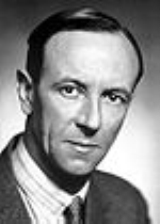
James Chadwick

 
James Chadwick

   Email Print
   Bookmark   Link


James Chadwick


Sir James Chadwick, CH
Order of the Companions of Honour

The Order of the Companions of Honour is a United Kingdom and Commonwealth of Nations Order . It was founded by George V of the United Kingdom in June 1917, as a reward for outstanding achievements in the arts, literature, music, science, politics, industry, or religion....
, FRS (20 October 1891 – 24 July 1974) was an English physicist
Physicist

A physicist is a scientist who studies or practices physics. Physicists study a wide range of physical phenomena in many Physics#Major fields of physics spanning all length scales: from atom particles of which all ordinary matter is made to the behavior of the material Universe as a whole ....
 and Nobel laureate in physics awarded for his discovery of the neutron
Neutron

The neutron is a subatomic particle with no net electric charge and a mass slightly larger than that of a proton.Neutrons are usually found in atomic nucleus....
.

wick was born in Bollington
Bollington

Bollington is a small town in the Macclesfield , Cheshire, England. It is located north of Macclesfield and east of Prestbury, Cheshire. In the Middle Ages it was part of the Earl of Chester's manor of Macclesfield....
, Cheshire
Cheshire

Cheshire is a Counties of England in North West England. The county town, and the location of the county council, is the City status in the United Kingdom of Chester, although Cheshire's largest town in terms of area and population is Warrington....
 to John Joseph Chadwick and Anne Mary Knowles. He went to Bollington Cross C of E Primary School, attended Manchester High School, and studied at the Universities of Manchester
Victoria University of Manchester

The Victoria University of Manchester was a university in Manchester, England. On 1 October 2004 it merged with the University of Manchester Institute of Science and Technology to form a new entity, "University of Manchester"....
 and Cambridge
University of Cambridge

The University of Cambridge , located in Cambridge, England, is the List of oldest universities in continuous operation university in the Anglosphere....
.

In 1913 Chadwick went and worked with Hans Geiger
Hans Geiger

Johannes Wilhelm Geiger was a Germany physicist. He is perhaps best known as the co-inventor of the Geiger counter and for the Geiger-Marsden experiment which discovered the atomic nucleus....
 at the Technical University of Berlin
Technical University of Berlin

The Technical University of Berlin is located in Berlin, Germany.It was founded in 1879 and, with nearly 30,000 students, is one of the largest technical universities in Germany....
.


Discussion
Ask a question about 'James Chadwick'
Start a new discussion about 'James Chadwick'
Answer questions from other users
Full Discussion Forum


Recent Posts


Encyclopedia


Sir James Chadwick, CH
Order of the Companions of Honour

The Order of the Companions of Honour is a United Kingdom and Commonwealth of Nations Order . It was founded by George V of the United Kingdom in June 1917, as a reward for outstanding achievements in the arts, literature, music, science, politics, industry, or religion....
, FRS (20 October 1891 – 24 July 1974) was an English physicist
Physicist

A physicist is a scientist who studies or practices physics. Physicists study a wide range of physical phenomena in many Physics#Major fields of physics spanning all length scales: from atom particles of which all ordinary matter is made to the behavior of the material Universe as a whole ....
 and Nobel laureate in physics awarded for his discovery of the neutron
Neutron

The neutron is a subatomic particle with no net electric charge and a mass slightly larger than that of a proton.Neutrons are usually found in atomic nucleus....
.

Biography

Chadwick was born in Bollington
Bollington

Bollington is a small town in the Macclesfield , Cheshire, England. It is located north of Macclesfield and east of Prestbury, Cheshire. In the Middle Ages it was part of the Earl of Chester's manor of Macclesfield....
, Cheshire
Cheshire

Cheshire is a Counties of England in North West England. The county town, and the location of the county council, is the City status in the United Kingdom of Chester, although Cheshire's largest town in terms of area and population is Warrington....
 to John Joseph Chadwick and Anne Mary Knowles. He went to Bollington Cross C of E Primary School, attended Manchester High School, and studied at the Universities of Manchester
Victoria University of Manchester

The Victoria University of Manchester was a university in Manchester, England. On 1 October 2004 it merged with the University of Manchester Institute of Science and Technology to form a new entity, "University of Manchester"....
 and Cambridge
University of Cambridge

The University of Cambridge , located in Cambridge, England, is the List of oldest universities in continuous operation university in the Anglosphere....
.

In 1913 Chadwick went and worked with Hans Geiger
Hans Geiger

Johannes Wilhelm Geiger was a Germany physicist. He is perhaps best known as the co-inventor of the Geiger counter and for the Geiger-Marsden experiment which discovered the atomic nucleus....
 at the Technical University of Berlin
Technical University of Berlin

The Technical University of Berlin is located in Berlin, Germany.It was founded in 1879 and, with nearly 30,000 students, is one of the largest technical universities in Germany....
. He also worked with Ernest Rutherford
Ernest Rutherford

Ernest Rutherford, 1st Baron Rutherford of Nelson, Order of Merit , Royal Society was a New Zealand-born British chemist who became known as the father of nuclear physics....
. He was in Germany at the start of World War I and would be interned in Ruhleben P.O.W. Camp
Ruhleben P.O.W. Camp

Ruhleben P.O.W. Camp was a civilian detention camp during World War I. It was located in Ruhleben, then a village 10 km to the west of Berlin, now split between the districts of Spandau and Charlottenburg-Wilmersdorf....
 just outside Berlin. During his internship he had the freedom to set up a laboratory in the stables. With the help of Charles Ellis he worked on the ionization of phosphorus and also on the photo-chemical reaction of carbon monoxide and magnesium. He spent most of the war years in Ruhleben until Geiger's laboratory interceded for his release.

Career


Research at Cambridge

In 1932, Chadwick made a fundamental discovery in the domain of nuclear science: he discovered the particle in the nucleus of an atom that became known as the neutron
Neutron

The neutron is a subatomic particle with no net electric charge and a mass slightly larger than that of a proton.Neutrons are usually found in atomic nucleus....
 because it has no electric charge. In contrast with the helium
Helium

Helium is a colorless, odorless, tasteless, non-toxic, inert monatomic chemical element that heads the noble gas group in the periodic table and whose atomic number is 2....
 nuclei (alpha particle
Alpha particle

Alpha particles consist of two protons and two neutrons bound together into a particle identical to a helium atomic nucleus; hence, it can be written as He2+ or 42He2+....
s) which are positively charged, and therefore repelled by the considerable electrical forces present in the nuclei of heavy atom
Atom

|-! bgcolor=gray | Properties|-||}The atom is a basic unit of matter consisting of a dense, central atomic nucleus surrounded by a electron cloud of electric charge electrons....
s, this new tool in atomic disintegration
Nuclear fission

In nuclear physics and nuclear chemistry, nuclear fission is a nuclear reaction in which the atomic nucleus of an atom splits into smaller parts, often producing free neutrons and lighter atomic nucleus, which may eventually produce photons ....
 need not overcome any Coulomb barrier and is capable of penetrating and splitting the nuclei of even the heaviest elements. In this way, Chadwick prepared the way towards the fission
Nuclear fission

In nuclear physics and nuclear chemistry, nuclear fission is a nuclear reaction in which the atomic nucleus of an atom splits into smaller parts, often producing free neutrons and lighter atomic nucleus, which may eventually produce photons ....
 of uranium 235. For this important discovery he was awarded the Hughes Medal
Hughes Medal

File:Jj-thomson3.jpgThe Hughes Medal is awarded by the Royal Society of London "in recognition of an original discovery in the physical sciences, particularly electricity and magnetism or their applications"....
 of the Royal Society
Royal Society

The Royal Society of London for the Improvement of Natural Knowledge, known simply as the Royal Society, or even the Royal, is a learned society for science that was founded in 1660 and is considered by most to be the oldest such society still in existence....
 in 1932, and subsequently the Nobel Prize for Physics in 1935.

Chadwick’s discovery made it possible to create elements heavier than uranium
Uranium

Uranium is a silvery-gray metallic chemical element in the actinide series of the periodic table that has the chemical symbol U and atomic number 92....
 in the laboratory. His discovery particularly inspired Enrico Fermi
Enrico Fermi

Enrico Fermi was an Italian physicist most noted for his work on the development of the first nuclear reactor, and for his contributions to the development of Quantum mechanics, nuclear physics and particle physics, and statistical mechanics....
, Italian physicist and Nobel laureate, to discover nuclear reactions brought by slowed neutrons, and led Otto Hahn
Otto Hahn

Otto Hahn was a German chemist and Nobel laureate who pioneered the fields of radioactivity and radiochemistry. He is regarded as "the father of nuclear chemistry" and the "founder of the atomic age"....
 and Fritz Strassmann, German radiochemists in Berlin, to the revolutionary discovery of “nuclear fission
Nuclear fission

In nuclear physics and nuclear chemistry, nuclear fission is a nuclear reaction in which the atomic nucleus of an atom splits into smaller parts, often producing free neutrons and lighter atomic nucleus, which may eventually produce photons ....
”.

Liverpool

Chadwick became professor of physics at Liverpool University in 1935. As a result of the Frisch-Peierls memorandum
Frisch-Peierls memorandum

The Frisch-Peierls memorandum was written by Otto Frisch and Rudolf Peierls while they were both working at the University of Birmingham, England and given to Marcus Oliphant....
 in 1940 on the feasibility of an atomic bomb, he was appointed to the MAUD Committee
MAUD Committee

The Maud Committee was the beginning of the British atomic bomb project, before the United Kingdom joined forces with the United States in the Manhattan Project....
 that investigated the matter further. He visited North America as part of the Tizard Mission
Tizard Mission

The Tizard Mission officially the British Technical and Scientific Mission was a United Kingdom delegation that visited the United States during the Second World War to get American resources to develop important military technology developed in the UK....
 in 1940 to collaborate with the Americans and Canadians on nuclear research. Returning to England in November 1940, he concluded that nothing would emerge from this research until after the war. In December 1940 Franz Simon
Francis Simon

Sir Francis Simon CBE, born Franz Eugen Simon , was a Germany and later Great Britain physical chemist and physicist who devised the method, and confirmed its feasibility, of separating the isotope Uranium-235 and thus made a major contribution to the creation of the atomic bomb....
, who had been commissioned by MAUD, reported that it was possible to separate the isotope
Isotope

Isotopes are any of the different types of atoms of the same chemical element, each having a different atomic mass . Isotopes of an element have atomic nucleus with the same number of protons but different numbers of neutron....
 uranium-235
Uranium-235

Uranium-235 is an Isotopes of uranium that differs from the element's other common isotope, uranium-238, by its ability to cause a rapidly expanding nuclear fission chain reaction, i.e., it is fissile....
. Simon's report included cost estimates and technical specifications for a large uranium enrichment plant. James Chadwick later wrote that it was at that time that he "realised that a nuclear bomb was not only possible, it was inevitable. I had then to take sleeping pills. It was the only remedy."

He shortly afterward joined the Manhattan Project
Manhattan Project

The Manhattan Project was the project to develop the first atomic weapon during World War II; involving the United States, the United Kingdom, and Canada....
 in the United States, which developed the atomic bombs dropped on Hiroshima
Hiroshima

The Japanese city of is the capital of Hiroshima Prefecture, and the largest city in the Chugoku region of western Honshu, the largest of Japan's islands....
 and Nagasaki. Chadwick was knight
Knight

File:Gothic armor 2.jpgKnight is the term for a social position originating in the Middle Ages. In the Commonwealth of Nations, knighthood is a non-heritable form of gentry....
ed in 1945.

In 1940, Chadwick forwarded the work of two French scientists, Hans Von Halban
Hans von Halban

Hans von Halban was a French physicist, of Austrian-Jewish descent....
 and Lew Kowarski
Lew Kowarski

Lew Kowarski was a naturalized France physicist, of Russian-Polish descent. He was a lesser known, but important contributor to nuclear science....
, who worked in Cambridge to the Royal Society
Royal Society

The Royal Society of London for the Improvement of Natural Knowledge, known simply as the Royal Society, or even the Royal, is a learned society for science that was founded in 1660 and is considered by most to be the oldest such society still in existence....
. He asked that the papers be held as they were not appropriate for publication during the war. In 2007, the Society discovered the documents during an audit of their archives.

External links

  • are held at the Churchill Archives Centre
    Churchill Archives Centre

    The Churchill Archives Centre is one of the largest repositories in the United Kingdom for the preservation and study of modern personal papers....
     in Cambridge and are accessible to the public.