

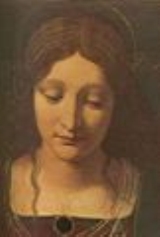
Isabella of Naples

Encyclopedia

Alfonso II of Naples
Alfonso II of Naples , also called Alfonso II d'Aragon, was King of Naples from 25 January 1494 to 22 February 1495 with the title King of Naples and Jerusalem...
by his wife, Ippolita Maria Sforza
Ippolita Maria Sforza
Ippolita Maria Sforza , Duchess of Calabria, was a member of the powerful Italian condottieri Sforza family which ruled the Duchy of Milan from 1450 until 1535...
. From 1489 to 1494, she was the Duchess consort of Milan
Duchy of Milan
The Duchy of Milan , was created on the 1st of may 1395, when Gian Galeazzo Visconti, Lord of Milan, purchased a diploma for 100,000 Florins from King Wenceslaus. It was this diploma that installed, Gian Galeazzo as Duke of Milan and Count of Pavia...
, and from 1499 to 1524 the Duchess of Bari
Bari
Bari is the capital city of the province of Bari and of the Apulia region, on the Adriatic Sea, in Italy. It is the second most important economic centre of mainland Southern Italy after Naples, and is well known as a port and university city, as well as the city of Saint Nicholas...
and Princess of Rossano
Rossano
Rossano is a town and comune in Southern Italy, in the province of Cosenza . The city is situated on an eminence c. 3. km from the Gulf of Taranto. The town is known for its marble and alabaster quarries....
. After her brother Ferdinand II's
Ferdinand II of Naples
Ferdinand II or Ferrante II of Naples , sometimes known as Ferrandino, was King of Naples from 1495 to 1496...
death, she was the heir of the Brienne claim
Brienne claim to the Kingdom of Jerusalem
Hugh, Count of Brienne claimed the regency of Jerusalem in 1264 as senior heir of Hugh I of Cyprus and Alice of Jerusalem, being the son of their eldest daughter, but was passed over by the Haute Cour in favor of his cousin Hugh III of Cyprus. This claim fell to his son Walter V of Brienne and...
to the title King of Jerusalem.
She married her first cousin, Gian Galeazzo Sforza
Gian Galeazzo Sforza
Gian Galeazzo Sforza was the sixth Duke of Milan.Born in Abbiategrasso, he was only 7 years old when in 1476 his father, Galeazzo Maria Sforza, was assassinated and Gian Galeazzo became the Duke of Milan...
, who at the time was the Duke of Milan
Duchy of Milan
The Duchy of Milan , was created on the 1st of may 1395, when Gian Galeazzo Visconti, Lord of Milan, purchased a diploma for 100,000 Florins from King Wenceslaus. It was this diploma that installed, Gian Galeazzo as Duke of Milan and Count of Pavia...
. However, his uncle Ludovico Sforza
Ludovico Sforza
Ludovico Sforza , was Duke of Milan from 1489 until his death. A member of the Sforza family, he was the fourth son of Francesco Sforza. He was famed as a patron of Leonardo da Vinci and other artists, and presided over the final and most productive stage of the Milanese Renaissance...
was the de facto
De facto
De facto is a Latin expression that means "concerning fact." In law, it often means "in practice but not necessarily ordained by law" or "in practice or actuality, but not officially established." It is commonly used in contrast to de jure when referring to matters of law, governance, or...
ruler.
With Gian Galeazzo Sforza she had one son and two daughters:
- FrancescoFrancesco Sforza (il Duchetto)Francesco Sforza, nicknamed Il Duchetto was the eldest son of Gian Galeazzo Sforza, duke of Milan, and Isabella of Naples.He was count of Pavia from 1491 to 1499...
, who was taken to France by the French King Louis XII.Louis XII of FranceLouis proved to be a popular king. At the end of his reign the crown deficit was no greater than it had been when he succeeded Charles VIII in 1498, despite several expensive military campaigns in Italy. His fiscal reforms of 1504 and 1508 tightened and improved procedures for the collection of taxes...
in 1499, - BonaBona SforzaBona Sforza was a member of the powerful Milanese House of Sforza. In 1518, she became the second wife of Sigismund I the Old, the King of Poland and Grand Duke of Lithuania, and became the Queen of Poland and Grand Duchess of Lithuania.She was the third child of Gian Galeazzo Sforza and his wife...
, who married King Sigismund I of PolandSigismund I the OldSigismund I of Poland , of the Jagiellon dynasty, reigned as King of Poland and also as the Grand Duke of Lithuania from 1506 until 1548...
, - Ippolita Maria.
Isabella also outlived Francesco, who was killed in 1512 by falling from his horse. Of her three children, only Bona survived her.
In the 1970s Robert Payne
Pierre Stephen Robert Payne
Pierre Stephen Robert Payne , was a novelist, historian, poet, and biographer.Born in Cornwall, the son of an English naval architect, and with a French mother. He worked as a shipbuilder and then for a time with the Inland Revenue. In 1941 he became an armament officer and chief camouflage...
was the first to suggest that Isabella was the subject of the Mona Lisa
Mona Lisa
Mona Lisa is a portrait by the Italian artist Leonardo da Vinci. It is a painting in oil on a poplar panel, completed circa 1503–1519...
, the portrait by Leonardo da Vinci
Leonardo da Vinci
Leonardo di ser Piero da Vinci was an Italian Renaissance polymath: painter, sculptor, architect, musician, scientist, mathematician, engineer, inventor, anatomist, geologist, cartographer, botanist and writer whose genius, perhaps more than that of any other figure, epitomized the Renaissance...
whose subject was traditionally thought to be Lisa Gherardini or Lisa del Giocondo. In 2003 historian Maike Vogt-Lüerssen concurred with Payne and argued that the subject was a member of the House of Sforza
House of Sforza
Sforza was a ruling family of Renaissance Italy, based in Milan.-History:The dynasty was founded by Muzio Attendolo , called Sforza , a condottiero from Romagna serving the Angevin kings of Naples...
because of the pattern on the subject's dark green dress. The 2005 discovery of a note by Agostino Vespucci is commonly used to diminish this theory. However, since Vespucci does not provide any description of the painting, it could refer to any of Leonardo's female portrait paintings of that time.
Ancestry
External links
- Bust of Isabella di Aragona by Francesco LauranaFrancesco LauranaFrancesco Laurana, also known as Francesco de la Vrana was a Dalmatian-born sculptor and medallist. He is considered as both Croatian and Italian sculptor.-Life and works:...
at the Kunsthistorisches MuseumKunsthistorisches MuseumThe Kunsthistorisches Museum is an art museum in Vienna, Austria. Housed in its festive palatial building on Ringstraße, it is crowned with an octagonal dome...
in ViennaViennaVienna is the capital and largest city of the Republic of Austria and one of the nine states of Austria. Vienna is Austria's primary city, with a population of about 1.723 million , and is by far the largest city in Austria, as well as its cultural, economic, and political centre... - Isabella of Aragon on kleio.org