
All Topics  
Inheritance of acquired characters


   Email Print
   Bookmark   Link


Inheritance of acquired characters


The inheritance of acquired traits (or characteristics) is a hypothesis about a mechanism of heredity by which changes in physiology acquired over the life of an organism (such as the enlargement of a muscle
MUSCLE

MUSCLE is public domain, multiple sequence alignment software for protein and nucleotide sequences.MUSCLE is integrated into UGENE bioinformatics tool as a plugin....
 through repeated use) may purportedly be transmitted to offspring.


Discussion
Ask a question about 'Inheritance of acquired characters'
Start a new discussion about 'Inheritance of acquired characters'
Answer questions from other users
Full Discussion Forum


Encyclopedia


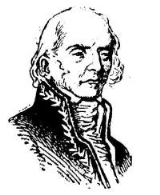
Jean Baptiste Lamarck
The inheritance of acquired traits (or characteristics) is a hypothesis about a mechanism of heredity by which changes in physiology acquired over the life of an organism (such as the enlargement of a muscle
MUSCLE

MUSCLE is public domain, multiple sequence alignment software for protein and nucleotide sequences.MUSCLE is integrated into UGENE bioinformatics tool as a plugin....
 through repeated use) may purportedly be transmitted to offspring. It is also commonly referred to as the theory of adaptation
Adaptation

Adaptation is the process, which takes place under natural selection, whereby an organism becomes better suited to its habitat. Also, the term may refer to some characteristic which stands out as being especially significant in the organism's survival....
 equated with the evolutionary theory of French
France

France , officially the French Republic , is a country whose Metropolitan France is located in Western Europe and that also comprises various Overseas departments and territories of France....
 naturalist
Natural history

Natural history is the scientific research of plants or animals, leaning more towards the observational than experimental methods of study, and encompasses more research that is published in magazines than in academic journals....
 Jean-Baptiste Lamarck
Jean-Baptiste Lamarck

Jean-Baptiste Pierre Antoine de Monet, Chevalier de la Marck, usually known as Lamarck, was a France soldier, natural history, academia and an early proponent of the idea that evolution occurred and proceeded in accordance with Naturalism ....
 known as Lamarckism
Lamarckism

Lamarckism is the once widely accepted idea that an organism can pass on characteristics that it acquired during its lifetime to its offspring ....
. The idea was proposed in ancient times by Hippocrates
Hippocrates

Hippocrates of Cos II or Hippokrates of Kos - ancient Greek: ; Hippokr?tes was an Ancient Greece physician of the Age of Pericles, and was considered one of the most outstanding figures in the history of medicine....
 and Aristotle
Aristotle

Aristotle was a Greeks philosopher, a student of Plato and teacher of Alexander the Great. He wrote on many subjects, including physics, metaphysics, Poetics , theater, music, logic, rhetoric, politics, government, ethics, biology and zoology....
, and was commonly accepted near to Lamarck's time. Comte de Buffon, before Lamarck, proposed ideas about evolution involving the concept, and even Charles Darwin
Charles Darwin

Charles Robert Darwin Royal Society was an English people natural history who realised and presented compelling evidence that all species of life have evolution over time from common descent, through the process he called natural selection....
, after Lamarck, developed his own theory of inheritance of acquired characters, pangenesis
Pangenesis

Pangenesis was Charles Darwin's hypothetical mechanism for heredity. He presented this 'provisional hypothesis' in his 1868 work Darwin from Orchids to Variation#Variation under Domestication and felt that it brought 'together a multitude of facts which are at present left disconnected by any efficient cause'....
. The basic concept of inheritance of acquired characters was finally widely rejected in the early 20th century.

Long after triumph of the central dogma of molecular biology
Central dogma of molecular biology

The central dogma of molecular biology was first enunciated by Francis Crick in 1958 and re-stated in a Nature paper published in 1970:In other words, 'once information gets into protein, it can't flow back to nucleic acid.'...
, which is often equated with the idea that the DNA
DNA

Deoxyribonucleic acid is a nucleic acid that contains the genetics instructions used in the development and functioning of all known living organisms and some viruses....
 of a cell
Cell (biology)

The cell is the structural and functional unit of all known Life organisms. It is the smallest unit of an organism that is classified as living, and is often called the building bricks of life....
 alone determines its fate, the theory of adaptation
Adaptation

Adaptation is the process, which takes place under natural selection, whereby an organism becomes better suited to its habitat. Also, the term may refer to some characteristic which stands out as being especially significant in the organism's survival....
 continued to attract attention. One of the core ideas that has been used to support the theory of adaptation is the observation that the germ plasm
Germ plasm

Germ plasm or polar plasm is a zone found in the cytoplasm of the egg cells of some model organisms , which contains determinants that will give rise to the germ cell lineage....
 of an egg cell
Ovum

An ovum is a haploid female reproductive cell or gamete. Both animals and embryophytes have ova. The term ovule is used for the young ovum of an animal, as well as the plant structure that carries the female gametophyte and egg cell and develops into a seed after fertilization....
 is in part derived from the diploid cells of the parent; this cytoplasm is hypothesized to influence the early stages of a developing embryo
Embryo

An embryo is a multicellular organism ploidy eukaryote in its earliest stage of development, from the time of first cell division until birth, Egg , or germination....
. Since the germ plasm of the egg has a different genotype
Genotype

The genotype is the trait we can't see. The genotype is the Genetics constitution of a cell, an organism, or an individual usually with reference to a specific character under consideration....
 than that of the egg nucleus itself, supporters of the theory of adaptation looked for examples in which the offspring shared a trait of the parent. Some researchers claimed that in quantitative genetics
Quantitative genetics

Quantitative genetics is the study of continuous traits and its underlying mechanisms. It is effectively an extension of simple Mendelian inheritance in that the combined effect of the many underlying genes results in a Continuous probability distribution of phenotypic values....
 models that included a maternal effect
Maternal effect

A maternal effect, in genetics, is the phenomenon where the genotype of a mother is expressed in the phenotype of its offspring, unaltered by paternal genetic influence....
 made more accurate predictions. However, these models have been disproven.

In the 1920s, Harvard University
Harvard University

Harvard University is a private university in Cambridge, Massachusetts, Massachusetts, United States, and a member of the Ivy League. Founded in 1636 by the colonial Massachusetts legislature, Harvard is the Colonial Colleges institution of higher learning in the United States....
 researcher William McDougall
William McDougall (psychologist)

William McDougall was an early twentieth century psychology who spent the first part of his career in the United Kingdom and the latter part in the United States....
 studied the abilities of rat
Rat

Rats are various medium sized, long-tailed rodents of the Family Muroidea. "True rats" are members of the genus Rattus, the most important of which to humans are the black rat, Rattus rattus, and the brown rat, Rattus norvegicus....
s to correctly solve maze
Maze

A maze is a complex tour puzzle in the form of a complex branching passage through which the solver must find a route. In everyday speech, both maze and labyrinth denote a complex and confusing series of pathways, but technically the maze is distinguished from the labyrinth....
s. He found that offspring of rats that had learned the maze were able to run it faster. The first rats would get it wrong 165 times before being able to run it perfectly each time, but after a few generations, it was down to 20. McDougall attributed this to some sort of Lamarckian evolutionary process.

During the rule of Joseph Stalin
Joseph Stalin

Joseph Stalin was the General Secretary of the Communist Party of the Soviet Union's Central Committee of the Communist Party of the Soviet Union from 1922 until his death in 1953....
 in the USSR
Soviet Union

The Union of Soviet Socialist Republics was a Constitution of the Soviet Union socialist state that existed in Eurasia from 1922 to 1991.The name is a translation of the , romanization of Russian Soyuz Sovetskikh Sotsialisticheskikh Respublik, abbreviated ????, SSSR....
 in the 1930s, the theory of inheritance of acquired characteristics was central to the dogma put forth by Trofim Lysenko
Trofim Lysenko

Trofim Denisovich Lysenko was an agronomy who was director of Union of Soviet Socialist Republics biology under Joseph Stalin. Lysenko rejected Mendelian inheritance genetics in favor of the Hybrid ization theories of Russian horticulture Ivan Vladimirovich Michurin, and adopted them into a powerful political scientific movement termed Lys...
, president of the Soviet Academy of Agricultural Sciences. Lysenkoism
Lysenkoism

Lysenkoism was a set of repressive political and social campaigns in science and agriculture by the powerful Joseph Stalin director of the Union of Soviet Socialist Republics Lenin All-Union Institute of Agricultural Sciences, Trofim Lysenko and his followers, which began in the late 1920s and formally ended in 1964....
 was advanced primarily in service to Soviet agriculture, always resulting in dismal failure. But its implications for human biology were not lost on the Soviet leadership.

See also

  • Adaptation
    Adaptation

    Adaptation is the process, which takes place under natural selection, whereby an organism becomes better suited to its habitat. Also, the term may refer to some characteristic which stands out as being especially significant in the organism's survival....
  • Epigenetics
    Epigenetics

    In biology, the term epigenetics refers to Heritability changes in phenotype or gene expression caused by mechanisms other than changes in the underlying DNA sequence ....
  • Germ plasm theory
  • Lysenkoism
    Lysenkoism

    Lysenkoism was a set of repressive political and social campaigns in science and agriculture by the powerful Joseph Stalin director of the Union of Soviet Socialist Republics Lenin All-Union Institute of Agricultural Sciences, Trofim Lysenko and his followers, which began in the late 1920s and formally ended in 1964....
  • Nature versus nurture
    Nature versus nurture

    The nature versus nurture debates concern the relative importance of an individual's innate qualities versus personal experiences in Determinism or causality individual differences in physiology and behaviour traits....
  • Pangenesis
    Pangenesis

    Pangenesis was Charles Darwin's hypothetical mechanism for heredity. He presented this 'provisional hypothesis' in his 1868 work Darwin from Orchids to Variation#Variation under Domestication and felt that it brought 'together a multitude of facts which are at present left disconnected by any efficient cause'....
  • August Weismann