

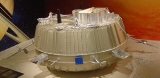
Huygens probe

Encyclopedia
The Huygens probe was an atmospheric entry probe carried to Saturn
's moon Titan
as part of the Cassini–Huygens mission. The probe was supplied by the European Space Agency
(ESA) and named after the Dutch 17th century astronomer Christiaan Huygens.
The combined Cassini–Huygens spacecraft was launched from Earth
on October 15, 1997. Huygens separated from the Cassini orbiter on December 25, 2004, and landed on Titan on January 14, 2005 near the Xanadu
region. This was the first landing
ever accomplished in the outer solar system. It touched down on land, although the possibility that it would touch down in an ocean was also taken into account in its design. The probe continued to send data for about 90 minutes after reaching the surface. It remains the most distant landing of any craft launched from Earth.
range, a flat plain
, an ocean
, or something else, and it was hoped that analysis of data from Cassini would help to answer these questions.
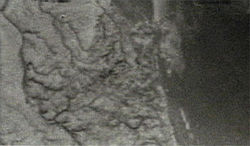 Based on pictures taken by Cassini at 1,200 km away from Titan, the landing site appeared to be, for lack of a better word, shoreline. Assuming the landing site could be non-solid, the Huygens probe was designed to survive the impact and splash-down on a liquid surface on Titan and send back data for several minutes on the conditions there. If that occurred it was expected to be the first time a human-made probe would land in an extraterrestrial ocean. The spacecraft had no more than three hours of battery life, most of which was planned to be taken up by the descent. Engineers only expected to get at best 30 minutes of data from the surface.
The Huygens probe system consists of the 318 kg probe itself, which descended to Titan, and the probe support equipment (PSE), which remained attached to the orbiting spacecraft. Huygens' heat shield was 2.7 m in diameter; after ejecting the shield, the probe was 1.3 m in diameter. The PSE included the electronics necessary to track the probe, to recover the data gathered during its descent, and to process and deliver the data to the orbiter, from which it transmitted or "downlinked" to the ground.
The probe remained dormant throughout the 6.7-year interplanetary cruise, except for bi-annual health checks. These checkouts followed preprogrammed descent scenario sequences as closely as possible, and the results were relayed to Earth for examination by system and payload experts. Navigation to Saturn, and specifically to Titan, was a very complicated process in and of itself, and was coordinated by the Jet Propulsion Laboratory
(NASA JPL), with astrometric navigation frames provided by various institutions such as the United States Naval Observatory Flagstaff Station
.
Prior to the probe's separation from the orbiter on December 25, 2004, a final health check was performed. The "coast" timer was loaded with the precise time necessary to turn on the probe systems (15 minutes before its encounter with Titan's atmosphere), then the probe detached from the orbiter and coasted in free space to Titan in 22 days with no systems active except for its wake-up timer.
The main mission phase was a parachute descent through Titan's atmosphere. The batteries and all other resources were sized for a Huygens mission duration of 153 minutes, corresponding to a maximum descent time of 2.5 hours plus at least 3 additional minutes (and possibly a half hour or more) on Titan's surface. The probe's radio link was activated early in the descent phase, and the orbiter "listened" to the probe for the next 3 hours, including the descent phase, and the first thirty minutes after touchdown. Not long after the end of this three-hour communication window, Cassini' s high-gain antenna (HGA) was turned away from Titan and toward Earth.
Very large radio telescopes on Earth were also listening to Huygens' 10-watt transmission using the technique of very long baseline interferometry
and aperture synthesis mode. At 11:25 CET on January 14, the Robert C. Byrd Green Bank Telescope (GBT) in West Virginia detected the carrier signal from the Huygens probe. The GBT continued to detect the carrier signal well after Cassini stopped listening to the incoming data stream. In addition to the GBT, eight of the ten telescopes of the continent-wide VLBA
in North America, located at Pie Town
and Los Alamos, New Mexico
; Fort Davis, Texas
; North Liberty, Iowa
; Kitt Peak, Arizona
; Brewster, Washington
; Owens Valley, California
; and Mauna Kea, Hawaii
, also listened for the Huygens signal.
The signal strength received on Earth from Huygens was comparable to that from the Galileo probe (the Jupiter atmospheric descent probe) as received by the VLA
, and was therefore too weak to detect in real time because of the signal modulation by the (then) unknown telemetry
. Instead, wide-band recordings of the probe signal were made throughout the three-hour descent. After the probe telemetry was finished being relayed from Cassini to Earth, the recorded signal was processed against a telemetry template, enabling signal integration over several seconds for determining the probe frequency. It was expected that through analysis of the Doppler shifting of Huygens' signal as it descended through the atmosphere of Titan, wind speed and direction could be determined with some degree of accuracy. A determination of Huygens' landing site on Titan was found with exquisite precision (within one km – one km on Titan measures 1.3' latitude and longitude at the equator) using the Doppler data at a distance from Earth of about 1.2 billion kilometers. The probe landed on the surface of the moon at 10.2°S, 192.4°W. A similar technique was used to determine the landing site of the Mars exploration rovers by listening to their telemetry alone.
 Early imaging of Titan from the Cassini mission was consistent with the presence of large bodies of liquid on the surface. The photos showed what appeared to be large drainage channels crossing the lighter coloured mainland into a dark sea. Some of the photos suggested islands and mist shrouded coastline. On January 18 it was reported that Huygens landed in "Titanian mud", and the landing site was estimated to lie within the white circle on the picture to the left. Mission scientists also reported a first "descent profile", which describes the trajectory the probe took during its descent.
Subsequent work done on the probe's trajectory indicated that, in fact, it landed within the dark 'sea' region in the photos. Photos of a dry landscape from the surface suggested that while there was evidence of liquid acting on the surface recently, hydrocarbon lakes and/or seas might not be present on Titan. Further data from the Cassini Mission, however, definitely confirmed the existence of liquid hydrocarbon lakes in the polar regions of Titan (see Lakes of Titan
).
At the landing site there were indications of chunks of water ice scattered over an orange surface, the majority of which is covered by a thin haze of methane
. The instruments revealed "a dense cloud or thick haze approximately 18-20 kilometers from the surface". The surface itself was reported to be a clay
-like "material which might have a thin crust followed by a region of relative uniform consistency." One ESA scientist compared the texture and colour of Titan's surface to a crème brûlée
, but admitted this term probably would not appear in the published papers.
Subsequent analysis of the data suggests that surface consistency readings were likely caused by Huygens displacing a large pebble as it landed, and that the surface is better described as a "sand" made of ice grains. The images taken after the probe's landing show a flat plain covered in pebbles. The pebbles, which may be made of water ice, are somewhat rounded, which may indicate the action of fluids on them.
.png)


There was a transit of the Earth and Moon across the Sun as seen from Saturn/Titan just hours before the landing. The Huygens probe entered the upper layer of Titan's atmosphere 2.7 hours after the end of the transit of the Earth, or only one or two minutes after the end of the transit of the Moon. However, the transit did not interfere with Cassini orbiter or Huygens probe, for two reasons. First, although they could not receive any signal from Earth because it was in front of the Sun, Earth could still listen to them. Second, Huygens did not send any readable data to the Earth; it transmitted data to the Cassini orbiter, which relayed the data received to the Earth later. For details about transits of the Earth as seen from Saturn, see also Transit of Earth from Saturn
.
See also Detailed timeline of Huygens mission.
s measured forces in all three axes as the probe descended through the atmosphere. With the aerodynamic properties of the probe already known, it was possible to determine the density of Titan's atmosphere and to detect wind gusts. The probe was designed so that in the event of a landing on a liquid surface, its motion due to waves would also have been measurable. Temperature and pressure sensors measured the thermal properties of the atmosphere. The Permittivity and Electromagnetic Wave Analyzer component measured the electron
and ion
(i.e., positively charged particle) conductivities of the atmosphere and searched for electromagnetic wave activity. On the surface of Titan, the electrical conductivity and permittivity
(i.e., the ratio of electric displacement field to its electric field
) of the surface material was measured. The HASI subsystem also contains a microphone, which was used to record any acoustic events during probe's descent and landing; this was the first time in history that audible sounds from another planetary body had been recorded.
measurements show gentle winds of a few metres per second, roughly in line with expectations.
s and violet photometer
s measured the up- and downward radiant flux from an altitude of 145 kilometers down to the surface. Solar aureole cameras measured how scattering by aerosol
s varies the intensity directly around the Sun. Three imagers, sharing the same CCD
, periodically imaged a swath of around 30 degrees wide, ranging from almost nadir
to just above the horizon. Aided by the slowly spinning probe they would build up a full mosaic of the landing site, which, surprisingly, became clearly visible only below 25 kilometers altitude. All measurements were timed by aid of a shadow bar, which would tell DISR when the Sun had passed through the field of view. Unfortunately, this scheme was upset by the fact that Huygens rotated in a direction opposite to that expected. Just before landing a lamp was switched on to illuminate the surface, which enabled measurements of the surface reflectance at wavelengths which are completely blocked out by atmospheric methane
absorption.
DISR was developed at the Lunar and Planetary Laboratory
at the University of Arizona
under the direction of Martin Tomasko, with several European institutes contributing to the hardware.
.jpg) This instrument is a versatile gas chemical analyzer that was designed to identify and measure chemicals in Titan's atmosphere. It was equipped with samplers that were filled at high altitude for analysis. The mass spectrometer, a high-voltage quadrupole, collected data to build a model of the molecular masses of each gas, and a more powerful separation of molecular and isotopic species was accomplished by the gas chromatograph. During descent, the GC/MS also analyzed pyrolysis products (i.e., samples altered by heating) passed to it from the Aerosol Collector Pyrolyser. Finally, the GC/MS measured the composition of Titan's surface. This investigation was made possible by heating the GC/MS instrument just prior to impact in order to vaporize the surface material upon contact. The GC/MS was developed by the Goddard Space Flight Center and University of Michigan
This instrument is a versatile gas chemical analyzer that was designed to identify and measure chemicals in Titan's atmosphere. It was equipped with samplers that were filled at high altitude for analysis. The mass spectrometer, a high-voltage quadrupole, collected data to build a model of the molecular masses of each gas, and a more powerful separation of molecular and isotopic species was accomplished by the gas chromatograph. During descent, the GC/MS also analyzed pyrolysis products (i.e., samples altered by heating) passed to it from the Aerosol Collector Pyrolyser. Finally, the GC/MS measured the composition of Titan's surface. This investigation was made possible by heating the GC/MS instrument just prior to impact in order to vaporize the surface material upon contact. The GC/MS was developed by the Goddard Space Flight Center and University of Michigan
's Space Physics Research Lab.
) to vaporize volatiles
and decompose the complex organic materials. The products were flushed along a pipe to the GC/MS instrument for analysis. Two filters were provided to collect samples at different altitudes. The ACP was developed by a (French) ESA
team at the Laboratoire Inter-Universitaire des Systèmes Atmosphériques (LISA).
, activated during the last 100 meters of the descent, continuously determined the distance to the surface, measuring the rate of descent and the surface roughness (e.g., due to waves). The instrument was designed so that if the surface were liquid, the sounder would measure the speed of sound in the "ocean" and possibly also the subsurface structure (depth). During descent, measurements of the speed of sound
gave information on atmospheric composition and temperature, and an accelerometer recorded the deceleration profile at impact, indicating the hardness and structure of the surface. A tilt sensor measured pendulum
motion during the descent and was also designed to indicate the probe's attitude after landing and show any motion due to waves. If the surface had been liquid, other sensors would also have measured its density
, temperature, thermal conductivity
, heat capacity, electrical properties (permittivity
and conductivity) and refractive index (using a critical angle refractometer). A penetrometer
instrument, that protruded 55 mm past the bottom of the Huygens probe descent module, was used to create a penetrometer trace as Huygens landed on the surface by measuring the force exerted on the instrument by the surface as the instrument broke though the surface and was pushed down into the planet by the force of the probe landing itself. The trace shows this force as a function of time over a period of about 400 ms. The trace has an initial spike which suggests that the instrument hit one of the icy pebbles on the surface photographed by the DISR camera.
The Huygens SSP was developed by Space Sciences Department of the University of Kent
and the Rutherford Appleton Laboratory Space Science Department under the direction of Professor John Zarnecki
. The SSP research and responsibility transferred to the Open University
when John Zarnecki transferred in 2000.
 Huygens was built under the Prime Contractorship of Aérospatiale
in its Cannes Mandelieu Space Center
, France, now part of Thales Alenia Space
. The heat shield system was built under the responsibility of Aérospatiale near Bordeaux, now part of EADS SPACE Transportation
.
Space Systems was responsible for Huygens parachute
systems and the structural components, mechanisms and pyrotechnics that control the probe's descent onto Titan. IRVIN-GQ
was responsible for the definition of the structure of each of Huygens' parachutes. Irvin worked on the probe's descent control sub-system under contract to Martin-Baker Space Systems.
As Huygens was too small to transmit directly to Earth, it was designed to transmit
the telemetry
data obtained while descending through Titan's atmosphere to Cassini by radio
, which would in turn relay it to Earth using its large 4-meter diameter main antenna. Some engineers, most notably ESA Darmstadt
employees Claudio Sollazzo and Boris Smeds
, felt uneasy about the fact that, in their opinion, this feature had not been tested before launch under sufficiently realistic conditions. Smeds managed, with some difficulty, to convince superiors to perform additional tests while Cassini was in flight. In early 2000, he sent simulated telemetry data at varying power and Doppler shift levels from Earth to Cassini. It turned out that Cassini was unable to relay the data correctly.
The reason: under the original flight plan, when Huygens was to descend to Titan, it would have accelerated relative to Cassini, causing the Doppler shift
of its signal to vary. Consequently, the hardware of Cassinis receiver was designed to be able to receive over a range of shifted frequencies. However, the firmware
failed to take into account that the Doppler shift would have changed not only the carrier
frequency, but also the timing of the payload bit
s, coded by phase-shift keying
at 8192 bits per second.
Reprogramming the firmware was impossible, and as a solution the trajectory had to be changed. Huygens detached a month later than originally planned (December 2004 instead of November) and approached Titan in such a way that its transmissions traveled perpendicular to its direction of motion relative to Cassini, greatly reducing the Doppler shift.
The trajectory change overcame the design flaw for the most part, and data transmission succeeded, although the information from one of the two radio channels was lost due to an unrelated error.
The trajectory change was not the only mitigation to the Doppler shift problem, and software patches
were uplink
ed to several instruments on the probe from the Deutsche Aerospace facility in Darmstadt
to further reduce the risk of data loss.
and scientific data to the Cassini orbiter for relay to Earth using two redundant S-band radio systems, referred to as Channel A and B, or Chain A and B. Channel A was the sole path for an experiment to measure wind speeds by studying tiny frequency changes caused by Huygens' s motion. In one other deliberate departure from full redundancy, pictures from the descent imager were split up, with each channel carrying 350 pictures.
As it turned out, Cassini never listened to channel A because of an operational commanding error. The receiver on the orbiter was never commanded to turn on, according to officials with the European Space Agency. ESA announced that the program error was a mistake on their part, the missing command was part of a software program developed by ESA for the Huygens mission and that it was executed by Cassini as delivered.
The loss of Channel A means only 350 pictures were received instead of the 700 planned. Also all Doppler
radio measurements between Cassini and Huygens were lost. Doppler radio measurements of Huygens from Earth were made, though not as accurate as the expected measurements that Cassini would have made; when added to accelerometer sensors on Huygens and VLBI
tracking of the position of the Huygens probe from Earth, reasonably accurate wind speed and direction measurements could still be derived.
Saturn
Saturn is the sixth planet from the Sun and the second largest planet in the Solar System, after Jupiter. Saturn is named after the Roman god Saturn, equated to the Greek Cronus , the Babylonian Ninurta and the Hindu Shani. Saturn's astronomical symbol represents the Roman god's sickle.Saturn,...
's moon Titan
Titan (moon)
Titan , or Saturn VI, is the largest moon of Saturn, the only natural satellite known to have a dense atmosphere, and the only object other than Earth for which clear evidence of stable bodies of surface liquid has been found....
as part of the Cassini–Huygens mission. The probe was supplied by the European Space Agency
European Space Agency
The European Space Agency , established in 1975, is an intergovernmental organisation dedicated to the exploration of space, currently with 18 member states...
(ESA) and named after the Dutch 17th century astronomer Christiaan Huygens.
The combined Cassini–Huygens spacecraft was launched from Earth
Earth
Earth is the third planet from the Sun, and the densest and fifth-largest of the eight planets in the Solar System. It is also the largest of the Solar System's four terrestrial planets...
on October 15, 1997. Huygens separated from the Cassini orbiter on December 25, 2004, and landed on Titan on January 14, 2005 near the Xanadu
Xanadu (Titan)
Xanadu is a highly reflective area on the leading hemisphere of Saturn's moon Titan...
region. This was the first landing
Landing
thumb|A [[Mute Swan]] alighting. Note the ruffled feathers on top of the wings indicate that the swan is flying at the [[Stall |stall]]ing speed...
ever accomplished in the outer solar system. It touched down on land, although the possibility that it would touch down in an ocean was also taken into account in its design. The probe continued to send data for about 90 minutes after reaching the surface. It remains the most distant landing of any craft launched from Earth.
Overview
Huygens was designed to enter and brake in Titan's atmosphere and parachute a fully instrumented robotic laboratory down to the surface. When the mission was planned, it was not yet certain whether the landing site would be a mountainMountain
Image:Himalaya_annotated.jpg|thumb|right|The Himalayan mountain range with Mount Everestrect 58 14 160 49 Chomo Lonzorect 200 28 335 52 Makalurect 378 24 566 45 Mount Everestrect 188 581 920 656 Tibetan Plateaurect 250 406 340 427 Rong River...
range, a flat plain
Plain
In geography, a plain is land with relatively low relief, that is flat or gently rolling. Prairies and steppes are types of plains, and the archetype for a plain is often thought of as a grassland, but plains in their natural state may also be covered in shrublands, woodland and forest, or...
, an ocean
Ocean
An ocean is a major body of saline water, and a principal component of the hydrosphere. Approximately 71% of the Earth's surface is covered by ocean, a continuous body of water that is customarily divided into several principal oceans and smaller seas.More than half of this area is over 3,000...
, or something else, and it was hoped that analysis of data from Cassini would help to answer these questions.
The Huygens probe system consists of the 318 kg probe itself, which descended to Titan, and the probe support equipment (PSE), which remained attached to the orbiting spacecraft. Huygens
The probe remained dormant throughout the 6.7-year interplanetary cruise, except for bi-annual health checks. These checkouts followed preprogrammed descent scenario sequences as closely as possible, and the results were relayed to Earth for examination by system and payload experts. Navigation to Saturn, and specifically to Titan, was a very complicated process in and of itself, and was coordinated by the Jet Propulsion Laboratory
Jet Propulsion Laboratory
Jet Propulsion Laboratory is a federally funded research and development center and NASA field center located in the San Gabriel Valley area of Los Angeles County, California, United States. The facility is headquartered in the city of Pasadena on the border of La Cañada Flintridge and Pasadena...
(NASA JPL), with astrometric navigation frames provided by various institutions such as the United States Naval Observatory Flagstaff Station
United States Naval Observatory Flagstaff Station
The United States Naval Observatory Flagstaff Station , is a scientific astronomical observatory operated as a Navy Echelon V command and the national dark-sky observing Facility/observatory subordinate to the United States Naval Observatory . USNO and NOFS are commands within the CNMOC claimancy,...
.
Prior to the probe's separation from the orbiter on December 25, 2004, a final health check was performed. The "coast" timer was loaded with the precise time necessary to turn on the probe systems (15 minutes before its encounter with Titan's atmosphere), then the probe detached from the orbiter and coasted in free space to Titan in 22 days with no systems active except for its wake-up timer.
The main mission phase was a parachute descent through Titan's atmosphere. The batteries and all other resources were sized for a Huygens mission duration of 153 minutes, corresponding to a maximum descent time of 2.5 hours plus at least 3 additional minutes (and possibly a half hour or more) on Titan's surface. The probe's radio link was activated early in the descent phase, and the orbiter "listened" to the probe for the next 3 hours, including the descent phase, and the first thirty minutes after touchdown. Not long after the end of this three-hour communication window, Cassini
Very large radio telescopes on Earth were also listening to Huygens
Very Long Baseline Interferometry
Very Long Baseline Interferometry is a type of astronomical interferometry used in radio astronomy. It allows observations of an object that are made simultaneously by many telescopes to be combined, emulating a telescope with a size equal to the maximum separation between the telescopes.Data...
and aperture synthesis mode. At 11:25 CET on January 14, the Robert C. Byrd Green Bank Telescope (GBT) in West Virginia detected the carrier signal from the Huygens probe. The GBT continued to detect the carrier signal well after Cassini stopped listening to the incoming data stream. In addition to the GBT, eight of the ten telescopes of the continent-wide VLBA
VLBA
VLBA may stand for* Very Long Baseline Array* Very Large Business Applications, a term in Business Informatics...
in North America, located at Pie Town
Pie Town, New Mexico
Pie Town is an unincorporated town on U.S. Route 60 in Catron County, New Mexico, United States. Its name comes from a dried-apple pie business that was established by Clyde Norman in the early 1920s. Pie Town hosts a Pie Festival on the second Saturday of each September...
and Los Alamos, New Mexico
Los Alamos, New Mexico
Los Alamos is a townsite and census-designated place in Los Alamos County, New Mexico, United States, built upon four mesas of the Pajarito Plateau and the adjoining White Rock Canyon. The population of the CDP was 12,019 at the 2010 Census. The townsite or "the hill" is one part of town while...
; Fort Davis, Texas
Fort Davis, Texas
Fort Davis is a census-designated place in Jeff Davis County, Texas, United States. The population was 1,050 at the 2000 census and 1,041 according to a 2007 estimate. It is the county seat of Jeff Davis County...
; North Liberty, Iowa
North Liberty, Iowa
North Liberty is a city in Johnson County, Iowa, United States. It is a suburb of Iowa City and part of the Iowa City Metropolitan Statistical Area....
; Kitt Peak, Arizona
Kitt Peak National Observatory
The Kitt Peak National Observatory is a United States astronomical observatory located on 2,096 m Kitt Peak of the Quinlan Mountains in the Arizona-Sonoran Desert on the Tohono O'odham Nation, southwest of Tucson...
; Brewster, Washington
Brewster, Washington
Brewster is a city in Okanogan County, Washington, United States. The population was 2,370 at the 2010 census.-History:In 1811, John Jacob Astor's Pacific Fur Company established Fort Okanogan just north of the present site of Brewster, which was the first American post in Washington...
; Owens Valley, California
Owens Valley
Owens Valley is the arid valley of the Owens River in eastern California in the United States, to the east of the Sierra Nevada and west of the White Mountains and Inyo Mountains on the west edge of the Great Basin section...
; and Mauna Kea, Hawaii
Mauna Kea
Mauna Kea is a volcano on the island of Hawaii. Standing above sea level, its peak is the highest point in the state of Hawaii. However, much of the mountain is under water; when measured from its oceanic base, Mauna Kea is over tall—significantly taller than Mount Everest...
, also listened for the Huygens signal.
The signal strength received on Earth from Huygens was comparable to that from the Galileo probe (the Jupiter atmospheric descent probe) as received by the VLA
Very Large Array
The Very Large Array is a radio astronomy observatory located on the Plains of San Agustin, between the towns of Magdalena and Datil, some fifty miles west of Socorro, New Mexico, USA...
, and was therefore too weak to detect in real time because of the signal modulation by the (then) unknown telemetry
Telemetry
Telemetry is a technology that allows measurements to be made at a distance, usually via radio wave transmission and reception of the information. The word is derived from Greek roots: tele = remote, and metron = measure...
. Instead, wide-band recordings of the probe signal were made throughout the three-hour descent. After the probe telemetry was finished being relayed from Cassini to Earth, the recorded signal was processed against a telemetry template, enabling signal integration over several seconds for determining the probe frequency. It was expected that through analysis of the Doppler shifting of Huygens
Findings
Subsequent work done on the probe's trajectory indicated that, in fact, it landed within the dark 'sea' region in the photos. Photos of a dry landscape from the surface suggested that while there was evidence of liquid acting on the surface recently, hydrocarbon lakes and/or seas might not be present on Titan. Further data from the Cassini Mission, however, definitely confirmed the existence of liquid hydrocarbon lakes in the polar regions of Titan (see Lakes of Titan
Lakes of Titan
The Lakes of Titan, a moon of Saturn, are bodies of liquid ethane and methane that have been detected by the Cassini–Huygens space probe, and had been suspected long before. The large ones are known as maria and the small ones as lacūs .-History:The possibility that there were hydrocarbon seas on...
).
At the landing site there were indications of chunks of water ice scattered over an orange surface, the majority of which is covered by a thin haze of methane
Methane
Methane is a chemical compound with the chemical formula . It is the simplest alkane, the principal component of natural gas, and probably the most abundant organic compound on earth. The relative abundance of methane makes it an attractive fuel...
. The instruments revealed "a dense cloud or thick haze approximately 18-20 kilometers from the surface". The surface itself was reported to be a clay
Clay
Clay is a general term including many combinations of one or more clay minerals with traces of metal oxides and organic matter. Geologic clay deposits are mostly composed of phyllosilicate minerals containing variable amounts of water trapped in the mineral structure.- Formation :Clay minerals...
-like "material which might have a thin crust followed by a region of relative uniform consistency." One ESA scientist compared the texture and colour of Titan's surface to a crème brûlée
Crème brûlée
Crème brûlée , also known as burnt cream, crema catalana, or Trinity cream is a dessert consisting of a rich custard base topped with a contrasting layer of hard caramel...
, but admitted this term probably would not appear in the published papers.
Subsequent analysis of the data suggests that surface consistency readings were likely caused by Huygens displacing a large pebble as it landed, and that the surface is better described as a "sand" made of ice grains. The images taken after the probe's landing show a flat plain covered in pebbles. The pebbles, which may be made of water ice, are somewhat rounded, which may indicate the action of fluids on them.
Detailed Huygens activity timeline
- Huygens probe separated from Cassini orbiter at 02:00 UTCCoordinated Universal TimeCoordinated Universal Time is the primary time standard by which the world regulates clocks and time. It is one of several closely related successors to Greenwich Mean Time. Computer servers, online services and other entities that rely on having a universally accepted time use UTC for that purpose...
on December 25, 2004 in Spacecraft Event TimeSpacecraft Event TimeSpacecraft Event Time is the time an event occurs in relation to a spacecraft. Since it takes time for a radio transmission to reach the spacecraft from the earth, the usual operation of a spacecraft is done via an uploaded commanding script containing SCET markers to ensure a certain timeline of...
. - Huygens probe entered Titan's atmosphere at 10:13 UTC on January 14, 2005 in SCET, according to ESA.
- The probe landed on the surface of the moon at about 10.2°S, 192.4°W around 12:43 UTC in SCET (2 hours 30 minutes after atmospheric entry).(1.)
There was a transit of the Earth and Moon across the Sun as seen from Saturn/Titan just hours before the landing. The Huygens probe entered the upper layer of Titan's atmosphere 2.7 hours after the end of the transit of the Earth, or only one or two minutes after the end of the transit of the Moon. However, the transit did not interfere with Cassini orbiter or Huygens probe, for two reasons. First, although they could not receive any signal from Earth because it was in front of the Sun, Earth could still listen to them. Second, Huygens did not send any readable data to the Earth; it transmitted data to the Cassini orbiter, which relayed the data received to the Earth later. For details about transits of the Earth as seen from Saturn, see also Transit of Earth from Saturn
Transit of Earth from Saturn
A transit of Earth across the Sun as seen from Saturn takes place when the planet Earth passes directly between the Sun and Saturn, obscuring a small part of the Sun's disc for an observer on Saturn...
.
See also Detailed timeline of Huygens mission.
Instrumentation
The Huygens probe had six complex instruments aboard that took in a wide range of scientific data after the probe descended into Titan's atmosphere. The six instruments are:Huygens Atmospheric Structure Instrument (HASI)
This instrument contains a suite of sensors that measured the physical and electrical properties of Titan's atmosphere. AccelerometerAccelerometer
An accelerometer is a device that measures proper acceleration, also called the four-acceleration. This is not necessarily the same as the coordinate acceleration , but is rather the type of acceleration associated with the phenomenon of weight experienced by a test mass that resides in the frame...
s measured forces in all three axes as the probe descended through the atmosphere. With the aerodynamic properties of the probe already known, it was possible to determine the density of Titan's atmosphere and to detect wind gusts. The probe was designed so that in the event of a landing on a liquid surface, its motion due to waves would also have been measurable. Temperature and pressure sensors measured the thermal properties of the atmosphere. The Permittivity and Electromagnetic Wave Analyzer component measured the electron
Electron
The electron is a subatomic particle with a negative elementary electric charge. It has no known components or substructure; in other words, it is generally thought to be an elementary particle. An electron has a mass that is approximately 1/1836 that of the proton...
and ion
Ion
An ion is an atom or molecule in which the total number of electrons is not equal to the total number of protons, giving it a net positive or negative electrical charge. The name was given by physicist Michael Faraday for the substances that allow a current to pass between electrodes in a...
(i.e., positively charged particle) conductivities of the atmosphere and searched for electromagnetic wave activity. On the surface of Titan, the electrical conductivity and permittivity
Permittivity
In electromagnetism, absolute permittivity is the measure of the resistance that is encountered when forming an electric field in a medium. In other words, permittivity is a measure of how an electric field affects, and is affected by, a dielectric medium. The permittivity of a medium describes how...
(i.e., the ratio of electric displacement field to its electric field
Electric field
In physics, an electric field surrounds electrically charged particles and time-varying magnetic fields. The electric field depicts the force exerted on other electrically charged objects by the electrically charged particle the field is surrounding...
) of the surface material was measured. The HASI subsystem also contains a microphone, which was used to record any acoustic events during probe's descent and landing; this was the first time in history that audible sounds from another planetary body had been recorded.
Doppler Wind Experiment (DWE)
This experiment used an ultra-stable oscillator to improve communication with the probe by giving it a very stable carrier frequency. This instrument was also used to measure the wind speed in Titan's atmosphere by measuring the Doppler shift in the carrier signal. The swinging motion of the probe beneath its parachute due to atmospheric properties may also have been detected. Failure of ground controllers to turn on the receiver in the Cassini orbiter caused the loss of this data. Earth-based radio telescopes were able to reconstruct some of it. Measurements started 150 kilometres above Titan's surface, where Huygens was blown eastwards at more than 400 kilometres per hour, agreeing with earlier measurements of the winds at 200 kilometres altitude, made over the past few years using telescopes. Between 60 and 80 kilometres, Huygens was buffeted by rapidly fluctuating winds, which are thought to be vertical wind shear. At ground level, the Earth-based doppler shift and VLBIVery Long Baseline Interferometry
Very Long Baseline Interferometry is a type of astronomical interferometry used in radio astronomy. It allows observations of an object that are made simultaneously by many telescopes to be combined, emulating a telescope with a size equal to the maximum separation between the telescopes.Data...
measurements show gentle winds of a few metres per second, roughly in line with expectations.
Descent Imager/Spectral Radiometer (DISR)
As Huygens was primarily an atmospheric mission, the DISR instrument was optimized to study the radiation balance inside Titan's atmosphere. Its visible and infrared spectrometerSpectrometer
A spectrometer is an instrument used to measure properties of light over a specific portion of the electromagnetic spectrum, typically used in spectroscopic analysis to identify materials. The variable measured is most often the light's intensity but could also, for instance, be the polarization...
s and violet photometer
Photometer
In its widest sense, a photometer is an instrument for measuring light intensity or optical properties of solutions or surfaces. Photometers are used to measure:*Illuminance*Irradiance*Light absorption*Scattering of light*Reflection of light*Fluorescence...
s measured the up- and downward radiant flux from an altitude of 145 kilometers down to the surface. Solar aureole cameras measured how scattering by aerosol
Aerosol
Technically, an aerosol is a suspension of fine solid particles or liquid droplets in a gas. Examples are clouds, and air pollution such as smog and smoke. In general conversation, aerosol usually refers to an aerosol spray can or the output of such a can...
s varies the intensity directly around the Sun. Three imagers, sharing the same CCD
Charge-coupled device
A charge-coupled device is a device for the movement of electrical charge, usually from within the device to an area where the charge can be manipulated, for example conversion into a digital value. This is achieved by "shifting" the signals between stages within the device one at a time...
, periodically imaged a swath of around 30 degrees wide, ranging from almost nadir
Nadir
The nadir is the direction pointing directly below a particular location; that is, it is one of two vertical directions at a specified location, orthogonal to a horizontal flat surface there. Since the concept of being below is itself somewhat vague, scientists define the nadir in more rigorous...
to just above the horizon. Aided by the slowly spinning probe they would build up a full mosaic of the landing site, which, surprisingly, became clearly visible only below 25 kilometers altitude. All measurements were timed by aid of a shadow bar, which would tell DISR when the Sun had passed through the field of view. Unfortunately, this scheme was upset by the fact that Huygens rotated in a direction opposite to that expected. Just before landing a lamp was switched on to illuminate the surface, which enabled measurements of the surface reflectance at wavelengths which are completely blocked out by atmospheric methane
Atmospheric methane
Atmospheric methane levels are of interest due to its impact on climate change. Atmospheric methane is one of the most potent and influential greenhouse gases on Earth. The 100-year global warming potential of methane is 25, i.e...
absorption.
DISR was developed at the Lunar and Planetary Laboratory
Lunar and Planetary Laboratory
The Lunar and Planetary Laboratory is a research center for planetary science located in Tucson, Arizona. It is also a graduate school, constituting the Department of Planetary Sciences at the University of Arizona...
at the University of Arizona
University of Arizona
The University of Arizona is a land-grant and space-grant public institution of higher education and research located in Tucson, Arizona, United States. The University of Arizona was the first university in the state of Arizona, founded in 1885...
under the direction of Martin Tomasko, with several European institutes contributing to the hardware.
Gas Chromatograph Mass Spectrometer (GC/MS)
University of Michigan
The University of Michigan is a public research university located in Ann Arbor, Michigan in the United States. It is the state's oldest university and the flagship campus of the University of Michigan...
's Space Physics Research Lab.
Aerosol Collector and Pyrolyser (ACP)
The ACP experiment drew in aerosol particles from the atmosphere through filters, then heated the trapped samples in ovens (using the process of pyrolysisPyrolysis
Pyrolysis is a thermochemical decomposition of organic material at elevated temperatures without the participation of oxygen. It involves the simultaneous change of chemical composition and physical phase, and is irreversible...
) to vaporize volatiles
Volatiles
In planetary science, volatiles are that group of chemical elements and chemical compounds with low boiling points that are associated with a planet's or moon's crust and/or atmosphere. Examples include nitrogen, water, carbon dioxide, ammonia, hydrogen, and methane, all compounds of C, H, O...
and decompose the complex organic materials. The products were flushed along a pipe to the GC/MS instrument for analysis. Two filters were provided to collect samples at different altitudes. The ACP was developed by a (French) ESA
European Space Agency
The European Space Agency , established in 1975, is an intergovernmental organisation dedicated to the exploration of space, currently with 18 member states...
team at the Laboratoire Inter-Universitaire des Systèmes Atmosphériques (LISA).
Surface-Science Package (SSP)
The SSP contained a number of sensors designed to determine the physical properties of Titan's surface at the point of impact, whether the surface was solid or liquid. An acoustic sounderSonar
Sonar is a technique that uses sound propagation to navigate, communicate with or detect other vessels...
, activated during the last 100 meters of the descent, continuously determined the distance to the surface, measuring the rate of descent and the surface roughness (e.g., due to waves). The instrument was designed so that if the surface were liquid, the sounder would measure the speed of sound in the "ocean" and possibly also the subsurface structure (depth). During descent, measurements of the speed of sound
Speed of sound
The speed of sound is the distance travelled during a unit of time by a sound wave propagating through an elastic medium. In dry air at , the speed of sound is . This is , or about one kilometer in three seconds or approximately one mile in five seconds....
gave information on atmospheric composition and temperature, and an accelerometer recorded the deceleration profile at impact, indicating the hardness and structure of the surface. A tilt sensor measured pendulum
Pendulum
A pendulum is a weight suspended from a pivot so that it can swing freely. When a pendulum is displaced from its resting equilibrium position, it is subject to a restoring force due to gravity that will accelerate it back toward the equilibrium position...
motion during the descent and was also designed to indicate the probe's attitude after landing and show any motion due to waves. If the surface had been liquid, other sensors would also have measured its density
Density
The mass density or density of a material is defined as its mass per unit volume. The symbol most often used for density is ρ . In some cases , density is also defined as its weight per unit volume; although, this quantity is more properly called specific weight...
, temperature, thermal conductivity
Thermal conductivity
In physics, thermal conductivity, k, is the property of a material's ability to conduct heat. It appears primarily in Fourier's Law for heat conduction....
, heat capacity, electrical properties (permittivity
Permittivity
In electromagnetism, absolute permittivity is the measure of the resistance that is encountered when forming an electric field in a medium. In other words, permittivity is a measure of how an electric field affects, and is affected by, a dielectric medium. The permittivity of a medium describes how...
and conductivity) and refractive index (using a critical angle refractometer). A penetrometer
Penetrometer
A penetrometer is a device to test the strength of a material such as soil. There are many types of penetrometer. They are usually round or cone shaped. The penetrometer is dropped on the test subject or pressed against it and the depth of the resulting hole is measured. The measurements determine...
instrument, that protruded 55 mm past the bottom of the Huygens probe descent module, was used to create a penetrometer trace as Huygens landed on the surface by measuring the force exerted on the instrument by the surface as the instrument broke though the surface and was pushed down into the planet by the force of the probe landing itself. The trace shows this force as a function of time over a period of about 400 ms. The trace has an initial spike which suggests that the instrument hit one of the icy pebbles on the surface photographed by the DISR camera.
The Huygens SSP was developed by Space Sciences Department of the University of Kent
University of Kent
The University of Kent, previously the University of Kent at Canterbury, is a public research university based in Kent, United Kingdom...
and the Rutherford Appleton Laboratory Space Science Department under the direction of Professor John Zarnecki
John Zarnecki
John C. Zarnecki is an English Sir Arthur Clarke Award winning professor and researcher in space science. Currently working at the Open University since 2000, he was previously a professor and researcher at the University of Kent...
. The SSP research and responsibility transferred to the Open University
Open University
The Open University is a distance learning and research university founded by Royal Charter in the United Kingdom...
when John Zarnecki transferred in 2000.
Spacecraft design
Aérospatiale
Aérospatiale was a French aerospace manufacturer that built both civilian and military aircraft, rockets and satellites. It was originally known as Société Nationale Industrielle Aérospatiale...
in its Cannes Mandelieu Space Center
Cannes Mandelieu Space Center
The Cannes Mandelieu Space Center is an industrial plant dedicated to spacecraft manufacturing, located in both the towns of Cannes and Mandelieu in France...
, France, now part of Thales Alenia Space
Thales Alenia Space
Thales Alenia Space is an aerospace company born after the Thales Group bought the participation of Alcatel in the two joint-ventures between Alcatel and Finmeccanica, Alcatel Alenia Space and Telespazio.-History:...
. The heat shield system was built under the responsibility of Aérospatiale near Bordeaux, now part of EADS SPACE Transportation
EADS SPACE Transportation
EADS Astrium Space Transportation was formed in June 2003 from the Space Infrastructure division of Astrium and the EADS Launch Vehicles division . Until July 2006 it was called EADS Space Transportation and was a fully owned subsidiary of EADS Space...
.
Parachute
Martin-BakerMartin-Baker
Martin-Baker Aircraft Co. Ltd. is a manufacturer of ejection seats and safety related equipment for aviation. The company origins were as an aircraft manufacturer before becoming a pioneer in the field of ejection seats...
Space Systems was responsible for Huygens parachute
Parachute
A parachute is a device used to slow the motion of an object through an atmosphere by creating drag, or in the case of ram-air parachutes, aerodynamic lift. Parachutes are usually made out of light, strong cloth, originally silk, now most commonly nylon...
systems and the structural components, mechanisms and pyrotechnics that control the probe's descent onto Titan. IRVIN-GQ
IRVIN-GQ
IRVIN-GQ is a company based in Llangeinor, Wales, United Kingdom that designs, manufactures and supplies a range of parachutes and emergency, rescue and survival equipment to the military, coastguard and civilian aerospace markets...
was responsible for the definition of the structure of each of Huygens
A critical design flaw resolved
Long after launch, a few persistent engineers discovered that the communication equipment on Cassini had a potentially fatal design flaw, which would have caused the loss of all data transmitted by the Huygens probe.As Huygens was too small to transmit directly to Earth, it was designed to transmit
Transmission (telecommunications)
Transmission, in telecommunications, is the process of sending, propagating and receiving an analogue or digital information signal over a physical point-to-point or point-to-multipoint transmission medium, either wired, optical fiber or wireless...
the telemetry
Telemetry
Telemetry is a technology that allows measurements to be made at a distance, usually via radio wave transmission and reception of the information. The word is derived from Greek roots: tele = remote, and metron = measure...
data obtained while descending through Titan's atmosphere to Cassini by radio
Radio
Radio is the transmission of signals through free space by modulation of electromagnetic waves with frequencies below those of visible light. Electromagnetic radiation travels by means of oscillating electromagnetic fields that pass through the air and the vacuum of space...
, which would in turn relay it to Earth using its large 4-meter diameter main antenna. Some engineers, most notably ESA Darmstadt
Darmstadt
Darmstadt is a city in the Bundesland of Hesse in Germany, located in the southern part of the Rhine Main Area.The sandy soils in the Darmstadt area, ill-suited for agriculture in times before industrial fertilisation, prevented any larger settlement from developing, until the city became the seat...
employees Claudio Sollazzo and Boris Smeds
Boris Smeds
Boris Smeds is a Swedish radio engineer and European Space Agency employee, noted for detecting a critical flaw in Cassini-Huygens space mission....
, felt uneasy about the fact that, in their opinion, this feature had not been tested before launch under sufficiently realistic conditions. Smeds managed, with some difficulty, to convince superiors to perform additional tests while Cassini was in flight. In early 2000, he sent simulated telemetry data at varying power and Doppler shift levels from Earth to Cassini. It turned out that Cassini was unable to relay the data correctly.
The reason: under the original flight plan, when Huygens was to descend to Titan, it would have accelerated relative to Cassini, causing the Doppler shift
Doppler effect
The Doppler effect , named after Austrian physicist Christian Doppler who proposed it in 1842 in Prague, is the change in frequency of a wave for an observer moving relative to the source of the wave. It is commonly heard when a vehicle sounding a siren or horn approaches, passes, and recedes from...
of its signal to vary. Consequently, the hardware of Cassinis receiver was designed to be able to receive over a range of shifted frequencies. However, the firmware
Firmware
In electronic systems and computing, firmware is a term often used to denote the fixed, usually rather small, programs and/or data structures that internally control various electronic devices...
failed to take into account that the Doppler shift would have changed not only the carrier
Carrier wave
In telecommunications, a carrier wave or carrier is a waveform that is modulated with an input signal for the purpose of conveying information. This carrier wave is usually a much higher frequency than the input signal...
frequency, but also the timing of the payload bit
Bit
A bit is the basic unit of information in computing and telecommunications; it is the amount of information stored by a digital device or other physical system that exists in one of two possible distinct states...
s, coded by phase-shift keying
Phase-shift keying
Phase-shift keying is a digital modulation scheme that conveys data by changing, or modulating, the phase of a reference signal ....
at 8192 bits per second.
Reprogramming the firmware was impossible, and as a solution the trajectory had to be changed. Huygens detached a month later than originally planned (December 2004 instead of November) and approached Titan in such a way that its transmissions traveled perpendicular to its direction of motion relative to Cassini, greatly reducing the Doppler shift.
The trajectory change overcame the design flaw for the most part, and data transmission succeeded, although the information from one of the two radio channels was lost due to an unrelated error.
The trajectory change was not the only mitigation to the Doppler shift problem, and software patches
Patch (computing)
A patch is a piece of software designed to fix problems with, or update a computer program or its supporting data. This includes fixing security vulnerabilities and other bugs, and improving the usability or performance...
were uplink
Uplink
A telecommunications link is generally one of several types of information transmission paths such as those provided by communication satellites to connect two points on earth.-Uplink:...
ed to several instruments on the probe from the Deutsche Aerospace facility in Darmstadt
Darmstadt
Darmstadt is a city in the Bundesland of Hesse in Germany, located in the southern part of the Rhine Main Area.The sandy soils in the Darmstadt area, ill-suited for agriculture in times before industrial fertilisation, prevented any larger settlement from developing, until the city became the seat...
to further reduce the risk of data loss.
Channel A data lost
Huygens was programmed to transmit telemetryTelemetry
Telemetry is a technology that allows measurements to be made at a distance, usually via radio wave transmission and reception of the information. The word is derived from Greek roots: tele = remote, and metron = measure...
and scientific data to the Cassini orbiter for relay to Earth using two redundant S-band radio systems, referred to as Channel A and B, or Chain A and B. Channel A was the sole path for an experiment to measure wind speeds by studying tiny frequency changes caused by Huygens
As it turned out, Cassini never listened to channel A because of an operational commanding error. The receiver on the orbiter was never commanded to turn on, according to officials with the European Space Agency. ESA announced that the program error was a mistake on their part, the missing command was part of a software program developed by ESA for the Huygens mission and that it was executed by Cassini as delivered.
The loss of Channel A means only 350 pictures were received instead of the 700 planned. Also all Doppler
Doppler radar
A Doppler radar is a specialized radar that makes use of the Doppler effect to produce velocity data about objects at a distance. It does this by beaming a microwave signal towards a desired target and listening for its reflection, then analyzing how the frequency of the returned signal has been...
radio measurements between Cassini and Huygens were lost. Doppler radio measurements of Huygens from Earth were made, though not as accurate as the expected measurements that Cassini would have made; when added to accelerometer sensors on Huygens and VLBI
Very Long Baseline Interferometry
Very Long Baseline Interferometry is a type of astronomical interferometry used in radio astronomy. It allows observations of an object that are made simultaneously by many telescopes to be combined, emulating a telescope with a size equal to the maximum separation between the telescopes.Data...
tracking of the position of the Huygens probe from Earth, reasonably accurate wind speed and direction measurements could still be derived.
External links
- Amateur compositions of images, preceding NASA and ESA releases
- European Space Agency Cassini-Huygens website, including videos of the descent
- ESA Huygens scientific information
- Interactive Flash-Animation of Cassini orbits through 2008
- Latest News on the Huygens Probe
- NASA's Cassini–Huygens page
- New Scientist — Cassini-Huygens: Mission to Saturn
- Planetary Society's Saturn coverage
- Raw images from descent
- Surface Mosaics and extensive Image Processing by an Amateur
- The Huygens Probe: Science, Payload and Mission Overview
- Exploratorium webcasts about Saturn and Titan
- ESA Bulletine on Huygens
- Engineering the parachute and computer systems on the Huygens probe
- NASA – Huygens Probe Lands on Saturn's Moon, Titan (on line www.youtube.com) a video clip reconstituted from images taken by the probe during its descent (comment : Huygens is not a NasaNASAThe National Aeronautics and Space Administration is the agency of the United States government that is responsible for the nation's civilian space program and for aeronautics and aerospace research...
programme, but ESA)