

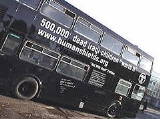
Human shield action to Iraq

Encyclopedia

Iraq
Iraq ; officially the Republic of Iraq is a country in Western Asia spanning most of the northwestern end of the Zagros mountain range, the eastern part of the Syrian Desert and the northern part of the Arabian Desert....
to act as human shields with the purpose of preventing the U.S.-led coalition
Coalition of the willing
The term coalition of the willing is a post-1990 political phrase used to collectively describe participants in military or military-humanitarian interventions for which the United Nations Security Council cannot agree to mount a full UN peacekeeping operation...
troops from bombing certain locations during the 2003 Invasion of Iraq
2003 invasion of Iraq
The 2003 invasion of Iraq , was the start of the conflict known as the Iraq War, or Operation Iraqi Freedom, in which a combined force of troops from the United States, the United Kingdom, Australia and Poland invaded Iraq and toppled the regime of Saddam Hussein in 21 days of major combat operations...
.
Chronology
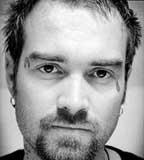
Kenneth O'Keefe
Kenneth Nichols O'Keefe is an Irish-American activist and former US Marine. He led the human shield action to Iraq and was a passenger on the MV Mavi Marmara during the Gaza flotilla raid...
, an ex-US Marine and Gulf War
Gulf War
The Persian Gulf War , commonly referred to as simply the Gulf War, was a war waged by a U.N.-authorized coalition force from 34 nations led by the United States, against Iraq in response to Iraq's invasion and annexation of Kuwait.The war is also known under other names, such as the First Gulf...
veteran who had formally renounced his US citizenship posted a call to action for large numbers of western citizens to migrate to Iraq and deploy themselves as "Human Shields". The action was ultimately named the TJP (Truth Justice Peace) Human Shield Action to Iraq. It was his position that protests and petitions had no chance of pre-venting the invasion and he reasoned that a large presence of western citizens, strategically placed in Iraq, at sites critical to the civilian population, was the only viable deterrent to the pre-planned war. The strategy of the action was based on the huge disparity between the way western lives and non-western lives are valued, thus he argued that thousands of Human Shields deployed to sites protected by the Fourth Geneva Convention
Fourth Geneva Convention
The Geneva Convention relative to the Protection of Civilian Persons in Time of War, commonly referred to as the Fourth Geneva Convention and abbreviated as GCIV, is one of the four treaties of the Geneva Conventions. It was adopted in August 1949, and defines humanitarian protections for civilians...
would make the invasion politically untenable. O'Keefe was in the unique position of publicly acknowledging Saddam Hussein
Saddam Hussein
Saddam Hussein Abd al-Majid al-Tikriti was the fifth President of Iraq, serving in this capacity from 16 July 1979 until 9 April 2003...
as a "violent dictator" and "mass-murderer" before he arrived in Saddam controlled Iraq, apparently he did this in an attempt to neutralize the inevitable accusations that the Human Shields were simply pawns of Saddam. Consequently he received no favor from the dictator, his influence within the action declined rapidly as he traveled to Iraq, and eventually he was deported days before the invasion. Before his deportation he repeatedly pointed to US and British support for Hussein during all of his worst crimes, ultimately he argued that it was the people of Iraq who would suffer most from war.
In January 2003 a group of dedicated anti-war activists joined O'Keefe in London and set out to carry out the plan as a new form of non-violent direct action. Acknowledging that traditional forms of protest were largely ineffective, on January 25, 2003 a group of 50 volunteers left London
London
London is the capital city of :England and the :United Kingdom, the largest metropolitan area in the United Kingdom, and the largest urban zone in the European Union by most measures. Located on the River Thames, London has been a major settlement for two millennia, its history going back to its...
and headed for Baghdad
Baghdad
Baghdad is the capital of Iraq, as well as the coterminous Baghdad Governorate. The population of Baghdad in 2011 is approximately 7,216,040...
with the intention of acting as human shields. The convoy travelled through Europe
Europe
Europe is, by convention, one of the world's seven continents. Comprising the westernmost peninsula of Eurasia, Europe is generally 'divided' from Asia to its east by the watershed divides of the Ural and Caucasus Mountains, the Ural River, the Caspian and Black Seas, and the waterways connecting...
and Turkey
Turkey
Turkey , known officially as the Republic of Turkey , is a Eurasian country located in Western Asia and in East Thrace in Southeastern Europe...
by bus to pick up like-minded people along the way, totalling roughly 75 people. It has been estimated that 200 to 500 people eventually made their way into Iraq
Iraq
Iraq ; officially the Republic of Iraq is a country in Western Asia spanning most of the northwestern end of the Zagros mountain range, the eastern part of the Syrian Desert and the northern part of the Arabian Desert....
before the U.S. invasion in March.
Upon reaching Baghdad, a strategy was formed on the assumption that there would not be enough human shields to avert an invasion. This was to involve the voluntary deployment of activists to strategic locations throughout Baghdad, and possibly Basra, in an effort to avert the bombing of those locations. There was much internal debate about which locations were to be chosen.

The need to work closely with the Iraqi government was not something many of shield volunteers felt comfortable with. Some felt that the list delivered by the officials compromised their autonomy. Others felt that they would rather be deployed in schools, hospitals, and orphanages. These shield volunteers left Iraq. The rest took up residence at the sites, a list of which was sent to the Joint Chiefs of Staff together with a request that they recognize their assertion that targeting these sites would be in violation of Article 54 Protocol Additional to the Geneva Convention
Protocol I
Protocol I is a 1977 amendment protocol to the Geneva Conventions relating to the protection of victims of international armed conflicts. It reaffirms the international laws of the original Geneva Conventions of 1949, but adds clarifications and new provisions to accommodate developments in modern...
. There was no response to the letters.
At its peak the total of shield volunteers in Baghdad numbered about 500, but the realization that the thousands needed to have a chance of stopping a blitz on Baghdad had not materialized, combined with the failure of the United Nations to forestall war, meant that bombing was imminent. Many of the shields chose to stay; many others chose to leave. Still others, like O’Keefe, were ordered out by the Iraqi government. One 21-year-old human shield, Tom Hurndall
Tom Hurndall
Thomas "Tom" Hurndall was a British photography student, a volunteer for the International Solidarity Movement , and an activist against the Israeli occupation of the Palestinian territories. On 11 April 2003, he was shot in the head in the Gaza Strip by an Israel Defense Forces sniper, Taysir Hayb...
, left Baghdad for reasons of safety. He went to the Palestinian territories where he was shot by an Israeli soldier while working with the International Solidarity Movement
International Solidarity Movement
The International Solidarity Movement is an organization focused on assisting the Palestinian cause in the Israeli-Palestinian conflict using nonviolent protests. It was founded in 2001 by Ghassan Andoni, a Palestinian activist; Neta Golan, an Israeli activist; Huwaida Arraf, a...
.
None of the 80 shields who stayed in Baghdad throughout the war were killed or injured. None of the sites where they were residing were destroyed.
During their deployments a small group of volunteers led by Gordon Sloan of New Zealand took on the job of vetting sites to ensure they were not in close vicinity to military facilities. This was to be the cause of some conflict with their Iraqi host, Dr. Abdul Razak al-Hashimi
Abdul Razak al-Hashimi
Dr. Abdul Razak al-Hashimi is a former Iraqi diplomat, Minister of Higher Education, and senior advisor to Saddam Hussein.Dr. Hashimi graduated from Boston University in 1969...
, Saddam Hussein
Saddam Hussein
Saddam Hussein Abd al-Majid al-Tikriti was the fifth President of Iraq, serving in this capacity from 16 July 1979 until 9 April 2003...
's spokesman during the first Gulf War, and head of the Friendship, Peace and Solidarity organisation which was hosting the activists, under the authority of the Baathist government.
With an invasion imminent, Hashimi became frustrated by Sloan's explorations, called a meeting, and asked the activists to deploy to sites or leave Iraq. Hashimi's meeting is said by some of the leading volunteers to have been a costly political mistake. It was the trigger of much anxiety among the volunteers and negative reporting in the media, including mis-reports that activists were being forced to deploy to military sites. It was also at this point that some of the British volunteers were to return to London along with the two double-decker red buses and their owner, which were originally meant to have left soon after arrival.
The paranoia that rose up around Hashimi's announcement and the reports that the buses were leaving Iraq slowed the influx of activists into Iraq, and caused some of those already there to leave Iraq, believing they had lost credibility through Hashimi's actions. The Iraqi authorities, on the other hand, saw Kenneth O'Keefe, Sloan, and other organisers as constantly challenging Hashimi's authority and being deliberately disruptive, and that some would-be shields were taking too long to deploy to sites. Five of the 'trouble makers' were then asked to leave the country.
Many activists stayed on, however, and continued to shield the chosen sites. It is claimed that eighty human shields stayed in the Baghdad area throughout the bombing campaign.
Analysis and effects of the human shields

Geneva Conventions
The Geneva Conventions comprise four treaties, and three additional protocols, that establish the standards of international law for the humanitarian treatment of the victims of war...
—was eventually bombed, the Al Mamun Telecommunications Facility, one day after the human shields pulled out of it.
For violating a U.S. prewar travel ban, human shields from the U.S. faced fines and/or imprisonment. On the day after the departure of the human shield convoy, White House Chief of Staff, Andrew Card, released a statement condemning the action and Fox News reported that U.S. leaders were considering prosecuting U.S. human shields for war crimes.
Criticisms
The Human Shield Movement was criticised for what many saw as being an overt act of aiding Saddam Hussein’s regime. Charges of the shields being "dupes" and "useful idiots" for Saddam were widespread in the U.S. The human shields countered that while various governments around the globe carry out acts of aggression, the human shield action saw fit to defend against this one.Human Rights Watch
Human Rights Watch
Human Rights Watch is an international non-governmental organization that conducts research and advocacy on human rights. Its headquarters are in New York City and it has offices in Berlin, Beirut, Brussels, Chicago, Geneva, Johannesburg, London, Los Angeles, Moscow, Paris, San Francisco, Tokyo,...
stated that "civilians acting as human shields, whether voluntary or not, contribute indirectly to the war capability of a state. Their actions do not pose a direct risk to opposing forces. Because they are not directly engaged in hostilities against an adversary, they retain their civilian immunity from attack." Human Rights Watch also noted that the use by a state of human shields, voluntary or not, is a violation of international law, citing Protocol I of the First Geneva Convention.
Jonah Goldberg
Jonah Goldberg
Jonah Jacob Goldberg is an American conservative syndicated columnist and author. Goldberg is known for his contributions on politics and culture to , of which he is editor-at-large...
claimed after a debate with O'Keefe, that "O'Keefe and his friends are objectively in favour of Saddam Hussein and his murderous regime because they believe he is uniquely worth defending with their bodies. They may be brave, I guess, but they're still idiots, and I'm sure Saddam is grateful for them".
Maria Ermanno, chairwoman of the Swedish Peace and Arbitration Society, cited reports that Iraqi officials were arranging transportation, accommodations and news conferences for the human shields and that they were being used for propaganda purposes by Saddam Hussein. "To go down to Iraq and live and act there on the regime's expense, then you're supporting a terrible dictator. I think that method is entirely wrong," Ermanno told Swedish Radio.
The Iraqi regime was also criticised for encouraging and facilitating the human shield actions, since this was seen as violation of international law
International law
Public international law concerns the structure and conduct of sovereign states; analogous entities, such as the Holy See; and intergovernmental organizations. To a lesser degree, international law also may affect multinational corporations and individuals, an impact increasingly evolving beyond...
and Protocol I, article 20 of the Geneva Convention.
See also
- Human shieldHuman shieldHuman shield is a military and political term describing the deliberate placement of civilians in or around combat targets to deter an enemy from attacking those targets. It may also refer to the use of civilians to literally shield combatants during attacks, by forcing the civilians to march in...
- Non-violent resistance
- Popular opposition to war on Iraq
- Protests against the 2003 Iraq war
- 2003 Invasion of Iraq2003 invasion of IraqThe 2003 invasion of Iraq , was the start of the conflict known as the Iraq War, or Operation Iraqi Freedom, in which a combined force of troops from the United States, the United Kingdom, Australia and Poland invaded Iraq and toppled the regime of Saddam Hussein in 21 days of major combat operations...
- Anti-warAnti-warAn anti-war movement is a social movement, usually in opposition to a particular nation's decision to start or carry on an armed conflict, unconditional of a maybe-existing just cause. The term can also refer to pacifism, which is the opposition to all use of military force during conflicts. Many...
- Peace movementPeace movementA peace movement is a social movement that seeks to achieve ideals such as the ending of a particular war , minimize inter-human violence in a particular place or type of situation, often linked to the goal of achieving world peace...
External links
- The Human Shield Movement The Contemporary Review, 2003, Stefan Simanowitz
- Human Shield Action to Iraq - official website
- Some interviews with Kenneth O'Keefe on global news networks such as CNNCNNCable News Network is a U.S. cable news channel founded in 1980 by Ted Turner. Upon its launch, CNN was the first channel to provide 24-hour television news coverage, and the first all-news television channel in the United States...
and Sky NewsSky NewsSky News is a 24-hour British and international satellite television news broadcaster with an emphasis on UK and international news stories.The service places emphasis on rolling news, including the latest breaking news. Sky News also hosts localised versions of the channel in Australia and in New... - http://www.guardian.co.uk/Iraq/voices/story/0,12820,886353,00.htmlInterview with Kenneth O'KeefeKenneth O'KeefeKenneth Nichols O'Keefe is an Irish-American activist and former US Marine. He led the human shield action to Iraq and was a passenger on the MV Mavi Marmara during the Gaza flotilla raid...
, part of the Voices of Iraq series] - The GuardianThe GuardianThe Guardian, formerly known as The Manchester Guardian , is a British national daily newspaper in the Berliner format...
(February 4, 2003) - 'Human shield' protesters visit No 10 - The GuardianThe GuardianThe Guardian, formerly known as The Manchester Guardian , is a British national daily newspaper in the Berliner format...
(January 22, 2003) - U.S. cautions Iraq on human shields BBC NewsBBC NewsBBC News is the department of the British Broadcasting Corporation responsible for the gathering and broadcasting of news and current affairs. The department is the world's largest broadcast news organisation and generates about 120 hours of radio and television output each day, as well as online...
(16 January 2003) - Fear as human shield faces jail BBC NewsBBC NewsBBC News is the department of the British Broadcasting Corporation responsible for the gathering and broadcasting of news and current affairs. The department is the world's largest broadcast news organisation and generates about 120 hours of radio and television output each day, as well as online...
(21 September 2003) - Human shield fined over sanctions BBC NewsBBC NewsBBC News is the department of the British Broadcasting Corporation responsible for the gathering and broadcasting of news and current affairs. The department is the world's largest broadcast news organisation and generates about 120 hours of radio and television output each day, as well as online...
(11 August 2003) - Putting Noncombatants at Risk: Saddam's Use of "Human Shields" - CIA (January 2003)
- A man from Norfolk who went to Iraq to act as a human shield is back, saying his mission was a success BBC NewsBBC NewsBBC News is the department of the British Broadcasting Corporation responsible for the gathering and broadcasting of news and current affairs. The department is the world's largest broadcast news organisation and generates about 120 hours of radio and television output each day, as well as online...
(18 April 2003) - The sister of a Labour MP has vowed to remain as a human shield throughout the bombing of Iraq BBC NewsBBC NewsBBC News is the department of the British Broadcasting Corporation responsible for the gathering and broadcasting of news and current affairs. The department is the world's largest broadcast news organisation and generates about 120 hours of radio and television output each day, as well as online...
(19 March 2003) - Gulf veteran recruits human shields - BBC NewsBBC NewsBBC News is the department of the British Broadcasting Corporation responsible for the gathering and broadcasting of news and current affairs. The department is the world's largest broadcast news organisation and generates about 120 hours of radio and television output each day, as well as online...
(22 January 2003) - 'I'm an ex-marine recruiting human shields' BBC NewsBBC NewsBBC News is the department of the British Broadcasting Corporation responsible for the gathering and broadcasting of news and current affairs. The department is the world's largest broadcast news organisation and generates about 120 hours of radio and television output each day, as well as online...
(19 February 2003) - 'Human shields' head for Iraq - (29 December 2002)
- First wave of volunteers prepare to set off for Baghdad - The GuardianThe GuardianThe Guardian, formerly known as The Manchester Guardian , is a British national daily newspaper in the Berliner format...
(23 January 2003) - Human shields speed to Baghdad BBC NewsBBC NewsBBC News is the department of the British Broadcasting Corporation responsible for the gathering and broadcasting of news and current affairs. The department is the world's largest broadcast news organisation and generates about 120 hours of radio and television output each day, as well as online...
(19 March 2003) - Targeting Decisions Regarding Human Shields - Military Review (September/October 2004)