


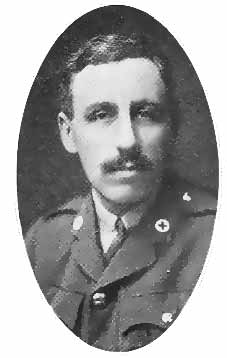
Harold Fraser-Simson

Encyclopedia
English people
The English are a nation and ethnic group native to England, who speak English. The English identity is of early mediaeval origin, when they were known in Old English as the Anglecynn. England is now a country of the United Kingdom, and the majority of English people in England are British Citizens...
composer of light music, including songs and the scores to musical comedies. His most famous musical was the World War I
World War I
World War I , which was predominantly called the World War or the Great War from its occurrence until 1939, and the First World War or World War I thereafter, was a major war centred in Europe that began on 28 July 1914 and lasted until 11 November 1918...
hit, The Maid of the Mountains
The Maid of the Mountains
The Maid of the Mountains, called in its original score a musical play, is an operetta or musical comedy in three acts. The music was by Harold Fraser-Simson, with additional music by James W...
, and he later set numerous children's poems to music, especially those of A. A. Milne
A. A. Milne
Alan Alexander Milne was an English author, best known for his books about the teddy bear Winnie-the-Pooh and for various children's poems. Milne was a noted writer, primarily as a playwright, before the huge success of Pooh overshadowed all his previous work.-Biography:A. A...
.
Life and career
Fraser-Simson was born in London, the second child and eldest son of an East Indies merchant, Arthur Theodore Simson and his wife, Jane Anne Catherine née Fraser, of Reelig, Scotland. He was educated at Charterhouse SchoolCharterhouse School
Charterhouse School, originally The Hospital of King James and Thomas Sutton in Charterhouse, or more simply Charterhouse or House, is an English collegiate independent boarding school situated at Godalming in Surrey.Founded by Thomas Sutton in London in 1611 on the site of the old Carthusian...
, then at Dulwich College
Dulwich College
Dulwich College is an independent school for boys in Dulwich, southeast London, England. The college was founded in 1619 by Edward Alleyn, a successful Elizabethan actor, with the original purpose of educating 12 poor scholars as the foundation of "God's Gift". It currently has about 1,600 boys,...
, then at King's College, London and in France. As a young man he joined a ship-owning firm in London before turning to music as a full-time occupation in his early forties.
Musical comedies
Fraser-Simson published his first song, "My Sweet Sweeting", in 1907. His first theatre score was for the 1911 musical Bonita, with a libretto by Walter Wadham Peacock, which played at Queen's TheatreQueen's Theatre
The Queen's Theatre is a West End theatre located in Shaftesbury Avenue in the City of Westminster. It opened on 8 October 1907 as a twin to the neighbouring Gielgud Theatre which opened ten months earlier. Both theatres were designed by W.G.R...
.
Operetta
Operetta is a genre of light opera, light in terms both of music and subject matter. It is also closely related, in English-language works, to forms of musical theatre.-Origins:...
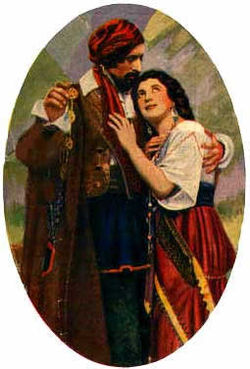
The Maid of the Mountains
The Maid of the Mountains
The Maid of the Mountains, called in its original score a musical play, is an operetta or musical comedy in three acts. The music was by Harold Fraser-Simson, with additional music by James W...
, which played at Daly's Theatre
Daly's Theatre
Daly's Theatre was a theatre in the City of Westminster. It was located at 2 Cranbourn Street, just off Leicester Square. It opened on 27 June 1893, and was demolished in 1937.-Early years:...
in London in 1917 and finally closed after 1,352 performances. This was, at the time, a phenomenal run second only to that of Chu Chin Chow
Chu Chin Chow
Chu Chin Chow is a musical comedy written, produced and directed by Oscar Asche, with music by Frederic Norton, based on the story of Ali Baba and the 40 Thieves...
. Several songs from this work (not all of them by Fraser-Simson) have remained "standards" ever since. Fraser-Simson's best-known songs for this show included "Love will Find a Way", "Farewell" and "Husbands and Wives". The Maid of the Mountains has been frequently revived by both professional and amateur groups and was filmed in 1932. It was one of the three most important musical hits of the London stage during World War I
World War I
World War I , which was predominantly called the World War or the Great War from its occurrence until 1939, and the First World War or World War I thereafter, was a major war centred in Europe that began on 28 July 1914 and lasted until 11 November 1918...
(the other two being a revue
Revue
A revue is a type of multi-act popular theatrical entertainment that combines music, dance and sketches. The revue has its roots in 19th century American popular entertainment and melodrama but grew into a substantial cultural presence of its own during its golden years from 1916 to 1932...
, The Bing Boys Are Here
The Bing Boys Are Here
The Bing Boys Are Here, styled "A Picture of London Life, in a Prologue and Six Panels," is the first of a series of revues which played at the Alhambra Theatre, London during the last two years of World War I. The series included The Bing Boys on Broadway and The Bing Boys are There. The music...
and the musical Chu Chin Chow. Music or scenes from all of these have been included as background in many films set in this period, and they remain intensely evocative of the "Great War" years. Audiences wanted light and uplifting entertainment during the war, and these shows delivered it.
A Southern Maid
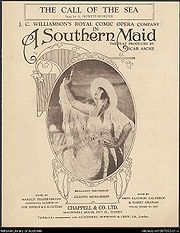
A Southern Maid is an operetta in three acts composed by Harold Fraser-Simson, with a book by Dion Clayton Calthrop and Harry Graham and lyrics by Harry Graham and Harry Miller. Additional music was provided by Ivor Novello and George H. Clutsam, with additional lyrics by Adrian Ross and Douglas...
(premiered in Manchester
Manchester
Manchester is a city and metropolitan borough in Greater Manchester, England. According to the Office for National Statistics, the 2010 mid-year population estimate for Manchester was 498,800. Manchester lies within one of the UK's largest metropolitan areas, the metropolitan county of Greater...
in 1917 and produced at Daly's in London after Maid closed in 1920); Our Peg (1919, with a libretto by Harry Graham and Edward Knoblock at Prince's Theatre); Missy Jo (1921 touring); Head over Heels (Adelphi Theatre
Adelphi Theatre
The Adelphi Theatre is a 1500-seat West End theatre, located on the Strand in the City of Westminster. The present building is the fourth on the site. The theatre has specialised in comedy and musical theatre, and today it is a receiving house for a variety of productions, including many musicals...
, 1923); Our Nell (1924, Lyric Theatre
Lyric Theatre (London)
The Lyric Theatre is a West End theatre on Shaftesbury Avenue in the City of Westminster.Designed by architect C. J. Phipps, it was built by producer Henry Leslie with profits from the Alfred Cellier and B. C. Stephenson hit, Dorothy, which he transferred from the Prince of Wales Theatre to open...
– a rewrite of Our Peg replacing Peg Woffington as principal character with Nell Gwynne), The Street Singer
The Street Singer
The Street Singer is a 1912 short silent film drama. The film starred Earle Foxe and Alice Joyce. It was Foxe's first film, aged seventeen....
(1924, 360 performances at the Lyric, starring Phyllis Dare
Phyllis Dare
Phyllis Dare born Phyllis Constance Haddie Dones was an English singer and actress who was famous for her performances in Edwardian musical comedy and other musical theatre in the first half of the 20th century....
); and Betty in Mayfair (1925, Adelphi Theatre
Adelphi Theatre
The Adelphi Theatre is a 1500-seat West End theatre, located on the Strand in the City of Westminster. The present building is the fourth on the site. The theatre has specialised in comedy and musical theatre, and today it is a receiving house for a variety of productions, including many musicals...
).
Fraser's music tended towards the old-fashioned European romantic songs, in contrast to the ragtime
Ragtime
Ragtime is an original musical genre which enjoyed its peak popularity between 1897 and 1918. Its main characteristic trait is its syncopated, or "ragged," rhythm. It began as dance music in the red-light districts of American cities such as St. Louis and New Orleans years before being published...
, jazz
Jazz
Jazz is a musical style that originated at the beginning of the 20th century in African American communities in the Southern United States. It was born out of a mix of African and European music traditions. From its early development until the present, jazz has incorporated music from 19th and 20th...
and other American dance music that began to be used in musicals during World War I. His other stage works include a ballet, Venetian Wedding (1926) and incidental music for The Nightingale and the Rose (1927).
Children's songs and later years
Fraser-Simson is also known for his many settings of children's verse by A. A. MilneA. A. Milne
Alan Alexander Milne was an English author, best known for his books about the teddy bear Winnie-the-Pooh and for various children's poems. Milne was a noted writer, primarily as a playwright, before the huge success of Pooh overshadowed all his previous work.-Biography:A. A...
and Kenneth Grahame
Kenneth Grahame
Kenneth Grahame was a Scottish writer, most famous for The Wind in the Willows , one of the classics of children's literature. He also wrote The Reluctant Dragon; both books were later adapted into Disney films....
, including the music for a children's play based on the latter's The Wind in the Willows
The Wind in the Willows
The Wind in the Willows is a classic of children's literature by Kenneth Grahame, first published in 1908. Alternately slow moving and fast paced, it focuses on four anthropomorphised animal characters in a pastoral version of England...
entitled Toad of Toad Hall
Toad of Toad Hall
Toad of Toad Hall is the first of several dramatisations of Kenneth Grahame's 1908 novel The Wind in the Willows. It was written by A. A. Milne, with incidental music by Harold Fraser-Simson....
(1929), which was successful and enjoyed many revivals. His settings of Milne's verse include a children's song cycle The Hums of Pooh, based on verses from Winnie-the-Pooh
Winnie-the-Pooh (book)
Winnie-the-Pooh is the first volume of stories about Winnie-the-Pooh, by A. A. Milne. It is followed by The House at Pooh Corner. The book focuses on the adventures of a teddy bear called Winnie-the-Pooh and his friends Piglet, a small toy pig; Eeyore, a toy donkey; Owl, a live owl; and Rabbit, a...
and The House at Pooh Corner
The House at Pooh Corner
The House at Pooh Corner is the second volume of stories about Winnie-the-Pooh, written by A. A. Milne and illustrated by E. H. Shepard. It is notable for the introduction of the character Tigger, who went on to become a prominent figure in the Disney Winnie the Pooh franchise.- Plot :The title...
. This was included in Julian Slade
Julian Slade
Julian Penkivil Slade was an English writer of musical theatre best known for the show Salad Days, which he wrote in six weeks in 1954 and became the UK's longest-running show of the 1950s with over 2,288 performances....
's 1970 adaptation of Winnie the Pooh. He published six volumes of songs setting verses from Milne's When We Were Very Young
When We Were Very Young
When We Were Very Young is a best-selling book of poetry by A. A. Milne. It was first published in 1924, and was illustrated by E. H. Shepard. Several of the verses were set to music by Harold Fraser-Simson...
. They were first recorded for the gramophone by George Baker
George Baker (record singer)
George Baker was an English singer. He is remembered for singing on thousands of gramophone records in a career that spanned 53 years, beginning in 1909...
accompanied by Gerald Moore
Gerald Moore
Gerald Moore CBE was an English pianist best known for his career as one of the most in-demand accompanists of his day, accompanying many of the world's most famous musicians...
in 1930. His other songs included the collection Teddy Bear and Other Songs and songs from Alice in Wonderland
Alice's Adventures in Wonderland
Alice's Adventures in Wonderland is an 1865 novel written by English author Charles Lutwidge Dodgson under the pseudonym Lewis Carroll. It tells of a girl named Alice who falls down a rabbit hole into a fantasy world populated by peculiar, anthropomorphic creatures...
which were published in 1932 and recorded by Baker and Moore the same year. Baker later recalled the composer as "a very polite, retiring man, looking more like a businessman than a composer of successful musicals."
In later years, Fraser-Simson lived the life of a country squire at Dalcross Castle, a home that he bought in Scotland. He married Cicely Devenish. He was an avid sportsman, enjoying golf, tennis, shooting and fishing.
Fraser-Simson died at a nursing home in Inverness
Inverness
Inverness is a city in the Scottish Highlands. It is the administrative centre for the Highland council area, and is regarded as the capital of the Highlands of Scotland...
, Scotland, following a fall on a stone staircase at his home in nearby Croy, Highland
Croy, Highland
Croy is a village between Inverness and Nairn, in the Highland council area in Scotland. The village looks over the Moray firth and is located a few miles from Inverness Airport.-History:...
, at the age of 71.