
Home      Discussion      Topics      Dictionary      Almanac
Signup       Login
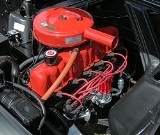
Ford Straight-6 engine

Ford Straight-6 engine

Overview
Ford
Ford Motor Company
The Ford Motor Company is an American multinational corporation based in Dearborn, Michigan, a suburb of Detroit. The automaker was founded by Henry Ford and incorporated on June 16, 1903. In addition to the Ford, Lincoln, and Mercury brands, Ford also owns Volvo Cars of Sweden, and a small stake...

's first straight-6
Straight-6
The straight-six engine or inline-six engine is a six cylinder internal combustion engine with all six cylinders mounted in a straight line along the crankcase. The single bank of cylinders may be oriented in either a vertical or an inclined plane with all the pistons driving a common crankshaft...

 engine was introduced in 1906 in the Model K
Ford Model K
Ford Model K was an upscale automobile produced by the Ford Motor Company. It was introduced in 1906 and replaced the earlier Model B. The model K was aimed at the top end of the market and featured an inline-6 giving 40 hp...

. Production ended in 1907. Henry Ford
Henry Ford
Henry Ford was the American founder of the Ford Motor Company and father of modern assembly lines used in mass production. His introduction of the Model T automobile revolutionized transportation and American industry. He was a prolific inventor and was awarded 161 U.S. patents...

 did not like this car, which had a habit of tearing its transmission up. The next Ford six was introduced in the 1941 Ford
1941 Ford
The Ford car was thoroughly updated in 1941, in preparation for a decade of unpredictability surrounding World War II. The 1941 design would continue in an aborted 1942 model year and would be restarted in 1946 and produced until the more modern 1949 Fords were ready.The two previous Ford car...

. The company continued producing straight 6 engines until they were replaced in the mid-1990s by more compact V6 designs. However, Ford's Australian Branch manufactures these engines for their Falcon range to this day.

The first generation Ford in-line six-cylinder (L6) engines were all of the flathead type.
Discussion
Ask a question about 'Ford Straight-6 engine'
Start a new discussion about 'Ford Straight-6 engine'
Answer questions from other users
Full Discussion Forum
 
Encyclopedia
Ford
Ford Motor Company
The Ford Motor Company is an American multinational corporation based in Dearborn, Michigan, a suburb of Detroit. The automaker was founded by Henry Ford and incorporated on June 16, 1903. In addition to the Ford, Lincoln, and Mercury brands, Ford also owns Volvo Cars of Sweden, and a small stake...

's first straight-6
Straight-6
The straight-six engine or inline-six engine is a six cylinder internal combustion engine with all six cylinders mounted in a straight line along the crankcase. The single bank of cylinders may be oriented in either a vertical or an inclined plane with all the pistons driving a common crankshaft...

 engine was introduced in 1906 in the Model K
Ford Model K
Ford Model K was an upscale automobile produced by the Ford Motor Company. It was introduced in 1906 and replaced the earlier Model B. The model K was aimed at the top end of the market and featured an inline-6 giving 40 hp...

. Production ended in 1907. Henry Ford
Henry Ford
Henry Ford was the American founder of the Ford Motor Company and father of modern assembly lines used in mass production. His introduction of the Model T automobile revolutionized transportation and American industry. He was a prolific inventor and was awarded 161 U.S. patents...

 did not like this car, which had a habit of tearing its transmission up. The next Ford six was introduced in the 1941 Ford
1941 Ford
The Ford car was thoroughly updated in 1941, in preparation for a decade of unpredictability surrounding World War II. The 1941 design would continue in an aborted 1942 model year and would be restarted in 1946 and produced until the more modern 1949 Fords were ready.The two previous Ford car...

. The company continued producing straight 6 engines until they were replaced in the mid-1990s by more compact V6 designs. However, Ford's Australian Branch manufactures these engines for their Falcon range to this day.

First generation


The first generation Ford in-line six-cylinder (L6) engines were all of the flathead type. They were the G- and H-series engines of used in cars and trucks and the M-series of used in larger Ford trucks and for industrial applications.

226


Introduced with the 1941
1941 Ford
The Ford car was thoroughly updated in 1941, in preparation for a decade of unpredictability surrounding World War II. The 1941 design would continue in an aborted 1942 model year and would be restarted in 1946 and produced until the more modern 1949 Fords were ready.The two previous Ford car...

 model year, the first Ford six (designated G-series) displaced and produced , the same as the Flathead V-8
Ford Flathead engine
The Flathead was the first independently designed and built V8 engine produced by the Ford Motor Company for mass production and ranks as one of the company's most important developments. Before the 1932 introduction of this engine , almost all production cars aimed at the average consumer used...

 that year. Like the V-8, it was also a flathead or L-head engine. In 1948, Ford raised the compression of the flathead six (designated H-series or Rouge 226) so that it generated and of torque. The G- and H-series engines were used in the full-size Ford cars and trucks to replace the smaller Flathead V8 that were used with the 1937 Ford
1937 Ford
The Ford line of cars was updated in 1937 with one major change — the introduction of an entry-level 136 CID V8 in addition to the popular 221 CID V8 unit. The model was a refresh of its predecessor, itself based on Ford's V8-powered Model 40A and was the company's main product...

. Ford discontinued production of the H-series engine with the 1951 model year.

254


A version of the flathead six (designated the M-series or Rouge 254) was used from 1948-53 in F6-series
Ford F-Series
The F-Series is a series of full-size pickup trucks from Ford Motor Company sold for over five decades. The most popular variant of the F-Series is the F-150. It was the best-selling vehicle in the United States for 23 years and has been the best-selling truck for 31 years, though this does not...

 Ford trucks (COE, Dump, semi-, etc.), and small Ford school buses. The M-series engine produced and . of torque. They were also used in miscellaneous industrial applications. e.g., to power water pumps for irrigation purposes and within wine-producing farms to manage risk by powering giant frost-control propellers on stands in the middle of rows of grapes.

215


A completely new OHV
Overhead valve
An overhead valve engine, also informally called pushrod engine or I-head engine, is a type of piston engine that places the camshaft within the cylinder block , and uses pushrods or rods to actuate rocker arms above the cylinder...

 six was offered for the 1952 F-series. It displaced and produced . It was also used in the 1952 Ford
1952 Ford
The Ford line of cars was again refreshed for 1952, although remaining similar to the all-new 1949 Fords. This time, curved one-piece windshield glass joined a new "Mileage Maker" straight-6 engine...

 full-size cars.

223


The 215 grew to for the 1954 F-series. Output was now (as the "Mileage Maker" in the trucks) and in the 1955 Ford
1955 Ford
The Ford line of cars gained a new body for 1955 to keep up with surging Chevrolet, although it remained similar to the 1952 Ford underneath...

 cars. Power was up to in the 1956 trucks.

262


A version was also produced. The 262 was built from 1961-64 for use in Heavy Duty Ford Trucks. This engine was also used for industrial applications.

Third generation


The third generation was produced at the Lima Engine
Lima Engine
Lima Engine is a Ford Motor Company automobile engine plant located in Lima, Ohio. The factory was opened in 1957 as the site of production of Ford's MEL V8 for the Edsel car...

 plant in Lima, Ohio
Lima, Ohio
Lima is a city in the U.S. state of Ohio and the county seat of Allen County. The municipality is located in northwestern Ohio along Interstate 75 approximately 72 miles north of Dayton and 78 miles south-southwest of Toledo.As of the 2000 U.S. census, the city had a population of...

 from 1960 through 1984. Officially dubbed the Thriftpower Six, this engine line is sometimes referred to as the Falcon Six. Note: Car companies including Ford, switched from gross ratings to net horsepower and torque ratings in 1972 (mainly because of the emissions laws being enacted nationwide at the time). Changes in engine compression and emissions controls make it difficult to compare engines from various production years (especially pre-1972).

144


The engine was first introduced in the 1960 Ford Falcon. The 144 was made from 1960 through 1964 and averaged during the production run. While not known for being powerful or a stout engine, it proved to be economical and could get fairly good gas mileage for the time (up to 25-30mpg). This small six was the basis for all the Ford "Falcon" straight six engines. The intake manifold on this series of engine was cast integrally with the cylinder head (this design was also used by Chevrolet with their third generation inline six); as a result, they could not be easily modified for greater power. This engine had four main bearings and can be identified by the three core plug
Core plug
Core plugs, sometimes wrongly called freeze plugs or frost plugs, are plugs that fill the core holes found on internal combustion engines. The sand casting cores are used to form the internal cavities in the engine block or cylinder head, usually forming the coolant passages...

s on the side of the block.

This engine was used on:
  • 1960 - 1964 Ford Falcon
  • 1960 - 1964 Ford Ranchero
    Ford Ranchero
    The Ford Ranchero was a coupe utility produced between 1957 and 1979 based on full-size, compact and intermediate automobiles by the Ford Motor Company for the North American market....

  • 1960 - 1964 Comet
    Comet
    A comet is a Small Solar System Body that has coma and is bigger than a meteoroid. When close enough to the Sun, a comet exhibits a visible coma , and sometimes a tail, both because of the effects of solar radiation upon the comet's nucleus...

  • 1961 - 1964 Ford E-Series
    Ford E-Series
    The Ford E-Series, formerly known as the Econoline or Club Wagon, is a line of full-size vans and truck chassis from the Ford Motor Company. The E-Series is related to the Ford F-Series line of pickup trucks. The line was introduced in 1961 as a compact van and its descendants are still produced...


170


In 1961 the became an option for the Falcon line. The 170 was a stroked version of the 144, changing the stroke from 2.5" to 2.94". The original 1964½ Ford Mustang
Ford Mustang
The Ford Mustang is an automobile manufactured by the Ford Motor Company. It was initially based on the second generation North American Ford Falcon, a compact car. Production began in Dearborn, Michigan on March 9, 1964 and the car was introduced to the public on April 17, 1964 at the New York...

 used a version. The Econoline van and Ford Bronco
Ford Bronco
The Ford Bronco was a sport-utility vehicle produced from 1966 through 1996, with five distinct generations.The Bronco was initially its own platform introduced as a competitor for small four-wheel-drive utility trucks such as the Jeep CJ-5 and International Harvester Scout...

 received a heavier duty version with mechanical valve lifters. This engine had four main bearings and can be identified by the three freeze (core) plugs on the side of the block. Later versions of this engine have seven main bearings. The 170 was dropped from production in 1972.

200


The 200 engine model was introduced in the middle of 1963 and shared the four main bearing design used in the 170 engine. Early 200s can be identified by three freeze (core) plugs on the side of the block.

Beginning in 1965 the 200 CID engines were upgraded to seven main bearings to reduce harmonic vibrations and increase durability. The 1965 and later engine can be identified by 5 freeze (core) plugs on the side of the block and the casting code C5DE-H. Starting in 1966 a six bolt bell housing flange block was introduced.

Beginning in 1980 the block was redesigned with a bell housing flange and a low mount starter that is very similar to the small block Ford V8. This version is easily identified by its low-mounted starter location down by the oil pan rail and is referred to as the Big Bell 200. The big bell design is uncommon but sought after by Inline six performance enthusiasts because it can be modified to accept a Ford small block V8 six bolt bell housing.

The 1965 Mustang used this engine as standard with . The Mustang continued to use the 200 as its base engine until it was dropped in 1971.

When Ford launched the third generation Fox body
Ford Fox platform
The Ford Fox platform is a rear wheel drive, unitized-chassis, automobile architecture that Ford used for 16 years in the North American market...

 Mustang in 1979, the original engine line up included the Cologne V6
Ford Cologne V6 engine
The original Ford Cologne V6, also known as the Ford Taunus V6, is a series of 60° cast iron block V6 engines produced continuously by the Ford Motor Company in Cologne, Germany since 1968...

. The same engine was also offered in the hugely successful Ford of Europe Capri Mk II. The 2.8L V6 engine was a popular option for the US Mustang and the European Capri MkII and as a result the Cologne engine plant could not meet the demand for engines for both Continents.

So, the Cologne 2.8L V6 was dropped from the engine lineup in the middle of the 1979 production year and replaced with the 200cid Falcon inline six, which was now referred to as the 3.3L engine. The engine and front suspension K-member was transferred from the Fairmont
Ford Fairmont
The Ford Fairmont was a North American compact car, produced between 1978 and 1983.The 1978 Ford Fairmont was the first vehicle built on the Ford Fox platform, which would be the basis for a variety of other models, including the 1980 to 1988 Thunderbird, the 1981 to 1982 American Ford Granada, the...

 model which helped reduce costs instead of having to redesign the Mustang for a different engine.

The 200 was used in the Ford Maverick and Mercury Comet models, and continued on in the Ford Fairmont and Mercury Zephyr
Mercury Zephyr
The Mercury Zephyr was a compact car sold by the Lincoln-Mercury division of Ford Motor Company in the North American market from 1978 to 1983. Along with its corporate cousin the Ford Fairmont, it was the first use of Ford's long-lived unibody Fox platform, which did not completely leave...

 until the Fairmont and Zephyr models were retired at the end of the 1983 model year and replaced with the Ford Tempo and Mercury Topaz.

The Ford Granada
Ford Granada (North America)
The Ford Granada was an intermediate sized car built and marketed by Ford Motor Company in North America from 1975 to 1982, along with its sister models, the Mercury Monarch, and Lincoln Versailles. The Granada was touted by Ford as a rival to the similarly sized Mercedes-Benz 280 of the time. The...

 and Mercury Monarch
Mercury Monarch
The Mercury Monarch was a mid-sized sedan manufactured by the Ford Motor Company from 1975 through 1980. The Mercury Monarch was released in 1975 alongside the Ford Granada, which was mechanically similar. Monarch justified a price hop over the Granada by offering an improved interior and a...

 offered the 200 inline six as part of their engine lineup from 1975 to 1982 when they were replaced in 1983 by the Ford LTD and the Mercury Marquis
Mercury Marquis
The Mercury Marquis is a vehicle produced by the Ford Motor Company under its Mercury brand from 1967 to 1986. It began as a full-size car, but became a mid-size in 1983. Continuing as a full-size was the former top-level trim line, Grand Marquis...

. These two models used the engine from 1983 to 1984 when it was replaced by the 3.8L Essex V6.

Ford was also having problems meeting demand for its 2.3L OHC engine which was used in a multitude of models worldwide.

In anticipation of another engine shortage, Ford's Lima Ohio engine plant, which was already producing the 2.3L OHC engine, decided they could modify the Falcon inline six block casting molds to remove cylinders 4 and 5 to create a 4 cylinder engine. An aluminum high-swirl cylinder head was developed, and the motor was designated the 2.3L HSC
Ford HSC engine
The HSC is an automobile engine from Ford Motor Company sold from 1984 until 1994. It was produced in Lima, Ohio, largely using tooling and designs adapted from the predecessor 200 CID straight 6.-2.3:...

 to help differentiate it from the same displacement 2.3L OHC design. This motor shared many common parts with the 200/3.3L inline six, and it is common for persons rebuilding their 200/3.3L inline six motors to use the 2.3L HSC pistons as a cheap replacement.

250


The straight six was an engine option offered in 1969 in the Mustang, and 1970 in medium-sized Ford cars (Maverick). The 250 was a stroked 200, made by changing the stroke from 3.126" to 3.91". Output was 155 hp (115 kW) in the Mustang, and became the base engine in 1971. Power was re-evaluated at for 1972 (due to power rating changes) and the next year. The last year of production for the 250 was 1980. This engine had seven main bearings, and can be identified by the five freeze (core) plugs on the side of the block. The block uses a low mount starter and six bellhousing bolts, sharing its bellhousing with the Windsor V-8s 302-351W, late (1965-68) 289, 351 Cleveland, early 4.6, and the 240-300 CID Ford Six.

Restoration and restomodstatus


The rising cost of fuel has increased the interest in the Falcon six design, and the engines have been gaining in popularity in recent years. Many Falcon and Mustang owners who used to replace their car's original inline six engine with a V8, are now keeping their inline sixes for the better fuel economy the inline six motor offers. A number of restoration and performance parts vendors now stock parts for people restoring their inline six motors.

Due to increased popularity of the Falcon six engine, the desire for improved performance, and difficulty in finding good quality used parts for an engine that has been out of production for 25 years, in 2005 the company Classic Inlines designed a modern aluminum head based on the Australian 250-2v head but with raised intake ports, high swirl combustion chambers, and larger valves. One of the features of the new head are pads cast into the top of the intake runners, which allows owners the ability to machine the head to accept modern electronic fuel injectors for direct port fuel injection.

Not only does the new head improve power output, but also the high-swirl design improves fuel mixing in the cylinder for a more complete burning of the air fuel mixture, resulting in reduced emissions output.

Ford of Australia Inline Six


Starting in 1960, Ford of Australia used the same inline six engines as North America, featuring the 144 cid and 170 cid models. Also as in North America, a 200 cid motor was added in 1965.

In 1968, Ford of Australia increased the deck height of the design to make room for increased crankshaft stroke, and 188 cid and 221 cid models were added to the lineup.

In 1970, Ford of Australia developed the 250 cid motor. the head was of the same design as previous models, with an integral intake catering for 1 single barrel stromberg carburettor. In the configuration, the falcon six was rated at .
Around this time Ford of Australia also developed the '2V' cylinder head, which in all respects was similar to the previous integral "log head" intake, with the exception of a removable aluminum intake which mounted a Stromberg 2-v carburetor. To take advantage of the much improved breathing ability that the removable intake brought to the new head, the 250-2v also mounted a much better breathing exhaust manifold. The result was the engine being rated at .

For years the 250-2V cylinder head was very popular for racing and many have been imported to North America, where owners of cars with the Falcon inline six have upgraded their engines with the better cylinder head.
In 1976, Ford of Australia replaced the 250 engine with a new block and head design, which was based on a taller and wider block with a cast iron crossflow head design. This engine was offered in the Ford Falcon XC in Australia. Whereas the previous integral "log head" inline six motor borrowed from the Ford FE engine family design, the new crossflow motor borrowed from the Ford 351 Cleveland engine family. A common upgrade for a crossflow head engine is to use 351 Cleveland roller tip rocker arms.
Ford of Australia continued the Crossflow design in 1978, but now an aluminum head casting was featured. The alloy head was used to improve warm up time and reduce fuel consumption and emissions. The iron head versions were fitted with a Stromberg carburetor, and the aluminum head versions were fitted with a Webber carburetor, which had improved consumption over the Stromberg.

Later, a Bosch Jetronic fuel injected version with direct port fuel injection was offered, and was only available as an aluminium 4.1 L from the XE Falcon onwards. There were changes to the carburetor-based engine to accommodate the Electronic Fuel Injection system. The compression ratio on the 4.1 L was 8.89:1. The cylinder head intake ports had been modified to provide clearance for the injectors, and a new intake manifold was designed and many other changes were made in the engine bay to accommodate the new fuel system.
  • Power at Specified RPM (DIN) Pre '86 running on Leaded Fuel
    • 3.3 L @ 4100 rpm
    • 4.1 L Carburetor @ 3750 rpm
    • 4.1 L E.F.I Engine @ 4000 rpm

  • Torque at Specified RPM (DIN) Pre '86 running on Leaded Fuel
    • 3.3 L @ 2500 rpm
    • 4.1 L Carburetor @ 2400 rpm
    • 4.1 L E.F.I Engine @ 3000 rpm

  • Power at Specified RPM (DIN) ADR 37 compliant engine running on Unleaded
    • 3.3 L @ 4000 rpm
    • 4.1 L Carburetor @ 3600 rpm
    • 4.1 L E.F.I Engine @ 4000 rpm

  • Torque at Specified RPM (DIN) ADR 37 compliant engine running on Unleaded
    • 3.3 L @ 2200 rpm
    • 4.1 L Carburetor @ 2000 rpm
    • 4.1 L E.F.I Engine @ 3000 rpm


In 1988, the inline six engines offered in the EA Falcon featured a new Single Over Head Cam (SOHC) crossflow aluminum head design. The camshaft and auxiliary shaft are driven by a 'Duplex' chain. The duplex chain drives the distributor and the oil pump shafts. The camshaft is supported on the cylinder head by using 'topless' bearings. Bearing liners are not used. The camshaft is held in position using valve spring pressure. Hydraulic lash adjusters mounted on the rocker arms are used to provide zero valve lash. As with all previous and current models, the block is cast iron, but with a reduction in the cylinder bore to try to help reduce emissions.

The SOHC engines were offered in 3.2L and 3.9L sizes with multipoint fuel injection or throttle body injection. In 1990, the 3.2L TBI version was discontinued, and in 1991 the 3.9L's displacement was enlarged to 4.0L and the engine was rated at .

Ford of Australia redesigned the inline six again in 1998, and increased the main bearing size and added a ladder style main stud girdle integral with the oil pan to increase low end rigidity. The engine also received variable cam timing technology, which can advance or retard cam timing depending on engine rpm, which gives a much broader power band.

In 2002 the engine received double overhead cams (DOHC) with variable cam timing as the Barra inline six motors and, depending on the version of engine, were offered in the 2002 BA Falcon, Fairlane, and the SX Territory. Currently the BA 190 powers the Falcon and Falcon "Utes" and the SY Territory since 2005. The BA190 is rated at at 5250 rpm and lbs at 2500 rpm.

There have been some noteworthy performance versions of the DOHC Barra inline sixes.

The Barra 240T, which was a turbocharged, fuel injected, intercooled DOHC inline six producing and lbs of torque, was offered between 2002 and 2005 in the BA Falcon XR6-Turbo.

Top of the line would be the Barra 310FG DOHC VCT motor, which is rated at at 5500 rpm and lbs of torque. It is the first Australian motor to achieve over per liter, and produces more torque than any Australian-built engine, including the V8s. It powers the FPV F6, a very high performance version of the Ford of Australia Falcon XR6-Turbo.

Ford Performance Vehicles (FPV) is an in-house factory tuner and serves as the performance division of Ford Australia, similar to the way AMG is to Mercedes-Benz, BMW M to BMW (M3, M5 etc) and HSV to Holden.

Ford of Australia had intended to discontinue production of the inline six motors at their Geelong engine plant in 2010, and replace them with imported Duratec V6s from North America. Due to the drastic increase of oil prices in 2008 and the following economic turmoil, the decision was reversed. Instead, Ford of Australia announced on 20th of November 2008 that 21 million Au dollars would be invested in the Geelong engine plant to bring the inline six engines up to date with the current Euro IV emissions standards.

In the EF model Falcon, the standard engine employed a high-energy coil-pack ignition system
Ignition system
An ignition system is a system for igniting a fuel-air mixture. It is best known in the field of internal combustion engines but also has other applications, e.g. in oil-fired and gas-fired boilers...

. However, the EL falcon used a distributor/coil ignition setup, as in Falcon models prior to EF.
Falcon model Capacity Induction Valvetrain Fuel Power Torque Notes
XY, XA, XB 4.1 L Carburettor OHV Leaded
XC 4.1 L Carburettor OHV Leaded Crossflow cylinder head
Crossflow cylinder head
A crossflow cylinder head is a cylinder head that features the intake and exhaust ports on opposite sides. The gases can be thought to flow across the head...

XD 4.1 L Carburettor OHV Leaded
XE 4.1 L EFI OHV Leaded Bosch LE II Jetronic fuel injection
Fuel injection
Fuel injection is a system for mixing fuel with air in an internal combustion engine. It has become the primary fuel delivery system used in gasoline automotive engines, having almost completely replaced carburetors in the late 1980s....

XF 4.1 L EFI OHV Unleaded
EA, EB 3.9 L EFI SOHC Unleaded
EA, EB 3.9 L EFI SOHC Unleaded EEC-IV Multi-point injection
EB series II, ED 4.0 L EFI SOHC Unleaded
XR6 ED, EF, EL 4.0 L EFI SOHC Unleaded
EF, EL, AU 4.0 L EFI SOHC Unleaded Coil-pack ignition system (EF and AU Only)
AU series II & III 4.0 L EFI SOHC LPG Dedicated LPG
Liquified petroleum gas
Liquefied petroleum gas is a mixture of hydrocarbon gases used as a fuel in heating appliances and vehicles, and increasingly replacing chlorofluorocarbons as an aerosol propellant and a refrigerant to reduce damage to the ozone layer, inferring that it is flammable.Varieties of LPG bought and...

XR6 AU 4.0 L EFI SOHC Unleaded VCT Variable Valve Timing
Variable valve timing
In internal combustion engines, variable valve timing, often abbreviated to VVT, is a generic term for an automobile piston engine technology. VVT allows the lift, duration or timing of the intake and/or exhaust valves to be changed while the engine is in operation...

BA 4.0 L EFI DOHC Unleaded
BA XR6 Turbo 4.0 L EFI DOHC Unleaded Garrett
Garrett Systems
Honeywell Turbo Technologies is a unit of the Honeywell Transportation Systems division of Honeywell International. Formerly a manufacturer of turboprop engines and a pioneer in numerous aerospace technologies, the company has continued to manufacture high-end turbochargers and components for the...

 GT40 turbocharger
Turbocharger
A turbocharger, or turbo, is a gas compressor that is used for forced-induction of an internal combustion engine. A form of supercharger, the purpose of a turbocharger is to increase the density of air entering the engine to create more power...

BF 4.0 L EFI DOHC Unleaded
BF XR6 Turbo 4.0 L EFI DOHC Unleaded Garrett GT3540 turbocharger
FG 4.0 L EFI DOHC Unleaded
FG XR6 Turbo 4.0 L EFI DOHC Unleaded

FPV F6 model Capacity Induction Valvetrain Fuel Power Torque Notes
BA MkII, BF 4.0 L EFI DOHC Unleaded
FG 4.0 L EFI DOHC Unleaded

Fourth generation


Produced at the Cleveland Engine
Cleveland Engine
Cleveland Engine is a Ford Motor Company engine manufacturing facility in Brook Park, Ohio, United States, a suburb of Cleveland.Opened in 1951, Cleveland Engine Plant number 1 was the site of production for Ford's first overhead valve engine, the Lincoln V8. It was later the site of production...

 plant in Brook Park, Ohio
Brook Park, Ohio
Brook Park is a city in Cuyahoga County, Ohio, United States and a suburb of Cleveland. As of the 2000 Census, the city population was 21,218.-Geography:Brook Park is located at ....

 from 1964 through 1996, the 240 and 300 Sixes are well-known for their durability. Simple design and rugged construction continue to endear these engines to a number of Ford enthusiasts to this day. Many have run without any more service than standard oil changes.

One example of the engine's sturdy design is the fact that no timing chain or timing belt (both of which can break, causing unwanted downtime or even engine damage) is used. This generation of Ford Six was designed with long-wearing gears for that purpose instead. Few, if any, modern engines use timing gears; belts are by far more common, especially among non-domestic automakers.

Both the 240 and the 300, no matter the application, used a single barrel Carter YF carburetor until the introduction of Electronic Fuel Injection
Fuel injection
Fuel injection is a system for mixing fuel with air in an internal combustion engine. It has become the primary fuel delivery system used in gasoline automotive engines, having almost completely replaced carburetors in the late 1980s....

. With proper gearing, many F-trucks and Broncos are able to achieve over 20 mpg with these carburetors, when properly tuned. This was heavily used by Ford's advertising campaign (some television advertisements and written literature even claimed 30 mpg), since the V8 engines in these trucks rarely achieved over 14 mpg.

The fuel economy of the 300 makes the engine a popular choice amongst truck enthusiasts that want both power and economy. The addition of performance parts (such as intake and exhaust manifolds with a four barrel carburetor) place the engine power output near the same levels as the stock HO (high output) version of the optional 351 V8, with little or no change in economy. There are claims of 300s that have had the power output doubled, or even tripled, with less than a single mpg drop in fuel economy.

240


The six for 1963 - 1970 full sized cars (continued to 74 in fleet models) and 63-77 trucks produced . In stationary service (generators and pumps) fueled by LPG or natural gas, this is known as the CSG-639.

300


The six was added for the F-series in 1965. It was essentially a with a longer stroke. The two engines are nearly identical; the differences are in block dimensions and the rotating assembly. It produced . The 300 became the base F-series engine in 1978 at (hp number changes due to Ford switching to net power ratings in 1971). Power outputs were increased to roughly during the early 1980s, before fuel injection was introduced. This became the primary engine of the line, eclipsing the 240. Unlike the Falcon engine, it featured separate intake and exhaust manifolds, which could be easily replaced with aftermarket manifolds offering the promise of even more power, through the installation of larger carburetors and a higher flowing exhaust system.

Also during the late sixties and early seventies, the 300 was used in larger vehicles such as dump trucks, many weighing into the 15,000–20,000 pound (7,000–9,000 kg) range. These 300s were equipped with a higher flow HD (Heavy Duty) exhaust manifold, since the engines were going to be constantly working in the 3000–4000 rpm range. These rare, yet effective, manifolds had higher flow than the electronic fuel injection 4.9 (300) manifolds and some headers.

Engine sizes were converted to metric for 1983, causing the 300 to become the "4.9". Fuel injection and other changes in 1987 pushed output up to with 8.8:1 compression. This engine was gradually phased out, ending production in 1996, and was replaced by the Essex V6 in the F-series trucks with their 1997 redesign. However, it was renowned for its durability, low end torque, and ease of service. The 300 4.9 came with the Ford C6 and E4OD transmissions, as well as the Mazda built M5OD 5 speed manual transmission. The 4.9 liter 6 cylinder was built in the Cleveland, Ohio engine plant.

This engine is also used by Stewart and Stevenson in the MA Baggage Tow Tractor (pdf), and Harlan in their standard tow tractors http://www.harlan-corp.com/NWeb/Trac_Build.asp?Key=Config&TCTMP=Yes, as well as a multitude of other pieces of equipment, such as ski lifts, power generators, wood chippers, tractors, and, until they converted to diesel engines, most UPS
United Parcel Service
United Parcel Service, Inc. , commonly referred to as UPS, is the world's largest package delivery company. Headquartered in Sandy Springs, Georgia, United States, UPS delivers more than 15 million packages a day to 6.1 million customers in more than 200 countries and territories around the world...

 trucks. Many UPS
United Parcel Service
United Parcel Service, Inc. , commonly referred to as UPS, is the world's largest package delivery company. Headquartered in Sandy Springs, Georgia, United States, UPS delivers more than 15 million packages a day to 6.1 million customers in more than 200 countries and territories around the world...

 trucks still use the 300 to this day.

In stationary service (generators and pumps) fueled with LPG or natural gas, this engine is known as the CSG-649.

The Ford Inline six in racing


The Ford Inline six has had a small though colorful career in racing, which has increased in recent years due to the rising popularity of the motor and the availability of performance parts.

A recent yet giant step in Ford Inline six racing has been performed by McLearran Motorsports in Tucson AZ. The McLearrans, Wil and Kelly, have achieved enough notice that their 1963 Ford Falcon has been seen in several magazines and was scheduled to make an appearance on the show Pinks
Pinks
Pinks is a franchise series of television programs on Speed Channel based on drag racing. The original debuted in 2005, with the spinoff Pinks: All Out following in 2006...

.

The 1963 Falcon driven by McLearran Motorsports' Kelly McLearran has been dyno tested at 323 rwhp @ 4500 rpm and 502 rwtq @ 2650 rpm. The car has run a best time of 10.89 seconds at 1/4 mile, with Kelly driving.

External links