


Facultative anaerobic organism

Encyclopedia
Organism
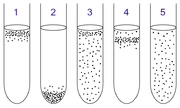
In biology, an organism is any contiguous living system . In at least some form, all organisms are capable of response to stimuli, reproduction, growth and development, and maintenance of homoeostasis as a stable whole.An organism may either be unicellular or, as in the case of humans, comprise...
, usually a bacterium, that makes ATP
Adenosine triphosphate
Adenosine-5'-triphosphate is a multifunctional nucleoside triphosphate used in cells as a coenzyme. It is often called the "molecular unit of currency" of intracellular energy transfer. ATP transports chemical energy within cells for metabolism...
by aerobic respiration if oxygen
Oxygen
Oxygen is the element with atomic number 8 and represented by the symbol O. Its name derives from the Greek roots ὀξύς and -γενής , because at the time of naming, it was mistakenly thought that all acids required oxygen in their composition...
is present but is also capable of switching to fermentation
Fermentation (biochemistry)
Fermentation is the process of extracting energy from the oxidation of organic compounds, such as carbohydrates, using an endogenous electron acceptor, which is usually an organic compound. In contrast, respiration is where electrons are donated to an exogenous electron acceptor, such as oxygen,...
. In contrast, obligate anaerobe
Obligate anaerobe
Obligate anaerobes are microorganisms that live and grow in the absence of molecular oxygen; some of these are killed by oxygen. -Metabolism:...
s die in the presence of oxygen.
Some examples of facultative anaerobic bacteria are Staphylococcus
Staphylococcus
Staphylococcus is a genus of Gram-positive bacteria. Under the microscope they appear round , and form in grape-like clusters....
(Gram positive), Escherichia coli
Escherichia coli
Escherichia coli is a Gram-negative, rod-shaped bacterium that is commonly found in the lower intestine of warm-blooded organisms . Most E. coli strains are harmless, but some serotypes can cause serious food poisoning in humans, and are occasionally responsible for product recalls...
and Shewanella oneidensis (Gram negative), and Listeria (Gram positive). Certain eukaryote
Eukaryote
A eukaryote is an organism whose cells contain complex structures enclosed within membranes. Eukaryotes may more formally be referred to as the taxon Eukarya or Eukaryota. The defining membrane-bound structure that sets eukaryotic cells apart from prokaryotic cells is the nucleus, or nuclear...
phyla
Phyla
Phyla, the plural of phylum, may refer to:* Phylum, a biological taxon between Kingdom and Class* Phylum , in linguistics, a large division of possibly related languagesPhyla, as a singular, may refer to:...
are also facultative anaerobes, including fungi such as yeasts and many aquatic invertebrates such as Nereid (worm) polychaete
Polychaete
The Polychaeta or polychaetes are a class of annelid worms, generally marine. Each body segment has a pair of fleshy protrusions called parapodia that bear many bristles, called chaetae, which are made of chitin. Indeed, polychaetes are sometimes referred to as bristle worms. More than 10,000...
s, for example. There are also circulating white blood cell
White blood cell
White blood cells, or leukocytes , are cells of the immune system involved in defending the body against both infectious disease and foreign materials. Five different and diverse types of leukocytes exist, but they are all produced and derived from a multipotent cell in the bone marrow known as a...
s that are classified as facultative anaerobes. These include neutrophils, monocyte
Monocyte
Monocytes are a type of white blood cell and are part of the innate immune system of vertebrates including all mammals , birds, reptiles, and fish. Monocytes play multiple roles in immune function...
s and tissue macrophage
Macrophage
Macrophages are cells produced by the differentiation of monocytes in tissues. Human macrophages are about in diameter. Monocytes and macrophages are phagocytes. Macrophages function in both non-specific defense as well as help initiate specific defense mechanisms of vertebrate animals...
s.
The concentrations of oxygen and fermentable material in the environment influence the organism's use of aerobic respiration vs. fermentation to derive energy. In brewer's yeast, the Pasteur shift
Pasteur effect
The Pasteur effect is an inhibiting effect of oxygen on the fermentation process.-Discovery:The effect was discovered in 1857 by Louis Pasteur, who showed that aerating yeasted broth causes yeast cell growth to increase, while conversely, fermentation rate decreases.-Explanation:The effect can be...
is the observed cessation of oxygen consumption when fermentable sugar is supplied. In a growing culture, the energy "economics" disfavors respiration due to the "overhead cost" of producing the apparatus, as long as sufficient fermentable substrate is available, even though the energy output per mole
Mole (unit)
The mole is a unit of measurement used in chemistry to express amounts of a chemical substance, defined as an amount of a substance that contains as many elementary entities as there are atoms in 12 grams of pure carbon-12 , the isotope of carbon with atomic weight 12. This corresponds to a value...
of fermented material is far less than from respiration's complete oxidation of the same substrate. However, the rate of production of ATP can be up to a 100 times faster than that of oxidative phosphorylation . Therefore, tissues and organisms that require fast consumption of ATP preferentially use anaerobic glycolysis.
See also
- Aerobic respiration
- Anaerobic respirationAnaerobic respirationAnaerobic respiration is a form of respiration using electron acceptors other than oxygen. Although oxygen is not used as the final electron acceptor, the process still uses a respiratory electron transport chain; it is respiration without oxygen...
- Anaerobic organismAnaerobic organismAn anaerobic organism or anaerobe is any organism that does not require oxygen for growth. It could possibly react negatively and may even die if oxygen is present...
- Obligate anaerobeObligate anaerobeObligate anaerobes are microorganisms that live and grow in the absence of molecular oxygen; some of these are killed by oxygen. -Metabolism:...