


Obligate anaerobe

Encyclopedia
Metabolism
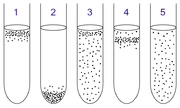
Historically, it was widely accepted that obligate (strict) anaerobes die in presence of oxygen due to the absence of the enzymes superoxide dismutaseSuperoxide dismutase
Superoxide dismutases are a class of enzymes that catalyze the dismutation of superoxide into oxygen and hydrogen peroxide. As such, they are an important antioxidant defense in nearly all cells exposed to oxygen...
and catalase
Catalase
Catalase is a common enzyme found in nearly all living organisms that are exposed to oxygen, where it catalyzes the decomposition of hydrogen peroxide to water and oxygen...
, which would convert the lethal superoxide
Superoxide
A superoxide, also known by the obsolete name hyperoxide, is a compound that possesses the superoxide anion with the chemical formula O2−. The systematic name of the anion is dioxide. It is important as the product of the one-electron reduction of dioxygen O2, which occurs widely in nature...
formed in their cells due to the presence of oxygen. While this is true in some cases, these enzyme activities have been identified in some obligate anaerobes, and genes for these enzymes and related proteins have been found in their genomes, such as Clostridium butyricum and Methanosarcina barkeri, among others. However, these organisms are still incapable of growing in the presence of oxygen. There are several hypotheses addressing why strict anaerobes are sensitive to oxygen:
- Dissolved oxygen increases the redoxRedoxRedox reactions describe all chemical reactions in which atoms have their oxidation state changed....
potential of a solution, and high redox potential inhibits the growth of some strict anaerobes. For example, methanogens grow at a redox potential lower than -0.3 V. - Sulfide is an essential component of some enzymes, and molecular oxygen oxidizes this to form disulfide, thus inactivating certain enzymes. Organisms may not be able to grow without these deactivated enzymes.
- Growth may be inhibited due to a lack of reducing equivalents for biosynthesis, because electrons are exhausted in reducing oxygen.
It is most likely a combination of these mechanisms that accounts for oxygen sensitivity in obligate anaerobes.
Instead of oxygen, obligate anaerobes use alternate electron acceptor
Electron acceptor
An electron acceptor is a chemical entity that accepts electrons transferred to it from another compound. It is an oxidizing agent that, by virtue of its accepting electrons, is itself reduced in the process....
s for cellular respiration
Cellular respiration
Cellular respiration is the set of the metabolic reactions and processes that take place in the cells of organisms to convert biochemical energy from nutrients into adenosine triphosphate , and then release waste products. The reactions involved in respiration are catabolic reactions that involve...
such as sulfate
Sulfate
In inorganic chemistry, a sulfate is a salt of sulfuric acid.-Chemical properties:...
, nitrate
Nitrate
The nitrate ion is a polyatomic ion with the molecular formula NO and a molecular mass of 62.0049 g/mol. It is the conjugate base of nitric acid, consisting of one central nitrogen atom surrounded by three identically-bonded oxygen atoms in a trigonal planar arrangement. The nitrate ion carries a...
, iron
Iron
Iron is a chemical element with the symbol Fe and atomic number 26. It is a metal in the first transition series. It is the most common element forming the planet Earth as a whole, forming much of Earth's outer and inner core. It is the fourth most common element in the Earth's crust...
, manganese
Manganese
Manganese is a chemical element, designated by the symbol Mn. It has the atomic number 25. It is found as a free element in nature , and in many minerals...
, mercury
Mercury (element)
Mercury is a chemical element with the symbol Hg and atomic number 80. It is also known as quicksilver or hydrargyrum...
, and carbon monoxide
Carbon monoxide
Carbon monoxide , also called carbonous oxide, is a colorless, odorless, and tasteless gas that is slightly lighter than air. It is highly toxic to humans and animals in higher quantities, although it is also produced in normal animal metabolism in low quantities, and is thought to have some normal...
. The energy yield of these respiratory processes is less than oxygen respiration, and not all of these electron acceptors are created equal.
- In marine sediments large amounts of sulfate-reducing bacteriaSulfate-reducing bacteriaSulfate-reducing bacteria are those bacteria and archaea that can obtain energy by oxidizing organic compounds or molecular hydrogen while reducing sulfate to hydrogen sulfide...
causes the rotten egg smell and black material that can be found just a few centimeters below the sediment surface.
Examples
BacteroidesBacteroides
Bacteroides is a genus of Gram-negative, bacillus bacteria. Bacteroides species are non-endospore-forming, anaerobes, and may be either motile or non-motile, depending on the species. The DNA base composition is 40-48% GC. Unusual in bacterial organisms, Bacteroides membranes contain sphingolipids...
and Clostridium
Clostridium
Clostridium is a genus of Gram-positive bacteria, belonging to the Firmicutes. They are obligate anaerobes capable of producing endospores. Individual cells are rod-shaped, which gives them their name, from the Greek kloster or spindle...
species are examples of non-spore forming and spore-forming strict anaerobes, respectively.
Other obligate anaerobes include Peptostreptococcus
Peptostreptococcus
Peptostreptococcus is a genus of anaerobic, Gram-positive, non-spore forming bacteria. The cells are small, spherical, and can occur in short chains, in pairs or individually. Peptostreptococcus are slow-growing bacteria with increasing resistance to antimicrobial drugs.The most frequently...
, Veillonella
Veillonella
Veillonella are gram-negative anaerobic cocci. This bacterium is well known for its lactate fermenting abilities. They are a normal bacterium in the intestines and oral mucosa of mammals...
, and Actinomyces
Actinomyces
Actinomyces from Greek "actino" that means mucus and fungus, is a genus of the actinobacteria class of bacteria. They are all Gram-positive and are characterized by contiguous spread, suppurative and granulomatous inflammation, and formation of multiple abscesses and sinus tracts that may...
.