

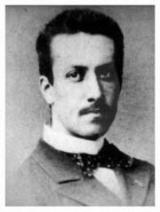
Charles-Marie Widor

Encyclopedia
Charles-Marie Jean Albert Widor (February 21, 1844 – March 12, 1937) was a French organist, composer
and teacher.
 Widor was born in Lyon
, to a family of organ builders, and initially studied music there with his father, François-Charles Widor, titular organist of Saint-François-de-Sales from 1838 to 1889. The French organ builder Aristide Cavaillé-Coll
, reviver of the art of organ building, was a friend of the Widor family; he arranged for the talented young organist to study in Brussels in 1863 with Jacques-Nicolas Lemmens
for organ technique and with the elderly François-Joseph Fétis
, director of the Brussels Conservatoire
, for composition. After this term of study Widor moved to Paris, where he would make his home for the rest of his life. At the age of 24 he was appointed assistant to Camille Saint-Saëns
at Église de la Madeleine
.
In January 1870, with the combined lobbying of Cavaillé-Coll, Saint-Saëns, and Charles Gounod
, the 25-year-old Widor was appointed as "provisional" organist of Saint-Sulpice
in Paris
, the most prominent position for a French organist. The organ at St-Sulpice was Cavaillé-Coll's masterwork; the instrument's spectacular capabilities proved an inspiration to Widor. Despite his job's ostensibly "provisional" nature, Widor remained as organist at St-Sulpice for nearly 64 years, until the end of 1933. He was succeeded in 1934 by his former student and assistant, Marcel Dupré
.
In 1890, upon the death of César Franck
, Widor succeeded him as organ professor at the Paris Conservatoire. The class he inherited was initially stunned by this new teacher, who suddenly demanded a formidable technique and a knowledge of J.S. Bach's organ works as prerequisites to effective improvisation. Later (1896), he gave up this post to become composition professor at the same institution. Widor had several students in Paris who were to become famous composers and organists in their own right, most notably the aforementioned Dupré, Louis Vierne
, Charles Tournemire
, Darius Milhaud
, Alexander Schreiner
, Edgard Varèse
, and the Canadian Henri Gagnon
. Albert Schweitzer
also studied with Widor, mainly from 1899; master and pupil collaborated on an annotated edition of J. S. Bach's organ works published in 1912-14. Widor, whose own master Lemmens was an important Bach exponent, encouraged Schweitzer's theological exploration of Bach's music.
Among the leading organ recitalists of his time, Widor visited in this capacity many different nations, including Russia, England, Germany, the Netherlands, Portugal, Italy, Poland and Switzerland. In addition he participated in the inaugural concerts of many of Cavaillé-Coll's greatest instruments, notably Notre-Dame de Paris, Saint-Germain-des-Près, the Trocadéro
and Saint-Ouen de Rouen
.
Well-known as a man of great culture and learning, Widor was made a chevalier
of the Légion d'Honneur
in 1892, named to the Institut de France
in 1910, and was elected "Secrétaire perpetuel" (permanent secretary) of the Académie des Beaux-Arts
on July 18, 1914, succeeding Henry Roujon
.
In 1921, Widor founded the American Conservatory at Fontainebleau
with Francis-Louis Casadesus
. He was the Director until 1934, when he was succeeded by Maurice Ravel
. His close friend, Isidor Philipp
gave piano lessons there, and Nadia Boulanger
taught an entire generation of new composers.
At the age of 76, Widor married Mathilde de Montesquiou-Fézensac on April 26, 1920 at Charchigné
. The 36-year-old Mathilde was a member of one of the oldest and most prominent families of Europe. She died in 1960: there were no children from this union.
On December 31, 1933, Widor resigned his position at Saint-Sulpice. Three years later he suffered a stroke which paralysed the right side of his body, although he remained mentally alert to the last. He died at his home in Paris on March 12, 1937 and his remains were interred in the crypt of Saint-Sulpice four days later.
s and a ballet
, but only his works for organ are played with any regularity today. These include: ten Organ Symphonies
, three Symphonies
for orchestra with organ, Suite Latine, Trois Nouvelles Pièces, and six arrangements of works by Bach under the title Bach's Memento (1925). The organ symphonies are his most significant contribution to the organ repertoire.
It seems unusual to assign the term "symphony
" to a work written for one instrument. However, Widor was at the forefront of a revival in French organ music, which had sunk to its nadir during the early nineteenth century. A prime mover in this revival was Aristide Cavaillé-Coll
, who pioneered a new organ that was "symphonic" in style. The organ of the Baroque and Classical periods was designed to project a clear and crisp sound capable of handling contrapuntal writing. Cavaillé-Coll's organs had a much warmer sound, ideal for the homophonic style of writing that now predominated, and a vast array of stops that extended the timbre
of the instrument. This new style of organ, with a truly orchestral range of voicing and unprecedented abilities for smooth crescendos and diminuendos, encouraged composers to write music that was truly symphonic in scope. This trend was not limited to France, and was reflected in Germany by the organs built by Eberhard Friedrich Walcker and the works of Franz Liszt
, Julius Reubke
, and Max Reger
.
Widor's symphonies can be divided into three groups. The first four symphonies comprise Op. 13 (1872) and are more properly termed "suites" (Widor himself called them "collections".) They represent Widor's early style. Widor made later revisions to the earlier symphonies. Some of these revisions were quite extensive.
With the Opus 42 symphonies Widor shows his mastery and refinement of contrapuntal technique while exploring to the fullest the capabilities of the Cavaillé-Coll organs for which these works were written. The Fifth Symphony has five movements, the last of which is the famous Toccata. The Sixth Symphony is also famous for its opening movement. The Seventh and Eighth Symphonies are the longest and least performed of Widor's Symphonies. The Seventh Symphony contains six movements, and the first version of the Eighth Symphony had seven (Widor subsequently removed the Prélude for the 1901 edition).
The ninth and tenth symphonies, respectively termed "Gothique" (Op. 70, of 1895) and "Romane" (Op. 73, of 1900), are much more introspective. They both derive thematic material from plainchant: Symphonie Gothique uses the Christmas Day Introit
"Puer natus est" in the third and fourth movements, while the Symphonie Romane has the Easter Gradual
"Haec dies" woven throughout all four movements. They also honored, respectively, the Gothic Church of St. Ouen, Rouen
and the Romanesque Basilica of St. Sernin, Toulouse, with the new Cavaillé-Coll organs installed in each. The second movement of the Symphonie Gothique, entitled "Andante sostenuto", is one of Widor's most-beloved pieces. Dating from this same period, and also based on a plainsong theme, is the "Salve Regina" movement, a late addition to the much earlier second symphony.
Widor's best-known single piece for the organ is the final movement, Toccata
, from his Symphony for Organ No. 5
, which is often played as a recessional at wedding
ceremonies and even at the close of the Christmas
Midnight Mass
at Saint Peter's Basilica (The Vatican City, Rome). Although the Fourth Symphony also opens with a Toccata, it is in a dramatically different (and earlier) style. The Toccata from Symphony No. 5 is the first of the toccatas characteristic of French Romantic organ music, and served as a model for later works by Boëllmann
, Mulet
, and Dupré. Widor was pleased with the worldwide renown this single piece afforded him, but he was unhappy with how fast many other organists played it. Widor himself always played the Toccata rather deliberately. Many organists play it at a very fast tempo whereas Widor preferred a more controlled articulation to be involved. He recorded the piece, at St. Sulpice in his eighty-ninth year: the tempo used for the Toccata is quite slow. Isidor Philipp
transcribed the Toccata for two pianos.
Over his career Widor returned again and again to edit his earlier music, even after publication. His biographer John Near reports: "Ultimately, it was discovered that over a period of about sixty years, as many as eight different editions were issued for some of the symphonies." (ref. Near)
Composer
A composer is a person who creates music, either by musical notation or oral tradition, for interpretation and performance, or through direct manipulation of sonic material through electronic media...
and teacher.
Life
Lyon
Lyon , is a city in east-central France in the Rhône-Alpes region, situated between Paris and Marseille. Lyon is located at from Paris, from Marseille, from Geneva, from Turin, and from Barcelona. The residents of the city are called Lyonnais....
, to a family of organ builders, and initially studied music there with his father, François-Charles Widor, titular organist of Saint-François-de-Sales from 1838 to 1889. The French organ builder Aristide Cavaillé-Coll
Aristide Cavaillé-Coll
Aristide Cavaillé-Coll was a French organ builder. He is considered by many to be the greatest organ builder of the 19th century because he combined both science and art to make his instruments...
, reviver of the art of organ building, was a friend of the Widor family; he arranged for the talented young organist to study in Brussels in 1863 with Jacques-Nicolas Lemmens
Jacques-Nicolas Lemmens
Jacques-Nicolas Lemmens , was an organist and composer for his instrument.Born at Zoerle-Parwijs, near Westerlo, Belgium, Lemmens took lessons from François-Joseph Fétis, who wanted to make him into a musician capable of renewing the organ-player's art in Belgium...
for organ technique and with the elderly François-Joseph Fétis
François-Joseph Fétis
François-Joseph Fétis was a Belgian musicologist, composer, critic and teacher. He was one of the most influential music critics of the 19th century, and his enormous compilation of biographical data in the Biographie universelle des musiciens remains an important source of information today...
, director of the Brussels Conservatoire
Koninklijk Conservatorium (Brussels)
The Royal Conservatory of Brussels is a drama and music college in Brussels, Belgium. An academy for acting and the arts, it has been attended by many of the top actors and actresses in Belgium such as Josse De Pauw, Luk van Mello and Luk De Konink....
, for composition. After this term of study Widor moved to Paris, where he would make his home for the rest of his life. At the age of 24 he was appointed assistant to Camille Saint-Saëns
Camille Saint-Saëns
Charles-Camille Saint-Saëns was a French Late-Romantic composer, organist, conductor, and pianist. He is known especially for The Carnival of the Animals, Danse macabre, Samson and Delilah, Piano Concerto No. 2, Cello Concerto No. 1, Havanaise, Introduction and Rondo Capriccioso, and his Symphony...
at Église de la Madeleine
Église de la Madeleine
L'église de la Madeleine is a Roman Catholic church occupying a commanding position in the 8th arrondissement of Paris. It was designed in its present form as a temple to the glory of Napoleon's army...
.
In January 1870, with the combined lobbying of Cavaillé-Coll, Saint-Saëns, and Charles Gounod
Charles Gounod
Charles-François Gounod was a French composer, known for his Ave Maria as well as his operas Faust and Roméo et Juliette.-Biography:...
, the 25-year-old Widor was appointed as "provisional" organist of Saint-Sulpice
Saint-Sulpice (Paris)
Saint-Sulpice is a Roman Catholic church in Paris, France, on the east side of the Place Saint-Sulpice, in the Luxembourg Quarter of the VIe arrondissement. At 113 metres long, 58 metres in width and 34 metres tall, it is only slightly smaller than Notre-Dame and thus the second largest church in...
in Paris
Paris
Paris is the capital and largest city in France, situated on the river Seine, in northern France, at the heart of the Île-de-France region...
, the most prominent position for a French organist. The organ at St-Sulpice was Cavaillé-Coll's masterwork; the instrument's spectacular capabilities proved an inspiration to Widor. Despite his job's ostensibly "provisional" nature, Widor remained as organist at St-Sulpice for nearly 64 years, until the end of 1933. He was succeeded in 1934 by his former student and assistant, Marcel Dupré
Marcel Dupré
Marcel Dupré , was a French organist, pianist, composer, and pedagogue.-Biography:Marcel Dupré was born in Rouen . Born into a musical family, he was a child prodigy. His father Albert Dupré was organist in Rouen and a friend of Aristide Cavaillé-Coll, who built an organ in the family house when...
.
In 1890, upon the death of César Franck
César Franck
César-Auguste-Jean-Guillaume-Hubert Franck was a composer, pianist, organist, and music teacher who worked in Paris during his adult life....
, Widor succeeded him as organ professor at the Paris Conservatoire. The class he inherited was initially stunned by this new teacher, who suddenly demanded a formidable technique and a knowledge of J.S. Bach's organ works as prerequisites to effective improvisation. Later (1896), he gave up this post to become composition professor at the same institution. Widor had several students in Paris who were to become famous composers and organists in their own right, most notably the aforementioned Dupré, Louis Vierne
Louis Vierne
Louis Victor Jules Vierne was a French organist and composer.-Life:Louis Vierne was born in Poitiers, Vienne, nearly blind due to congenital cataracts, but at an early age was discovered to have an unusual gift for music. Louis Victor Jules Vierne (8 October 1870 – 2 June 1937) was a French...
, Charles Tournemire
Charles Tournemire
Charles Tournemire was a French composer and organist, notable partly for his improvisations, which were often rooted in the music of Gregorian chant...
, Darius Milhaud
Darius Milhaud
Darius Milhaud was a French composer and teacher. He was a member of Les Six—also known as The Group of Six—and one of the most prolific composers of the 20th century. His compositions are influenced by jazz and make use of polytonality...
, Alexander Schreiner
Alexander Schreiner
Alexander Schreiner was one of the most noted organists of the Salt Lake Tabernacle. He also wrote the music to several LDS hymns, several of which are in the current edition of the hymn book of The Church of Jesus Christ of Latter-day Saints .-Early life:Alexander Ferdinand Schreiner was born on...
, Edgard Varèse
Edgard Varèse
Edgard Victor Achille Charles Varèse, , whose name was also spelled Edgar Varèse , was an innovative French-born composer who spent the greater part of his career in the United States....
, and the Canadian Henri Gagnon
Henri Gagnon
Henri Gagnon was a Canadian composer, organist, and music educator. He spent 51 years playing the organ at the Basilica of Sainte-Anne-de-Beaupré where, according to music historian François Brassard, he earned "a prestige similar to that of the famous organists of Europe"...
. Albert Schweitzer
Albert Schweitzer
Albert Schweitzer OM was a German theologian, organist, philosopher, physician, and medical missionary. He was born in Kaysersberg in the province of Alsace-Lorraine, at that time part of the German Empire...
also studied with Widor, mainly from 1899; master and pupil collaborated on an annotated edition of J. S. Bach's organ works published in 1912-14. Widor, whose own master Lemmens was an important Bach exponent, encouraged Schweitzer's theological exploration of Bach's music.
Among the leading organ recitalists of his time, Widor visited in this capacity many different nations, including Russia, England, Germany, the Netherlands, Portugal, Italy, Poland and Switzerland. In addition he participated in the inaugural concerts of many of Cavaillé-Coll's greatest instruments, notably Notre-Dame de Paris, Saint-Germain-des-Près, the Trocadéro
Trocadéro
The Trocadéro, , site of the Palais de Chaillot, , is an area of Paris, France, in the 16th arrondissement, across the Seine from the Eiffel Tower. The hill of the Trocadéro is the hill of Chaillot, a former village.- Origin of the name :...
and Saint-Ouen de Rouen
Church of St. Ouen, Rouen
The Church of St. Ouen is a large Gothic Roman Catholic church in Rouen, northern France, famous for both its architecture and its large, unaltered Cavaillé-Coll organ, which Charles-Marie Widor described as "a Michelangelo of an organ"...
.
Well-known as a man of great culture and learning, Widor was made a chevalier
Knight
A knight was a member of a class of lower nobility in the High Middle Ages.By the Late Middle Ages, the rank had become associated with the ideals of chivalry, a code of conduct for the perfect courtly Christian warrior....
of the Légion d'Honneur
Légion d'honneur
The Legion of Honour, or in full the National Order of the Legion of Honour is a French order established by Napoleon Bonaparte, First Consul of the Consulat which succeeded to the First Republic, on 19 May 1802...
in 1892, named to the Institut de France
Institut de France
The Institut de France is a French learned society, grouping five académies, the most famous of which is the Académie française.The institute, located in Paris, manages approximately 1,000 foundations, as well as museums and chateaux open for visit. It also awards prizes and subsidies, which...
in 1910, and was elected "Secrétaire perpetuel" (permanent secretary) of the Académie des Beaux-Arts
Académie des beaux-arts
The Académie des Beaux-Arts is a French learned society. It is one of the five academies of the Institut de France.It was created in 1795 as the merger of the:* Académie de peinture et de sculpture...
on July 18, 1914, succeeding Henry Roujon
Henry Roujon
Henry Roujon was a French academic, essayist and novelist.Roujon was the secretary of Jules Ferry, and later director of Fine Arts in 1894...
.
In 1921, Widor founded the American Conservatory at Fontainebleau
Fontainebleau
Fontainebleau is a commune in the metropolitan area of Paris, France. It is located south-southeast of the centre of Paris. Fontainebleau is a sub-prefecture of the Seine-et-Marne department, and it is the seat of the arrondissement of Fontainebleau...
with Francis-Louis Casadesus
Casadesus
Casadesus is the surname of a prominent French musical family. Its members include:* Francis Casadesus , composer and conductor* Robert-Guillaume Casadesus , composer and singer known as "Robert Casa"...
. He was the Director until 1934, when he was succeeded by Maurice Ravel
Maurice Ravel
Joseph-Maurice Ravel was a French composer known especially for his melodies, orchestral and instrumental textures and effects...
. His close friend, Isidor Philipp
Isidor Philipp
Isidor Philipp was a French pianist, composer, and distinguished pedagogue of Hungarian descent. He was born in Budapest and died in Paris.-Biography:...
gave piano lessons there, and Nadia Boulanger
Nadia Boulanger
Nadia Boulanger was a French composer, conductor and teacher who taught many composers and performers of the 20th century.From a musical family, she achieved early honours as a student at the Paris Conservatoire, but believing that her talent as a composer was inferior to that of her younger...
taught an entire generation of new composers.
At the age of 76, Widor married Mathilde de Montesquiou-Fézensac on April 26, 1920 at Charchigné
Charchigné
Charchigné is a commune in the Mayenne department in north-western France.-See also:*Communes of the Mayenne department...
. The 36-year-old Mathilde was a member of one of the oldest and most prominent families of Europe. She died in 1960: there were no children from this union.
On December 31, 1933, Widor resigned his position at Saint-Sulpice. Three years later he suffered a stroke which paralysed the right side of his body, although he remained mentally alert to the last. He died at his home in Paris on March 12, 1937 and his remains were interred in the crypt of Saint-Sulpice four days later.
Organ Symphonies
Widor wrote music for a wide variety of instruments and ensembles (some of his songs for voice and piano are especially notable) and composed four operaOpera
Opera is an art form in which singers and musicians perform a dramatic work combining text and musical score, usually in a theatrical setting. Opera incorporates many of the elements of spoken theatre, such as acting, scenery, and costumes and sometimes includes dance...
s and a ballet
Ballet
Ballet is a type of performance dance, that originated in the Italian Renaissance courts of the 15th century, and which was further developed in France and Russia as a concert dance form. The early portions preceded the invention of the proscenium stage and were presented in large chambers with...
, but only his works for organ are played with any regularity today. These include: ten Organ Symphonies
Organ Symphony
This page lists the best known Symphonies for solo Organ and Symphonies for Orchestra and Organ. Organ concertos are not listed here.- Edward Shippen Barnes :...
, three Symphonies
Symphony
A symphony is an extended musical composition in Western classical music, scored almost always for orchestra. A symphony usually contains at least one movement or episode composed according to the sonata principle...
for orchestra with organ, Suite Latine, Trois Nouvelles Pièces, and six arrangements of works by Bach under the title Bach's Memento (1925). The organ symphonies are his most significant contribution to the organ repertoire.
It seems unusual to assign the term "symphony
Symphony
A symphony is an extended musical composition in Western classical music, scored almost always for orchestra. A symphony usually contains at least one movement or episode composed according to the sonata principle...
" to a work written for one instrument. However, Widor was at the forefront of a revival in French organ music, which had sunk to its nadir during the early nineteenth century. A prime mover in this revival was Aristide Cavaillé-Coll
Aristide Cavaillé-Coll
Aristide Cavaillé-Coll was a French organ builder. He is considered by many to be the greatest organ builder of the 19th century because he combined both science and art to make his instruments...
, who pioneered a new organ that was "symphonic" in style. The organ of the Baroque and Classical periods was designed to project a clear and crisp sound capable of handling contrapuntal writing. Cavaillé-Coll's organs had a much warmer sound, ideal for the homophonic style of writing that now predominated, and a vast array of stops that extended the timbre
Timbre
In music, timbre is the quality of a musical note or sound or tone that distinguishes different types of sound production, such as voices and musical instruments, such as string instruments, wind instruments, and percussion instruments. The physical characteristics of sound that determine the...
of the instrument. This new style of organ, with a truly orchestral range of voicing and unprecedented abilities for smooth crescendos and diminuendos, encouraged composers to write music that was truly symphonic in scope. This trend was not limited to France, and was reflected in Germany by the organs built by Eberhard Friedrich Walcker and the works of Franz Liszt
Franz Liszt
Franz Liszt ; ), was a 19th-century Hungarian composer, pianist, conductor, and teacher.Liszt became renowned in Europe during the nineteenth century for his virtuosic skill as a pianist. He was said by his contemporaries to have been the most technically advanced pianist of his age...
, Julius Reubke
Julius Reubke
Julius Reubke was a German composer, pianist and organist. In his short life — he died at the age of 24 — he composed the Sonata on the 94th Psalm, in C minor, which was and still is considered one of the greatest organ works in the repertoire.-Biography:Born in Hausneindorf, a small...
, and Max Reger
Max Reger
Johann Baptist Joseph Maximilian Reger was a German composer, conductor, pianist, organist, and academic teacher.-Life:...
.
Widor's symphonies can be divided into three groups. The first four symphonies comprise Op. 13 (1872) and are more properly termed "suites" (Widor himself called them "collections".) They represent Widor's early style. Widor made later revisions to the earlier symphonies. Some of these revisions were quite extensive.
With the Opus 42 symphonies Widor shows his mastery and refinement of contrapuntal technique while exploring to the fullest the capabilities of the Cavaillé-Coll organs for which these works were written. The Fifth Symphony has five movements, the last of which is the famous Toccata. The Sixth Symphony is also famous for its opening movement. The Seventh and Eighth Symphonies are the longest and least performed of Widor's Symphonies. The Seventh Symphony contains six movements, and the first version of the Eighth Symphony had seven (Widor subsequently removed the Prélude for the 1901 edition).
The ninth and tenth symphonies, respectively termed "Gothique" (Op. 70, of 1895) and "Romane" (Op. 73, of 1900), are much more introspective. They both derive thematic material from plainchant: Symphonie Gothique uses the Christmas Day Introit
Introit
The Introit is part of the opening of the liturgical celebration of the Eucharist for many Christian denominations. In its most complete version, it consists of an antiphon, psalm verse and Gloria Patri that is spoken or sung at the beginning of the celebration...
"Puer natus est" in the third and fourth movements, while the Symphonie Romane has the Easter Gradual
Gradual
The Gradual is a chant or hymn in the liturgical celebration of the Eucharist for many Christian denominations. In the Tridentine Mass it was and is sung after the reading or chanting of the Epistle and before the Alleluia, or, during penitential seasons, before the Tract. In the Mass of Paul VI...
"Haec dies" woven throughout all four movements. They also honored, respectively, the Gothic Church of St. Ouen, Rouen
Church of St. Ouen, Rouen
The Church of St. Ouen is a large Gothic Roman Catholic church in Rouen, northern France, famous for both its architecture and its large, unaltered Cavaillé-Coll organ, which Charles-Marie Widor described as "a Michelangelo of an organ"...
and the Romanesque Basilica of St. Sernin, Toulouse, with the new Cavaillé-Coll organs installed in each. The second movement of the Symphonie Gothique, entitled "Andante sostenuto", is one of Widor's most-beloved pieces. Dating from this same period, and also based on a plainsong theme, is the "Salve Regina" movement, a late addition to the much earlier second symphony.
Widor's best-known single piece for the organ is the final movement, Toccata
Toccata
Toccata is a virtuoso piece of music typically for a keyboard or plucked string instrument featuring fast-moving, lightly fingered or otherwise virtuosic passages or sections, with or without imitative or fugal interludes, generally emphasizing the dexterity of the performer's fingers...
, from his Symphony for Organ No. 5
Symphony for Organ No. 5 (Widor)
The Symphony for Organ No. 5 in F minor, Op. 42, No. 1, was composed by Charles-Marie Widor in 1879. It lasts for about thirty-five minutes. Its Toccata is the best known of all of Widor's compositions.-Structure:The piece has five movements:# Allegro vivace...
, which is often played as a recessional at wedding
Wedding
A wedding is the ceremony in which two people are united in marriage or a similar institution. Wedding traditions and customs vary greatly between cultures, ethnic groups, religions, countries, and social classes...
ceremonies and even at the close of the Christmas
Christmas
Christmas or Christmas Day is an annual holiday generally celebrated on December 25 by billions of people around the world. It is a Christian feast that commemorates the birth of Jesus Christ, liturgically closing the Advent season and initiating the season of Christmastide, which lasts twelve days...
Midnight Mass
Mass (music)
The Mass, a form of sacred musical composition, is a choral composition that sets the invariable portions of the Eucharistic liturgy to music...
at Saint Peter's Basilica (The Vatican City, Rome). Although the Fourth Symphony also opens with a Toccata, it is in a dramatically different (and earlier) style. The Toccata from Symphony No. 5 is the first of the toccatas characteristic of French Romantic organ music, and served as a model for later works by Boëllmann
Léon Boëllmann
Léon Boëllmann was a French composer of Alsatian origin, known for a small number of compositions for organ. His best-known composition is Suite Gothique , still very much a staple of the organ repertoire, especially its dramatic concluding Toccata.-Biography:The son of a pharmacist, Boëllmann was...
, Mulet
Henri Mulet
Henri Mulet was a French organist and composer. He was born on 17 October 1878 in Paris, France, and died on 20 September 1967 in Draguignan, France....
, and Dupré. Widor was pleased with the worldwide renown this single piece afforded him, but he was unhappy with how fast many other organists played it. Widor himself always played the Toccata rather deliberately. Many organists play it at a very fast tempo whereas Widor preferred a more controlled articulation to be involved. He recorded the piece, at St. Sulpice in his eighty-ninth year: the tempo used for the Toccata is quite slow. Isidor Philipp
Isidor Philipp
Isidor Philipp was a French pianist, composer, and distinguished pedagogue of Hungarian descent. He was born in Budapest and died in Paris.-Biography:...
transcribed the Toccata for two pianos.
Over his career Widor returned again and again to edit his earlier music, even after publication. His biographer John Near reports: "Ultimately, it was discovered that over a period of about sixty years, as many as eight different editions were issued for some of the symphonies." (ref. Near)
Compositions
Rough dates of composition/publication are in brackets, along with the original publisher, if known.Organ solo
- Symphonie pour orgue No. 1 op. 13 no. 1 (1872, Hamelle)
- Symphonie pour orgue No. 2 op. 13 no. 2 (1872, Hamelle)
- Symphonie pour orgue No. 3 op. 13 no. 3 (1872, Hamelle)
- Symphonie pour orgue No. 4 op. 13 no. 4 (1872, Hamelle)
- Marche américaine (transc. by Marcel Dupré: no. 11 from 12 Feuillets d’Album op. 31, Hamelle)
- Symphonie pour orgue No. 5Symphony for Organ No. 5 (Widor)The Symphony for Organ No. 5 in F minor, Op. 42, No. 1, was composed by Charles-Marie Widor in 1879. It lasts for about thirty-five minutes. Its Toccata is the best known of all of Widor's compositions.-Structure:The piece has five movements:# Allegro vivace...
op. 42 no. 1 (1879, Hamelle) - Symphonie pour orgue No. 6 op. 42 no. 2 (1879, Hamelle)
- Symphonie pour orgue No. 7 op. 42 no. 3 (1887, Hamelle)
- Symphonie pour orgue No. 8 op. 42 no. 4 (1887, Hamelle)
- Marche Nuptiale op. 64 (1892) (transc., from Conte d'Avril, Schott)
- Symphonie Gothique pour orgue [No. 9], op. 70 (1895, Schott)
- Symphonie Romane pour orgue [No. 10], op. 73 (1900, Hamelle)
- Bach's Memento (1925, Hamelle)
- Suite Latine op. 86 (1927, Durand)
- Trois Nouvelles Pièces op. 87 (1934, Durand)
Piano solo
- Variations de concert sur un thème original op. 1 (1867, Heugel)
- Sérénade op. 3 no. 4 (arr. Leistner) (Hamelle)
- Airs de ballet op. 4 (1868, Hamelle)
- Scherzo-valse op. 5 (1868, Hamelle)
- La Barque (Fantaisie italienne) op. 6 (1877, Durand)
- Le Corricolo (Fantaisie italienne) op. 6 (1877, Durand)
- Caprice op. 9 (1868, Hamelle)
- 3 Valses op. 11 (1871, Hamelle)
- Impromptu op. 12 (1871, Hamelle)
- 6 Morceaux de salon op. 15 (1872, Hamelle)
- Prelude, andante et final op. 17 (1874, Hamelle)
- Scènes de bal op. 20 (1875, Hamelle)
- 6 Valses caractéristiques op. 26 (1877, Hamelle)
- Variations sur un thème original op. 29 (revision of op. 1) (1877, Hamelle)
- 12 Feuillets d’album op. 31 (1877, Hamelle)
- Six Valses op. 33 (Hamelle)
- Dans les bois op. 44 (1880, Hamelle)
- Pages intimes op.48 (1879, Hamelle)
- Suite polonaise op. 51 (1881, Hamelle)
- Suite op. 58 (1887, Hamelle)
- Carnaval, douze pièces pour piano op. 61 (1889, Hamelle)
- Nocturne, from Contes d'Avril op. 64
- [5 Valses] op. 71 (1894, Hamelle)
- Suite Écossaise op.78 (1905, Joseph Williams)
- Introduction (Hamelle)
- Intermezzo (Hamelle)
Chamber works
- 6 Duos op. 3 - Piano and Harmonium (1867, Regnier-Canaux/Renaud/Pérégally & Parvy/Schott)
- Humoresque op. 3 no. 1 - Violin, Violoncello and Piano (arr. Widor) (Pérégally & Parvy)
- Cantabile op. 3 no. 2 - Violin, Violoncello and Piano (arr. Widor) (Pérégally & Parvy)
- Nocturne op. 3 no. 3 - Violin, Violoncello and Piano (arr. Widor) (Pérégally & Parvy)
- Sérénade op. 3 no. 4 - Violin, Violoncello and Piano (arr. Widor) (Pérégally & Parvy)
- Piano Quintet No. 1 op. 7 (1868, Hamelle)
- Sérénade op. 10 (1870, Hamelle) - Piano, Flute, Violin, Cello and Harmonium
- Piano Trio op. 19 - Piano, Violin and Cello (1875, Hamelle)
- 3 Pieces op. 21 - Cello and Piano (1875, Hamelle)
- Suite op. 34 - Flute and Piano (1877, Hamelle; 1898, Heugel)
- Romance op. 46 - Violin and Piano
- Sonate No. 1 op. 50 - Violin and Piano (1881, Hamelle)
- Soirs d'Alsace - 4 Duos op. 52 - Violin, Cello and Piano (1881, Hamelle)
- Cavatine op. 57 - Violin and Piano (1887, Hamelle)
- Piano Quartet op. 66 - Violin, Viola, Cello and Piano (1891, Durand)
- Piano Quintet No. 2 op. 68 - 2 Violins, Viola, Cello and Piano (1894, Durand)
- Introduction et Rondo op. 72 - Clarinet and Piano (1898, Leduc)
- Suite op. 76 - Violin and Piano (1903, Hamelle)
- Sonate op.79 - Violin and Piano (1906, Heugel)
- Sonate op. 80 - Cello and Piano (1907, Heugel)
- Salvum fac populum tuum op. 84 - 3 Trumpets, 3 Trombones, Drum and Organ (1917, Heugel)
- 4 Pièces - Violin, Cello and Piano (1890)
- 3 Pièces - Oboe and Piano (1891)
- Suite - Cello and Piano (1912)
- Suite Florentine - Flute or Violin and Piano (1920)
Symphonic works
- Symphony No. 1 op. 16 (1870, Durand) - Orchestra
- Piano Concerto No. 1 op. 39 (1876, Hamelle) - Orchestra and Piano solo
- Cello Concerto op. 41 (1882, Hamelle) - Orchestra and Cello solo
- Symphonie pour orgue et orchestre op. 42 (1882, A-R Editions) - Orchestra and Organ solo (arr. by Widor of movements from Op. 42)
- Chant séculaire op. 49 - (1881, Hamelle) - Soprano solo, Chorus and Orchestra
- Symphony No. 2 op. 54 (1882, Heugel) - Orchestra
- La nuit de Walpurgis - poeme symphonique op. 60 (1887, Hamelle) - Chorus and Orchestra
- Fantaisie op. 62 (1889, Durand) - Piano and Orchestra
- Suite, from Conte d'avril op. 64 (1892, Heugel) - Orchestra
- Symphony No. 3 op. 69 (1894, Schott) - Organ and Orchestra
- Choral et Variations op. 74 (1900, Leduc) - Harp and Orchestra
- Piano Concerto No. 2 op. 77 (1906, Heugel) - Piano and Orchestra
- Sinfonia sacra op. 81 (1908, Otto Junne) - Organ and Orchestra
- Symphonie antique op. 83 (1911, Heugel) - Soloists, Chorus, Organ and Orchestra
- Ouverture espagnole (1897, Heugel) - Orchestra
Songs and choral works
- O Salutaris op. 8 (1868, Hamelle) - Contralto or Baritone, Violin, Cello and Organ
- 6 Mélodies op. 14 (1872, Hamelle)- Voice and Piano
- Tantum ergo op. 18 no. 1 (1874, Hamelle) - Baritone Choir, SATB Choir and Organ
- Regina coeli op. 18 no. 2 (1874, Hamelle) - Baritone Choir, SATB Choir and Organ
- 6 Mélodies op. 22 (1875, Hamelle) - Voice and Piano
- Quam dilecta tabernacula tua op. 23 no. 1 (1876, Hamelle) - Baritone Choir, SATB Choir, Choir Organ and Grand Organ
- Tu es Petrus op. 23 no. 2 (1876, Hamelle) - Baritone Choir, SATB Choir, Choir Organ and Grand Organ
- Surrexit a mortuis (Sacerdos et pontifex) op. 23 no. 3 (1876, Hamelle) - SATB Choir, Choir Organ and Grand Organ
- Ave Maria op. 24 (1877, Hamelle) - Mezzo-Soprano, Harp and Organ
- 3 Choruses op. 25 (1876, Hamelle) - SATB Choir
- 3 Mélodies op. 28 - (1876, Hamelle) - Voice and Piano
- 2 Duos op. 30 - (1876, Hamelle) - Soprano, Contralto and Piano
- 3 Mélodies italiennes op. 32 (1877, Hamelle) - Voice and Piano
- 3 Mélodies italiennes op. 35 (1878, Hamelle) - Voice and Piano
- Messe op. 36 (1878, Hamelle) - Baritone Choir, SATB Choir, Choir Organ and Grand Organ
- 6 Mélodies op. 37 (1877, Hamelle) - Voice and Piano
- 2 Duos op. 40 (1876, Hamelle) - Soprano, Contralto and Piano
- 6 Mélodies op. 43 (1878, Hamelle) - Voice and Piano
- 6 Mélodies op. 47 (1879, Hamelle) - Voice and Piano
- 6 Mélodies op. 53 (1881, Hamelle) - Voice and Piano
- Ave Maria op. 59 (1884, Hamelle) - Voice, Harp and Organ
- O salutaris op. 63[bis] (1889, Hamelle) - Voice, Violin, Cello and Organ
- Soirs d'été op. 63 (1889, Durand) - Voice and Piano
- Ecce Joanna, Alleluia! (Schola Cantorum) - SATB Choir and Organ
- Psalm 112 (1879, Hamelle) - Baritone Choir, SATB Choir, Choir Organ, Grand Organ and Orchestra
- Chansons de mer op. 75 (1902)
- Da Pacem (1930, Durand) - SATB Choir and Organ or Piano
- Non Credo (1890, Durand) - Voice and Piano
Stage music
- Le capitaine Loys (ca. 1878, unpublished) - Comic opera
- La korrigane (1880, Hamelle) - Ballet
- Maître Ambros : drame lyrique en 4 actes et 5 tableaux de François Coppée & Auguste Dorchain Op.56 (piano reduction published by Heugel, 1886) - Opera
- Conte d'avril op. 64 (1885; 1891, Heugel) - Incidental music
- Les pêcheurs de Saint-Jean : drame lyrique en 4 actes (1895; 1904, Heugel) - Opera
- Nerto : drame lyrique en 4 actes (1924, Heugel) - Opera
Writings
- Technique de l'orchestre moderne faisant suite au Traité d'instrumentation de H. Berlioz (1904, Paris: Lemoine)
- L'Orgue moderne, la décadence dans la facture contemporaine (1928, Paris: Durand)
Further Reading
Near, John. R. Widor: A Life beyond the Toccata. Rochester, NY: University of Rochester Press, 2011. ISBN 9781580463690.External links
- (Embellishments), John R. Near, The Complete Organ Symphonies of Charles-Marie Widor
- Toccata in F from Symphony No. 5 interactive hypermedia (Shockwave Player required) at the BinAural Collaborative Hypertext
- Performances of organ works by Charles-Marie Widor in MIDI format at Logos Virtual Library