

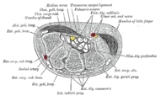
Carpal tunnel syndrome

Encyclopedia
Carpal Tunnel Syndrome (CTS) is an entrapment
idiopathic
median
neuropathy, causing paresthesia
, pain
, and other symptoms in the distribution of the median nerve
due to its compression at the wrist in the carpal tunnel
. The pathophysiology is not completely understood but can be considered compression of the median nerve
traveling through the carpal tunnel
. The National Center for Biotechnology Information
and highly cited older literature say the most common cause of CTS is typing. More recent research by Lozano-Calderón has cited genetics as a larger factor than use, and has encouraged caution in ascribing causality.
The main symptom of CTS is intermittent numbness of the thumb, index, long and radial half of the ring finger. The numbness usually occurs at night, as humans tend to sleep with flexed wrists
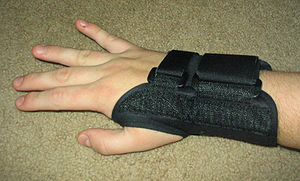
. It can be relieved by wearing a wrist splint
that prevents flexion
. Long-standing CTS leads to permanent nerve damage with constant numbness, atrophy of some of the muscles of the thenar eminence
, and weakness of palmar abduction.
Pain in carpal tunnel syndrome is primarily numbness that is so intense that it wakes one from sleep. Pain in electrophysiologically verified CTS is associated with misinterpretation of nociception
and depression
.
Palliative treatments for CTS include use of night splints and corticosteroid
injection. The only scientifically established disease modifying treatment is surgery to cut the transverse carpal ligament.
). Before the median nerve enters the carpal tunnel it passes first through the thoracic outlet and then the two heads of the pronator teres muscle of the forearm. As a consequence, inflammation, edema, or hypertrophy in the thoracic outlet or the forearm can impinge the median nerve, mimicking the effects of carpal tunnel syndrome, and patients may also report pain in the arm and shoulder.
Numbness and paresthesias in the median nerve distribution are the hallmark neuropathic symptoms (NS) of carpal tunnel entrapment syndrome. Weakness and atrophy
of the thenar muscles may occur if the condition remains untreated.
People can also experience pain up to their elbow when using the affected hand.
Other causes of this condition include intrinsic factors that exert pressure within the tunnel, and extrinsic factors (pressure exerted from outside the tunnel), which include benign tumors such as lipomas, ganglion, and vascular malformation.
(OSHA) has adopted rules and regulations regarding cumulative trauma disorders. Occupational risk factors of repetitive tasks, force, posture, and vibration have been cited. However, the American Society for Surgery of the Hand
(ASSH) has issued a statement claiming that the current literature does not support a causal relationship between specific work activities and the development of diseases such as CTS.
The relationship between work and CTS is controversial; in many locations, workers diagnosed with carpal tunnel syndrome are entitled to time off and compensation. In the USA, Carpal tunnel syndrome results in an average of $30,000 in lifetime costs (medical bills and lost time from work).
Some speculate that carpal tunnel syndrome is provoked by repetitive movement and manipulating activities and that the exposure can be cumulative. It has also been stated that symptoms are commonly exacerbated by forceful and repetitive use of the hand and wrists in industrial occupations, but it is unclear as to whether this refers to pain (which may not be due to carpal tunnel syndrome) or the more typical numbness symptoms.
A review of available scientific data by the National Institute for Occupational Safety and Health
(NIOSH) indicated that job tasks that involve highly repetitive manual acts or specific wrist postures were associated with incidents of CTS, but causation was not established, and the distinction from work-related arm pains that are not carpal tunnel syndrome was not clear. It has been proposed that repetitive use of the arm can affect the biomechanics
of the upper limb or cause damage to tissues. It has also been proposed that postural and spinal assessment along with ergonomic assessments should be included in the overall determination of the condition. While addressing these factors has been found to improve comfort in some studies,
The speculation or rationale that CTS is work-related is based on debatable points such as:
1. CTS is found mostly in the working adult population. This may depend on how CTS is defined and diagnosed, but this seems untrue. For instance, in one recent representative series of a consecutive experience, most patients were older and not working. Based on the claimed increased incidence in the workplace, arm use is implicated, but the weight of evidence suggests that this is an inherent, genetic, slowly but inevitably progressive idiopathic peripheral mononeuropathy.
Examples include:
Clinical assessment by history taking and physical examination can support a diagnosis of CTS.
As a note, a patient with true carpal tunnel syndrome (entrapment of the median nerve within the carpal tunnel) will not have any sensory loss over the thenar eminence (bulge of muscles in the palm of hand and at the base of the thumb). This is because the palmer branch of the median nerve, which innervates that area of the palm, branches off of the median nerve and passes over the carpal tunnel. This feature of the median nerve can help separate carpal tunnel syndrome from thoracic outlet syndrome, or pronator teres syndrome.
Other conditions may also be misdiagnosed as carpal tunnel syndrome. Thus, if history and physical examination suggest CTS, patients will sometimes be tested electrodiagnostically with nerve conduction studies
and electromyography
. The goal of electrodiagnostic testing is to compare the speed of conduction in the median nerve with conduction in other nerves supplying the hand. When the median nerve is compressed, as in CTS, it will conduct more slowly than normal and more slowly than other nerves. There are many electrodiagnostic tests used to make a diagnosis of CTS, but the most sensitive, specific, and reliable test is the Combined Sensory Index (also known as Robinson index).
Nerve conduction studies (NCS) are a sensitive measure of detecting compression of the median nerve. Electrodiagnosis rests upon demonstrating impaired median nerve conduction across the carpal tunnel in context of normal conduction elsewhere. Compression results in damage to the myelin sheath and manifests as delayed latencies and slowed conduction velocities
The role of MRI
or ultrasound imaging
in the diagnosis of carpal tunnel syndrome is unclear.
The median nerve can be compressed by a decrease in the size of the canal, an increase in the size of the contents (such as the swelling of lubrication tissue around the flexor tendons), or both. Simply flexing the wrist to 90 degrees will decrease the size of the canal.
Compression of the median nerve as it runs deep to the transverse carpal ligament (TCL) causes atrophy of the thenar eminence
, weakness of the flexor pollicis brevis, opponens pollicis, abductor pollicis brevis, as well as sensory loss in the distribution of the median nerve distal to the transverse carpal ligament. There is a superficial sensory branch of the median nerve, which branches proximal to the TCL and travels superficial to it. Therefore, this branch is spared, and it innervates the palm toward the thumb.
However, others think it can be prevented by developing healthy habits like avoiding repetitive stress, practicing healthy work habits like using ergonomic equipment (wrist rest, mouse pad), taking proper breaks, using keyboard alternatives (digital pen
, voice recognition, and dictation), and employing early passive treatment like taking turmeric (anti-inflammatory), omega-3 fatty acid
s, and B vitamins. Scientists have long abandoned the potential role of B-vitamins in carpal tunnel syndrome.
Those favoring activity as a cause of carpal tunnel syndrome speculate that activity-limitation might limit the risk of developing carpal tunnel syndrome, but there is little or no data to support these concepts. and they stigmatize arm use in ways that risks increasing illness.
According to the 2007 guidelines by the American Academy of Orthopaedic Surgeons, early surgery with carpal tunnel release is indicated where there is clinical evidence of median nerve denervation or the patient elects to proceed directly to surgical treatment. Otherwise, the main recommended treatments are local corticosteroid
injection, splinting (immobilizing braces), oral corticosteroids and ultrasound treatment. The treatment should be switched when the current treatment fails to resolve the symptoms within 2 to 7 weeks. However, these recommendations have sufficient evidence for carpal tunnel syndrome when found in association with the following conditions: diabetes mellitus
, coexistent cervical radiculopathy, hypothyroidism
, polyneuropathy
, pregnancy
, rheumatoid arthritis
, and carpal tunnel syndrome in the workplace.
 The importance of wrist braces and splints
in the carpal tunnel syndrome therapy is known, but many people are unwilling to use braces. In 1993, The American Academy of Neurology recommend a non-invasive treatment for the CTS at the beginning (except for sensitive or motor deficit or grave report at EMG/ENG): a therapy using splints was indicated for light and moderate pathology. Current recommendations generally don't suggest immobilizing braces, but instead activity modification and non-steroidal anti-inflammatory drug
s as initial therapy, followed by more aggressive options or specialist referral if symptoms do not improve.
Many health professionals suggest that, for best results, one should wear braces at night and, if possible, during the activity primarily causing stress on the wrists.
injections can be quite effective for temporary relief from symptoms of CTS for a short time-frame while a patient develops a longterm strategy that fits with his/her lifestyle. In certain patients, an injection may also be of diagnostic value. This treatment is not appropriate for extended periods, however. In general, medical professionals prescribe local steroid injections only until other treatment options can be identified. For most patients, surgery is the only option that will provide permanent relief.
, to reduce swelling and nerve pressure within the carpal tunnel. Methylcobalamin (vitamin B12) has been helpful in some cases of CTS.
There are several carpal tunnel release surgery variations: Each surgeon has differences of preference based on his or her personal beliefs and experience. All techniques have several things in common, involving brief outpatient procedures, palm or wrist incision(s), and cutting of the transverse carpal ligament.
The two major types of surgery are open carpal tunnel release and endoscopic carpal tunnel release
. Most surgeons historically have performed the open procedure, widely considered to be the gold standard. However, since the 1990s, a growing number of surgeons now offer endoscopic carpal tunnel release.
Open surgery involves an incision on the palm about an inch or two in length. Through this incision, the skin and subcutaneous tissue is divided, followed by the palmar fascia, and ultimately the transverse carpal ligament.
Endoscopic techniques involve one or two smaller incisions (less than half inch each) through which instrumentation is introduced including a synovial elevator, probes, knives, and an endoscope used to visualize the underside of the transverse carpal ligament. The endoscopic methods do not divide the subcutaneous tissues or the palmar fascia to the same degree as the open method does.
Many studies have been done to determine whether perceived benefits of a limited endoscopic or arthroscopic release are significant. Brown et al. conducted a prospective, randomized, multi-center study and found no significant differences between the two groups with regard to secondary quantitative outcome measurements. However, the open technique resulted in more tenderness of the scar than the endoscopic method. A prospective randomized study done in 2002 by Trumble revealed that good clinical outcomes and patient satisfaction are achieved more quickly with the endoscopic method. Single-portal endoscopic surgery is a safe and effective method of treating carpal tunnel syndrome. There was no significant difference in the rate of complications or the cost of surgery between the two groups. However, the open technique caused greater scar tenderness during the first three months after surgery, and a longer time before the patients could return to work.
Many surgeons have embraced limited incision methods. It is considered to be the procedure of choice for many of these surgeons with respect to idiopathic carpal tunnel syndrome. Supporting this are the results of some of the previously mentioned series that cite no difference in the rate of complications for either method of surgery. Thus, there has been broad support for either surgical procedure using a variety of devices or incisions. The primary goal of any carpal tunnel release surgery is to divide the transverse carpal ligament and the distal aspect of the volar ante brachial fascia, thereby decompressing the median nerve. Despite these views, some surgeons have suggested that in their own hands endoscopic carpal tunnel release
has been associated with a higher incidence of median nerve injury, and for this reason it has been abandoned at several centers in the United States. At the 2007 meeting of the American Society for Surgery of the Hand, a former advocate of endoscopic carpal tunnel release, Thomas J. Fischer, MD, retracted his advocacy of the technique, based on his assessment that the benefit of the procedure (slightly faster recovery) did not outweigh the risk of injury to the median nerve.
Balloon Carpal Tunnelplasty is a technique that uses a minimally invasive balloon catheter director to access the carpal tunnel. The director protects the median nerve and contents of the carpal tunnel. As with a traditional tissue elevator/expander with Balloon Carpal Tunnelplasty, the carpal ligament is elevated increasing the space in the carpal tunnel. The Balloon Carpal Tunnelplasty technique is performed through a one-centimeter incision at the distal wrist crease. It is monitored and expansion is confirmed by direct or endoscopic visualization. The purpose of Balloon Carpal Tunnelplasty is to avoid an incision in the palm of the hand, avoid cutting the transverse carpal ligament, and maintain the biomechanics of the hand.
Carpal tunnel surgery is usually performed by a hand surgeon, orthopaedic
surgeon, or plastic surgeon
. Some neurosurgeons
and general surgeons also perform the procedure.
to the wrist gives significant improvement of symptoms in people with CTS. A treatment process may consist of 20 sessions of 15 minutes of ultrasound applied to the area over the carpal tunnel at a frequency of 1 MHz, and a power of 1.0 W/cm2.
However, many studies have shown no effect. Given these inconsistencies, the role of ultrasound in the treatment of CTS is debatable and it should be considered an experimental treatment.
Again, some claim that pro-active ways to reduce stress on the wrists, which alleviates wrist pain and strain, involve adopting a more ergonomic work and life environment. For example, some have claimed that switching from a QWERTY
computer keyboard layout to a more optimised ergonomic layout such as Dvorak
was commonly cited as beneficial in early CTS studies, however some meta-analyses
of these studies claim that the evidence that they present is limited.
While outcomes are generally good, certain factors can contribute to poorer results that have little to do with nerves, anatomy, or surgery type. One study showed that mental status parameters or alcohol use yields much poorer overall results of treatment.
Recurrence of carpal tunnel syndrome after successful surgery is rare. If a person has hand pain after surgery, it is most likely not caused by carpal tunnel syndrome. It may be the case that the illness of a person with hand pain after carpal tunnel release was diagnosed incorrectly, such that the carpal tunnel release has had no positive effect upon the patient's symptoms.
. CTS is also common in pregnancy
.
after working with a group of patients in the 1950s and 1960s.
Entrapment
In criminal law, entrapment is conduct by a law enforcement agent inducing a person to commit an offense that the person would otherwise have been unlikely to commit. In many jurisdictions, entrapment is a possible defense against criminal liability...
idiopathic
Idiopathic
Idiopathic is an adjective used primarily in medicine meaning arising spontaneously or from an obscure or unknown cause. From Greek ἴδιος, idios + πάθος, pathos , it means approximately "a disease of its own kind". It is technically a term from nosology, the classification of disease...
median
Median nerve
The median nerve is a nerve in humans and other animals. It is in the upper limb. It is one of the five main nerves originating from the brachial plexus....
neuropathy, causing paresthesia
Paresthesia
Paresthesia , spelled "paraesthesia" in British English, is a sensation of tingling, burning, pricking, or numbness of a person's skin with no apparent long-term physical effect. It is more generally known as the feeling of "pins and needles" or of a limb "falling asleep"...
, pain
Pain
Pain is an unpleasant sensation often caused by intense or damaging stimuli such as stubbing a toe, burning a finger, putting iodine on a cut, and bumping the "funny bone."...
, and other symptoms in the distribution of the median nerve
Median nerve
The median nerve is a nerve in humans and other animals. It is in the upper limb. It is one of the five main nerves originating from the brachial plexus....
due to its compression at the wrist in the carpal tunnel
Carpal tunnel
In the human body, the carpal tunnel or carpal canal is the passageway on the palmar side of the wrist that connects the forearm to the middle compartment of the deep plane of the palm. The tunnel consists of bones and connective tissue...
. The pathophysiology is not completely understood but can be considered compression of the median nerve
Median nerve
The median nerve is a nerve in humans and other animals. It is in the upper limb. It is one of the five main nerves originating from the brachial plexus....
traveling through the carpal tunnel
Carpal tunnel
In the human body, the carpal tunnel or carpal canal is the passageway on the palmar side of the wrist that connects the forearm to the middle compartment of the deep plane of the palm. The tunnel consists of bones and connective tissue...
. The National Center for Biotechnology Information
National Center for Biotechnology Information
The National Center for Biotechnology Information is part of the United States National Library of Medicine , a branch of the National Institutes of Health. The NCBI is located in Bethesda, Maryland and was founded in 1988 through legislation sponsored by Senator Claude Pepper...
and highly cited older literature say the most common cause of CTS is typing. More recent research by Lozano-Calderón has cited genetics as a larger factor than use, and has encouraged caution in ascribing causality.
The main symptom of CTS is intermittent numbness of the thumb, index, long and radial half of the ring finger. The numbness usually occurs at night, as humans tend to sleep with flexed wrists
Wrist
In human anatomy, the wrist is variously defined as 1) the carpus or carpal bones, the complex of eight bones forming the proximal skeletal segment of the hand;...
. It can be relieved by wearing a wrist splint
Splint (medicine)
A splint is a device used for support or immobilization of limbs or of the spine.It can be used:* By the emergency medical services or by volunteer first responders, to immobilize a fractured limb before the transportation; it is then a temporary immobilization;* By allied health professionals such...
that prevents flexion
Flexion
In anatomy, flexion is a position that is made possible by the joint angle decreasing. The skeletal and muscular systems work together to move the joint into a "flexed" position. For example the elbow is flexed when the hand is brought closer to the shoulder...
. Long-standing CTS leads to permanent nerve damage with constant numbness, atrophy of some of the muscles of the thenar eminence
Thenar eminence
The thenar eminence refers to the group of muscles on the palm of the human hand at the base of the thumb...
, and weakness of palmar abduction.
Pain in carpal tunnel syndrome is primarily numbness that is so intense that it wakes one from sleep. Pain in electrophysiologically verified CTS is associated with misinterpretation of nociception
Nociception
Nociception is defined as "the neural processes of encoding and processing noxious stimuli." It is the afferent activity produced in the peripheral and central nervous system by stimuli that have the potential to damage tissue...
and depression
Depression (mood)
Depression is a state of low mood and aversion to activity that can affect a person's thoughts, behaviour, feelings and physical well-being. Depressed people may feel sad, anxious, empty, hopeless, helpless, worthless, guilty, irritable, or restless...
.
Palliative treatments for CTS include use of night splints and corticosteroid
Corticosteroid
Corticosteroids are a class of steroid hormones that are produced in the adrenal cortex. Corticosteroids are involved in a wide range of physiologic systems such as stress response, immune response and regulation of inflammation, carbohydrate metabolism, protein catabolism, blood electrolyte...
injection. The only scientifically established disease modifying treatment is surgery to cut the transverse carpal ligament.
Signs and symptoms
Patients with CTS experience numbness, tingling, or burning sensations in the thumb and fingers, in particular the index, middle fingers, and radial half of the ring fingers, which are innervated by the median nerve. Less-specific symptoms may include pain in the hands or wrists and loss of grip strength (both of which are more characteristic of painful conditions such as arthritisArthritis
Arthritis is a form of joint disorder that involves inflammation of one or more joints....
). Before the median nerve enters the carpal tunnel it passes first through the thoracic outlet and then the two heads of the pronator teres muscle of the forearm. As a consequence, inflammation, edema, or hypertrophy in the thoracic outlet or the forearm can impinge the median nerve, mimicking the effects of carpal tunnel syndrome, and patients may also report pain in the arm and shoulder.
Numbness and paresthesias in the median nerve distribution are the hallmark neuropathic symptoms (NS) of carpal tunnel entrapment syndrome. Weakness and atrophy
Atrophy
Atrophy is the partial or complete wasting away of a part of the body. Causes of atrophy include mutations , poor nourishment, poor circulation, loss of hormonal support, loss of nerve supply to the target organ, disuse or lack of exercise or disease intrinsic to the tissue itself...
of the thenar muscles may occur if the condition remains untreated.
People can also experience pain up to their elbow when using the affected hand.
Causes
Most cases of CTS are of unknown causes, or idiopathic. Carpal Tunnel Syndrome can be associated with any condition that causes pressure on the median nerve at the wrist. Some common conditions that can lead to CTS include obesity, oral contraceptives, hypothyroidism, arthritis, diabetes, and trauma. Carpal tunnel is also a feature of a form of Charcot-Marie-Tooth syndrome type 1 called hereditary neuropathy with liability to pressure palsies.Other causes of this condition include intrinsic factors that exert pressure within the tunnel, and extrinsic factors (pressure exerted from outside the tunnel), which include benign tumors such as lipomas, ganglion, and vascular malformation.
Work related
The international debate regarding the relationship between CTS and repetitive motion in work is ongoing. The Occupational Safety and Health AdministrationOccupational Safety and Health Administration
The United States Occupational Safety and Health Administration is an agency of the United States Department of Labor. It was created by Congress of the United States under the Occupational Safety and Health Act, signed by President Richard M. Nixon, on December 29, 1970...
(OSHA) has adopted rules and regulations regarding cumulative trauma disorders. Occupational risk factors of repetitive tasks, force, posture, and vibration have been cited. However, the American Society for Surgery of the Hand
American Society for Surgery of the Hand
The American Society for Surgery of the Hand was founded in 1946 to facilitate the exchange of information related to problems of the hand. It is the oldest and largest medical specialty society in the United States devoted to the care of the hand....
(ASSH) has issued a statement claiming that the current literature does not support a causal relationship between specific work activities and the development of diseases such as CTS.
The relationship between work and CTS is controversial; in many locations, workers diagnosed with carpal tunnel syndrome are entitled to time off and compensation. In the USA, Carpal tunnel syndrome results in an average of $30,000 in lifetime costs (medical bills and lost time from work).
Some speculate that carpal tunnel syndrome is provoked by repetitive movement and manipulating activities and that the exposure can be cumulative. It has also been stated that symptoms are commonly exacerbated by forceful and repetitive use of the hand and wrists in industrial occupations, but it is unclear as to whether this refers to pain (which may not be due to carpal tunnel syndrome) or the more typical numbness symptoms.
A review of available scientific data by the National Institute for Occupational Safety and Health
National Institute for Occupational Safety and Health
The National Institute for Occupational Safety and Health is the United States’ federal agency responsible for conducting research and making recommendations for the prevention of work-related injury and illness. NIOSH is part of the Centers for Disease Control and Prevention within the U.S...
(NIOSH) indicated that job tasks that involve highly repetitive manual acts or specific wrist postures were associated with incidents of CTS, but causation was not established, and the distinction from work-related arm pains that are not carpal tunnel syndrome was not clear. It has been proposed that repetitive use of the arm can affect the biomechanics
Biomechanics
Biomechanics is the application of mechanical principles to biological systems, such as humans, animals, plants, organs, and cells. Perhaps one of the best definitions was provided by Herbert Hatze in 1974: "Biomechanics is the study of the structure and function of biological systems by means of...
of the upper limb or cause damage to tissues. It has also been proposed that postural and spinal assessment along with ergonomic assessments should be included in the overall determination of the condition. While addressing these factors has been found to improve comfort in some studies,
The speculation or rationale that CTS is work-related is based on debatable points such as:
1. CTS is found mostly in the working adult population. This may depend on how CTS is defined and diagnosed, but this seems untrue. For instance, in one recent representative series of a consecutive experience, most patients were older and not working. Based on the claimed increased incidence in the workplace, arm use is implicated, but the weight of evidence suggests that this is an inherent, genetic, slowly but inevitably progressive idiopathic peripheral mononeuropathy.
Associated with other diseases
A variety of patient factors can lead to CTS, including heredity, size of the carpal tunnel, associated local and systematic diseases, and certain habits. Non-traumatic causes generally happen over a period of time, and are not triggered by one certain event. Many of these factors are manifestations of physiologic aging.Examples include:
- Rheumatoid arthritis and other diseases that cause inflammation of the flexor tendons.
- With pregnancyPregnancyPregnancy refers to the fertilization and development of one or more offspring, known as a fetus or embryo, in a woman's uterus. In a pregnancy, there can be multiple gestations, as in the case of twins or triplets...
and hypothyroidismHypothyroidismHypothyroidism is a condition in which the thyroid gland does not make enough thyroid hormone.Iodine deficiency is the most common cause of hypothyroidism worldwide but it can be caused by other causes such as several conditions of the thyroid gland or, less commonly, the pituitary gland or...
, fluid is retained in tissues, which swells the tenosynovium. - During pregnancy women experience CTS due to hormonal changes (high progesterone levels) and water retention, which is common during pregnancy.
- Previous injuries including fractures of the wrist.
- Medical disorders that lead to fluid retention or are associated with inflammation such as: inflammatory arthritis, Colles' fracture, amyloidosisAmyloidosisIn medicine, amyloidosis refers to a variety of conditions whereby the body produces "bad proteins", denoted as amyloid proteins, which are abnormally deposited in organs and/or tissues and cause harm. A protein is described as being amyloid if, due to an alteration in its secondary structure, it...
, hypothyroidism, diabetes mellitus, acromegaly, and use of corticosteroids and estrogens. - Carpal tunnel syndrome is also associated with repetitive activities of the hand and wrist, in particular with a combination of forceful and repetitive activities
- AcromegalyAcromegalyAcromegaly is a syndrome that results when the anterior pituitary gland produces excess growth hormone after epiphyseal plate closure at puberty...
, causes excessive growth hormoneGrowth hormoneGrowth hormone is a peptide hormone that stimulates growth, cell reproduction and regeneration in humans and other animals. Growth hormone is a 191-amino acid, single-chain polypeptide that is synthesized, stored, and secreted by the somatotroph cells within the lateral wings of the anterior...
s. This causes the soft tissues and bones around the carpel tunnel to grow causes compression of the median nerve.
- TumorTumorA tumor or tumour is commonly used as a synonym for a neoplasm that appears enlarged in size. Tumor is not synonymous with cancer...
s (usually benign), such as a ganglionGanglionIn anatomy, a ganglion is a biological tissue mass, most commonly a mass of nerve cell bodies. Cells found in a ganglion are called ganglion cells, though this term is also sometimes used to refer specifically to retinal ganglion cells....
or a lipomaLipomaA lipoma is a benign tumor composed of adipose tissue. It is the most common form of soft tissue tumor. Lipomas are soft to the touch, usually movable, and are generally painless. Many lipomas are small but can enlarge to sizes greater than six centimeters. Lipomas are commonly found in adults...
, can protrude into the carpal tunnel, reducing the amount of space. This is exceedingly rare (less than 1%). - ObesityObesityObesity is a medical condition in which excess body fat has accumulated to the extent that it may have an adverse effect on health, leading to reduced life expectancy and/or increased health problems...
also increases the risk of CTS: individuals classified as obese (BMIBody mass indexThe body mass index , or Quetelet index, is a heuristic proxy for human body fat based on an individual's weight and height. BMI does not actually measure the percentage of body fat. It was invented between 1830 and 1850 by the Belgian polymath Adolphe Quetelet during the course of developing...
> 29) are 2.5 times more likely than slender individuals (BMI < 20) to be diagnosed with CTS. - Double-crush syndrome is a debated hypothesis that compression or irritation of nerve branches contributing to the median nerve in the neck, or anywhere above the wrist, increases sensitivity of the nerve to compression in the wrist. There is little evidence, however, that this syndrome really exists.
- Heterozygous mutations in the gene SH3TC2SH3TC2SH3 domain and tetratricopeptide repeats-containing protein 2 is a protein that in humans is encoded by the SH3TC2 gene. It is expressed in in the Schwann cells that wrap the myelin sheath around nerves.- Function :...
, associated with Charcot-Marie-Tooth, confer susceptibility to neuropathy, including the carpal tunnel syndrome. - ParvovirusParvovirusParvovirus, often truncated to "parvo", is both the common name in English casually applied to all the viruses in the Parvoviridae taxonomic family, and also the taxonomic name of the Parvovirus genus within the Parvoviridae family...
b19 has been associated with carpel tunnel syndrome
Diagnosis
The reference standard for the diagnosis of carpal tunnel syndrome is electrophysiological testing. Patients with intermittent numbness in the distribution of the median nerve along with positive Phalen's, Durkan's, and eletrophysiological tests have, at worst, a very mild case of carpal tunnel syndrome. A predominance of pain rather than numbness is unlikely to be caused by carpal tunnel syndrome no matter what the result of electrophysiological testing.Clinical assessment by history taking and physical examination can support a diagnosis of CTS.
- Phalen's maneuverPhalen's maneuverPhalen's maneuver is a diagnostic test for carpal tunnel syndrome discovered by an American orthopedist named George S. Phalen.-Process:The patient is asked to hold their wrist in complete and forced flexion for 30–60 seconds. The lumbricals attach in part to the flexor digitorum profundus tendons...
is performed by flexing the wrist gently as far as possible, then holding this position and awaiting symptoms. A positive test is one that results in numbness in the median nerve distribution when holding the wrist in acute flexion position within 60 seconds. The quicker the numbness starts, the more advanced the condition. Phalen's sign is defined as pain and/or paresthesias in the median-innervated fingers with one minute of wrist flexion. Only this test has been shown to correlate with CTS severity when studied prospectively.
- Tinel's signTinel's signTinel's sign is a way to detect irritated nerves. It is performed by lightly tapping over the nerve to elicit a sensation of tingling or "pins and needles" in the distribution of the nerve.It takes its name from French neurologist Jules Tinel .For example, in carpal tunnel syndrome where the...
, a classic — though less sensitive - test is a way to detect irritated nerves. Tinel's is performed by lightly tapping the skin over the flexor retinaculumFlexor retinaculumFlexor retinaculum may be:* Flexor retinaculum of the hand, the retinaculum flexorum manus* Flexor retinaculum of the foot, the retinaculum musculorum flexorum pedis...
to elicit a sensation of tingling or "pins and needles" in the nerve distribution. Tinel's sign (pain and/or paresthesias of the median-innervated fingers with percussion over the median nerve) is less sensitive, but slightly more specific than Phalen’s sign.
- Durkan testDurkan testDurkan's test is a procedure to diagnose a patient with carpal tunnel syndrome. It is a new variation of Tinel's sign that was proposed by JA Durkan in 1991.-Process:Examiner presses thumbs over carpal tunnel and holds pressure for 30 seconds...
, carpal compression test, or applying firm pressure to the palm over the nerve for up to 30 seconds to elicit symptoms has also been proposed.
As a note, a patient with true carpal tunnel syndrome (entrapment of the median nerve within the carpal tunnel) will not have any sensory loss over the thenar eminence (bulge of muscles in the palm of hand and at the base of the thumb). This is because the palmer branch of the median nerve, which innervates that area of the palm, branches off of the median nerve and passes over the carpal tunnel. This feature of the median nerve can help separate carpal tunnel syndrome from thoracic outlet syndrome, or pronator teres syndrome.
Other conditions may also be misdiagnosed as carpal tunnel syndrome. Thus, if history and physical examination suggest CTS, patients will sometimes be tested electrodiagnostically with nerve conduction studies
Nerve conduction study
A nerve conduction study is a test commonly used to evaluate the function, especially the ability of electrical conduction, of the motor and sensory nerves of the human body.Nerve conduction velocity is a common measurement made during this test...
and electromyography
Electromyography
Electromyography is a technique for evaluating and recording the electrical activity produced by skeletal muscles. EMG is performed using an instrument called an electromyograph, to produce a record called an electromyogram. An electromyograph detects the electrical potential generated by muscle...
. The goal of electrodiagnostic testing is to compare the speed of conduction in the median nerve with conduction in other nerves supplying the hand. When the median nerve is compressed, as in CTS, it will conduct more slowly than normal and more slowly than other nerves. There are many electrodiagnostic tests used to make a diagnosis of CTS, but the most sensitive, specific, and reliable test is the Combined Sensory Index (also known as Robinson index).
Nerve conduction studies (NCS) are a sensitive measure of detecting compression of the median nerve. Electrodiagnosis rests upon demonstrating impaired median nerve conduction across the carpal tunnel in context of normal conduction elsewhere. Compression results in damage to the myelin sheath and manifests as delayed latencies and slowed conduction velocities
The role of MRI
Magnetic resonance imaging
Magnetic resonance imaging , nuclear magnetic resonance imaging , or magnetic resonance tomography is a medical imaging technique used in radiology to visualize detailed internal structures...
or ultrasound imaging
Medical ultrasonography
Diagnostic sonography is an ultrasound-based diagnostic imaging technique used for visualizing subcutaneous body structures including tendons, muscles, joints, vessels and internal organs for possible pathology or lesions...
in the diagnosis of carpal tunnel syndrome is unclear.
Differential diagnosis
There are some who believe that carpal tunnel syndrome is simply a universal label applied to anyone suffering from pain, numbness, swelling, and/or burning in the radial side of the hands and/or wrists. When pain is the primary symptom, carpal tunnel syndrome is unlikely to be the source of the symptoms. As a whole, the medical community is not currently embracing or accepting trigger point theories due to lack of scientific evidence supporting their effectiveness.Pathophysiology
The carpal tunnel is an anatomical compartment located at the base of the wrist. Nine flexor tendons and the median nerve pass through the carpal tunnel that is surrounded on three sides by the carpal bones that form an arch. The nerve and the tendons provide function, feeling, and movement to some of the fingers. The finger and wrist flexor muscles including their tendons originate in the forearm at the medial epicondyle of the elbow joint and attach to the Metaphalangeal (MP), Proximal Interphalangeal (PIP), and Distal Interphalangeal bones of the fingers and thumb (BSI). The carpal tunnel is approximately as wide as the thumb and its boundary lies at the distal wrist skin crease and extends distally into the palm for approximately 2 cm.The median nerve can be compressed by a decrease in the size of the canal, an increase in the size of the contents (such as the swelling of lubrication tissue around the flexor tendons), or both. Simply flexing the wrist to 90 degrees will decrease the size of the canal.
Compression of the median nerve as it runs deep to the transverse carpal ligament (TCL) causes atrophy of the thenar eminence
Thenar eminence
The thenar eminence refers to the group of muscles on the palm of the human hand at the base of the thumb...
, weakness of the flexor pollicis brevis, opponens pollicis, abductor pollicis brevis, as well as sensory loss in the distribution of the median nerve distal to the transverse carpal ligament. There is a superficial sensory branch of the median nerve, which branches proximal to the TCL and travels superficial to it. Therefore, this branch is spared, and it innervates the palm toward the thumb.
Prevention
A 2007 study, conducted by Lozano-Calderon et al. in the Department of Orthopaedic Surgery at Massachusetts General Hospital, states that carpal tunnel syndrome is determined primarily by genetics and structure. It is presumed, therefore, that carpal tunnel syndrome is not preventable.However, others think it can be prevented by developing healthy habits like avoiding repetitive stress, practicing healthy work habits like using ergonomic equipment (wrist rest, mouse pad), taking proper breaks, using keyboard alternatives (digital pen
Digital pen
A digital pen is an input device which captures the handwriting or brush strokes of a user, converts handwritten analog information created using "pen and paper" into digital data, enabling the data to be utilized in various applications. For example, the writing data can be digitized and uploaded...
, voice recognition, and dictation), and employing early passive treatment like taking turmeric (anti-inflammatory), omega-3 fatty acid
Omega-3 fatty acid
N−3 fatty acids are essential unsaturated fatty acids with a double bond starting after the third carbon atom from the end of the carbon chain....
s, and B vitamins. Scientists have long abandoned the potential role of B-vitamins in carpal tunnel syndrome.
Those favoring activity as a cause of carpal tunnel syndrome speculate that activity-limitation might limit the risk of developing carpal tunnel syndrome, but there is little or no data to support these concepts. and they stigmatize arm use in ways that risks increasing illness.
Treatment
There have been numerous scientific papers evaluating treatment efficacy in CTS. It is important to distinguish treatments that are supported in the scientific literature from those that are advocated by any particular device manufacturer or any other party with a vested financial interest. Generally accepted treatments, as described below, may include splinting or bracing, steroid injection, activity modification, physiotherapy, regular massage therapy treatments, chiropractic, medications, and surgical release of the transverse carpal ligament.According to the 2007 guidelines by the American Academy of Orthopaedic Surgeons, early surgery with carpal tunnel release is indicated where there is clinical evidence of median nerve denervation or the patient elects to proceed directly to surgical treatment. Otherwise, the main recommended treatments are local corticosteroid
Corticosteroid
Corticosteroids are a class of steroid hormones that are produced in the adrenal cortex. Corticosteroids are involved in a wide range of physiologic systems such as stress response, immune response and regulation of inflammation, carbohydrate metabolism, protein catabolism, blood electrolyte...
injection, splinting (immobilizing braces), oral corticosteroids and ultrasound treatment. The treatment should be switched when the current treatment fails to resolve the symptoms within 2 to 7 weeks. However, these recommendations have sufficient evidence for carpal tunnel syndrome when found in association with the following conditions: diabetes mellitus
Diabetes mellitus
Diabetes mellitus, often simply referred to as diabetes, is a group of metabolic diseases in which a person has high blood sugar, either because the body does not produce enough insulin, or because cells do not respond to the insulin that is produced...
, coexistent cervical radiculopathy, hypothyroidism
Hypothyroidism
Hypothyroidism is a condition in which the thyroid gland does not make enough thyroid hormone.Iodine deficiency is the most common cause of hypothyroidism worldwide but it can be caused by other causes such as several conditions of the thyroid gland or, less commonly, the pituitary gland or...
, polyneuropathy
Polyneuropathy
Polyneuropathy is a neurological disorder that occurs when many peripheral nerves throughout the body malfunction simultaneously. It may be acute and appear without warning, or chronic and develop gradually over a longer period of time. Many polyneuropathies have both motor and sensory...
, pregnancy
Pregnancy
Pregnancy refers to the fertilization and development of one or more offspring, known as a fetus or embryo, in a woman's uterus. In a pregnancy, there can be multiple gestations, as in the case of twins or triplets...
, rheumatoid arthritis
Rheumatoid arthritis
Rheumatoid arthritis is a chronic, systemic inflammatory disorder that may affect many tissues and organs, but principally attacks synovial joints. The process produces an inflammatory response of the synovium secondary to hyperplasia of synovial cells, excess synovial fluid, and the development...
, and carpal tunnel syndrome in the workplace.
Immobilizing braces
Splint (medicine)
A splint is a device used for support or immobilization of limbs or of the spine.It can be used:* By the emergency medical services or by volunteer first responders, to immobilize a fractured limb before the transportation; it is then a temporary immobilization;* By allied health professionals such...
in the carpal tunnel syndrome therapy is known, but many people are unwilling to use braces. In 1993, The American Academy of Neurology recommend a non-invasive treatment for the CTS at the beginning (except for sensitive or motor deficit or grave report at EMG/ENG): a therapy using splints was indicated for light and moderate pathology. Current recommendations generally don't suggest immobilizing braces, but instead activity modification and non-steroidal anti-inflammatory drug
Non-steroidal anti-inflammatory drug
Nonsteroidal anti-inflammatory drugs, usually abbreviated to NSAIDs or NAIDs, but also referred to as nonsteroidal anti-inflammatory agents/analgesics or nonsteroidal Anti-inflammatory medicines , are drugs with analgesic and antipyretic effects and which have, in higher doses, anti-inflammatory...
s as initial therapy, followed by more aggressive options or specialist referral if symptoms do not improve.
Many health professionals suggest that, for best results, one should wear braces at night and, if possible, during the activity primarily causing stress on the wrists.
Localized corticosteroid injections
CorticosteroidCorticosteroid
Corticosteroids are a class of steroid hormones that are produced in the adrenal cortex. Corticosteroids are involved in a wide range of physiologic systems such as stress response, immune response and regulation of inflammation, carbohydrate metabolism, protein catabolism, blood electrolyte...
injections can be quite effective for temporary relief from symptoms of CTS for a short time-frame while a patient develops a longterm strategy that fits with his/her lifestyle. In certain patients, an injection may also be of diagnostic value. This treatment is not appropriate for extended periods, however. In general, medical professionals prescribe local steroid injections only until other treatment options can be identified. For most patients, surgery is the only option that will provide permanent relief.
Other medication
A more aggressive pharmaceutical option is an injection of cortisoneCortisone
Cortisone is a steroid hormone. It is one of the main hormones released by the adrenal gland in response to stress. In chemical structure, it is a corticosteroid closely related to corticosterone. It is used to treat a variety of ailments and can be administered intravenously, orally,...
, to reduce swelling and nerve pressure within the carpal tunnel. Methylcobalamin (vitamin B12) has been helpful in some cases of CTS.
Carpal tunnel release surgery
Release of the transverse carpal ligament is known as "carpal tunnel release" surgery. It is recommended when there is static (constant, not just intermittent) numbness, muscle weakness, or atrophy, and when night-splinting no longer controls intermittent symptoms. In general, milder cases can be controlled for months to years, but severe cases are unrelenting symptomatically and are likely to result in surgical treatment.Procedure
In carpal tunnel release surgery, the goal is to divide the transverse carpal ligament in two. This is a wide ligament that runs across the hand, from the scaphoid bone to the hamate bone and pisiform. It forms the roof of the carpal tunnel, and when the surgeon cuts across it (i.e., in a line with the ring finger) it no longer presses down on the nerve inside, relieving the pressure.There are several carpal tunnel release surgery variations: Each surgeon has differences of preference based on his or her personal beliefs and experience. All techniques have several things in common, involving brief outpatient procedures, palm or wrist incision(s), and cutting of the transverse carpal ligament.
The two major types of surgery are open carpal tunnel release and endoscopic carpal tunnel release
Endoscopic carpal tunnel release
Endoscopic Carpal Tunnel Release refers to a method of performing carpal tunnel release surgery using an endoscope or an arthroscopic device.-The procedure:...
. Most surgeons historically have performed the open procedure, widely considered to be the gold standard. However, since the 1990s, a growing number of surgeons now offer endoscopic carpal tunnel release.
Open surgery involves an incision on the palm about an inch or two in length. Through this incision, the skin and subcutaneous tissue is divided, followed by the palmar fascia, and ultimately the transverse carpal ligament.
Endoscopic techniques involve one or two smaller incisions (less than half inch each) through which instrumentation is introduced including a synovial elevator, probes, knives, and an endoscope used to visualize the underside of the transverse carpal ligament. The endoscopic methods do not divide the subcutaneous tissues or the palmar fascia to the same degree as the open method does.
Many studies have been done to determine whether perceived benefits of a limited endoscopic or arthroscopic release are significant. Brown et al. conducted a prospective, randomized, multi-center study and found no significant differences between the two groups with regard to secondary quantitative outcome measurements. However, the open technique resulted in more tenderness of the scar than the endoscopic method. A prospective randomized study done in 2002 by Trumble revealed that good clinical outcomes and patient satisfaction are achieved more quickly with the endoscopic method. Single-portal endoscopic surgery is a safe and effective method of treating carpal tunnel syndrome. There was no significant difference in the rate of complications or the cost of surgery between the two groups. However, the open technique caused greater scar tenderness during the first three months after surgery, and a longer time before the patients could return to work.
Many surgeons have embraced limited incision methods. It is considered to be the procedure of choice for many of these surgeons with respect to idiopathic carpal tunnel syndrome. Supporting this are the results of some of the previously mentioned series that cite no difference in the rate of complications for either method of surgery. Thus, there has been broad support for either surgical procedure using a variety of devices or incisions. The primary goal of any carpal tunnel release surgery is to divide the transverse carpal ligament and the distal aspect of the volar ante brachial fascia, thereby decompressing the median nerve. Despite these views, some surgeons have suggested that in their own hands endoscopic carpal tunnel release
Endoscopic carpal tunnel release
Endoscopic Carpal Tunnel Release refers to a method of performing carpal tunnel release surgery using an endoscope or an arthroscopic device.-The procedure:...
has been associated with a higher incidence of median nerve injury, and for this reason it has been abandoned at several centers in the United States. At the 2007 meeting of the American Society for Surgery of the Hand, a former advocate of endoscopic carpal tunnel release, Thomas J. Fischer, MD, retracted his advocacy of the technique, based on his assessment that the benefit of the procedure (slightly faster recovery) did not outweigh the risk of injury to the median nerve.
Balloon Carpal Tunnelplasty is a technique that uses a minimally invasive balloon catheter director to access the carpal tunnel. The director protects the median nerve and contents of the carpal tunnel. As with a traditional tissue elevator/expander with Balloon Carpal Tunnelplasty, the carpal ligament is elevated increasing the space in the carpal tunnel. The Balloon Carpal Tunnelplasty technique is performed through a one-centimeter incision at the distal wrist crease. It is monitored and expansion is confirmed by direct or endoscopic visualization. The purpose of Balloon Carpal Tunnelplasty is to avoid an incision in the palm of the hand, avoid cutting the transverse carpal ligament, and maintain the biomechanics of the hand.
Efficacy
Surgery to correct carpal tunnel syndrome has a high success rate. Up to 90% of patients were able to return to their same jobs after surgery. In general, endoscopic techniques are as effective as traditional open carpal surgeries, though the faster recovery time typically noted in endoscopic procedures is felt by some to possibly be offset by higher complication rates. Success is greatest in patients with the most typical symptoms. The most common cause of failure is incorrect diagnosis, and it should be noted that this surgery will only mitigate carpal tunnel syndrome, and will not relieve symptoms with alternative causes. Recurrence is rare, and apparent recurrence usually results from a misdiagnosis of another problem. Complications can occur, but serious ones are infrequent to rare.Carpal tunnel surgery is usually performed by a hand surgeon, orthopaedic
Orthopedic surgery
Orthopedic surgery or orthopedics is the branch of surgery concerned with conditions involving the musculoskeletal system...
surgeon, or plastic surgeon
Plastic surgery
Plastic surgery is a medical specialty concerned with the correction or restoration of form and function. Though cosmetic or aesthetic surgery is the best-known kind of plastic surgery, most plastic surgery is not cosmetic: plastic surgery includes many types of reconstructive surgery, hand...
. Some neurosurgeons
Neurosurgery
Neurosurgery is the medical specialty concerned with the prevention, diagnosis, treatment, and rehabilitation of disorders which affect any portion of the nervous system including the brain, spine, spinal cord, peripheral nerves, and extra-cranial cerebrovascular system.-In the United States:In...
and general surgeons also perform the procedure.
Ultrasound treatment
Some claim that UltrasoundUltrasound
Ultrasound is cyclic sound pressure with a frequency greater than the upper limit of human hearing. Ultrasound is thus not separated from "normal" sound based on differences in physical properties, only the fact that humans cannot hear it. Although this limit varies from person to person, it is...
to the wrist gives significant improvement of symptoms in people with CTS. A treatment process may consist of 20 sessions of 15 minutes of ultrasound applied to the area over the carpal tunnel at a frequency of 1 MHz, and a power of 1.0 W/cm2.
However, many studies have shown no effect. Given these inconsistencies, the role of ultrasound in the treatment of CTS is debatable and it should be considered an experimental treatment.
Physiotherapy
One review of the evidence for possible symptom reduction found good evidence (level B recommendations) for splinting, ultrasound, nerve gliding exercises, carpal bone mobilization, magnetic therapy, and yoga for people with carpal tunnel syndrome. However, a recent evidence based guideline produced by the American Academy of Orthopedic Surgeons assigned lower grades to most of these treatments.Again, some claim that pro-active ways to reduce stress on the wrists, which alleviates wrist pain and strain, involve adopting a more ergonomic work and life environment. For example, some have claimed that switching from a QWERTY
QWERTY
QWERTY is the most common modern-day keyboard layout. The name comes from the first six letters appearing in the topleft letter row of the keyboard, read left to right: Q-W-E-R-T-Y. The QWERTY design is based on a layout created for the Sholes and Glidden typewriter and sold to Remington in the...
computer keyboard layout to a more optimised ergonomic layout such as Dvorak
Dvorak Simplified Keyboard
The Dvorak Simplified Keyboard is a keyboard layout patented in 1936 by Dr. August Dvorak and his brother-in-law, Dr. William Dealey. Over the years several slight variations were designed by the team led by Dvorak or by ANSI...
was commonly cited as beneficial in early CTS studies, however some meta-analyses
Meta-analysis
In statistics, a meta-analysis combines the results of several studies that address a set of related research hypotheses. In its simplest form, this is normally by identification of a common measure of effect size, for which a weighted average might be the output of a meta-analyses. Here the...
of these studies claim that the evidence that they present is limited.
Occupational therapy
OTs are involved in the assessment and intervention process with clients with CTS. Within the area of intervention, OTs provide education; symptom management techniques such as splinting; and modification of specific tasks, equipment and environment .Prognosis
Most people relieved of their carpal tunnel symptoms with conservative or surgical management find minimal residual or "nerve damage". Long-term chronic carpal tunnel syndrome (typically seen in the elderly) can result in permanent "nerve damage", i.e. irreversible numbness, muscle wasting, and weakness.While outcomes are generally good, certain factors can contribute to poorer results that have little to do with nerves, anatomy, or surgery type. One study showed that mental status parameters or alcohol use yields much poorer overall results of treatment.
Recurrence of carpal tunnel syndrome after successful surgery is rare. If a person has hand pain after surgery, it is most likely not caused by carpal tunnel syndrome. It may be the case that the illness of a person with hand pain after carpal tunnel release was diagnosed incorrectly, such that the carpal tunnel release has had no positive effect upon the patient's symptoms.
Epidemiology
Carpal tunnel syndrome can affect anyone. In the U.S., roughly 1 out of 20 people will suffer from the effects of carpal tunnel syndrome. Caucasians have the highest risk of CTS compared with other races such as non-white South Africans. Women suffer more from CTS than men with a ratio of 3:1 between the ages of 45–60 years. Only 10% of reported cases of CTS are younger than 30 years. Increasing age is a risk factorRisk factor
In epidemiology, a risk factor is a variable associated with an increased risk of disease or infection. Sometimes, determinant is also used, being a variable associated with either increased or decreased risk.-Correlation vs causation:...
. CTS is also common in pregnancy
Pregnancy
Pregnancy refers to the fertilization and development of one or more offspring, known as a fetus or embryo, in a woman's uterus. In a pregnancy, there can be multiple gestations, as in the case of twins or triplets...
.
History
The condition known as Carpal Tunnel Syndrome had major appearances throughout the years but it was most commonly heard of in the years following World War II.Individuals who had suffered from this condition have been depicted in surgical literature for the mid-19th century.In 1854, Sir James Paget was the first to report median nerve compression at the wrist in a distal radius fracture. Following the early 20th century there were various cases of median nerve compression underneath the transverse carpal ligament. Carpal Tunnel Syndrome was most commonly noted in medical literature in the early 20th century but the first use of the term was noted 1939. Physician Dr. George S. Phalen of the Cleveland Clinic identified the pathologyPathology
Pathology is the precise study and diagnosis of disease. The word pathology is from Ancient Greek , pathos, "feeling, suffering"; and , -logia, "the study of". Pathologization, to pathologize, refers to the process of defining a condition or behavior as pathological, e.g. pathological gambling....
after working with a group of patients in the 1950s and 1960s.
Notable cases
- HRH Prince Philip, husband of Queen Elizabeth II
- Mike DirntMike DirntMichael Ryan Pritchard is an American musician, best known as the bassist, backing vocalist and co-founder of the American Rock band Green Day. While at school, he would play "air-bass." While pretending to pluck the strings, he made the noise, "dirnt, dirnt, dirnt"...
, bassist with the band Green DayGreen DayGreen Day is an American punk rock band formed in 1987. The band consists of lead vocalist and guitarist Billie Joe Armstrong, bassist and backing vocalist Mike Dirnt, and drummer Tre Cool... - Michael Einziger, guitarist with the band IncubusIncubus (band)Incubus is an American rock band from Calabasas, California. The band was formed in 1991 by vocalist Brandon Boyd, lead guitarist Mike Einziger, and drummer Jose Pasillas while enrolled in high school and later expanded to include bassist Alex "Dirk Lance" Katunich, and Gavin "DJ Lyfe" Koppell;...
External links
- Carpal Tunnel Syndrome : Anatomy, Pathology, Causes, Clinical features, Diagnostic Tests and Treatment | Medchrome
- Carpal Tunnel Syndrome Fact Sheet (National Institute of Neurological Disorders and Stroke)
- Non-Surgical Treatment of Carpal Tunnel Syndrome
- Surgical Treatment of Carpal Tunnel Syndrome
- Carpal Tunnel Syndrome
- Carpal Tunnel Syndrome, information, diagnostic tool