
All Topics  
Bivalvia

 
Bivalvia

   Email Print
   Bookmark   Link


Bivalvia


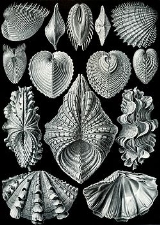
Bivalves are molluscs belonging to the class Bivalvia. They have two-part shells, and typically both valves are symmetrical
Symmetry

Symmetry generally conveys two primary meanings. The first is an imprecise sense of harmonious or aesthetically-pleasing proportionality and balance; such that it reflects beauty or perfection....
 along the hinge line. The class has 30,000 species
Species

In biology, a species is one of the basic units of biological classification and a taxonomic rank. A species is often defined as a group of organisms capable of interbreeding and producing fertile offspring....
, including scallop
Scallop

A scallop is a Marine bivalve mollusk of the Family Pectinidae. Scallops are a wiktionary:cosmopolitan family, found in all of the world's oceans....
s, clam
Clam

Clam is a word which can be used for all, some, or only a few species of bivalve mollusks; the word is a common name which has no real Taxonomy significance in biology....
s, oyster
Oyster

The common name oyster is used for a number of different groups of bivalve mollusks, most of which live in marine habitats or brackish water....
s and mussel
Mussel

The common name mussel is used for members of several different families of clams or bivalve molluscs, from both saltwater and freshwater habitats....
s. Other names for the class include Bivalva, Pelecypoda, and Lamellibranchia.

Bivalves are exclusively aquatic; they include both marine and freshwater forms. However some, for instance the mussels, can survive out of water for short periods by closing their valves.

Bivalves are unique among the molluscs for lacking a radula
Radula

The radula is an anatomical structure found in mollusks and used for feeding. It is a minutely toothed, chitinous ribbon. It is typically used for scraping or cutting food before the food enters the esophagus....
; they feed by siphoning and filtering large particles from water.


Discussion
Ask a question about 'Bivalvia'
Start a new discussion about 'Bivalvia'
Answer questions from other users
Full Discussion Forum


Recent Posts


Encyclopedia


Bivalves are molluscs belonging to the class Bivalvia. They have two-part shells, and typically both valves are symmetrical
Symmetry

Symmetry generally conveys two primary meanings. The first is an imprecise sense of harmonious or aesthetically-pleasing proportionality and balance; such that it reflects beauty or perfection....
 along the hinge line. The class has 30,000 species
Species

In biology, a species is one of the basic units of biological classification and a taxonomic rank. A species is often defined as a group of organisms capable of interbreeding and producing fertile offspring....
, including scallop
Scallop

A scallop is a Marine bivalve mollusk of the Family Pectinidae. Scallops are a wiktionary:cosmopolitan family, found in all of the world's oceans....
s, clam
Clam

Clam is a word which can be used for all, some, or only a few species of bivalve mollusks; the word is a common name which has no real Taxonomy significance in biology....
s, oyster
Oyster

The common name oyster is used for a number of different groups of bivalve mollusks, most of which live in marine habitats or brackish water....
s and mussel
Mussel

The common name mussel is used for members of several different families of clams or bivalve molluscs, from both saltwater and freshwater habitats....
s. Other names for the class include Bivalva, Pelecypoda, and Lamellibranchia.

Bivalves are exclusively aquatic; they include both marine and freshwater forms. However some, for instance the mussels, can survive out of water for short periods by closing their valves.

Bivalves are unique among the molluscs for lacking a radula
Radula

The radula is an anatomical structure found in mollusks and used for feeding. It is a minutely toothed, chitinous ribbon. It is typically used for scraping or cutting food before the food enters the esophagus....
; they feed by siphoning and filtering large particles from water. Some bivalves are epifaunal: that is, they attach themselves to surfaces in the water, by means of a byssus
Byssus

The word Byssus has two related meanings, and one rather different one, according to the context:IN BIOLOGY: Byssus is the wiktionary:Filaments created by numerous different kinds of marine and freshwater bivalve mollusks, by which they can attach themselves to hard substrates, or to the sea bed....
 or organic cementation. Others are infaunal: they bury themselves in sand or other sediments; these forms typically have a strong digging foot. Some bivalves, such as scallop
Scallop

A scallop is a Marine bivalve mollusk of the Family Pectinidae. Scallops are a wiktionary:cosmopolitan family, found in all of the world's oceans....
s, can swim.

Systematics

Due to classification schemes using single organ systems to draw phylogenies, as well as numerous naming schemes, many conflicts have arisen. More recent systems combine multiple organ systems, fossil records, as well as molecular data to draw more robust phylogenies.

The systematic layout presented here is according to Newell's 1965 classification based on hinge teeth morphology. There exists no robust phylogeny, and due to the plethora of fossil
Fossil

Fossils are the preserved remains or trace fossil of animals, plants, and other organisms from the remote past. The totality of fossils, both discovered and undiscovered, and their placement in fossiliferous Rock formations and sedimentary rock layers is known as the fossil record....
 lineages, DNA sequence
DNA sequence

A DNA sequence or genetic sequence is a succession of letters representing the primary structure of a real or hypothetical DNA molecule or strand, with the capacity to carry information as described by the central dogma of molecular biology....
 data is only of limited use should the subclass
Subclass

Subclass may refer to:* Subclass , a taxonomic rank intermediate between class and superorder* Subclass , a class that is derived from another class or classes...
es turn out to be paraphyletic. The monophyly
Monophyly

In common cladistic usage, a monophyletic group is a clade, consisting of an ancestor and all its descendants. The term is synonymous with the uncommon term holophyly....
 of the Anomalodesmata is especially disputed, but this is of less consequence as that group does not include higher-level prehistoric taxa. It is, however, currently accepted that Anomalodesmata resides within the subclass Heterodonta.

Subclass Palaeotaxodonta
  • Order
    Order (biology)

    In Biological classification used in biology, the order is a taxonomic rank between class and family . The superorder is a rank between class and order....
     Nuculoida
    Nuculoida

    Nuculoida is an Order of bivalves. It is the sole member of the subclass Palaeotaxodonta....
Subclass Cryptodonta
Cryptodonta

Cryptodonta is a subclass of the bivalves. It contains a single extant taxon order, Solemyoida, while the Praecardioida are known only from fossils....
  • †Praecardioida
  • Solemyoida
    Solemyoida

    Solemyoida is an order of bivalve molluscs....
Subclass Pteriomorphia (oysters, mussels, etc)
  • Arcoida
    Arcoida

    The Arcoida is an extant order of clams or bivalve molluscs. This order dates back to the lower Ordovician period.Seven families are currently recognised within the order, including the well-known ark clams or ark shells in the family Arcidae....
  • †Cyrtodontoida
  • Mytiloida
  • Ostreoida
    Ostreoida

    The order Ostreoida includes the true oysters and a number of other related families of bivalves.About eleven family are recognised within it, but suborders, superfamily and subfamily are used relatively heavily in this order....
     - formerly included in Pterioida
  • †Praecardioida
  • Pterioida
    Pterioida

    Pterioida is an order of large and medium-sized saltwater clams, Marine bivalve mollusks. It includes five families, among them the Pteriidae ...
Subclass Paleoheterodonta
Paleoheterodonta

Paleoheterodonta is a mollusc subclass of the Bivalvia. It contains the extant order Unionoida and the prehistoric Trigonioida....
  • †Trigonioida
  • Unionoida
    Unionoida

    Unionoida is an order of freshwater mussels, aquatic animal bivalve mollusks. The order includes most of the larger freshwater mussels, including the freshwater pearl mussels....
     (typical freshwater mussels)
  • †Modiomorpha
Subclass Heterodonta
Heterodonta

Heterodonta is a mollusc subclass in the class Bivalvia and contains the orders ?Cycloconchidae, ?Hippuritoida , ?Lyrodesmatidae, Myoida , ?Redoniidae, and Veneroida ....
 (typical clam
Clam

Clam is a word which can be used for all, some, or only a few species of bivalve mollusks; the word is a common name which has no real Taxonomy significance in biology....
s, cockle
Cockle

Cockle may refer to:* Cockle * Lolium temulentum* Berwick cockles, a confectionery from Scotland* The phrase 'warm the cockles of one's heart' refers to the Ventricle s of the heart ...
s, rudists, etc)
  • †Cycloconchidae
  • †Hippuritoida
  • †Lyrodesmatidae
  • Myoida
    Myoida

    Myoida is an order of bivalve molluscs....
  • †Redoniidae
  • Veneroida
    Veneroida

    The Veneroida or veneroids are an order of bivalve molluscs. They include some familiar forms such as saltwater clams and cockle s, and a number of freshwater bivalves including zebra mussels....
Subclass Anomalodesmata
  • Pholadomyoida
    Pholadomyoida

    Pholadomyoida is an order of bivalve molluscs. It is the sole member of the subclass Anomalosdesmata....


There also exists an alternative systematic scheme according to gill
Gill

A gill is an anatomical structure found in many aquatic ecosystem organisms. It is a respiration organ whose function is the extraction of oxygen from water and the excretion of carbon dioxide....
 morphology (Franc 1960). This distinguishes between Protobranchia, Filibranchia, and Eulamellibranchia. The first corresponds to Newell's Palaeotaxodonta + Cryptodonta, the second to his Pteriomorphia, and the last contains all other groups. In addition, Franc separated the Septibranchia from his eulamellibranchs, but this would seem to make the latter paraphyletic.

Anatomy


Valve Internalview
The shapes of bivalve shells vary greatly - some are rounded and globular, others are flattened and plate-like, while still others, have become greatly elongated in order to aid burrowing. The shipworm
Shipworm

Shipworms are not worms at all, but rather a group of unusual saltwater clams with very reduced shells, notorious for boring into wooden structures that are immersed in sea water, such as piers, docks and wooden ships....
s of the family Teredinidae have greatly elongated bodies, but the shell valves are much reduced and restricted to the anterior end of the body, where they function as burrowing organs, allowing the animal to dig tunnels through wood.

Nervous system

The sedentary habit of the bivalves has led to the development of a simpler nervous system
Nervous system

The nervous system is a Neural network of specialized cells that communicate information about an animal's surroundings and itself. It processes this information and causes reactions in other parts of the body....
 than in other molluscs - so simple, in fact, that there is no brain
Brain

The brain is the center of the nervous system in all vertebrate, and most invertebrate, animals. Some primitive animals such as cnidarian and echinoderm have a decentralized nervous system without a brain, while sponges lack any nervous system at all....
. In all but the simplest forms the neural ganglia are united into two cerebropleural ganglia either side of the oesophagus. The pedal ganglia, controlling the foot, are at its base, and the visceral ganglia (which can be quite large in swimming bivalves) under the posterior adductor muscle. These ganglia are both connected to the cerebropleural ganglia by nerve fibres. There may also be siphonal ganglia in bivalves with a long siphon.

Senses
The sensory organs of bivalves are not well developed, and are largely a function of the posterior mantle margins. The organs are usually tentacles and most are typically mechanoreceptor
Mechanoreceptor

A mechanoreceptor is a sensory receptor that responds to mechanical pressure or distortion. There are four main types in the glabrous skin of humans: Pacinian corpuscles, Meissner's corpuscles, Merkel nerve ending, and Ruffini corpuscles....
s and chemoreceptors.

Scallop
Scallop

A scallop is a Marine bivalve mollusk of the Family Pectinidae. Scallops are a wiktionary:cosmopolitan family, found in all of the world's oceans....
s have complex eyes with a lens
Lens (anatomy)

The lens is a transparent, Lens_#Types_of_lenses structure in the eye that, along with the cornea, helps to refract light to be Focus on the retina....
 and retina
Retina

The vertebrate retina is a light sensitive tissue lining the inner surface of the eye. The optics of the eye create an image of the visual world on the retina, which serves much the same function as the film in a camera....
, but most other bivalves have much simpler eyes, if any. There are also light-sensitive cells in all bivalves, that can detect shadows falling on the animal.

In the septibranchs the inhalant siphon is surrounded by vibration-sensitive tentacles for detecting prey.

Statocyst
Statocyst

The statocyst is a Equilibrioception present in some aquatic invertebrates . It consists of a sac-like structure containing a mineralised mass and numerous innervated sensory hairs ....
s within the organism help the bivalve to sense its orientation, which can then be corrected if need be.

Muscles

The muscular system is composed of the posterior and anterior
Anatomical terms of location

Standard anatomical terms of location are employed in sciences dealing with the anatomy of animals to avoid ambiguities which might otherwise arise....
 adductor muscles, although the anterior may be reduced or even lost in some species.

The paired anterior and posterior pedal retractor muscles operate the animal's foot
Foot

The foot is an anatomical structure found in many animals. It is the terminal portion of a limb which bears weight and allows locomotion. In many animals with feet, the foot is a separate organ at the terminal part of the leg made up of one or more segments or bones, generally including claws or nails....
. In some bivalves, such as oyster
Oyster

The common name oyster is used for a number of different groups of bivalve mollusks, most of which live in marine habitats or brackish water....
s and scallop
Scallop

A scallop is a Marine bivalve mollusk of the Family Pectinidae. Scallops are a wiktionary:cosmopolitan family, found in all of the world's oceans....
s, these retractors are absent.

Circulation

Bivalves have an open circulatory system
Circulatory system

The circulatory system is an organ that moves nutrients, gases, and wastes to and from cells to help fight diseases and help stabilize body temperature and pH to maintain homeostasis....
 that bathes the organs in hemolymph
Hemolymph

Hemolymph or haemolymph is the blood analogue used by all arthropods and most mollusks that have an open circulatory system.In these animals there is no distinction between blood and interstitial fluid....
.

Mantle and shell

In bivalves the mantle
Mantle (mollusc)

The mantle is a significant part of the anatomy of molluscs: it is the dorsum body wall which covers the visceral mass.In many, but by no means all, species of molluscs, the Epidermis of the mantle secretes calcium carbonate and conchiolin, and creates a mollusc shell....
, a thin membrane
Membrane

A membrane is a layer of material which serves as a selective barrier between two Phase and remains permeation to specific particles or group of particles or substances when exposed to the action of a Membrane potential....
 surrounding the body, secretes the main shell valves, ligament
Ligament

Ligaments connect bone to bone. In anatomy, the term ligament is used to denote three different types of structures:# Fibrous Tissue that connects bones to other bones....
 and hinge teeth, the mantle lobes secreting the valves and the mantle crest the other parts. The mantle is attached to the shell by the mantle retractor muscles at the pallial line. In some bivalves the mantle edges fuse to form siphon
Siphon

A siphon is a continuous tube that allows liquid to drain from a reservoir through an intermediate point that is higher, or lower, than the reservoir, the flow being driven only by the difference in hydrostatic pressure without any need for pumping....
s, which take in and expel water for suspension feeding purposes.

The shell is composed of two calcareous
Calcareous

Calcareous refers to a sediment, sedimentary rock, or soil type which is formed from or contains a high proportion of calcium carbonate in the form of calcite or aragonite....
 valve
Valve

A valve is a device that regulates the flow of a fluid by opening, closing, or partially obstructing various passageways. Valves are technically pipe Piping and plumbing fittings, but are usually discussed as a separate category....
s, which are made of either calcite
Calcite

Calcite is a Carbonate minerals and the most stable Polymorphism of calcium carbonate . The other polymorphs are the minerals aragonite and vaterite....
 (as with, e.g. oysters) or both calcite and aragonite
Aragonite

Aragonite is a carbonate mineral, one of the two common, naturally occurring polymorphism of calcium carbonate, calciumcarbonoxygen3....
, usually with the aragonite forming an inner layer, as with the pterioida
Pterioida

Pterioida is an order of large and medium-sized saltwater clams, Marine bivalve mollusks. It includes five families, among them the Pteriidae ...
. The outermost layer is the periostracum
Periostracum

File:Spisula solidissima juv.jpgFile:Arctica islandica Islandmuschel.jpgFile:Arctica islandica valves.jpgPeriostracum is a thin organic coating or "skin" which is the outermost layer of the animal shell of many shelled mollusks....
, composed of a horny organic substance. This forms the familiar coloured layer on the shell. The shell is added to in two ways - at the open edge, and by a gradual thickening throughout the animal's life.

The shell halves are held together at the animal's dorsum
Dorsum (biology)

In anatomy, the dorsum is the upper side of animals that typically run, fly, or swim in a horizontal position, and the back side of animals that walk upright....
 by the ligament
Ligament

Ligaments connect bone to bone. In anatomy, the term ligament is used to denote three different types of structures:# Fibrous Tissue that connects bones to other bones....
, which is composed of the tensilium and resilium. The ligament opens the shells.

Reproduction

The sexes are usually separate, but some hermaphroditism is known. Bivalves practice external fertilisation.

Typically the marine bivalve will start life as a trochophore
Trochophore

A trochophore is a type of free-swimming planktonic marine larva with several bands of cilia.By moving their cilia rapidly, a water eddy is created....
, later becoming a veliger
Veliger

A veliger is the free-swimming, planktonic larva of many kinds of Marine and fresh-water gastropod molluscs, as well as a number of bivalves ....
. Freshwater bivalves have a different life cycle: they become a glochidium
Glochidium

The glochidium is a special microscopic larval stage of larger freshwater mussels, aquatic bivalve mollusks in the families Unionidae and Margaritiferidae, the river mussels and European freshwater pearl mussels....
, which attaches to any firm surface to avoid the danger of being swept downsteam. Glochidia can become serious pest
Pest

Pest may refer to:*Pest, an archaic term for pestilence, originally the Black Death*Pest , an ice hockey player specialising in aggravating opponents...
s of fish
Fish

A fish is any marine biology vertebrate animal that is typically ectothermic , covered with scale , and equipped with two sets of paired fins and several unpaired fins....
.

Some of the species in the freshwater mussel family, Unionidae
Unionidae

Unionidae is a Family of freshwater mussels, aquatic animal bivalve mollusks which are sometimes known as river mussels, naiads or simply as unionids....
, commonly known as pocketbook mussels have evolved a remarkable reproductive strategy. The edge of the female's body that protrudes from the valves of the shell develops into an astounding mimic of a small fish, complete with markings and false eyes. This decoy moves in the current and attracts the attention of real fish. Some fish see the decoy as prey, while others see a shoal member or potential mate. Whatever they see, they approach for a closer look and this is when the female mussel releases huge numbers of larvae from her gills, dousing the inquisitive fish with her tiny, parasitic babies. The larvae are drawn into the fish's gills where they attach and trigger a tissue response that forms a small cyst in which the young mussel resides. It feeds by breaking down and digesting the tissue of the fish within the cyst.

Behaviour

The radical structure of the bivalves affects their behaviour in several ways. the most significant is the use of the closely-fitting valves as a defence against predation and, in intertidal
Intertidal zone

The intertidal zone is the area that is exposed to the air at low tide and submerged at high tide, for example, the area between tide marks. This area can include many different types of habitats, including steep rocky cliffs, sandy beaches, or wetlands ....
 species such as mussels, drying out. The entire animal can be contained within the shell, which is held shut by the powerful adductor muscles. This defence is difficult to overcome except by specialist predators such as sea star
Sea star

Sea stars, also known as starfish, are echinoderms belonging to the class Asteroidea. The names "sea star" and "starfish" are sometimes differentiated, with "starfish" used in a broader sense to include the closely related brittle stars, which make up the class Ophiuroidea, as well as excluding sea stars which do not have five ar...
s and the Oystercatcher
Oystercatcher

The oystercatchers are a group of waders; they form the family Haematopodidae, which has a single genus, Haematopus. They are found on coasts worldwide apart from the polar regions and some tropical regions of Africa and South East Asia....
.

Feeding

Most bivalves are filter feeder
Filter feeder

Filter feeders are animals that feed by straining suspended matter and food particles from water, typically by passing the water over a specialized filtering structure....
s (although some have taken up scavenging and predation), extracting organic matter from the sea in which they live. Nephridia remove the waste material. Buried bivalves feed by extending a siphon to the surface (indicated by the presence of a pallial sinus, the size of which is proportional to the burrowing depth, and represented by their hinge teeth).

Feeding types
There are four feeding types, defind by their gill structure. The Protobranchs use their ctenidia solely for respiration, and the labial palps catch their food. The filibranchs and lamellibranchs trap the food with a mucous
Mucous

Mucous may refer to:* The adjectival form of mucus, a slippery secretion of the lining of various membranes in the body* Mucous membrane, a membrane which secretes mucus...
 coating on the ctenidia; the filibranchs and lamellibranchs are differentiated by the way the ctenidia are joined. Finally, the septibranchs possess a septum
Septum

A septum is a partition separating two cavities or spaces. Examples include:*Nasal septum: the cartilage wall separating the nostrils of the human nose....
 across the mantle cavity, which pumps in food.

Movement

Razor shell
Razor shell

The 'razor shell', Ensis arcuatus, also called 'razor clam' or 'razor fish', is a bivalve of the family Solenidae. It is found on sandy beaches in Northern Europe, although it prefers coarser sand than its relatives E....
s (Ensis
Ensis

Ensis is a genus of medium-sized edible saltwater clams, Littoral zone bivalve mollusks in the family Solenidae.In the USA, other common names for species in this genus are razor clams or jackknife clams....
 spp.) can dig themselves into the sand with great speed to escape predation. Scallops, and file clams (Lima
Lima (genus)

Lima is a genus of file shells or file clams, marine bivalve molluscs in the family Limidae, the file shells, within the subclass Pteriomorphia....
 spp.), can swim to escape an enemy, clapping their valves together to create a jet of water. Cockles can use their foot to leap from danger. However these methods can quickly exhaust the animal. In the razor shells the siphons can break off only to grow back later.

Defensive secretions

The file shells (Limidae
Limidae

Limidae is the only family of bivalve molluscs in the order Limoida. They have radial ribbed shells, slightly gaping on one or both sides. Some are free swimmers, and others are sedentary, forming a nest of dense byssus tentacles....
) can produce a noxious secretion when threatened, and the fan shells of the same family have a unique, acid-producing organ.

Comparison with brachiopods

Bivalves are laterally combined and have a shell composed of two valves. The valved shell makes them superficially similar to brachiopod
Brachiopod

Brachiopods are a small Phylum of benthic invertebrates. Also known as lamp shells , "brachs" or Brachiopoda, they are Sessility , two-valved, Marine animals with an external morphology superficially resembling Bivalvias to which they are not closely related....
s, but the construction of the shell is completely different in the two groups: in brachiopods, the two valves are on the upper and lower surfaces of the body, while in bivalves, they are on the left and right sides.

Bivalves appeared late in the Cambrian explosion
Cambrian explosion

The Cambrian explosion or Cambrian radiation was the seemingly rapid appearance of most major groups of complex animals around , as evidenced by the fossil record....
 and came to dominate over brachiopod
Brachiopod

Brachiopods are a small Phylum of benthic invertebrates. Also known as lamp shells , "brachs" or Brachiopoda, they are Sessility , two-valved, Marine animals with an external morphology superficially resembling Bivalvias to which they are not closely related....
s during the Palaeozoic; indeed, by the end-Permian extinction
Permian-Triassic extinction event

The Permian?Triassic extinction event, informally known as the Great Dying, was an extinction event that occurred , forming the boundary between the Permian and Triassic geologic periods....
, bivalves were undergoing a huge radiation in numbers while brachiopods (along with around 95% of all species) were devastated.

It had long been considered that bivalves are better adapted to aquatic life than the brachiopods were, causing brachiopods to be out-competed
Competition (biology)

Competition can be defined as an Biological interaction between organisms or species, in which the fitness of one is lowered by the presence of another....
 and relegated to minor niches in later fossil strata. In fact, these taxa even appeared in textbooks as an example of replacement by competition. Evidence adduced for this included use of an energetically-efficient ligament-muscle system for opening valves, requiring less food to subsist. Lately, however, this interpretation of the interaction between brachiopods and bivalves has been largely exploded. It seems instead that the reason for the prominence of bivalves over brachiopods has to do with chance disparities in their response to extinction events.

External links

  • - Palaeontology from the University of California, Berkeley
    University of California, Berkeley

    The University of California, Berkeley is a public university research university located in Berkeley, California, California, United States. The oldest of the ten major campuses affiliated with the University of California, Berkeley offers some 300 undergraduate and graduate degree programs in a wide range of disciplines....