
All Topics  
Mollusca


Mollusca


Molluscs or mollusks are animals belonging to phylum Mollusca. The word is derived from the FrenchFrench language

French is the third-largest of the Romance languages in terms of number of native speakers, after Spanish and Portuguese, b...
 mollusque, which originated from the LatinLatin

Latin is an ancient Indo-European language originally spoken in Latium, the region immediately surrounding Rome....
 molluscus, meaning thin-shelled, from , soft. The scientificScience

Science in the broadest sense refers to any system of knowledge attained by verifiable means....
 study of molluscs is known as malacologyMalacology

Malacology is the branch of invertebrate zoology which deals with the study of mollusks, the second-largest phylum of animal...
.

There are around 100,000 extant speciesSpecies

In biology, a species is one of the basic units of biodiversity....
 within the phylum with an estimated 70,000 extinct species. They range widely in size from micromolluskMicromollusk

A micromollusk is a descriptive term for a shelled mollusk which is extremely small, even at full adult size....
an snails and clams to larger organisms such as the Colossal SquidColossal Squid

The Colossal Squid, sometimes called the Antarctic or Giant Cranch Squid, is believed to be the largest squid sp...
, believed to be the world's largest invertebrateInvertebrate Summary

Invertebrate is a term coined by Jean-Baptiste Lamarck to describe any animal without a spinal column....
. Molluscs are typically divided into ten taxonomicTaxonomy

Taxonomy was once only the science of classifying living organisms , but later the word was applied in a wider sense, and m...
 classesClass (biology)

A class is a rank in the scientific classification of animals and plants in biology....
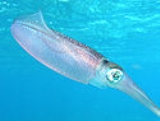
, of which two are entirely extinct. Class CephalopodCephalopod

The cephalopods are the mollusk class Cephalopoda characterized by bilateral body symmetry, a prominent head, and a m...
a molluscs such as squidSquid

Squids are a large, diverse group of marine cephalopods....
, cuttlefishCuttlefish

Cuttlefish are marine animals of the order Sepiida belonging to the Cephalopoda class ....
 and octopusOctopus

The octopus is a cephalopod of the order Octopoda that inhabits many diverse regions of the ocean, especially coral r...
 are among the most neurologically-advancedNeurobiology

Neurobiology is the study of cells of the nervous system and the organization of these cells into functional circuits that p...
 of all invertebrates.

The majority of mollusc species live in marineMarine

Marine may mean:*Marine , a soldier serving aboard a ship and/or whose primary function is to assault the land from the sea...
 environments, and many of them are found intertidallyIntertidal zone

The intertidal zone, also known as the littoral zone, in marine aquatic environments is the area of the foreshore and seabed...
, in the shallow subtidal and on the continental shelfContinental shelf

The continental shelf is the extended perimeter of each continent, which is covered during interglacial periods such as the ...
. PelagicPelagic zone

The pelagic zone is the part of the open sea or ocean comprising the water column, i.e....
 species of octopus and squid live throughout the water columnWater column

Water column may refer to:* a unit for hydrostatic pressure; metres water column....
 of the ocean, and some species of clam and limpet live in the abyssal depths of the oceans around hot hydrothermal ventHydrothermal vent

A hydrothermal vent is a fissure in a planet's surface from which geothermally heated water issues....
s. However, not all molluscs are marine: the bivalve and gastropod classes also contain freshwater species, and the gastropods additionally have representatives that live on land, the land snailSnail

The name snail applies to most members of the molluscan class Gastropoda that have coiled shells....
s and slugSlug

Slugs are gastropod molluscs without shells or with very small internal shells, in contrast to snails, which have a prominen...
s.

A number of species of molluscs are valued by humans as seafoodSeafood

Seafood is any sea animal or seaweed that is served as food or is suitable for eating....
, or for their decorative shells. Edible species include various clams, snails, squid and octopuses.

Anatomy


Molluscs are triploblastic protostomeFacts About Protostome

Protostomes are a taxon of animals....
s and many demonstrate bilateral symmetrySymmetry (biology) Summary

Symmetry in biology is the balanced distribution of duplicate body parts or shapes....
. The principal body cavityBody cavity Overview

By the broadest definition, a body cavity is any fluid filled space in a multicellular organism....
 is a blood-filled hemocoelHemocoel

A Hemocoel is a cavity or series of spaces between the organs of organisms with open circulatory systems like most arthropod...
. They have a true coelomBody cavity

By the broadest definition, a body cavity is any fluid filled space in a multicellular organism....
 (eucoelom); any coelomic cavities have been reduced to vestiges around the heartHeart

The heart is a hollow, muscular organ in vertebrates, responsible for pumping blood through the blood vessels by repeated, r...
s, gonadGonad

The gonad is the organ that makes gametes....
s, and metanephridia. The body is often divided into a head, with eyes or tentacles, a muscular foot, and a visceralViscus

In anatomy, a viscus is an internal organ of an animal , in particular an internal organ of the thorax or abdomen....
 mass housing the organs.

Molluscs have a mantleMantle (mollusc)

The mantle is an organ found in mollusks....
, which is a fold of the outer skin lining the shell, and a muscular foot that in most species is used for locomotion. In most molluscs the mantle secretes a calcium carbonateCalcium carbonate

Calcium carbonate is a chemical compound, with chemical formula CaCO3....
 external shell. In the majority of marine molluscs the gillGill

In aquatic organisms, gills are respiration organs for the extraction of oxygen from water and the excretion of carbon dioxi...
 or gills absorbs oxygenOxygen Summary

Oxygen is a chemical element with the chemical symbol O and atomic number 8....
 from the water.

All species of the phylum Molluscs have a complete digestive tract that starts from the mouthMouth

The mouth, also known as the buccal cavity or the oral cavity, is the opening through which an animal takes in f...
 and runs to the anusAnus

In anatomy, the anus is the external opening of the rectum....
. Many have a feeding structure, the radulaRadula

Radula is the scientific name for the toothed chitinous ribbon in the mouth of gastropods....
, mostly composed of chitinChitin

Chitin is one of the main components in the cell walls of fungi, the exoskeletons of insects and other arthropods, and in so...
. This radula is a feature only found in molluscs. Radulae are very diverse within the Mollusca, ranging from structures used to scrape algaeAlgae Summary

Algae encompass several different groups of usually relatively simple living organisms that capture light energy through ph...
 off rocks, to the harpoon-like structures of cone snailCone snail Summary

The cone snails or cone shells are marine snails found in coral reefs....
s. Cephalopods also possess a chitinous beak. Unlike the closely related annelidAnnelid

The annelids, collectively called Annelida , are a large phylum of animals, comprising the segmented worms, with about...
s, molluscs lack body segmentation.

Development passes through one or two trochophoreTrochophore

A trochophore is a type of larva with several bands of cilia....
 stages, one of which, (the veligerVeliger

Veliger are the free-swimming, planktonic larvae of certain marine and fresh-water univalve mollusks, or gastropods as well ...
), is unique to the group. These larval stages suggest a close relationship between the molluscs and various other protostomes, notably the AnnelidAnnelid

The annelids, collectively called Annelida , are a large phylum of animals, comprising the segmented worms, with about...
s.

The giant squidGiant squid

Giant squid, once believed to be mythical creatures, are squid of the Architeuthidae family, represented by as many as...
, which until recently had not been observed alive in its adult form,ssification


There are ten classesClass (biology)

A class is a rank in the scientific classification of animals and plants in biology....
 of molluscs; eight of the classes have living representatives, the other two classes are known only from fossils. More than 250,000 species of mollusc are recognized and named. Snails (Gastropoda) account for about 80% of living mollusc diversity.


Class Major organisms Extant species Distribution
CaudofoveataCaudofoveata

Caudofoveata is a small class of the phylum mollusca, also known as Chaetodermomorpha....
 
worm-like organisms 70 deep ocean
AplacophoraAplacophora

Aplacophora is a class of exclusively benthic marine mollusks found in all oceans of the world....
 
solenogastersNeomeniomorpha

Together with the Chaetodermomorpha a part of Aplacophora....
, worm-like organisms
250 deep ocean
Polyplacophora  chitons 600 rocky marine shorelines
MonoplacophoraMonoplacophora

Monoplacophora is a class of mollusks thought to be extinct until 1952, when a living animal was dredged up from deep marine...
 
limpet-like organisms 11 deep ocean
GastropodaGastropoda

The gastropods, gasteropods, or univalves, are the largest and most successful class of mollusks, with 60,000-75...
 
abaloneAbalone

Abalone is the American English variant of the Spanish name Abuln used for various species of shellfish from the Ha...
, limpetLimpet

Limpets are marine mollusks in the family Acmaeidae with flattened, cone-shaped shells....
s, conchConch

A conch is a sea-dwelling mollusk, and more specifically, a marine gastropod....
, nudibranchFacts About Nudibranch

Nudibranchs are sea slugs belonging to the suborder Nudibranchia, the largest suborder of the order Opisthobranchia....
s, sea hareSea hare

Sea hares are small marine gastropod molluscs of the suborder Anaspidea in the subclass Orthogastropoda, class Gastrop...
s, sea butterflySea butterfly

Sea butterflies, or flapping snails, are holoplanktonic mollusks , belonging to the suborder Thecosomata ....
, snailSnail

The name snail applies to most members of the molluscan class Gastropoda that have coiled shells....
s, slugFacts About Slug

Slugs are gastropod molluscs without shells or with very small internal shells, in contrast to snails, which have a prominen...
s
150,000 marine, freshwater, land
CephalopodCephalopod

The cephalopods are the mollusk class Cephalopoda characterized by bilateral body symmetry, a prominent head, and a m...
a
squidSquid

Squids are a large, diverse group of marine cephalopods....
, octopusOctopus

The octopus is a cephalopod of the order Octopoda that inhabits many diverse regions of the ocean, especially coral r...
, cuttlefishCuttlefish

Cuttlefish are marine animals of the order Sepiida belonging to the Cephalopoda class ....
, nautilusNautilus

Nautilus is the common name of any marine creatures of the cephalopod family Nautilidae, the sole family of the subord...
 
786 marine
BivalviaBivalvia

Bivalves are molluscs belonging to the class Bivalvia....
 
clamClam

Clams are shelled marine or freshwater mollusks belonging to the class Bivalvia...
s, oysterFacts About Oyster

The name oyster is used for a number of different groups of molluscs which grow for the most part in marine or brackish wate...
s, scallopScallop

Scallops are the family Pectinidae of bivalve molluscs....
s, musselMussel

The term mussel is used for several families of bivalve mollusks inhabiting lakes, rivers, and creeks, as well as intertida...
s
8000 marine, freshwater
Scaphopoda  tusk shells 350 marine
RostroconchiaRostroconchia

The Rostroconchia is a class of extinct mollusks dating from the early Cambrian to the late Permian....
 †
fossils; probable ancestors of bivalves extinct 
Helcionelloida † fossils; snail-like organisms such as LatouchellaLatouchella

Latouchella is an extinct genus of mollusc....
extinct


Evolution


It is believed that the bivalves and scaphopods are sister groups, as are the gastropods and cephalopods, as indicated in the relationship diagram to the right.

In this phylum's level of organization, organ systems from all three primary germ layerGerm layer

A germ layer is a collection of cells, formed during animal embryogenesis....
s can be found:

  1. Nervous system (with brainBrain

    In animals, the brain, or encephalon , is the control center of the central nervous system....
    )
  2. Excretory system
  3. Circulatory system (open circulatory systemCirculatory system

    A circulatory system is an organ system that moves substances to and from cells; it can also help stabilize body temperatur...
     - except cephalopods which have a closed system)
  4. Respiratory system


All major molluscan groups possess a skeleton, though it has been lost through evolution in some members of the phylum. It is probable that the pre-Cambrian ancestor of the molluscs had calcium carbonate spicules embedded in its mantle and outer tissues, as is the case in some modern members.

The skeleton, if present, is primarily external and composed of calcium carbonate (aragonite or calcite). The snail shell or gastropod shellGastropod shell

The gastropod shell is a seashell which is part of the body of a gastropod or snail....
 is perhaps the best known molluscan shell, but many pulmonate and opisthobranch snails have secondarily reduced and internalized shells, or have lost the shell completely. The bivalve or clam shell consists of two pieces (valves), articulated by muscles and an elastic hinge. The cephalopod shell was ancestrally external and chambered, as exemplified by the ammonoids and nautiloids, and still possessed by Nautilus today. Other cephalopods, such as cuttlefish, have internalized the shell, the squid have mostly organic chitinous internal shells, and the octopods have lost the shell altogether.

The first definitive evidence for molluscs comes from an early Cambrian radula, but the Ediacaran organism KimberellaKimberella

Kimberella quadrata is a fossil animal from the Ediacaran or Vendian fauna....
is held by some to be an ancestral mollusc.

Dangerous molluscs


A very small minority of molluscs can represent a serious risk to humans under the wrong circumstances.

All octopuses are venomous but only a few species pose a significant threat to humans, such as octopuses in the genus HapalochlaenaBlue-ringed octopus

The blue-ringed octopuses are three or four small octopus species that live in tide pools in the Pacific, in places from Jap...
which have a very poisonous bite. A few of the larger tropical cone snailCone snail

The cone snails or cone shells are marine snails found in coral reefs....
 species have a very poisonous sting. These bites and stings can sometimes be fatal.

Some people are severely allergic to shellfish as a food item. However, even for people without these allergies, clams can sometimes be risky to eat. When there is a "red tideRed tide

Red tide is an estuarine or marine algal bloom and is caused by a species of dinoflagellates, often present in sufficient nu...
", or other blooms of noxious planktonPlankton

Plankton are drifting organisms that inhabit the water column of oceans, seas, and bodies of fresh water. ...
, or when there are high concentrations of bacteria in the water from sewage run-off, bivalves such as clams and mussels can temporarily become very problematic as a food source. This is because bivalves are filter-feeders, and thus they can concentrate toxins from floating microorganisms within their tissues.

The traditional idea that the giant clamGiant clam

The giant clam or traditionally, paua, is the largest living bivalve mollusc....
 can trap the leg of a person between its valves, thus drowning them, has been shown to be a myth.

Despite its name, the disease molluscum contagiosumMolluscum contagiosum

Molluscum contagiosum is a viral infection of the skin or occasionally of the mucous membranes....
 is caused by a virusVirus

A virus is a microscopic particle that can infect the cells of a biological organism....
, and is not connected with molluscs in any way.


Aquaculture


In 2005, China accounted for 80 per cent of the global mollusc catch according to a FAO study. Within Europe, France remained the industry leader.

External links