

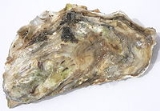
Oyster

Encyclopedia
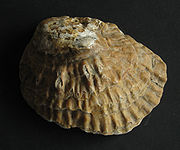
The word oyster is used as a common name
for a number of distinct groups of bivalve molluscs which live in marine
or brackish habitats. The valves are highly calcified.
Some kinds of oyster are commonly consumed, cooked or raw, by humans. Other kinds, such as pearl oyster
s, are not. These are considered an aphrodisiac
.
oistre, in turn from Latin
ostrea, the feminine form of ostreum, which is the latinisation
of the Greek
ὄστρεον (ostreon), "oyster". Compare ὀστέον (osteon), "bone".
. This family includes the edible oysters, which mainly belong to the genera Ostrea
, Crassostrea
, Ostreola
and Saccostrea. Examples include the Belon oyster
, Eastern oyster
, Olympia oyster
, Pacific oyster
, Sydney rock oyster
, and the Wellfleet oyster.
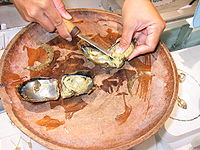
Almost all shell-bearing molluscs can secrete pearls, yet most are not very valuable.
Pearl oyster
s are not closely related to true oysters, being members of a distinct family, the feathered oysters (Pteriidae
). Both cultured pearl
s and natural pearls can be obtained from pearl oysters, though other molluscs, such as the freshwater mussel
s, also yield pearls of commercial value.
The largest pearl-bearing oyster is the marine Pinctada maxima, which is roughly the size of a dinner plate. Not all individual oysters produce pearls naturally. In fact, in a harvest of three ton
s of oysters, only three to four oysters produce perfect pearls.
In nature, pearl oysters produce natural pearls by covering a minute invading parasite with nacre
, not by ingesting a grain of sand. Over the years, the irritating object is covered with enough layers of nacre to become a pearl. There are many different types, colours and shapes of pearl; these qualities depend on the natural pigment
of the nacre, and the shape of the original irritant.
Pearl farmers can culture a pearl by placing a nucleus, usually a piece of polished mussel shell, inside the oyster. In three to six years, the oyster can produce a perfect pearl. These pearls are not as valuable as natural pearls, but look exactly the same. In fact, since the beginning of the 20th century, when several researchers discovered how to produce artificial pearls, the cultured pearl market has far outgrown the natural pearl market.
s, drawing water in over their gill
s through the beating of cilia. Suspended plankton
and particles are trapped in the mucus
of a gill, and from there are transported to the mouth, where they are eaten, digested and expelled as faeces or pseudofaeces. Oysters feed most actively at temperatures above 10 °C (50 °F). An oyster can filter up to 5 litres (1.3 US gal) of water per hour. Chesapeake Bay
's once flourishing oyster population historically filtered excess nutrients from the estuary's entire water volume every three to four days. Today that would take nearly a year. Excess sediment, nutrients, and algae can result in the eutrophication
of a body of water. Oyster filtration can mitigate these pollutants.
In addition to their gills, oysters can also exchange gases across their mantle, which is lined with many small, thin-walled blood vessels. A small, three-chambered heart
, lying under the adductor muscle
, pumps colorless blood
to all parts of the body. At the same time, two kidneys, located on the underside of the muscle, remove waste products from the blood.
While some oysters have two sexes (European Oyster & Olympia Oyster), their reproductive organs contain both eggs and sperm. Because of this, it is technically possible for an oyster to fertilize its own egg. The gonads surround the digestive organs, and are made up of sex cells, branching tubules and connective tissue.
Once the female is fertilized, they discharge millions of eggs into the water. The larvae develop in about six hours and swim around for about two to three weeks. After that, they settle on a bed and mature within a year. [29]
The largest oyster-producing body of water is located in Chesapeake Bay, although these beds are starting to decrease in number due to overfishing and pollution. Large beds of edible oysters are also found in Japan and Australia. [29]
As a keystone species
, oysters provide habitat
for many marine species.
Crassostrea and Saccostrea live mainly in the intertidal zone
, while Ostrea are subtidal. The hard surfaces of oyster shells and the nooks between the shells provide places where a host of small animals can live. Hundreds of animals such as sea anemones, barnacles, and hooked mussels inhabit oyster reefs. Many of these animals are prey to larger animals, including fish such as striped bass
, black drum
and croakers.
An oyster reef can increase the surface area of a flat bottom 50-fold. An oyster's mature shape often depends on the type of bottom to which it is originally attached, but it always orients itself with its outer, flared shell tilted upward. One valve is cupped and the other is flat.
Oysters usually reach maturity in one year. They are protandric; during their first year they spawn as males by releasing sperm
into the water. As they grow over the next two or three years and develop greater energy reserves, they spawn as females by releasing eggs
. Bay oysters usually spawn by the end of June. An increase in water temperature prompts a few oysters to spawn. This triggers spawning in the rest, clouding the water with millions of eggs and sperm. A single female oyster can produce up to 100 million eggs annually. The eggs become fertilized in the water and develop into larvae, which eventually find suitable sites, such as another oyster's shell, on which to settle. Attached oyster larvae are called spat. Spat are oysters less than 25 millimetre (0.984251968503937 in) long. Many species of bivalve, oysters included, seem to be stimulated to settle near adult conspecifics.
Some tropical oysters in the family Isognomonidae
grow best on mangrove
roots. Low tide can expose them, making them easy to collect. In Trinidad
in the West Indies, tourists are often astounded when they are told that in the Caribbean, "oysters grow on trees".
Common oyster predators include crab
s, sea birds, sea star
s, and human
s. Some oysters contain live crabs, known as oyster crab
s.
s and ammonia
), removing them from the water. Nitrogen compounds are important phytoplankton
nutrients. Phytoplankton increase water turbidity
. Limiting the amount of phytoplankton in the water improves water quality and other marine life by reducing competition for dissolved oxygen. Oysters feed on plankton, incidentally consuming nitrogen compounds as well. They then expel solid waste pellets which decompose into the atmosphere as nitrogen
. In Maryland
, the Chesapeake Bay Program
plans to use oysters to reduce the amount of nitrogen compounds entering the Chesapeake Bay
by 8600 metric tons (18,959,754.5 lb) per year by 2010.
The oyster-tecture movement, espoused by Assistant Professor Kate Orff of the Columbia University Graduate School of Architecture, promotes the use of oyster reefs for water purification and wave attenuation. As of 2011, coverage of the Gowanus Canal Parade of Oyster Spats is unavailable. An "Oyster-tecture" project has been implemented at Withers Estuary, Withers Swash, South Carolina, by Neil Chambers-led volunteers, at a site where pollution was impacting beach tourism. Currently, for the installation cost of $3000, roughly 4.8 million liters of water is being filtered daily. In New Jersey, however, oyster-tecture is faring less well. The Department of Environmental Protection refused to allow oysters as a filtering system in Sandy Hook Bay and the Raritan Bay citing worries that commercial shellfish growers would be at risk and that members of the public might disregard warnings and consume tainted oysters.
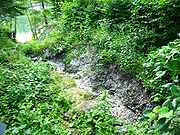 Midden
s testify to the prehistoric importance of oysters as food. In the United Kingdom
, the town of Whitstable
is noted for oyster farming
from beds on the Kentish Flats that have been used since Roman
times. The borough of Colchester
holds an annual Oyster Feast
each October, at which "Colchester Natives" (the native oyster, Ostrea edulis) are consumed. The United Kingdom
hosts several other annual oyster festivals, for example Woburn Oyster Festival is held in September. Many breweries produce Oyster Stout, a beer intended to be drunk with oysters that sometimes includes oysters in the brewing process.
The French
seaside resort of Cancale
is noted for its oysters, which also date from Roman times. Sergius Orata
of the Roman Republic
is considered the first major merchant and cultivator of oysters. Using his considerable knowledge of hydraulics, he built a sophisticated cultivation system, including channels and locks, to control the tides. He was so famous for this that the Romans used to say he could breed oysters on the roof of his house.
The world-famous Clarenbridge and Galway Oyster Festivals take place in Galway, Ireland each September. In Ireland
it is traditional to eat them live with Guinness
and buttered brown soda bread
.
In the early 19th century, oysters were cheap and mainly eaten by the working class
. Throughout the 19th century, oyster beds in New York
harbor became the largest source of oysters worldwide. On any day in the late 19th century, six million oysters could be found on barges tied up along the city’s waterfront. Oysters were naturally quite popular in New York City
, and helped initiate the city’s restaurant trade. New York's oystermen became skilled cultivators of their beds, which provided employment for hundreds of workers and nutritious food for thousands. Eventually, rising demand exhausted many of the beds. To increase production, they introduced foreign species, which brought disease, when combined with effluent
and increasing sedimentation from erosion, which destroyed most of the beds by the early 20th century. Oysters’ popularity has put an ever-increasing demands on wild oyster stocks. This scarcity increased prices, converting them from their original role as working class food to their current status as an expensive delicacy
.
In the United Kingdom, the native variety (Ostrea edulis) is still held to be the finest, requiring five years to mature and protected by an Act of Parliament
during the May–August spawning season. The current market is dominated by the larger Pacific oyster
and rock oyster
varieties which are farmed year round.
. In somewhat deeper water, long-handled rakes or oyster tongs
are used to reach the beds. Patent tongs can be lowered on a line to reach beds that are too deep to reach directly. In all cases the task is the same: the oysterman
scrapes oysters into a pile, and then scoops them up with the rake or tongs.
In some areas a scallop dredge
is used. This is a toothed bar attached to a chain bag. The dredge is towed through an oyster bed by a boat, picking up the oysters in its path. While dredges collect oysters more quickly, they heavily damage the beds, and their use is highly restricted. Until 1965 Maryland
limited dredging to sailboat
s, and even since that date motor boats can be used only on certain days of the week. These regulations prompted the development of specialized sailboat
s (the bugeye and later the skipjack) for dredging.
Oysters can also be collected by divers
.
In any case, when the oysters are collected, they are sorted to eliminate dead animals, bycatch (unwanted catch), and debris. Then they are taken to market where they are either canned or sold live.

Oysters have been cultured for well over a century. Two methods are commonly used, release and bagging. In both cases oysters are cultivated onshore to the size of spat, when they can attach themselves to a substrate. They may be allowed to mature further to form seed oysters. In either case they are then placed in the water to mature. The release technique involves distributing the spat throughout existing oyster beds allowing them to mature naturally to be collected like wild oysters. Bagging has the cultivator putting spat in racks or bags and keeping them above the bottom. Harvesting involves simply lifting the bags or rack to the surface and removing the mature oysters. The latter method prevents losses to some predators, but is more expensive.
The Pacific or Japanese oyster, Crassostrea gigas has been grown in the outflow of mariculture
ponds. When fish or prawn
are grown in ponds, it takes, typically 10 kilograms (22 lb) of feed to produce 1 kilograms (2.2 lb) of product (dry-dry basis). The other 9 kilograms (19.8 lb) goes into the pond and after mineralization, provides food for phytoplankton, which in turn feeds the oyster.
To prevent spawning, sterile oysters are now cultured by crossbreeding tetraploid and diploid oysters. The resulting triploid oyster cannot propagate, which prevents introduced oysters from spreading into unwanted habitats.
was introduced to California waters in 1875, while the Pacific oyster was introduced there in 1929. Proposals for further such introductions remain controversial.
The Pacific oyster prospered in Pendrell Sound
where the surface water is typically warm enough for spawning in the summer. Over the following years, spat spread out sporadically and populated adjacent areas. Eventually, possibly following adaptation to the local conditions, the Pacific oyster spread up and down the coast and now is the basis of the North American west coast oyster industry. Pendrell Sound is now a reserve that supplies spat for cultivation.
Near the mouth of the Great Wicomico River
in the Chesapeake Bay
, five year-old artificial reefs now harbor more than 180 million native Crassostrea virginica. That is still a far cry from the late 1880s, when the Bay’s population was in the billions, and watermen harvested about 910000 cubic metres (25,021,502 imp bsh) annually. The 2009 harvest was less than 7300 cubic metres (200,721.9 imp bsh). Researchers claim that the keys to the project were:
In 2005, China accounted for 80% of the global oyster harvest. Within Europe, France remained the industry leader.
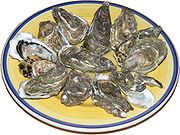
 Jonathan Swift
is quoted as having said, "He was a bold man that first ate an oyster", but evidence of oyster consumption goes back into prehistory, evidenced by oyster middens found worldwide. Oysters were an important food source in all coastal areas where they could be found, and oyster fisheries
were an important industry where they were plentiful. Overfishing and pressure from diseases and pollution have sharply reduced supplies, but they remain a popular treat celebrated in oyster festival
s in many cities and towns.
There are several different types of oysters that are edible out of the over 50 different kinds that are in the oceans today.[29]
, iron
, calcium
, selenium
as well as Vitamin A
and Vitamin B12
. Oysters are low in food energy
; one dozen raw oysters contain approximately 110 kilocalories (460.2 kJ). Oysters are considered the healthiest when eaten raw on the half shell.
Traditionally, oysters were considered to be an aphrodisiac
. A team of American and Italian researchers analyzed bivalves and found they were rich in amino acids that trigger increased levels of sex hormones. Their high zinc
content aids the production of testosterone.
Dietary supplements may contain calcium carbonate from oyster shells, though there is no evidence that this offers any benefits beyond what calcium may offer.
Oysters can be eaten on the half shell, raw, smoked, boiled, baked, fried
, roasted, stewed, canned
, pickled, steamed, broiled or used in a variety of drinks. Preparation widely varies. It can be as simple as opening the shell and eating the contents, including juice. Butter
and salt
are often added. In the case of oysters Rockefeller
, preparation can be very elaborate. They are sometimes served on edible seaweed, such as brown algae
.
Care should be taken when consuming oysters. Purists insist on eating them raw, with no dressing save perhaps lemon
juice, vinegar
(most commonly shallot
vinegar), or cocktail sauce
. Upscale restaurants pair raw oysters with a home-made Mignonette sauce
, which consists primarily of fresh chopped shallot
, mixed pepper
corn, dry white wine and lemon
juice or sherry vinegar
. Like fine wine, raw oysters have complex flavors that vary greatly among varieties and regions: sweet, salty, earthy, or even melon. The texture is soft and fleshy, but crisp on the palate. North American varieties include: Kumamoto and Yaquina Bay
from Oregon State, Malpeque from Prince Edward Island
, Canada
, Blue Point
from Long Island
, New York
, and Cape May
oysters from New Jersey
. Salinity, mineral, and nutrient variations in the water that nurtures them influence their flavor profile.
It was once assumed that oysters were only safe to eat in months with the letter ‘r’ in their English and French names. This is a myth whose basis in truth is that in the northern hemisphere oysters are much more likely to spoil in May, June, July, and August.
Oysters can contain harmful bacteria
. Oysters are filter feeders and will naturally concentrate anything present in the surrounding water. Oysters from the Gulf Coast of the United States, for example, contain high bacterial loads of human pathogens in the warm months, most notably Vibrio vulnificus
and Vibrio parahaemolyticus
. In these cases, the main danger is for immuno-compromised individuals, who are unable to fight off infection and can succumb to septicemia, leading to death. Vibrio vulnificus is the most deadly seafood-borne pathogen
, with a higher case-to-death ratio than even Salmonella enterica
and Escherichia coli
.
 Fresh oysters must be alive just before consumption or cooking. There is only one criterion: the oyster must be capable of tightly closing its shell. Open oysters should be tapped on the shell; a live oyster will close up and is safe to eat. Oysters which are open and unresponsive are dead and must be discarded. Some dead oysters, or oyster shells which are full of sand may be closed. These make a distinctive noise when tapped, and are known as clackers.
Opening oysters requires skill. The preferred method is to use a special knife (called an oyster knife, a variant of a shucking knife), with a short and thick blade about 5 centimetres (2 in) long.
While there are different methods to open an oyster (which sometimes depend on the type of oyster), the following is one commonly accepted oyster shucking method. Insert the blade, with moderate force and vibration if necessary, at the hinge between the two valves. Then twist the blade until there is a slight pop. Then slide the blade upward to cut the adductor muscle which holds the shell closed. Inexperienced shuckers can apply too much force, which can result in injury if the blade slips. Heavy gloves are necessary: apart from the knife, the shell itself can be razor sharp. Professional shuckers require less than 3 seconds to do the deed.
If the oyster has a particularly soft shell, the knife can be inserted instead in the sidedoor, about halfway along one side where the oyster lips widen and there is a slight indentation.
Opening or "shucking" oysters has become a competitive sport. Oyster shucking competitions are staged around the world. Widely acknowledged to be the premiere event, the Guinness World Oyster Opening Championship is held in September at the Galway Oyster Festival, in Galway Ireland.
and the generally sustainable and environmentally friendly way in which they are raised and harvested.
One common ethical objection to the consumption of animals is that their cultivation is environmentally harmful. Regarding environmental impact, 95% of oysters are sustainably farmed and harvested (other bivalves are frequently harvested by harmful dredging), feed on plankton (very low on the food chain
), and in fact improve the marine environment by removing toxins. As such, oysters are listed as a "Best Choice" (highest rating) on the Seafood Watch
list.
The view that oysters are acceptable to eat, even by strict ethical criteria, has notably been propounded in the seminal 1975 text Animal Liberation
, by philosopher Peter Singer
However, subsequent editions have reversed this position (advocating against eating oysters). Singer has stated that he has "gone back and forth on this over the years", and as of 2010 states that "while you could give them the benefit of the doubt, you could also say that unless some new evidence of a capacity for pain emerges, the doubt is so slight that there is no good reason for avoiding eating sustainably produced oysters".
Common name
A common name of a taxon or organism is a name in general use within a community; it is often contrasted with the scientific name for the same organism...
for a number of distinct groups of bivalve molluscs which live in marine
Marine (ocean)
Marine is an umbrella term. As an adjective it is usually applicable to things relating to the sea or ocean, such as marine biology, marine ecology and marine geology...
or brackish habitats. The valves are highly calcified.
Some kinds of oyster are commonly consumed, cooked or raw, by humans. Other kinds, such as pearl oyster
Pearl oyster
Pearl oysters are saltwater clams, marine bivalve molluscs of the genus Pinctada in the family Pteriidae. They have a strong inner shell layer composed of nacre, also known as "mother of pearl"....
s, are not. These are considered an aphrodisiac
Aphrodisiac
An aphrodisiac is a substance that increases sexual desire. The name comes from Aphrodite, the Greek goddess of sexuality and love. Throughout history, many foods, drinks, and behaviors have had a reputation for making sex more attainable and/or pleasurable...
.
Etymology
First attested in English 14th century, the word oyster comes from Old FrenchOld French
Old French was the Romance dialect continuum spoken in territories that span roughly the northern half of modern France and parts of modern Belgium and Switzerland from the 9th century to the 14th century...
oistre, in turn from Latin
Latin
Latin is an Italic language originally spoken in Latium and Ancient Rome. It, along with most European languages, is a descendant of the ancient Proto-Indo-European language. Although it is considered a dead language, a number of scholars and members of the Christian clergy speak it fluently, and...
ostrea, the feminine form of ostreum, which is the latinisation
Latinisation (literature)
Latinisation is the practice of rendering a non-Latin name in a Latin style. It is commonly met with for historical personal names, with toponyms, or for the standard binomial nomenclature of the life sciences. It goes further than Romanisation, which is the writing of a word in the Latin alphabet...
of the Greek
Greek language
Greek is an independent branch of the Indo-European family of languages. Native to the southern Balkans, it has the longest documented history of any Indo-European language, spanning 34 centuries of written records. Its writing system has been the Greek alphabet for the majority of its history;...
ὄστρεον (ostreon), "oyster". Compare ὀστέον (osteon), "bone".
True oysters
True oysters are members of the family OstreidaeOstreidae
Ostreidae are the true oysters, and include most species that are commonly eaten under the name oyster. Pearl oysters are not true oysters and belong to the distinct order Pterioida....
. This family includes the edible oysters, which mainly belong to the genera Ostrea
Ostrea
Ostrea is a genus of oyster in the family Ostreidae. Evidence of a number of species of this genus in the geological fossil record demonstrates the ancient nature of this genus, and also gives testimony to the species that co-existed with members of the Ostrea genus...
, Crassostrea
Crassostrea
Crassostrea is a genus of true oysters containing the most important oysters used for food.- Species :* Crassostrea ** †Crassostrea alabamiensis...
, Ostreola
Ostreola
Ostreola is a genus of fungi in the family Mytilinidiaceae. This is a monotypic genus, containing the single species Ostreola consociata.-External links:*...
and Saccostrea. Examples include the Belon oyster
Belon oyster
Ostrea edulis is a species of oyster native to Europe and commonly known as the European flat oyster, Colchester native oyster, mud oyster, or edible oyster . When mature O. edulis adults range from across...
, Eastern oyster
Eastern oyster
The eastern oyster — also called Atlantic oyster or Virginia oyster — is a species of true oyster native to the eastern seaboard and Gulf of Mexico coast of North America. It is also farmed in Puget Sound, Washington, where it is known as the Totten Inlet Virginica. Eastern oysters are and have...
, Olympia oyster
Olympia oyster
The Olympia oyster, Ostreola conchaphila, is the native oyster of the Pacific coast of North America from Alaska to Mexico. The name is derived from the important 19th century oyster industry near Olympia, Washington, in Puget Sound....
, Pacific oyster
Pacific oyster
The Pacific oyster, Japanese oyster or Miyagi oyster , is an oyster native to the Pacific coast of Asia. It has become an introduced species in North America, Australia, Europe, and New Zealand.- Etymology :...
, Sydney rock oyster
Sydney rock oyster
The Sydney rock oyster, Saccostrea glomerata, formerly known as Saccostrea commercialis, is an oyster species endemic to Australia and New Zealand...
, and the Wellfleet oyster.
Pearl oysters
Almost all shell-bearing molluscs can secrete pearls, yet most are not very valuable.
Pearl oyster
Pearl oyster
Pearl oysters are saltwater clams, marine bivalve molluscs of the genus Pinctada in the family Pteriidae. They have a strong inner shell layer composed of nacre, also known as "mother of pearl"....
s are not closely related to true oysters, being members of a distinct family, the feathered oysters (Pteriidae
Pteriidae
Pteriidae is a family of medium-sized to large saltwater clams. They are pearl oysters, marine bivalve mollusks in the order Pterioida.Some of the species in this family are important economically as the source of saltwater pearls....
). Both cultured pearl
Cultured pearl
A cultured pearl is a pearl created by a pearl farmer under controlled conditions.-Development of a pearl:A pearl is formed when the mantle tissue is injured by a parasite, an attack of a fish or another event that damages the external fragile rim of the shell of a molluc shell bivalve or gastropod...
s and natural pearls can be obtained from pearl oysters, though other molluscs, such as the freshwater mussel
Mussel
The common name mussel is used for members of several families of clams or bivalvia mollusca, from saltwater and freshwater habitats. These groups have in common a shell whose outline is elongated and asymmetrical compared with other edible clams, which are often more or less rounded or oval.The...
s, also yield pearls of commercial value.
The largest pearl-bearing oyster is the marine Pinctada maxima, which is roughly the size of a dinner plate. Not all individual oysters produce pearls naturally. In fact, in a harvest of three ton
Ton
The ton is a unit of measure. It has a long history and has acquired a number of meanings and uses over the years. It is used principally as a unit of weight, and as a unit of volume. It can also be used as a measure of energy, for truck classification, or as a colloquial term.It is derived from...
s of oysters, only three to four oysters produce perfect pearls.
In nature, pearl oysters produce natural pearls by covering a minute invading parasite with nacre
Nacre
Nacre , also known as mother of pearl, is an organic-inorganic composite material produced by some mollusks as an inner shell layer; it is also what makes up pearls. It is very strong, resilient, and iridescent....
, not by ingesting a grain of sand. Over the years, the irritating object is covered with enough layers of nacre to become a pearl. There are many different types, colours and shapes of pearl; these qualities depend on the natural pigment
Pigment
A pigment is a material that changes the color of reflected or transmitted light as the result of wavelength-selective absorption. This physical process differs from fluorescence, phosphorescence, and other forms of luminescence, in which a material emits light.Many materials selectively absorb...
of the nacre, and the shape of the original irritant.
Pearl farmers can culture a pearl by placing a nucleus, usually a piece of polished mussel shell, inside the oyster. In three to six years, the oyster can produce a perfect pearl. These pearls are not as valuable as natural pearls, but look exactly the same. In fact, since the beginning of the 20th century, when several researchers discovered how to produce artificial pearls, the cultured pearl market has far outgrown the natural pearl market.
Other types of oyster
A number of bivalve molluscs (other than edible oysters and pearl oysters) also have common names that include the word "oyster", usually because they either taste or look like oysters, or because they yield noticeable pearls. Examples include:- Thorny oysters (Spondylidae)
- Pilgrim oysters (a kind of scallop)
- Saddle oysters (Anomia ephippium)
Anatomy
Oysters are filter feederFilter feeder
Filter feeders are animals that feed by straining suspended matter and food particles from water, typically by passing the water over a specialized filtering structure. Some animals that use this method of feeding are clams, krill, sponges, baleen whales, and many fish and some sharks. Some birds,...
s, drawing water in over their gill
Gill
A gill is a respiratory organ found in many aquatic organisms that extracts dissolved oxygen from water, afterward excreting carbon dioxide. The gills of some species such as hermit crabs have adapted to allow respiration on land provided they are kept moist...
s through the beating of cilia. Suspended plankton
Plankton
Plankton are any drifting organisms that inhabit the pelagic zone of oceans, seas, or bodies of fresh water. That is, plankton are defined by their ecological niche rather than phylogenetic or taxonomic classification...
and particles are trapped in the mucus
Mucus
In vertebrates, mucus is a slippery secretion produced by, and covering, mucous membranes. Mucous fluid is typically produced from mucous cells found in mucous glands. Mucous cells secrete products that are rich in glycoproteins and water. Mucous fluid may also originate from mixed glands, which...
of a gill, and from there are transported to the mouth, where they are eaten, digested and expelled as faeces or pseudofaeces. Oysters feed most actively at temperatures above 10 °C (50 °F). An oyster can filter up to 5 litres (1.3 US gal) of water per hour. Chesapeake Bay
Chesapeake Bay
The Chesapeake Bay is the largest estuary in the United States. It lies off the Atlantic Ocean, surrounded by Maryland and Virginia. The Chesapeake Bay's drainage basin covers in the District of Columbia and parts of six states: New York, Pennsylvania, Delaware, Maryland, Virginia, and West...
's once flourishing oyster population historically filtered excess nutrients from the estuary's entire water volume every three to four days. Today that would take nearly a year. Excess sediment, nutrients, and algae can result in the eutrophication
Eutrophication
Eutrophication or more precisely hypertrophication, is the movement of a body of water′s trophic status in the direction of increasing plant biomass, by the addition of artificial or natural substances, such as nitrates and phosphates, through fertilizers or sewage, to an aquatic system...
of a body of water. Oyster filtration can mitigate these pollutants.
In addition to their gills, oysters can also exchange gases across their mantle, which is lined with many small, thin-walled blood vessels. A small, three-chambered heart
Heart
The heart is a myogenic muscular organ found in all animals with a circulatory system , that is responsible for pumping blood throughout the blood vessels by repeated, rhythmic contractions...
, lying under the adductor muscle
Adductor muscle
- Humans :* Adductor muscles of the hip, the most common reference in humans, but may also refer to** Adductor brevis muscle, a muscle in the thigh situated immediately behind the pectineus and adductor longus...
, pumps colorless blood
Blood
Blood is a specialized bodily fluid in animals that delivers necessary substances such as nutrients and oxygen to the cells and transports metabolic waste products away from those same cells....
to all parts of the body. At the same time, two kidneys, located on the underside of the muscle, remove waste products from the blood.
While some oysters have two sexes (European Oyster & Olympia Oyster), their reproductive organs contain both eggs and sperm. Because of this, it is technically possible for an oyster to fertilize its own egg. The gonads surround the digestive organs, and are made up of sex cells, branching tubules and connective tissue.
Once the female is fertilized, they discharge millions of eggs into the water. The larvae develop in about six hours and swim around for about two to three weeks. After that, they settle on a bed and mature within a year. [29]
Habitat and behaviour
A group of oysters is commonly called a bed or oyster reef.The largest oyster-producing body of water is located in Chesapeake Bay, although these beds are starting to decrease in number due to overfishing and pollution. Large beds of edible oysters are also found in Japan and Australia. [29]
As a keystone species
Keystone species
A keystone species is a species that has a disproportionately large effect on its environment relative to its abundance. Such species play a critical role in maintaining the structure of an ecological community, affecting many other organisms in an ecosystem and helping to determine the types and...
, oysters provide habitat
Habitat (ecology)
A habitat is an ecological or environmental area that is inhabited by a particular species of animal, plant or other type of organism...
for many marine species.
Crassostrea and Saccostrea live mainly in the intertidal zone
Intertidal zone
The intertidal zone is the area that is above water at low tide and under water at high tide . This area can include many different types of habitats, with many types of animals like starfish, sea urchins, and some species of coral...
, while Ostrea are subtidal. The hard surfaces of oyster shells and the nooks between the shells provide places where a host of small animals can live. Hundreds of animals such as sea anemones, barnacles, and hooked mussels inhabit oyster reefs. Many of these animals are prey to larger animals, including fish such as striped bass
Striped bass
The striped bass is the state fish of Maryland, Rhode Island, South Carolina, and the state saltwater fish of New York, Virginia, and New Hampshire...
, black drum
Black drum
The Black Drum is a saltwater fish similar to its cousin, the Red Drum. It is the only species in the genus Pogonias. Though most specimens are generally found in the 5-30 lb range, the black drum is well known as the largest of all the drum family with some specimens reaching excesses of...
and croakers.
An oyster reef can increase the surface area of a flat bottom 50-fold. An oyster's mature shape often depends on the type of bottom to which it is originally attached, but it always orients itself with its outer, flared shell tilted upward. One valve is cupped and the other is flat.
Oysters usually reach maturity in one year. They are protandric; during their first year they spawn as males by releasing sperm
Sperm
The term sperm is derived from the Greek word sperma and refers to the male reproductive cells. In the types of sexual reproduction known as anisogamy and oogamy, there is a marked difference in the size of the gametes with the smaller one being termed the "male" or sperm cell...
into the water. As they grow over the next two or three years and develop greater energy reserves, they spawn as females by releasing eggs
Egg (biology)
An egg is an organic vessel in which an embryo first begins to develop. In most birds, reptiles, insects, molluscs, fish, and monotremes, an egg is the zygote, resulting from fertilization of the ovum, which is expelled from the body and permitted to develop outside the body until the developing...
. Bay oysters usually spawn by the end of June. An increase in water temperature prompts a few oysters to spawn. This triggers spawning in the rest, clouding the water with millions of eggs and sperm. A single female oyster can produce up to 100 million eggs annually. The eggs become fertilized in the water and develop into larvae, which eventually find suitable sites, such as another oyster's shell, on which to settle. Attached oyster larvae are called spat. Spat are oysters less than 25 millimetre (0.984251968503937 in) long. Many species of bivalve, oysters included, seem to be stimulated to settle near adult conspecifics.
Some tropical oysters in the family Isognomonidae
Isognomonidae
Isognomonidae is a family of marine bivalve mollusks. They are related to the pearl oysters.Some of the species in the family are known as tree oysters because they are edible and grow on mangrove roots.-Taxonomy:* Crenatula...
grow best on mangrove
Mangrove
Mangroves are various kinds of trees up to medium height and shrubs that grow in saline coastal sediment habitats in the tropics and subtropics – mainly between latitudes N and S...
roots. Low tide can expose them, making them easy to collect. In Trinidad
Trinidad
Trinidad is the larger and more populous of the two major islands and numerous landforms which make up the island nation of Trinidad and Tobago. It is the southernmost island in the Caribbean and lies just off the northeastern coast of Venezuela. With an area of it is also the fifth largest in...
in the West Indies, tourists are often astounded when they are told that in the Caribbean, "oysters grow on trees".
Common oyster predators include crab
Crab
True crabs are decapod crustaceans of the infraorder Brachyura, which typically have a very short projecting "tail" , or where the reduced abdomen is entirely hidden under the thorax...
s, sea birds, sea star
Sea star
Starfish or sea stars are echinoderms belonging to the class Asteroidea. The names "starfish" and "sea star" essentially refer to members of the class Asteroidea...
s, and human
Human
Humans are the only living species in the Homo genus...
s. Some oysters contain live crabs, known as oyster crab
Oyster crab
The oyster crab, Zaops ostreus, is a small, whitish or translucent crab in the family Pinnotheridae. It is less than half an inch across, and lives inside the gills of an oyster or a clam. It uses the oyster for protection and lives on the food that the oyster gets for itself. It is found in...
s.
Marine pollution
Oysters consume nitrogen-containing compounds (nitrateNitrate
The nitrate ion is a polyatomic ion with the molecular formula NO and a molecular mass of 62.0049 g/mol. It is the conjugate base of nitric acid, consisting of one central nitrogen atom surrounded by three identically-bonded oxygen atoms in a trigonal planar arrangement. The nitrate ion carries a...
s and ammonia
Ammonia
Ammonia is a compound of nitrogen and hydrogen with the formula . It is a colourless gas with a characteristic pungent odour. Ammonia contributes significantly to the nutritional needs of terrestrial organisms by serving as a precursor to food and fertilizers. Ammonia, either directly or...
), removing them from the water. Nitrogen compounds are important phytoplankton
Phytoplankton
Phytoplankton are the autotrophic component of the plankton community. The name comes from the Greek words φυτόν , meaning "plant", and πλαγκτός , meaning "wanderer" or "drifter". Most phytoplankton are too small to be individually seen with the unaided eye...
nutrients. Phytoplankton increase water turbidity
Turbidity
Turbidity is the cloudiness or haziness of a fluid caused by individual particles that are generally invisible to the naked eye, similar to smoke in air. The measurement of turbidity is a key test of water quality....
. Limiting the amount of phytoplankton in the water improves water quality and other marine life by reducing competition for dissolved oxygen. Oysters feed on plankton, incidentally consuming nitrogen compounds as well. They then expel solid waste pellets which decompose into the atmosphere as nitrogen
Nitrogen
Nitrogen is a chemical element that has the symbol N, atomic number of 7 and atomic mass 14.00674 u. Elemental nitrogen is a colorless, odorless, tasteless, and mostly inert diatomic gas at standard conditions, constituting 78.08% by volume of Earth's atmosphere...
. In Maryland
Maryland
Maryland is a U.S. state located in the Mid Atlantic region of the United States, bordering Virginia, West Virginia, and the District of Columbia to its south and west; Pennsylvania to its north; and Delaware to its east...
, the Chesapeake Bay Program
Chesapeake Bay Program
The Chesapeake Bay Program is the regional partnership that directs and conducts the restoration of the Chesapeake Bay in the United States. As a partnership, the Chesapeake Bay Program brings together members of various state, federal, academic and local watershed organizations to build and adopt...
plans to use oysters to reduce the amount of nitrogen compounds entering the Chesapeake Bay
Chesapeake Bay
The Chesapeake Bay is the largest estuary in the United States. It lies off the Atlantic Ocean, surrounded by Maryland and Virginia. The Chesapeake Bay's drainage basin covers in the District of Columbia and parts of six states: New York, Pennsylvania, Delaware, Maryland, Virginia, and West...
by 8600 metric tons (18,959,754.5 lb) per year by 2010.
The oyster-tecture movement, espoused by Assistant Professor Kate Orff of the Columbia University Graduate School of Architecture, promotes the use of oyster reefs for water purification and wave attenuation. As of 2011, coverage of the Gowanus Canal Parade of Oyster Spats is unavailable. An "Oyster-tecture" project has been implemented at Withers Estuary, Withers Swash, South Carolina, by Neil Chambers-led volunteers, at a site where pollution was impacting beach tourism. Currently, for the installation cost of $3000, roughly 4.8 million liters of water is being filtered daily. In New Jersey, however, oyster-tecture is faring less well. The Department of Environmental Protection refused to allow oysters as a filtering system in Sandy Hook Bay and the Raritan Bay citing worries that commercial shellfish growers would be at risk and that members of the public might disregard warnings and consume tainted oysters.
Human history
Midden
A midden, is an old dump for domestic waste which may consist of animal bone, human excrement, botanical material, vermin, shells, sherds, lithics , and other artifacts and ecofacts associated with past human occupation...
s testify to the prehistoric importance of oysters as food. In the United Kingdom
United Kingdom
The United Kingdom of Great Britain and Northern IrelandIn the United Kingdom and Dependencies, other languages have been officially recognised as legitimate autochthonous languages under the European Charter for Regional or Minority Languages...
, the town of Whitstable
Whitstable
Whitstable is a seaside town in Northeast Kent, Southeast England. It is approximately north of the city of Canterbury and approximately west of the seaside town of Herne Bay. It is part of the City of Canterbury district and has a population of about 30,000.Whitstable is famous for its oysters,...
is noted for oyster farming
Oyster farming
Oyster farming is an aquaculture practice in which oysters are raised for human consumption. Oyster farming most likely developed in tandem with pearl farming, a similar practice in which oysters are farmed for the purpose of developing pearls...
from beds on the Kentish Flats that have been used since Roman
Roman Britain
Roman Britain was the part of the island of Great Britain controlled by the Roman Empire from AD 43 until ca. AD 410.The Romans referred to the imperial province as Britannia, which eventually comprised all of the island of Great Britain south of the fluid frontier with Caledonia...
times. The borough of Colchester
Colchester
Colchester is an historic town and the largest settlement within the borough of Colchester in Essex, England.At the time of the census in 2001, it had a population of 104,390. However, the population is rapidly increasing, and has been named as one of Britain's fastest growing towns. As the...
holds an annual Oyster Feast
Oyster Feast
The Oyster Feast is the centrepiece of the annual civic calendar in the ancient borough of Colchester located in Essex in the East of England.- The Colchester Natives :The Colne oyster fishery dates to the Roman era. It was mentioned in the Domesday Book....
each October, at which "Colchester Natives" (the native oyster, Ostrea edulis) are consumed. The United Kingdom
United Kingdom
The United Kingdom of Great Britain and Northern IrelandIn the United Kingdom and Dependencies, other languages have been officially recognised as legitimate autochthonous languages under the European Charter for Regional or Minority Languages...
hosts several other annual oyster festivals, for example Woburn Oyster Festival is held in September. Many breweries produce Oyster Stout, a beer intended to be drunk with oysters that sometimes includes oysters in the brewing process.
The French
France
The French Republic , The French Republic , The French Republic , (commonly known as France , is a unitary semi-presidential republic in Western Europe with several overseas territories and islands located on other continents and in the Indian, Pacific, and Atlantic oceans. Metropolitan France...
seaside resort of Cancale
Cancale
Cancale is a commune in the Ille-et-Vilaine department in Brittany in north-western France. It is known as the birthplace of Saint Jeanne Jugan.-Demographics:Inhabitants of Cancale are called Cancalais....
is noted for its oysters, which also date from Roman times. Sergius Orata
Sergius Orata
Sergius Orata was a famed merchant and hydraulic engineer of the Roman Republic.Sergius was well-known by his contemporaries because of the breeding and commercialization of oysters, in which he can be considered a pioneer. Orata wanted to take advantage of Romans' taste for shellfish, so he...
of the Roman Republic
Roman Republic
The Roman Republic was the period of the ancient Roman civilization where the government operated as a republic. It began with the overthrow of the Roman monarchy, traditionally dated around 508 BC, and its replacement by a government headed by two consuls, elected annually by the citizens and...
is considered the first major merchant and cultivator of oysters. Using his considerable knowledge of hydraulics, he built a sophisticated cultivation system, including channels and locks, to control the tides. He was so famous for this that the Romans used to say he could breed oysters on the roof of his house.
The world-famous Clarenbridge and Galway Oyster Festivals take place in Galway, Ireland each September. In Ireland
Ireland
Ireland is an island to the northwest of continental Europe. It is the third-largest island in Europe and the twentieth-largest island on Earth...
it is traditional to eat them live with Guinness
Guinness
Guinness is a popular Irish dry stout that originated in the brewery of Arthur Guinness at St. James's Gate, Dublin. Guinness is directly descended from the porter style that originated in London in the early 18th century and is one of the most successful beer brands worldwide, brewed in almost...
and buttered brown soda bread
Soda bread
Soda bread is a variety of quick bread traditionally made in a variety of cuisines in which sodium bicarbonate is used as a raising agent rather than the more common yeast. The ingredients of traditional soda bread are flour, bread soda, salt, and buttermilk...
.
In the early 19th century, oysters were cheap and mainly eaten by the working class
Working class
Working class is a term used in the social sciences and in ordinary conversation to describe those employed in lower tier jobs , often extending to those in unemployment or otherwise possessing below-average incomes...
. Throughout the 19th century, oyster beds in New York
New York
New York is a state in the Northeastern region of the United States. It is the nation's third most populous state. New York is bordered by New Jersey and Pennsylvania to the south, and by Connecticut, Massachusetts and Vermont to the east...
harbor became the largest source of oysters worldwide. On any day in the late 19th century, six million oysters could be found on barges tied up along the city’s waterfront. Oysters were naturally quite popular in New York City
New York City
New York is the most populous city in the United States and the center of the New York Metropolitan Area, one of the most populous metropolitan areas in the world. New York exerts a significant impact upon global commerce, finance, media, art, fashion, research, technology, education, and...
, and helped initiate the city’s restaurant trade. New York's oystermen became skilled cultivators of their beds, which provided employment for hundreds of workers and nutritious food for thousands. Eventually, rising demand exhausted many of the beds. To increase production, they introduced foreign species, which brought disease, when combined with effluent
Water pollution
Water pollution is the contamination of water bodies . Water pollution occurs when pollutants are discharged directly or indirectly into water bodies without adequate treatment to remove harmful compounds....
and increasing sedimentation from erosion, which destroyed most of the beds by the early 20th century. Oysters’ popularity has put an ever-increasing demands on wild oyster stocks. This scarcity increased prices, converting them from their original role as working class food to their current status as an expensive delicacy
Delicacy
A delicacy is a food item that is considered highly desirable in certain cultures. Often this is because of unusual flavors or characteristics or because it is rare....
.
In the United Kingdom, the native variety (Ostrea edulis) is still held to be the finest, requiring five years to mature and protected by an Act of Parliament
Act of Parliament
An Act of Parliament is a statute enacted as primary legislation by a national or sub-national parliament. In the Republic of Ireland the term Act of the Oireachtas is used, and in the United States the term Act of Congress is used.In Commonwealth countries, the term is used both in a narrow...
during the May–August spawning season. The current market is dominated by the larger Pacific oyster
Pacific oyster
The Pacific oyster, Japanese oyster or Miyagi oyster , is an oyster native to the Pacific coast of Asia. It has become an introduced species in North America, Australia, Europe, and New Zealand.- Etymology :...
and rock oyster
Rock oyster
Rock oysters are true oysters of the genus Saccostrea. The best known species of rock oyster is the Sydney rock oyster .- Species :* Saccostrea** Saccostrea cuccullata...
varieties which are farmed year round.
Fishing from the wild
Oysters are harvested by simply gathering them from their beds. In very shallow waters they can be gathered by hand or with small rakesRake (tool)
A rake is a broom for outside; an horticultural implement consisting of a toothed bar fixed transversely to a handle, and used to collect leaves, hay, grass, etc., and, in gardening, for loosening the soil, light weeding and levelling, removing dead grass from...
. In somewhat deeper water, long-handled rakes or oyster tongs
Tongs
Tongs are used for gripping and lifting tools, of which there are many forms adapted to their specific use. Some are merely large pincers or nippers, but the greatest number fall into three classes:...
are used to reach the beds. Patent tongs can be lowered on a line to reach beds that are too deep to reach directly. In all cases the task is the same: the oysterman
Waterman
Waterman may refer to:* Watermen, river workers who transferred passengers across and along the city centre rivers in Britain* Waterman Or Waterperson. Someone who takes part in multiple water activities...
scrapes oysters into a pile, and then scoops them up with the rake or tongs.
In some areas a scallop dredge
Scallop dredge
A fishing dredge, also known as a scallop dredge, oyster dredge, etc, is a kind of dredge which is towed along the bottom of the sea by a fishing boat in order to collect a targeted edible bottom-dwelling species. The gear is used to fish for scallops, oysters and other species of clams, crabs, and...
is used. This is a toothed bar attached to a chain bag. The dredge is towed through an oyster bed by a boat, picking up the oysters in its path. While dredges collect oysters more quickly, they heavily damage the beds, and their use is highly restricted. Until 1965 Maryland
Maryland
Maryland is a U.S. state located in the Mid Atlantic region of the United States, bordering Virginia, West Virginia, and the District of Columbia to its south and west; Pennsylvania to its north; and Delaware to its east...
limited dredging to sailboat
Sailboat
A sailboat or sailing boat is a boat propelled partly or entirely by sails. The term covers a variety of boats, larger than small vessels such as sailboards and smaller than sailing ships, but distinctions in the size are not strictly defined and what constitutes a sailing ship, sailboat, or a...
s, and even since that date motor boats can be used only on certain days of the week. These regulations prompted the development of specialized sailboat
Sailboat
A sailboat or sailing boat is a boat propelled partly or entirely by sails. The term covers a variety of boats, larger than small vessels such as sailboards and smaller than sailing ships, but distinctions in the size are not strictly defined and what constitutes a sailing ship, sailboat, or a...
s (the bugeye and later the skipjack) for dredging.
Oysters can also be collected by divers
Underwater diving
Underwater diving is the practice of going underwater, either with breathing apparatus or by breath-holding .Recreational diving is a popular activity...
.
In any case, when the oysters are collected, they are sorted to eliminate dead animals, bycatch (unwanted catch), and debris. Then they are taken to market where they are either canned or sold live.
Cultivating oysters
Oysters have been cultured for well over a century. Two methods are commonly used, release and bagging. In both cases oysters are cultivated onshore to the size of spat, when they can attach themselves to a substrate. They may be allowed to mature further to form seed oysters. In either case they are then placed in the water to mature. The release technique involves distributing the spat throughout existing oyster beds allowing them to mature naturally to be collected like wild oysters. Bagging has the cultivator putting spat in racks or bags and keeping them above the bottom. Harvesting involves simply lifting the bags or rack to the surface and removing the mature oysters. The latter method prevents losses to some predators, but is more expensive.
The Pacific or Japanese oyster, Crassostrea gigas has been grown in the outflow of mariculture
Mariculture
Mariculture is a specialized branch of aquaculture involving the cultivation of marine organisms for food and other products in the open ocean, an enclosed section of the ocean, or in tanks, ponds or raceways which are filled with seawater. An example of the latter is the farming of marine fish,...
ponds. When fish or prawn
Prawn
Prawns are decapod crustaceans of the sub-order Dendrobranchiata. There are 540 extant species, in seven families, and a fossil record extending back to the Devonian...
are grown in ponds, it takes, typically 10 kilograms (22 lb) of feed to produce 1 kilograms (2.2 lb) of product (dry-dry basis). The other 9 kilograms (19.8 lb) goes into the pond and after mineralization, provides food for phytoplankton, which in turn feeds the oyster.
To prevent spawning, sterile oysters are now cultured by crossbreeding tetraploid and diploid oysters. The resulting triploid oyster cannot propagate, which prevents introduced oysters from spreading into unwanted habitats.
Restoration and recovery
In many areas non-native oysters have been introduced in attempts to prop up failing harvests of native varieties. For example, the eastern oysterEastern oyster
The eastern oyster — also called Atlantic oyster or Virginia oyster — is a species of true oyster native to the eastern seaboard and Gulf of Mexico coast of North America. It is also farmed in Puget Sound, Washington, where it is known as the Totten Inlet Virginica. Eastern oysters are and have...
was introduced to California waters in 1875, while the Pacific oyster was introduced there in 1929. Proposals for further such introductions remain controversial.
The Pacific oyster prospered in Pendrell Sound
Pendrell Sound
Pendrell Sound is a sound on the South Coast of British Columbia, Canada, separating West Redonda and East Redonda Islands in the Discovery Islands region....
where the surface water is typically warm enough for spawning in the summer. Over the following years, spat spread out sporadically and populated adjacent areas. Eventually, possibly following adaptation to the local conditions, the Pacific oyster spread up and down the coast and now is the basis of the North American west coast oyster industry. Pendrell Sound is now a reserve that supplies spat for cultivation.
Near the mouth of the Great Wicomico River
Great Wicomico River
The Great Wicomico River is a river in the U.S. state of Virginia, located approximately northeast of Richmond. In 1864, during the American Civil War, one of the torpedo boats of Admiral David Dixon Porter's fleet ran into the Great Wicomico River and was captured.-Geography:The Great Wicomico...
in the Chesapeake Bay
Chesapeake Bay
The Chesapeake Bay is the largest estuary in the United States. It lies off the Atlantic Ocean, surrounded by Maryland and Virginia. The Chesapeake Bay's drainage basin covers in the District of Columbia and parts of six states: New York, Pennsylvania, Delaware, Maryland, Virginia, and West...
, five year-old artificial reefs now harbor more than 180 million native Crassostrea virginica. That is still a far cry from the late 1880s, when the Bay’s population was in the billions, and watermen harvested about 910000 cubic metres (25,021,502 imp bsh) annually. The 2009 harvest was less than 7300 cubic metres (200,721.9 imp bsh). Researchers claim that the keys to the project were:
- using waste oyster shells to elevate the reef floor 25–45 cm (9.8–17.7 in) to keep the spat free of bottom sediments
- building larger reefs, ranging up to 8.1 hectares (20 acre) in size
- disease resistant broodstock
In 2005, China accounted for 80% of the global oyster harvest. Within Europe, France remained the industry leader.
Oysters as food
Jonathan Swift
Jonathan Swift was an Irish satirist, essayist, political pamphleteer , poet and cleric who became Dean of St...
is quoted as having said, "He was a bold man that first ate an oyster", but evidence of oyster consumption goes back into prehistory, evidenced by oyster middens found worldwide. Oysters were an important food source in all coastal areas where they could be found, and oyster fisheries
Fishery
Generally, a fishery is an entity engaged in raising or harvesting fish which is determined by some authority to be a fishery. According to the FAO, a fishery is typically defined in terms of the "people involved, species or type of fish, area of water or seabed, method of fishing, class of boats,...
were an important industry where they were plentiful. Overfishing and pressure from diseases and pollution have sharply reduced supplies, but they remain a popular treat celebrated in oyster festival
Oyster festival
An oyster festival is a food festival centered around the oyster. There are a number of oyster festivals worldwide, including the following:-Australia:* The Brisbane Water Oyster Festival — Woy Woy, New South Wales...
s in many cities and towns.
There are several different types of oysters that are edible out of the over 50 different kinds that are in the oceans today.[29]
Nutrition
Oysters are an excellent source of zincZinc
Zinc , or spelter , is a metallic chemical element; it has the symbol Zn and atomic number 30. It is the first element in group 12 of the periodic table. Zinc is, in some respects, chemically similar to magnesium, because its ion is of similar size and its only common oxidation state is +2...
, iron
Iron
Iron is a chemical element with the symbol Fe and atomic number 26. It is a metal in the first transition series. It is the most common element forming the planet Earth as a whole, forming much of Earth's outer and inner core. It is the fourth most common element in the Earth's crust...
, calcium
Calcium
Calcium is the chemical element with the symbol Ca and atomic number 20. It has an atomic mass of 40.078 amu. Calcium is a soft gray alkaline earth metal, and is the fifth-most-abundant element by mass in the Earth's crust...
, selenium
Selenium
Selenium is a chemical element with atomic number 34, chemical symbol Se, and an atomic mass of 78.96. It is a nonmetal, whose properties are intermediate between those of adjacent chalcogen elements sulfur and tellurium...
as well as Vitamin A
Vitamin A
Vitamin A is a vitamin that is needed by the retina of the eye in the form of a specific metabolite, the light-absorbing molecule retinal, that is necessary for both low-light and color vision...
and Vitamin B12
Vitamin B12
Vitamin B12, vitamin B12 or vitamin B-12, also called cobalamin, is a water-soluble vitamin with a key role in the normal functioning of the brain and nervous system, and for the formation of blood. It is one of the eight B vitamins...
. Oysters are low in food energy
Food energy
Food energy is the amount of energy obtained from food that is available through cellular respiration.Food energy is expressed in food calories or kilojoules...
; one dozen raw oysters contain approximately 110 kilocalories (460.2 kJ). Oysters are considered the healthiest when eaten raw on the half shell.
Traditionally, oysters were considered to be an aphrodisiac
Aphrodisiac
An aphrodisiac is a substance that increases sexual desire. The name comes from Aphrodite, the Greek goddess of sexuality and love. Throughout history, many foods, drinks, and behaviors have had a reputation for making sex more attainable and/or pleasurable...
. A team of American and Italian researchers analyzed bivalves and found they were rich in amino acids that trigger increased levels of sex hormones. Their high zinc
Zinc
Zinc , or spelter , is a metallic chemical element; it has the symbol Zn and atomic number 30. It is the first element in group 12 of the periodic table. Zinc is, in some respects, chemically similar to magnesium, because its ion is of similar size and its only common oxidation state is +2...
content aids the production of testosterone.
Dietary supplements may contain calcium carbonate from oyster shells, though there is no evidence that this offers any benefits beyond what calcium may offer.
Selection, preparation and storage
Unlike most shellfish, oysters can have a fairly long shelf life: up to two weeks. However, their taste becomes less pleasant as they age. Oysters should be refrigerated out of water, not frozen and in 100% humidity. Oysters stored in water under refrigeration will open, consume available oxygen and die. Oysters must be eaten alive, or cooked alive. The shells of live oysters are normally tightly closed or snap shut given a slight tap. If the shell is open, the oyster is dead, and cannot be eaten safely. Cooking oysters in the shell kills the oysters and causes them to open by themselves. Oysters that don’t open were dead before cooking and are unsafe.Oysters can be eaten on the half shell, raw, smoked, boiled, baked, fried
Frying
Frying is the cooking of food in oil or another fat, a technique that originated in ancient Egypt around 2500 BC. Chemically, oils and fats are the same, differing only in melting point, but the distinction is only made when needed. In commerce, many fats are called oils by custom, e.g...
, roasted, stewed, canned
Canning
Canning is a method of preserving food in which the food contents are processed and sealed in an airtight container. Canning provides a typical shelf life ranging from one to five years, although under specific circumstances a freeze-dried canned product, such as canned, dried lentils, can last as...
, pickled, steamed, broiled or used in a variety of drinks. Preparation widely varies. It can be as simple as opening the shell and eating the contents, including juice. Butter
Butter
Butter is a dairy product made by churning fresh or fermented cream or milk. It is generally used as a spread and a condiment, as well as in cooking applications, such as baking, sauce making, and pan frying...
and salt
Edible salt
Salt, also known as table salt, or rock salt, is a mineral that is composed primarily of sodium chloride , a chemical compound belonging to the larger class of ionic salts. It is essential for animal life in small quantities, but is harmful to animals and plants in excess...
are often added. In the case of oysters Rockefeller
Oysters Rockefeller
Oysters Rockefeller consists of oysters on the half-shell that have been topped with various other ingredients and are then baked or broiled.-History:...
, preparation can be very elaborate. They are sometimes served on edible seaweed, such as brown algae
Brown algae
The Phaeophyceae or brown algae , is a large group of mostly marine multicellular algae, including many seaweeds of colder Northern Hemisphere waters. They play an important role in marine environments, both as food and for the habitats they form...
.
Care should be taken when consuming oysters. Purists insist on eating them raw, with no dressing save perhaps lemon
Lemon
The lemon is both a small evergreen tree native to Asia, and the tree's ellipsoidal yellow fruit. The fruit is used for culinary and non-culinary purposes throughout the world – primarily for its juice, though the pulp and rind are also used, mainly in cooking and baking...
juice, vinegar
Vinegar
Vinegar is a liquid substance consisting mainly of acetic acid and water, the acetic acid being produced through the fermentation of ethanol by acetic acid bacteria. Commercial vinegar is produced either by fast or slow fermentation processes. Slow methods generally are used with traditional...
(most commonly shallot
Shallot
The shallot is the botanical variety of Allium cepa to which the multiplier onion also belongs. It was formerly classified as the species A. ascalonicum, a name now considered a synonym of the correct name...
vinegar), or cocktail sauce
Cocktail sauce
Cocktail sauce is one of several types of cold or room temperature sauces often served as part of the dish referred to as seafood cocktail or as a condiment with other seafoods. In America it generally consists of ketchup mixed with prepared horseradish. Some restaurants use chili sauce, a spicier...
. Upscale restaurants pair raw oysters with a home-made Mignonette sauce
Mignonette sauce
Mignonette sauce is a condiment usually made with minced shallots, cracked pepper, and vinegar. It is traditionally served with raw oysters. The name "mignonette" originally referred to a bundle of peppercorns, cloves, and spices used to flavor dishes, but now simply means cracked pepper. Though...
, which consists primarily of fresh chopped shallot
Shallot
The shallot is the botanical variety of Allium cepa to which the multiplier onion also belongs. It was formerly classified as the species A. ascalonicum, a name now considered a synonym of the correct name...
, mixed pepper
Black pepper
Black pepper is a flowering vine in the family Piperaceae, cultivated for its fruit, which is usually dried and used as a spice and seasoning. The fruit, known as a peppercorn when dried, is approximately in diameter, dark red when fully mature, and, like all drupes, contains a single seed...
corn, dry white wine and lemon
Lemon
The lemon is both a small evergreen tree native to Asia, and the tree's ellipsoidal yellow fruit. The fruit is used for culinary and non-culinary purposes throughout the world – primarily for its juice, though the pulp and rind are also used, mainly in cooking and baking...
juice or sherry vinegar
Sherry Vinegar
Sherry vinegar is a gourmet wine vinegar made from Sherry. It is produced in the Spanish province of Cádiz and inside the triangular area between the city of Jerez de la Frontera and towns of Sanlúcar de Barrameda and El Puerto de Santa María, known as the "sherry triangle".To be called vinagre de...
. Like fine wine, raw oysters have complex flavors that vary greatly among varieties and regions: sweet, salty, earthy, or even melon. The texture is soft and fleshy, but crisp on the palate. North American varieties include: Kumamoto and Yaquina Bay
Yaquina Bay
Yaquina Bay is a small bay partially within Newport, Oregon, United States, located where the Yaquina River flows into the Pacific Ocean. It is traversed by the Yaquina Bay Bridge. The bay's area is about 8 km² .-See also:...
from Oregon State, Malpeque from Prince Edward Island
Prince Edward Island
Prince Edward Island is a Canadian province consisting of an island of the same name, as well as other islands. The maritime province is the smallest in the nation in both land area and population...
, Canada
Canada
Canada is a North American country consisting of ten provinces and three territories. Located in the northern part of the continent, it extends from the Atlantic Ocean in the east to the Pacific Ocean in the west, and northward into the Arctic Ocean...
, Blue Point
Blue Point, New York
Blue Point is a hamlet in Suffolk County, New York, United States. The population was 4,407 at the 2000 census. Blue Point is in the Town of Brookhaven...
from Long Island
Long Island
Long Island is an island located in the southeast part of the U.S. state of New York, just east of Manhattan. Stretching northeast into the Atlantic Ocean, Long Island contains four counties, two of which are boroughs of New York City , and two of which are mainly suburban...
, New York
New York
New York is a state in the Northeastern region of the United States. It is the nation's third most populous state. New York is bordered by New Jersey and Pennsylvania to the south, and by Connecticut, Massachusetts and Vermont to the east...
, and Cape May
Cape May
Cape May is a peninsula and island ; the southern tip of the island is the southernmost point of the state of New Jersey, United States. It runs southwards from the New Jersey mainland, separating Delaware Bay from the Atlantic Ocean...
oysters from New Jersey
New Jersey
New Jersey is a state in the Northeastern and Middle Atlantic regions of the United States. , its population was 8,791,894. It is bordered on the north and east by the state of New York, on the southeast and south by the Atlantic Ocean, on the west by Pennsylvania and on the southwest by Delaware...
. Salinity, mineral, and nutrient variations in the water that nurtures them influence their flavor profile.
It was once assumed that oysters were only safe to eat in months with the letter ‘r’ in their English and French names. This is a myth whose basis in truth is that in the northern hemisphere oysters are much more likely to spoil in May, June, July, and August.
Oysters can contain harmful bacteria
Bacteria
Bacteria are a large domain of prokaryotic microorganisms. Typically a few micrometres in length, bacteria have a wide range of shapes, ranging from spheres to rods and spirals...
. Oysters are filter feeders and will naturally concentrate anything present in the surrounding water. Oysters from the Gulf Coast of the United States, for example, contain high bacterial loads of human pathogens in the warm months, most notably Vibrio vulnificus
Vibrio vulnificus
Vibrio vulnificus is a species of Gram-negative, motile, curved, rod-shaped bacteria of the Vibrio Genus. It was first reported by Hollis et al. in 1976. It was subsequently given the name Beneckea vulnifica by Reichelt et al. in 1976 , and finally Vibrio vulnificus by Farmer in 1979...
and Vibrio parahaemolyticus
Vibrio parahaemolyticus
Vibrio parahaemolyticus is a curved, rod-shaped, Gram-negative bacterium found in brackish saltwater, which, when ingested, causes gastrointestinal illness in humans. V. parahaemolyticus is oxidase positive, facultatively aerobic, and does not form spores...
. In these cases, the main danger is for immuno-compromised individuals, who are unable to fight off infection and can succumb to septicemia, leading to death. Vibrio vulnificus is the most deadly seafood-borne pathogen
Pathogen
A pathogen gignomai "I give birth to") or infectious agent — colloquially, a germ — is a microbe or microorganism such as a virus, bacterium, prion, or fungus that causes disease in its animal or plant host...
, with a higher case-to-death ratio than even Salmonella enterica
Salmonella enterica
Salmonella enterica is a rod-shaped flagellated, facultative anaerobic, Gram-negative bacterium, and a member of the genus Salmonella.- Epidemiology :...
and Escherichia coli
Escherichia coli
Escherichia coli is a Gram-negative, rod-shaped bacterium that is commonly found in the lower intestine of warm-blooded organisms . Most E. coli strains are harmless, but some serotypes can cause serious food poisoning in humans, and are occasionally responsible for product recalls...
.
Opening oysters
Opening oysters requires skill. The preferred method is to use a special knife (called an oyster knife, a variant of a shucking knife), with a short and thick blade about 5 centimetres (2 in) long.
While there are different methods to open an oyster (which sometimes depend on the type of oyster), the following is one commonly accepted oyster shucking method. Insert the blade, with moderate force and vibration if necessary, at the hinge between the two valves. Then twist the blade until there is a slight pop. Then slide the blade upward to cut the adductor muscle which holds the shell closed. Inexperienced shuckers can apply too much force, which can result in injury if the blade slips. Heavy gloves are necessary: apart from the knife, the shell itself can be razor sharp. Professional shuckers require less than 3 seconds to do the deed.
If the oyster has a particularly soft shell, the knife can be inserted instead in the sidedoor, about halfway along one side where the oyster lips widen and there is a slight indentation.
Opening or "shucking" oysters has become a competitive sport. Oyster shucking competitions are staged around the world. Widely acknowledged to be the premiere event, the Guinness World Oyster Opening Championship is held in September at the Galway Oyster Festival, in Galway Ireland.
Ethical considerations
The oyster is considered by some ethicists to be an appropriate food choice for those concerned with animal rights, arguing it is acceptable to eat oysters due to their lack of a central nervous systemCentral nervous system
The central nervous system is the part of the nervous system that integrates the information that it receives from, and coordinates the activity of, all parts of the bodies of bilaterian animals—that is, all multicellular animals except sponges and radially symmetric animals such as jellyfish...
and the generally sustainable and environmentally friendly way in which they are raised and harvested.
One common ethical objection to the consumption of animals is that their cultivation is environmentally harmful. Regarding environmental impact, 95% of oysters are sustainably farmed and harvested (other bivalves are frequently harvested by harmful dredging), feed on plankton (very low on the food chain
Food chain
A food web depicts feeding connections in an ecological community. Ecologists can broadly lump all life forms into one of two categories called trophic levels: 1) the autotrophs, and 2) the heterotrophs...
), and in fact improve the marine environment by removing toxins. As such, oysters are listed as a "Best Choice" (highest rating) on the Seafood Watch
Seafood Watch
Seafood Watch is one of the best known sustainable seafood advisory lists, and has influenced similar programs around the world. It is a program designed to raise consumer awareness about the importance of buying seafood from sustainable sources...
list.
The view that oysters are acceptable to eat, even by strict ethical criteria, has notably been propounded in the seminal 1975 text Animal Liberation
Animal Liberation (book)
Animal Liberation is a book by Australian philosopher Peter Singer, published in 1975.The book is widely considered within the animal liberation movement to be the founding philosophical statement of its ideas...
, by philosopher Peter Singer
Peter Singer
Peter Albert David Singer is an Australian philosopher who is the Ira W. DeCamp Professor of Bioethics at Princeton University and Laureate Professor at the Centre for Applied Philosophy and Public Ethics at the University of Melbourne...
However, subsequent editions have reversed this position (advocating against eating oysters). Singer has stated that he has "gone back and forth on this over the years", and as of 2010 states that "while you could give them the benefit of the doubt, you could also say that unless some new evidence of a capacity for pain emerges, the doubt is so slight that there is no good reason for avoiding eating sustainably produced oysters".
Diseases
Oysters are subject to various diseases which can reduce harvests and severely deplete local populations. Disease control focuses on containing infections and breeding resistant strains and is the subject of much ongoing research.- Dermo (Perkinsus marinusPerkinsus marinusPerkinsus marinus is a prevalent pathogen of oysters, causing massive mortality in oyster populations. The disease it causes is known as "Dermo" ,and is characterized by proteolytic degradation of oyster tissues...
) is caused by a protozoaProtozoaProtozoa are a diverse group of single-cells eukaryotic organisms, many of which are motile. Throughout history, protozoa have been defined as single-cell protists with animal-like behavior, e.g., movement...
n parasite. It is a prevalent pathogenPathogenA pathogen gignomai "I give birth to") or infectious agent — colloquially, a germ — is a microbe or microorganism such as a virus, bacterium, prion, or fungus that causes disease in its animal or plant host...
, causes massive mortality and poses a significant economic threat to the oyster industry. The disease is not a direct threat to humans consuming infected oysters. Dermo first appeared in the Gulf of MexicoGulf of MexicoThe Gulf of Mexico is a partially landlocked ocean basin largely surrounded by the North American continent and the island of Cuba. It is bounded on the northeast, north and northwest by the Gulf Coast of the United States, on the southwest and south by Mexico, and on the southeast by Cuba. In...
in the 1950s, and until 1978 it was believed to be caused by a fungusFungusA fungus is a member of a large group of eukaryotic organisms that includes microorganisms such as yeasts and molds , as well as the more familiar mushrooms. These organisms are classified as a kingdom, Fungi, which is separate from plants, animals, and bacteria...
. While it is most serious in warmer waters, it has gradually spread up the east coast of the United States.
- MSX (Multinucleated Sphere X) is caused by the protozoan Haplosporidium nelsoniHaplosporidium nelsoniHaplosporidium nelsoni is a pathogen of oysters, that originally caused oyster populations to experience high mortality rates in the 1950s, and still is quite prevalent today. The disease caused by H. nelsoni is also known as MSX...
, generally seen as a multi-nucleated plasmodiumPlasmodiumPlasmodium is a genus of parasitic protists. Infection by these organisms is known as malaria. The genus Plasmodium was described in 1885 by Ettore Marchiafava and Angelo Celli. Currently over 200 species of this genus are recognized and new species continue to be described.Of the over 200 known...
. It is infectious and causes heavy mortality in the Eastern OysterEastern oysterThe eastern oyster — also called Atlantic oyster or Virginia oyster — is a species of true oyster native to the eastern seaboard and Gulf of Mexico coast of North America. It is also farmed in Puget Sound, Washington, where it is known as the Totten Inlet Virginica. Eastern oysters are and have...
; survivors, however, develop resistance and can help propagate resistant populations. MSX is associated with high salinity and water temperatures. MSX was first noted in Delaware BayDelaware BayDelaware Bay is a major estuary outlet of the Delaware River on the Northeast seaboard of the United States whose fresh water mixes for many miles with the waters of the Atlantic Ocean. It is in area. The bay is bordered by the State of New Jersey and the State of Delaware...
in 1957 and is now found all up and down the east coast of the United States. Evidence suggests that it was brought to the United States when Crassostrea gigas, a JapanJapanJapan is an island nation in East Asia. Located in the Pacific Ocean, it lies to the east of the Sea of Japan, China, North Korea, South Korea and Russia, stretching from the Sea of Okhotsk in the north to the East China Sea and Taiwan in the south...
ese oyster variety, was introduced to Delaware Bay.