
All Topics  
Battle of Fallen Timbers

 
Battle of Fallen Timbers

   Email Print
   Bookmark   Link


Battle of Fallen Timbers


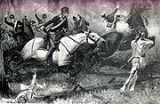
The Battle of Fallen Timbers (August 20, 1794) was the final battle of the Northwest Indian War
Northwest Indian War

The Northwest Indian War , also known as Little Turtle's War and by various other names, was a war fought between the United States and a large confederation of Native Americans in the United States for control of the Northwest Territory, which ended with a decisive U.S....
, a struggle between American Indians and the United States
United States

The United States of America is a Federal government constitutional republic comprising U.S. state and a federal district. The country is situated mostly in central North America, where its Contiguous United States and Washington, D.C., the Capital districts and territories, lie between the Pacific Ocean and Atlantic Oceans, Borders of the U...
 for control of the Northwest Territory
Northwest Territory

The Northwest Territory, formally known as the Territory Northwest of the River Ohio, was a governmental region within the early United States....
 (an area bounded on the south by the Ohio River
Ohio River

The Ohio River is the largest tributary, by volume, of the Mississippi River. It is approximately 981 miles long and is located in the eastern United States....
, on the west by the Mississippi River
Mississippi River

The Mississippi River is the longest river in the United States, with a length of from its source in Lake Itasca in Minnesota to its mouth in the Gulf of Mexico....
, and on the northeast by the Great Lakes
Great Lakes

The St. Lawrence River Great Lakes are a chain of fresh water lakes located in eastern North America, on the Canada ? United States border. Consisting of Lakes Lake Superior, Lake Michigan, Lake Huron, Lake Erie, and Lake Ontario, they form the largest group of freshwater lakes on Earth....
). The battle, which was a decisive victory for the United States, ended major hostilities in the region until "Tecumseh's War
Tecumseh's War

Tecumseh's War or Tecumseh's Rebellion are terms sometimes used to describe a conflict in the Old Northwest between the United States and an American Indians in the United States confederacy led by the Shawnee leader Tecumseh....
" and the Battle of Tippecanoe
Battle of Tippecanoe

The Battle of Tippecanoe was fought on November 7, 1811, between United States forces led by Governor of Indiana William Henry Harrison of the Indiana Territory and forces of Tecumseh's growing Native Americans in the United States confederation led by his brother, Tenskwatawa....
 in 1811.

Western Lakes Confederacy—one of the strongest Native American alliances to date—had achieved major victories over the United States in 1790 and 1791, alarming the administration of President George Washington
George Washington

George Washington was the leader of the Continental Army in the American Revolutionary War and served as the List of Presidents of the United States President of the United States of the United States of Americas ....
.


Discussion
Ask a question about 'Battle of Fallen Timbers'
Start a new discussion about 'Battle of Fallen Timbers'
Answer questions from other users
Full Discussion Forum


Recent Posts


Encyclopedia


The Battle of Fallen Timbers (August 20, 1794) was the final battle of the Northwest Indian War
Northwest Indian War

The Northwest Indian War , also known as Little Turtle's War and by various other names, was a war fought between the United States and a large confederation of Native Americans in the United States for control of the Northwest Territory, which ended with a decisive U.S....
, a struggle between American Indians and the United States
United States

The United States of America is a Federal government constitutional republic comprising U.S. state and a federal district. The country is situated mostly in central North America, where its Contiguous United States and Washington, D.C., the Capital districts and territories, lie between the Pacific Ocean and Atlantic Oceans, Borders of the U...
 for control of the Northwest Territory
Northwest Territory

The Northwest Territory, formally known as the Territory Northwest of the River Ohio, was a governmental region within the early United States....
 (an area bounded on the south by the Ohio River
Ohio River

The Ohio River is the largest tributary, by volume, of the Mississippi River. It is approximately 981 miles long and is located in the eastern United States....
, on the west by the Mississippi River
Mississippi River

The Mississippi River is the longest river in the United States, with a length of from its source in Lake Itasca in Minnesota to its mouth in the Gulf of Mexico....
, and on the northeast by the Great Lakes
Great Lakes

The St. Lawrence River Great Lakes are a chain of fresh water lakes located in eastern North America, on the Canada ? United States border. Consisting of Lakes Lake Superior, Lake Michigan, Lake Huron, Lake Erie, and Lake Ontario, they form the largest group of freshwater lakes on Earth....
). The battle, which was a decisive victory for the United States, ended major hostilities in the region until "Tecumseh's War
Tecumseh's War

Tecumseh's War or Tecumseh's Rebellion are terms sometimes used to describe a conflict in the Old Northwest between the United States and an American Indians in the United States confederacy led by the Shawnee leader Tecumseh....
" and the Battle of Tippecanoe
Battle of Tippecanoe

The Battle of Tippecanoe was fought on November 7, 1811, between United States forces led by Governor of Indiana William Henry Harrison of the Indiana Territory and forces of Tecumseh's growing Native Americans in the United States confederation led by his brother, Tenskwatawa....
 in 1811.

Background

The Western Lakes Confederacy—one of the strongest Native American alliances to date—had achieved major victories over the United States in 1790 and 1791, alarming the administration of President George Washington
George Washington

George Washington was the leader of the Continental Army in the American Revolutionary War and served as the List of Presidents of the United States President of the United States of the United States of Americas ....
. In 1792, Washington called upon Revolutionary War veteran General "Mad Anthony" Wayne
Anthony Wayne

Anthony Wayne was a United States Army general and statesman. Wayne adopted a military career at the outset of the American Revolutionary War, where his military exploits and fiery personality quickly earned him a promotion to the rank of Brigadier general and the sobriquet of "Mad Anthony"....
 to build and command a new army. Wayne believed the previous expeditions against the Indians had failed because of the poor training and discipline, and he began rigorous preparations.

Wayne had time to train his new army, as peace negotiations were undertaken in the summer of 1793. The Americans sought to confirm possession of the lands north of the Ohio River
Ohio River

The Ohio River is the largest tributary, by volume, of the Mississippi River. It is approximately 981 miles long and is located in the eastern United States....
 they had claimed from Great Britain after victory in the American Revolutionary War. American settlers were already moving into the Ohio
Ohio

Ohio is a Midwestern United States U.S. state of the United States. As part of the Great Lakes region , Ohio has long been a cultural and geographical crossroads in North America....
 territory.

However, Shawnee war chief Blue Jacket
Blue Jacket

Blue Jacket or Weyapiersenwah was a war chief of the Shawnee people, known for his militant defense of Shawnee lands in the Ohio Country....
 and Delaware (Lenape)
Lenape

The Lenape are organized bands of Native Americans in the United States peoples with shared cultural and linguistic characteristics.These are the people who are living in what is now New Jersey and along the Delaware River in Pennsylvania, the northern shore of Delaware, and the lower Hudson Valley and New York Harbor in New York, at the t...
 leader Buckongahelas
Buckongahelas

Buckongahelas was a regionally and nationally renowned Lenape chief, counselor and warrior. He lived during the days of the French and Indian War and when the young American republic began advancing westward....
, encouraged by their recent victories over United States troops and the hope of continued British support, pressed for the Ohio River boundary line established with Britain by the Treaty of Fort Stanwix
Treaty of Fort Stanwix

The Treaty of Fort Stanwix was an important treaty between North American Indians and the British Empire. It was signed at in 1768 at Fort Stanwix, located in present-day Rome, New York....
 in 1768. They rejected the subsequent treaties that ceded lands north of the Ohio River to the United States. A faction led by the influential Mohawk
Mohawk nation

Mohawk are an Indigenous peoples of the Americas of North America originally from the Mohawk Valley in upstate New York to southern Quebec and eastern Ontario....
 leader Joseph Brant
Joseph Brant

Thayendanegea or Joseph Brant was a Mohawk nation leader and Kingdom of Great Britain military officer during the American Revolutionary War....
 attempted to negotiate a compromise, but Blue Jacket and his allies would accept nothing less than an Ohio River boundary, which the United States refused.

Battle

Wayne's new army, the Legion of the United States
Legion of the United States

The Legion of the United States was a reorganization and extension of the United States Army in 1792 under the command of Major General Anthony Wayne....
, marched north from Fort Washington (Cincinnati, Ohio
Cincinnati, Ohio

Cincinnati is a city in the U.S. state of Ohio and the county seat of Hamilton County, Ohio. The municipality is located in southwestern Ohio and is situated on the Ohio River at the Ohio-Kentucky border....
) in 1793, building a line of forts along the way. Wayne commanded more than 4,600 men, with some Choctaw
Choctaw

The Choctaw are a Native Americans in the United States people originally from the Southeastern United States . They are of the Muskogean languages group....
 and Chickasaw
Chickasaw

The Chickasaw are Native Americans in the United States people originally from the Southeastern United States . They are of the Muskogean linguistic group....
 Indians serving as scouts.

Blue Jacket's army took a defensive stand along the Maumee River
Maumee River

The Maumee River is a river in northwestern Ohio and northeastern Indiana in the United States. It is formed at Fort Wayne, Indiana by the confluence of the St....
 (in present-day Maumee, Ohio
Maumee, Ohio

?Maumee is a city in Lucas County, Ohio, Ohio, United States. It is a suburb of Toledo, Ohio along the Maumee River. The population was 15,237 at the United States Census 2000....
 and not far from present-day Toledo, Ohio
Toledo, Ohio

Toledo is a city in the U.S. state of Ohio and the county seat of Lucas County, Ohio. Named after Toledo, Spain, it is located on the western end of Lake Erie, on the Michigan border....
), where a number of uprooted trees ("fallen timbers") had been leveled by a tornado or heavy storm. They reckoned that the trees would hinder the advance of the army, if they came. Nearby was Fort Miami
Fort Miami (Ohio)

Fort Miami was a fort built on the Maumee River at the eastern edge of the present-day city of Maumee, Ohio, and southwest of the present-day city of Toledo, Ohio....
, a British outpost from which the Indian confederacy received provisions. The Indian army, about 1,500 strong, consisted of Blue Jacket's Shawnees and Buckongahelas's Delawares, Miamis
Miami tribe

The Miami are a Native Americans in the United States tribe originally found in Indiana, southwest Michigan and Ohio, and now living also in Oklahoma....
 led by Little Turtle, Wyandot
Wyandot

The Wyandot and Huron are indigenous peoples of North America of North America known in their Wyandot language as the Wendat. Modern Wyandots and Hurons emerged in the 17th century from the remnants of two earlier groups, the Huron Confederacy and the Petun....
s, Ojibwa
Ojibwa

The Ojibwa or Chippewa is the largest group of Native Americans in the United States-First Nations north of Mexico, including M?tis people ....
s, Ottawa
Ottawa (tribe)

The Odawa or Ottawa, said to mean "traders," are a Native Americans in the United States and First Nations people. They are one of the Anishinaabeg, related to but distinct from the Ojibwa nation....
s, Potawatomi
Potawatomi

The Potawatomi are a Native Americans in the United States people of the upper Mississippi River region. They traditionally speak the Potawatomi language, a member of the Algonquian languages....
s, Mingo
Mingo

The Mingo are an Iroquoian languages group of Native Americans in the United States that migrated west to the Ohio Country in the mid-eighteenth century....
s, and even some Canadian militia.

The battle did not last long. Not only were the Indians greatly outnumbered—many were getting provisions from the fort when the battle began—they were also outflanked by American cavalry. The Indians were quickly routed, and fell back to Fort Miami, only to find the gates closed. The British commander, not authorized to start a war with the Americans, refused to give shelter to the fleeing Indians. The American troops destroyed Indian villages and crops in the area, and then withdrew. Thirty-three of Wayne's men were killed and 100 were wounded. The victorious Americans claimed to have found 30-40 enemy dead on the field. According to Alexander McKee
Alexander McKee

Colonel Alexander McKee, , was an agent in the British Indian Department during the American Revolutionary War and the Northwest Indian Wars.McKee was born in Ireland and came to the America`s with his father and grand-father....
 of the British Indian Department, the Indian confederacy had 19 men killed. McKee's figure may or may not include the casualties of a group of Canadian volunteers under Captain Alexander McKillop, who fought alongside the Indians.

Aftermath

The defeat of the Indians led to the signing of the Treaty of Greenville
Treaty of Greenville

The Treaty of Greenville was signed at Fort Greenville , on August 3, 1795, between a coalition of Native Americans in the United States and the United States following the Native American loss at the Battle of Fallen Timbers....
 in 1795, which ceded much of present-day Ohio
Ohio

Ohio is a Midwestern United States U.S. state of the United States. As part of the Great Lakes region , Ohio has long been a cultural and geographical crossroads in North America....
 to the United States, paving the way for the creation of that state in 1803. One veteran of Fallen Timbers who did not sign the Greenville treaty was a young Shawnee war leader named Tecumseh
Tecumseh

Tecumseh , also Tecumtha or Tekamthi, was a famous Native Americans in the United States leader of the Shawnee. He spent much of his life attempting to rally various native American tribes in a mutual defense of their lands, which eventually led to his death in the War of 1812....
, who would renew Indian resistance in the years ahead.

See also

  • Battle of Tippecanoe
    Battle of Tippecanoe

    The Battle of Tippecanoe was fought on November 7, 1811, between United States forces led by Governor of Indiana William Henry Harrison of the Indiana Territory and forces of Tecumseh's growing Native Americans in the United States confederation led by his brother, Tenskwatawa....
  • List of conflicts in the United States
    List of conflicts in the United States

    List of conflicts in the United States is a timeline of events that includes Indian wars, battles, skirmishes, major Terrorism attacks, Wiktionary:massacre, and other related items that have occurred in the United States's geographical area, including overseas territories since 1776....
  • Northwest Indian War
    Northwest Indian War

    The Northwest Indian War , also known as Little Turtle's War and by various other names, was a war fought between the United States and a large confederation of Native Americans in the United States for control of the Northwest Territory, which ended with a decisive U.S....


External links