

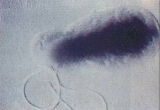
Bartonella

Encyclopedia
Bartonella is a genus
of Gram-negative
bacteria. Facultative intracellular parasites, Bartonella species can infect healthy people but are considered especially important as opportunistic
pathogen
s. Bartonella are transmitted by insect vectors such as ticks, fleas, sand flies
and mosquitoes. At least eight Bartonella species or subspecies
are known to infect humans. In June 2007, a new species of the genus, called Bartonella melophagi, was discovered. This is the sixth species known to infect humans, and the ninth species and subspecies, overall, known to infect humans.
vian scientist born in Argentina
.
s and the reservoir hosts are mammals. Immediately after infection, the bacteria colonize a primary niche, the endothelial cells. Every five days, a part of the Bartonella in the endothelial cells are released into the blood stream where they infect erythrocytes. The bacteria then invade and replicate within a phagosomal membrane inside the erythrocytes. Inside the erythrocytes, the bacteria multiply until they reach a critical population density. At this point, the Bartonella has simply to wait until it is taken with the erythrocytes by a blood-sucking arthropod. Though some studies have found "no definitive evidence of transmission by a tick to a vertebrate host," Bartonella species are well-known to be transmissible to both animals and humans through various other vectors such as fleas, lice, and sandflies. Recent studies have shown a strong correlation between tick exposure and bartonellosis
, including human bartonellosis. Bartonella are the bacteria associated with so-called "Cat-scratch" disease, but a study in 2010 concluded, "Clinicians should be aware that . . . a history of an animal scratch or bite is not necessary for disease transmission." All current Bartonella spp. identified in canines are human pathogens.
—macrolide
s and tetracycline
, for example—the efficacy of antibiotic treatment in immunocompetent individuals is uncertain. Immunocompromised patients should be treated with antibiotics because they are particularly susceptible to systemic disease and bacteremia. Drugs of particular effectiveness include trimethoprim-sulfamethoxazole, gentamicin
, ciprofloxacin
, and rifampin; B. henselae is generally resistant to penicillin
, amoxicillin
, and nafcillin.
Genus
In biology, a genus is a low-level taxonomic rank used in the biological classification of living and fossil organisms, which is an example of definition by genus and differentia...
of Gram-negative
Gram-negative
Gram-negative bacteria are bacteria that do not retain crystal violet dye in the Gram staining protocol. In a Gram stain test, a counterstain is added after the crystal violet, coloring all Gram-negative bacteria with a red or pink color...
bacteria. Facultative intracellular parasites, Bartonella species can infect healthy people but are considered especially important as opportunistic
Opportunistic infection
An opportunistic infection is an infection caused by pathogens, particularly opportunistic pathogens—those that take advantage of certain situations—such as bacterial, viral, fungal or protozoan infections that usually do not cause disease in a healthy host, one with a healthy immune system...
pathogen
Pathogen
A pathogen gignomai "I give birth to") or infectious agent — colloquially, a germ — is a microbe or microorganism such as a virus, bacterium, prion, or fungus that causes disease in its animal or plant host...
s. Bartonella are transmitted by insect vectors such as ticks, fleas, sand flies
Phlebotominae
Members of the subfamily Phlebotominae are known outside of the United States by the name sand fly. This subfamily includes numerous genera of blood-feeding flies, including the primary vectors of leishmaniasis, bartonellosis and pappataci fever...
and mosquitoes. At least eight Bartonella species or subspecies
Subspecies
Subspecies in biological classification, is either a taxonomic rank subordinate to species, ora taxonomic unit in that rank . A subspecies cannot be recognized in isolation: a species will either be recognized as having no subspecies at all or two or more, never just one...
are known to infect humans. In June 2007, a new species of the genus, called Bartonella melophagi, was discovered. This is the sixth species known to infect humans, and the ninth species and subspecies, overall, known to infect humans.
History
Bartonella species have been infecting humans for thousands of years, as demonstrated by Bartonella quintana DNA in a 4000 year old tooth. The genus is named for Alberto Leonardo Barton Thompson, a PeruPeru
Peru , officially the Republic of Peru , is a country in western South America. It is bordered on the north by Ecuador and Colombia, on the east by Brazil, on the southeast by Bolivia, on the south by Chile, and on the west by the Pacific Ocean....
vian scientist born in Argentina
Argentina
Argentina , officially the Argentine Republic , is the second largest country in South America by land area, after Brazil. It is constituted as a federation of 23 provinces and an autonomous city, Buenos Aires...
.
Infection cycle
The currently accepted model explaining the infection cycle holds that the transmitting vectors are blood-sucking arthropodArthropod
An arthropod is an invertebrate animal having an exoskeleton , a segmented body, and jointed appendages. Arthropods are members of the phylum Arthropoda , and include the insects, arachnids, crustaceans, and others...
s and the reservoir hosts are mammals. Immediately after infection, the bacteria colonize a primary niche, the endothelial cells. Every five days, a part of the Bartonella in the endothelial cells are released into the blood stream where they infect erythrocytes. The bacteria then invade and replicate within a phagosomal membrane inside the erythrocytes. Inside the erythrocytes, the bacteria multiply until they reach a critical population density. At this point, the Bartonella has simply to wait until it is taken with the erythrocytes by a blood-sucking arthropod. Though some studies have found "no definitive evidence of transmission by a tick to a vertebrate host," Bartonella species are well-known to be transmissible to both animals and humans through various other vectors such as fleas, lice, and sandflies. Recent studies have shown a strong correlation between tick exposure and bartonellosis
Bartonellosis
Bartonellosis is an infectious disease produced by bacteria of the genus Bartonella. Bartonella species cause diseases such as Carrión´s disease, trench fever, and cat scratch disease, and other recognized diseases, such as bacillary angiomatosis, peliosis hepatis, chronic bacteremia, endocarditis,...
, including human bartonellosis. Bartonella are the bacteria associated with so-called "Cat-scratch" disease, but a study in 2010 concluded, "Clinicians should be aware that . . . a history of an animal scratch or bite is not necessary for disease transmission." All current Bartonella spp. identified in canines are human pathogens.
Pathophysiology
Bartonella infections are remarkable in the wide range of symptoms an infection can produce: the time course (acute or chronic) as well as the underlying pathology are highly variable.| Bartonella pathophysiology in humans | ||||
| Species | Human reservoir or incidental host? | Animal reservoir | Pathophysiology | Distribution |
|---|---|---|---|---|
| B. bacilliformis | Reservoir | Causes Carrion's disease Carrion's disease Oroya fever or Carrion's Disease is an infectious disease produced by Bartonella bacilliformis infection.It is named for Daniel Alcides Carrión.-History:... (Oroya fever, Verruga peruana) |
Peru Peru Peru , officially the Republic of Peru , is a country in western South America. It is bordered on the north by Ecuador and Colombia, on the east by Brazil, on the southeast by Bolivia, on the south by Chile, and on the west by the Pacific Ocean.... , Ecuador Ecuador Ecuador , officially the Republic of Ecuador is a representative democratic republic in South America, bordered by Colombia on the north, Peru on the east and south, and by the Pacific Ocean to the west. It is one of only two countries in South America, along with Chile, that do not have a border... , and Colombia Colombia Colombia, officially the Republic of Colombia , is a unitary constitutional republic comprising thirty-two departments. The country is located in northwestern South America, bordered to the east by Venezuela and Brazil; to the south by Ecuador and Peru; to the north by the Caribbean Sea; to the... |
|
| B. quintana Bartonella quintana Bartonella quintana, originally known as Rochalimaea quintana, and "Rickettsia quintana", is a microorganism that is transmitted by the human body louse. This microorganism is the caustative agent of trench fever... |
Reservoir | Causes Trench fever Trench fever Trench fever is a moderately serious disease transmitted by body lice. It infected armies in Flanders, France, Poland, Galicia, Italy, Salonika, Macedonia, Mesopotamia, and Egypt in World War I Trench fever (also known as "Five day fever", "Quintan fever" (febris Quintana in Latin), "Urban trench... , Bacillary angiomatosis Bacillary angiomatosis Bacillary angiomatosis is a form of angiomatosis associated with bacteria of the Bartonella genus.-Causes:It is caused by either Bartonella henselae or Bartonella quintana.... , and endocarditis Endocarditis Endocarditis is an inflammation of the inner layer of the heart, the endocardium. It usually involves the heart valves . Other structures that may be involved include the interventricular septum, the chordae tendineae, the mural endocardium, or even on intracardiac devices... |
Worldwide | |
| B. clarridgeiae | Incidental | Domestic cat | Cat-scratch Disease | |
| B. elizabethae | Incidental | Rat | Endocarditis Endocarditis Endocarditis is an inflammation of the inner layer of the heart, the endocardium. It usually involves the heart valves . Other structures that may be involved include the interventricular septum, the chordae tendineae, the mural endocardium, or even on intracardiac devices... |
|
| B. grahamii | Incidental | Mouse | Endocarditis Endocarditis Endocarditis is an inflammation of the inner layer of the heart, the endocardium. It usually involves the heart valves . Other structures that may be involved include the interventricular septum, the chordae tendineae, the mural endocardium, or even on intracardiac devices... and Neuroretinitis |
|
| B. henselae Bartonella henselae Bartonella henselae, formerly Rochalimæa, is a proteobacterium that can cause bacteremia, endocarditis, bacillary angiomatosis, and peliosis hepatis. It is also the causative agent of cat-scratch disease which, as the name suggests, occurs after a cat bite or scratch... |
Incidental | Domestic cat | Cat-scratch Disease, Bacillary angiomatosis Bacillary angiomatosis Bacillary angiomatosis is a form of angiomatosis associated with bacteria of the Bartonella genus.-Causes:It is caused by either Bartonella henselae or Bartonella quintana.... , Peliosis hepatis Peliosis hepatis Peliosis Hepatis is an uncommon vascular condition characterised by randomly distributed multiple blood-filled cavities throughout the liver. The size of the cavities usually ranges between a few millimetres to 3 cm in diameter... , Endocarditis Endocarditis Endocarditis is an inflammation of the inner layer of the heart, the endocardium. It usually involves the heart valves . Other structures that may be involved include the interventricular septum, the chordae tendineae, the mural endocardium, or even on intracardiac devices... , Bacteremia Bacteremia Bacteremia is the presence of bacteria in the blood. The blood is normally a sterile environment, so the detection of bacteria in the blood is always abnormal.... with fever and Neuroretinitis |
Worldwide |
| B. koehlerae | Incidental | Domestic cat | ||
| B. vinsonii | Incidental | Mouse, Dog, Domestic Cat | ||
| B. washoensis | Incidental | Squirrel | Myocarditis Myocarditis Myocarditis is inflammation of heart muscle . It resembles a heart attack but coronary arteries are not blocked.Myocarditis is most often due to infection by common viruses, such as parvovirus B19, less commonly non-viral pathogens such as Borrelia burgdorferi or Trypanosoma cruzi, or as a... |
|
| B. rochalimae Bartonella rochalimae Bartonella rochalimae is a recently discovered strain of Gram-negative bacteria in the Bartonella genus, isolated by researchers at the University of California at San Francisco , Massachusetts General Hospital, and the United States Centers for Disease Control and Prevention... |
Incidental | Unknown | Carrion's disease-like symptoms | |
| References: | ||||
Treatment
Treatment is dependent on which strain of Bartonella is found in a given patient. While Bartonella species are susceptible to a number of standard antibiotics in vitroIn vitro
In vitro refers to studies in experimental biology that are conducted using components of an organism that have been isolated from their usual biological context in order to permit a more detailed or more convenient analysis than can be done with whole organisms. Colloquially, these experiments...
—macrolide
Macrolide
The macrolides are a group of drugs whose activity stems from the presence of a macrolide ring, a large macrocyclic lactone ring to which one or more deoxy sugars, usually cladinose and desosamine, may be attached. The lactone rings are usually 14-, 15-, or 16-membered...
s and tetracycline
Tetracycline antibiotics
Tetracyclines are a group of broad-spectrum antibiotics whose general usefulness has been reduced with the onset of bacterial resistance. Despite this, they remain the treatment of choice for some specific indications....
, for example—the efficacy of antibiotic treatment in immunocompetent individuals is uncertain. Immunocompromised patients should be treated with antibiotics because they are particularly susceptible to systemic disease and bacteremia. Drugs of particular effectiveness include trimethoprim-sulfamethoxazole, gentamicin
Gentamicin
Gentamicin is an aminoglycoside antibiotic, used to treat many types of bacterial infections, particularly those caused by Gram-negative organisms. However, gentamicin is not used for Neisseria gonorrhoeae, Neisseria meningitidis or Legionella pneumophila...
, ciprofloxacin
Ciprofloxacin
Ciprofloxacin is a synthetic chemotherapeutic antibiotic of the fluoroquinolone drug class.It is a second-generation fluoroquinolone antibacterial. It kills bacteria by interfering with the enzymes that cause DNA to rewind after being copied, which stops synthesis of DNA and of...
, and rifampin; B. henselae is generally resistant to penicillin
Penicillin
Penicillin is a group of antibiotics derived from Penicillium fungi. They include penicillin G, procaine penicillin, benzathine penicillin, and penicillin V....
, amoxicillin
Amoxicillin
Amoxicillin , formerly amoxycillin , and abbreviated amox, is a moderate-spectrum, bacteriolytic, β-lactam antibiotic used to treat bacterial infections caused by susceptible microorganisms. It is usually the drug of choice within the class because it is better absorbed, following oral...
, and nafcillin.
Epidemiology
Homeless IV drug users are at high risk for Bartonella infections, particularly B. elizabethae. B. elizabethae seropositivity rates in this population range from 12.5% in Los Angeles, to 33% in Baltimore, Maryland, 46% in New York, and in Sweden 39%.External links
- Bartonella genomes and related information at PATRIC, a Bioinformatics Resource Center funded by NIAID