

Balance disorder

Encyclopedia
A balance disorder is a disturbance that causes an individual to feel unsteady, for example when standing or walking. It may be accompanied by feelings of giddiness or wooziness, or having a sensation of movement, spinning, or floating. Balance
is the result of several body systems working together: the visual system
(eyes), vestibular system
(ears) and proprioception
(the body's sense of where it is in space). Degeneration of loss of function in any of these systems can lead to balance deficits.
Some individuals may also experience nausea
and vomiting, diarrhea
, faintness, changes in heart rate and blood pressure
, fear, anxiety, or panic. Some reactions to the symptoms are fatigue, depression, and decreased concentration. The symptoms may appear and disappear over short time periods or may last for a longer period.
Cognitive dysfunction (disorientation) may occur with vestibular disorders. Cognitive deficits are not just spatial in nature, but also include non-spatial functions such as object recognition memory. Vestibular dysfunction has been shown to adversely affect processes of attention and increased demands of attention can worsen the postural sway associated with vestibular disorders. Recent MRI studies also show that humans with bilateral vestibular damage undergo atrophy
of the hippocampus
which correlates with their degree of impairment on spatial memory tasks.
Many different terms are often used to describe what is collectively known as dizziness. Common descriptions include words such as lightheaded, floating, woozy, giddy, confused, helpless or fuzzy. Vertigo, Disequilibrium and Pre-syncope are the terms in use by most doctors.
Vertigo
Vertigo is a specific medical term used to describe the sensation of spinning or having the room spin about you. Most people find vertigo very disturbing and report associated nausea and vomiting.
Disequilibrium
Disequilibrium is the sensation of being off balance, and is most often characterized by frequent falls in a specific direction. This condition is not often associated with nausea or vomiting.
Pre-syncope
Pre-syncope is most often described as lightheaded or feeling faint. Syncope, by contrast, is actually fainting.
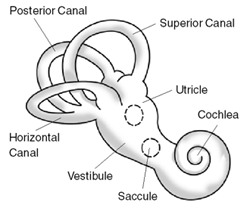
 The semicircular canals, found within the vestibular apparatus, let us know when we are in a rotary (circular) motion. The semicircular canals are fluid-filled. Motion of the fluid tells us if we are moving. The vestibule is the region of the inner ear where the semicircular canals converge, close to the cochlea
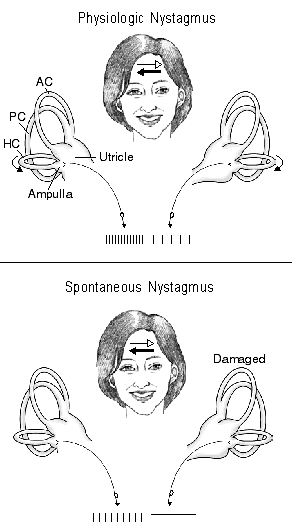
(the hearing organ). The vestibular system works with the visual system to keep objects in focus when the head is moving. This is called the vestibulo-ocular reflex (VOR).
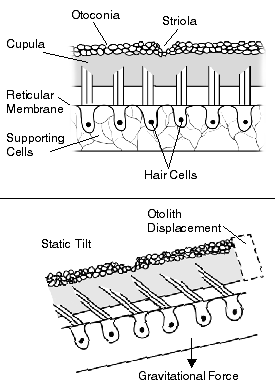
Movement of fluid in the semicircular canals signals the brain about the direction and speed of rotation of the head - for example, whether we are nodding our head up and down or looking from right to left. Each semicircular canal has a bulbed end, or enlarged portion, that contains hair cells. Rotation of the head causes a flow of fluid, which in turn causes displacement of the top portion of the hair cells that are embedded in the jelly-like cupula. Two other organs that are part of the vestibular system are the utricle and saccule. These are called the otolithic organs and are responsible for detecting linear acceleration, or movement in a straight line. The hair cells of the otolithic organs are blanketed with a jelly-like layer studded with tiny calcium stones called otoconia. When the head is tilted or the body position is changed with respect to gravity, the displacement of the stones causes the hair cells to bend.
The balance system works with the visual and skeletal systems (the muscles and joints and their sensors) to maintain orientation or balance. For example, visual signals are sent to the brain about the body's position in relation to its surroundings. These signals are processed by the brain, and compared to information from the vestibular, visual and the skeletal systems.
The primary physician may request the opinion of an otolaryngologist to help evaluate a balance problem. An otolaryngologist is a physician/surgeon who specializes in diseases and disorders of the ear, nose, throat, head, and neck, sometimes with expertise in balance disorders. He or she will usually obtain a detailed medical history and perform a physical examination to start to sort out possible causes of the balance disorder. The physician may require tests and make additional referrals to assess the cause and extent of the disruption of balance. The kinds of tests needed will vary based on the patient's symptoms and health status. Because there are so many variables, not all patients will require every test.
(balance) function include electronystagmography
(ENG), Videonystagmograph (VNG), rotation tests, Computerized Dynamic Posturography
(CDP), and Caloric reflex test
.
Tests of auditory system
(hearing) function include pure-tone audiometry, speech audiometry, acoustic-reflex, electrocochleography (ECoG), otoacoustic emissions (OAE), and auditory brainstem response test
(ABR; also known as BER, BSER, or BAER).
Other diagnostic tests include magnetic resonance imaging
(MRI) and computerized axial tomography (CAT, or CT).
, spinal cord injury
, Parkinson’s, neuromuscular conditions, acquired brain injury
, cerebellar dysfunctions and/or ataxia
. Individual treatment will vary and will be based upon assessment results including symptoms, medical history, general health, and the results of medical tests. Most types of balance disorders will require balance training, prescribed by a physiotherapist. Physiotherapists often administer standardized outcome measures as part of their assessment in order to gain useful information and data about a patient’s current status. Some standardized balance
assessments or outcome measures include but are not limited to the Functional Reach Test, Clinical Test for Sensory Integration in Balance (CTSIB), Berg Balance Scale and/or Timed Up and Go The data and information collected can further help the physiotherapist develop an intervention program that is specific to the individual assessed. Intervention programs may include training activities that can be used to improve static and dynamic postural control, body alignment, weight distribution, ambulation, fall prevention and sensory function.
(BPPV) is caused by misplaced crystals within the ear. Treatment, simply put, involves moving these crystals out of areas, which cause vertigo and into areas where they do not. A number of exercises have been developed to shift these crystals. The following article explains with diagrams how these exercises can be performed at the office or at home with some help: http://www.tchain.com/otoneurology/disorders/bppv/bppv.html The success of these exercises depends on their being performed correctly.
The two exercises explained in the above article are:
drugs are often prescribed for vertigo and dizziness, but these usually treat the symptoms rather than the underlying cause. Lorazepam (Ativan) is often used and is a sedative which has no effect on the disease process rather helps patients cope with the sensation.
Anti-nauseants, like those prescribed for motion sickness, are also often prescribed but do not effect the prognosis of the disorder.
Specifically for Meniere's disease a medication called Serc (Beta-histine) is available. There is some evidence to support it is effective to reduce the frequency of attacks. Also Diuretics, like Diazide (HCTZ/triamterene), are effective in many patients. Finally, ototoxic medications delivered either systemically or through the eardrum can eliminate the vertigo associated with Meniere's in many cases, although there is about a 10% risk of further hearing loss when using ototoxic medications.
Treatment is specific for underlying disorder of balance disorder:
Other projects supported by the NIDCD include studies of the genes essential to normal development and function in the vestibular system. NIDCD scientists are also studying inherited syndromes of the brain that affect balance and coordination.
The NIDCD supports research to develop new tests and refine current tests of balance and vestibular function. For example, NIDCD scientists have developed computer-controlled systems to measure eye movement and body position by stimulating specific parts of the vestibular and nervous systems. Other tests to determine disability, as well as new physical rehabilitation strategies, are under investigation in clinical and research settings.
Scientists at the NIDCD hope that new data will help to develop strategies to prevent injury from falls, a common occurrence among people with balance disorders, particularly as they grow older.
Equilibrioception
Equilibrioception or sense of balance is one of the physiological senses. It helps prevent humans and animals from falling over when walking or standing still. Balance is the result of a number of body systems working together: the eyes , ears and the body's sense of where it is in space ideally...
is the result of several body systems working together: the visual system
Visual system
The visual system is the part of the central nervous system which enables organisms to process visual detail, as well as enabling several non-image forming photoresponse functions. It interprets information from visible light to build a representation of the surrounding world...
(eyes), vestibular system
Vestibular system
The vestibular system, which contributes to balance in most mammals and to the sense of spatial orientation, is the sensory system that provides the leading contribution about movement and sense of balance. Together with the cochlea, a part of the auditory system, it constitutes the labyrinth of...
(ears) and proprioception
Proprioception
Proprioception , from Latin proprius, meaning "one's own" and perception, is the sense of the relative position of neighbouring parts of the body and strength of effort being employed in movement...
(the body's sense of where it is in space). Degeneration of loss of function in any of these systems can lead to balance deficits.
Symptoms
When balance is impaired, an individual has difficulty maintaining upright orientation. For example, an individual may not be able to walk without staggering, or may not even be able to stand. They may have falls or near-falls. When symptoms exist, they may include:- A sensation of dizziness or vertigo.
- Lightheadedness or feeling woozy.
- Problems reading and difficulty seeing.
- Disorientation.
Some individuals may also experience nausea
Nausea
Nausea , is a sensation of unease and discomfort in the upper stomach with an involuntary urge to vomit. It often, but not always, precedes vomiting...
and vomiting, diarrhea
Diarrhea
Diarrhea , also spelled diarrhoea, is the condition of having three or more loose or liquid bowel movements per day. It is a common cause of death in developing countries and the second most common cause of infant deaths worldwide. The loss of fluids through diarrhea can cause dehydration and...
, faintness, changes in heart rate and blood pressure
Blood pressure
Blood pressure is the pressure exerted by circulating blood upon the walls of blood vessels, and is one of the principal vital signs. When used without further specification, "blood pressure" usually refers to the arterial pressure of the systemic circulation. During each heartbeat, BP varies...
, fear, anxiety, or panic. Some reactions to the symptoms are fatigue, depression, and decreased concentration. The symptoms may appear and disappear over short time periods or may last for a longer period.
Cognitive dysfunction (disorientation) may occur with vestibular disorders. Cognitive deficits are not just spatial in nature, but also include non-spatial functions such as object recognition memory. Vestibular dysfunction has been shown to adversely affect processes of attention and increased demands of attention can worsen the postural sway associated with vestibular disorders. Recent MRI studies also show that humans with bilateral vestibular damage undergo atrophy
Atrophy
Atrophy is the partial or complete wasting away of a part of the body. Causes of atrophy include mutations , poor nourishment, poor circulation, loss of hormonal support, loss of nerve supply to the target organ, disuse or lack of exercise or disease intrinsic to the tissue itself...
of the hippocampus
Hippocampus
The hippocampus is a major component of the brains of humans and other vertebrates. It belongs to the limbic system and plays important roles in the consolidation of information from short-term memory to long-term memory and spatial navigation. Humans and other mammals have two hippocampi, one in...
which correlates with their degree of impairment on spatial memory tasks.
Causes
Problems with balance can occur when there is a disruption in any of the vestibular, visual, or proprioceptive systems. Abnormalities in balance function may indicate a wide range of pathologies from causes like inner ear disorders, low blood pressure, brain tumors, and brain injury including stroke.Many different terms are often used to describe what is collectively known as dizziness. Common descriptions include words such as lightheaded, floating, woozy, giddy, confused, helpless or fuzzy. Vertigo, Disequilibrium and Pre-syncope are the terms in use by most doctors.
Vertigo
Vertigo (medical)
Vertigo is a type of dizziness, where there is a feeling of motion when one is stationary. The symptoms are due to a dysfunction of the vestibular system in the inner ear...
Vertigo is a specific medical term used to describe the sensation of spinning or having the room spin about you. Most people find vertigo very disturbing and report associated nausea and vomiting.
Disequilibrium
Equilibrioception
Equilibrioception or sense of balance is one of the physiological senses. It helps prevent humans and animals from falling over when walking or standing still. Balance is the result of a number of body systems working together: the eyes , ears and the body's sense of where it is in space ideally...
Disequilibrium is the sensation of being off balance, and is most often characterized by frequent falls in a specific direction. This condition is not often associated with nausea or vomiting.
Pre-syncope
Pre-syncope is most often described as lightheaded or feeling faint. Syncope, by contrast, is actually fainting.
Related to the ear
Causes of dizziness related to the ear are often characterized by vertigo (spinning) and nausea. Nystagmus (flickering of the eye, related to the VOR) is often seen in patients with an acute peripheral cause of dizziness.- Benign Paroxysmal Positional VertigoBenign paroxysmal positional vertigoBenign paroxysmal positional vertigo is a disorder caused by problems in the inner ear. Its symptoms are repeated episodes of positional vertigo, that is, of a spinning sensation caused by changes in the position of the head.-Classification:...
(BPPV) - The most common cause of vertigo. It is typically described as a brief, intense sensation of spinning that occurs when there are changes in the position of the head with respect to gravity. An individual may experience BPPV when rolling over to the left or right, upon getting out of bed in the morning, or when looking up for an object on a high shelf. The cause of BPPV is the presence of normal but misplaced calcium crystals called otoconia, which are normally found in the utricle and sacculeSacculeThe saccule is a bed of sensory cells situated in the inner ear. The saccule translates head movements into neural impulses which the brain can interpret. The saccule is sensitive to linear translations of the head, specifically movements up and down...
(the otolith organs) and are used to sense movement. If they fall from the utricle and become loose in the semicircular canals, they can distort the sense of movement and cause a mismatch between actual head movement and the information sent to the brain by the inner ear, causing a spinning sensation. - LabyrinthitisLabyrinthitisLabyrinthitis is an inflammation of the inner ear, and a form of unilateral vestibular dysfunction. It derives its name from the labyrinths that house the vestibular system . Labyrinthitis can cause balance disorders....
- An inner ear infection or inflammation causing both dizziness (vertigo) and hearing loss.- Vestibular neuronitisVestibular neuronitisVestibular neuronitis, also called Vestibular neuritis, can be a paroxysmal, single attack of vertigo, a series of attacks, or a persistent condition which diminishes over three to six weeks. It is a type of unilateral vestibular dysfunction and may be associated with nausea, vomiting, and...
- an infection of the vestibular nerve, generally viral, causing vertigo - Cochlear neuronitis - an infection of the cochlear nerve, generally viral, causing sudden deafness but no vertigo
- Vestibular neuronitis
- Trauma - Injury to the skull may cause either a fracture or a concussion to the organ of balance. In either case an acute head injury will often result in dizziness and a sudden loss of vestibular function.
- Ménière's diseaseMénière's diseaseMénière's disease is a disorder of the inner ear that can affect hearing and balance to a varying degree. It is characterized by episodes of vertigo and tinnitus and progressive hearing loss, usually in one ear. It is named after the French physician Prosper Ménière, who, in an article published...
- an inner ear fluid balance disorder that causes lasting episodes of vertigo, fluctuating hearing loss, tinnitusTinnitusTinnitus |ringing]]") is the perception of sound within the human ear in the absence of corresponding external sound.Tinnitus is not a disease, but a symptom that can result from a wide range of underlying causes: abnormally loud sounds in the ear canal for even the briefest period , ear...
(a ringing or roaring in the ears), and the sensation of fullness in the ear. The cause of Ménière's disease is unknown. - Perilymph fistulaPerilymph fistulaA labyrinthine fistula is an abnormal opening in the bony capsule of the inner ear, resulting in leakage of the perilymph from the semicircular canals into the middle ear . This includes specifically a perilymph fistula , an abnormal connection between the fluid of the inner ear and the air-filled...
- a leakage of inner ear fluid from the inner ear. It can occur after head injury, surgery, physical exertion or without a known cause. - Superior canal dehiscence syndromeSuperior canal dehiscence syndromeSuperior canal dehiscence syndrome is a rare medical condition of the inner ear, first described in 1998 by Dr. Lloyd B. Minor of Johns Hopkins University, Baltimore, USA, leading to hearing and balance disorders in those affected....
- a balance and hearing disorder caused by a gap in the temporal bone, leading to the dysfunction of the superior canal. - Bilateral vestibulopathyBilateral VestibulopathyBilateral Vestibulopathy results as the culmination of damage done to both inner ears. Bilateral Vestibulopathy causes problems in vision, hearing and motor coordination.-Symptoms:...
- a condition involving loss of inner earInner earThe inner ear is the innermost part of the vertebrate ear. In mammals, it consists of the bony labyrinth, a hollow cavity in the temporal bone of the skull with a system of passages comprising two main functional parts:...
balance function in both ears. This may be caused by certain antibiotics, anti-cancer, and other drugs or by chemicals such as solvents, heavy metals, etc., which are ototoxic; or by diseases such as syphilis or autoimmune disease; or other causes.
Related to the brain
Brain related causes are less commonly associated with isolated vertigo and nystagmus but can still produce signs and symptoms, which mimic peripheral causes. Disequilibrium is often a prominent feature.- Degenerative: age related decline in balance function
- Infectious: meningitisMeningitisMeningitis is inflammation of the protective membranes covering the brain and spinal cord, known collectively as the meninges. The inflammation may be caused by infection with viruses, bacteria, or other microorganisms, and less commonly by certain drugs...
, encephalitisEncephalitisEncephalitis is an acute inflammation of the brain. Encephalitis with meningitis is known as meningoencephalitis. Symptoms include headache, fever, confusion, drowsiness, and fatigue...
, epidural abscess, syphilisSyphilisSyphilis is a sexually transmitted infection caused by the spirochete bacterium Treponema pallidum subspecies pallidum. The primary route of transmission is through sexual contact; however, it may also be transmitted from mother to fetus during pregnancy or at birth, resulting in congenital syphilis... - Circulatory: cerebral or cerebellar ischemiaIschemiaIn medicine, ischemia is a restriction in blood supply, generally due to factors in the blood vessels, with resultant damage or dysfunction of tissue. It may also be spelled ischaemia or ischæmia...
or hypoperfusion, strokeStrokeA stroke, previously known medically as a cerebrovascular accident , is the rapidly developing loss of brain function due to disturbance in the blood supply to the brain. This can be due to ischemia caused by blockage , or a hemorrhage...
, lateral medullary syndromeLateral medullary syndromeLateral medullary syndrome is a disease in which the patient has a constellation of neurologic symptoms due to injury to the lateral part of the medulla in the brain, resulting in tissue ischemia and necrosis.-Signs and symptoms:This syndrome is characterized by sensory deficits affecting...
(Wallenberg's syndrome) - Autoimmune: Cogan syndromeCogan syndromeCogan syndrome is a rare disorder characterized by recurrent inflammation of the front of the eye and often fever, fatigue, and weight loss, episodes of dizziness, and hearing loss. It can lead to deafness or blindness if untreated. The classic form of the disease was first described by D.G...
- Structural: Arnold-Chiari malformationArnold-Chiari malformationArnold–Chiari malformation, or often simply Chiari malformation, is a malformation of the brain. It consists of a downward displacement of the cerebellar tonsils through the foramen magnum , sometimes causing non-communicating hydrocephalus as a result of obstruction of cerebrospinal fluid outflow...
, hydrocephalusHydrocephalusHydrocephalus , also known as "water in the brain," is a medical condition in which there is an abnormal accumulation of cerebrospinal fluid in the ventricles, or cavities, of the brain. This may cause increased intracranial pressure inside the skull and progressive enlargement of the head,... - Systemic: multiple sclerosisMultiple sclerosisMultiple sclerosis is an inflammatory disease in which the fatty myelin sheaths around the axons of the brain and spinal cord are damaged, leading to demyelination and scarring as well as a broad spectrum of signs and symptoms...
, Parkinson's diseaseParkinson's diseaseParkinson's disease is a degenerative disorder of the central nervous system... - CNS or posterior neoplasms, benign or malignant
- Other - There are a host of other causes of dizziness not related to the ear.
- Mal de debarquementMal de debarquementMal de debarquement syndrome is a rare condition usually occurring after a cruise, aircraft flight, or other sustained motion event. It has only recently received attention and very little real scientific research has been conducted...
is rare disorder of imbalance caused by being on board a ship. Patients suffering from this condition experience seasickness even when they get off the ship. - Motion sicknessMotion sicknessMotion sickness or kinetosis, also known as travel sickness, is a condition in which a disagreement exists between visually perceived movement and the vestibular system's sense of movement...
- a conflict between the input from the various systems involved in balance causes an unpleasant sensation. For this reason, looking out the window of a moving car is much more pleasant than looking inside the vehicle. - Migraine-associated vertigoMigraine-associated vertigoMigraine-associated vertigo is vertigo associated with a migraine, either as a symptom of migraine or as a related but neurological disorder; when referred to as a disease unto itself, it is also termed vestibular migraine, migrainous vertigo, or migraine-related vestibulopathy.A 2010 report from...
- ToxinToxinA toxin is a poisonous substance produced within living cells or organisms; man-made substances created by artificial processes are thus excluded...
s, drugs, medications
- Mal de debarquement
Pathophysiology
Cochlea
The cochlea is the auditory portion of the inner ear. It is a spiral-shaped cavity in the bony labyrinth, making 2.5 turns around its axis, the modiolus....
(the hearing organ). The vestibular system works with the visual system to keep objects in focus when the head is moving. This is called the vestibulo-ocular reflex (VOR).
Movement of fluid in the semicircular canals signals the brain about the direction and speed of rotation of the head - for example, whether we are nodding our head up and down or looking from right to left. Each semicircular canal has a bulbed end, or enlarged portion, that contains hair cells. Rotation of the head causes a flow of fluid, which in turn causes displacement of the top portion of the hair cells that are embedded in the jelly-like cupula. Two other organs that are part of the vestibular system are the utricle and saccule. These are called the otolithic organs and are responsible for detecting linear acceleration, or movement in a straight line. The hair cells of the otolithic organs are blanketed with a jelly-like layer studded with tiny calcium stones called otoconia. When the head is tilted or the body position is changed with respect to gravity, the displacement of the stones causes the hair cells to bend.
The balance system works with the visual and skeletal systems (the muscles and joints and their sensors) to maintain orientation or balance. For example, visual signals are sent to the brain about the body's position in relation to its surroundings. These signals are processed by the brain, and compared to information from the vestibular, visual and the skeletal systems.
Diagnosis
Diagnosis of a balance disorder is complicated because there are many kinds of balance disorders and because other medical conditions — including ear infections, blood pressure changes, and some vision problems — and some medications may contribute to a balance disorder. A person experiencing dizziness should see a physiotherapist or physician for an evaluation. A physician can assess for a medical disorder, such as a stroke or infection, if indicated. A physiotherapist can assess balance or a dizziness disorder and provide specific treatment.The primary physician may request the opinion of an otolaryngologist to help evaluate a balance problem. An otolaryngologist is a physician/surgeon who specializes in diseases and disorders of the ear, nose, throat, head, and neck, sometimes with expertise in balance disorders. He or she will usually obtain a detailed medical history and perform a physical examination to start to sort out possible causes of the balance disorder. The physician may require tests and make additional referrals to assess the cause and extent of the disruption of balance. The kinds of tests needed will vary based on the patient's symptoms and health status. Because there are so many variables, not all patients will require every test.
Diagnostic testing
Tests of vestibular systemVestibular system
The vestibular system, which contributes to balance in most mammals and to the sense of spatial orientation, is the sensory system that provides the leading contribution about movement and sense of balance. Together with the cochlea, a part of the auditory system, it constitutes the labyrinth of...
(balance) function include electronystagmography
Electronystagmography
Electronystagmography is a diagnostic test to record involuntary movements of the eye caused by a condition known as nystagmus. It can also be used to diagnose the cause of vertigo, dizziness or balance dysfunction by testing the vestibular system....
(ENG), Videonystagmograph (VNG), rotation tests, Computerized Dynamic Posturography
Posturography
Posturography is a general term that covers all the techniques used to quantify postural control in upright stance in either static or dynamic conditions...
(CDP), and Caloric reflex test
Caloric reflex test
In medicine, the caloric reflex test is a test of the vestibulo-ocular reflex that involves irrigating cold or warm water or air into the external auditory canal.-Utility:...
.
Tests of auditory system
Auditory system
The auditory system is the sensory system for the sense of hearing.- Outer ear :The folds of cartilage surrounding the ear canal are called the pinna...
(hearing) function include pure-tone audiometry, speech audiometry, acoustic-reflex, electrocochleography (ECoG), otoacoustic emissions (OAE), and auditory brainstem response test
Auditory Brainstem Response
The auditory brainstem response is an auditory evoked potential extracted from ongoing electrical activity in the brain and recorded via electrodes placed on the scalp. The resulting recording is a series of vertex positive waves of which I through V are evaluated...
(ABR; also known as BER, BSER, or BAER).
Other diagnostic tests include magnetic resonance imaging
Magnetic resonance imaging
Magnetic resonance imaging , nuclear magnetic resonance imaging , or magnetic resonance tomography is a medical imaging technique used in radiology to visualize detailed internal structures...
(MRI) and computerized axial tomography (CAT, or CT).
Treatment
There are various options for treating balance disorders. One option includes treatment for a disease or disorder that may be contributing to the balance problem, such as ear infection, stroke, multiple sclerosisMultiple sclerosis
Multiple sclerosis is an inflammatory disease in which the fatty myelin sheaths around the axons of the brain and spinal cord are damaged, leading to demyelination and scarring as well as a broad spectrum of signs and symptoms...
, spinal cord injury
Spinal cord injury
A spinal cord injury refers to any injury to the spinal cord that is caused by trauma instead of disease. Depending on where the spinal cord and nerve roots are damaged, the symptoms can vary widely, from pain to paralysis to incontinence...
, Parkinson’s, neuromuscular conditions, acquired brain injury
Acquired brain injury
An acquired brain injury is brain damage caused by events after birth, rather than as part of a genetic or congenital disorder such as fetal alcohol syndrome, perinatal illness or perinatal hypoxia. ABI can result in cognitive, physical, emotional, or behavioural impairments that lead to permanent...
, cerebellar dysfunctions and/or ataxia
Ataxia
Ataxia is a neurological sign and symptom that consists of gross lack of coordination of muscle movements. Ataxia is a non-specific clinical manifestation implying dysfunction of the parts of the nervous system that coordinate movement, such as the cerebellum...
. Individual treatment will vary and will be based upon assessment results including symptoms, medical history, general health, and the results of medical tests. Most types of balance disorders will require balance training, prescribed by a physiotherapist. Physiotherapists often administer standardized outcome measures as part of their assessment in order to gain useful information and data about a patient’s current status. Some standardized balance
Balance
- Equipment :* Balance beam, a piece of gymnastics apparatus.* Balance board, a piece of training equipment.* Balancing machine, a machine that balances mechanical rotating parts to lessen vibration.* Balance wheel, a watch component....
assessments or outcome measures include but are not limited to the Functional Reach Test, Clinical Test for Sensory Integration in Balance (CTSIB), Berg Balance Scale and/or Timed Up and Go The data and information collected can further help the physiotherapist develop an intervention program that is specific to the individual assessed. Intervention programs may include training activities that can be used to improve static and dynamic postural control, body alignment, weight distribution, ambulation, fall prevention and sensory function.
BPPV
Benign Paroxysmal Positional VertigoBenign paroxysmal positional vertigo
Benign paroxysmal positional vertigo is a disorder caused by problems in the inner ear. Its symptoms are repeated episodes of positional vertigo, that is, of a spinning sensation caused by changes in the position of the head.-Classification:...
(BPPV) is caused by misplaced crystals within the ear. Treatment, simply put, involves moving these crystals out of areas, which cause vertigo and into areas where they do not. A number of exercises have been developed to shift these crystals. The following article explains with diagrams how these exercises can be performed at the office or at home with some help: http://www.tchain.com/otoneurology/disorders/bppv/bppv.html The success of these exercises depends on their being performed correctly.
The two exercises explained in the above article are:
- The Brandt-Daroff Exercises, which can be done at home and have a very high success rate but are unpleasant and time consuming to perform.
- The Epley's exercises are often performed by a doctor but can be performed at home. Various devices are available for home BPPV treatmentDizzyFIXThe DizzyFIX is an FDA cleared home medical device available to assist in the treatment of Benign Paroxysmal Positional Vertigo and its associated vertigo. The device itself is a head-worn representation of semi-circular canals. The device is filled with fluid and a particle representing the...
.
Ménière's disease
- Diet: Dietary changes such as reducing intake of sodium (salt) may help. For some people, reducing alcoholAlcoholIn chemistry, an alcohol is an organic compound in which the hydroxy functional group is bound to a carbon atom. In particular, this carbon center should be saturated, having single bonds to three other atoms....
, caffeineCaffeineCaffeine is a bitter, white crystalline xanthine alkaloid that acts as a stimulant drug. Caffeine is found in varying quantities in the seeds, leaves, and fruit of some plants, where it acts as a natural pesticide that paralyzes and kills certain insects feeding on the plants...
, and/or avoiding nicotineNicotineNicotine is an alkaloid found in the nightshade family of plants that constitutes approximately 0.6–3.0% of the dry weight of tobacco, with biosynthesis taking place in the roots and accumulation occurring in the leaves...
may be helpful. Stress has also been shown to make the symptoms associated with Ménière's worse. - Drugs:
- Beta-histine (Serc) is available in some countries and is thought to reduce the frequency of symptoms
- Diuretics such as hydrochlorothiazide (Diazide) have also been shown to reduce the frequency of symptoms
- Aminoglycoside antibiotics (gentamicin) can be used to treat Ménière's disease. Systemic streptomycin (given by injection) and topical gentamicin (given directly to the inner ear) are useful for their ability to affect the hair cells of the balance system. Gentamicin also can affect the hair cells of the cochlea, though, and cause hearing loss in about 10% of patients. In cases that do not respond to medical management, surgery may be indicated.
- Surgery for Ménière's disease is a last resort.
- Vestibular neuronectomy can cure Ménière's disease but is very involved surgery and not widely available. It involves drilling into the skull and cutting the balance nerve just as it is about to enter the brain.
- Labyrinthectomy (surgical removal of the whole balance organ) is more widely available as a treatment but causes total deafness in the affected ear.
Labyrinthitis
Treatment includes balance retraining exercises (vestibular rehabilitation). The exercises include movements of the head and body specifically developed for the patient. This form of therapy is thought to promote compensation for the disorder. Vestibular retraining programs are administered by professionals with knowledge and understanding of the vestibular system and its relationship with other systems in the body.Medication
SedativeSedative
A sedative or tranquilizer is a substance that induces sedation by reducing irritability or excitement....
drugs are often prescribed for vertigo and dizziness, but these usually treat the symptoms rather than the underlying cause. Lorazepam (Ativan) is often used and is a sedative which has no effect on the disease process rather helps patients cope with the sensation.
Anti-nauseants, like those prescribed for motion sickness, are also often prescribed but do not effect the prognosis of the disorder.
Specifically for Meniere's disease a medication called Serc (Beta-histine) is available. There is some evidence to support it is effective to reduce the frequency of attacks. Also Diuretics, like Diazide (HCTZ/triamterene), are effective in many patients. Finally, ototoxic medications delivered either systemically or through the eardrum can eliminate the vertigo associated with Meniere's in many cases, although there is about a 10% risk of further hearing loss when using ototoxic medications.
Treatment is specific for underlying disorder of balance disorder:
- anticholinergics
- antihistamines
- benzodiazepines
- calcium channel antagonistsCalcium channel blockerA calcium channel blocker is a chemical that disrupts the movement of calcium through calcium channels.CCB drugs devised to target neurons are used as antiepileptics. However, the most widespread clinical usage of calcium channel blockers is to decrease blood pressure in patients with...
, specifically VerapamilVerapamilVerapamil is an L-type calcium channel blocker of the phenylalkylamine class. It has been used in the treatment of hypertension, angina pectoris, cardiac arrhythmia, and most recently, cluster headaches. It is also an effective preventive medication for migraine...
and NimodipineNimodipineNimodipine is a dihydropyridine calcium channel blocker originally developed for the treatment of high blood pressure... - GABA modulators, specifically gabapentinGabapentinGabapentin is a pharmaceutical drug, specifically a GABA analogue. It was originally developed for the treatment of epilepsy, and currently is also used to relieve neuropathic pain...
and baclofenBaclofenBaclofen is a derivative of gamma-aminobutyric acid . It is primarily used to treat spasticity and is under investigation for the treatment of alcoholism.... - Neurotransmitter reuptake inhibitors such as SSRI's, SNRI'sSerotonin-norepinephrine reuptake inhibitorSerotonin–norepinephrine reuptake inhibitors are a class of antidepressant drugs used in the treatment of major depression and other mood disorders...
and Tricyclics
Research
Scientists at the National Institute on Deafness and Other Communication Disorders (NIDCD) are working to understand the various balance disorders and the complex interactions between the labyrinth, other balance-sensing organs, and the brain. NIDCD scientists are studying eye movement to understand the changes that occur in aging, disease, and injury, as well as collecting data about eye movement and posture to improve diagnosis and treatment of balance disorders. They are also studying the effectiveness of certain exercises as a treatment option.Other projects supported by the NIDCD include studies of the genes essential to normal development and function in the vestibular system. NIDCD scientists are also studying inherited syndromes of the brain that affect balance and coordination.
The NIDCD supports research to develop new tests and refine current tests of balance and vestibular function. For example, NIDCD scientists have developed computer-controlled systems to measure eye movement and body position by stimulating specific parts of the vestibular and nervous systems. Other tests to determine disability, as well as new physical rehabilitation strategies, are under investigation in clinical and research settings.
Scientists at the NIDCD hope that new data will help to develop strategies to prevent injury from falls, a common occurrence among people with balance disorders, particularly as they grow older.
External links
- (Video) Head Impulse Testing site (vHIT) Site with thorough information about vHIT
- National Institutes of Health - dizziness and vertigo
- Dizziness, Hearing and Balance Timothy C. Hain, M.D.
- Brandt-Daroff Exercises (slide show)
- DizzyTimes.com, online community for sufferers of dizziness and vertigo