
All Topics  
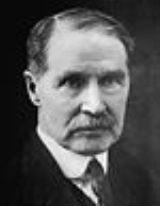
Andrew Bonar Law


   Email Print
   Bookmark   Link


Andrew Bonar Law


Andrew Bonar Law (16 September 1858 – 30 October 1923) was a Canadian
Canada

Canada is a country occupying most of northern North America, extending from the Atlantic Ocean in the east to the Pacific Ocean in the west and northward into the Arctic Ocean....
-born British
United Kingdom

The United Kingdom of Great Britain and Northern Ireland, commonly known as the United Kingdom , the UK or Britain,is a sovereign state located off the northwestern coast of continental Europe....
 Conservative Party
Conservative Party (UK)

The Conservative and Unionist Party, more commonly known as the Conservative Party, is a conservative political party in the United Kingdom....
 statesman and Prime Minister
Prime Minister of the United Kingdom

The Prime Minister of the United Kingdom of Great Britain and Northern Ireland is the political leader of the United Kingdom and the head of government Her Majesty's Government....
. He is the only British Prime Minister to have been born outside the British Isles
British Isles

The British Isles are a group of islands off the northwest coast of continental Europe that include Great Britain and Ireland, and numerous smaller islands....
.

lster Scots and Scottish
Scotland

conventional_long_name = ScotlandAlba|common_name= Scotland|image_flag = Flag of Scotland.svg|flag_width = 130px...
 descent, Andrew Bonar Law was born in Rexton
Rexton, New Brunswick

Rexton is a Canada village in Kent County, New Brunswick, New Brunswick.Situated on the Richibucto River, the village was originally inhabited by Mi'kmaq, many of whose descendants still reside in the nearby Elsipogtog First Nation, formerly referred to as the Big Cove Band....
, a small village in eastern New Brunswick
New Brunswick

New Brunswick is one of Canada's three Maritime provinces and is the only Constitution of Canada bilingual province in the federation. The provincial capital is Fredericton....
, Canada
Canada

Canada is a country occupying most of northern North America, extending from the Atlantic Ocean in the east to the Pacific Ocean in the west and northward into the Arctic Ocean....
. He was the son of the Reverend James Law of Portrush
Portrush

Portrush is a seaside resort town in County Antrim, Northern Ireland, on the County Londonderry border. The main part of the old town, including the Portrush railway station as well as most hotels, restaurants and bars, is built on a mile–long peninsula, Ramore Head, pointing north-northwest....
, County Antrim
County Antrim

County Antrim is one of six Counties of Northern Ireland that form Northern Ireland, and one of nine counties that historically and geographically constitute the Province of Ulster....
 and Elize Anne "Annie" Kidston, who belonged to a Glaswegian
Glasgow

Glasgow is the largest city in Scotland and List of largest United Kingdom settlements by population in the United Kingdom. The city is situated on the River Clyde in the country's Scottish Lowlands....
 banking family. In 1860, Law's mother died in childbirth.


Discussion
Ask a question about 'Andrew Bonar Law'
Start a new discussion about 'Andrew Bonar Law'
Answer questions from other users
Full Discussion Forum


Quotations


Whatever steps you may feel compelled to take, whether they are constitutional, or whether in the long run they are unconstitutional, you have the whole Unionist Party, under my leadership, behind you.

Message sent to Belfast (12 July, 1913).


Encyclopedia


Andrew Bonar Law (16 September 1858 – 30 October 1923) was a Canadian
Canada

Canada is a country occupying most of northern North America, extending from the Atlantic Ocean in the east to the Pacific Ocean in the west and northward into the Arctic Ocean....
-born British
United Kingdom

The United Kingdom of Great Britain and Northern Ireland, commonly known as the United Kingdom , the UK or Britain,is a sovereign state located off the northwestern coast of continental Europe....
 Conservative Party
Conservative Party (UK)

The Conservative and Unionist Party, more commonly known as the Conservative Party, is a conservative political party in the United Kingdom....
 statesman and Prime Minister
Prime Minister of the United Kingdom

The Prime Minister of the United Kingdom of Great Britain and Northern Ireland is the political leader of the United Kingdom and the head of government Her Majesty's Government....
. He is the only British Prime Minister to have been born outside the British Isles
British Isles

The British Isles are a group of islands off the northwest coast of continental Europe that include Great Britain and Ireland, and numerous smaller islands....
.

Early life

Of Ulster Scots and Scottish
Scotland

conventional_long_name = ScotlandAlba|common_name= Scotland|image_flag = Flag of Scotland.svg|flag_width = 130px...
 descent, Andrew Bonar Law was born in Rexton
Rexton, New Brunswick

Rexton is a Canada village in Kent County, New Brunswick, New Brunswick.Situated on the Richibucto River, the village was originally inhabited by Mi'kmaq, many of whose descendants still reside in the nearby Elsipogtog First Nation, formerly referred to as the Big Cove Band....
, a small village in eastern New Brunswick
New Brunswick

New Brunswick is one of Canada's three Maritime provinces and is the only Constitution of Canada bilingual province in the federation. The provincial capital is Fredericton....
, Canada
Canada

Canada is a country occupying most of northern North America, extending from the Atlantic Ocean in the east to the Pacific Ocean in the west and northward into the Arctic Ocean....
. He was the son of the Reverend James Law of Portrush
Portrush

Portrush is a seaside resort town in County Antrim, Northern Ireland, on the County Londonderry border. The main part of the old town, including the Portrush railway station as well as most hotels, restaurants and bars, is built on a mile–long peninsula, Ramore Head, pointing north-northwest....
, County Antrim
County Antrim

County Antrim is one of six Counties of Northern Ireland that form Northern Ireland, and one of nine counties that historically and geographically constitute the Province of Ulster....
 and Elize Anne "Annie" Kidston, who belonged to a Glaswegian
Glasgow

Glasgow is the largest city in Scotland and List of largest United Kingdom settlements by population in the United Kingdom. The city is situated on the River Clyde in the country's Scottish Lowlands....
 banking family. In 1860, Law's mother died in childbirth. He worked as a boy on his father's smallholding and for some years after his mother’s death he was in the care of his maternal aunt, Janet Kidston, who lived in her brother-in-law's household until his remarriage, when she decided to return to her native Scotland
Scotland

conventional_long_name = ScotlandAlba|common_name= Scotland|image_flag = Flag of Scotland.svg|flag_width = 130px...
. She suggested that it might be to her nephew's advantage if she were to take him back to Scotland with her, where he would receive a good education, as the Kidstons were a much wealthier and better connected family than the Laws.

At the age of 12, Law left to live with his late mother's three male cousins, who were rich merchant bankers in Glasgow
Glasgow

Glasgow is the largest city in Scotland and List of largest United Kingdom settlements by population in the United Kingdom. The city is situated on the River Clyde in the country's Scottish Lowlands....
. As they were all either unmarried or childless, they saw him as a substitute son and heir. He was educated at Gilbertfield School in Hamilton (1870-1873), and then at Glasgow High School
High School of Glasgow

The High School of Glasgow is an independent school, co-educational day school school in Glasgow, Scotland. It is the List of the oldest schools in the United Kingdom in Scotland, and the twelfth oldest in the United Kingdom....
 (1873-1875).

The Kidstons did not wish him to continue to university, and so at the age of 16 he was employed in the offices of their bank. He did later attend night classes at the University of Glasgow
University of Glasgow

The University of Glasgow was founded in 1451, in Glasgow, Scotland, and, along with its contemporary institution, the University of St Andrews, it formed the Kingdom of Scotland's equivalent to Oxbridge....
, which gave him an interest in politics and debating. At some time during his life time he lived in the presbyterian Manse
Manse

A manse is a house inhabited by, or formerly inhabited by, a Minister , usually used in the context of a Presbyterian, Methodist, Baptist or United Church....
 on Abbey Street in Coleraine
Coleraine

Coleraine is a large town in County Londonderry, Northern Ireland near to the mouth of the River Bann. It is northwest of Belfast and east of Londonderry, both of which are linked by major roads and railway connections....
, County Londonderry
County Londonderry

County Londonderry or County Derry is one of the six Counties of Ireland of Northern Ireland in the Provinces of Ireland of Ulster in Ireland....
, belonging to 1st Coleraine Presbyterian
Presbyterian Church in Ireland

The Presbyterian Church in Ireland , operating seamlessly across the border between the Republic of Ireland and Northern Ireland, is the largest Presbyterian denomination in Ireland, and the largest Protestant denomination in Northern Ireland....
 Church.

He read voraciously, but had a particular fondness for Dickens
Charles Dickens

Charles John Huffam Dickens, Royal Society of Arts , pen-name "Boz", was the most popular English people novelist of the Victorian era, as well as a vigorous Reform movement....
, Carlyle
Thomas Carlyle

Thomas Carlyle was a Scotland satire writer, essayist, historian and teacher during the Victorian era.He called economics the "dismal science", wrote articles for the Edinburgh Encyclopedia, and became a controversial social commentator....
, Disraeli and Gibbon
Edward Gibbon

Edward Gibbon was an English historian and Member of Parliament. His most important work, The History of the Decline and Fall of the Roman Empire, was published in six volumes between 1776 and 1788....
. He also became a very able chess
Chess

Chess is a recreational and competitive game played between two Player . Sometimes called Western chess or international chess to distinguish it from History of chess and other chess variants, the current form of the game emerged in Southern Europe during the second half of the 15th century after evolving from similar, much older...
 player.

Bonar Law's business career went from strength to strength, and well before he was thirty, he had acquired the reputation of a shrewd man of business, who drove others hard but himself far harder. In 1885, he purchased a partnership in William Jacks & Co., a Glasgow firm concerned in the financing of the iron trade. In 1890, at the age of thirty-two, Bonar Law, already a settled and successful man, became engaged to Annie Robley, whom he married in Helensburgh
Helensburgh

Helensburgh is a town and former burgh in Argyll and Bute, Scotland. It lies on the north shore of the Firth of Clyde and the eastern shore of the entrance to the Gare Loch....
, Dunbartonshire
Dunbartonshire

Dunbartonshire or the County of Dumbarton, is a Lieutenancy areas of Scotland and a registration county of Scotland. Until 1975 it was a Counties of Scotland....
 on 24 March 1891.

The marriage was to prove very happy and they had seven children, although the first was stillborn. Law’s interest in politics had grown stronger as the 1890s went by, and after he inherited a very large sum on the death of one of the Kidstons, he was able to consider running for Parliament. One of Law's children, Isabel H. Law, married Major General Sir Frederick Sykes
Frederick Sykes

Air Vice-Marshal Sir Frederick Hugh Sykes Order of the Star of India, Order of the Indian Empire, Order of the British Empire, Order of the Bath, Order of St Michael and St George, Privy Council of the United Kingdom was a military officer, United Kingdom statesman and politician....
, the military commander, politician and statesman. Two of his sons were killed in World War I
World War I

World War I, or the First World War , was a global military conflict which involved the Great powers, organized into two opposing military alliances: the Allies of World War I and the Central Powers....
 - Charles Law with the King's Own Scottish Borderers
King's Own Scottish Borderers

The King's Own Scottish Borderers was an infantry regiment of the British Army, part of the Scottish Division. It was raised on 18 March 1689 by the David Melville, 3rd Earl of Leven to defend Edinburgh against the Jacobite forces of James II....
 at the Battle of Gaza
Battle of Gaza

Battle of Gaza may refer to:* Battle of Gaza , fought between Ptolemy I of Egypt and Demetrius I of Macedon* Battle of Raphia, also known as Battle of Gaza, fought between Ptolemy IV of Egypt and Antiochus III the Great of the Seleucid kingdom in 217 BC...
 on 1917 and James Law with the Royal Flying Corps
Royal Flying Corps

The Royal Flying Corps was the over-land air arm of the British military during most of the First World War. During the early part of the war, the RFC's responsibilities were centred on support of the British Army, via artillery cooperation and photographic reconnaissance....
, shot down over the Western Front also in 1917. His youngest son was Richard Law, 1st Baron Coleraine
Richard Law, 1st Baron Coleraine

Richard Kidston Law, 1st Baron Coleraine Privy Council of the United Kingdom was a United Kingdom Conservative Party politician. He was the youngest son of former Conservative Prime Minister Andrew Bonar Law and his wife Annie Bonar Law....
.

Parliament

He was elected to Parliament
British House of Commons

The House of Commons is the lower house of the Parliament of the United Kingdom, which also comprises the British monarchy and the House of Lords ....
 for Glasgow Blackfriars and Hutchesontown
Glasgow Blackfriars and Hutchesontown (UK Parliament constituency)

Glasgow Blackfriars and Hutchesontown, representing parts of Glasgow, Scotland, was a constituency represented in the British House of Commons of the Parliament of the United Kingdom from 1885 until 1918....
 as a Conservative in 1900. He associated himself with the Protectionist wing of the party led by Joseph Chamberlain
Joseph Chamberlain

Joseph Chamberlain was an influential British businessman, politician, and statesman.In his early years Chamberlain was a radically minded Liberal Party member, a campaigner for educational reform, and President of the Board of Trade....
, and after Chamberlain withdrew from politics in 1906, Law came to lead that wing of the party along with Chamberlain's son, Austen
Austen Chamberlain

Sir Joseph Austen Chamberlain, Order of the Garter was a British statesman, Politics, and recipient of the Nobel Peace Prize....
. He had a reputation for honesty and fearlessness, and was well regarded as an effective speaker. These qualities helped him to be appointed as Parliamentary Secretary to the Board of Trade
Parliamentary Secretary to the Board of Trade

The Parliamentary Secretary to the Board of Trade in the United Kingdom was a member of Parliament assigned to assist the Board of Trade and its President of the Board of Trade with administration and liaison with Parliament....
 in 1902.

He lost his seat to future Labour
Labour Party (UK)

The Labour Party is a political party in the United Kingdom. Founded at the start of the 20th century, it has been since the 1920s the principal party of the Left-wing politics in England, Scotland and Wales, but not Northern Ireland, where it has only recently organised again....
 leader George Nicoll Barnes
George Nicoll Barnes

George Nicoll Barnes Order of the Companions of Honour Privy Council of the United Kingdom was a Scotland politician and a leader of the Labour Party ....
 in the anti-Conservative landslide 1906 General Election
United Kingdom general election, 1906

The United Kingdom general election of 1906 was held from 12 January to 8 February 1906.The Liberal Party , led by sitting minority Prime Minister of the United Kingdom Henry Campbell-Bannerman, won a large majority in the election....
, but he returned to represent Dulwich
Dulwich (UK Parliament constituency)

Dulwich is a former borough constituency in the Dulwich area of South London, which returned one Member of Parliament to the British House of Commons of the Parliament of the United Kingdom....
 at a by-election later that year
Dulwich by-election, 1906

The Dulwich by-election, 1906 was a by-election held on 15 May 1906 for the British House of Commons United Kingdom constituencies of Dulwich in South London....
. Though hit hard by the death of his wife, he continued his political career; after leaving the House of Commons
British House of Commons

The House of Commons is the lower house of the Parliament of the United Kingdom, which also comprises the British monarchy and the House of Lords ....
 at the December 1910 election, he returned as MP for Bootle
Bootle (UK Parliament constituency)

Bootle is a borough constituency represented in the British House of Commons of the Parliament of the United Kingdom. It elects one Member of Parliament by the first past the post system of election....
 at a by-election in 1911
Bootle by-election, 1911

The Bootle by-election, 1911 was a by-election held for the British House of Commons United Kingdom constituencies of Bootle in Merseyside on 27 March 1911....
.

Conservative Leader

Arthur Balfour
Arthur Balfour

Arthur James Balfour, 1st Earl of Balfour, Order of the Garter, Order of Merit , Privy Council of the United Kingdom was a United Kingdom Conservative Party politician and statesman....
 resigned the leadership of the Conservative Party (known at that time, after the formal merger with the Liberal Unionists, and until Irish independence in the early 1920s, as "the Unionist Party") in 1911 amid widespread dissatisfaction with his actions over the Parliament Act
Parliament Act 1911

The Parliament Act 1911 was an Act of Parliament of the Parliament of the United Kingdom of Great Britain and Ireland .This Act is to be construed as one with the Parliament Act 1949....
, which had eliminated the veto
Veto

A veto, Latin for "I forbid", is used to denote that a certain party has the right to stop unilaterally a piece of legislation. In practice, the veto can be absolute or limited ...
 of the House of Lords
House of Lords

The House of Lords is the second house of the Parliament of the United Kingdom and is also commonly referred to as "the Lords". The Parliament comprises the British monarchy, the British House of Commons , and the Lords....
. Following a deadlock between Austen Chamberlain
Austen Chamberlain

Sir Joseph Austen Chamberlain, Order of the Garter was a British statesman, Politics, and recipient of the Nobel Peace Prize....
 and Walter Long, the two candidates agreed to stand down in favour of Bonar Law, who became Leader as a compromise candidate. Law's closest associate was his fellow Canadian (and New Brunswicker), newspaper mogul William Maxwell Aitken (later Lord Beaverbrook). In the years prior to the outbreak of the First World War, Law focused most of his attention on the tariff issue and on Irish Home Rule
Home rule

Home rule refers to a demand that constituent parts of a state be given greater self-governance within the greater administrative purview of the central government....
. Now that the House of Lords had lost its power to veto legislation, the latter had become inevitable, but along with much of his party Bonar Law furiously opposed the Liberals' plans to coerce the Ulster Protestants into a Home Rule Ireland; at a time when the latter were moving towards armed resistance, Bonar Law said that "there were no lengths" to which Ulster could go and not receive his support.

The Great War

He entered the coalition government
Coalition Government 1915-1916

Herbert Henry Asquith British government of 1915 was formed in the aftermath of the Battle of Gallipoli disaster, by bringing in the Conservative Party s to shore up the government....
 as Colonial Secretary
Colonial Secretary

In Government of the United Kingdom usage, Colonial Secretary had two different meanings:* The Secretary of State for the Colonies, the Cabinet minister who headed the Colonial Office, was commonly referred to as the Colonial Secretary....
 in 1915, his first senior Cabinet post, and, following the resignation of Prime Minister and Liberal Party leader Herbert Asquith, was invited by King George V
George V of the United Kingdom

George V was the first British monarch belonging to the House of Windsor, which he created from the British branch of the German House of Saxe-Coburg and Gotha....
 to form a government, but he deferred to Lloyd George
David Lloyd George

David Lloyd George, 1st Earl Lloyd-George of Dwyfor Order of Merit , Privy Council of the United Kingdom was a United Kingdom statesman and the only Wales Prime Minister of the United Kingdom - he is also the only one to have spoken English language as a second language, Welsh language having been his first....
, Secretary of State for War and former Minister of Munitions, who he believed was better placed to lead a coalition ministry. He served in Lloyd George's War Cabinet, first as Chancellor of the Exchequer
Chancellor of the Exchequer

The Chancellor of the Exchequer is the title held by the British Cabinet of the United Kingdom Minister who is responsible for all economic and financial matters....
 and Leader of the House of Commons
Leader of the House of Commons

The Leader of the House of Commons is a member of the Cabinet of the United Kingdom who is responsible for arranging government business in the United Kingdom House of Commons....
. His promotion reflected the great mutual trust between both leaders and made for a well co-ordinated political partnership; their coalition was re-elected by a landslide following the Armistice. Law's two eldest sons were both killed whilst fighting in the war. In the 1918 General Election, Law returned to Glasgow and was elected as member for Glasgow Central.

Post-war and Prime Minister

At war's end, he gave up the Exchequer for the less demanding sinecure
Sinecure

A sinecure means an office which requires or involves little or no responsibility, labour, or active service. Sinecures have historically provided a potent tool for governments or monarchs to distribute patronage, while recipients are able to store up titles and easy salaries....
 office of Lord Privy Seal
Lord Privy Seal

The Lord Privy Seal or Lord Keeper of the Privy Seal is the fifth of the Great Officers of State in the United Kingdom, ranking beneath the Lord President of the Council and above the Lord Great Chamberlain....
, but remained Leader of the Commons. In 1921, ill health forced his resignation as Conservative leader and Leader of the Commons in favour of Austen Chamberlain
Austen Chamberlain

Sir Joseph Austen Chamberlain, Order of the Garter was a British statesman, Politics, and recipient of the Nobel Peace Prize....
. His departure weakened the hardliners in the cabinet who were opposed to negotiating with the Irish Republican Army
Irish Republican Army

The Irish Republican Army was an Irish republican revolutionary military organisation descended from the Irish Volunteers, established 25 November 1913 and who in April 1916 staged the Easter Rising....
, and the Anglo-Irish War ended in the summer.

By 1921-2 the coalition had become embroiled in an air of moral and financial corruption (e.g. the sale of honours). Besides the recent Irish Treaty and Edwin Montagu's moves towards greater self-government for India
India

India, officially the Republic of India , is a country in South Asia. It is the List of countries and outlying territories by total area country by geographical area, the List of countries by population country, and the most populous liberal democracy in the world....
, both of which dismayed rank-and-file Conservative opinion, the government's willingness to intervene against the Bolshevik
Bolshevik

Bolsheviks, originally also Bolshevists were a faction of the Marxism Russian Social Democratic Labour Party which split apart from the Menshevik faction at the 2nd Congress of the RSDLP in 1903 and ultimately became the Communist Party of the Soviet Union....
 regime in Russia
Russia

Russia , or the Russian Federation , is a list of countries spanning more than one continent country extending over much of northern Eurasia....
 also seemed out of step with the new and more pacifist mood. A sharp slump in 1921 and a wave of strikes in the coal and railway industries also added to the government's unpopularity, as did the apparent failure of the Genoa
Genoa

Genoa is a city and an important seaport in northern Italy, the capital of the Province of Genoa and of the region of Liguria. The city has a population of about 610,000 and the urban area has a population of about 900,000....
 Conference, which ended in an apparent rapprochement between Germany
Germany

Germany , officially the Federal Republic of Germany , is a country in Central Europe. It is bordered to the north by the North Sea, Denmark, and the Baltic Sea; to the east by Poland and the Czech Republic; to the south by Austria and Switzerland; and to the west by France, Luxembourg, Belgium, and the Netherlands....
 and Soviet Russia. In other words, it was no longer the case that Lloyd George was an electoral asset to the Conservative Party.

Lloyd George, Birkenhead and Winston Churchill
Winston Churchill

Sir Winston Leonard Spencer-Churchill, Order of the Garter, Order of Merit, Order of the Companions of Honour, Territorial Decoration, Fellow of the Royal Society, Her Majesty's Most Honourable Privy Council, Queen's Privy Council for Canada was a Politics of the United Kingdom known chiefly for his leadership of the United King...
 (still distrusted by many Conservatives) wished to use armed force against Turkey
Turkey

Turkey , known officially as the Republic of Turkey , is a Eurasian country that stretches across the Anatolian peninsula in southwest Asia and Thrace in the Balkans region of Southern Europe....
 (the Chanak Crisis
Chanak Crisis

The Chanak Crisis in September 1922 was the threatened attack by Turkey troops on United Kingdom and France troops stationed near ?anakkale to guard the Dardanelles neutral zone....
), but had to back down when offered support only by New Zealand
New Zealand

New Zealand is an island country in the south-western Pacific Ocean comprising two main landmasses , and numerous Islands of New Zealand, most notably Stewart Island/Rakiura and the Chatham Islands....
, but not Canada
Canada

Canada is a country occupying most of northern North America, extending from the Atlantic Ocean in the east to the Pacific Ocean in the west and northward into the Arctic Ocean....
, Australia
Australia

Australia, officially the Commonwealth of Australia, is a country in the southern hemisphere comprising the Australia of the world's smallest continent, the major island of Tasmania, and numerous list of islands of Australia in the Indian Ocean and Pacific Oceans....
 or South Africa
South Africa

The Republic of South Africa, also known by Official names of South Africa, is a country located at the southern tip of the continent of Africa....
; an anonymous letter appeared in "The Times" supporting the government but stating that Britain could not "act as the policeman for the world", and it was an open secret that the author, "A Colonial", was in fact Bonar Law. At a famous meeting at the Carlton Club
Carlton Club

The Carlton Club is a gentlemen's club in London....
, Conservative backbenchers, led by the President of the Board of Trade Stanley Baldwin
Stanley Baldwin

Stanley Baldwin, 1st Earl Baldwin of Bewdley, Order of the Garter, Privy Council of the United Kingdom was a British Conservative Party politician, statesman, and major figure on the political scene in the interwar years....
 and influenced by the recent Newport by-election
Newport by-election, 1922

The Newport by-election, 1922 was by-election held in the Newport on 18 October 1922. The by-election attracted especial attention, both at the time and since, as it was seen as a crucial electoral test of the viability of the Lloyd George Coalition Government, formed of followers of David Lloyd George with the Conservative Party ,...
 which was won by a Conservative standing against the Coalition, voted to end the Lloyd George Coalition and fight the next election as an independent party. Austen Chamberlain resigned as Party Leader, Lloyd George resigned as Prime Minister and Bonar Law returned on 23 October 1922 in both jobs.

Many leading Conservatives (e.g. Birkenhead, Arthur Balfour
Arthur Balfour

Arthur James Balfour, 1st Earl of Balfour, Order of the Garter, Order of Merit , Privy Council of the United Kingdom was a United Kingdom Conservative Party politician and statesman....
, Austen Chamberlain, Robert Horne) were not members of the new Cabinet, which was contemptuously referred to as "the Second Eleven". Although the Coalition Conservatives numbered no more than thirty, they hoped to dominate any future Coalition government in the same way that the similarly-sized Peelite group had dominated the Coalition Government of 1852-5 - an analogy much used at the time.

Parliament was immediately dissolved, and a General Election ensued. Besides the two Conservative factions, the Labour Party
Labour Party (UK)

The Labour Party is a political party in the United Kingdom. Founded at the start of the 20th century, it has been since the 1920s the principal party of the Left-wing politics in England, Scotland and Wales, but not Northern Ireland, where it has only recently organised again....
 were fighting as a major national party for the first time and indeed became the main Opposition after the election; the Liberals were still split into Asquith and Lloyd George factions, with many Lloyd George Liberals still unopposed by Conservative candidates (including Churchill, who was defeated at Dundee
Dundee

Dundee is the fourth-largest City status in the United Kingdom in Scotland and, fully named as Dundee City, one of Scotland's 32 Local government in Scotland Council areas of Scotland....
 nonetheless). Despite the confused political arena the Conservatives were re-elected with a comfortable majority.

Questions were raised about whether the elderly Conservative Party Treasurer, Lord Farquhar, had passed on to Lloyd George (who during his premiership had amassed a large fund, largely from the sale of honours) any money intended for the Conservative Party. The Coalition Conservatives also hoped to obtain Conservative Party money from Farquar. Bonar Law found Farquar too "gaga" to properly explain what had happened, and dismissed him.

One of the questions which taxed Bonar Law's brief government was that of inter-Allied war debts. Britain owed money to the USA, and in turn was owed four times as much money by France
France

France , officially the French Republic , is a country whose Metropolitan France is located in Western Europe and that also comprises various Overseas departments and territories of France....
, Italy
Italy

Italy , officially the Italian Republic , is a country located on the Italian Peninsula in Southern Europe and on the two largest islands in the Mediterranean Sea, Sicily and Sardinia....
 and the other Allied powers, although under the Lloyd George government Balfour had promised that Britain would collect no more money from other Allies than she was required to repay the USA; the debt was hard to repay as trade (exports were needed to earn foreign currency) had not returned to prewar levels. On a trip to the USA Stanley Baldwin, the inexperienced Chancellor of the Exchequer, agreed to repay £40 million per annum to the USA rather than the £25 million which the British government had thought feasible, and on his return announced the deal to the press when his ship docked at Southampton
Southampton

Southampton is the largest City status in the United Kingdom in the ceremonial county of Hampshire, on the south coast of England, and is sited around 100 km south-west of London and 30 km north-west of Portsmouth....
, before the Cabinet had had a chance to consider it. Bonar Law contemplated resignation, and after being talked out of it by senior ministers, once again vented his feelings in an anonymous letter to "The Times".

Resignation, Death


Bonar Law was soon diagnosed with terminal throat cancer and, no longer physically able to speak in Parliament, resigned on 22 May 1923. George V
George V of the United Kingdom

George V was the first British monarch belonging to the House of Windsor, which he created from the British branch of the German House of Saxe-Coburg and Gotha....
 sent for Baldwin, whom Bonar Law is rumoured to have favoured over Lord Curzon. However Law did not offer any advice to the King. Bonar Law died later that same year in London
London

London is the capital of both England and the United Kingdom, and the most populous municipality in the European Union. An important settlement for two millennia, History of London goes back to its founding by the Roman Empire....
 at the age of 65.

Bonar Law's estate was probated at £35,736.

Bonar Law was the shortest serving PM of the twentieth century. He is often referred to as "the unknown Prime Minister", not least because of a biography of that title by Robert Blake
Robert Blake, Baron Blake

Robert Norman William Blake, Baron Blake was an England historian. He is best known for his 1966 biography of Benjamin Disraeli, 1st Earl of Beaconsfield, and for The Conservative Party from Peel to Churchill, which grew out of his 1968 Ford lecures....
; the name comes from a remark by Asquith at Bonar Law's funeral, that they were burying the Unknown Prime Minister next to the Tomb of the Unknown Soldier.

He is also the only British Prime Minister to have been born outside the British Isles.

A tiny hamlet (unincorporated village) named Bonarlaw is named after the British Prime Minister. It was formerly known as "Big Springs" and then "Bellview" and is located in the municipality of Stirling-Rawdon, Ontario
Stirling-Rawdon, Ontario

Stirling-Rawdon is a township in the Canada province of Ontario, located in Hastings County, Ontario....
, Canada.

Bonar Law's Government, October 1922 - May 1923

For a full list of Ministerial office holders, see Conservative Government 1922-1924
Conservative Government 1922-1924

Members of the Cabinet are shown in bold face....
  • Andrew Bonar Law - Prime Minister and Leader of the House of Commons
    Leader of the House of Commons

    The Leader of the House of Commons is a member of the Cabinet of the United Kingdom who is responsible for arranging government business in the United Kingdom House of Commons....
  • Lord Cave
    George Cave, 1st Viscount Cave

    George Cave, 1st Viscount Cave, Order of St Michael and St George , King's Counsel , Privy Council of the United Kingdom was a United Kingdom lawyer and Conservative Party politician who became Lord Chancellor....
     - Lord Chancellor
    Lord Chancellor

    The Lord High Chancellor of Great Britain, or Lord Chancellor, is a senior and important functionary in the government of the United Kingdom....
  • Lord Salisbury - Lord President of the Council
    Lord President of the Council

    The Lord President of the Council is the fourth of the Great Officers of State of the United Kingdom, ranking beneath the Lord High Treasurer and above the Lord Privy Seal....
     and Chancellor of the Duchy of Lancaster
    Chancellor of the Duchy of Lancaster

    The Chancellor of the Duchy of Lancaster is, in modern times, a sinecure office in the government of the United Kingdom....
  • Stanley Baldwin
    Stanley Baldwin

    Stanley Baldwin, 1st Earl Baldwin of Bewdley, Order of the Garter, Privy Council of the United Kingdom was a British Conservative Party politician, statesman, and major figure on the political scene in the interwar years....
     - Chancellor of the Exchequer
    Chancellor of the Exchequer

    The Chancellor of the Exchequer is the title held by the British Cabinet of the United Kingdom Minister who is responsible for all economic and financial matters....
  • William Clive Bridgeman
    William Clive Bridgeman

    William Clive Bridgeman, 1st Viscount Bridgeman, Privy Council of the United Kingdom, Justice of Peace, Deputy Lieutenant, was a British Conservative Party politician....
     - Secretary of State for the Home Department
  • Lord Curzon of Kedleston - Secretary of State for Foreign Affairs and Leader of the House of Lords
    Leader of the House of Lords

    Leader of the House of Lords is a function in the Her Majesty's Government that is always held in combination with a formal Cabinet of the United Kingdom position, most often Lord President of the Council, Lord Privy Seal or Chancellor of the Duchy of Lancaster....
  • The Duke of Devonshire
    Victor Cavendish, 9th Duke of Devonshire

    Victor Christian William Cavendish, 9th Duke of Devonshire, Order of the Garter, GCMG, Royal Victorian Order , was a Liberal Unionist Member of Parliament for West Derbyshire , Governor General of Canada , and Secretary of State for the Colonies ....
     - Secretary of State for the Colonies
    Secretary of State for the Colonies

    The Secretary of State for the Colonies or Colonial Secretary was the Cabinet of the United Kingdom official in charge of managing the various British colonies....
  • Lord Derby - Secretary of State for War
    Secretary of State for War

    The position of Secretary of State for War, commonly called War Secretary, was a United Kingdom Cabinet -level position, first applied to Henry Dundas ....
  • Lord Peel
    William Wellesley Peel, 1st Earl Peel

    William Robert Wellesley Peel, 1st Earl Peel Order of the Star of India Order of the British Empire Territorial Decoration Privy Council of the United Kingdom was a United Kingdom politician....
     - Secretary of State for India
    Secretary of State for India

    File:John Morley, 1st Viscount Morley of Blackburn - Project Gutenberg eText 17976.jpgThe office of Secretary of State for India, or India Secretary, was created in 1858 when Company rule in India ended and British India was brought under direct British administration ....
  • Lord Novar - Secretary for Scotland
    Secretary for Scotland

    The Secretary for Scotland was chief Political minister in charge of the Scottish Office in the United Kingdom government. The post of Secretary of State for Scotland existed briefly after the Acts of Union 1707 of the Parliament of Scotland and the Parliament of England in 1707 till the Jacobite rising of 1745....
  • Leo Amery
    Leopold Stennett Amery

    Leopold Charles Maurice Stennett Amery Companion of Honour, Privy Council of the United Kingdom , usually known as Leo Amery or L. S. Amery, was a British Conservative Party politician and journalist, noted for his interest in military preparedness, British Raj, and the British Empire....
     - First Lord of the Admiralty
  • Sir Philip Lloyd-Greame
    Philip Cunliffe-Lister, 1st Earl of Swinton

    Philip Cunliffe-Lister, 1st Earl of Swinton, Order of the British Empire, Order of the Companions of Honour, Military Cross, Privy Council of the United Kingdom , known as Philip Lloyd-Greame until 1924 and as The Viscount Swinton from 1935 until 1955, was a prominent British Conservative Party politician from the 1920s until th...
     - President of the Board of Trade
  • Sir Robert Sanders - Minister of Agriculture and Fisheries
    Minister of Agriculture, Fisheries and Food

    The Minister of Agriculture, Fisheries and Food was a UK cabinet position, responsible for the Ministry of Agriculture, Fisheries and Food. Successive Ministers were asked to upgrade the Ministry to a Department of State and take the title 'Secretary of State', but all refused....
  • Edward Frederick Lindley Wood - President of the Board of Education
  • Sir Montague Barlow - Minister of Labour
    Secretary of State for Employment

    The Secretary of State for Employment was a position in the Cabinet of the United Kingdom. In 1995 it was merged with Secretary of State for Education to make the Secretary of State for Education and Employment....
  • Sir Arthur Griffith-Boscawen
    Arthur Griffith-Boscawen

    Lieutenant-Colonel Sir Arthur Sackville Trevor Griffith-Boscawen Privy Council of the United Kingdom was a United Kingdom Conservative Party politician whose career was cut short by repeatedly losing a string of Parliamentary elections....
     - Minister of Health
    Secretary of State for Health

    Secretary of State for Health is a UK cabinet position responsible for the British Department of Health. The current Secretary of State for Health is Alan Johnson, appointed on 28 June 2007 as part of Gordon Brown's first cabinet....


Changes

  • April 1923 - Griffith-Boscawen resigns as Minister of Health after losing his seat and is succeeded by Neville Chamberlain
    Neville Chamberlain

    Arthur Neville Chamberlain was a British Conservative Party politician and Prime Minister of the United Kingdom from 1937 to 1940. Chamberlain is best known for appeasement foreign policy, in particular regarding his signing of the Munich Agreement in 1938, conceding the Sudetenland region of Czechoslovakia to Germany, and for his "containm...
    .


Bibliography

  • Adams, R. J. Q. Bonar Law, London: John Murray, 1999. ISBN 0-7195-5422-5
  • Blake, Robert The Unknown Prime Minister: The Life and Times of Andrew Bonar Law, 1858-1923, London: 1955.
  • Smith, Jeremy "Bluff, Bluster and Brinkmanship: Andrew Bonar Law and the Third Home Rule Bill" pages 161-178 from Historical Journal, Volume 36, Issue #1, 1993.
  • Deane, Ciarán The Guinness Book of Irish Facts & Feats. Guinness Publishing 1994 ISBN 0851127932
  • Taylor, A. J. P. Beaverbrook, 1972.


Popular Culture

Bonar Law plays a supporting, if off-screen role in Upstairs, Downstairs
Upstairs, Downstairs

Upstairs, Downstairs is a British Academy Television Awards and Primetime Emmy Award award-winning United Kingdom drama television series set in a large townhouse in Edwardian period London that depicted the lives of the servants "downstairs" and their masters "upstairs"....
. He is even said to have recommended family patriarch, Richard Bellamy, to be offered a seat in the peerage.

External links

  • on the Downing Street website.
  • at the UK Parliamentary Archives