

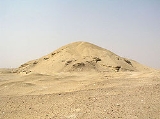
Amenemhat I

Encyclopedia
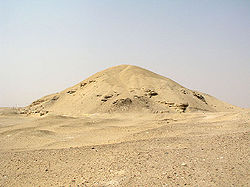
Twelfth dynasty of Egypt
The twelfth dynasty of ancient Egypt is often combined with Dynasties XI, XIII and XIV under the group title Middle Kingdom.-Rulers:Known rulers of the twelfth dynasty are as follows :...
(the dynasty considered to be the beginning of the Middle Kingdom of Egypt
Middle Kingdom of Egypt
The Middle Kingdom of Egypt is the period in the history of ancient Egypt stretching from the establishment of the Eleventh Dynasty to the end of the Fourteenth Dynasty, between 2055 BC and 1650 BC, although some writers include the Thirteenth and Fourteenth dynasties in the Second Intermediate...
). He ruled from 1991 BC to 1962 BC
Twelfth dynasty of Egypt
The twelfth dynasty of ancient Egypt is often combined with Dynasties XI, XIII and XIV under the group title Middle Kingdom.-Rulers:Known rulers of the twelfth dynasty are as follows :...
. Amenemhat I was a vizier of his predecessor Mentuhotep IV, overthrowing him from power, scholars vary if Mentuhotep IV was killed by Amenemhat I, but there is no independent evidence to support this and there may even have been a period of co-regency between their reigns. Amenemhet I was not of royal lineage, and the composition of some literary works (the Prophecy of Neferti
Prophecy of Neferti
The Prophecy of Neferti is an Ancient Egyptian discourse text set in the reign of the 4th dynasty Old Kingdom king Snofru , but was actually written during the early 12th dynasty . The text is a pseudo-prophecy, i.e. one written after the event...
, the Instructions of Amenemhat
Instructions of Amenemhat
Instructions of Amenemhat is a short ancient Egyptian poem of the sebayt genre written during the early Middle Kingdom. The poem takes the form of an intensely dramatic monologue delivered by the ghost of the murdered 12th Dynasty pharaoh Amenemhat I to his son Senusret I...
) and, in architecture, the reversion to the pyramid
Pyramid
A pyramid is a structure whose outer surfaces are triangular and converge at a single point. The base of a pyramid can be trilateral, quadrilateral, or any polygon shape, meaning that a pyramid has at least three triangular surfaces...
-style complexes of the 6th dynasty
Sixth dynasty of Egypt
The sixth dynasty of ancient Egypt is often combined with Dynasties III, IV and V under the group title the Old Kingdom.-Pharaohs:...
rulers are often considered to have been attempts at legitimizing his rule. Amenemhat I moved the capital from Thebes
Thebes, Egypt
Thebes is the Greek name for a city in Ancient Egypt located about 800 km south of the Mediterranean, on the east bank of the river Nile within the modern city of Luxor. The Theban Necropolis is situated nearby on the west bank of the Nile.-History:...
to Itjtawy
Itjtawy
Itjtawy , is the as-yet unidentified location of the royal city founded by Twelfth Dynasty Egyptian King Amenemhat I during year 20 of his reign. It is located in the Faiyum region, and its cemeteries were located at Lisht, el-Lahun and Dahshur...
and was buried in el-Lisht
El-Lisht
Lisht or el-Lisht is an Egyptian village located south of Cairo. It is the site of Middle Kingdom royal and elite burials, including two pyramids built by Amenemhat I and Senusret I. The two main pyramids were surrounded by smaller pyramids of members of the royal family, and many mastaba tombs of...
.
His son Senusret I
Senusret I
Senusret I was the second pharaoh of the Twelfth Dynasty of Egypt. He ruled from 1971 BC to 1926 BC, and was one of the most powerful kings of this Dynasty. He was the son of Amenemhat I and his wife Nefertitanen. His wife and sister was Neferu. She was also the mother of the successor Amenemhat II...
followed in his footsteps, building his pyramid–a closer reflection of the 6th dynasty pyramids than that of Amenemhat I–at Lisht as well, but his grandson, Amenemhat II, broke with this tradition.
Assassination
Two literary works dating from the end of the reign give a picture about Amenemhat I's death. The Instructions of AmenemhatInstructions of Amenemhat
Instructions of Amenemhat is a short ancient Egyptian poem of the sebayt genre written during the early Middle Kingdom. The poem takes the form of an intensely dramatic monologue delivered by the ghost of the murdered 12th Dynasty pharaoh Amenemhat I to his son Senusret I...
were supposedly counsels that the deceased king gave to his son during a dream. In the passage where he warns Senusret I against too great intimacy with his subjects, he tells the story of his own death as a reinforcement:
This passage refers to a conspiracy in which Amenemhat was killed by his own guards, when his son and co-regent Senusret I was leading a campaign in Libya. Another account of the following events is given in the Story of Sinuhe
Story of Sinuhe
The Tale of Sinuhe is considered one of the finest works of Ancient Egyptian literature. It is a narrative set in the aftermath of the death of Pharaoh Amenemhat I, founder of the 12th dynasty of Egypt, in the early 20th century BC. It is likely that it was composed only shortly after this date,...
, a famous text of Egyptian literature:
Succession
Amenemhat I is considered to be the first king of Egypt to have had a coregency with his son, Senusret ISenusret I
Senusret I was the second pharaoh of the Twelfth Dynasty of Egypt. He ruled from 1971 BC to 1926 BC, and was one of the most powerful kings of this Dynasty. He was the son of Amenemhat I and his wife Nefertitanen. His wife and sister was Neferu. She was also the mother of the successor Amenemhat II...
. A double dated stela is dated to the thirtieth year of Amenemhat I and to the tenth year of Senusret I, which establishes that Senusret was made co-regent in Amenemhat's 20th regnal year.
Name
Amenemhat I's name is associated with one of only two sebaytSebayt
Sebayt is the ancient Egyptian term for a genre of pharaonic literature. The word literally means 'teachings' or 'instructions' and refers to formally written ethical teachings focused on the "way of living truly"....
or ethical "teachings" attributed to Egyptian monarchs, entitled the Instructions of Amenemhat
Instructions of Amenemhat
Instructions of Amenemhat is a short ancient Egyptian poem of the sebayt genre written during the early Middle Kingdom. The poem takes the form of an intensely dramatic monologue delivered by the ghost of the murdered 12th Dynasty pharaoh Amenemhat I to his son Senusret I...
, though it is generally thought today that it was composed by a scribe at the behest of the king.
Amenemhat I's Horus name, Wehemmesu, which means renaissance or rebirth, is an allusion to the Old Kingdom
Old Kingdom
Old Kingdom is the name given to the period in the 3rd millennium BC when Egypt attained its first continuous peak of civilization in complexity and achievement – the first of three so-called "Kingdom" periods, which mark the high points of civilization in the lower Nile Valley .The term itself was...
period, whose cultural icons and models (such as pyramidal tombs and Old Kingdom artistic motifs) where emulated by the Twelfth Dynasty kings after the end of the First Intermediate Period. The cult of the king was also promoted during this period, which witnessed a steady return to a more centralized government.
The royal court
The vizierVizier (Ancient Egypt)
The vizier was the highest official in Ancient Egypt to serve the king, or pharaoh during the Old, Middle, and New Kingdoms. Vizier is the generally accepted rendering of ancient Egyptian tjati, tjaty etc, among Egyptologists...
at the beginning of the reign was Ipi, at the end of the reign Intefiqer
Intefiqer
The Ancient Egyptian noble Intefiqer was overseer of the city and Vizier under Amenemhet I and Senusret I during the 12th Dynasty. He is known from several rock inscriptions in Lower Nubia, showing that he was part of a military mission into this region. He appears in an inscription found at the...
was in charge. Two treasurers
Treasurer (Ancient Egypt)
The Treasurer in Ancient Egypt is the modern translation of the title imi-r ḫtmt . The office is known since the end of the Old Kingdom, where people with this title appear sporadically in the organisation of private estates...
can be placed under this king: another Ipi and Rehuerdjersen
Rehuerdjersen
Rehuerdjersen was an Ancient Egyptian treasurer who held this office under the 12th dynasty pharaoh Amenemhet I.Rehuerdjersen is mainly known from his tomb at el-Lisht, close to the pyramid of Amenemhet I. His mastaba was heavily damaged, but reliefs with his name and several titles were found...
. Two high stewards, Meketre
Meketre
The Ancient Egyptian noble Meketre was chancellor and chief steward during the reign of Mentuhotep II and Mentuhotep III, during the Middle Kingdom...
and Sobeknakht, have also been identified.
Modern adaptation
Naguib MahfouzNaguib Mahfouz
Naguib Mahfouz was an Egyptian writer who won the 1988 Nobel Prize for Literature. He is regarded as one of the first contemporary writers of Arabic literature, along with Tawfiq el-Hakim, to explore themes of existentialism. He published over 50 novels, over 350 short stories, dozens of movie...
, the Nobel Prize-winning Egyptian writer, includes Amenemhat I in one of his stories published in 1941 entitled "Awdat Sinuhi". The story appeared in an English translation by Raymond Stock
Raymond Stock
Raymond Stock is an American academic, writer and translator. He has a BA in Mass Media/Foreign Affairs from Grand Valley State University , and an MA in Middle Eastern Studies from the University of Michigan in Ann Arbor...
in 2003 as "The Return of Sinuhe" in the collection of Mahfouz's short stories entitled Voices from the Other World. The story is based directly on the "Story of Sinuhe
Story of Sinuhe
The Tale of Sinuhe is considered one of the finest works of Ancient Egyptian literature. It is a narrative set in the aftermath of the death of Pharaoh Amenemhat I, founder of the 12th dynasty of Egypt, in the early 20th century BC. It is likely that it was composed only shortly after this date,...
", although adding details of a lovers' triangle romance involving Amenemhat I and Sinuhe that does not appear in the original. Mahfouz also includes the pharaoh in his account of Egypt's rulers "Facing the Throne". In this work, the Nobel laureate has the Ancient Egyptian gods judge the country's rulers from Pharaoh Mena
Menes
Menes was an ancient Egyptian pharaoh of the early dynastic period, credited by classical tradition with having united Upper and Lower Egypt, and as the founder of the first dynasty ....
to President Anwar Sadat
Anwar Sadat
Muhammad Anwar al-Sadat was the third President of Egypt, serving from 15 October 1970 until his assassination by fundamentalist army officers on 6 October 1981...
.
Further reading
- W. Grajetzki, The Middle Kingdom of Ancient Egypt: History,Archaeology and Society, Duckworth, London 2006 ISBN 0-7156-3435-6, 28-35
- Mahfouz, Naguib. The Return of Sinuhe in Voices from the Other World (translated by Robert Stock), Random House, 2003.