


William Forbes Skene

Encyclopedia
Scotland
Scotland is a country that is part of the United Kingdom. Occupying the northern third of the island of Great Britain, it shares a border with England to the south and is bounded by the North Sea to the east, the Atlantic Ocean to the north and west, and the North Channel and Irish Sea to the...
historian
Historian
A historian is a person who studies and writes about the past and is regarded as an authority on it. Historians are concerned with the continuous, methodical narrative and research of past events as relating to the human race; as well as the study of all history in time. If the individual is...
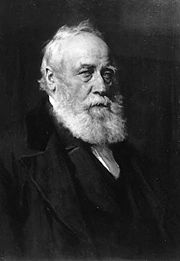
and antiquary, was the second son of Sir Walter Scott's friend, James Skene (1775–1864), of Rubislaw, near Aberdeen
Aberdeen
Aberdeen is Scotland's third most populous city, one of Scotland's 32 local government council areas and the United Kingdom's 25th most populous city, with an official population estimate of ....
.
He was educated at Edinburgh Academy
Edinburgh Academy
The Edinburgh Academy is an independent school which was opened in 1824. The original building, in Henderson Row on the northern fringe of the New Town of Edinburgh, Scotland, is now part of the Senior School...
in Edinburgh
Edinburgh
Edinburgh is the capital city of Scotland, the second largest city in Scotland, and the eighth most populous in the United Kingdom. The City of Edinburgh Council governs one of Scotland's 32 local government council areas. The council area includes urban Edinburgh and a rural area...
and at the University of St Andrews
University of St Andrews
The University of St Andrews, informally referred to as "St Andrews", is the oldest university in Scotland and the third oldest in the English-speaking world after Oxford and Cambridge. The university is situated in the town of St Andrews, Fife, on the east coast of Scotland. It was founded between...
, taking an especial interest in the study of Celtic
Celtic languages
The Celtic languages are descended from Proto-Celtic, or "Common Celtic"; a branch of the greater Indo-European language family...
philology
Philology
Philology is the study of language in written historical sources; it is a combination of literary studies, history and linguistics.Classical philology is the philology of Greek and Classical Latin...
and literature
Celtic literature
In the strictly academic context of Celtic studies, the term Celtic literature is used by Celticists to denote any number of bodies of literature written in a Celtic language, encompassing the Irish, Welsh, Cornish, Manx, Scottish Gaelic and Breton languages in either their modern or earlier...
. In 1832, he became a Writer to the Signet (WS), and shortly afterwards obtained an official appointment in the bill department of the Court of Session
Court of Session
The Court of Session is the supreme civil court of Scotland, and constitutes part of the College of Justice. It sits in Parliament House in Edinburgh and is both a court of first instance and a court of appeal....
, which he held until 1865. His early interest in the history and antiquities of the Scottish Highlands
Scottish Highlands
The Highlands is an historic region of Scotland. The area is sometimes referred to as the "Scottish Highlands". It was culturally distinguishable from the Lowlands from the later Middle Ages into the modern period, when Lowland Scots replaced Scottish Gaelic throughout most of the Lowlands...
bore its first fruit in 1837, when he published The Highlanders of Scotland, their Origin, History and Antiquities.
In 1847, during the Highland Potato Famine
Highland Potato Famine (1846 - 1857)
The Highland Potato Famine was a famine caused by potato blight that struck the Scottish Highlands in the 1840s. While the mortality rate was less than other Scottish famines in the 1690s, and 1780, the Highland potato famine caused over 1.7 million people to leave Scotland during the period 1846–52...
, he was appointed Secretary to the Central Board for Highland Relief. In this position he worked closely with Sir Charles Trevelyan, Assistant Secretary to the Treasury.
His chief work, however, is his Celtic Scotland, a History of Ancient Alban (5 vols., Edinburgh, 1876–1880), perhaps the most important contribution to Scottish history
History of Scotland
The history of Scotland begins around 10,000 years ago, when humans first began to inhabit what is now Scotland after the end of the Devensian glaciation, the last ice age...
written during the 19th century. In 1879 he was made a Doctor of Civil Law
Doctor of Civil Law
Doctor of Civil Law is a degree offered by some universities, such as the University of Oxford, instead of the more common Doctor of Laws degrees....
(DCL) of the University of Oxford
University of Oxford
The University of Oxford is a university located in Oxford, United Kingdom. It is the second-oldest surviving university in the world and the oldest in the English-speaking world. Although its exact date of foundation is unclear, there is evidence of teaching as far back as 1096...
, and in 1881 Historiographer Royal
Historiographer Royal
The Historiographer Royal is a member of the Royal household in Scotland. The office was created in 1681, and was in abeyance from 1709 until 1763 when it was revived for Principal William Robertson of Edinburgh University. The post, which now has no formal responsibilities or salary, is held by...
for Scotland. He died in Edinburgh
Edinburgh
Edinburgh is the capital city of Scotland, the second largest city in Scotland, and the eighth most populous in the United Kingdom. The City of Edinburgh Council governs one of Scotland's 32 local government council areas. The council area includes urban Edinburgh and a rural area...
on 29 August 1892.
The most important of Skene's other works are: editions of John of Fordun
John of Fordun
John of Fordun was a Scottish chronicler. It is generally stated that he was born at Fordoun, Mearns. It is certain that he was a secular priest, and that he composed his history in the latter part of the 14th century; and it is probable that he was a chaplain in the St Machar's Cathedral of...
's Chronica gentis Scotorum (Edinburgh, 1871–1872); of the Four Ancient Books of Wales
Four Ancient Books of Wales
The Four Ancient Books of Wales is a term coined by William Forbes Skene to describe four important medieval manuscripts written in Middle Welsh and dating from the 13th, 14th, and 15th centuries. They contain primarily texts of poetry and prose, some of which are contemporary and others which may...
(Edinburgh, 1868); of the Chronicles of the Picts and Scots (Edinburgh, 1867); and of Adomnán's Vita S. Columbae (Edinburgh, 1874); an Essay on the Coronation Stone of Scone
Stone of Scone
The Stone of Scone , also known as the Stone of Destiny and often referred to in England as The Coronation Stone, is an oblong block of red sandstone, used for centuries in the coronation of the monarchs of Scotland and later the monarchs of England, Great Britain and the United Kingdom...
(Edinburgh, 1869); and Memorials of the Family of Skene of Skene (Aberdeen, 1887). One of Skene's harshest critics was the Scottish philologist Alexander Macbain
Alexander Macbain
Alexander Macbain was a Scottish philologist, best known today for An Etymological Dictionary of the Gaelic Language .-Early life and education:...
.
See also
- MS 1467MS 1467MS 1467, earlier known as MS 1450, is a mediaeval Gaelic manuscript which contains numerous pedigrees for many prominent Scottish individuals and clans. Transcriptions of the genealogies within the text were first published in the early 19th century and have ever since been used by writers on the...
, a mediaeval Gaelic manuscript 'discovered', transcribed, and translated by Skene
External links
Scotland
Scotland is a country that is part of the United Kingdom. Occupying the northern third of the island of Great Britain, it shares a border with England to the south and is bounded by the North Sea to the east, the Atlantic Ocean to the north and west, and the North Channel and Irish Sea to the...
historian
Historian
A historian is a person who studies and writes about the past and is regarded as an authority on it. Historians are concerned with the continuous, methodical narrative and research of past events as relating to the human race; as well as the study of all history in time. If the individual is...
and antiquary, was the second son of Sir Walter Scott's friend, James Skene (1775–1864), of Rubislaw, near Aberdeen
Aberdeen
Aberdeen is Scotland's third most populous city, one of Scotland's 32 local government council areas and the United Kingdom's 25th most populous city, with an official population estimate of ....
.
He was educated at Edinburgh Academy
Edinburgh Academy
The Edinburgh Academy is an independent school which was opened in 1824. The original building, in Henderson Row on the northern fringe of the New Town of Edinburgh, Scotland, is now part of the Senior School...
in Edinburgh
Edinburgh
Edinburgh is the capital city of Scotland, the second largest city in Scotland, and the eighth most populous in the United Kingdom. The City of Edinburgh Council governs one of Scotland's 32 local government council areas. The council area includes urban Edinburgh and a rural area...
and at the University of St Andrews
University of St Andrews
The University of St Andrews, informally referred to as "St Andrews", is the oldest university in Scotland and the third oldest in the English-speaking world after Oxford and Cambridge. The university is situated in the town of St Andrews, Fife, on the east coast of Scotland. It was founded between...
, taking an especial interest in the study of Celtic
Celtic languages
The Celtic languages are descended from Proto-Celtic, or "Common Celtic"; a branch of the greater Indo-European language family...
philology
Philology
Philology is the study of language in written historical sources; it is a combination of literary studies, history and linguistics.Classical philology is the philology of Greek and Classical Latin...
and literature
Celtic literature
In the strictly academic context of Celtic studies, the term Celtic literature is used by Celticists to denote any number of bodies of literature written in a Celtic language, encompassing the Irish, Welsh, Cornish, Manx, Scottish Gaelic and Breton languages in either their modern or earlier...
. In 1832, he became a Writer to the Signet (WS), and shortly afterwards obtained an official appointment in the bill department of the Court of Session
Court of Session
The Court of Session is the supreme civil court of Scotland, and constitutes part of the College of Justice. It sits in Parliament House in Edinburgh and is both a court of first instance and a court of appeal....
, which he held until 1865. His early interest in the history and antiquities of the Scottish Highlands
Scottish Highlands
The Highlands is an historic region of Scotland. The area is sometimes referred to as the "Scottish Highlands". It was culturally distinguishable from the Lowlands from the later Middle Ages into the modern period, when Lowland Scots replaced Scottish Gaelic throughout most of the Lowlands...
bore its first fruit in 1837, when he published The Highlanders of Scotland, their Origin, History and Antiquities.
In 1847, during the Highland Potato Famine
Highland Potato Famine (1846 - 1857)
The Highland Potato Famine was a famine caused by potato blight that struck the Scottish Highlands in the 1840s. While the mortality rate was less than other Scottish famines in the 1690s, and 1780, the Highland potato famine caused over 1.7 million people to leave Scotland during the period 1846–52...
, he was appointed Secretary to the Central Board for Highland Relief. In this position he worked closely with Sir Charles Trevelyan, Assistant Secretary to the Treasury.
His chief work, however, is his Celtic Scotland, a History of Ancient Alban (5 vols., Edinburgh, 1876–1880), perhaps the most important contribution to Scottish history
History of Scotland
The history of Scotland begins around 10,000 years ago, when humans first began to inhabit what is now Scotland after the end of the Devensian glaciation, the last ice age...
written during the 19th century. In 1879 he was made a Doctor of Civil Law
Doctor of Civil Law
Doctor of Civil Law is a degree offered by some universities, such as the University of Oxford, instead of the more common Doctor of Laws degrees....
(DCL) of the University of Oxford
University of Oxford
The University of Oxford is a university located in Oxford, United Kingdom. It is the second-oldest surviving university in the world and the oldest in the English-speaking world. Although its exact date of foundation is unclear, there is evidence of teaching as far back as 1096...
, and in 1881 Historiographer Royal
Historiographer Royal
The Historiographer Royal is a member of the Royal household in Scotland. The office was created in 1681, and was in abeyance from 1709 until 1763 when it was revived for Principal William Robertson of Edinburgh University. The post, which now has no formal responsibilities or salary, is held by...
for Scotland. He died in Edinburgh
Edinburgh
Edinburgh is the capital city of Scotland, the second largest city in Scotland, and the eighth most populous in the United Kingdom. The City of Edinburgh Council governs one of Scotland's 32 local government council areas. The council area includes urban Edinburgh and a rural area...
on 29 August 1892.
The most important of Skene's other works are: editions of John of Fordun
John of Fordun
John of Fordun was a Scottish chronicler. It is generally stated that he was born at Fordoun, Mearns. It is certain that he was a secular priest, and that he composed his history in the latter part of the 14th century; and it is probable that he was a chaplain in the St Machar's Cathedral of...
's Chronica gentis Scotorum (Edinburgh, 1871–1872); of the Four Ancient Books of Wales
Four Ancient Books of Wales
The Four Ancient Books of Wales is a term coined by William Forbes Skene to describe four important medieval manuscripts written in Middle Welsh and dating from the 13th, 14th, and 15th centuries. They contain primarily texts of poetry and prose, some of which are contemporary and others which may...
(Edinburgh, 1868); of the Chronicles of the Picts and Scots (Edinburgh, 1867); and of Adomnán's Vita S. Columbae (Edinburgh, 1874); an Essay on the Coronation Stone of Scone
Stone of Scone
The Stone of Scone , also known as the Stone of Destiny and often referred to in England as The Coronation Stone, is an oblong block of red sandstone, used for centuries in the coronation of the monarchs of Scotland and later the monarchs of England, Great Britain and the United Kingdom...
(Edinburgh, 1869); and Memorials of the Family of Skene of Skene (Aberdeen, 1887). One of Skene's harshest critics was the Scottish philologist Alexander Macbain
Alexander Macbain
Alexander Macbain was a Scottish philologist, best known today for An Etymological Dictionary of the Gaelic Language .-Early life and education:...
.
See also
- MS 1467MS 1467MS 1467, earlier known as MS 1450, is a mediaeval Gaelic manuscript which contains numerous pedigrees for many prominent Scottish individuals and clans. Transcriptions of the genealogies within the text were first published in the early 19th century and have ever since been used by writers on the...
, a mediaeval Gaelic manuscript 'discovered', transcribed, and translated by Skene
External links
Scotland
Scotland is a country that is part of the United Kingdom. Occupying the northern third of the island of Great Britain, it shares a border with England to the south and is bounded by the North Sea to the east, the Atlantic Ocean to the north and west, and the North Channel and Irish Sea to the...
historian
Historian
A historian is a person who studies and writes about the past and is regarded as an authority on it. Historians are concerned with the continuous, methodical narrative and research of past events as relating to the human race; as well as the study of all history in time. If the individual is...
and antiquary, was the second son of Sir Walter Scott's friend, James Skene (1775–1864), of Rubislaw, near Aberdeen
Aberdeen
Aberdeen is Scotland's third most populous city, one of Scotland's 32 local government council areas and the United Kingdom's 25th most populous city, with an official population estimate of ....
.
He was educated at Edinburgh Academy
Edinburgh Academy
The Edinburgh Academy is an independent school which was opened in 1824. The original building, in Henderson Row on the northern fringe of the New Town of Edinburgh, Scotland, is now part of the Senior School...
in Edinburgh
Edinburgh
Edinburgh is the capital city of Scotland, the second largest city in Scotland, and the eighth most populous in the United Kingdom. The City of Edinburgh Council governs one of Scotland's 32 local government council areas. The council area includes urban Edinburgh and a rural area...
and at the University of St Andrews
University of St Andrews
The University of St Andrews, informally referred to as "St Andrews", is the oldest university in Scotland and the third oldest in the English-speaking world after Oxford and Cambridge. The university is situated in the town of St Andrews, Fife, on the east coast of Scotland. It was founded between...
, taking an especial interest in the study of Celtic
Celtic languages
The Celtic languages are descended from Proto-Celtic, or "Common Celtic"; a branch of the greater Indo-European language family...
philology
Philology
Philology is the study of language in written historical sources; it is a combination of literary studies, history and linguistics.Classical philology is the philology of Greek and Classical Latin...
and literature
Celtic literature
In the strictly academic context of Celtic studies, the term Celtic literature is used by Celticists to denote any number of bodies of literature written in a Celtic language, encompassing the Irish, Welsh, Cornish, Manx, Scottish Gaelic and Breton languages in either their modern or earlier...
. In 1832, he became a Writer to the Signet (WS), and shortly afterwards obtained an official appointment in the bill department of the Court of Session
Court of Session
The Court of Session is the supreme civil court of Scotland, and constitutes part of the College of Justice. It sits in Parliament House in Edinburgh and is both a court of first instance and a court of appeal....
, which he held until 1865. His early interest in the history and antiquities of the Scottish Highlands
Scottish Highlands
The Highlands is an historic region of Scotland. The area is sometimes referred to as the "Scottish Highlands". It was culturally distinguishable from the Lowlands from the later Middle Ages into the modern period, when Lowland Scots replaced Scottish Gaelic throughout most of the Lowlands...
bore its first fruit in 1837, when he published The Highlanders of Scotland, their Origin, History and Antiquities.
In 1847, during the Highland Potato Famine
Highland Potato Famine (1846 - 1857)
The Highland Potato Famine was a famine caused by potato blight that struck the Scottish Highlands in the 1840s. While the mortality rate was less than other Scottish famines in the 1690s, and 1780, the Highland potato famine caused over 1.7 million people to leave Scotland during the period 1846–52...
, he was appointed Secretary to the Central Board for Highland Relief. In this position he worked closely with Sir Charles Trevelyan, Assistant Secretary to the Treasury.
His chief work, however, is his Celtic Scotland, a History of Ancient Alban (5 vols., Edinburgh, 1876–1880), perhaps the most important contribution to Scottish history
History of Scotland
The history of Scotland begins around 10,000 years ago, when humans first began to inhabit what is now Scotland after the end of the Devensian glaciation, the last ice age...
written during the 19th century. In 1879 he was made a Doctor of Civil Law
Doctor of Civil Law
Doctor of Civil Law is a degree offered by some universities, such as the University of Oxford, instead of the more common Doctor of Laws degrees....
(DCL) of the University of Oxford
University of Oxford
The University of Oxford is a university located in Oxford, United Kingdom. It is the second-oldest surviving university in the world and the oldest in the English-speaking world. Although its exact date of foundation is unclear, there is evidence of teaching as far back as 1096...
, and in 1881 Historiographer Royal
Historiographer Royal
The Historiographer Royal is a member of the Royal household in Scotland. The office was created in 1681, and was in abeyance from 1709 until 1763 when it was revived for Principal William Robertson of Edinburgh University. The post, which now has no formal responsibilities or salary, is held by...
for Scotland. He died in Edinburgh
Edinburgh
Edinburgh is the capital city of Scotland, the second largest city in Scotland, and the eighth most populous in the United Kingdom. The City of Edinburgh Council governs one of Scotland's 32 local government council areas. The council area includes urban Edinburgh and a rural area...
on 29 August 1892.
The most important of Skene's other works are: editions of John of Fordun
John of Fordun
John of Fordun was a Scottish chronicler. It is generally stated that he was born at Fordoun, Mearns. It is certain that he was a secular priest, and that he composed his history in the latter part of the 14th century; and it is probable that he was a chaplain in the St Machar's Cathedral of...
's Chronica gentis Scotorum (Edinburgh, 1871–1872); of the Four Ancient Books of Wales
Four Ancient Books of Wales
The Four Ancient Books of Wales is a term coined by William Forbes Skene to describe four important medieval manuscripts written in Middle Welsh and dating from the 13th, 14th, and 15th centuries. They contain primarily texts of poetry and prose, some of which are contemporary and others which may...
(Edinburgh, 1868); of the Chronicles of the Picts and Scots (Edinburgh, 1867); and of Adomnán's Vita S. Columbae (Edinburgh, 1874); an Essay on the Coronation Stone of Scone
Stone of Scone
The Stone of Scone , also known as the Stone of Destiny and often referred to in England as The Coronation Stone, is an oblong block of red sandstone, used for centuries in the coronation of the monarchs of Scotland and later the monarchs of England, Great Britain and the United Kingdom...
(Edinburgh, 1869); and Memorials of the Family of Skene of Skene (Aberdeen, 1887). One of Skene's harshest critics was the Scottish philologist Alexander Macbain
Alexander Macbain
Alexander Macbain was a Scottish philologist, best known today for An Etymological Dictionary of the Gaelic Language .-Early life and education:...
.
See also
- MS 1467MS 1467MS 1467, earlier known as MS 1450, is a mediaeval Gaelic manuscript which contains numerous pedigrees for many prominent Scottish individuals and clans. Transcriptions of the genealogies within the text were first published in the early 19th century and have ever since been used by writers on the...
, a mediaeval Gaelic manuscript 'discovered', transcribed, and translated by Skene