
All Topics  
Wild rice

 
Wild Rice

   Email Print
   Bookmark   Link


Wild rice


"Indian rice" redirects here. The wildflower Fritillaria camschatcensis
Fritillaria camschatcensis

Fritillaria camschatcensis is a species of fritillary native to western North America from Alaska to Oregon. It has many common names, typically Kamchatka Fritillary or Kamchatka Lily....
is sometimes also called "Indian rice" or "wild rice".


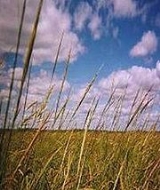
Wild rice is any of the four species of plants that make up the genus Zizania (common names: Canada rice, Indian rice, and water oats), a group of grasses
Poaceae

Poaceae or Gramineae is a family in the Class Liliopsida of the Magnoliophyta. Plants of this family are usually called grasses; the shrub- or tree-like plants in this family are called bamboo ....
 that grow in shallow water
Water

Water is a common chemical substance that is essential for the survival of all known forms of life. In typical usage, water refers only to its liquid form or States of matter, but the substance also has a solid state, ice, and a gaseous state, water vapor or steam....
 in small lake
Lake

A lake is a terrain feature , a body of liquid on the surface of a world that is localized to the bottom of basin and moves slowly if it moves at all....
s and slow-flowing stream
Stream

A stream is a body of water less than 60 feet wide with a current , confined within a stream bed and stream banks. Depending on its locale or certain characteristics, a stream may be referred to as brook, beck, Burn , creek, crick, kill, lick , rill, river syke, bayou, rivu...
s; often, only the flowering head of wild rice rises above the water.


Discussion
Ask a question about 'Wild rice'
Start a new discussion about 'Wild rice'
Answer questions from other users
Full Discussion Forum


Recent Posts


Encyclopedia


"Indian rice" redirects here. The wildflower Fritillaria camschatcensis
Fritillaria camschatcensis

Fritillaria camschatcensis is a species of fritillary native to western North America from Alaska to Oregon. It has many common names, typically Kamchatka Fritillary or Kamchatka Lily....
is sometimes also called "Indian rice" or "wild rice".


Wild rice is any of the four species of plants that make up the genus Zizania (common names: Canada rice, Indian rice, and water oats), a group of grasses
Poaceae

Poaceae or Gramineae is a family in the Class Liliopsida of the Magnoliophyta. Plants of this family are usually called grasses; the shrub- or tree-like plants in this family are called bamboo ....
 that grow in shallow water
Water

Water is a common chemical substance that is essential for the survival of all known forms of life. In typical usage, water refers only to its liquid form or States of matter, but the substance also has a solid state, ice, and a gaseous state, water vapor or steam....
 in small lake
Lake

A lake is a terrain feature , a body of liquid on the surface of a world that is localized to the bottom of basin and moves slowly if it moves at all....
s and slow-flowing stream
Stream

A stream is a body of water less than 60 feet wide with a current , confined within a stream bed and stream banks. Depending on its locale or certain characteristics, a stream may be referred to as brook, beck, Burn , creek, crick, kill, lick , rill, river syke, bayou, rivu...
s; often, only the flowering head of wild rice rises above the water. The genus is closely related to true rice
Rice

Rice is a staple food for a large part of the world's human population, especially in tropical Latin America, and East Asia, South Asia and Southeast Asia, making it the second-most consumed cereal grain, after maize....
, genus Oryza
Oryza

Oryza is a genus of 7-20 species of Poaceae in the tribe Oryzeae, within the subfamily Bambusoideae. native to tropical and subtropical regions of Asia and Africa....
, which is also a grass, and shares the tribe
Tribe (biology)

In biology, a tribe — or infrafamily — is a taxonomic rank between family and genus. It is sometimes subdivided into subtribes....
 Oryzeae. Three species of wild rice are native to North America
North America

North America is the northern continent of the Americas, situated in the Earth's northern hemisphere and almost totally in the western hemisphere....
:
  • Northern wild rice (Zizania palustris) is an annual plant
    Annual plant

    An annual plant is a plant that usually germinates flowers and dies in one year. True annuals will only live longer than a year if they are prevented from setting seed....
     native to the Great Lakes region of North America, the aquatic areas of the Boreal Forest
    Boreal forest of Canada

    Canada's boreal forest comprises about 25% of the circumpolar boreal forest that rings the northern hemisphere, mostly north of the 50th parallel....
     regions of Alberta
    Alberta

    Alberta is one of Canada Canadian Prairies Provinces and territories of Canada. It became a province on September 1, 1905.Alberta is located in western Canada, bounded by the provinces of British Columbia to the west and Saskatchewan to the east, the Northwest Territories to the north, and the U.S....
    , Saskatchewan
    Saskatchewan

    Saskatchewan is a prairie provinces in Canada, which has an area of 588,276.09 square kilometres and a population of 1,015,895 , mostly living in the southern half of the province....
     and Manitoba
    Manitoba

    Manitoba is a prairie provinces in Canada, which has an area of 647,797 square kilometres and a population of 1,207,959 , with more than half located within the Winnipeg Capital Region ....
    . Northern wild rice is the state grain
    State symbols

    State symbols may refer to:*National symbols*United States state symbols...
     of the U.S.
    United States

    The United States of America is a Federal government constitutional republic comprising U.S. state and a federal district. The country is situated mostly in central North America, where its Contiguous United States and Washington, D.C., the Capital districts and territories, lie between the Pacific Ocean and Atlantic Oceans, Borders of the U...
     state of Minnesota
    Minnesota

    Minnesota is a U.S. state in the Midwestern United States of the United States. The twelfth largest state by area in the U.S., it is the twenty-first most populous, with just over five million residents....
    .
  • Wild rice (Z. aquatica), also an annual, grows in the Saint Lawrence River
    Saint Lawrence River

    Saint Lawrence River is a large river flowing approximately from southwest to northeast in the middle latitudes of North America, connecting the Great Lakes with the Atlantic Ocean....
     and on the Atlantic
    Atlantic Ocean

    The Atlantic Ocean is the second-largest of the world's oceanic divisions; with a total area of about 106.4 million square kilometres . It covers approximately one-fifth of the Earth's surface....
     and Gulf
    Gulf of Mexico

    The Gulf of Mexico is the ninth largest body of water in the world. Considered a smaller part of the Atlantic Ocean, it is an oceanic basin largely surrounded by the North American continent and the island of Cuba....
     coasts of the United States
    United States

    The United States of America is a Federal government constitutional republic comprising U.S. state and a federal district. The country is situated mostly in central North America, where its Contiguous United States and Washington, D.C., the Capital districts and territories, lie between the Pacific Ocean and Atlantic Oceans, Borders of the U...
    .
  • Texas wild rice (Z. texana) is a perennial plant
    Perennial plant

    A perennial plant or perennial is a plant that lives for more than two years. When used by gardeners or horticulturalists, this term applies specifically to perennial herbaceous plants....
     only found in a small area along the San Marcos River
    San Marcos River

    The San Marcos River rises from the San Marcos Springs, the location of Aquarena Springs, in San Marcos, Texas. The springs are home to several threatened or endangered species, including the Texas Blind Salamander, Fountain Darter, and Texas Wild Rice....
     in central Texas
    Texas

    Texas is a U.S. state located in the South Central United States, nicknamed the Lone Star State. Texas is the second largest U.S. state in both area and population, spanning , and with a growing population of 24.3 million residents....
    .
One species is native to Asia
Asia

Asia is the world's largest and most populous continent. It covers 8.6% of the Earth's total surface area and, with over 4 billion people, it contains more than 60% of the world's current human population....
:
  • Manchurian wild rice (Z. latifolia; incorrect synonym: Z. caduciflora), is a perennial native to China
    China

    China is a Culture of China, an ancient civilization, and, depending on perspective, a national or multinational entity extending over a large area in East Asia....
    .


Texas wild rice is in danger of extinction
Extinction

In biology and ecology, extinction is the death of every member of a species or group of taxon. The moment of extinction is generally considered to be the death of the last individual of that species ....
 due to loss of suitable habitat in its limited range and to pollution
Pollution

Pollution is the introduction of contaminants into an environment that causes instability, disorder, harm or discomfort to the ecosystem i.e. physical systems or living organisms ....
. The pollen of Texas wild rice can only travel about 30 inches away from a parent plant. If pollen does not land on a receptive female flower within that distance, no seeds are produced. Manchurian wild rice has almost disappeared from the wild in its native range, but has been accidentally introduced into the wild in New Zealand
New Zealand

New Zealand is an island country in the south-western Pacific Ocean comprising two main landmasses , and numerous Islands of New Zealand, most notably Stewart Island/Rakiura and the Chatham Islands....
 and is considered an invasive species
Invasive species

Invasive species is a phrase with several definitions. The first definition expresses the phrase in terms of non-indigenous species that adversely affect the habitats they invade economically, environmentally or ecologically....
 there.

Use as a food grain

The species most commonly harvested as grain
Cereal

Cereals, or cereal grains, are mostly Poaceae cultivated for their edible brans or fruit seeds . Cereal grains are grown in greater quantities and provide more energy worldwide than any other type of crop; they are therefore staple foods....
 is the annual species Zizania palustris. Native Americans
Native Americans in the United States

Native Americans in the United States are the Indigenous peoples of the Americas from the regions of North America now encompassed by the continental United States United States, including parts of Alaska and the island state of Hawaii....
 harvest wild rice by canoe
Canoe

A canoe is a small narrow boat, typically human-powered, though it may also be powered by sails or small electric or gas motors. Canoes usually are pointed at both bow and stern and are normally open on top, but can be covered....
ing into a stand of plants, and bending the ripe grain heads with wooden sticks called knockers, so as to thresh
Threshing

Threshing is the process of loosening the edible part of cereal grain from the scaly, inedible chaff that surrounds it. It is the step in grain preparation before winnowing, which separates the loosened chaff from the grain....
 the seeds into the canoe.

The size of the knockers, as well as other details, are prescribed in state and tribal law. By Minnesota statute, knockers must be at most 1 inch in diameter, 30 inches long, and one pound in weight. The plants are not beaten with the knockers but require only a gentle brushing to dislodge the mature grain. The Ojibwa
Ojibwa

The Ojibwa or Chippewa is the largest group of Native Americans in the United States-First Nations north of Mexico, including M?tis people ....
 people call this plant manoomin meaning "good berry". Some seeds fall to the muddy bottom to overwinter and germinate in the spring. Wild rice and maize
Maize

Maize , known as corn in some countries, is a cereal domesticated in Mesoamerica and subsequently spread throughout the American continents....
 are the only cereal
Cereal

Cereals, or cereal grains, are mostly Poaceae cultivated for their edible brans or fruit seeds . Cereal grains are grown in greater quantities and provide more energy worldwide than any other type of crop; they are therefore staple foods....
 crops native to North America. It is a favorite food of dabbling ducks and other aquatic wildlife.

Almost always sold as a dried whole grain
Whole grain

Whole grains are cereal that contain bran and cereal germ as well as the endosperm, in contrast to refined grains, which retain only the endosperm....
, wild rice is high in protein
Protein

Proteins are organic compounds made of amino acids arranged in a linear chain and joined together by peptide bonds between the carboxyl and amino groups of adjacent amino acid Residue ....
, the amino acid
Amino acid

In chemistry, an amino acid is a molecule containing both amine and carboxyl functional groups. These molecules are particularly important in biochemistry, where this term refers to alpha-amino acids with the general formula H2NCHRCOOH, where R is an organic substituent....
 lysine
Lysine

Lysine is an a-amino acid with the chemical formula HO2CCH4NH2. This amino acid is an essential amino acid, which means that humans cannot synthesize it....
 and dietary fiber
Dietary fiber

Dietary fiber, sometimes called "roughage", is the indigestible portion of plant foods that pushes food through the digestive system, absorbing water and easing defecation....
, and low in fat
Fat

Fats consist of a wide group of compounds that are generally soluble in organic solvents and largely insoluble in water. Chemistry, fats are generally ester of glycerol and fatty acids....
. Like true rice, it does not contain gluten
Gluten

Gluten is a composite of the proteins gliadin and glutenin. These exist, conjoined with starch, in the endosperms of some Triticeae glutens cereal, notably wheat, rye, and barley....
. It is also a good source of the minerals potassium
Potassium

Potassium is a chemical element. It has the symbol K , atomic number 19, and atomic mass 39.0983. Potassium was first isolated from potash, hence the name....
 and phosphorus
Phosphorus

Phosphorus is the chemical element that has the symbol P and atomic number 15. The name comes from the and . A Valency nonmetal of the nitrogen group, phosphorus is commonly found in inorganic phosphate minerals....
, and the vitamin
Vitamin

A vitamin is an organic compound required as a nutrient in tiny amounts by an organism. A compound is called a vitamin when it cannot be biosynthesis in sufficient quantities by an organism, and must be obtained from the diet....
s thiamine
Thiamine

'Thiamine', or 'thiamin', sometimes called aneurin, is a water-soluble vitamin of the B complex , whose phosphate derivatives are involved in many cellular processes....
, riboflavin
Riboflavin

Riboflavin , also known as vitamin B2, is an easily absorbed micronutrient with a key role in maintaining health in humans and animals....
 and niacin
Niacin

Niacin, also known as vitamin B3, is a water-soluble vitamin which prevents the Nutrition disorder pellagra. It is an organic compound with the chemical formula C6H5NO2....
. Because commercial, paddy-grown wild rice is harder and denser than naturally growing wild rice, it must be cooked longer to become soft enough to be eaten; it generally requires cooking for at least 45–60 minutes in a ratio of wild rice to water of approximately 1 to 3. Because of its comparatively high cost and chewy texture, it is often cooked together with true rice, often in a ratio of true rice to wild rice of 8 to 1 or 4 to 1. Manoomin, on the other hand, is not nearly as hard as paddy rice, allowing it to be cooked in 15–30 minutes. This is usually because of the lower temperatures and high degree of scarification used in smaller processing facilities where much of this wild rice is processed Manoomin often has a softer texture than cultivated wild rice and is preferred by the traditional wild rice users in wild-rice-growing regions of Minnesota and Canada.

Because of its nutrition
Nutrition

Nutrition is the provision, to cells and organisms, of the materials necessary to support life. Many common health problems can be prevented or alleviated with good nutrition....
al value and taste, wild rice increased in popularity in the late 20th century, and commercial cultivation began in the US and Canada
Canada

Canada is a country occupying most of northern North America, extending from the Atlantic Ocean in the east to the Pacific Ocean in the west and northward into the Arctic Ocean....
 to supply the increased demand. In the US the main producers are California
California

California is a U.S. state on the West Coast of the United States of the United States, along the Pacific Ocean. It is bordered by Oregon to the north, Nevada to the east, Arizona to the southeast, and to the south the Mexico state of Baja California....
 and Minnesota
Minnesota

Minnesota is a U.S. state in the Midwestern United States of the United States. The twelfth largest state by area in the U.S., it is the twenty-first most populous, with just over five million residents....
 (where it is the official state grain) and it is mainly cultivated in paddy field
Paddy field

A paddy field is a flooded parcel of arable land used for growing rice and other Aquatic plant. Rice can also be grown in dry-fields, but from the twentieth century paddy field agriculture became the dominant form of growing rice....
s. In Canada, it is usually harvested from natural bodies of water; the largest producer is the province of Saskatchewan
Saskatchewan

Saskatchewan is a prairie provinces in Canada, which has an area of 588,276.09 square kilometres and a population of 1,015,895 , mostly living in the southern half of the province....
. Wild rice is also produced in Hungary
Hungary

Hungary , officially in English the Republic of Hungary , is a landlocked country in the Carpathian Basin of Central Europe, bordered by Austria, Slovakia, Ukraine, Romania, Serbia, Croatia, and Slovenia....
 and Australia
Australia

Australia, officially the Commonwealth of Australia, is a country in the southern hemisphere comprising the Australia of the world's smallest continent, the major island of Tasmania, and numerous list of islands of Australia in the Indian Ocean and Pacific Oceans....
. In Hungary, cultivation started in 1974 on the rice field of Szarvas. The Indian Rice Ltd. was founded in 1990. Now, the Hungarian wild rice growing and processing is managed only by this company. In Australia production is controlled by Ricewild Pty. Ltd. at Deniliquin
Deniliquin, New South Wales

Deniliquin, known locally as "Deni", is a town in the Riverina region of New South Wales close to the border with Victoria, Australia.Deniliquin is located at the intersection of the Riverina Highway and Cobb Highway approximately 725 kilometres south west of the state capital, Sydney and 285 kilometres north of Melbourne....
 in Southern New South Wales.

Manchurian wild rice , gathered from the wild, was once an important grain in ancient China
China

China is a Culture of China, an ancient civilization, and, depending on perspective, a national or multinational entity extending over a large area in East Asia....
. Because of the difficulty of its domestication, it gradually lost importance with increasing population density, as its habitat was converted for use in raising rice. It is now very rare in the wild, and its use as a grain has completely disappeared in China, though it continues to be cultivated for its stems.

Use as a vegetable

The swollen crisp white stems of Manchurian wild rice are grown as a vegetable
Vegetable

The term "vegetable" generally means the Eating parts of plants. The definition of the word is traditional rather than scientific, however, and therefore the usage of the word is somewhat arbitrary and subjective, as it is determined by individual cultural customs of food selection and food preparation....
, popular in East
East Asia

East Asia is a subregion of Asia that can be defined in either Geography or cultural terms. Geography and geopolitically, it covers about 12,000,000 km?, or about 28 percent of the Asian continent, about 15 percent bigger than the area of Europe, though some categorize Tibet, Xinjiang, and Mongolia as Central Asia....
 and Southeast Asia
Southeast Asia

Southeast Asia or Southeastern Asia is a subregion of Asia, consisting of the countries that are geographically south of China, east of India and north of Australia....
. The swelling occurs because of infection with the smut fungus
Smut (fungus)

The smuts are fungus, mostly Ustilaginomycetes , that cause plant disease.Smuts affect grasses, notably including cereal crops such as maize. They initially attack the plant's reproductive system, forming galls which darken and burst, releasing fungal spores which infect other plants nearby....
 Ustilago esculenta. The fungus prevents the plant from flowering, so the crop is propagated
Plant propagation

'Plant propagation' is the process of artificially or naturally distributing plants....
 asexually, the infection being passed from mother plant to daughter plant. Harvest
Harvest

In agriculture, the harvest is the process of gathering mature crop from the field s. Reaping is the cutting of grain or Pulse for harvest, typically using a scythe, sickle, or reaper....
 must be made between about 120 days and 170 days after planting, after the stem begins to swell but before the infection reaches its reproductive stage, when the stem will begin to turn black
Black

Black is the color of objects that do not emit or reflection light in any part of the visible spectrum; they absorb all such frequencies of light....
 and eventually disintegrate.

The vegetable is especially common in China
China

China is a Culture of China, an ancient civilization, and, depending on perspective, a national or multinational entity extending over a large area in East Asia....
, where it is known as gaosun or jiaobai Other names which may be used in English include coba, makomo and water bamboo.

Importation of the vegetable to the United States
United States

The United States of America is a Federal government constitutional republic comprising U.S. state and a federal district. The country is situated mostly in central North America, where its Contiguous United States and Washington, D.C., the Capital districts and territories, lie between the Pacific Ocean and Atlantic Oceans, Borders of the U...
 is prohibited in order to protect North America
North America

North America is the northern continent of the Americas, situated in the Earth's northern hemisphere and almost totally in the western hemisphere....
n species from the fungus.

Ornamental use

Wild rice is also grown as an ornamental plant
Ornamental plant

Ornamental plants are typically grown in the flower garden or as house plants. Most commonly they are grown for the display of their flowers. Other common ornamental features include leaves, scent, fruit, Plant stem and bark....
 in garden ponds.

Culture

Several Native American cultures, such as the Ojibwa
Ojibwa

The Ojibwa or Chippewa is the largest group of Native Americans in the United States-First Nations north of Mexico, including M?tis people ....
, consider wild rice (known as manoomin in Ojibwa
Ojibwe language

Ojibwe is an Indigenous language of the Algonquian languages linguistic family. Ojibwe is characterized by a series of Dialect that have local names and frequently local Writing system....
) to be a sacred component in their culture . The rice is harvested with a canoe: one person knocks rice into the canoe with a pole while the other paddles slowly. For these groups, this harvest is an important cultural (and often economic) event.

In the Parable of the Tares told by Jesus
Jesus

Jesus of Nazareth , also known as Jesus Christ, is the central figure of Christianity and is revered by most Christian churches as the Son of God and the Incarnation ....
 in the New Testament
New Testament

The New Testament is the name given to the second major division of the Christianity Bible, the first such division being the much longer Old Testament....
 of the Christian
Christian

A Christian is a person who adheres to Christianity, a Monotheism#Christian view religion centered on the life and teachings of Jesus and interpreted by Christians to have been prophesied in the Hebrew Bible/Old Testament....
 Bible
Bible

The Bible is the central religious text of Judaism and Christianity. The exact Books of the Bible is dependent on the religious traditions of specific denominations....
, the plant otherwise known as darnel or tares
Ryegrass

Ryegrass is a genus of nine species of tufted grasses, family Poaceae. Also called tares , these plants are native to Europe, Asia and northern Africa, but are widely cultivated and naturalised elsewhere....
 is described as zizania. This is the plural form of the Greek word ???????? (zizanion).

Diseases


See also

  • Aquatic plants
  • Camargue red rice
    Camargue red rice

    Camargue red rice is a relatively new variety of rice cultivated in the wetland of the Camargue region of southern France. It is a short-grained and unmilled variety of rice and is therefore quite sticky. It is a brownish-red colour....
     - modern domesticated variety from the Camargue
    Camargue

    The Camargue is located south of Arles, France, between the Mediterranean Sea and the two arms of the Rhone River River delta. The eastern arm is called the Grand Rh?ne; the western one is the Petit Rh?ne....
     area of France.


External links