
|
|
|
|
Vivitar
|
| |
|
| |
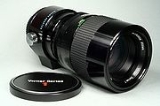
Vivitar Corporation was a manufacturer, distributor and marketer of photographic and optical equipment originally based in Oxnard, California. In November 2006, the corporation was purchased by public company Syntax-Brillian Corporation for US $26 million in stock and was operated as a wholly-owned subsidiary. On August 21 2008, subsequent to its filing for bankruptcy, parent company Syntax-Brillian completed the sale of the Vivitar brand name and intellectual property to privately held consumer electronics maker based in Edison, New Jersey.

Discussion
Ask a question about 'Vivitar'
Start a new discussion about 'Vivitar'
Answer questions from other users
|
Encyclopedia
Vivitar Corporation was a manufacturer, distributor and marketer of photographic and optical equipment originally based in Oxnard, California. In November 2006, the corporation was purchased by public company Syntax-Brillian Corporation for US $26 million in stock and was operated as a wholly-owned subsidiary. On August 21 2008, subsequent to its filing for bankruptcy, parent company Syntax-Brillian completed the sale of the Vivitar brand name and intellectual property to privately held consumer electronics maker based in Edison, New Jersey. Sakar did not purchase Vivitar’s equipment, facilities or accounts receivable. Terms of the deal were not disclosed.
Future of the Vivitar brand Sakar plans to expand its current mass retail digital camera offerings which sell in the low-range market of $20 to $100 by using the Vivitar brand on digital cameras priced in the midprice range of $70 to $300. Additional Vivitar-branded products including camera accessories and digital photo frames are planned as well as potential licensing opportunities.
Products
The company's product line has included 35 mm SLR cameras, zoom lenses, flashes, binoculars, digital cameras, night vision products, point-and-shoot cameras, tripods, underwater cameras, and other photographic accessories.
Company history
Founded in 1938, as Ponder and Best by Max Ponder and John Best. Originally an importer of German made photo equipment they began to import cameras and photographic equipment from Japan after WWII. They were instrumental in the introduction of many brands into the US marketplace including Mamiya/Sekor 35mm cameras, Kobina 8mm movie cameras, Sankyo/Komura wide/tele adapter lenses and a full line of photographic darkroom equipment cobbled from many mom and pop manufacturers throughout Japan and later Taiwan. the company has a rich history and reputation in photographic equipment. Cigar smoking and with a heavy German accent, Max was the sales side of the company while John ran the operations side of the company. Together they were a formidable team. In the Early 1960's they created the "Vivitar" brand to compete with the major lens manufactures all of whom used the "ar" ending in their lens names. By carefully positioning their limited quantity of product with key photo retailers, they quickly built a reputation for good quality lenses at modest prices. The retailers found that they could make good margins while giving their customer good value. As their reputation grew many contract lens manufacturer sought them out to carry their products under the Vivitar brand. Ponder and Best were the first to gain acceptance for lenses with interchangeable mounts allowing customers to use the same lens on different manufacturers camera bodies. In the 1980's they introduced the Series I lens line. These computer designed state of the art lenses were well priced and often out performed the optics of most camera manufacturers of the day. In the mid 1960's they private labeled a new type of semi-professional flash unit from National/Panasonic called the Vivitar 260. While acclaimed for its innovative design, its down side was that it used expensive 9 volt batteries which died quickly. Max, recognizing the problem, flew to Japan and met with the manufacturer and offered some improvements based on the feedback he received from customers. The improved flash was introduced in 1970 as the Vivitar 283 and quickly became the number one professional and Enthusiasts flash unit, outselling all its competitors combined and selling 3,000,000 by 1973. This flash unit was in production for over 30 years, revived twice after being discontinued due to customer demand. The early made in Japan units have have a trigger voltage of 250v which can overload some digital cameras,the later made in China and Korea units are fine at 5 to 12 volts. A point of note is the 283 has a removable sensor (as has the 285) and coupled the Optional remote sensor cord, off camera flash is Possible with the gun still in auto mode. the 283 sister flash called the 285 which has a zoom head to cover different focal length lenses. After the deaths of Max and later John, the company lost its edge drifting between different owners.
Vivitar lenses
Manual focus prime lenses
- Vivitar 17mm f/3.5
- Vivitar 19mm f/3.8
- Vivitar 20mm f/3.8
- Vivitar Auto 21mm f/3.8 T4
- Vivitar 24mm f/2 (made by Kiron)
- Vivitar 24mm f/2.8 (made by Tokina)
- Vivitar Series 1 28mm f/1.9
- Vivitar 28mm f/2 (49mm filter version made by Komine, 55mm by Kiron)
- Vivitar 28mm f/2.5
- Vivitar Close Focus 28mm f/2.8
- Vivitar Auto 28mm f/2.8
- Vivitar 35mm f/1.9
- Vivitar 35mm f/2.8
- Vivitar 50mm f/1.7
- Vivitar 50mm f/1.8
- Vivitar 50mm f/1.9 (Japan)
- Vivitar 55mm f/2.8 Macro M42 Mount (made by Komine)
- Tele-Vivitar 85mm f/1.8 T
- Vivitar Series 1 85mm f/1.4 Asphereical IF (released in 2009, made by Samyang)
- Vivitar 90mm f/2.5 Macro M42 Mount (made by Komine)
- Vivitar 90mm f/2.8 Macro M42 Mount and others (made by Komine)
- Vivitar Series 1 90mm f/2.5 1:2 Macro, 1:1 achieved with dedicated extender, nicknamed the Bokina (made by Tokina)
- Vivitar 100mm f/2.8 Macro (made by Kiron)
- Vivitar Series 1 105mm f/2.5 macro (made by Kiron)
- Vivitar 135mm f/1.5 professional
- Vivitar Series 1 135mm f/2.3 (made by Komine)
- Vivitar 135mm f/2.5
- Vivitar 135mm f/2.8
- Vivitar 135mm f/2.8 close-focusing 1:2 Macro (made by Komine)
- Vivitar 200mm f/3.5 M42 Mount and others (made by Komine)
- Vivitar Series 1 200mm f/3 (made by Komine)
- Vivitar Series 1 200mm f/3.5 Auto Focus
- Vivitar 300mm f/5.6 (made by Olympus)
- Vivitar 400mm f/5.6
- Vivitar 500mm f/8
- Vivitar Series 1 500mm f/8 mirror T-mount (released in 2009, made by Samyang)
- Vivitar 500mm f/6.3 T-mount (not mirror)
- Vivitar 600mm f/8 T-mount (not mirror)
- Vivitar Series 1 800mm f/8 mirror T-mount (released in 2009, made by Samyang)
- Vivitar 800mm f/11 solid cat
Manual focus zoom lenses
- Vivitar 17-28mm f/4-4.5
- Vivitar 19-35mm f/3.5-4.5
- Vivitar Series 1 24-48mm f3.5
- Vivitar Series 1 28-105mm f2.8-3.8
- Vivitar 28-200mm f/3.5-f5.3 Macro
- Vivitar 28-210mm f/3.5-5.6
- Vivitar 28-85mm f/3.5-4.5
- Vivitar Series 1 28-90mm f2.8-3.5
- Vivitar Series 1 35-85mm f2.8 (Variable focus)
- Vivitar Series 1 35-105 f3.5 (with close focus)
- Vivitar 35-200mm f/3-f4.5 Macro
- Vivitar 55-135mm f/3.5 TX
- Vivitar 70-150mm f/3.8
- Vivitar Series 1 70-210mm f/2.8-4
- Vivitar Series 1 70-210mm f/3.5
- Vivitar 70-210mm f/4.5
- Vivitar 70-210mm f/4.5 Macro
- Vivitar 70-210 f/4-5.6
- Vivitar 75-205 f/3.8
- Vivitar 85-205 f/3.8
- Vivitar 90-230mm f/4.5 TX
- Vivitar 90-180mm F/4.5 Flat Field zoom (made by Kiron)
- Vivitar 75-300mm f/4.5-5.8
- Vivitar 100-200mm f/4.0
- Vivitar Series 1 120-600mm f8
Auto focus lenses
- Vivitar Series 1 19-35mm f/3.5-4.5
- Vivitar Series 1 28-70mm f/2.8 (re-labeled Sigma)
- Vivitar 28-70mm f/3.5-4.8
- Vivitar 28-80mm f3.5-5.6
- Vivitar 28-105mm f/2.8-4.0
- Vivitar Series 1 28-210mm f/4.2-6.5
- Vivitar 28-300mm f/4-6.3
- Vivitar 35-70mm f3.5-4.5
- Vivitar Series 1 70-210mm f2.8 (re-labeled Sigma)
- Vivitar Series 1 70-210mm f2.8-4
- Vivitar 70-210mm f4.5-5.6
- Vivitar 100mm f3.5 Macro
- Vivitar 100-300mm f5.6-6.7
- Vivitar 100-400mm f4.5-6.7
See also
External links
-
-
-
-
-
-
- : Enthusiast web site, historical information
-
|
| |
|
|