

Tragedy of the anticommons

Encyclopedia
The tragedy of the anticommons is a neologism coined by Michael Heller
to describe a coordination breakdown where the existence of numerous rightsholders frustrates achieving a socially desirable outcome. The term mirrors the older term tragedy of the commons
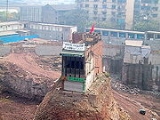
used to describe coordination breakdowns arising from insufficient rightsholders. The concept covers a range of coordination failures including patent thickets, submarine patents, and nail house
s. Overcoming these breakdowns can be difficult, but there are assorted means including eminent domain
, Laches
, patent pool
s or other licensing organizations.
The term originally appeared in Heller's 1998 article and is the thesis of his 2008 book. In a 1998 article in Science, Heller and Rebecca Eisenberg, while not disputing role of patents in general in motivating invention and disclosure, argue that biomedical research was one of several key areas where competing patent
rights could actually prevent useful and affordable products from reaching the marketplace. Proponents of the theory claimed that too many property rights could lead to less innovation.
, in many Eastern Europe
an cities there were a lot of open air kiosks, but also a lot of empty stores. Upon investigation, he concluded that because many different agencies and private parties had rights over the use of store space, it was difficult or even impossible for a startup
retailer to negotiate successfully the use of that space. Even though all the persons with ownership rights were losing money with the empty stores, and stores were in great demand, their competing interests got in the way of the effective use of space.
s can prevent a product from coming to the marketplace at a reasonable price, resulting in lost royalty
income for the copyright holders. For example, WKRP in Cincinnati
was one of the most popular syndicated sitcoms
of all time, and many television shows from that era have been successfully released on DVD. However, for many years, WKRP was not available on DVD. When it was a television
program, an agreement was in place between television producers and music licensing organizations such as ASCAP and BMI
wherein a standard licensing fee was paid for each song that was played on a television show. As such, the producers could determine how much money would be paid for their use of music clips and budget accordingly. However, there is no similar standard agreement for use of music on DVDs (which ASCAP and BMI do not control), and producers of programs from that era (and into the present) are now faced with the prospect of negotiating individually with several dozen composers. The current owner of the show, 20th Century Fox
, released the show on DVD starting in the first half of 2007, using "soundalike" versions of music for which they could not obtain rights.
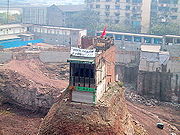 To construct roads, railroads, and similar transportation arteries, eminent domain
has long been considered necessary. Although the benefit to society from the transportation route may be substantial, without eminent domain, every single property owner along the way must agree for the route to be built. This provides conditions for the tragedy of the anticommons, as even if hundreds agree, a single landowner can stop the road or railroad. The ability for one person to veto the construction drastically increases the transaction costs for such projects.
Tragedy of the anticommons is related to other concepts:
Michael Heller (law professor)
Michael A. Heller is the Lawrence A. Wien Professor of Real Estate Law at Columbia Law School and is one of America's leading authorities on property...
to describe a coordination breakdown where the existence of numerous rightsholders frustrates achieving a socially desirable outcome. The term mirrors the older term tragedy of the commons
Tragedy of the commons
The tragedy of the commons is a dilemma arising from the situation in which multiple individuals, acting independently and rationally consulting their own self-interest, will ultimately deplete a shared limited resource, even when it is clear that it is not in anyone's long-term interest for this...
used to describe coordination breakdowns arising from insufficient rightsholders. The concept covers a range of coordination failures including patent thickets, submarine patents, and nail house
Nail house
A nail house is a Chinese neologism for homes belonging to people who refuse to make room for development. The term, a pun coined by developers, refers to nails that are stuck in wood, and cannot be pounded down with a hammer.-Historical background:In the People's Republic of China, during most...
s. Overcoming these breakdowns can be difficult, but there are assorted means including eminent domain
Eminent domain
Eminent domain , compulsory purchase , resumption/compulsory acquisition , or expropriation is an action of the state to seize a citizen's private property, expropriate property, or seize a citizen's rights in property with due monetary compensation, but without the owner's consent...
, Laches
Laches (equity)
Laches is an "unreasonable delay pursuing a right or claim...in a way that prejudices the [opposing] party" When asserted in litigation, it is an equitable defense, or doctrine...
, patent pool
Patent pool
In patent law, a patent pool is a consortium of at least two companies agreeing to cross-license patents relating to a particular technology. The creation of a patent pool can save patentees and licensees time and money, and, in case of blocking patents, it may also be the only reasonable method...
s or other licensing organizations.
The term originally appeared in Heller's 1998 article and is the thesis of his 2008 book. In a 1998 article in Science, Heller and Rebecca Eisenberg, while not disputing role of patents in general in motivating invention and disclosure, argue that biomedical research was one of several key areas where competing patent
Patent
A patent is a form of intellectual property. It consists of a set of exclusive rights granted by a sovereign state to an inventor or their assignee for a limited period of time in exchange for the public disclosure of an invention....
rights could actually prevent useful and affordable products from reaching the marketplace. Proponents of the theory claimed that too many property rights could lead to less innovation.
Classic example
In Heller's 1998 Harvard Law Review article, he noted that after the fall of CommunismPost-Communism
Post-communism is a name sometimes given to the period of political and economic transformation or "transition" in former Communist states located in parts of Europe and Asia, in which new governments aimed to create free market-oriented capitalist economies with some form of parliamentary...
, in many Eastern Europe
Eastern Europe
Eastern Europe is the eastern part of Europe. The term has widely disparate geopolitical, geographical, cultural and socioeconomic readings, which makes it highly context-dependent and even volatile, and there are "almost as many definitions of Eastern Europe as there are scholars of the region"...
an cities there were a lot of open air kiosks, but also a lot of empty stores. Upon investigation, he concluded that because many different agencies and private parties had rights over the use of store space, it was difficult or even impossible for a startup
Startup company
A startup company or startup is a company with a limited operating history. These companies, generally newly created, are in a phase of development and research for markets...
retailer to negotiate successfully the use of that space. Even though all the persons with ownership rights were losing money with the empty stores, and stores were in great demand, their competing interests got in the way of the effective use of space.
Copyrights
In the same way, competing use of copyrightCopyright
Copyright is a legal concept, enacted by most governments, giving the creator of an original work exclusive rights to it, usually for a limited time...
s can prevent a product from coming to the marketplace at a reasonable price, resulting in lost royalty
Royalties
Royalties are usage-based payments made by one party to another for the right to ongoing use of an asset, sometimes an intellectual property...
income for the copyright holders. For example, WKRP in Cincinnati
WKRP in Cincinnati
WKRP in Cincinnati is an American situation comedy that featured the misadventures of the staff of a struggling fictional radio station in Cincinnati, Ohio. The show was created by Hugh Wilson and was based upon his experiences working in advertising sales at Top 40 radio station WQXI in Atlanta...
was one of the most popular syndicated sitcoms
Situation comedy
A situation comedy, often shortened to sitcom, is a genre of comedy that features characters sharing the same common environment, such as a home or workplace, accompanied with jokes as part of the dialogue...
of all time, and many television shows from that era have been successfully released on DVD. However, for many years, WKRP was not available on DVD. When it was a television
Television
Television is a telecommunication medium for transmitting and receiving moving images that can be monochrome or colored, with accompanying sound...
program, an agreement was in place between television producers and music licensing organizations such as ASCAP and BMI
Broadcast Music Incorporated
Broadcast Music, Inc. is one of three United States performing rights organizations, along with ASCAP and SESAC. It collects license fees on behalf of songwriters, composers, and music publishers and distributes them as royalties to those members whose works have been performed...
wherein a standard licensing fee was paid for each song that was played on a television show. As such, the producers could determine how much money would be paid for their use of music clips and budget accordingly. However, there is no similar standard agreement for use of music on DVDs (which ASCAP and BMI do not control), and producers of programs from that era (and into the present) are now faced with the prospect of negotiating individually with several dozen composers. The current owner of the show, 20th Century Fox
20th Century Fox
Twentieth Century Fox Film Corporation — also known as 20th Century Fox, or simply 20th or Fox — is one of the six major American film studios...
, released the show on DVD starting in the first half of 2007, using "soundalike" versions of music for which they could not obtain rights.
Eminent domain
Eminent domain
Eminent domain , compulsory purchase , resumption/compulsory acquisition , or expropriation is an action of the state to seize a citizen's private property, expropriate property, or seize a citizen's rights in property with due monetary compensation, but without the owner's consent...
has long been considered necessary. Although the benefit to society from the transportation route may be substantial, without eminent domain, every single property owner along the way must agree for the route to be built. This provides conditions for the tragedy of the anticommons, as even if hundreds agree, a single landowner can stop the road or railroad. The ability for one person to veto the construction drastically increases the transaction costs for such projects.
See also
- Tragedy of the commonsTragedy of the commonsThe tragedy of the commons is a dilemma arising from the situation in which multiple individuals, acting independently and rationally consulting their own self-interest, will ultimately deplete a shared limited resource, even when it is clear that it is not in anyone's long-term interest for this...
- Market failureMarket failureMarket failure is a concept within economic theory wherein the allocation of goods and services by a free market is not efficient. That is, there exists another conceivable outcome where a market participant may be made better-off without making someone else worse-off...
- GeorgismGeorgismGeorgism is an economic philosophy and ideology that holds that people own what they create, but that things found in nature, most importantly land, belong equally to all...
- Network effects
- Rivalry (economics)Rivalry (economics)In economics, rivalry is a characteristic of a good. A good can be placed along a continuum ranging from rivalrous to non-rival. The same characteristic is sometimes referred to as subtractable or non-subtractable . A rival good is a good whose consumption by one consumer prevents simultaneous...
Tragedy of the anticommons is related to other concepts:
| Property rights | Common ownership or lack of property rights | |
|---|---|---|
| Bad outcome/tragedy | Tragedy of the anticommons Tragedy of the anticommons The tragedy of the anticommons is a neologism coined by Michael Heller to describe a coordination breakdown where the existence of numerous rightsholders frustrates achieving a socially desirable outcome. The term mirrors the older term tragedy of the commons used to describe coordination... |
Tragedy of the commons Tragedy of the commons The tragedy of the commons is a dilemma arising from the situation in which multiple individuals, acting independently and rationally consulting their own self-interest, will ultimately deplete a shared limited resource, even when it is clear that it is not in anyone's long-term interest for this... |
| Good outcome/cornucopia | normal case | Inverse commons |