


Te Atatu (New Zealand electorate)

Encyclopedia
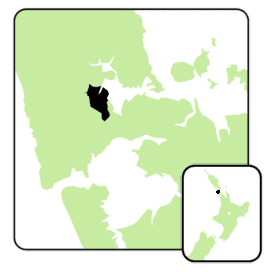
Te Atatū is a New Zealand
New Zealand
New Zealand is an island country in the south-western Pacific Ocean comprising two main landmasses and numerous smaller islands. The country is situated some east of Australia across the Tasman Sea, and roughly south of the Pacific island nations of New Caledonia, Fiji, and Tonga...
Parliamentary electorate
New Zealand electorates
An electorate is a voting district for elections to the Parliament of New Zealand. In informal discussion, electorates are often called seats. The most formal description, electoral district, is rarely seen outside of electoral legislation. Before 1996, all Members of Parliament were directly...
, returning one Member of Parliament to the New Zealand
New Zealand
New Zealand is an island country in the south-western Pacific Ocean comprising two main landmasses and numerous smaller islands. The country is situated some east of Australia across the Tasman Sea, and roughly south of the Pacific island nations of New Caledonia, Fiji, and Tonga...
House of Representatives
Parliament of New Zealand
The Parliament of New Zealand consists of the Queen of New Zealand and the New Zealand House of Representatives and, until 1951, the New Zealand Legislative Council. The House of Representatives is often referred to as "Parliament".The House of Representatives usually consists of 120 Members of...
. The current MP for Te Atatū is Chris Carter
Chris Carter (politician)
Christopher Joseph Carter was an independent Member of Parliament in New Zealand, and a former member of the New Zealand Labour Party until his expulsion. Carter was a senior Cabinet Minister in the Fifth Labour Government of New Zealand, serving lastly as Minister of Education, Minister...
, who is formerly of the Labour Party
New Zealand Labour Party
The New Zealand Labour Party is a New Zealand political party. It describes itself as centre-left and socially progressive and has been one of the two primary parties of New Zealand politics since 1935....
, but is currently an Independent MP. He first held this position from 1993
New Zealand general election, 1993
The 1993 New Zealand general election was held on 6 November 1993 to determine the composition of the 44th New Zealand Parliament. It saw the governing National Party, led by Jim Bolger, win a second term in office, despite a major swing back towards the Labour Party. The new Alliance and New...
to 1996
New Zealand general election, 1996
The 1996 New Zealand general election was held on 12 October 1996 to determine the composition of the 45th New Zealand Parliament. It was notable for being the first election to be held under the new Mixed Member Proportional electoral system, and produced a parliament considerably more diverse...
and again since 1999
New Zealand general election, 1999
The 1999 New Zealand general election was held on 27 November 1999 to determine the composition of the 46th New Zealand Parliament. The governing National Party, led by Prime Minister Jenny Shipley, was defeated, being replaced by a coalition of Helen Clark's Labour Party and the smaller Alliance...
.
Te Atatū comprises the suburbs of Waitakere City on the western side of the Whau River
Whau River
The Whau River is an estuarial arm of the southwestern Waitemata Harbour within the Auckland metropolitan area in New Zealand. It flows north for 5.7 kilometres from its origin at the confluence of the Avondale Stream and Whau Stream to its mouth between the Te Atatu peninsula and the long, thin...
in Auckland
Auckland
The Auckland metropolitan area , in the North Island of New Zealand, is the largest and most populous urban area in the country with residents, percent of the country's population. Auckland also has the largest Polynesian population of any city in the world...
. The main parts of the seat are the suburbs of Glendene
Glendene, New Zealand
Glendene is an Auckland suburb. It is under the local governance of the Waitakere City Council.Glendene School and community arts college is a special needs school in the north-east of England in a village called Easington, County Durham....
, Te Atatu
Te Atatu
Te Atatu is the name of two suburbs in western Auckland, New Zealand: Te Atatu Peninsula and Te Atatu South. They are located next to each other some 10 kilometres to the west of the Auckland city centre....
, Lincoln
Lincoln, Auckland
Lincoln is a West Auckland suburb, in Waitakere City. The Northwestern Motorway passes through the northern part of the suburb, with the "Lincoln Road" junction providing access. Lincoln North mall is a small shopping centre on the corner of Lincoln Road and Universal Drive, and across Universal...
and Massey
Massey, New Zealand
Massey is a north-western suburb of the Auckland conurbation. It was formerly a northern suburb of Waitakere City which existed from 1989 to 2010, before being replaced by the Auckland Council. The suburb was named after former Prime Minister of New Zealand William Massey...
. Boundary changes in the leadup to the 2008 election
New Zealand general election, 2008
The 2008 New Zealand general election was held on 8 November 2008 to determine the composition of the 49th New Zealand parliament. The conservative National Party, headed by its Parliamentary leader John Key, won a plurality of votes and seats, ending 9 years of government dominated by the social...
have seen the northern boundary edge northwards to include Massey East, with a small southern block transferred to the neighbouring Waitakere
Waitakere (New Zealand electorate)
Waitakere is a New Zealand Parliamentary electorate, returning one Member of Parliament to the New Zealand House of Representatives. The current MP for Waitakere is Paula Bennett of the National Party. She has held this position since the 2008 election....
seat.
The makeup of Te Atatū shows that while its population is composed roughly inline with the national average: It is roughly the same ages as the nation (with slightly more residents over fifty), and its average income ($22627) is only slightly lower than the rest of New Zealand. Its main point of demographic difference with its country is ethnic - it has more Asian New Zealanders and more Pacific Islanders than the rest of the country.
History
The first Te Atatū seat was created ahead of the 1978 electionNew Zealand general election, 1978
The 1978 New Zealand general election was a nationwide vote to elect the 39th New Zealand Parliament. It saw the governing National Party, led by Robert Muldoon, retain office, although the opposition Labour Party managed to win the largest share of the vote...
by pulling apart the seat of Waitemata
Waitemata (New Zealand electorate)
Waitemata was a New Zealand parliamentary electorate, from 1871 to 1946, and then from 1954 to 1978.-Population centres:This electorate is in the suburbs of Auckland.-History:The electorate existed from 1871 to 1946, and from 1954 to 1978...
; its first MP was future cabinet minister Dr Michael Bassett
Michael Bassett
Michael Edward Rainton Bassett, QSO is a former Labour Party member of the New Zealand House of Representatives and cabinet minister in the reformist fourth Labour government...
, who had been the MP for Waitemata from 1972
New Zealand general election, 1972
The New Zealand general election of 1972 was held to elect MPs to the 37th session of the New Zealand Parliament. The Labour Party, led by Norman Kirk, defeated the governing National Party.-Background:...
until 1975
New Zealand general election, 1975
The 1975 New Zealand general election was held to elect MPs to the 38th session of the New Zealand Parliament. It was the first election in New Zealand where 18-20 year olds and all permanent residents of New Zealand were eligible to vote, although only citizens were able to be...
before an anti-labour landslide cost him his job. Basset held the seat until his retirement in 1990, when a toxic battle to succeed Bassett in an already lean year for Labour passed one of their safe seats into the hands of Brian Neeson
Brian Neeson
Brian Kevin Neeson is a New Zealand politician. He was an MP from 1990 to 2002, representing the National Party, and a member of the Waitemata District Health Board from 2004 - 2010.-Early life:...
. Neeson himself never represented the same seat twice in succession, (having jumped ship to Waitakere
Waitakere (New Zealand electorate)
Waitakere is a New Zealand Parliamentary electorate, returning one Member of Parliament to the New Zealand House of Representatives. The current MP for Waitakere is Paula Bennett of the National Party. She has held this position since the 2008 election....
in 1993, Waipareia
Waipareira
Waipareira is a former New Zealand Parliamentary electorate in West Auckland, which existed only from 1996 to 1999, and was held by Brian Neeson.-Population centres:The electorate includes the following population centres:* Te Atatu Peninsula* Massey...
in 1996, to a new, larger Waitakere seat in 1999 before being denied the chance to contest Helensville
Helensville (New Zealand electorate)
Helensville is a New Zealand Parliamentary electorate, returning one Member of Parliament to the New Zealand House of Representatives. The current MP for Helensville is John Key, leader of the National Party and Prime Minister of New Zealand. He has held this electorate since 2002...
in 2002), and his departure in 1993, coupled with a reversal of electoral fortune for the National Party (down from 47.8 to 35.1 percent) lead to a victory for incoming Labour MP Chris Carter. In his first three years in Parliament, Carter made news for being the first openly gay member of Parliament.
With the introduction of MMP voting in 1996, Te Atatū was scrapped in favour of a new seat called Waipareira, which covered the same area as Te Atatū, but also included the wealthy harbourside suburbs to the north of the seat. Neeson and Carter were rematched, when the presence of former Labour MP for West Auckland
Auckland West
The former New Zealand Parliamentary electorate on the western outskirts of Auckland, was known as West Auckland from 1984 to 1993. The earlier electorates were known as City of Auckland West from 1861 to 1890, and then Auckland West from 1905 to 1946.-History:The "City of Auckland West" electorate...
turned New Zealand First
New Zealand First
New Zealand First is a political party in New Zealand that was founded in 1993, following party founder Winston Peters' resignation from the National Party in 1992...
candidate Jack Elder
Jack Elder
Jack Arnold Elder is a former New Zealand politician. He was an MP from 1984 to 1999, representing first the Labour Party, then New Zealand First, and then Mauri Pacific.-Early life:...
, undermined Carter's chances and handed the seat to Neeson by fewer than a thousand votes.
Three years later, Te Atatu was re-established, with the new seat focused more on the working class suburbs at the southern end of Waitakere City and Carter had no such trouble using the seat to springboard back into Parliament. In 2002
New Zealand general election, 2002
The 2002 New Zealand general election was held on 27 July 2002 to determine the composition of the 47th New Zealand Parliament. It saw the reelection of Helen Clark's Labour Party government, as well as the worst-ever performance by the opposition National Party.Arguably the most controversial...
and 2005
New Zealand general election, 2005
The 2005 New Zealand general election held on 17 September 2005 determined the composition of the 48th New Zealand Parliament. No party won a majority in the unicameral House of Representatives, but the Labour Party of Prime Minister Helen Clark secured two more seats than nearest rival, the...
, because the electoral climate favoured Labour, Carter and his party dominated the seat, winning at least 49 percent of the candidate and list vote, but the Labour vote was reduced in the 2008
New Zealand general election, 2008
The 2008 New Zealand general election was held on 8 November 2008 to determine the composition of the 49th New Zealand parliament. The conservative National Party, headed by its Parliamentary leader John Key, won a plurality of votes and seats, ending 9 years of government dominated by the social...
election.
Members of Parliament
Key1978 to 1996
| Election | Winner | |
|---|---|---|
| 1978 election New Zealand general election, 1978 The 1978 New Zealand general election was a nationwide vote to elect the 39th New Zealand Parliament. It saw the governing National Party, led by Robert Muldoon, retain office, although the opposition Labour Party managed to win the largest share of the vote... |
Michael Bassett Michael Bassett Michael Edward Rainton Bassett, QSO is a former Labour Party member of the New Zealand House of Representatives and cabinet minister in the reformist fourth Labour government... |
|
| 1981 election New Zealand general election, 1981 The 1981 New Zealand general election was a nationwide vote to determine the shape of the 40th New Zealand Parliament. It saw the governing National Party, led by Robert Muldoon, win a third term in office, although the opposition Labour Party, led by Bill Rowling, actually won the largest share of... |
||
| 1984 election New Zealand general election, 1984 The 1984 New Zealand general election was a nationwide vote to determine the shape of the 41st New Zealand Parliament. It marked the beginning of the Fourth Labour Government, with David Lange's Labour Party defeating long-serving Prime Minister Robert Muldoon of the National Party. It was also the... |
||
| 1987 election New Zealand general election, 1987 The 1987 New Zealand general election was a nationwide vote to determine the shape of the 43rd sitting of the New Zealand Parliament. The governing New Zealand Labour Party, led by Prime Minister David Lange, was re-elected for a second term, although the Opposition National Party made gains... |
||
| 1990 election New Zealand general election, 1990 The 1990 New Zealand general election was held on 27 October to determine the composition of the 43rd New Zealand parliament. The governing Labour Party was defeated, ending its controversial two terms in office... |
Brian Neeson Brian Neeson Brian Kevin Neeson is a New Zealand politician. He was an MP from 1990 to 2002, representing the National Party, and a member of the Waitemata District Health Board from 2004 - 2010.-Early life:... |
|
| 1993 election New Zealand general election, 1993 The 1993 New Zealand general election was held on 6 November 1993 to determine the composition of the 44th New Zealand Parliament. It saw the governing National Party, led by Jim Bolger, win a second term in office, despite a major swing back towards the Labour Party. The new Alliance and New... |
Chris Carter Chris Carter (politician) Christopher Joseph Carter was an independent Member of Parliament in New Zealand, and a former member of the New Zealand Labour Party until his expulsion. Carter was a senior Cabinet Minister in the Fifth Labour Government of New Zealand, serving lastly as Minister of Education, Minister... |
|
1996 to present
| Election | Winner | |
|---|---|---|
| 1999 election New Zealand general election, 1999 The 1999 New Zealand general election was held on 27 November 1999 to determine the composition of the 46th New Zealand Parliament. The governing National Party, led by Prime Minister Jenny Shipley, was defeated, being replaced by a coalition of Helen Clark's Labour Party and the smaller Alliance... |
Chris Carter Chris Carter (politician) Christopher Joseph Carter was an independent Member of Parliament in New Zealand, and a former member of the New Zealand Labour Party until his expulsion. Carter was a senior Cabinet Minister in the Fifth Labour Government of New Zealand, serving lastly as Minister of Education, Minister... |
|
| 2002 election New Zealand general election, 2002 The 2002 New Zealand general election was held on 27 July 2002 to determine the composition of the 47th New Zealand Parliament. It saw the reelection of Helen Clark's Labour Party government, as well as the worst-ever performance by the opposition National Party.Arguably the most controversial... |
||
| 2005 election New Zealand general election, 2005 The 2005 New Zealand general election held on 17 September 2005 determined the composition of the 48th New Zealand Parliament. No party won a majority in the unicameral House of Representatives, but the Labour Party of Prime Minister Helen Clark secured two more seats than nearest rival, the... |
||
| 2008 election New Zealand general election, 2008 The 2008 New Zealand general election was held on 8 November 2008 to determine the composition of the 49th New Zealand parliament. The conservative National Party, headed by its Parliamentary leader John Key, won a plurality of votes and seats, ending 9 years of government dominated by the social... |
||
List MPs from Te Atatū
Members of Parliament elected from party lists in elections since 1999 where that person also unsuccessfully contested the Te Atatū electorate. Unless otherwise stated, all MPs' terms began and ended at general elections.| Election | Winner | |
|---|---|---|
| 1999 election New Zealand general election, 1999 The 1999 New Zealand general election was held on 27 November 1999 to determine the composition of the 46th New Zealand Parliament. The governing National Party, led by Prime Minister Jenny Shipley, was defeated, being replaced by a coalition of Helen Clark's Labour Party and the smaller Alliance... |
Laila Harré Laila Harré Laila Jane Harré is a New Zealand politician and trade unionist. She was a Member of Parliament for the left-wing Alliance party, and became the party's leader for a brief period after the group experienced a schism in 2002.-Early life:... |
|
| 2005 election New Zealand general election, 2005 The 2005 New Zealand general election held on 17 September 2005 determined the composition of the 48th New Zealand Parliament. No party won a majority in the unicameral House of Representatives, but the Labour Party of Prime Minister Helen Clark secured two more seats than nearest rival, the... |
Tau Henare Tau Henare Tau Henare is a New Zealand Māori parliamentarian. He served as a Member of Parliament from 1993 to 1999 and returned to Parliament in 2005. He has been involved with four political parties: Mana Motuhake, New Zealand First, Mauri Pacific and the National Party - representing three in... 1 |
|
| 2008 election New Zealand general election, 2008 The 2008 New Zealand general election was held on 8 November 2008 to determine the composition of the 49th New Zealand parliament. The conservative National Party, headed by its Parliamentary leader John Key, won a plurality of votes and seats, ending 9 years of government dominated by the social... |
||
1 Tau Henare was a New Zealand First
New Zealand First
New Zealand First is a political party in New Zealand that was founded in 1993, following party founder Winston Peters' resignation from the National Party in 1992...
MP from 1993 until his defeat in 1999
Candidates in the
|}retired incumbent
Electorate (as at 11 November 2011): 42,742
2008 election
2005 election
External links
- Electorate Profile Parliamentary Library