

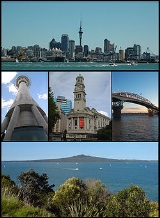
Auckland

Encyclopedia
The Auckland metropolitan area (icon), in the North Island
of New Zealand
, is the largest and most populous urban area in the country
with residents, percent of the country's population. Auckland also has the largest Polynesian
population of any city in the world. In Māori
Auckland's name is Tāmaki Makaurau, or the transliterated version of Auckland, Ākarana.
The 2011 Mercer Quality of Living Survey ranked Auckland 3rd equal place in the world on its list, while The Economist's
World's Most Livable Cities
index of 2011 ranked Auckland in 9th place.
In 2010, Auckland was classified as a Beta World City
in the World Cities Study Group’s inventory by Loughborough University
.
Auckland lies between the Hauraki Gulf
of the Pacific Ocean
to the east, the low Hunua Ranges
to the south-east, the Manukau Harbour
to the south-west, and the Waitakere Ranges
and smaller ranges to the west and north-west. The central part of the urban area occupies a narrow isthmus
between the Manukau Harbour on the Tasman Sea
and the Waitemata Harbour
on the Pacific Ocean
. It is one of the few cities in the world to have harbours on two separate major bodies of water.
(fortified villages) were created, mainly on the volcanic peaks. Māori population in the area is estimated at about 20,000 people before the arrival of Europeans. The subsequent introduction of firearms, which began in Northland, upset the balance of power and led to devastating inter-tribal warfare, causing iwi
who lacked the new weapons to seek refuge in areas less exposed to coastal raids. As a result, the region had relatively low numbers of Māori when European settlement of New Zealand began. There is, however, nothing to suggest that this was the result of a deliberate European policy. On 27 January 1832, Joseph Brooks Weller, eldest of the Weller brothers
of Otago
and Sydney
bought land including the sites of the modern cities of Auckland and North Shore and part of Rodney District, for "one large cask of powder" from "Cohi Rangatira".
After the signing of the Treaty of Waitangi
in February 1840, the new Governor of New Zealand, William Hobson
, chose the area as his new capital, and named it after George Eden, Earl of Auckland
, then Viceroy of India. The land that Auckland was established on was gifted to the Governor by local Maori iwi
Ngati Whatua
, as a sign of goodwill and in the hope that the building of a city would attract commercial and political opportunities for the iwi. Auckland was officially declared New Zealand's capital in 1841, and the transfer of the administration from Russell (now Old Russell
) in the Bay of Islands was completed in 1842. However, even in 1840 Port Nicholson (later Wellington
) was seen as a better choice for an administrative capital because of its proximity to the South Island
and Wellington became the capital in 1865. Auckland was the principal city of the Auckland Province
until the provincial system was abolished in 1876.
. This, and continued road building towards the south into the Waikato
, enabled Pākehā
(European New Zealanders) influence to spread from Auckland. Its population grew fairly rapidly, from 1,500 in 1841 to 12,423 by 1864. The growth occurred similarly to other mercantile-dominated cities, mainly around the port and with problems of overcrowding and pollution. Auckland had a far greater population of ex soldiers than other settlements, many of whom were Irish. About 50% of the population was Irish which contrasted heavily with the majority English settlers in Wellington, Christchurch or New Plymouth. Most of the Irish, though not all were from Protestant Ulster. The majority of settlers in the early period were assisted by receiving a cheap passage to NZ.
Trams and railway lines shaped Auckland's rapid expansion in the early first half of the 20th century, but soon afterward the dominance of the motor vehicle emerged and has not abated since; arterial roads and motorways have become both defining and geographically dividing features of the urban landscape. They also allowed further massive expansion that resulted in the growth of associated urban areas like the North Shore
(especially after the construction of the Auckland Harbour Bridge
), and Manukau City in the south.
A large percentage of Auckland is dominated by a very suburban style of building, giving the city a very low population density
. Some services like public transport are costlier than in other higher-density cities, but Aucklanders are still able to live in single-family dwellings similar to the rest of the New Zealand population, although lot sizes tend to be smaller than in many other centres.
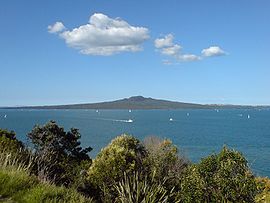
, which has produced about 50 volcanoes. These take the form of cones, lakes, lagoons, islands and depressions, and several have produced extensive lava flows. Most of the cones have been partly or completely quarried
away. The individual volcanoes are all considered extinct, although the volcanic field itself is merely dormant. Auckland has at least 14 large lava tube caves which run from the volcanoes down towards the sea.
Unlike the explosive subduction
-driven volcanism
in the central North Island, such as at Mount Ruapehu
and Lake Taupo
, Auckland's volcanoes are fuelled entirely by basalt
ic magma
. The most recent and by far the largest volcano, Rangitoto Island
, was formed within the last 1000 years, and its eruptions destroyed the Māori settlements on neighbouring Motutapu Island
some 700 years ago. Rangitoto's size, its symmetry, its position guarding the entrance to Waitemata Harbour
and its visibility from many parts of the Auckland region make it Auckland's most iconic natural feature. Few birds and insects inhabit the island because of the rich acidic soil and the type of flora growing out of the rocky soil.
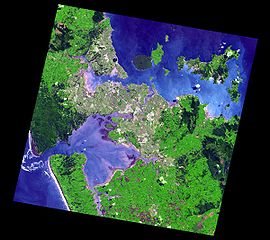
, less than two kilometres wide at its narrowest point, between Mangere Inlet
and the Tamaki River
. There are two harbours in the Auckland urban area surrounding this isthmus: Waitemata Harbour
to the north, which opens east to the Hauraki Gulf
, and Manukau Harbour
to the south, which opens west to the Tasman Sea
.
Bridges span parts of both harbours, notably the Auckland Harbour Bridge
crossing the Waitemata Harbour west of the Auckland Central Business District
(CBD). The Mangere Bridge and the Upper Harbour Bridge
span the upper reaches of the Manukau and Waitemata Harbours, respectively. In earlier times, portage
paths crossed the narrowest sections of the isthmus.
Several islands of the Hauraki Gulf
are administered as part of Auckland City, though they are not officially part of the Auckland metropolitan area. Parts of Waiheke Island
effectively function as Auckland suburbs, while various smaller islands near Auckland are mostly zoned 'recreational open space' or are nature sanctuaries.
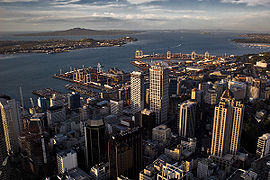 Auckland has a warm-temperate
climate, with warm, humid summers and mild, damp winters. Under Köppen's climate classification
, the city has an oceanic climate
. It is the warmest main centre of New Zealand and is also one of the sunniest, with an average of 2060 sunshine hours per annum. The average daily maximum temperature is 23.7 °C
(74.7°F) in February, and 14.5°C (58.1°F) in July. The absolute maximum recorded temperature is 32.4 °C (90.3°F) , while the absolute minimum is -2.5 °C (27.5°F). High levels of rainfall occur almost year-round with an average of 1240 mm per year spread over 137 'rain days'. Climatic conditions vary in different parts of the city owing to geography such as hills, land cover and distance from the sea, hence unofficial temperature records exist, such as a maximum of 34°C (93.2°F) in West Auckland. Snowfall in Auckland is extremely rare; recorded instances include 27 July 1939 and 15 August 2011, although without any accumulation.
The early morning calm on the isthmus during settled weather, before the sea breeze rises, was described as early as 1853: "In all seasons, the beauty of the day is in the early morning. At that time, generally, a solemn stillness holds, and a perfect calm prevails..." Many Aucklanders used this time of day to walk and run in parks.
As car ownership rates are very high and emissions controls relatively weak, Auckland suffers from some air pollution
, especially with regard to fine particles emissions. There are also occasional breaches of guideline levels of carbon monoxide
. While maritime winds normally disperse the pollution relatively quickly it can sometimes become visible as smog
, especially on calm winter days. Precipitation is relatively abundant all year round, but peaks marginally in winter.
 Auckland is home to many cultures. The majority of inhabitants claim European
- predominantly British
- descent, but substantial Māori, Pacific Islander
and Asian
communities exist as well. Auckland has the largest Polynesia
n population of any city in the world and a higher proportion of people of Asian origin than the rest of New Zealand. Ethnic groups from all corners of the world have a presence in Auckland, making it by far the country's most cosmopolitan
city.
. Immigration to New Zealand is heavily concentrated towards Auckland (partly for job market reasons). This strong focus on Auckland has led the immigration services to award extra points towards immigration visa requirements for people intending to move to other parts of New Zealand.
The following table shows the ethnic profile of Auckland's population, as recorded in the 2001 and 2006 New Zealand Census
. The percentages add up to more than 100%, as some people counted themselves as belonging to more than one ethnic group. Figures for 2006 refer to the whole Auckland Region, not just the urban area. The substantial percentage drop of 'Europeans' was mainly caused by the increasing numbers of people from this group choosing to define themselves as 'New Zealanders' - even though this was not one of the groups listed on the census form.
The 2006 Census also provides information about the multilinguality of the region. 867,825 people in the Auckland Region spoke one language only, 274,863 spoke two, and 57,051 three or more.
, but fewer than 10% regularly attend church and almost 40% profess no religious affiliation (2001 census figures). The main denominations are Roman Catholic, Anglican and Presbyterian. Pentecostal
and charismatic
churches are the fastest growing. A small community of Coptic Orthodox Christians is also present.
Recent immigration from Asia has added to the religious diversity of the city, and about 10% of the population follow such beliefs as Buddhism
, Hinduism
, Islam
and Sikhism
, although there are no figures on religious attendance. There is also a small, long-established Jewish
community.
 Auckland's lifestyle is influenced by the fact that while it is 70% rural in land area, 90% of Aucklanders live in urban areas - though large parts of these areas have a more suburban character than many cities in Europe and Asia.
Positive aspects of Auckland life are its mild climate, plentiful employment and educational opportunities, as well as numerous leisure facilities. Meanwhile, traffic problems, the lack of good public transport, and increasing housing costs have been cited by many Aucklanders as among the strongest negative factors of living there, together with crime. Nonetheless, Auckland ranks 4th equal in a survey of the quality of life of 215 major cities of the world (2009 data).
In 2006, Auckland placed 23rd on the UBS
list of the world's richest cities.
In 2010, Auckland was ranked by the Mercer
consulting firm as 149 of 214 centres for affordability, i.e. making it one of the most affordable cities world-wide to live in, based on the comparative cost of 200 aspects of life including housing, transport, food, clothing, household goods and entertainment.
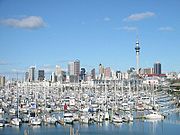
s and launches
. Around 60,500 of the country's 149,900 registered yachtsmen come from the Auckland Region. About one in three Auckland households owns a boat.
Viaduct Basin
also hosted two America's Cup
challenges (2000 Cup and 2003 Cup
), and its cafes, restaurants, and clubs add to Auckland's vibrant nightlife. With the sheltered Waitemata Harbour at its doorstep, Auckland sees many nautical events, and there are also a large number of sailing clubs in Auckland, as well as Westhaven Marina
, the largest of the Southern Hemisphere
.
High Street, Queen Street
, Ponsonby Road
, and Karangahape Road
are very popular with urban socialites. Newmarket
and Parnell
are up-market shopping areas, while Otara
's and Avondale
's fleamarkets offer a colourful alternative shopping experience. Newer shopping malls tend to be outside city centres, with Sylvia Park
(Sylvia Park, Auckland City), Botany Town Centre
(Howick, Manukau City) and Westfield Albany
(Albany, North Shore) being the three largest.
The Auckland Town Hall
and Aotea Centre
host conferences and cultural events such as theatre, kapa haka
, and opera
. Auckland also boasts a full-time professional symphonic ensemble in the Auckland Philharmonia Orchestra
.
Many national treasures are displayed at the Auckland Art Gallery
, such as the work of Colin McCahon
, while many other significant cultural artefacts reside at the Auckland War Memorial Museum
, the National Maritime Museum, or the Museum of Transport and Technology
(MOTAT). Exotic creatures can be observed at the Auckland Zoo
and Kelly Tarlton's Underwater World. Movies and rock concerts (notably, the "Big Day Out
") are also well patronised.
The Waitemata Harbour has popular swimming beaches at Mission Bay
, Devonport
, Takapuna
, and the west coast has popular surf spots such as Piha
and Muriwai
. Many Auckland beaches are patrolled by surf lifesaving clubs, which are part of Surf Life Saving Northern Region
.
The Auckland Philharmonia Orchestra
is the region's resident full time symphony orchestra, performing its own series of concerts and accompanying opera, ballet and visiting artists like Luciano Pavarotti
, Burt Bacharach
, Meat Loaf
, Nigel Kennedy
and the orchestra's patron Dame Kiri Te Kanawa
.
The Auckland Art Gallery
Toi o Tāmaki, is considered the home of the visual arts in New Zealand with a collection of over 14,000 artworks, including prominent New Zealand artists and has been promised a gift of fifteen works of art by New York art collectors and philanthropists Julian and Josie Robertson—including well-known paintings by Paul Cézanne, Pablo Picasso, Henri Matisse, Paul Gauguin and Piet Mondrian. This is the largest gift ever made to an art museum in Australasia.
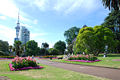
 Auckland Domain
is one of the largest parks in the city, close to the Auckland CBD
and having a good view of the Hauraki Gulf
and Rangitoto Island
. Smaller parks close to the city centre are Albert Park
, Myers Park, Western Park
and Victoria Park
.
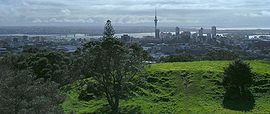
While most volcanic cones in the Auckland Volcanic Field
have been affected by quarrying, many of the remaining cones are now within parks, and retain a more natural character than the surrounding city. Prehistoric earthworks and historic fortifications are in several of these parks, including Mount Eden
, North Head
and One Tree Hill
(Maungakiekie).
Other parks around the city are in Western Springs
, which has a large park bordering the MOTAT museum and the Auckland Zoo
. The Auckland Botanic Gardens
are further south, in Manurewa
.
Ferries provide transport to parks and nature reserves at Devonport
, Waiheke Island
, Rangitoto Island
and Tiritiri Matangi. The Waitakere Ranges
Regional Park to the west of Auckland offers beautiful and relatively unspoiled bush territory, as do the Hunua Ranges
to the south.
Rugby union
, rugby league
, soccer, cricket
and netball
are widely played and followed. Auckland has a considerable number of rugby union and cricket grounds, and venues for motorsports, tennis, badminton, netball, swimming, soccer, rugby league, and many other sports.
Main teams
Major events
Annual sporting events include:
Auckland hosted the 1950 British Empire Games
and the 14th Commonwealth Games in 1990
, and will host a number of matches (including the semi-finals and the final) of the 2011 Rugby World Cup
.
and the Viaduct Basin
in the Auckland CBD
, where many financial and business services are located, which make up a large percentage of the CBD economy. A large proportion of the technical and trades workforce is based in the industrial zones of South Auckland
.
The largest commercial and industrial areas of Greater Auckland are in the southeast of Auckland City and the western parts of Manukau City, mostly bordering the Manukau Harbour
and the Tamaki River
estuary.
The sub-national GDP of the Auckland region was estimated at US$47.6 billion in 2003, 36% of New Zealand's national GDP, 15% greater than the entire South Island.
Auckland's status as the largest commercial centre of the country reflects in the high median personal income (per working person, per year) which was NZ$44,304 (approx. US$33,000) for the region in 2005, with jobs in the Auckland CBD often earning more. The median personal income (for all persons older than 15 years of age, per year) was NZ$22,300 (2001), behind only North Shore City (also part of the Greater Auckland area) and Wellington
. While office workers still account for a large part of Auckland's commuters, large office developments in other parts of the city, for example in Takapuna
or Albany
, both on the North Shore, are slowly becoming more common, reducing concentration on the Auckland CBD somewhat.
Amongst the more important tertiary educational institutes are the University of Auckland
, Auckland University of Technology
, Massey University
, Manukau Institute of Technology
and Unitec New Zealand
.
in the lower income neighbourhoods, to palatial waterfront estates, especially on the Waitemata. Traditionally, the most common residence of Aucklanders was a bungalow on a 'quarter acre
' (1,000 m²). However, subdividing such properties with 'infill housing', has long been the norm. Aucklanders' housing preferences resulting from a lack of apartments and poor public transport has resulted in a large urban sprawl
and reliance on motor vehicles. This will probably continue, as the vast majority of Aucklanders live in low-density housing, which is expected to remain at up to 70% of the total share even in 2050.
In some areas, the Victorian villas
are being increasingly torn down to make way for large plaster mansions with tennis courts and swimming pools. The demolition of the older properties is being combated by the Auckland City Council passing laws that cover heritage suburbs or streets. Auckland has been described as having 'the most extensive range of timbered housing with its classical details and mouldings in the world', many of them Victorian-Edwardian style houses.
 The Auckland Council
is the local authority
with jurisdiction over the city of Auckland, along with surrounding rural areas, parkland, and the islands of the Hauraki Gulf.
From 1989 to 2010 Auckland was governed by several separate city and district councils. In the late 2000s, New Zealand's central government and parts of Auckland's society felt that this large number of councils, and the lack of strong regional government (with the Auckland Regional Council
having only limited powers) were hindering Auckland's progress. A Royal Commission on Auckland Governance
was set up in 2007, and in 2009 recommended a unified local governance structure for Auckland, amalgamating the councils. Government subsequently announced that a "super city" would be set up with a single mayor by the time of New Zealand's local body elections in 2010.
Many aspects of the reorganisation were or are still controversial, from matters such as the form of representation for Maori, the inclusion or exclusion of rural council areas in the super city, to the role of council-controlled organisations that are intended to place much of the day to day business of council services at arms length from the elected Council.
In October 2010, Manukau City mayor Len Brown
was elected the mayor of the amalgamated Auckland Council
.
on the University of Auckland
's City campus. The capital was moved to Wellington
in 1865.
Auckland, because of its large population, is covered by 21 general electorates and three Maori electorates. Prior to 2008, there were only 20 general electorates, with the new seat of Botany being created in 2008 due to the increase in population around Auckland.
As of the 2008 election, thirteen of the seats are held by the governing National Party
, eight seats (seven general, one Maori) being held by the opposing Labour Party
, one seat by the ACT Party, and two seats (both Maori) by the Maori Party
.
is situated in Auckland.
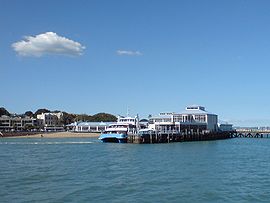
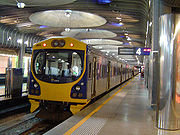
Private vehicles are the main form of transportation within Auckland, with around 7% of journeys in the Auckland region being undertaken by bus (2006 data), and 2% undertaken by train and ferry. Usage is however heavily skewed towards travel to and from the Central Business District, where more than half of trips are undertaken by public transport. Auckland still ranks quite low in this regard, having only 46 public transport trips per capita per year, while Wellington has almost twice this number at 91, and Sydney has 114 trips. This strong roading focus results in substantial traffic congestion
during peak times.
Bus services in Auckland are mostly radial, with few ring-routes, due to Auckland being on an isthmus
. Late-night services (i.e. past midnight) are limited, even on weekends.
Regular trains operating along four lines travel between the CBD and the west, south and south-east of Auckland, with longer-distance options scarce. In 2007 approximately NZ$5.3 billion worth of large-scale projects were underway or planned (and budgeted for) in the Auckland area to improve rail and public transport patronage over the next decade, 31% of the transport budget. However, policy changes in early 2009 by the incoming National government have meant a shift in emphasis to more highway construction, and have removed the provision of a regional fuel tax that was to pay for ARTA's public transport upgrades. While the government has promised to fund the rail electrification
, the process and associated tenders were delayed by approximately one year, and some rail station upgrades and the funding of the integrated ticketing
upgrade were in doubt. The lack of future funding also forced ARTA to hand over the Auckland region's rail stations to government control.
Other modes
Auckland's ports
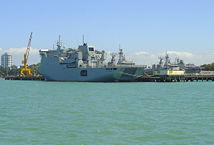
are the largest of the country, and a large part of both inbound and outbound New Zealand commerce travels through them, mostly via the facilities northeast of Auckland CBD. Freight usually arrives at or is distributed from the port via road, though the port facilities also have rail access. Auckland is a major cruise ship stopover point, with the ships usually tying up at Princes Wharf
. Auckland CBD is connected to coastal suburbs, to the North Shore and to outlying islands by ferry.
 Air
Air
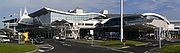
Auckland has various small regional airports and Auckland Airport, the busiest of the country. Auckland Airport, New Zealand's largest, is in the southern suburb of Mangere on the shores of the Manukau Harbour. There are frequent services to Australia, and to other New Zealand destinations. There are also direct connections to many locations in the South Pacific, to the United States, Asia and to Buenos Aires and Santiago in South America.
Policies
Research at Griffith University
has indicated that in the last 50 years, Auckland has engaged in some of the most pro-automobile transport policies anywhere in the world. With public transport declining heavily during the second half of the 20th century (a trend mirrored in most Western countries such as the US), and increased spending on roads and cars, New Zealand (and specifically Auckland) now has the second-highest vehicle ownership rate in the world, with around 578 vehicles per 1000 people. Auckland has also been called a very pedestrian- and cyclist-unfriendly city, though some efforts are being made to change this. At the same, high-profile gaps in the network, such as the inability for pedestrians and cyclists to cross the Waitemata Harbour, will probably remain for the foreseeable future, with councils generally not considering the costs involved as sensible expense.
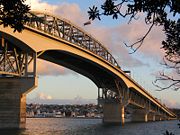
connects the cities in the Auckland urban area through the Northern, Southern, Northwestern and Southwestern Motorways.
The Auckland Harbour Bridge
(Northern Motorway) is the main connection to the North Shore, and also a major traffic bottleneck. The Harbour Bridge does not provide access for rail, pedestrians or cyclists, which has repeatedly (most recently in 2008) led to campaigns for and investigations into retrofitting the structure.
The Central Motorway Junction
, also called 'Spaghetti Junction' for its complexity, is the intersection between the two major motorways of Auckland (State Highway 1 and State Highway 16).
Two of the longest arterial roads within Greater Auckland are Great North Road and Great South Road
- the main connections in those directions before the construction of the State Highway network.
Auckland has three main railway lines, serving the general western, southern, and central eastern directions from the Britomart Transport Centre
in downtown Auckland. It is the terminal station for all lines, and connects them to ferry and bus services.
is responsible for the high voltage transmission lines into and across Auckland, while Vector
, and in some areas Counties Power, being responsible for most of the sub-transmission and distribution lines. Several companies are responsible for electricity generation and retailing.
Auckland has two major electricity generation stations within the city, both of which are gas-fired turbine station. Otahuhu B
is owned by Contact Energy and generates 380MW, while Southdown
is owned by Mighty River Power and generates 175MW.
As there is not enough local generation to support the city's electricity needs, and there is very little generation north of the city, most of the electricity needs for the city has to be brought in from the south, mainly from Huntly Power Station
and the Waikato River
hydroelectric dams. Four major 220 kV transmission lines, and one smaller 110 kV line, bring electricity from the south into Otahuhu substation, where lines radiate out distributing electricity to the city and further north to Northland.
The city has been the site of many notable power outages, mainly caused by failures in aging infrastructure carrying increasing electrical loads as the city grows. The five-week long 1998 Auckland power crisis
blacked out much of the CBD after a cascade failure on four underground cables supplying the central city, while the 2006 Auckland Blackout
blacked out the CBD and many inner suburbs after an earth wire shackle at Otahuhu substation broke and short-circuited the lines supplying the inner city. In 2009, much of the northern and western suburbs, as well as Northland, experienced a blackout when a forklift accidentally came in contact with the only major line supplying the region.
Transpower is currently spending $1.25 billion upgrading the electricity supply into and around Auckland, to relieve supply constraints and to improve redundancy. A new 220/400 kV line (the Whakamaru to Brownhill Road transmission line
) is being built from the Whakamaru hydroelectric dam in South Waikato to Brownhill Road in Whitford, with 220 kV cables connecting it to Pakuranga substation. A 220 kV is also being installed from Pakuranga across the Waitemata Harbour to Albany, via Penrose, and the CBD, to create an alternative route to the north of the city.
, that urban sprawl
will result from the growth and, as a result, that it is necessary to address this proactively in planning policy
.
A 'Regional Growth Strategy' has been adopted that sees limits on further subdivision and intensification of existing use as its main sustainability
measures. This policy is contentious, as it naturally limits the uses of private land, especially the subdivision of urban fringe properties, by setting 'Metropolitan Urban Limits' in planning documents like the District Plan
.
According to the 2006 Census projections, the medium-variant scenario shows that the population is projected to continue growing, to reach 1.93 million by 2031. The high-variant scenario shows the region's population growing to over two million by 2031.
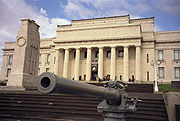
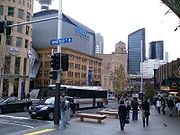 Tourist attractions and landmarks in the Auckland metropolitan area include:
Attractions and buildings
Landmarks
North Island
The North Island is one of the two main islands of New Zealand, separated from the much less populous South Island by Cook Strait. The island is in area, making it the world's 14th-largest island...
of New Zealand
New Zealand
New Zealand is an island country in the south-western Pacific Ocean comprising two main landmasses and numerous smaller islands. The country is situated some east of Australia across the Tasman Sea, and roughly south of the Pacific island nations of New Caledonia, Fiji, and Tonga...
, is the largest and most populous urban area in the country
Urban areas of New Zealand
Statistics New Zealand defines New Zealand urban areas for statistical purposes. The urban areas comprise cities, towns and other 'conurbations' of a thousand people or more. In combination, the urban areas of the country constitute New Zealand's urban population...
with residents, percent of the country's population. Auckland also has the largest Polynesian
Polynesians
The Polynesian peoples is a grouping of various ethnic groups that speak Polynesian languages, a branch of the Oceanic languages within the Austronesian languages, and inhabit Polynesia. They number approximately 1,500,000 people...
population of any city in the world. In Māori
Maori language
Māori or te reo Māori , commonly te reo , is the language of the indigenous population of New Zealand, the Māori. It has the status of an official language in New Zealand...
Auckland's name is Tāmaki Makaurau, or the transliterated version of Auckland, Ākarana.
The 2011 Mercer Quality of Living Survey ranked Auckland 3rd equal place in the world on its list, while The Economist's
Economist Intelligence Unit
The Economist Intelligence Unit is part of the Economist Group.It is a research and advisory company providing country, industry and management analysis worldwide and incorporates the former Business International Corporation, a U.S. company acquired by the parent organization in 1986...
World's Most Livable Cities
World's Most Livable Cities
The world's most liveable cities is an informal name given to any list of cities as they rank on a reputable annual survey of living conditions. Two examples are the Mercer Quality of Living Survey and The Economists World's Most Livable Cities .Liveability rankings are designed for use by...
index of 2011 ranked Auckland in 9th place.
In 2010, Auckland was classified as a Beta World City
Global city
A global city is a city that is deemed to be an important node in the global economic system...
in the World Cities Study Group’s inventory by Loughborough University
Loughborough University
Loughborough University is a research based campus university located in the market town of Loughborough, Leicestershire, in the East Midlands of England...
.
Auckland lies between the Hauraki Gulf
Hauraki Gulf
The Hauraki Gulf is a coastal feature of the North Island of New Zealand. It has a total area of 4000 km², and lies between the Auckland Region, the Hauraki Plains, the Coromandel Peninsula and Great Barrier Island...
of the Pacific Ocean
Pacific Ocean
The Pacific Ocean is the largest of the Earth's oceanic divisions. It extends from the Arctic in the north to the Southern Ocean in the south, bounded by Asia and Australia in the west, and the Americas in the east.At 165.2 million square kilometres in area, this largest division of the World...
to the east, the low Hunua Ranges
Hunua Ranges
The Hunua Ranges form a block of hilly country to the southeast of Auckland in New Zealand's North Island. They cover some 250 square kilometres , containing 178 km² of parkland, and rise to 688 metres at Kohukohunui...
to the south-east, the Manukau Harbour
Manukau Harbour
Manukau Harbour is the second largest natural harbour in New Zealand by area. It is located to the southwest of the Auckland isthmus, and is an arm of the Tasman Sea.-Geography:...
to the south-west, and the Waitakere Ranges
Waitakere Ranges
The Waitakere Ranges are a chain of hills in the Auckland metropolitan area, generally running approximately 25 km from north to south, 25 km west of central Auckland, New Zealand. The maximum elevation within the ranges is 474 m...
and smaller ranges to the west and north-west. The central part of the urban area occupies a narrow isthmus
Isthmus
An isthmus is a narrow strip of land connecting two larger land areas usually with waterforms on either side.Canals are often built through isthmuses where they may be particularly advantageous to create a shortcut for marine transportation...
between the Manukau Harbour on the Tasman Sea
Tasman Sea
The Tasman Sea is the large body of water between Australia and New Zealand, approximately across. It extends 2,800 km from north to south. It is a south-western segment of the South Pacific Ocean. The sea was named after the Dutch explorer Abel Janszoon Tasman, the first recorded European...
and the Waitemata Harbour
Waitemata Harbour
The quite famous Waitemata Harbour is the main access by sea to Auckland, New Zealand. For this reason it is often referred to as Auckland Harbour, despite the fact that it is only one of two harbours surrounding the city, and is crossed by the Auckland Harbour Bridge. The Waitemata forms the north...
on the Pacific Ocean
Pacific Ocean
The Pacific Ocean is the largest of the Earth's oceanic divisions. It extends from the Arctic in the north to the Southern Ocean in the south, bounded by Asia and Australia in the west, and the Americas in the east.At 165.2 million square kilometres in area, this largest division of the World...
. It is one of the few cities in the world to have harbours on two separate major bodies of water.
Early Māori and Europeans
The isthmus was settled by Māori around 1350 and was valued for its rich and fertile land. Many pāPa (Maori)
The word pā can refer to any Māori village or settlement, but in traditional use it referred to hillforts fortified with palisades and defensive terraces and also to fortified villages. They first came into being about 1450. They are located mainly in the North Island north of lake Taupo...
(fortified villages) were created, mainly on the volcanic peaks. Māori population in the area is estimated at about 20,000 people before the arrival of Europeans. The subsequent introduction of firearms, which began in Northland, upset the balance of power and led to devastating inter-tribal warfare, causing iwi
Iwi
In New Zealand society, iwi form the largest everyday social units in Māori culture. The word iwi means "'peoples' or 'nations'. In "the work of European writers which treat iwi and hapū as parts of a hierarchical structure", it has been used to mean "tribe" , or confederation of tribes,...
who lacked the new weapons to seek refuge in areas less exposed to coastal raids. As a result, the region had relatively low numbers of Māori when European settlement of New Zealand began. There is, however, nothing to suggest that this was the result of a deliberate European policy. On 27 January 1832, Joseph Brooks Weller, eldest of the Weller brothers
Weller brothers
The Weller brothers, Englishmen of Sydney and Otago, New Zealand, were the founders of a whaling station on Otago Harbour and New Zealand’s most substantial merchant traders in the 1830s.-Immigration:...
of Otago
Otago
Otago is a region of New Zealand in the south of the South Island. The region covers an area of approximately making it the country's second largest region. The population of Otago is...
and Sydney
Sydney
Sydney is the most populous city in Australia and the state capital of New South Wales. Sydney is located on Australia's south-east coast of the Tasman Sea. As of June 2010, the greater metropolitan area had an approximate population of 4.6 million people...
bought land including the sites of the modern cities of Auckland and North Shore and part of Rodney District, for "one large cask of powder" from "Cohi Rangatira".
After the signing of the Treaty of Waitangi
Treaty of Waitangi
The Treaty of Waitangi is a treaty first signed on 6 February 1840 by representatives of the British Crown and various Māori chiefs from the North Island of New Zealand....
in February 1840, the new Governor of New Zealand, William Hobson
William Hobson
Captain William Hobson RN was the first Governor of New Zealand and co-author of the Treaty of Waitangi.-Early life:...
, chose the area as his new capital, and named it after George Eden, Earl of Auckland
George Eden, 1st Earl of Auckland
George Eden, 1st Earl of Auckland, GCB, PC was a British Whig politician and colonial administrator. He was thrice First Lord of the Admiralty and also served as Governor-General of India between 1836 and 1842....
, then Viceroy of India. The land that Auckland was established on was gifted to the Governor by local Maori iwi
Iwi
In New Zealand society, iwi form the largest everyday social units in Māori culture. The word iwi means "'peoples' or 'nations'. In "the work of European writers which treat iwi and hapū as parts of a hierarchical structure", it has been used to mean "tribe" , or confederation of tribes,...
Ngati Whatua
Ngati Whatua
Ngāti Whātua is a Māori iwi of New Zealand. It consists of four hapu : Te Uri-o-Hau, Te Roroa, Te Taoū, and Ngāti Whātua-o-Ōrākei....
, as a sign of goodwill and in the hope that the building of a city would attract commercial and political opportunities for the iwi. Auckland was officially declared New Zealand's capital in 1841, and the transfer of the administration from Russell (now Old Russell
Okiato
Okiato or Old Russell is a small holiday spot in the Bay of Islands, New Zealand, seven km south of present-day Russell. It was New Zealand's first national capital, for a short time from 1840 to 1841, before the seat of government was moved to Auckland...
) in the Bay of Islands was completed in 1842. However, even in 1840 Port Nicholson (later Wellington
Wellington
Wellington is the capital city and third most populous urban area of New Zealand, although it is likely to have surpassed Christchurch due to the exodus following the Canterbury Earthquake. It is at the southwestern tip of the North Island, between Cook Strait and the Rimutaka Range...
) was seen as a better choice for an administrative capital because of its proximity to the South Island
South Island
The South Island is the larger of the two major islands of New Zealand, the other being the more populous North Island. It is bordered to the north by Cook Strait, to the west by the Tasman Sea, to the south and east by the Pacific Ocean...
and Wellington became the capital in 1865. Auckland was the principal city of the Auckland Province
Auckland Province
The Auckland Province was a province of New Zealand from 1853 until the abolition of provincial government in 1876.-Anniversary Day:...
until the provincial system was abolished in 1876.
Growth up to today
In response to the ongoing rebellion by Hone Heke in the mid 1840s the government encouraged retired but fit British soldiers and their families to migrate to Auckland to form a defense line around the port settlement as garrison soldiers. By the time the first Fencibles arrived in 1848, the rebels in the north had been defeated, so the outlying defensive towns were constructed to the south stretching in a line from the port village of Onehunga in the West, to Howick in the east. Each of the 4 settlements had about 800 settlers, the men being fully armed in case of emergency but spent nearly all their time breaking in the land and establishing roads. In the early 1860s, Auckland became a base against the Māori King MovementMaori King Movement
The Māori King Movement or Kīngitanga is a movement that arose among some of the Māori tribes of New Zealand in the central North Island ,in the 1850s, to establish a role similar in status to that of the monarch of the colonising people, the British, as a way of halting the alienation of Māori land...
. This, and continued road building towards the south into the Waikato
Waikato
The Waikato Region is a local government region of the upper North Island of New Zealand. It covers the Waikato, Hauraki, Coromandel Peninsula, the northern King Country, much of the Taupo District, and parts of Rotorua District...
, enabled Pākehā
Pakeha
Pākehā is a Māori language word for New Zealanders who are "of European descent". They are mostly descended from British and to a lesser extent Irish settlers of the nineteenth and twentieth centuries, although some Pākehā have Dutch, Scandinavian, German, Yugoslav or other ancestry...
(European New Zealanders) influence to spread from Auckland. Its population grew fairly rapidly, from 1,500 in 1841 to 12,423 by 1864. The growth occurred similarly to other mercantile-dominated cities, mainly around the port and with problems of overcrowding and pollution. Auckland had a far greater population of ex soldiers than other settlements, many of whom were Irish. About 50% of the population was Irish which contrasted heavily with the majority English settlers in Wellington, Christchurch or New Plymouth. Most of the Irish, though not all were from Protestant Ulster. The majority of settlers in the early period were assisted by receiving a cheap passage to NZ.
Trams and railway lines shaped Auckland's rapid expansion in the early first half of the 20th century, but soon afterward the dominance of the motor vehicle emerged and has not abated since; arterial roads and motorways have become both defining and geographically dividing features of the urban landscape. They also allowed further massive expansion that resulted in the growth of associated urban areas like the North Shore
North Shore, New Zealand
North Shore City was the name of a city that existed in the Auckland region of New Zealand from 1989 until 2010. The city had a population of making it the fourth most populous city in New Zealand prior to November 2010...
(especially after the construction of the Auckland Harbour Bridge
Auckland Harbour Bridge
The Auckland Harbour Bridge is an eight-lane box truss motorway bridge over the Waitemata Harbour, joining St Marys Bay in Auckland with Northcote in North Shore City, New Zealand. The bridge is part of State Highway 1 and the Auckland Northern Motorway...
), and Manukau City in the south.
A large percentage of Auckland is dominated by a very suburban style of building, giving the city a very low population density
Population density
Population density is a measurement of population per unit area or unit volume. It is frequently applied to living organisms, and particularly to humans...
. Some services like public transport are costlier than in other higher-density cities, but Aucklanders are still able to live in single-family dwellings similar to the rest of the New Zealand population, although lot sizes tend to be smaller than in many other centres.
Geography and climate
Volcanoes
Auckland straddles the Auckland Volcanic FieldAuckland Volcanic Field
The Auckland volcanic field is a monogenetic volcanic field in the North Island of New Zealand. Basaltic in nature, it underlies much of the metropolitan area of Auckland....
, which has produced about 50 volcanoes. These take the form of cones, lakes, lagoons, islands and depressions, and several have produced extensive lava flows. Most of the cones have been partly or completely quarried
Quarry
A quarry is a type of open-pit mine from which rock or minerals are extracted. Quarries are generally used for extracting building materials, such as dimension stone, construction aggregate, riprap, sand, and gravel. They are often collocated with concrete and asphalt plants due to the requirement...
away. The individual volcanoes are all considered extinct, although the volcanic field itself is merely dormant. Auckland has at least 14 large lava tube caves which run from the volcanoes down towards the sea.
Unlike the explosive subduction
Subduction
In geology, subduction is the process that takes place at convergent boundaries by which one tectonic plate moves under another tectonic plate, sinking into the Earth's mantle, as the plates converge. These 3D regions of mantle downwellings are known as "Subduction Zones"...
-driven volcanism
Volcanism
Volcanism is the phenomenon connected with volcanoes and volcanic activity. It includes all phenomena resulting from and causing magma within the crust or mantle of a planet to rise through the crust and form volcanic rocks on the surface....
in the central North Island, such as at Mount Ruapehu
Mount Ruapehu
Mount Ruapehu, or just Ruapehu, is an active stratovolcano at the southern end of the Taupo Volcanic Zone in New Zealand. It is 23 kilometres northeast of Ohakune and 40 kilometres southwest of the southern shore of Lake Taupo, within Tongariro National Park...
and Lake Taupo
Lake Taupo
Lake Taupo is a lake situated in the North Island of New Zealand. With a surface area of , it is the largest lake by surface area in New Zealand, and the second largest freshwater lake by surface area in geopolitical Oceania after Lake Murray ....
, Auckland's volcanoes are fuelled entirely by basalt
Basalt
Basalt is a common extrusive volcanic rock. It is usually grey to black and fine-grained due to rapid cooling of lava at the surface of a planet. It may be porphyritic containing larger crystals in a fine matrix, or vesicular, or frothy scoria. Unweathered basalt is black or grey...
ic magma
Magma
Magma is a mixture of molten rock, volatiles and solids that is found beneath the surface of the Earth, and is expected to exist on other terrestrial planets. Besides molten rock, magma may also contain suspended crystals and dissolved gas and sometimes also gas bubbles. Magma often collects in...
. The most recent and by far the largest volcano, Rangitoto Island
Rangitoto Island
Rangitoto Island is a volcanic island in the Hauraki Gulf near Auckland, New Zealand. The 5.5 km wide island is an iconic and widely visible landmark of Auckland with its distinctive symmetrical shield volcano cone rising 260 metres high over the Hauraki Gulf...
, was formed within the last 1000 years, and its eruptions destroyed the Māori settlements on neighbouring Motutapu Island
Motutapu Island
Motutapu Island is a island in the Hauraki Gulf to the northeast of the city of Auckland, New Zealand. The island is part of the Hauraki Gulf Maritime Park....
some 700 years ago. Rangitoto's size, its symmetry, its position guarding the entrance to Waitemata Harbour
Waitemata Harbour
The quite famous Waitemata Harbour is the main access by sea to Auckland, New Zealand. For this reason it is often referred to as Auckland Harbour, despite the fact that it is only one of two harbours surrounding the city, and is crossed by the Auckland Harbour Bridge. The Waitemata forms the north...
and its visibility from many parts of the Auckland region make it Auckland's most iconic natural feature. Few birds and insects inhabit the island because of the rich acidic soil and the type of flora growing out of the rocky soil.
Harbours and gulf
Auckland lies on and around an isthmusIsthmus
An isthmus is a narrow strip of land connecting two larger land areas usually with waterforms on either side.Canals are often built through isthmuses where they may be particularly advantageous to create a shortcut for marine transportation...
, less than two kilometres wide at its narrowest point, between Mangere Inlet
Mangere Inlet
Mangere Inlet is an arm of the Manukau Harbour, the southwestern of the two harbours of Auckland, New Zealand and itself an arm of the Tasman Sea. The inlet lies between the two cities of Auckland City and Manukau City and has a size of 6.6 km2 and a catchment of 34.5 km2, being considered to...
and the Tamaki River
Tamaki River
The Tamaki River is, despite its name, mostly an estuarial arm and harbour of the Hauraki Gulf, within the city of Auckland in New Zealand. It extends south for 15 kilometres from its mouth between the Auckland suburb of Saint Heliers and the long thin peninsula of Bucklands Beach, which reaches...
. There are two harbours in the Auckland urban area surrounding this isthmus: Waitemata Harbour
Waitemata Harbour
The quite famous Waitemata Harbour is the main access by sea to Auckland, New Zealand. For this reason it is often referred to as Auckland Harbour, despite the fact that it is only one of two harbours surrounding the city, and is crossed by the Auckland Harbour Bridge. The Waitemata forms the north...
to the north, which opens east to the Hauraki Gulf
Hauraki Gulf
The Hauraki Gulf is a coastal feature of the North Island of New Zealand. It has a total area of 4000 km², and lies between the Auckland Region, the Hauraki Plains, the Coromandel Peninsula and Great Barrier Island...
, and Manukau Harbour
Manukau Harbour
Manukau Harbour is the second largest natural harbour in New Zealand by area. It is located to the southwest of the Auckland isthmus, and is an arm of the Tasman Sea.-Geography:...
to the south, which opens west to the Tasman Sea
Tasman Sea
The Tasman Sea is the large body of water between Australia and New Zealand, approximately across. It extends 2,800 km from north to south. It is a south-western segment of the South Pacific Ocean. The sea was named after the Dutch explorer Abel Janszoon Tasman, the first recorded European...
.
Bridges span parts of both harbours, notably the Auckland Harbour Bridge
Auckland Harbour Bridge
The Auckland Harbour Bridge is an eight-lane box truss motorway bridge over the Waitemata Harbour, joining St Marys Bay in Auckland with Northcote in North Shore City, New Zealand. The bridge is part of State Highway 1 and the Auckland Northern Motorway...
crossing the Waitemata Harbour west of the Auckland Central Business District
Auckland CBD
The Auckland CBD is the geographical and economic heart of the Auckland metropolitan area. Bounded by several major motorways and by the harbour coastline in the north, it is surrounded further out by mostly suburban areas...
(CBD). The Mangere Bridge and the Upper Harbour Bridge
Upper Harbour Bridge
The Upper Harbour Bridge or Greenhithe Bridge is a motorway bridge , which spans over a reach of the Waitemata Harbour and connects Hobsonville and Greenhithe , New Zealand....
span the upper reaches of the Manukau and Waitemata Harbours, respectively. In earlier times, portage
Portage
Portage or portaging refers to the practice of carrying watercraft or cargo over land to avoid river obstacles, or between two bodies of water. A place where this carrying occurs is also called a portage; a person doing the carrying is called a porter.The English word portage is derived from the...
paths crossed the narrowest sections of the isthmus.
Several islands of the Hauraki Gulf
Hauraki Gulf
The Hauraki Gulf is a coastal feature of the North Island of New Zealand. It has a total area of 4000 km², and lies between the Auckland Region, the Hauraki Plains, the Coromandel Peninsula and Great Barrier Island...
are administered as part of Auckland City, though they are not officially part of the Auckland metropolitan area. Parts of Waiheke Island
Waiheke Island
Waiheke Island is an island in the Hauraki Gulf of New Zealand, located about from Auckland.The island is the second-largest in the Hauraki Gulf after Great Barrier Island. It is the most populated, with nearly 8,000 permanent residents plus another estimated 3,400 who have second or holiday homes...
effectively function as Auckland suburbs, while various smaller islands near Auckland are mostly zoned 'recreational open space' or are nature sanctuaries.
Climate
Temperate
In geography, temperate or tepid latitudes of the globe lie between the tropics and the polar circles. The changes in these regions between summer and winter are generally relatively moderate, rather than extreme hot or cold...
climate, with warm, humid summers and mild, damp winters. Under Köppen's climate classification
Köppen climate classification
The Köppen climate classification is one of the most widely used climate classification systems. It was first published by Crimea German climatologist Wladimir Köppen in 1884, with several later modifications by Köppen himself, notably in 1918 and 1936...
, the city has an oceanic climate
Oceanic climate
An oceanic climate, also called marine west coast climate, maritime climate, Cascadian climate and British climate for Köppen climate classification Cfb and subtropical highland for Köppen Cfb or Cwb, is a type of climate typically found along the west coasts at the middle latitudes of some of the...
. It is the warmest main centre of New Zealand and is also one of the sunniest, with an average of 2060 sunshine hours per annum. The average daily maximum temperature is 23.7 °C
Celsius
Celsius is a scale and unit of measurement for temperature. It is named after the Swedish astronomer Anders Celsius , who developed a similar temperature scale two years before his death...
(74.7°F) in February, and 14.5°C (58.1°F) in July. The absolute maximum recorded temperature is 32.4 °C (90.3°F) , while the absolute minimum is -2.5 °C (27.5°F). High levels of rainfall occur almost year-round with an average of 1240 mm per year spread over 137 'rain days'. Climatic conditions vary in different parts of the city owing to geography such as hills, land cover and distance from the sea, hence unofficial temperature records exist, such as a maximum of 34°C (93.2°F) in West Auckland. Snowfall in Auckland is extremely rare; recorded instances include 27 July 1939 and 15 August 2011, although without any accumulation.
The early morning calm on the isthmus during settled weather, before the sea breeze rises, was described as early as 1853: "In all seasons, the beauty of the day is in the early morning. At that time, generally, a solemn stillness holds, and a perfect calm prevails..." Many Aucklanders used this time of day to walk and run in parks.
As car ownership rates are very high and emissions controls relatively weak, Auckland suffers from some air pollution
Air pollution
Air pollution is the introduction of chemicals, particulate matter, or biological materials that cause harm or discomfort to humans or other living organisms, or cause damage to the natural environment or built environment, into the atmosphere....
, especially with regard to fine particles emissions. There are also occasional breaches of guideline levels of carbon monoxide
Carbon monoxide
Carbon monoxide , also called carbonous oxide, is a colorless, odorless, and tasteless gas that is slightly lighter than air. It is highly toxic to humans and animals in higher quantities, although it is also produced in normal animal metabolism in low quantities, and is thought to have some normal...
. While maritime winds normally disperse the pollution relatively quickly it can sometimes become visible as smog
Smog
Smog is a type of air pollution; the word "smog" is a portmanteau of smoke and fog. Modern smog is a type of air pollution derived from vehicular emission from internal combustion engines and industrial fumes that react in the atmosphere with sunlight to form secondary pollutants that also combine...
, especially on calm winter days. Precipitation is relatively abundant all year round, but peaks marginally in winter.
Cultures
New Zealand European
The term New Zealand European refers to New Zealanders of European descent who identify as New Zealand Europeans rather than some other ethnic group...
- predominantly British
British people
The British are citizens of the United Kingdom, of the Isle of Man, any of the Channel Islands, or of any of the British overseas territories, and their descendants...
- descent, but substantial Māori, Pacific Islander
Pacific Islander
Pacific Islander , is a geographic term to describe the indigenous inhabitants of any of the three major sub-regions of Oceania: Polynesia, Melanesia and Micronesia.According to the Encyclopædia Britannica, these three regions, together with their islands consist of:Polynesia:...
and Asian
Asian people
Asian people or Asiatic people is a term with multiple meanings that refers to people who descend from a portion of Asia's population.- Central Asia :...
communities exist as well. Auckland has the largest Polynesia
Polynesia
Polynesia is a subregion of Oceania, made up of over 1,000 islands scattered over the central and southern Pacific Ocean. The indigenous people who inhabit the islands of Polynesia are termed Polynesians and they share many similar traits including language, culture and beliefs...
n population of any city in the world and a higher proportion of people of Asian origin than the rest of New Zealand. Ethnic groups from all corners of the world have a presence in Auckland, making it by far the country's most cosmopolitan
Cosmopolitanism
Cosmopolitanism is the ideology that all human ethnic groups belong to a single community based on a shared morality. This is contrasted with communitarian and particularistic theories, especially the ideas of patriotism and nationalism...
city.
Demographics
The proportion of Asians and other Non-European immigrants has increased during the last decades due to immigration, and the removal of restrictions directly or indirectly based on raceImmigration to New Zealand
Immigration to New Zealand began with Polynesian settlement in New Zealand, then uninhabited, in the tenth century . The role of Moriori settlement is currently disputed, with some suggesting that the Moriori arrived in New Zealand before the Maori, and were distinct from Maori, & others favouring...
. Immigration to New Zealand is heavily concentrated towards Auckland (partly for job market reasons). This strong focus on Auckland has led the immigration services to award extra points towards immigration visa requirements for people intending to move to other parts of New Zealand.
The following table shows the ethnic profile of Auckland's population, as recorded in the 2001 and 2006 New Zealand Census
New Zealand Census of Population and Dwellings
The New Zealand government department Statistics New Zealand conducts a census of population and dwellings every five years. The census scheduled for 2011 was cancelled due to circumstances surrounding the February 2011 Christchurch earthquake, however, and legislation introduced to hold the next...
. The percentages add up to more than 100%, as some people counted themselves as belonging to more than one ethnic group. Figures for 2006 refer to the whole Auckland Region, not just the urban area. The substantial percentage drop of 'Europeans' was mainly caused by the increasing numbers of people from this group choosing to define themselves as 'New Zealanders' - even though this was not one of the groups listed on the census form.
| Ethnic Group | 2001 (%) | 2001 (people) | 2006 (%) | 2006 (people) |
|---|---|---|---|---|
| New Zealand European New Zealand European The term New Zealand European refers to New Zealanders of European descent who identify as New Zealand Europeans rather than some other ethnic group... |
66.9 | 684,237 | 56.5 | 698,622 |
| Pacific Islander Pacific Islander Pacific Islander , is a geographic term to describe the indigenous inhabitants of any of the three major sub-regions of Oceania: Polynesia, Melanesia and Micronesia.According to the Encyclopædia Britannica, these three regions, together with their islands consist of:Polynesia:... |
14.9 | 152,508 | 14.4 | 177,936 |
| Asian Asian people Asian people or Asiatic people is a term with multiple meanings that refers to people who descend from a portion of Asia's population.- Central Asia :... |
14.6 | 149,121 | 18.9 | 234,222 |
| Māori | 11.5 | 117,513 | 11.1 | 137,133 |
| Middle Easterners/Latin Americans Latin Americans Latin Americans are the citizens of the Latin American countries and dependencies. Latin American countries are multi-ethnic, home to people of different ethnic and national backgrounds. As a result, some Latin Americans don't take their nationality as an ethnicity, but identify themselves with... /Africans |
n/a | n/a | 1.5 | 18,555 |
| Others | 1.3 | 13,455 | 0.1 | 648 |
| 'New Zealanders' | n/a | n/a | 8.0 | 99,258 |
| Total giving their ethnicity | 1,022,616 (individuals) | 1,237,239 (individuals) |
The 2006 Census also provides information about the multilinguality of the region. 867,825 people in the Auckland Region spoke one language only, 274,863 spoke two, and 57,051 three or more.
Religion
Similar to the rest of the country, over half of Aucklanders profess ChristianityChristianity
Christianity is a monotheistic religion based on the life and teachings of Jesus as presented in canonical gospels and other New Testament writings...
, but fewer than 10% regularly attend church and almost 40% profess no religious affiliation (2001 census figures). The main denominations are Roman Catholic, Anglican and Presbyterian. Pentecostal
Pentecostalism
Pentecostalism is a diverse and complex movement within Christianity that places special emphasis on a direct personal experience of God through the baptism in the Holy Spirit, has an eschatological focus, and is an experiential religion. The term Pentecostal is derived from Pentecost, the Greek...
and charismatic
Charismatic movement
The term charismatic movement is used in varying senses to describe 20th century developments in various Christian denominations. It describes an ongoing international, cross-denominational/non-denominational Christian movement in which individual, historically mainstream congregations adopt...
churches are the fastest growing. A small community of Coptic Orthodox Christians is also present.
Recent immigration from Asia has added to the religious diversity of the city, and about 10% of the population follow such beliefs as Buddhism
Buddhism
Buddhism is a religion and philosophy encompassing a variety of traditions, beliefs and practices, largely based on teachings attributed to Siddhartha Gautama, commonly known as the Buddha . The Buddha lived and taught in the northeastern Indian subcontinent some time between the 6th and 4th...
, Hinduism
Hinduism
Hinduism is the predominant and indigenous religious tradition of the Indian Subcontinent. Hinduism is known to its followers as , amongst many other expressions...
, Islam
Islam
Islam . The most common are and . : Arabic pronunciation varies regionally. The first vowel ranges from ~~. The second vowel ranges from ~~~...
and Sikhism
Sikhism
Sikhism is a monotheistic religion founded during the 15th century in the Punjab region, by Guru Nanak Dev and continued to progress with ten successive Sikh Gurus . It is the fifth-largest organized religion in the world and one of the fastest-growing...
, although there are no figures on religious attendance. There is also a small, long-established Jewish
Judaism
Judaism ) is the "religion, philosophy, and way of life" of the Jewish people...
community.
Lifestyle
Positive aspects of Auckland life are its mild climate, plentiful employment and educational opportunities, as well as numerous leisure facilities. Meanwhile, traffic problems, the lack of good public transport, and increasing housing costs have been cited by many Aucklanders as among the strongest negative factors of living there, together with crime. Nonetheless, Auckland ranks 4th equal in a survey of the quality of life of 215 major cities of the world (2009 data).
In 2006, Auckland placed 23rd on the UBS
UBS AG
UBS AG is a Swiss global financial services company headquartered in Basel and Zürich, Switzerland, which provides investment banking, asset management, and wealth management services for private, corporate, and institutional clients worldwide, as well as retail clients in Switzerland...
list of the world's richest cities.
In 2010, Auckland was ranked by the Mercer
Mercer (consulting firm)
Mercer is a human resource and related financial services consulting firm, headquartered in New York City. The firm operates internationally in more than 40 countries, with more than 19,000 employees, and is the world's largest human resource consulting firm....
consulting firm as 149 of 214 centres for affordability, i.e. making it one of the most affordable cities world-wide to live in, based on the comparative cost of 200 aspects of life including housing, transport, food, clothing, household goods and entertainment.
Leisure
Auckland is popularly known as the "City of Sails" because the harbour is often dotted with hundreds of yachts and has more per capita than any other city in the world, with around 135,000 yachtYacht
A yacht is a recreational boat or ship. The term originated from the Dutch Jacht meaning "hunt". It was originally defined as a light fast sailing vessel used by the Dutch navy to pursue pirates and other transgressors around and into the shallow waters of the Low Countries...
s and launches
Launch (boat)
A launch in contemporary usage refers to a large motorboat. The name originally referred to the largest boat carried by a warship. The etymology of the word is given as Portuguese lancha "barge", from Malay lancha, lancharan, "boat," from lanchar "velocity without effort," "action of gliding...
. Around 60,500 of the country's 149,900 registered yachtsmen come from the Auckland Region. About one in three Auckland households owns a boat.
Viaduct Basin
Viaduct Basin
Viaduct Basin is a former commercial harbour on the Auckland waterfront, now turned into a development of mostly upscale apartments, office space and restaurants. It is located on the site of a formerly run-down area of the Freemans Bay / Auckland CBD waterfront in Auckland City, New Zealand...
also hosted two America's Cup
America's Cup
The America’s Cup is a trophy awarded to the winner of the America's Cup match races between two yachts. One yacht, known as the defender, represents the yacht club that currently holds the America's Cup and the second yacht, known as the challenger, represents the yacht club that is challenging...
challenges (2000 Cup and 2003 Cup
2003 America’s Cup
The 31st America's Cup was contested between the holder, Team New Zealand, and the winner of the 2003 Louis Vuitton Cup, Alinghi.-Build Up:The 2002–2003 Louis Vuitton Cup, held in the Hauraki Gulf in Auckland, New Zealand saw nine teams from six countries staging 120 races over five months to...
), and its cafes, restaurants, and clubs add to Auckland's vibrant nightlife. With the sheltered Waitemata Harbour at its doorstep, Auckland sees many nautical events, and there are also a large number of sailing clubs in Auckland, as well as Westhaven Marina
Westhaven Marina
Westhaven Marina in Auckland, New Zealand, is the largest yacht marina in the Southern Hemisphere. The marina has nearly two thousand berths and swing moorings, and tends to be continually booked...
, the largest of the Southern Hemisphere
Southern Hemisphere
The Southern Hemisphere is the part of Earth that lies south of the equator. The word hemisphere literally means 'half ball' or "half sphere"...
.
High Street, Queen Street
Queen Street, Auckland
Queen Street is the major commercial thoroughfare in the Auckland CBD, Auckland, New Zealand's main population centre. It starts at Queens Wharf on the Auckland waterfront, adjacent to the Britomart Transport Centre and the Downtown Ferry Terminal, and runs uphill for almost three kilometres in a...
, Ponsonby Road
Ponsonby, New Zealand
Ponsonby is an inner-city suburb of Auckland City located 2 km west of the Auckland CBD, in the North Island of New Zealand. The suburb is oriented along a ridge running north-south, which is followed by the main street of the suburb, Ponsonby Road....
, and Karangahape Road
Karangahape Road
Karangahape Road is one of the main streets in the central business district of Auckland, New Zealand. The massive expansion of motorways through the nearby inner city area - and subsequent flight of residents and retail into the suburbs - turned it from one of Auckland's premier shopping streets...
are very popular with urban socialites. Newmarket
Newmarket, New Zealand
Newmarket is an Auckland suburb to the south-east of the central business district. With its high building density, especially of retail shops, it is considered New Zealand's premier retailing area, and a rival of local competitor Auckland CBD...
and Parnell
Parnell, New Zealand
Parnell is a suburb of Auckland, New Zealand. It is often billed as Auckland's "oldest suburb" since it dates from the earliest days of the European settlement of Auckland in 1841...
are up-market shopping areas, while Otara
Otara
Ōtara is a suburb of Auckland, New Zealand, situated 18 kilometres to the southeast of the Auckland CBD. Ōtara lies near the head of the Tāmaki River , which extends south towards the Manukau Harbour...
's and Avondale
Avondale, Auckland
Avondale is a suburb of Auckland, New Zealand, located in the Whau ward, one of the thirteen administrative divisions for the Auckland Council. It is commonly considered to be part of West Auckland. It was originally called "Te Whau", which is the common name, of Māori origin, for Entelea...
's fleamarkets offer a colourful alternative shopping experience. Newer shopping malls tend to be outside city centres, with Sylvia Park
Sylvia Park
Sylvia Park is a large business park and shopping centre in the Auckland, New Zealand suburb of Mount Wellington. Less commonly known, the area around the centre is also called Sylvia Park...
(Sylvia Park, Auckland City), Botany Town Centre
Botany Town Centre, Howick
Botany Town Centre is located in Auckland, New Zealand and has approximately 200 shops spread across three complexes and restaurants, as well as entertainment buildings such as cinemas. Botany Town Centre provides an award-winning shopping experience....
(Howick, Manukau City) and Westfield Albany
Westfield Albany
Westfield Albany is a new shopping centre of the Westfield Group in Albany, New Zealand, opposite the Albany Lakes Civic Park. Once the last sections opened in April 2008, at 7 ha of indoor space , it became the largest shopping centre in New Zealand, eclipsing even recently opened Sylvia Park,...
(Albany, North Shore) being the three largest.
The Auckland Town Hall
Auckland Town Hall
The Auckland Town Hall is a historic building on Queen Street in downtown Auckland, New Zealand, known both for its original and ongoing use for administrative functions , as well as for its famed Great Hall and its separate Concert Chamber...
and Aotea Centre
Aotea Centre
The Aotea Centre is a performing arts and events centre / theatre in the Auckland CBD, Auckland City, New Zealand. Located at the western edge of Aotea Square, off Queen Street, the centre provides cultural venue space in the heart of the city and is managed by 'The Edge'...
host conferences and cultural events such as theatre, kapa haka
Kapa haka
The term Kapa haka is commonly known in Aotearoa as 'Maori Performing Arts' or the 'cultural dance' of Maori people...
, and opera
Opera
Opera is an art form in which singers and musicians perform a dramatic work combining text and musical score, usually in a theatrical setting. Opera incorporates many of the elements of spoken theatre, such as acting, scenery, and costumes and sometimes includes dance...
. Auckland also boasts a full-time professional symphonic ensemble in the Auckland Philharmonia Orchestra
Auckland Philharmonia Orchestra
The Auckland Philharmonia Orchestra was established in the early 1980s and has become one of New Zealand's major performing organisations. The instigation of its Composer-in-Residence programme in 1990 has made the orchestra an important force in the promotion of New Zealand composed...
.
Many national treasures are displayed at the Auckland Art Gallery
Auckland Art Gallery
Auckland Art Gallery Toi o Tāmaki is the principal public gallery in Auckland, New Zealand and has the most extensive collection of national and international art in New Zealand...
, such as the work of Colin McCahon
Colin McCahon
Colin John McCahon was a prominent New Zealand artist. During his life he also worked in art galleries and as a university lecturer...
, while many other significant cultural artefacts reside at the Auckland War Memorial Museum
Auckland War Memorial Museum
The Auckland War Memorial Museum is one of New Zealand's most important museums and war memorials. Its collections concentrate on New Zealand history , natural history, as well as military history.The museum is also one of the most iconic Auckland buildings, constructed in the neo-classicist...
, the National Maritime Museum, or the Museum of Transport and Technology
Museum of Transport and Technology
The Museum of Transport and Technology is a museum located in Western Springs, Auckland, New Zealand. It is located close to the Western Springs Stadium, Auckland Zoo and the Western Springs Park. The museum has large collections of civilian and military aircraft and other land transport vehicles...
(MOTAT). Exotic creatures can be observed at the Auckland Zoo
Auckland Zoo
Auckland Zoo is a zoological garden in Auckland, New Zealand, situated next to Western Springs park not far from Auckland's central business district. It is run by the Auckland City Council with the Auckland Zoological Society as a supporting organisation....
and Kelly Tarlton's Underwater World. Movies and rock concerts (notably, the "Big Day Out
Big Day Out
The Big Day Out is an annual music festival held in several cities in Australia and New Zealand in late January. It started in Sydney in 1992, spread to Adelaide, Melbourne and Perth by 1993, with the Gold Coast and Auckland joining in 1994...
") are also well patronised.
The Waitemata Harbour has popular swimming beaches at Mission Bay
Mission Bay, New Zealand
Mission Bay is a suburb of Auckland city, in the North Island of New Zealand. It is located seven kilometres to the east of the city centre, on the southern shore of the Waitemata Harbour. At the census of 2001, Mission Bay was reported to have a population of 5235.The Mission Bay district has been...
, Devonport
Devonport, New Zealand
Devonport is a harbourside suburb of Auckland, New Zealand. It is located on the North Shore, at the southern end of a peninsula that runs southeast from near Lake Pupuke in Takapuna, forming the northern side of the Waitemata Harbour...
, Takapuna
Takapuna
Takapuna is a central, coastal suburb of North Shore City, located in the northern North Island of New Zealand, at the beginning of a south-east-facing peninsula forming the northern side of the Waitemata Harbour...
, and the west coast has popular surf spots such as Piha
Piha
Piha is a northern New Zealand coastal settlement with a population of about 600. It is one of the most popular beaches in the area and a major day-trip destination for Aucklanders throughout the year, although especially so in summer.-Location:...
and Muriwai
Muriwai
Muriwai, also called Muriwai Beach, is a coastal community located on the west coast of North Island, New Zealand. It is also home to a large colony of gannets.- Location :...
. Many Auckland beaches are patrolled by surf lifesaving clubs, which are part of Surf Life Saving Northern Region
Surf Life Saving Northern Region
Surf Life Saving Northern Region is the organisation responsible for controlling the surf lifesaving activities around the Auckland region of New Zealand. It is responsible for surf beaches from Far North Rescue to Raglan Surf Lfe Saving Club. It is a district organization of Surf Life Saving New...
.
Music and arts
The Auckland Festival is a biennial event that takes place throughout the Auckland region. It features local and international music, dance, theatre and visual arts.The Auckland Philharmonia Orchestra
Auckland Philharmonia Orchestra
The Auckland Philharmonia Orchestra was established in the early 1980s and has become one of New Zealand's major performing organisations. The instigation of its Composer-in-Residence programme in 1990 has made the orchestra an important force in the promotion of New Zealand composed...
is the region's resident full time symphony orchestra, performing its own series of concerts and accompanying opera, ballet and visiting artists like Luciano Pavarotti
Luciano Pavarotti
right|thumb|Luciano Pavarotti performing at the opening of the Constantine Palace in [[Strelna]], 31 May 2003. The concert was part of the celebrations for the 300th anniversary of [[St...
, Burt Bacharach
Burt Bacharach
Burt F. Bacharach is an American pianist, composer and music producer. He is known for his popular hit songs and compositions from the mid-1950s through the 1980s, with lyrics written by Hal David. Many of their hits were produced specifically for, and performed by, Dionne Warwick...
, Meat Loaf
Meat Loaf
Michael Lee Aday , better known by his stage name, Meat Loaf, is an American hard rock musician and actor...
, Nigel Kennedy
Nigel Kennedy
Nigel Kennedy is a British born violinist and violist. He made his early career in the classical field, and he has performed and recorded most of the major violin concerti...
and the orchestra's patron Dame Kiri Te Kanawa
Kiri Te Kanawa
Dame Kiri Jeanette Te Kanawa, ONZ, DBE, AC is a New Zealand / Māori soprano who has had a highly successful international opera career since 1968. Acclaimed as one of the most beloved sopranos in both the United States and Britain she possesses a warm full lyric soprano voice, singing a wide array...
.
The Auckland Art Gallery
Auckland Art Gallery
Auckland Art Gallery Toi o Tāmaki is the principal public gallery in Auckland, New Zealand and has the most extensive collection of national and international art in New Zealand...
Toi o Tāmaki, is considered the home of the visual arts in New Zealand with a collection of over 14,000 artworks, including prominent New Zealand artists and has been promised a gift of fifteen works of art by New York art collectors and philanthropists Julian and Josie Robertson—including well-known paintings by Paul Cézanne, Pablo Picasso, Henri Matisse, Paul Gauguin and Piet Mondrian. This is the largest gift ever made to an art museum in Australasia.
Parks and nature
Auckland Domain
The Auckland Domain is Auckland's oldest park, and at 75 hectares one of the largest in the city. Located in the central suburb of Grafton, the park contains all of the explosion crater and most of the surrounding tuff ring of the Pukekawa volcano....
is one of the largest parks in the city, close to the Auckland CBD
Auckland CBD
The Auckland CBD is the geographical and economic heart of the Auckland metropolitan area. Bounded by several major motorways and by the harbour coastline in the north, it is surrounded further out by mostly suburban areas...
and having a good view of the Hauraki Gulf
Hauraki Gulf
The Hauraki Gulf is a coastal feature of the North Island of New Zealand. It has a total area of 4000 km², and lies between the Auckland Region, the Hauraki Plains, the Coromandel Peninsula and Great Barrier Island...
and Rangitoto Island
Rangitoto Island
Rangitoto Island is a volcanic island in the Hauraki Gulf near Auckland, New Zealand. The 5.5 km wide island is an iconic and widely visible landmark of Auckland with its distinctive symmetrical shield volcano cone rising 260 metres high over the Hauraki Gulf...
. Smaller parks close to the city centre are Albert Park
Albert Park, Auckland
Albert Park is a scenic park in central Auckland, bounded by Wellesley Street East, Princes Street, Bowen Avenue and Kitchener Street. From the entrance at the corner of Bowen Ave and Kitchener St, sealed footpaths climb steeply through native trees to the large flat area at the summit, where...
, Myers Park, Western Park
Western Park, Auckland
Western Park is a midsized public park located in the suburb of Freemans Bay, west of the CBD of Auckland, New Zealand.It is situated in two merging gullies which run downhill to the sea from what was once called Te Rimu Tahi ridge...
and Victoria Park
Victoria Park, Auckland
Victoria Park is a park and sports ground in Auckland City, New Zealand. It lies on reclaimed bay land in Freemans Bay, a suburb directly west of the Auckland CBD. This origin of the land makes it very flat and level...
.
While most volcanic cones in the Auckland Volcanic Field
Auckland Volcanic Field
The Auckland volcanic field is a monogenetic volcanic field in the North Island of New Zealand. Basaltic in nature, it underlies much of the metropolitan area of Auckland....
have been affected by quarrying, many of the remaining cones are now within parks, and retain a more natural character than the surrounding city. Prehistoric earthworks and historic fortifications are in several of these parks, including Mount Eden
Mount Eden
Mount Eden is the name of a cinder cone and surrounding suburb in Auckland City, New Zealand, situated five kilometres south of the city centre. The mountain is the highest natural point in the whole of Auckland...
, North Head
North Head, New Zealand
North Head is a volcanic cone forming a headland within North Shore City, New Zealand, in the suburb of Devonport at the east end of the Waitemata Harbour ....
and One Tree Hill
One Tree Hill, New Zealand
One Tree Hill is a 182 metre volcanic peak located in Auckland, New Zealand. It is an important memorial place for both Māori and other New Zealanders...
(Maungakiekie).
Other parks around the city are in Western Springs
Western Springs
Western Springs is a residential suburb and park in the west of the city of Auckland in the north of New Zealand. It is located four kilometres to the west of the city centre, situated to the north of State Highway 16....
, which has a large park bordering the MOTAT museum and the Auckland Zoo
Auckland Zoo
Auckland Zoo is a zoological garden in Auckland, New Zealand, situated next to Western Springs park not far from Auckland's central business district. It is run by the Auckland City Council with the Auckland Zoological Society as a supporting organisation....
. The Auckland Botanic Gardens
Auckland Botanic Gardens
Auckland Botanic Gardens, Auckland, New Zealand is a botanical garden that covers 64 hectares in Manurewa, South Auckland. The first purchase of land by the Auckland Regional Authority – predecessor of Auckland Regional Council – dates back to 1968. Developments started in 1973. The garden was...
are further south, in Manurewa
Manurewa
Manurewa is the southernmost major suburb of Manukau City, one of the four cities that make up the metropolitan area of Auckland in the North Island of New Zealand. It is located 6km south of the Manukau City Centre, and 26km southeast of the Auckland CBD....
.
Ferries provide transport to parks and nature reserves at Devonport
Devonport, New Zealand
Devonport is a harbourside suburb of Auckland, New Zealand. It is located on the North Shore, at the southern end of a peninsula that runs southeast from near Lake Pupuke in Takapuna, forming the northern side of the Waitemata Harbour...
, Waiheke Island
Waiheke Island
Waiheke Island is an island in the Hauraki Gulf of New Zealand, located about from Auckland.The island is the second-largest in the Hauraki Gulf after Great Barrier Island. It is the most populated, with nearly 8,000 permanent residents plus another estimated 3,400 who have second or holiday homes...
, Rangitoto Island
Rangitoto Island
Rangitoto Island is a volcanic island in the Hauraki Gulf near Auckland, New Zealand. The 5.5 km wide island is an iconic and widely visible landmark of Auckland with its distinctive symmetrical shield volcano cone rising 260 metres high over the Hauraki Gulf...
and Tiritiri Matangi. The Waitakere Ranges
Waitakere Ranges
The Waitakere Ranges are a chain of hills in the Auckland metropolitan area, generally running approximately 25 km from north to south, 25 km west of central Auckland, New Zealand. The maximum elevation within the ranges is 474 m...
Regional Park to the west of Auckland offers beautiful and relatively unspoiled bush territory, as do the Hunua Ranges
Hunua Ranges
The Hunua Ranges form a block of hilly country to the southeast of Auckland in New Zealand's North Island. They cover some 250 square kilometres , containing 178 km² of parkland, and rise to 688 metres at Kohukohunui...
to the south.
Sport
LocationsRugby union
Rugby union
Rugby union, often simply referred to as rugby, is a full contact team sport which originated in England in the early 19th century. One of the two codes of rugby football, it is based on running with the ball in hand...
, rugby league
Rugby league
Rugby league football, usually called rugby league, is a full contact sport played by two teams of thirteen players on a rectangular grass field. One of the two codes of rugby football, it originated in England in 1895 by a split from Rugby Football Union over paying players...
, soccer, cricket
Cricket
Cricket is a bat-and-ball game played between two teams of 11 players on an oval-shaped field, at the centre of which is a rectangular 22-yard long pitch. One team bats, trying to score as many runs as possible while the other team bowls and fields, trying to dismiss the batsmen and thus limit the...
and netball
Netball
Netball is a ball sport played between two teams of seven players. Its development, derived from early versions of basketball, began in England in the 1890s. By 1960 international playing rules had been standardised for the game, and the International Federation of Netball and Women's Basketball ...
are widely played and followed. Auckland has a considerable number of rugby union and cricket grounds, and venues for motorsports, tennis, badminton, netball, swimming, soccer, rugby league, and many other sports.
- Eden ParkEden ParkEden Park is the biggest stadium in Auckland, New Zealand. It is used primarily for rugby union in winter and cricket in summer . The ground also occasionally hostts rugby league matches. To accommodate all three sports, the cricket pitch is removable...
is the city's primary stadiumStadiumA modern stadium is a place or venue for outdoor sports, concerts, or other events and consists of a field or stage either partly or completely surrounded by a structure designed to allow spectators to stand or sit and view the event.)Pausanias noted that for about half a century the only event...
and a frequent home for international rugby unionRugby unionRugby union, often simply referred to as rugby, is a full contact team sport which originated in England in the early 19th century. One of the two codes of rugby football, it is based on running with the ball in hand...
and cricketCricketCricket is a bat-and-ball game played between two teams of 11 players on an oval-shaped field, at the centre of which is a rectangular 22-yard long pitch. One team bats, trying to score as many runs as possible while the other team bowls and fields, trying to dismiss the batsmen and thus limit the...
matches, in addition to Super Rugby matches where the Blues play their home games. - North Harbour StadiumNorth Harbour StadiumNorth Harbour Stadium is a stadium, situated in Albany, in North Shore City, in New Zealand. It was opened in 1997, after nearly a decade of discussion, planning and construction. Rugby union, football and rugby League are the only sports played on the main ground, as it is rectangular in shape....
is mainly used for rugby unionRugby unionRugby union, often simply referred to as rugby, is a full contact team sport which originated in England in the early 19th century. One of the two codes of rugby football, it is based on running with the ball in hand...
and soccer matches, but is also used for concerts. - Mt Smart StadiumMt Smart StadiumMt Smart Stadium, formerly Ericsson Stadium, is a stadium in Auckland, New Zealand. It is the home ground of National Rugby League team, the New Zealand Warriors...
is used mainly for rugby leagueRugby leagueRugby league football, usually called rugby league, is a full contact sport played by two teams of thirteen players on a rectangular grass field. One of the two codes of rugby football, it originated in England in 1895 by a split from Rugby Football Union over paying players...
matches and is home to the New Zealand WarriorsNew Zealand WarriorsThe New Zealand Warriors are a professional rugby league football club based in Auckland, New Zealand. They compete in the National Rugby League premiership and are the League's only team from outside Australia...
of the NRL, and is also used for concerts, hosting the Auckland stop of the Big Day OutBig Day OutThe Big Day Out is an annual music festival held in several cities in Australia and New Zealand in late January. It started in Sydney in 1992, spread to Adelaide, Melbourne and Perth by 1993, with the Gold Coast and Auckland joining in 1994...
music festival every January. - ASB Tennis CentreASB Tennis CentreThe ASB Tennis Centre is a tennis facility located in the Parnell district of Auckland, New Zealand. The centre was founded in 1920 by Tennis Auckland. It hosts the Heineken Open for men and the ASB Classic for women on consecutive weeks in January each year before the Australian Open...
is Auckland's primary tennis centre, hosting international tournaments for men (Heineken OpenHeineken Open (tennis)The Heineken Open is a tennis tournament on the ATP International Series played in Auckland, New Zealand. It was also a combined mens and womens tournament until 1981.-History:...
) and women (ASB ClassicASB ClassicThe ASB Classic is a tennis tournament held in Auckland, New Zealand. Held since 1986, this WTA Tour event is an International series tournament and is played on outdoor hardcourts during the first week of the year....
) in January each year. - Vector ArenaVector ArenaVector Arena is a 12,000-seat arena for sports and entertainment events in Auckland, New Zealand. Named for a sponsor, Vector Limited, the arena is located at Quay Park, Parnell, very close to the former Auckland Railway Station...
is an indoor arena. It is primarily used for concerts and international netballNetballNetball is a ball sport played between two teams of seven players. Its development, derived from early versions of basketball, began in England in the 1890s. By 1960 international playing rules had been standardised for the game, and the International Federation of Netball and Women's Basketball ...
matches. - Trusts StadiumTrusts StadiumTrusts Stadium is an indoor arena located in Waitakere City, Auckland, New Zealand. It is a multi-purpose stadium that primarily holds sports events and music concerts...
is an indoor arena which primarily hosts netball matches, and is the home of the Northern MysticsNorthern MysticsThe Northern Mystics are a New Zealand netball team based in Auckland that currently compete in the trans-Tasman ANZ Championship. The franchise was formed in 2007 as an amalgamation of two teams from the National Bank Cup – the Northern Force and the Auckland Diamonds – after the competition was...
of the ANZ ChampionshipANZ ChampionshipThe ANZ Championship is the pre-eminent netball league in the world. The competition is held annually between April and July, comprising 69 matches played over 17 weeks. It is contested by ten teams, five from Australia and five from New Zealand...
. It is also where the 2007 Netball World Championships2007 Netball World ChampionshipsThe 2007 World Netball Championships was the 12th staging of the World Netball Championships, a quadrennial international netball world championship co-ordinated by the International Federation of Netball Associations , inaugurated in 1963....
were held. - North Shore Events CentreNorth Shore Events CentreNorth Shore Events Centre is an indoor arena, located in Auckland, New Zealand. The arena opened in 1992 and has a capacity of 4,500 people.The Centre primarily hosts basketball games and is the home arena of the New Zealand Breakers who play in the Australasian NBL. It also hosts concerts and...
is an indoor arena, primarily used for basketball. It is home to the New Zealand BreakersNew Zealand BreakersThe New Zealand Breakers are a professional basketball team competing in the Australasian National Basketball League. The Breakers joined the NBL for the 2003/04 season as one of two expansion clubs. The club is based in the city of Auckland, New Zealand and play their home games at the North...
.
Main teams
- Formerly the Auckland Blues, the Blues, a team in Super Rugby. Auckland is also home to three ITM Cup rugby teams: AucklandAuckland Rugby Football UnionThe Auckland Rugby Football Union is the governing body of rugby union in the Auckland Region, in the North Island of New Zealand. Its colours are navy blue and white in a hoop design. Auckland's top representative team have won New Zealand's top provincial rugby competition 16 times, more than...
, North HarbourNorth Harbour Rugby UnionThe North Harbour Rugby Union , commonly referred to colloquially as North Harbour or simply Harbour, is a provincial rugby team which competes in the ITM Cup , the successor to the country's former domestic competition, the National Provincial Championship .-Area:Harbour Rugby encompasses a...
and Counties ManukauCounties Manukau Rugby UnionThe Counties Manukau Rugby Football Union is the governing body of rugby union in the Franklin district of New Zealand. The Steelers colours are red, white, and black horizontal bands. The 'Steelers' moniker is a reference to the nearby Glenbrook steel factory...
. - Previously the Auckland Warriors, the New Zealand WarriorsNew Zealand WarriorsThe New Zealand Warriors are a professional rugby league football club based in Auckland, New Zealand. They compete in the National Rugby League premiership and are the League's only team from outside Australia...
is a team in Australia's NRL competition. They play their home games at Mt Smart StadiumMt Smart StadiumMt Smart Stadium, formerly Ericsson Stadium, is a stadium in Auckland, New Zealand. It is the home ground of National Rugby League team, the New Zealand Warriors...
in Auckland. - Auckland's first class cricket team, the Auckland AcesAuckland AcesThe Auckland domestic cricket team represent the Auckland region and are one of six New Zealand domestic first class cricket teams. Governed by the Auckland Cricket Association they are the most successful side having won 26 Plunket Shield titles, eight Domestic One Day Championships and the HRV...
play their home matches at Colin Maiden ParkColin Maiden ParkColin Maiden Park is a cricket ground in Auckland, New Zealand that stages first-class matches. It is one of the home grounds for the Auckland Aces.It has a capacity of 4,000.-External links:* * Auckland Cricket Association* Zoomin Profile...
. - Auckland CityAuckland City FCAuckland City Football Club is a football club based in Auckland, New Zealand's largest city. The club competes in the eight-team ASB Premiership which is the highest level of domestic football in the country...
and Waitakere UnitedWaitakere UnitedWaitakere United is a football club based in Waitakere City, New Zealand. They are one of the franchises in the ASB Premiership. They play their home games at Fred Taylor Park in Kumeu.-History:...
are football teams which play in the ASB Premiership. - The Northern MysticsNorthern MysticsThe Northern Mystics are a New Zealand netball team based in Auckland that currently compete in the trans-Tasman ANZ Championship. The franchise was formed in 2007 as an amalgamation of two teams from the National Bank Cup – the Northern Force and the Auckland Diamonds – after the competition was...
netball team compete in the ANZ ChampionshipANZ ChampionshipThe ANZ Championship is the pre-eminent netball league in the world. The competition is held annually between April and July, comprising 69 matches played over 17 weeks. It is contested by ten teams, five from Australia and five from New Zealand...
and play their home games at Trusts StadiumTrusts StadiumTrusts Stadium is an indoor arena located in Waitakere City, Auckland, New Zealand. It is a multi-purpose stadium that primarily holds sports events and music concerts...
. - The New Zealand BreakersNew Zealand BreakersThe New Zealand Breakers are a professional basketball team competing in the Australasian National Basketball League. The Breakers joined the NBL for the 2003/04 season as one of two expansion clubs. The club is based in the city of Auckland, New Zealand and play their home games at the North...
is a team in the NBL and play their home matches at the North Shore Events CentreNorth Shore Events CentreNorth Shore Events Centre is an indoor arena, located in Auckland, New Zealand. The arena opened in 1992 and has a capacity of 4,500 people.The Centre primarily hosts basketball games and is the home arena of the New Zealand Breakers who play in the Australasian NBL. It also hosts concerts and...
Major events
Annual sporting events include:
- The Heineken OpenHeineken Open (tennis)The Heineken Open is a tennis tournament on the ATP International Series played in Auckland, New Zealand. It was also a combined mens and womens tournament until 1981.-History:...
and ASB ClassicASB ClassicThe ASB Classic is a tennis tournament held in Auckland, New Zealand. Held since 1986, this WTA Tour event is an International series tournament and is played on outdoor hardcourts during the first week of the year....
men's and women's Tennis events, held annually in January. - The Auckland MarathonAuckland MarathonThe Auckland Marathon and Half Marathon is an annual marathon running race held in Auckland, New Zealand. The event is held in October, or early November of each year, which is during the spring in New Zealand. The main feature of the event is the crossing of the Auckland Harbour Bridge, which...
(and half-marathon), an annual marathon which draws thousands of competitors. - The Auckland Harbour Crossing SwimAuckland Harbour Crossing SwimThe Auckland Harbour Crossing, also called the Sovereign Harbour Crossing after the sponsoring company, is an annual ocean swim event / race in Auckland, New Zealand. It involves a 2.8km swim across the Waitamata Harbour, with the route going from locations like either Stanley Bay or Bayswater in...
swim from the North Shore to the Viaduct BasinViaduct BasinViaduct Basin is a former commercial harbour on the Auckland waterfront, now turned into a development of mostly upscale apartments, office space and restaurants. It is located on the site of a formerly run-down area of the Freemans Bay / Auckland CBD waterfront in Auckland City, New Zealand...
, Auckland CBD, is a yearly summer event, covering 2.8 km (often with some considerable counter-currents) and attended by over a thousand mostly amateur competitors. It is New Zealand's largest ocean swim. - The 'Round the Bays' fun-runRoad runningRoad running is the sport of running on a measured course over an established road . These events would be classified as long distance according to athletics terminology, with distances typically ranging from 5 kilometers to 42.2 kilometers in the marathon. They may involve large numbers of runners...
, starting in the city and going 8.4 kilometres (5.2 mi) along the waterfront to the suburb of St HeliersSaint Heliers, New ZealandSaint Heliers is a residential Auckland City suburb, located at the eastern end of the city, where the Tamaki estuary divides it from Manukau City.This area was originally called Glen Orchard after Lieutenant-Colonel William Taylor's farm...
. It attracts many tens of thousands of people and has been an annual March event since 1972.
Auckland hosted the 1950 British Empire Games
1950 British Empire Games
The 1950 British Empire Games was the fourth edition of what is now called the Commonwealth Games. It was held in Auckland, New Zealand between the 4th and 11th of February 1950, after a 12-year gap from the 3rd edition of the games...
and the 14th Commonwealth Games in 1990
1990 Commonwealth Games
The 1990 Commonwealth Games were held in Auckland, New Zealand from 24 January-3 February 1990. It was the 14th Commonwealth Games, and part of New Zealand's 1990 sesquicentennial celebrations. Participants competed in ten sports: athletics, aquatics, badminton, boxing, cycling, gymnastics, judo,...
, and will host a number of matches (including the semi-finals and the final) of the 2011 Rugby World Cup
2011 Rugby World Cup
The 2011 Rugby World Cup was the seventh Rugby World Cup, a quadrennial international rugby union competition inaugurated in 1987. The International Rugby Board selected New Zealand as the host country in preference to Japan and South Africa at a meeting in Dublin on 17 November 2005...
.
Economy
Most major international corporations have an Auckland office, as the city is the economic capital of the nation. The most expensive office space is around lower Queen StreetQueen Street, Auckland
Queen Street is the major commercial thoroughfare in the Auckland CBD, Auckland, New Zealand's main population centre. It starts at Queens Wharf on the Auckland waterfront, adjacent to the Britomart Transport Centre and the Downtown Ferry Terminal, and runs uphill for almost three kilometres in a...
and the Viaduct Basin
Viaduct Basin
Viaduct Basin is a former commercial harbour on the Auckland waterfront, now turned into a development of mostly upscale apartments, office space and restaurants. It is located on the site of a formerly run-down area of the Freemans Bay / Auckland CBD waterfront in Auckland City, New Zealand...
in the Auckland CBD
Auckland CBD
The Auckland CBD is the geographical and economic heart of the Auckland metropolitan area. Bounded by several major motorways and by the harbour coastline in the north, it is surrounded further out by mostly suburban areas...
, where many financial and business services are located, which make up a large percentage of the CBD economy. A large proportion of the technical and trades workforce is based in the industrial zones of South Auckland
South Auckland
South Auckland is an imprecisely defined area of Auckland, New Zealand, often stereotyped as a socio-economically disadvantaged, and sometimes rough, urban area with a relatively large Polynesian and Māori population. The name South Auckland is not an official place name but is in common use by New...
.
The largest commercial and industrial areas of Greater Auckland are in the southeast of Auckland City and the western parts of Manukau City, mostly bordering the Manukau Harbour
Manukau Harbour
Manukau Harbour is the second largest natural harbour in New Zealand by area. It is located to the southwest of the Auckland isthmus, and is an arm of the Tasman Sea.-Geography:...
and the Tamaki River
Tamaki River
The Tamaki River is, despite its name, mostly an estuarial arm and harbour of the Hauraki Gulf, within the city of Auckland in New Zealand. It extends south for 15 kilometres from its mouth between the Auckland suburb of Saint Heliers and the long thin peninsula of Bucklands Beach, which reaches...
estuary.
The sub-national GDP of the Auckland region was estimated at US$47.6 billion in 2003, 36% of New Zealand's national GDP, 15% greater than the entire South Island.
Auckland's status as the largest commercial centre of the country reflects in the high median personal income (per working person, per year) which was NZ$44,304 (approx. US$33,000) for the region in 2005, with jobs in the Auckland CBD often earning more. The median personal income (for all persons older than 15 years of age, per year) was NZ$22,300 (2001), behind only North Shore City (also part of the Greater Auckland area) and Wellington
Wellington
Wellington is the capital city and third most populous urban area of New Zealand, although it is likely to have surpassed Christchurch due to the exodus following the Canterbury Earthquake. It is at the southwestern tip of the North Island, between Cook Strait and the Rimutaka Range...
. While office workers still account for a large part of Auckland's commuters, large office developments in other parts of the city, for example in Takapuna
Takapuna
Takapuna is a central, coastal suburb of North Shore City, located in the northern North Island of New Zealand, at the beginning of a south-east-facing peninsula forming the northern side of the Waitemata Harbour...
or Albany
Albany, New Zealand
Albany is a northern suburb of Auckland, one of the several cities in northern New Zealand. The name derives from Alba and its Latinisation. It is located to the north of the Waitemata Harbour, 15 kilometres northwest of the Auckland city centre. The suburb is in the Albany ward, one of the...
, both on the North Shore, are slowly becoming more common, reducing concentration on the Auckland CBD somewhat.
Education
Auckland has a number of important educational institutions, including some of the largest universities in the country. Auckland is a major centre of overseas language education, with large numbers of foreign students (particularly East Asians) coming to the city for several months or years to learn English or study at universities - although numbers New Zealand-wide have dropped substantially since peaking in 2003. As of 2007, there are around 50 NZQA certified schools and institutes teaching English in the Auckland area.Amongst the more important tertiary educational institutes are the University of Auckland
University of Auckland
The University of Auckland is a university located in Auckland, New Zealand. It is the largest university in the country and the highest ranked in the 2011 QS World University Rankings, having been ranked worldwide...
, Auckland University of Technology
Auckland University of Technology
The Auckland University of Technology is a university in New Zealand. It was formed on 1 January 2000 when the Auckland Institute of Technology was granted university status. Its primary campus is on Wellesley Street in Auckland's Central business district...
, Massey University
Massey University
Massey University is one of New Zealand's largest universities with approximately 36,000 students, 20,000 of whom are extramural students.The University has campuses in Palmerston North , Wellington and Auckland . Massey offers most of its degrees extramurally within New Zealand and internationally...
, Manukau Institute of Technology
Manukau Institute of Technology
Manukau Institute of Technology is a large institute of technology in Auckland, New Zealand. It is located on two campuses in Otara, 30 minutes from central Auckland and 15 minutes from the central area of Manukau.-Campus:...
and Unitec New Zealand
Unitec New Zealand
Unitec Institute of Technology is the largest institute of technology in Auckland, New Zealand with over 23,800 students in 2010....
.
Housing
Housing varies considerably between some suburbs having state owned housingState housing
State housing is the system of public housing offered to New Zealand residents on low to moderate incomes. Some 66,000 houses are managed by Housing New Zealand Corporation, most of which are owned by the government.-The Liberal Government:...
in the lower income neighbourhoods, to palatial waterfront estates, especially on the Waitemata. Traditionally, the most common residence of Aucklanders was a bungalow on a 'quarter acre
Quarter Acre
In Australian and New Zealand English, a quarter acre is a term for a suburban plot of land. Traditionally, Australians and New Zealanders aspire to own a 3- or 4-bedroom house or bungalow on a section of around a quarter of an acre , also known locally as the Australian Dream or the New Zealand...
' (1,000 m²). However, subdividing such properties with 'infill housing', has long been the norm. Aucklanders' housing preferences resulting from a lack of apartments and poor public transport has resulted in a large urban sprawl
Urban sprawl
Urban sprawl, also known as suburban sprawl, is a multifaceted concept, which includes the spreading outwards of a city and its suburbs to its outskirts to low-density and auto-dependent development on rural land, high segregation of uses Urban sprawl, also known as suburban sprawl, is a...
and reliance on motor vehicles. This will probably continue, as the vast majority of Aucklanders live in low-density housing, which is expected to remain at up to 70% of the total share even in 2050.
In some areas, the Victorian villas
Villa
A villa was originally an ancient Roman upper-class country house. Since its origins in the Roman villa, the idea and function of a villa have evolved considerably. After the fall of the Roman Republic, villas became small farming compounds, which were increasingly fortified in Late Antiquity,...
are being increasingly torn down to make way for large plaster mansions with tennis courts and swimming pools. The demolition of the older properties is being combated by the Auckland City Council passing laws that cover heritage suburbs or streets. Auckland has been described as having 'the most extensive range of timbered housing with its classical details and mouldings in the world', many of them Victorian-Edwardian style houses.
Local
Auckland Council
The Auckland Council is the council for the Auckland Region in New Zealand. It began operating on 1 November 2010, combining the functions of the existing regional council and the region's seven previous city and district councils into one "super council" or "super city" governed by a mayor, 20...
is the local authority
Regions of New Zealand
The region is the top tier of local government in New Zealand. There are 16 regions of New Zealand. Eleven are governed by an elected regional council, while five are governed by territorial authorities which also perform the functions of a regional council and thus are known as unitary authorities...
with jurisdiction over the city of Auckland, along with surrounding rural areas, parkland, and the islands of the Hauraki Gulf.
From 1989 to 2010 Auckland was governed by several separate city and district councils. In the late 2000s, New Zealand's central government and parts of Auckland's society felt that this large number of councils, and the lack of strong regional government (with the Auckland Regional Council
Auckland Regional Council
The Auckland Regional Council was the regional council of the Auckland Region. Its predecessor the Auckland Regional Authority was formed in 1963 and became the ARC in 1989...
having only limited powers) were hindering Auckland's progress. A Royal Commission on Auckland Governance
Royal Commission on Auckland Governance
The Royal Commission on Auckland Governance was established by the New Zealand Government to investigate the local government arrangements of Auckland....
was set up in 2007, and in 2009 recommended a unified local governance structure for Auckland, amalgamating the councils. Government subsequently announced that a "super city" would be set up with a single mayor by the time of New Zealand's local body elections in 2010.
Many aspects of the reorganisation were or are still controversial, from matters such as the form of representation for Maori, the inclusion or exclusion of rural council areas in the super city, to the role of council-controlled organisations that are intended to place much of the day to day business of council services at arms length from the elected Council.
In October 2010, Manukau City mayor Len Brown
Len Brown
Len Brown is the Mayor of Auckland in New Zealand and the head of the Auckland Council. He won the 2010 Auckland mayoral election on 9 October 2010 and was sworn in as Mayor of Auckland on 1 November 2010, being the first to hold that title for the amalgamated Auckland 'Super City'...
was elected the mayor of the amalgamated Auckland Council
Auckland Council
The Auckland Council is the council for the Auckland Region in New Zealand. It began operating on 1 November 2010, combining the functions of the existing regional council and the region's seven previous city and district councils into one "super council" or "super city" governed by a mayor, 20...
.
National
Between 1842 and 1865, Auckland was the capital city of New Zealand. Parliament met in what is now Old Government HouseOld Government House, Auckland
Old Government House is the former residence of the Governor of New Zealand in Auckland, New Zealand. The present Government House in Auckland was previously a private residence....
on the University of Auckland
University of Auckland
The University of Auckland is a university located in Auckland, New Zealand. It is the largest university in the country and the highest ranked in the 2011 QS World University Rankings, having been ranked worldwide...
's City campus. The capital was moved to Wellington
Wellington
Wellington is the capital city and third most populous urban area of New Zealand, although it is likely to have surpassed Christchurch due to the exodus following the Canterbury Earthquake. It is at the southwestern tip of the North Island, between Cook Strait and the Rimutaka Range...
in 1865.
Auckland, because of its large population, is covered by 21 general electorates and three Maori electorates. Prior to 2008, there were only 20 general electorates, with the new seat of Botany being created in 2008 due to the increase in population around Auckland.
As of the 2008 election, thirteen of the seats are held by the governing National Party
New Zealand National Party
The New Zealand National Party is the largest party in the New Zealand House of Representatives and in November 2008 formed a minority government with support from three minor parties.-Policies:...
, eight seats (seven general, one Maori) being held by the opposing Labour Party
New Zealand Labour Party
The New Zealand Labour Party is a New Zealand political party. It describes itself as centre-left and socially progressive and has been one of the two primary parties of New Zealand politics since 1935....
, one seat by the ACT Party, and two seats (both Maori) by the Maori Party
Maori Party
The Māori Party, a political party in New Zealand, was formed on 7 July 2004. The Party is guided by eight constitutional "kaupapa", or Party objectives. Tariana Turia formed the Māori Party after resigning from the Labour Party where she had been a Cabinet Minister in the Fifth Labour-led...
.
| Electorate | MP | Party |
|---|---|---|
| Auckland Central Auckland Central Auckland Central is a New Zealand electoral division returning one member to the New Zealand House of Representatives. Its current representative is Nikki Kaye, a member of the National Party; she has represented the seat since 2008.... |
Nikki Kaye Nikki Kaye Nicola Laura Kaye is the member of the New Zealand Parliament for the Auckland Central electorate, having defeated incumbent Labour MP Judith Tizard in the 2008 election.-Early life:... |
National |
| Botany Botany (New Zealand electorate) Botany is a New Zealand Parliamentary electorate, returning one Member of Parliament to the New Zealand House of Representatives. It was contested for the first time at the 2008 general election, and won by Pansy Wong for the National Party... |
Pansy Wong Pansy Wong Pansy Yu Fong Wong is a former New Zealand politician. She was New Zealand's first Asian MP, serving as a member of parliament for the National Party from 1996 to 2011... |
National |
| East Coast Bays East Coast Bays (New Zealand electorate) East Coast Bays is a New Zealand parliamentary electorate. It was first formed in 1972 and has existed apart from a break lasting two parliamentary terms. The electorate is currently held by Murray McCully.-Population centres:... |
Murray McCully Murray McCully Murray Stuart McCully is a New Zealand politician. He is a member of the National Party, and Minister of Foreign Affairs, Minister for Sport and Recreation, and Minister for the Rugby World Cup.-Early life:... |
National |
| Epsom Epsom (New Zealand electorate) Epsom is a New Zealand Parliamentary electorate, returning one Member of Parliament to the New Zealand House of Representatives. The current MP for Epsom is Rodney Hide MP of the ACT Party. He has held this position since 2005.-Population centres:... |
Rodney Hide Rodney Hide Rodney Hide is a New Zealand politician who was leader of the political party ACT New Zealand from 2004 to 2011. From 2005 to 2011 he represented the electorate of Epsom as its Member of Parliament. Rodney Hide was Minister of Local Government, Associate Minister of Commerce and Minister of... |
ACT |
| Helensville Helensville (New Zealand electorate) Helensville is a New Zealand Parliamentary electorate, returning one Member of Parliament to the New Zealand House of Representatives. The current MP for Helensville is John Key, leader of the National Party and Prime Minister of New Zealand. He has held this electorate since 2002... |
John Key John Key John Phillip Key is the 38th Prime Minister of New Zealand, in office since 2008. He has led the New Zealand National Party since 2006.... |
National |
| Hunua Hunua The Hunua electorate existed three times for the New Zealand House of Representatives beginning in 1978, based at the south end of the Auckland urban area, and named for the Hunua Ranges. It covered different geographical areas over those periods... |
Paul Hutchison Paul Hutchison Charles Paul Telford Hutchison, known as Paul Hutchison is a New Zealand politician and former health professional. He is a member of the National Party.-Early years:... |
National |
| Mangere Mangere (New Zealand electorate) Māngere is a New Zealand Parliamentary electorate, returning one Member of Parliament to the New Zealand House of Representatives. The current MP for Māngere is Su'a William Sio, elected for the Labour Party. He has held this seat since 2008.... |
Su'a William Sio Su'a William Sio Su'a William Sio is a politician who became a Member of Parliament in the New Zealand House of Representatives on 1 April 2008 as a New Zealand Labour Party list MP. He currently represents the Māngere electorate seat in Parliament.... |
Labour |
| Manukau East Manukau East Manukau East is a New Zealand Parliamentary electorate.It is currently held by Ross Robertson MP.-Suburbs:In 2007, large changes were made to the Manukau East electorate. Its northern boundary extended past the Tāmaki River to almost as far as Sylvia Park Rd to incorporate Middlemore, Otahuhu and... |
Ross Robertson Ross Robertson Harold Valentine Ross Robertson is a New Zealand politician for the Labour Party. He has been a Member of Parliament since 1987.-Early life:Robertson was born in Wellington... |
Labour |
| Manurewa Manurewa (New Zealand electorate) Manurewa is a New Zealand Parliamentary electorate.It is currently held by George Hawkins MP.-Population Centres:The electorate includes the following population centres:... |
George Hawkins George Warren Hawkins George Warren Hawkins is a New Zealand politician. He is a member of the Labour Party.-Early life:Hawkins was born in 1946 in the Auckland suburb of Mt Eden. He attended Dominion Road Primary School, Mount Albert Grammar School and then Auckland Teachers' College.-Papakura:Hawkins was a... |
Labour |
| Maungakiekie Maungakiekie (New Zealand electorate) Maungakiekie is a New Zealand Parliamentary electorate, returning one Member of Parliament to the New Zealand House of Representatives. The current MP for Maungakiekie is Peseta Sam Lotu-Iiga of the National Party... |
Peseta Sam Lotu-Iiga Sam Lotu-Iiga Peseta Sam Lotu-Iiga is the member of the New Zealand Parliament for the Maungakiekie electorate having been elected in the 2008 election. Lotu-Iiga is the National Party's only Pacific Island MP. Lotu-Iiga holds the Samoan high chiefly title of Peseta.-Early life:Lotu-Iiga was born in Apia,... |
National |
| Mt Albert | David Shearer David Shearer David James Shearer, MBE is a humanitarian worker and politician from New Zealand. He won the Mount Albert by-election on 13 June 2009 to become a Member of the Parliament of New Zealand for the Labour Party... |
Labour |
| Mt Roskill | Phil Goff Phil Goff Philip Bruce Goff is the current Leader of the Opposition and the Leader of the New Zealand Labour Party. During the Fifth Labour Government, he served in a number of ministerial portfolios, including Minister of Defence of New Zealand, Minister of Corrections, Minister of Foreign Affairs and... |
Labour |
| New Lynn | David Cunliffe David Cunliffe David Richard Cunliffe is a New Zealand politician. He is a member of the Labour Party, and the sitting member of parliament for New Lynn, West Auckland. He served as the Minister of Health and Minister for Communications and Information Technology for the Fifth Labour Government of New Zealand... |
Labour |
| North Shore | Wayne Mapp Wayne Mapp Wayne Daniel Mapp is a New Zealand politician, representing the National Party in the New Zealand Parliament. He has served as the MP for the North Shore electorate since the 1996 elections. Before entering politics, he lectured in commercial law at University of Auckland.-Early years:He gained... |
National |
| Northcote | Jonathan Coleman | National |
| Pakuranga | Maurice Williamson Maurice Williamson Maurice Donald Williamson is a New Zealand politician, representing Pakuranga in the House of Representatives as a member of the National Party... |
National |
| Papakura | Judith Collins Judith Collins Judith Anne Collins is a New Zealand National Party politician and a lawyer. She is a front bench Cabinet minister with the portfolios of Police, Corrections and Veterans' Affairs in the Fifth National Government.... |
National |
| Rodney | Lockwood Smith Lockwood Smith Alexander Lockwood Smith is a New Zealand politician, the 28th and current Speaker of the House of Representatives. Smith is a member of the New Zealand National Party, who has served as a Member of Parliament since 1984... |
National |
| Te Atatu | Chris Carter Chris Carter (politician) Christopher Joseph Carter was an independent Member of Parliament in New Zealand, and a former member of the New Zealand Labour Party until his expulsion. Carter was a senior Cabinet Minister in the Fifth Labour Government of New Zealand, serving lastly as Minister of Education, Minister... |
Labour |
| Tāmaki | Allan Peachey Allan Peachey Allan Peachey was a New Zealand politician and Member of Parliament for Tamaki.-School principal:Before his election to Parliament, Peachey was employed as the principal of Rangitoto College, the largest secondary school in New Zealand... |
National |
| Waitakere | Paula Bennett Paula Bennett Paula Lee Bennett is a New Zealand politician and member of parliament for the National Party. She is a Cabinet minister with the roles of Minister for Social Development and Employment, Minister for Disability Issues and Minister of Youth Affairs.-Early life:Bennett was born in 1969 to Bob... |
National |
| Hauraki-Waikato (Maori) | Nanaia Mahuta Nanaia Mahuta Nanaia Cybelle Mahuta BA, MA in social anthropology, is a New Zealand politician and was a cabinet minister in the Fifth Labour Government of New Zealand. She was Minister of Customs, Minister of Local Government, Minister of Youth Development, Associate Minister for the Environment and Associate... |
Labour |
| Tamaki Makaurau (Maori) | Pita Sharples Pita Sharples Pita Russell Sharples, CBE, , a Māori academic and politician, currently co-leads the Māori Party. He currently is the member for Tamaki Makaurau in New Zealand's Parliament.-Early life:... |
Maori |
| Te Tai Tokerau (Maori) | Hone Harawira Hone Harawira Hone Pani Tamati Waka Nene Harawira is a New Zealand Māori activist and parliamentarian. He was elected to the Parliament of New Zealand for the Māori electorate of Te Tai Tokerau in the 2005 general election as the Māori Party candidate. His resignation caused the Te Tai Tokerau by-election, held... |
Maori |
Other
The administrative offices of the Government of the Pitcairn IslandsPolitics of the Pitcairn Islands
Politics of the Pitcairn Islands takes place in a framework of a parliamentary representative democratic dependency, whereby the Mayor is the head of government. The territories constitution is the Local Government Ordinance of 1964. In terms of population, the Pitcairn Islands is the smallest...
is situated in Auckland.
Transport
Travel modes
Road and railPrivate vehicles are the main form of transportation within Auckland, with around 7% of journeys in the Auckland region being undertaken by bus (2006 data), and 2% undertaken by train and ferry. Usage is however heavily skewed towards travel to and from the Central Business District, where more than half of trips are undertaken by public transport. Auckland still ranks quite low in this regard, having only 46 public transport trips per capita per year, while Wellington has almost twice this number at 91, and Sydney has 114 trips. This strong roading focus results in substantial traffic congestion
Traffic congestion
Traffic congestion is a condition on road networks that occurs as use increases, and is characterized by slower speeds, longer trip times, and increased vehicular queueing. The most common example is the physical use of roads by vehicles. When traffic demand is great enough that the interaction...
during peak times.
Bus services in Auckland are mostly radial, with few ring-routes, due to Auckland being on an isthmus
Isthmus
An isthmus is a narrow strip of land connecting two larger land areas usually with waterforms on either side.Canals are often built through isthmuses where they may be particularly advantageous to create a shortcut for marine transportation...
. Late-night services (i.e. past midnight) are limited, even on weekends.
Regular trains operating along four lines travel between the CBD and the west, south and south-east of Auckland, with longer-distance options scarce. In 2007 approximately NZ$5.3 billion worth of large-scale projects were underway or planned (and budgeted for) in the Auckland area to improve rail and public transport patronage over the next decade, 31% of the transport budget. However, policy changes in early 2009 by the incoming National government have meant a shift in emphasis to more highway construction, and have removed the provision of a regional fuel tax that was to pay for ARTA's public transport upgrades. While the government has promised to fund the rail electrification
Auckland Railway electrification
The Auckland railway electrification has been proposed for several decades, but physical works only began in the late 2000s. After investment into new infrastructure and improved services created massive patronage gains on Auckland's commuter rail network in the middle 2000s, the long-discussed...
, the process and associated tenders were delayed by approximately one year, and some rail station upgrades and the funding of the integrated ticketing
Integrated ticketing
Integrated ticketing allows a person to make a journey that involves transfers within or between different transport modes with a single ticket that is valid for the complete journey, modes being buses, trains, subways, ferries, etc...
upgrade were in doubt. The lack of future funding also forced ARTA to hand over the Auckland region's rail stations to government control.
Other modes
Auckland's ports
Ports of Auckland
Ports of Auckland Limited , the successor to the Auckland Harbour Board, is the company administering Auckland's commercial freight and cruise ship harbour facilities...
are the largest of the country, and a large part of both inbound and outbound New Zealand commerce travels through them, mostly via the facilities northeast of Auckland CBD. Freight usually arrives at or is distributed from the port via road, though the port facilities also have rail access. Auckland is a major cruise ship stopover point, with the ships usually tying up at Princes Wharf
Princes Wharf
Princes Wharf is a former commercial wharf on the Auckland waterfront, in Auckland City, New Zealand, which has been redeveloped into a multi-story high-class mixed-use development and cruise ship terminal....
. Auckland CBD is connected to coastal suburbs, to the North Shore and to outlying islands by ferry.
Auckland has various small regional airports and Auckland Airport, the busiest of the country. Auckland Airport, New Zealand's largest, is in the southern suburb of Mangere on the shores of the Manukau Harbour. There are frequent services to Australia, and to other New Zealand destinations. There are also direct connections to many locations in the South Pacific, to the United States, Asia and to Buenos Aires and Santiago in South America.
Policies
Research at Griffith University
Griffith University
Griffith University is a public, coeducational, research university located in the southeastern region of the Australian state of Queensland. The university has five satellite campuses located in the Gold Coast, Logan City and in the Brisbane suburbs of Mount Gravatt, Nathan and South Bank. Current...
has indicated that in the last 50 years, Auckland has engaged in some of the most pro-automobile transport policies anywhere in the world. With public transport declining heavily during the second half of the 20th century (a trend mirrored in most Western countries such as the US), and increased spending on roads and cars, New Zealand (and specifically Auckland) now has the second-highest vehicle ownership rate in the world, with around 578 vehicles per 1000 people. Auckland has also been called a very pedestrian- and cyclist-unfriendly city, though some efforts are being made to change this. At the same, high-profile gaps in the network, such as the inability for pedestrians and cyclists to cross the Waitemata Harbour, will probably remain for the foreseeable future, with councils generally not considering the costs involved as sensible expense.
Infrastructure
The State Highway networkNew Zealand State Highway network
The New Zealand State Highway network is the major national highway network in New Zealand. Just under 100 roads in both the North and South Islands are State Highways...
connects the cities in the Auckland urban area through the Northern, Southern, Northwestern and Southwestern Motorways.
The Auckland Harbour Bridge
Auckland Harbour Bridge
The Auckland Harbour Bridge is an eight-lane box truss motorway bridge over the Waitemata Harbour, joining St Marys Bay in Auckland with Northcote in North Shore City, New Zealand. The bridge is part of State Highway 1 and the Auckland Northern Motorway...
(Northern Motorway) is the main connection to the North Shore, and also a major traffic bottleneck. The Harbour Bridge does not provide access for rail, pedestrians or cyclists, which has repeatedly (most recently in 2008) led to campaigns for and investigations into retrofitting the structure.
The Central Motorway Junction
Central Motorway Junction
The Central Motorway Junction or CMJ , is the intersection of New Zealand State Highways 1 and 16, just south of the central business district of Auckland, New Zealand...
, also called 'Spaghetti Junction' for its complexity, is the intersection between the two major motorways of Auckland (State Highway 1 and State Highway 16).
Two of the longest arterial roads within Greater Auckland are Great North Road and Great South Road
Great South Road, New Zealand
The Great South Road was the northern section of the earliest highway between Auckland and Wellington, in the North Island of New Zealand. Construction of the Great South Road began in 1861 during the New Zealand Wars...
- the main connections in those directions before the construction of the State Highway network.
Auckland has three main railway lines, serving the general western, southern, and central eastern directions from the Britomart Transport Centre
Britomart Transport Centre
Britomart Transport Centre is the CBD public transport hub of Auckland, New Zealand, and the northern terminus of the North Island Main Trunk line. It combines a bus interchange with a railway station in a former Edwardian post office, extended with expansive post-modernist architectural elements...
in downtown Auckland. It is the terminal station for all lines, and connects them to ferry and bus services.
Electricity
Auckland is New Zealand's largest electricity consumer, consuming around 20% of the country's total electricity. National grid operator TranspowerTranspower New Zealand Limited
Transpower New Zealand Limited is the state-owned enterprise responsible for electric power transmission in New Zealand. Transpower performs two major functions in the New Zealand Electricity Market...
is responsible for the high voltage transmission lines into and across Auckland, while Vector
Vector Limited
Vector Limited is a multi-network infrastructure company in New Zealand. It is the national number one provider of electricity distribution, number one provider of gas transmission and distribution, number one provider of electricity and gas metering, number two wholesaler of LPG and number three...
, and in some areas Counties Power, being responsible for most of the sub-transmission and distribution lines. Several companies are responsible for electricity generation and retailing.
Auckland has two major electricity generation stations within the city, both of which are gas-fired turbine station. Otahuhu B
Otahuhu Power Station
The Otahuhu power station site holds two plants; Otahuhu A and Otahuhu B . The station is owned and operated by Contact Energy.- Otahuhu A :...
is owned by Contact Energy and generates 380MW, while Southdown
Southdown Power Station
Southdown Power Station is a natural gas-fired combined cycle gas turbine cogeneration power station in Southdown, a suburb in southern Auckland City, New Zealand...
is owned by Mighty River Power and generates 175MW.
As there is not enough local generation to support the city's electricity needs, and there is very little generation north of the city, most of the electricity needs for the city has to be brought in from the south, mainly from Huntly Power Station
Huntly power station
The Huntly Power Station is the largest thermal power station in New Zealand and is located in the town of Huntly in the Waikato. It is operated by Genesis Power, a state-owned enterprise, and supplies around 17% of the country's power.-Generation:...
and the Waikato River
Waikato River
The Waikato River is the longest river in New Zealand. In the North Island, it runs for 425 kilometres from the eastern slopes of Mount Ruapehu, joining the Tongariro River system and emptying into Lake Taupo, New Zealand's largest lake. It drains Taupo at the lake's northeastern edge, creates the...
hydroelectric dams. Four major 220 kV transmission lines, and one smaller 110 kV line, bring electricity from the south into Otahuhu substation, where lines radiate out distributing electricity to the city and further north to Northland.
The city has been the site of many notable power outages, mainly caused by failures in aging infrastructure carrying increasing electrical loads as the city grows. The five-week long 1998 Auckland power crisis
1998 Auckland power crisis
The 1998 Auckland power crisis was a five-week-long power outage.Almost all of downtown Auckland in New Zealand was supplied electricity by Mercury Energy via four power cables, two of them 40-year-old oil-filled cables that were past their replacement date. One of the cables failed on 20 January,...
blacked out much of the CBD after a cascade failure on four underground cables supplying the central city, while the 2006 Auckland Blackout
2006 Auckland Blackout
The 2006 Auckland Blackout refers to the massive electrical blackout in Auckland, the largest city in New Zealand, on 12 June 2006. It started at 8:30 am local time, with most areas of Auckland regaining power by 2:45 pm local time...
blacked out the CBD and many inner suburbs after an earth wire shackle at Otahuhu substation broke and short-circuited the lines supplying the inner city. In 2009, much of the northern and western suburbs, as well as Northland, experienced a blackout when a forklift accidentally came in contact with the only major line supplying the region.
Transpower is currently spending $1.25 billion upgrading the electricity supply into and around Auckland, to relieve supply constraints and to improve redundancy. A new 220/400 kV line (the Whakamaru to Brownhill Road transmission line
Whakamaru to Brownhill Road transmission line
The Whakamaru to Brownhill Road transmission line is an under construction double-circuit 400 kV transmission line between the southern Waikato and the city of Auckland...
) is being built from the Whakamaru hydroelectric dam in South Waikato to Brownhill Road in Whitford, with 220 kV cables connecting it to Pakuranga substation. A 220 kV is also being installed from Pakuranga across the Waitemata Harbour to Albany, via Penrose, and the CBD, to create an alternative route to the north of the city.
Future growth
Auckland is expecting substantial population growth via immigration and natural population increases (which contribute to growth at about one-third and two-thirds, respectively), and is set to grow to an estimated 1.9 million inhabitants by 2031. This substantial increase in population will have a major impact on transport, housing and other infrastructure that is in many cases already considered under pressure. It is also feared by some organisations, such as the Auckland Regional CouncilAuckland Regional Council
The Auckland Regional Council was the regional council of the Auckland Region. Its predecessor the Auckland Regional Authority was formed in 1963 and became the ARC in 1989...
, that urban sprawl
Urban sprawl
Urban sprawl, also known as suburban sprawl, is a multifaceted concept, which includes the spreading outwards of a city and its suburbs to its outskirts to low-density and auto-dependent development on rural land, high segregation of uses Urban sprawl, also known as suburban sprawl, is a...
will result from the growth and, as a result, that it is necessary to address this proactively in planning policy
Policy
A policy is typically described as a principle or rule to guide decisions and achieve rational outcome. The term is not normally used to denote what is actually done, this is normally referred to as either procedure or protocol...
.
A 'Regional Growth Strategy' has been adopted that sees limits on further subdivision and intensification of existing use as its main sustainability
Sustainability
Sustainability is the capacity to endure. For humans, sustainability is the long-term maintenance of well being, which has environmental, economic, and social dimensions, and encompasses the concept of union, an interdependent relationship and mutual responsible position with all living and non...
measures. This policy is contentious, as it naturally limits the uses of private land, especially the subdivision of urban fringe properties, by setting 'Metropolitan Urban Limits' in planning documents like the District Plan
District Plan
A District Plan is a statutory planning document of New Zealand's territorial authorities.Mainly covering land use/zoning questions, they have become required since the advent of the Resource Management Act 1991...
.
According to the 2006 Census projections, the medium-variant scenario shows that the population is projected to continue growing, to reach 1.93 million by 2031. The high-variant scenario shows the region's population growing to over two million by 2031.
Famous sights
Attractions and buildings
- Auckland Civic TheatreAuckland Civic TheatreThe Auckland Civic Theatre is a large heritage theatre seating 2,378 people in central Auckland, New Zealand. First opened on 20 December 1929, it was reopened in 2000 after a major renovation and conservation effort...
- a famous heritage atmospheric theatreAtmospheric theatreAn atmospheric theatre is a type of movie palace which has an auditorium ceiling that is intended to give the illusion of an open sky as its defining feature...
in downtown Auckland. It was renovated in 2000 to its original condition. - Harbour BridgeAuckland Harbour BridgeThe Auckland Harbour Bridge is an eight-lane box truss motorway bridge over the Waitemata Harbour, joining St Marys Bay in Auckland with Northcote in North Shore City, New Zealand. The bridge is part of State Highway 1 and the Auckland Northern Motorway...
- connecting Central Auckland and the North ShoreNorth Shore, New ZealandNorth Shore City was the name of a city that existed in the Auckland region of New Zealand from 1989 until 2010. The city had a population of making it the fourth most populous city in New Zealand prior to November 2010...
, an iconic symbol of Auckland. - Auckland Town HallAuckland Town HallThe Auckland Town Hall is a historic building on Queen Street in downtown Auckland, New Zealand, known both for its original and ongoing use for administrative functions , as well as for its famed Great Hall and its separate Concert Chamber...
- with its concert hall considered to have some of the finest acoustics in the world, this 1911 building serves both council and entertainment functions. - Auckland War Memorial MuseumAuckland War Memorial MuseumThe Auckland War Memorial Museum is one of New Zealand's most important museums and war memorials. Its collections concentrate on New Zealand history , natural history, as well as military history.The museum is also one of the most iconic Auckland buildings, constructed in the neo-classicist...
- a large multi-exhibition museum in the Auckland DomainAuckland DomainThe Auckland Domain is Auckland's oldest park, and at 75 hectares one of the largest in the city. Located in the central suburb of Grafton, the park contains all of the explosion crater and most of the surrounding tuff ring of the Pukekawa volcano....
, known for its impressive neo-classicistNeoclassical architectureNeoclassical architecture was an architectural style produced by the neoclassical movement that began in the mid-18th century, manifested both in its details as a reaction against the Rococo style of naturalistic ornament, and in its architectural formulas as an outgrowth of some classicizing...
style. - Aotea SquareAotea SquareAotea Square is a large paved public area in the CBD, of Auckland, New Zealand. Officially opened in 1979 by Sir Dove-Myer Robinson next to Queen Street, it is used for open-air concerts and gatherings, and markets and political rallies....
- the hub of downtown Auckland beside Queen Street, it is the site of crafts markets, rallies and arts festivals. - St Patrick's CathedralSt Patrick's Cathedral, AucklandThe Cathedral of St Patrick and St Joseph is the Cathedral of the Catholic Bishop of Auckland.-Origins:...
- the Catholic Cathedral of Auckland. - Britomart Transport CentreBritomart Transport CentreBritomart Transport Centre is the CBD public transport hub of Auckland, New Zealand, and the northern terminus of the North Island Main Trunk line. It combines a bus interchange with a railway station in a former Edwardian post office, extended with expansive post-modernist architectural elements...
- the main downtown public transport centre in a historic Edwardian building. - Eden ParkEden ParkEden Park is the biggest stadium in Auckland, New Zealand. It is used primarily for rugby union in winter and cricket in summer . The ground also occasionally hostts rugby league matches. To accommodate all three sports, the cricket pitch is removable...
- the city's primary stadiumStadiumA modern stadium is a place or venue for outdoor sports, concerts, or other events and consists of a field or stage either partly or completely surrounded by a structure designed to allow spectators to stand or sit and view the event.)Pausanias noted that for about half a century the only event...
and a frequent home for All BlacksAll BlacksThe New Zealand men's national rugby union team, known as the All Blacks, represent New Zealand in what is regarded as its national sport....
rugby unionRugby unionRugby union, often simply referred to as rugby, is a full contact team sport which originated in England in the early 19th century. One of the two codes of rugby football, it is based on running with the ball in hand...
and Black CapsNew Zealand cricket teamThe New Zealand cricket team, nicknamed the Black Caps, are the national cricket team representing New Zealand. They played their first in 1930 against England in Christchurch, New Zealand, becoming the fifth country to play Test cricket. It took the team until 1955–56 to win a Test, against the...
cricketCricketCricket is a bat-and-ball game played between two teams of 11 players on an oval-shaped field, at the centre of which is a rectangular 22-yard long pitch. One team bats, trying to score as many runs as possible while the other team bowls and fields, trying to dismiss the batsmen and thus limit the...
matches. It was the location of the 2011 Rugby World Cup final. - Karangahape RoadKarangahape RoadKarangahape Road is one of the main streets in the central business district of Auckland, New Zealand. The massive expansion of motorways through the nearby inner city area - and subsequent flight of residents and retail into the suburbs - turned it from one of Auckland's premier shopping streets...
- known as "K' Road", a street in upper central Auckland famous for its bars, clubs, smaller shops and red-light districtRed-light districtA red-light district is a part of an urban area where there is a concentration of prostitution and sex-oriented businesses, such as sex shops, strip clubs, adult theaters, etc...
. - Kelly Tarlton's Underwater World - a well-known aquariumAquariumAn aquarium is a vivarium consisting of at least one transparent side in which water-dwelling plants or animals are kept. Fishkeepers use aquaria to keep fish, invertebrates, amphibians, marine mammals, turtles, and aquatic plants...
and Antarctic environment in the eastern suburb of Mission BayMission Bay, New ZealandMission Bay is a suburb of Auckland city, in the North Island of New Zealand. It is located seven kilometres to the east of the city centre, on the southern shore of the Waitemata Harbour. At the census of 2001, Mission Bay was reported to have a population of 5235.The Mission Bay district has been...
, built in a set of former sewage storage tanks, showcasing penguins, turtles, sharks, tropical fish, sting rays and other marine creatures. - MOTATMuseum of Transport and TechnologyThe Museum of Transport and Technology is a museum located in Western Springs, Auckland, New Zealand. It is located close to the Western Springs Stadium, Auckland Zoo and the Western Springs Park. The museum has large collections of civilian and military aircraft and other land transport vehicles...
- Auckland's Museum for Transport and Technology, at Western SpringsWestern SpringsWestern Springs is a residential suburb and park in the west of the city of Auckland in the north of New Zealand. It is located four kilometres to the west of the city centre, situated to the north of State Highway 16....
. - Mt Smart StadiumMt Smart StadiumMt Smart Stadium, formerly Ericsson Stadium, is a stadium in Auckland, New Zealand. It is the home ground of National Rugby League team, the New Zealand Warriors...
- a stadium used mainly for rugby leagueRugby leagueRugby league football, usually called rugby league, is a full contact sport played by two teams of thirteen players on a rectangular grass field. One of the two codes of rugby football, it originated in England in 1895 by a split from Rugby Football Union over paying players...
and soccer matches. Also the site of many concerts. - New Zealand National Maritime Museum - features exhibitions and collections relating to New Zealand maritime history at Hobson Wharf, adjacent to the Viaduct BasinViaduct BasinViaduct Basin is a former commercial harbour on the Auckland waterfront, now turned into a development of mostly upscale apartments, office space and restaurants. It is located on the site of a formerly run-down area of the Freemans Bay / Auckland CBD waterfront in Auckland City, New Zealand...
. - PonsonbyPonsonby, New ZealandPonsonby is an inner-city suburb of Auckland City located 2 km west of the Auckland CBD, in the North Island of New Zealand. The suburb is oriented along a ridge running north-south, which is followed by the main street of the suburb, Ponsonby Road....
- a suburb and main street immediately west of central Auckland known for arts, cafes, culture and historic villas. - Queen StreetQueen Street, AucklandQueen Street is the major commercial thoroughfare in the Auckland CBD, Auckland, New Zealand's main population centre. It starts at Queens Wharf on the Auckland waterfront, adjacent to the Britomart Transport Centre and the Downtown Ferry Terminal, and runs uphill for almost three kilometres in a...
- the main street of the city, from Karangahape Road down to the harbour. - Sky TowerSky TowerThe Sky Tower is an observation and telecommunications tower located on the corner of Victoria and Federal Streets in the Auckland CBD, Auckland City, New Zealand. It is tall, as measured from ground level to the top of the mast, making it the tallest free-standing structure in the Southern...
- the tallest free-standing structure in the Southern HemisphereSouthern HemisphereThe Southern Hemisphere is the part of Earth that lies south of the equator. The word hemisphere literally means 'half ball' or "half sphere"...
, it is 328 m (1,076 ft) tall and has excellent panoramic views. - Vector ArenaVector ArenaVector Arena is a 12,000-seat arena for sports and entertainment events in Auckland, New Zealand. Named for a sponsor, Vector Limited, the arena is located at Quay Park, Parnell, very close to the former Auckland Railway Station...
- events centre in downtown Auckland completed in 2007. Holding 12,000 people, it is used for sports and concert events. - Viaduct BasinViaduct BasinViaduct Basin is a former commercial harbour on the Auckland waterfront, now turned into a development of mostly upscale apartments, office space and restaurants. It is located on the site of a formerly run-down area of the Freemans Bay / Auckland CBD waterfront in Auckland City, New Zealand...
- a marina and residential development in downtown Auckland, the venue for the America's Cup regattas in 2000 and 2003. - Western Springs StadiumWestern Springs StadiumWestern Springs Stadium is an entertainment venue in Auckland, New Zealand, that consists of a natural amphitheatre. During the winter it is used for club rugby union matches and over summer it is used for speedway. It is also occasionally used for large music concerts and festivals.Western Springs...
- a natural amphitheatreAmphitheatreAn amphitheatre is an open-air venue used for entertainment and performances.There are two similar, but distinct, types of structure for which the word "amphitheatre" is used: Ancient Roman amphitheatres were large central performance spaces surrounded by ascending seating, and were commonly used...
used mainly for speedwayRace trackA race track is a purpose-built facility for racing of animals , automobiles, motorcycles or athletes. A race track may also feature grandstands or concourses. Some motorsport tracks are called speedways.A racetrack is a permanent facility or building...
races, rock and pop concertConcertA concert is a live performance before an audience. The performance may be by a single musician, sometimes then called a recital, or by a musical ensemble, such as an orchestra, a choir, or a musical band...
s.
Landmarks
- Auckland DomainAuckland DomainThe Auckland Domain is Auckland's oldest park, and at 75 hectares one of the largest in the city. Located in the central suburb of Grafton, the park contains all of the explosion crater and most of the surrounding tuff ring of the Pukekawa volcano....
- one of the largest parks of the city, close to the CBDAuckland CBDThe Auckland CBD is the geographical and economic heart of the Auckland metropolitan area. Bounded by several major motorways and by the harbour coastline in the north, it is surrounded further out by mostly suburban areas...
and having a good view of the harbour and of Rangitoto Island. - Mount EdenMount EdenMount Eden is the name of a cinder cone and surrounding suburb in Auckland City, New Zealand, situated five kilometres south of the city centre. The mountain is the highest natural point in the whole of Auckland...
- a volcanic coneVolcanic coneVolcanic cones are among the simplest volcanic formations. They are built by ejecta from a volcanic vent, piling up around the vent in the shape of a cone with a central crater. Volcanic cones are of different types, depending upon the nature and size of the fragments ejected during the eruption...
with a grassy craterVolcanic craterA volcanic crater is a circular depression in the ground caused by volcanic activity. It is typically a basin, circular in form within which occurs a vent from which magma erupts as gases, lava, and ejecta. A crater can be of large dimensions, and sometimes of great depth...
. As the highest natural point in Auckland City, it offers 360-degree views of Auckland and is thus a favorite tourist outlook. - Mount VictoriaMount Victoria, AucklandMount Victoria is the highest volcano on Auckland's North Shore, rising to 87 m. Its age is currently unknown. Its lava flows now line much of Devonport's waterfront...
- a volcanic cone on the North Shore offering a spectacular view of downtown Auckland. A brisk walk from the Devonport ferry terminal, the cone is steeped in history, as is nearby North HeadNorth Head, New ZealandNorth Head is a volcanic cone forming a headland within North Shore City, New Zealand, in the suburb of Devonport at the east end of the Waitemata Harbour ....
. - One Tree HillOne Tree Hill, New ZealandOne Tree Hill is a 182 metre volcanic peak located in Auckland, New Zealand. It is an important memorial place for both Māori and other New Zealanders...
(Maungakiekie) - a volcanic cone that dominates the skyline in the southern, inner suburbs. It no longer has a tree on the summit (after a politically motivated attack on the old tree) but is still crowned by an obeliskObeliskAn obelisk is a tall, four-sided, narrow tapering monument which ends in a pyramid-like shape at the top, and is said to resemble a petrified ray of the sun-disk. A pair of obelisks usually stood in front of a pylon...
. - Rangitoto IslandRangitoto IslandRangitoto Island is a volcanic island in the Hauraki Gulf near Auckland, New Zealand. The 5.5 km wide island is an iconic and widely visible landmark of Auckland with its distinctive symmetrical shield volcano cone rising 260 metres high over the Hauraki Gulf...
- guards the entrance to Waitemata HarbourWaitemata HarbourThe quite famous Waitemata Harbour is the main access by sea to Auckland, New Zealand. For this reason it is often referred to as Auckland Harbour, despite the fact that it is only one of two harbours surrounding the city, and is crossed by the Auckland Harbour Bridge. The Waitemata forms the north...
, and forms a prominent feature on the eastern horizon. - Waiheke IslandWaiheke IslandWaiheke Island is an island in the Hauraki Gulf of New Zealand, located about from Auckland.The island is the second-largest in the Hauraki Gulf after Great Barrier Island. It is the most populated, with nearly 8,000 permanent residents plus another estimated 3,400 who have second or holiday homes...
- the second largest island in the Hauraki GulfHauraki GulfThe Hauraki Gulf is a coastal feature of the North Island of New Zealand. It has a total area of 4000 km², and lies between the Auckland Region, the Hauraki Plains, the Coromandel Peninsula and Great Barrier Island...
and is well known for its beaches, forests, vineyards and olive groves.
See also
- 1998 Auckland power crisis1998 Auckland power crisisThe 1998 Auckland power crisis was a five-week-long power outage.Almost all of downtown Auckland in New Zealand was supplied electricity by Mercury Energy via four power cables, two of them 40-year-old oil-filled cables that were past their replacement date. One of the cables failed on 20 January,...
- Auckland CityAuckland CityAuckland City was the city and local authority covering the Auckland isthmus and most of the islands of the Hauraki Gulf, in the North Island of New Zealand. On 1 November 2010 it was amalgamated into the wider Auckland Region under the authority of the new Auckland Council...
- East AucklandEast AucklandEast Auckland is an area of Auckland, New Zealand characterised in the popular mind as a socio-economically mixed urban area with a relatively large multi-cultural population. The name East Auckland is not an official placename but is in popular use by New Zealanders. It is also used in the names...
- JafaJafaJafa is a slang term for a resident of Auckland, New Zealand. It is the acronym for Just Another Fucking Aucklander or used as a insult to Aucklanders...
(slang term for Aucklander, article also contains a range of Aucklander stereotypes) - South AucklandSouth AucklandSouth Auckland is an imprecisely defined area of Auckland, New Zealand, often stereotyped as a socio-economically disadvantaged, and sometimes rough, urban area with a relatively large Polynesian and Māori population. The name South Auckland is not an official place name but is in common use by New...
- Suburbs of Auckland
Further reading
- Settlers-NZ immigrants 1800-1945,J Phillips and T Hearn, Aulandk University Press,2008.
External links
- Auckland - Visitor-oriented official website
- Auckland Travel Guide - NewZealand.com (New Zealand's Official Visitor Guide and Information)
- Auckland in Te Ara the Encyclopedia of New Zealand
- Maps & Aerial Photos (from the ARCAuckland Regional CouncilThe Auckland Regional Council was the regional council of the Auckland Region. Its predecessor the Auckland Regional Authority was formed in 1963 and became the ARC in 1989...
map website)