
All Topics  
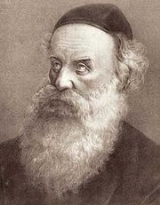
Shneur Zalman of Liadi

 
Shneur Zalman of Liadi

   Email Print
   Bookmark   Link


Shneur Zalman of Liadi


Shneur Zalman of Liadi (September 4, 1745 – December 15, 1812 O.S.
Old Style and New Style dates

Old Style and New Style are used in English language historical studies either to indicate that the start of the Julian year has been adjusted to start on :January 1 even though contemporary documents use a different start of year ; or to indicate that a date conforms to the Julian calendar , formerly in use in many countries, rathe...
), was an Orthodox
Orthodox Judaism

Orthodox Judaism is a Jewish denominations of Judaism that adheres to a relatively strict constructionist and application of the laws and ethics first canonized in the Talmudic texts and as subsequently developed and applied by the later authorities known as the Gaonim, Rishonim, and Acharonim....
 Rabbi
Rabbi

Rabbi , in Judaism, means a religious ?teacher?, or more literally, ?my great one?, when addressing any master. The word rabbi derives from the Hebrew root word , rav, which in biblical Hebrew means ?great?, used in many senses, including the sense of a ?master? and apprentice, whence someone who is a distinguished ?teacher?....
, and the founder and first Rebbe
Rebbe

Rebbe which means master, teacher, or mentor is a Yiddish word derived from the identical Hebrew language word Rabbi. It mostly refers to the leader of a Hasidic Judaism Jewish movement....
 of Chabad, a branch of Hasidic Judaism
Hasidic Judaism

Hasidic Judaism is a type of Orthodox Judaism or Haredi Judaism Orthodox Judaism religious movement. Some refer to Hasidic Judaism as Hasidism, and the adjective chasidic / hasidic applies....
, then based in Liadi, Imperial Russia. He was the author of many works, and is best known for Shulchan Aruch HaRav
Shulchan Aruch HaRav

Shulchan Aruch HaRav is a Halakha#Codes_of_Jewish_law of halakha by Rabbi Shneur Zalman of Liadi, known during his lifetime as HaRav and after his lifetime as the Alter Rebbe ....
, Tanya
Tanya

Tanya is a book more commonly known by its opening word although titled Likkutei Amarim , an early work of Hasidic Judaism, written by Rabbi Shneur Zalman of Liadi, the founder of Chabad, in 1797 CE....
 and his Siddur
Siddur

A siddur is a Judaism prayer book, containing a set order of List of Jewish prayers and blessings. This article discusses how some of these prayers evolved, and how the siddur, as we know it today has developed....
 Torah Or
compiled according to the Nusach Ari
Nusach Ari

Nusach Ari means, in a general sense, any prayer rite following the usages of Rabbi Isaac Luria, the AriZal, in the 16th century, and, more particularly, the version of it used by Chabad-Lubavitch Hasidic Judaism....
. He is also known as Shneur Zalman Baruchovitch, Reb Shneur Zalman, RaZaSh, Baal HaTanya vehaShulchan Aruch, the Alter Rebbe ("Old Rebbe" in Yiddish), Rabbeinu HaZokein, Rabbeinu HaGodol, the GRaZ or The Rav.

i Shneur Zalman was born in 1745 in the small town of Liozna
Liozna

Liozna or Liozno is an urban type settlement in Vitsebsk Voblast, Belarus, the capital of the Liozno District. It is located close to the border with Russia by the Vitsebsk-Smolensk railroad branch and highway, on the Moshna River....
, Polish-Lithuanian Commonwealth
Polish-Lithuanian Commonwealth

The Polish?Lithuanian Commonwealth was one of the largest and most populous countries in 16th and 17th-century Europe, formed by a Union of Lublin of Kingdom of Poland and Grand Duchy of Lithuania in 1569....
 (Belarus
Belarus

Belarus is a landlocked country in Eastern Europe, bordered by Russia to the north and east, Ukraine to the south, Poland to the west, and Lithuania and Latvia to the north....
).


Discussion
Ask a question about 'Shneur Zalman of Liadi'
Start a new discussion about 'Shneur Zalman of Liadi'
Answer questions from other users
Full Discussion Forum


Encyclopedia


Shneur Zalman of Liadi (September 4, 1745 – December 15, 1812 O.S.
Old Style and New Style dates

Old Style and New Style are used in English language historical studies either to indicate that the start of the Julian year has been adjusted to start on :January 1 even though contemporary documents use a different start of year ; or to indicate that a date conforms to the Julian calendar , formerly in use in many countries, rathe...
), was an Orthodox
Orthodox Judaism

Orthodox Judaism is a Jewish denominations of Judaism that adheres to a relatively strict constructionist and application of the laws and ethics first canonized in the Talmudic texts and as subsequently developed and applied by the later authorities known as the Gaonim, Rishonim, and Acharonim....
 Rabbi
Rabbi

Rabbi , in Judaism, means a religious ?teacher?, or more literally, ?my great one?, when addressing any master. The word rabbi derives from the Hebrew root word , rav, which in biblical Hebrew means ?great?, used in many senses, including the sense of a ?master? and apprentice, whence someone who is a distinguished ?teacher?....
, and the founder and first Rebbe
Rebbe

Rebbe which means master, teacher, or mentor is a Yiddish word derived from the identical Hebrew language word Rabbi. It mostly refers to the leader of a Hasidic Judaism Jewish movement....
 of Chabad, a branch of Hasidic Judaism
Hasidic Judaism

Hasidic Judaism is a type of Orthodox Judaism or Haredi Judaism Orthodox Judaism religious movement. Some refer to Hasidic Judaism as Hasidism, and the adjective chasidic / hasidic applies....
, then based in Liadi, Imperial Russia. He was the author of many works, and is best known for Shulchan Aruch HaRav
Shulchan Aruch HaRav

Shulchan Aruch HaRav is a Halakha#Codes_of_Jewish_law of halakha by Rabbi Shneur Zalman of Liadi, known during his lifetime as HaRav and after his lifetime as the Alter Rebbe ....
, Tanya
Tanya

Tanya is a book more commonly known by its opening word although titled Likkutei Amarim , an early work of Hasidic Judaism, written by Rabbi Shneur Zalman of Liadi, the founder of Chabad, in 1797 CE....
 and his Siddur
Siddur

A siddur is a Judaism prayer book, containing a set order of List of Jewish prayers and blessings. This article discusses how some of these prayers evolved, and how the siddur, as we know it today has developed....
 Torah Or
compiled according to the Nusach Ari
Nusach Ari

Nusach Ari means, in a general sense, any prayer rite following the usages of Rabbi Isaac Luria, the AriZal, in the 16th century, and, more particularly, the version of it used by Chabad-Lubavitch Hasidic Judaism....
. He is also known as Shneur Zalman Baruchovitch, Reb Shneur Zalman, RaZaSh, Baal HaTanya vehaShulchan Aruch, the Alter Rebbe ("Old Rebbe" in Yiddish), Rabbeinu HaZokein, Rabbeinu HaGodol, the GRaZ or The Rav.

Biography


Early life

Rabbi Shneur Zalman was born in 1745 in the small town of Liozna
Liozna

Liozna or Liozno is an urban type settlement in Vitsebsk Voblast, Belarus, the capital of the Liozno District. It is located close to the border with Russia by the Vitsebsk-Smolensk railroad branch and highway, on the Moshna River....
, Polish-Lithuanian Commonwealth
Polish-Lithuanian Commonwealth

The Polish?Lithuanian Commonwealth was one of the largest and most populous countries in 16th and 17th-century Europe, formed by a Union of Lublin of Kingdom of Poland and Grand Duchy of Lithuania in 1569....
 (Belarus
Belarus

Belarus is a landlocked country in Eastern Europe, bordered by Russia to the north and east, Ukraine to the south, Poland to the west, and Lithuania and Latvia to the north....
). He was a descendent of the mystic and philosopher Rabbi Judah Loew, the "Maharal of Prague
Prague

Prague is the Capital and World's largest cities of the Czech Republic. Its official name is Hlavn? mesto Praha, meaning Prague, the Capital City....
". He was a prominent and youngest disciple of Rabbi Dovber of Mezeritch
Dovber of Mezeritch

Rabbi Dov Ber of Mezeritch was a disciple of Rabbi Israel ben Eliezer, the founder of Hasidic Judaism, and largely seen as his successor. Rabbi Dov Ber is regarded as the first proponent and exponent of Hasidism and one of its most important propagators....
, the "Great Maggid", who was in turn the successor of the founder of Hasidism, Rabbi Yisroel ben Eliezer
Yisroel ben Eliezer (The Baal Shem Tov)

Rabbi Yisroel ben Eliezer , often called Baal Shem Tov or Besht, was a Judaism mystical rabbi. He is considered to be the founder of Hasidic Judaism ....
 known as the Baal Shem Tov.

Until the age of twelve, he studied under Rabbi Issachar Ber, in Lyubavichi
Lyubavichi

Lyubavichi is a types of inhabited localities in Russia in Rudnyansky District, Smolensk Oblast of Smolensk Oblast, Russia. In the days of the Russian Empire, it was a shtetl in Orshansky Uyezd, in Mogilev Governorate....
 (Lubavitch); he distinguished himself as a Talmud
Talmud

The Talmud is a record of rabbinic discussions pertaining to Halakha, Jewish ethics, customs, and history. It is a central text of mainstream Judaism....
ist, such that his teacher sent him back home, informing his father that the boy could continue his studies without the aid of a teacher.

At age fifteen he married Sterna Segal, the daughter of Yehuda Leib Segal, a wealthy resident of Vitebsk
Vitebsk

Vitebsk, also known as Viciebsk or Vitsyebsk , is a city in Belarus, near the border with Russia and Latvia. The capital of the Vitebsk Oblast, in 2004 it had 342,381 inhabitants, making it the country's fourth largest city....
, and he was then able to devote himself entirely to study. During these years, Shneur Zalman was introduced to mathematics
Mathematics

Mathematics is the study of quantity, structure, space, change, and related topics of pattern and form. Mathematicians seek out patterns whether found in numbers, space, natural science, computers, imaginary abstractions, or elsewhere....
, geometry
Geometry

Geometry arose as the field of knowledge dealing with spatial relationships. Geometry was one of the two fields of pre-modern mathematics, the other being the study of numbers....
 and astronomy
Astronomy

Astronomy is the science of Astronomical object and Phenomenon that originate outside the Earth's atmosphere . It is concerned with the evolution, physics, chemistry, meteorology, and motion of celestial objects, as well as the physical cosmology....
 by two learned brothers, refugee
Refugee

Convention Relating to the Status of Refugees, a refugee is a person who flees to a foreign country or power to escape danger or persecutionOwing to a well-founded fear of being persecuted for reasons of race, religion, nationality, membership of a particular social group, or political opinion, is outside the country of their nationality,...
s from Bohemia
Bohemia

History...
, who had settled in Liozna. One of them was also a scholar of the Kabbalah
Kabbalah

Kabbalah is a discipline and school of thought discussing the mysticism aspect of Judaism. It is a set of esoteric teachings that are meant to explain the relationship between an infinite, eternal and essentially unknowable Creator deity with the finite and mortal universe of His creation....
. Thus, besides mastering rabbinic literature
Rabbinic literature

Rabbinic literature, in its broadest sense, can mean the entire spectrum of rabbinic writings throughout Judaism history. But the term often refers specifically to literature from the Talmudic era, as opposed to medieval and modern rabbinic writing, and thus corresponds with the Hebrew language term Sifrut Hazal ....
, he also acquired a fair knowledge of the sciences, philosophy
Philosophy

Philosophy is the study of general problems concerning matters such as existence, knowledge, truth, beauty, justice, validity, mind, and language....
, and Kabbalah.

He became an adept in Isaac Luria
Isaac Luria

Rabbi Isaac Luria was a Judaism mystic in Safed. His name today is attached to all of the mystic thought in the town of Safed in 16th century Ottoman Palestine....
's system of Kabbalah, and it is thought that this is when he became an admirer of Rabbi Dovber of Mezeritch
Dovber of Mezeritch

Rabbi Dov Ber of Mezeritch was a disciple of Rabbi Israel ben Eliezer, the founder of Hasidic Judaism, and largely seen as his successor. Rabbi Dov Ber is regarded as the first proponent and exponent of Hasidism and one of its most important propagators....
. For twelve years he lived in Rabbi Dovber's house, and took an active part in the propagation of Hasidism
Hasidic Judaism

Hasidic Judaism is a type of Orthodox Judaism or Haredi Judaism Orthodox Judaism religious movement. Some refer to Hasidic Judaism as Hasidism, and the adjective chasidic / hasidic applies....
.

In Lithuania

During the latter portion of Rabbi Dovber’s life, his students dispersed over Europe
Europe

Europe is, conventionally, one of the world's seven continents. Comprising the westernmost peninsula of Eurasia, Europe is generally divided from Asia to its east by the water divide of the Ural Mountains, the Ural , the Caspian Sea, and by the Caucasus Mountains to the southeast....
, and after Rabbi Dovber's passing, Rabbi Shneur Zalman became the leader of Hasidism
Hasidic Judaism

Hasidic Judaism is a type of Orthodox Judaism or Haredi Judaism Orthodox Judaism religious movement. Some refer to Hasidic Judaism as Hasidism, and the adjective chasidic / hasidic applies....
 in Lithuania
Lithuanian Jews

Lithuanian Jews are Ashkenazi Jews with roots in the Grand Duchy of Lithuania .Lithuania was historically home to a large and influential Jewish community that was almost entirely eliminated during the Holocaust: see Holocaust in Lithuania....
, along with his senior colleague Menachem Mendel of Vitebsk
Menachem Mendel of Vitebsk

Rabbi Menachem Mendel of Vitebsk also known as Menachem Mendel of Horodok was an early leader of Hasidic Judaism. Part of the third generation of Hasidic leaders, he was the primary disciple of the Maggid of Mezeritch....
. When Rabbi Menachem Mendel died (in 1788), Rabbi Schneur Zalman was recognized as leader of the Chassidim in Lithuania.

At the time Lithuania was the center of the misnagdim
Misnagdim

Misnagdim or mitnagdim is a Hebrew language word meaning "opponents". It is the plural of Misnaged or Mitnaged. Most prominent among the misnagdim was Rabbi Elijah ben Shlomo Zalman , commonly known as the Vilna Gaon or GRA....
 (opponents of Hasidism), and Shneur Zalman faced much opposition. In 1772, together with Menachem Mendel of Vitebsk
Menachem Mendel of Vitebsk

Rabbi Menachem Mendel of Vitebsk also known as Menachem Mendel of Horodok was an early leader of Hasidic Judaism. Part of the third generation of Hasidic leaders, he was the primary disciple of the Maggid of Mezeritch....
, he attempted yet ultimately failed to create a dialogue with the Vilna Gaon
Vilna Gaon

Rabbi Elijah ben Shlomo Zalman, known as the Vilna Gaon or Elijah of Vilna and simply by his Hebrew language acronym Gra , , was an exceptional Talmud, Halakha, Kabbalah, and the foremost leader of non-hasidic world Jewry of the past few centuries....
 who led the Misnagdim and had launched a ban (cherem
Cherem

Cherem , is the highest ecclesiastical censure in the Jewish community. It is the total exclusion of a person from the Jewish community. It is a form of shunning, and is similar to excommunication in the Catholic Church....
) against the Hasidim (see Vilna Gaon: Antagonism to Hasidism
Vilna Gaon

Rabbi Elijah ben Shlomo Zalman, known as the Vilna Gaon or Elijah of Vilna and simply by his Hebrew language acronym Gra , , was an exceptional Talmud, Halakha, Kabbalah, and the foremost leader of non-hasidic world Jewry of the past few centuries....
 and Hasidim and Mitnagdim
Schisms among the Jews

Schism s among the Jews are cultural as well as religious. They have happened as a product of historical accident, geography, and theology....
).

Undaunted by this antagonism, he succeeded in creating a powerful network of Hasidic centers. He also involved himself in opposing Napoleon's advance on Russia by recruiting his disciples to the Czar's army, and canvassing financial support for the Jewish settlements in the Land of Israel
Land of Israel

For other uses, see Israel The Land of Israel is the region which, according to the Hebrew Bible, was promised by God to the descendants of Abraham through his son Isaac and to the Israelites, descendants of Jacob, Abraham's grandson....
, then under the control of the Ottoman Empire
Ottoman Empire

The Ottoman Empire , also known by its contemporaries as the Turkish Empire or Turkey , was an empire that lasted from 1299?1923. It was Treaty of Lausanne by the Republic of Turkey, which was officially proclaimed on October 29, 1923....
.

Philosophy: Chabad

See Hasidic philosophy
Hasidic philosophy

Hasidic Philosophy or Hasidus are the teachings, interpretations of Judaism, and philosophy underlying the modern Hasidic movement.The word derives from the Hebrew "hesed" , and the appellation "hasid" has a history in Judaism for a person who has sincere motives in serving God and helping others....


As a Talmudist, Rabbi Shneur Zalman endeavored to place Kabbalah and Hasidism on a rational
Rationality

Rationality as a term is related to the idea of reason, a word which following Webster's may be derived as much from older terms referring to thinking itself as from giving an account or an explanation....
 basis. In his seminal work, Tanya, he defines his approach as "??? ???? ?? ???" ("mind ruling over the heart/emotions"). He chose the name "Chabad" for this philosophy — the Hebrew
Hebrew language

Hebrew is a Semitic languages of the Afro-Asiatic languages. Modern Hebrew is spoken by more than seven million people in Israel and Classical Hebrew is used for prayer or study in Jews communities around the world....
 acronym for the intellectual attributes (sefirot) Chochma
Chokhmah (Kabbalah)

Chokhmah in the Kabbalah of Judaism, is the uppermost of the Sephirah of the right line . It is derived from the Hebrew language word chokhmah which means "wisdom"....
 ("wisdom"), Bina
Binah (Kabbalah)

Binah, , in the Kabbalah of Judaism, is the second intellectual Sephirah on the Tree of life . It sits on the level below Keter , across from Chokhmah and directly above Gevurah ....
 ("understanding"), and Da'at
Da'at (Kabbalah)

Daat or Daas in Judaism mysticism, called Kabbalah, is the location where all ten Sephirot in the Tree of life are united as one.In Daat, all sefirot exist in their perfected state of infinite sharing....
 ("knowledge”).

Both in his works and in his sermons he "indicated an intelligent and not a blind faith", and assumed an intellectual accessibility of the mystical teachings of the Kabbalah
Kabbalah

Kabbalah is a discipline and school of thought discussing the mysticism aspect of Judaism. It is a set of esoteric teachings that are meant to explain the relationship between an infinite, eternal and essentially unknowable Creator deity with the finite and mortal universe of His creation....
. This intellectual basis differentiates Chabad from other forms of Hasidism - in this context referred to as "Chagas" — the "emotional" attributes (sefiros) of Chesed ("kindness"), Gevurah
Gevurah (Kabbalah)

Gevurah , Gebrah or Geburah and Din in the Kabbalah of Judaism is the fifth of the Sephirah of the Tree of life , and it is the second of the emotive attributes of the Sephirot....
 ("power"), and Tiferes ("beauty").

Opposition to Napoleon and Support for the Tsar

During the French invasion of Russia, while many Jewish leaders supported Napoleon or remained quiet about their support, Rabbi Shneur Zalman openly and vigorously supported the Tsar.

While fleeing from the advancing French army he wrote a letter explaining his opposition to Napoleon to a friend, Rabbi Moshe Meizeles:

Some argue that Rabbi Shneur Zalman's opposition stemmed from Napoleon's attempts to arouse a messianic view of himself in Jews, opening the gates of the ghettos and emancipating their residents as he conquered. He established an ersatz
Ersatz

Ersatz is a German language word literally meaning substitute or replacement. Although it is used as an adjective in English language, Ersatz can function in German as a noun on its own, or as a part in compound nouns such as Ersatzteile or Ersatzspieler ....
 Sanhedrin
Sanhedrin

The Sanhedrin was an assembly of twenty-three judges appointed in every city in the Land of Israel.The Great Sanhedrin was the supreme court of ancient Israel....
, recruiting Jews to his ranks, and spreading rumors about his conquest of the Holy Land to make Jews subversive for his own ends. Thus his opposition was based on a practical fear of Jews turning to the false messianism of Napoleon as he saw it.

It should be noted that Rabbi Yisroel Hopsztajn of Kozienice
Kozienice

Kozienice is a town in central Poland with 21,500 inhabitants . It is the capital of Powiat of Kozienice ....
, another Hasidic leader, also considered Napoleon a menace to the Jewish people. However, Rabbi Menachem Mendel Schneerson
Menachem Mendel Schneerson

Menachem Mendel Schneerson In 1950, upon the death of his father-in-law, Rabbi Yosef Yitzchok Schneersohn, he assumed the leadership of Chabad Lubavitch....
 identifies Rabbi Yisrael as the Chasidic leader who preferred that Napoleon defeat the Czar.

Arrests

In 1797 following the death of the Gaon, leaders of the Vilna community falsely accused the Hasidim of subversive activities - on charges of supporting the Ottoman Empire
Ottoman Empire

The Ottoman Empire , also known by its contemporaries as the Turkish Empire or Turkey , was an empire that lasted from 1299?1923. It was Treaty of Lausanne by the Republic of Turkey, which was officially proclaimed on October 29, 1923....
, since he advocated sending charity to support Jews living in the Ottoman territory of Palestine
Palestine

Palestine is a name which has been widely used since Roman times to refer to the region between the Mediterranean Sea and the Jordan River. It is derived from a name used already much earlier for a narrower geographical region, mainly along the coastal region....
. In 1798 he was arrested on suspicion of treason and brought to St. Petersburg where he was held in the Petropavlovski fortress
Peter and Paul Fortress

The Peter and Paul Fortress is the original citadel of Saint Petersburg, Russia, founded by Peter the Great in 1703 and built to Domenico Trezzini's designs from 1706 to 1740....
 for 53 days; he was then subjected to an examination by a secret commission. Ultimately he was released by order of Paul I of Russia
Paul I of Russia

Paul was the Emperor of Russia between 1796 and 1801....
 in 1798. The day of his acquittal and release, 19 Kislev
19 Kislev

The 19 Kislev refers to the 19th day of the Jewish month of Kislev....
, 5559 on the Hebrew calendar
Hebrew calendar

The Hebrew calendar or Jewish calendar is a lunisolar calendar used by Jews, now predominantly for religious purposes. It is used to reckon the Jewish New Year and dates for Jewish holidays, and also to determine appropriate Torah reading of Torah portions, Yahrzeits , and daily Psalm reading, among many ceremonial uses....
, is celebrated by Chabad
Chabad

*Chabad is an acronym for Chochmah, Binah, and Da'at, the three levels of Sefirot related to cognition according to the Kabbalah.*Chabad-Strashelye, Strashelye is a branch of the Chabad school of Hasidic Judaism....
 hasidim, who have a festive meal and make communal pledges to learn the whole of the Talmud
Talmud

The Talmud is a record of rabbinic discussions pertaining to Halakha, Jewish ethics, customs, and history. It is a central text of mainstream Judaism....
 known as "Chalukas Ha'Shas."

Again in 1800 he was arrested and again transported to St. Petersburg along with his son Moshe
Moshe Schneersohn

Moshe Schneersohn was the youngest son of the founder of Chabad-Lubavitch Hasidic Judaism, Rabbi Shneur Zalman of Liadi. According to some scholars he converted to Christianity and died in a St....
 who served as an interpreter, as he spoke no Russian or French. He was released after a few weeks but was banned from leaving St. Petersburg The elevation of Tsar Alexander I (Alexander I of Russia
Alexander I of Russia

Alexander I of Russia , also known as Alexander the Blessed served as Tsar of Russia from 23 March 1801 to 1 December 1825 and Ruler of Poland from 1815 to 1825, as well as the first Russian Grand Duke of Finland....
) a few weeks later led to his release; he was then “given full liberty to proclaim his religious teachings” by the Russian government.

According to scholars his first arrest was not the result of anti-Hasidic agitators fabricating charges, or officials seeking extortion monies. An accusation was made on May 8 1798 by Hirsh ben David of Vilna accused him of trying to assist the French Revolution
French Revolution

The French Revolution was a period of political and social upheaval and radical change in the history of France, during which the French governmental structure, previously an absolute monarchy with feudalism for the aristocracy and Roman Catholic Church clergy, underwent radical change to forms based on Age of Enlightenment principles of cit...
, by sending money to Napoleon and the Sultan. It appears that there was no such person as Hirsh and the authorities were attempting to stir up internecine fighting among the Jews.

Liadi

After his release he moved his base to Liadi, Vitsebsk Voblast
Vitsebsk Voblast

Vitsebsk Voblast or Vitebsk Oblast is a province of Belarus with its Capital city being Vitebsk.As of a 2005 estimate, the voblast has a population of 1,294,700....
, Imperial Russia; rather than returning to Liozna, he took up his residence in the town of Liadi at the invitation of Prince Stanislaw Lubomirski
Stanislaw Lubomirski (1704-1793)

Prince Stanislaw Lubomirski was a Poland noble and magnate.Stanislaw became the Podstoli of the Crown in 1739. He became the voivode of Braclaw Voivodeship in 1764 and of Kij?w Voivodship in 1772....
, voivode of the town. There his movement grew immensely, and he is still associated with the town to this day. In 1812, fleeing the French Invasion
French invasion of Russia (1812)

The French invasion of Russia of 1812 was a turning point in the Napoleonic Wars. The campaign reduced the First French Empire and allied invasion forces to a tiny fraction of their initial strength....
, he left Mogilev
Mogilev

Mahilyow is a city in eastern Belarus, about 76 km from the border with Russia's Smolensk Oblast and 105 km from the border with Russia's Bryansk Oblast....
, intending to go to Poltava
Poltava

File:Poltava 1850 Main Square.PNGFile:October Parc Poltava 1550.JPGPoltava is a city in central Ukraine. It is the Capital city of the Poltava Oblast , as well as the administrative center of the surrounding Poltavskyi Raion within the oblast....
, but died on the way in the small village of Pena, Kursk Oblast
Kursk Oblast

Kursk Oblast is a federal subjects of Russia of Russia . Its administrative center is the types of inhabited localities in Russia of Kursk, Russia....
. He is buried in Hadiach
Hadiach

Hadiach is a historic city in Poltava Oblast in the central-east part of Ukraine. Located on the Psel River the city is an administrative center of the Hadyatskyi Raion ....
.

He was succeeded as Rebbe by his oldest son, Dovber Schneuri
Dovber Schneuri

Dovber Schneuri was the second Rebbe of the Chabad Lubavitch Hasidic Judaism movement. Rabbi Dovber was the first Chabad rebbe to live in the town of Lyubavichi , the town for which this Hasidic dynasty is named....
. According to David Assaf, his youngest son, Moshe
Moshe Schneersohn

Moshe Schneersohn was the youngest son of the founder of Chabad-Lubavitch Hasidic Judaism, Rabbi Shneur Zalman of Liadi. According to some scholars he converted to Christianity and died in a St....
, suffered a lifetime of mental illness and converted to Catholicism shortly before he was consigned to a mental hospital.

Subsequent history of Chabad

See Chabad-Lubavitch: History of the movement
Chabad-Lubavitch

Chabad-Lubavitch is one of the largest Hasidic Judaism movements in Orthodox Judaism, and is based in the Crown Heights, Brooklyn neighborhood of Brooklyn....


Rabbi Dovber Schneuri
Dovber Schneuri

Dovber Schneuri was the second Rebbe of the Chabad Lubavitch Hasidic Judaism movement. Rabbi Dovber was the first Chabad rebbe to live in the town of Lyubavichi , the town for which this Hasidic dynasty is named....
 moved the movement to the town of Lubavitch (Lyubavichi
Lyubavichi

Lyubavichi is a types of inhabited localities in Russia in Rudnyansky District, Smolensk Oblast of Smolensk Oblast, Russia. In the days of the Russian Empire, it was a shtetl in Orshansky Uyezd, in Mogilev Governorate....
) in present-day Russia
Russia

Russia , or the Russian Federation , is a list of countries spanning more than one continent country extending over much of northern Eurasia....
. A top follower of Rabbi Shneur Zalman, Rabbi Aharon HaLevi Horowitz, established a rival Chabad school in Strashelye
Strashelye (Hasidic dynasty)

Strashelye, is a branch of the Chabad school of Hasidic Judaism, named after the town Strashelye in the Mahilyow Voblast of present-day Belarus, where its leader lived....
, which did not last after his passing.

In 1940, under the leadership of the previous Rebbe
Rebbe

Rebbe which means master, teacher, or mentor is a Yiddish word derived from the identical Hebrew language word Rabbi. It mostly refers to the leader of a Hasidic Judaism Jewish movement....
, Rabbi Yosef Yitzchok Schneersohn, the Chabad-Lubavitch
Chabad-Lubavitch

Chabad-Lubavitch is one of the largest Hasidic Judaism movements in Orthodox Judaism, and is based in the Crown Heights, Brooklyn neighborhood of Brooklyn....
 movement moved its headquarters to Brooklyn, New York in the United States
United States

The United States of America is a Federal government constitutional republic comprising U.S. state and a federal district. The country is situated mostly in central North America, where its Contiguous United States and Washington, D.C., the Capital districts and territories, lie between the Pacific Ocean and Atlantic Oceans, Borders of the U...
. Under the leadership of Rabbi Menachem Mendel Schneerson, Chabad established branches all over the world staffed by its own Lubavitch-trained and ordained rabbi
Rabbi

Rabbi , in Judaism, means a religious ?teacher?, or more literally, ?my great one?, when addressing any master. The word rabbi derives from the Hebrew root word , rav, which in biblical Hebrew means ?great?, used in many senses, including the sense of a ?master? and apprentice, whence someone who is a distinguished ?teacher?....
s with their wives and children. The number of branches continues to grow to this day, and existing branches continue to expand.

Many descendants of Rabbi Shneur Zalman carry surnames such as Shneur, Shneuri, Schneerson, and Zalman.

Works

Rabbi Shneur Zalman was a prolific writer. He produced works of both mysticism and law. His works form the cornerstone of Chabad-Lubavitch teachings. His ability to explain even the most complex issues of Torah made his writings popular with Torah scholars everywhere.

Tanya

He is probably best known for his systematic exposition of Hasidic Jewish philosophy, entitled Likkutei Amarim, more widely known as the Tanya
Tanya

Tanya is a book more commonly known by its opening word although titled Likkutei Amarim , an early work of Hasidic Judaism, written by Rabbi Shneur Zalman of Liadi, the founder of Chabad, in 1797 CE....
, first published in 1797. (The fuller and more authoritative version of this work dates from 1814.) Due to the popularity of this book, Hasidic Jews often refer to Rabbi Shneur Zalman as the Baal HaTanya (the author of the Tanya). The Tanya deals with Jewish spirituality and psychology from a Kabbalistic point of view, and expounds on such profound themes as the Oneness of God
Jewish principles of faith

Although Jews and religious leaders share a core of monotheism principles, Judaism has no formal statement of principles of faith such as a creed that is recognized or accepted by all....
, Tzimtzum
Tzimtzum

In the kabbalah theory of creationism, Tzimtzum refers to the notion, based on the teachings of Isaac Luria , that God in Judaism "contracted" his Ein Sof light in order to allow for a "conceptual space" in which a wiktionary:finite, seemingly independent world could exist....
, the Sefirot, simcha
Simcha

Simcha is a Hebrew language word with several meanings. Literally, the word "simcha" means gladness, or joy. It comes from the root word "sameyach," which means glad or happy....
, bitachon, and many other mystical concepts.

Shulchan Aruch HaRav

Rabbi Shneur Zalman is equally well known for the Shulchan Aruch HaRav
Shulchan Aruch HaRav

Shulchan Aruch HaRav is a Halakha#Codes_of_Jewish_law of halakha by Rabbi Shneur Zalman of Liadi, known during his lifetime as HaRav and after his lifetime as the Alter Rebbe ....
, his version of the classic Shulkhan Arukh, an authoritative code
Halakha

Halakha ? also Hebrew transliteration Halocho and Halacha ? is the collective body of Judaism religious law, including biblical law and later talmudic and rabbinic law, as well as customs and traditions....
 of Jewish law and custom
Halakha

Halakha ? also Hebrew transliteration Halocho and Halacha ? is the collective body of Judaism religious law, including biblical law and later talmudic and rabbinic law, as well as customs and traditions....
 commissioned by Rabbi Dovber of Mezeritch
Dovber of Mezeritch

Rabbi Dov Ber of Mezeritch was a disciple of Rabbi Israel ben Eliezer, the founder of Hasidic Judaism, and largely seen as his successor. Rabbi Dov Ber is regarded as the first proponent and exponent of Hasidism and one of its most important propagators....
. The work states the decided halakha
Posek

Posek is the term in Halakha for "decider"?a legal scholar who decides the Halakha in cases of law where previous authorities are inconclusive....
, as well as the underlying reasoning. The Shulchan Aruch HaRav is considered authoritative by other Hasidim
Hasidim

Hasidim is the plural of Hasid , meaning "pious" or "righteous". The word Hasid was frequently used as a term of exceptional respect in the Talmudic and early medieval periods....
, and citations to this work are many times found in non-Hasidic sources such as the Mishnah Berurah
Mishnah Berurah

Mishnah Berurah is a work of halakha by Rabbi Yisrael Meir Kagan, better known as The Yisrael Meir Kagan . It is a commentary on Orach Chayim, the first section of the Shulchan Aruch , summarizing the opinions of the Acharonim on that work....
 used by Lithuanian Jews and the Ben Ish Chai
Ben Ish Chai

Yosef Chaim was a leading Hakham , posek on Jewish law and Master Kabbalah. He is best known as author of the work of Halakha Ben Ish Chai , by which title he is also known....
 used by Sephardic Jews. Rabbi Shneur Zalman is also one of three halachic authorities
Posek

Posek is the term in Halakha for "decider"?a legal scholar who decides the Halakha in cases of law where previous authorities are inconclusive....
 on whom Shlomo Ganzfried
Shlomo Ganzfried

Rabbi Shlomo Ganzfried was an Orthodox Judaism rabbi and posek best known as author of the work of Halakha , the Kitzur Shulchan Aruch , by which title he is also known....
 based his Kitzur Shulkhan Arukh.

Siddur Torah Or

He also edited the first Chabad siddur
Siddur

A siddur is a Judaism prayer book, containing a set order of List of Jewish prayers and blessings. This article discusses how some of these prayers evolved, and how the siddur, as we know it today has developed....
 - Siddur Torah Or. It was based on the Ari Siddur
Nusach Ari

Nusach Ari means, in a general sense, any prayer rite following the usages of Rabbi Isaac Luria, the AriZal, in the 16th century, and, more particularly, the version of it used by Chabad-Lubavitch Hasidic Judaism....
 of the famous kabbalist Rabbi Isaac Luria
Isaac Luria

Rabbi Isaac Luria was a Judaism mystic in Safed. His name today is attached to all of the mystic thought in the town of Safed in 16th century Ottoman Palestine....
 (Arizal) of Safed
Safed

Safed is a city in the North District of Israel of Israel and a center for Kabbalah, or Jewish mysticism. At an elevation of 800 meters above sea level, Safed is the highest city in the Galilee....
, but he altered it for general use, and corrected its textual errors. Today's Siddur Tehillat HaShem
Tehillat HaShem

Tehillat HaShem is the name of a prayer-book used for Jewish services in synagogues and privately amongst Hasidic Judaism Jews, specifically in the Chabad-Lubavitch community....
 is based on Shneur Zalman's Siddur Torah Or.

Music and Arts

The current custom of Lubavitch is to hum a solemn melody before the wedding canopy. It is tradition that the melody was composed by Rabbi Shneur Zalman. This melody is solemn in contrast to the joyous melodies sang by other Orthodox sects.

Other

Rabbi Shneur Zalman's other works include:
  • Torah Or and Likutei Torah, kabbalistic explanations of the weekly Torah portions, Shir HaShirim
    Song of Solomon

    The Song of Songs , is a book of the Hebrew Bible—Tanakh or Old Testament—one of the five The Five Scrolls . It is also known as the Song of Solomon or as Canticles, the latter from the shortened and anglicized Vulgate title Canticum Canticorum, "Song of Songs" in Latin language....
     and the Book of Esther
    Book of Esther

    The Book of Esther is one of the books of the Ketuvim of the Tanakh and of the Historical Books of the Old Testament. The Book of Esther or the Megillah is the basis for the Jewish celebration of Purim....
    , drawn from his Hasidic Discourses and published by his grandson, the Tzemach Tzedek.
  • Sefer HaMa'amorim, also known as Maamarei Admur HaZakein, Hasidic Discourses: Hanachot HaRaP; Et’haleich Lyozna; 5562- 2 vol.; 5563, 2 vol.; 5564; 5565, 2 vol.; 5566; 5567; 5568, 2 vol.; 5569; 5570; 5571; Haketzarim; Al Parshiyot HaTorah VehaMoadim, 2 vol.; Inyanim; Ma’amarei Razal; Nach, 3 vol.
  • Hilchot Talmud Torah, on the study of Torah
    Torah study

    Torah study is the study by Jewish people of the Torah, Tanakh, Talmud, responsa, rabbinic literature and similar works, all of which are Judaism's religious texts....
    .
  • Sefer She’elot Uteshuvot, Responsa
    Responsa

    Responsa comprise a body of written decisions and rulings given by legal scholars in response to questions addressed to them....
    .
  • Boneh Yerushalayim.
  • Me'ah She'arim.
  • Igrot Kodesh, 2 vol.


External links

  • , chabad.org
  • , lessonsintanya.com
  • , Adin Steinsaltz
    Adin Steinsaltz

    Rabbi Adin Steinsaltz or Adin Even Yisrael is most commonly known for his popular commentary and translation of both Talmuds into Hebrew language, French language, Russian language and Spanish language....
  • , Prof. Eliezer Segal
  • , jewishencyclopedia.com
  • , asknoah.org
  • , scjfaq.org
  • , chabadofeugene.org
  • From chabadlibrary.org